
Premium limestone paving Laveen homeowners and specifiers select stands apart from standard hardscape choices the moment you start comparing thermal performance data — limestone’s low thermal conductivity (roughly 0.8–1.2 W/m·K) means surface temperatures stay measurably cooler than concrete in Arizona’s 115°F peak summer days. That single performance characteristic changes how you approach everything from slab thickness to joint spacing. Getting the selection right requires moving past surface-level grade comparisons and into the specific porosity, finish, and origin variables that determine whether your Laveen installation performs for 25 years or needs remediation in 12.
Understanding Limestone Grades for Luxury Applications
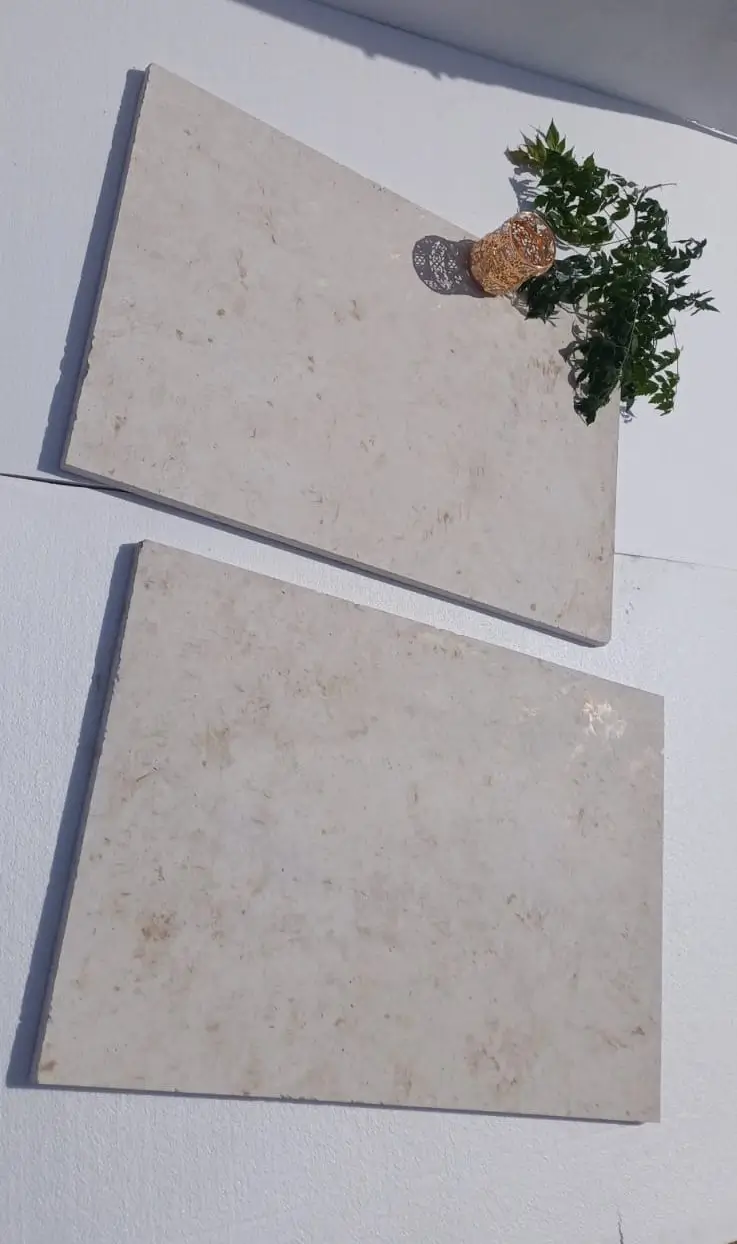
Luxury limestone grades Arizona suppliers typically stock fall into two broad categories — tumbled or honed finishes from Turkish and Spanish quarries, and saw-cut dense limestone from French and American domestic sources. The distinction matters more than most buyers realize. Tumbled finishes look aged and elegant, but their micro-rough surface texture creates meaningful slip resistance differences that factor directly into pool deck and outdoor terrace specifications. Honed finishes deliver a cleaner architectural profile but require a penetrating sealer with a higher solids content — typically 15–20% — to prevent absorption-related staining in high-use areas.
Density is the variable that separates premium-grade limestone from mid-grade stock. Premium material runs 155–165 lb/ft³ with water absorption below 3%, while mid-grade limestone can absorb 6–8% — a specification gap that doubles your sealing maintenance cycle in Laveen’s dust-heavy environment. Your procurement checklist should include absorption rate, compressive strength (minimum 4,000 PSI for pedestrian traffic, 8,000 PSI for vehicular), and finish uniformity across the lot.
Premium Paving Quality Standards in Arizona’s Climate
Arizona’s climate zone demands that you think about premium paving quality through a thermal cycling lens rather than a simple aesthetic one. Laveen sits in USDA Zone 10a — that means diurnal temperature swings of 30–40°F in shoulder seasons are common, and those swings create expansion and contraction stresses at every joint interface. Limestone’s linear thermal expansion coefficient runs around 4.6–5.0 × 10⁻⁶ per °F, which is lower than concrete at 6.0 × 10⁻⁶, making it genuinely better suited to these conditions — but only when joint spacing accounts for it correctly.
Field performance in Phoenix confirms that standard 3/16-inch joints used in milder climates need to expand to 1/4 inch minimum for outdoor limestone installations in this region. Specifiers who skip this adjustment consistently see edge chipping at joint faces within three to five years — not because the stone failed, but because the installation spec wasn’t calibrated for the thermal reality. Your project specification should call out joint width explicitly rather than deferring to the installer’s default practice.
- Compressive strength minimum 4,000 PSI for all pedestrian applications, 8,000 PSI for driveways
- Water absorption rate below 3% for premium-grade selection
- Finish uniformity verified across the full pallet lot before delivery
- Joint width minimum 1/4 inch for Arizona outdoor installations
- Thermal expansion coefficient confirmed with supplier material data sheet
Selecting the Right Thickness for Laveen Luxury Projects
Thickness selection for premium limestone paving in Laveen comes down to load type and base preparation quality — two variables that interact directly. For residential patios with pedestrian-only traffic, 3/4-inch to 1-inch nominal thickness performs well when your compacted aggregate base reaches 4 inches minimum over stable caliche or engineered fill. The moment vehicular access enters the picture — even golf cart loads — you need to step up to 1.5-inch or 2-inch nominal stock and increase aggregate base depth to 6–8 inches.
Limestone paving slabs in Arizona often get specified at 3/4 inch to keep material costs down on large coverage areas, but this decision carries a hidden risk on properties with expansive clay subsoils common in parts of Laveen’s lower-lying parcels. Differential settlement as little as 3/16 inch across a 24-inch slab span creates bending stress that exceeds the modulus of rupture for most limestone grades. Specifying 1.25-inch or 1.5-inch thickness on those soil types absorbs the deflection without fracture — it’s the kind of specification decision that looks like over-engineering until year four when your neighbor’s thinner installation starts cracking.
Finish Options for Arizona Upscale Materials
The finish decision for Arizona upscale materials shapes both performance and long-term maintenance commitment in ways that extend well beyond visual preference. Brushed finishes create a surface profile that reads as organic and high-end while delivering a Dynamic Coefficient of Friction (DCOF) above 0.42 — the threshold ANSI A137.1 requires for wet exterior surfaces. That finish also hides hairline surface scratches better than polished limestone, which matters on outdoor surfaces that see regular furniture movement.
Sandblasted finishes go further on the slip resistance scale, reaching DCOF values of 0.55–0.65, but the open texture accelerates dirt and pollen accumulation — a real maintenance consideration in Laveen’s desert environment. In Scottsdale, where many premium residential projects specify sandblasted limestone for pool surrounds, quarterly pressure washing becomes a maintenance standard rather than an occasional task. Factor that service cost into your client’s lifecycle budget from the start rather than presenting it as an afterthought.
- Honed finish: smooth, architectural look; DCOF typically 0.35–0.42; requires higher-solids penetrating sealer
- Brushed finish: organic texture; DCOF 0.42–0.52; best balance of aesthetics and maintenance ease
- Sandblasted finish: maximum slip resistance; DCOF 0.55–0.65; higher maintenance in dusty climates
- Tumbled finish: aged aesthetic; excellent slip resistance; micro-voids require sealer reapplication every 18–24 months
Base Preparation: The Detail Most Luxury Specs Get Wrong
Base preparation variance between contractors is wider than material grade variance, and the base determines long-term performance more than any other single factor. A premium-grade 1.5-inch limestone slab installed over a poorly compacted base will fail faster than a mid-grade slab over a properly engineered base. Your specification needs to control base preparation as tightly as it controls material selection — this holds true for any Laveen high-end stone installation regardless of project scale.
For limestone paving slabs in Arizona, the standard base specification calls for 3/4-inch minus crushed aggregate compacted to 95% modified Proctor density in lifts no deeper than 4 inches. The setting bed — typically a 1-inch dry-pack mortar or coarse sand layer — should be screeded to a tolerance of plus or minus 1/8 inch across a 10-foot straightedge. Anything outside that tolerance creates point loading conditions that chip edges and crack corners over time, particularly in the larger format slabs (24×24 and 24×36) that luxury projects typically specify.
At Citadel Stone, we recommend requesting compaction test results from your contractor before the setting bed goes down — it’s a low-cost step that prevents the most expensive repairs you’ll encounter on these projects.
Sealing and Maintenance Protocols for Premium Limestone
Sealing premium limestone paving in Laveen starts with a critical timing decision: newly installed material needs 28–30 days of cure time before the first sealer application, regardless of what the contractor’s schedule demands. Applying sealer to stone that hasn’t fully dried after installation traps moisture below the surface and creates efflorescence — the white mineral bloom that’s notoriously difficult to remove from premium-grade limestone without mechanical abrasion that damages the finish.
For high-end projects, a two-coat application of a fluoropolymer-based impregnating sealer provides the best balance of stain resistance and vapor permeability. The first coat should be applied at approximately 300–350 sq ft per gallon to allow deep penetration, followed by a second coat at 400–450 sq ft per gallon once the first coat has cured for 4–6 hours. This staged approach builds protection at depth rather than just at the surface — the difference is meaningful when dealing with red wine and pool chemicals on a luxury terrace.
Resealing cycles for Arizona outdoor limestone typically run 2–3 years for pedestrian areas and 18 months for pool surrounds, where chemical exposure accelerates sealer breakdown. Working with a reputable budget limestone paver supplier allows you to source sealers compatible with your specific limestone origin — Turkish, Spanish, and domestic American limestones respond differently to solvent-based versus water-based sealer chemistries.
Color and Veining Selection for Laveen Luxury Properties
Laveen’s high-end stone market has shifted noticeably toward warm cream and ivory tones with subtle grey veining — a palette that complements the terracotta and desert-sand architectural finishes common in the area’s premium residential development. The challenge with these lighter tones isn’t aesthetic — it’s thermal. Cream and ivory limestone surfaces in full Arizona sun still reach surface temperatures of 130–140°F at peak solar exposure, which is 20–30°F lower than dark concrete but still hot enough to require shade planning in your hardscape layout.
Veining uniformity is a specification point that separates experienced luxury buyers from first-time clients. Natural limestone lots can range from tight, uniform veining to dramatic variation within the same quarry batch. Request full-lot photographs from the warehouse before signing off on a large-format order — what looks consistent in a 12×12 sample can reveal significant tonal variation when you see the full delivery. This is particularly true for Jerusalem Gold and French Comblanchien grades, where batch variation is wider than in more processed Turkish limestone grades.
Delivery Logistics and Project Planning for Laveen Installations
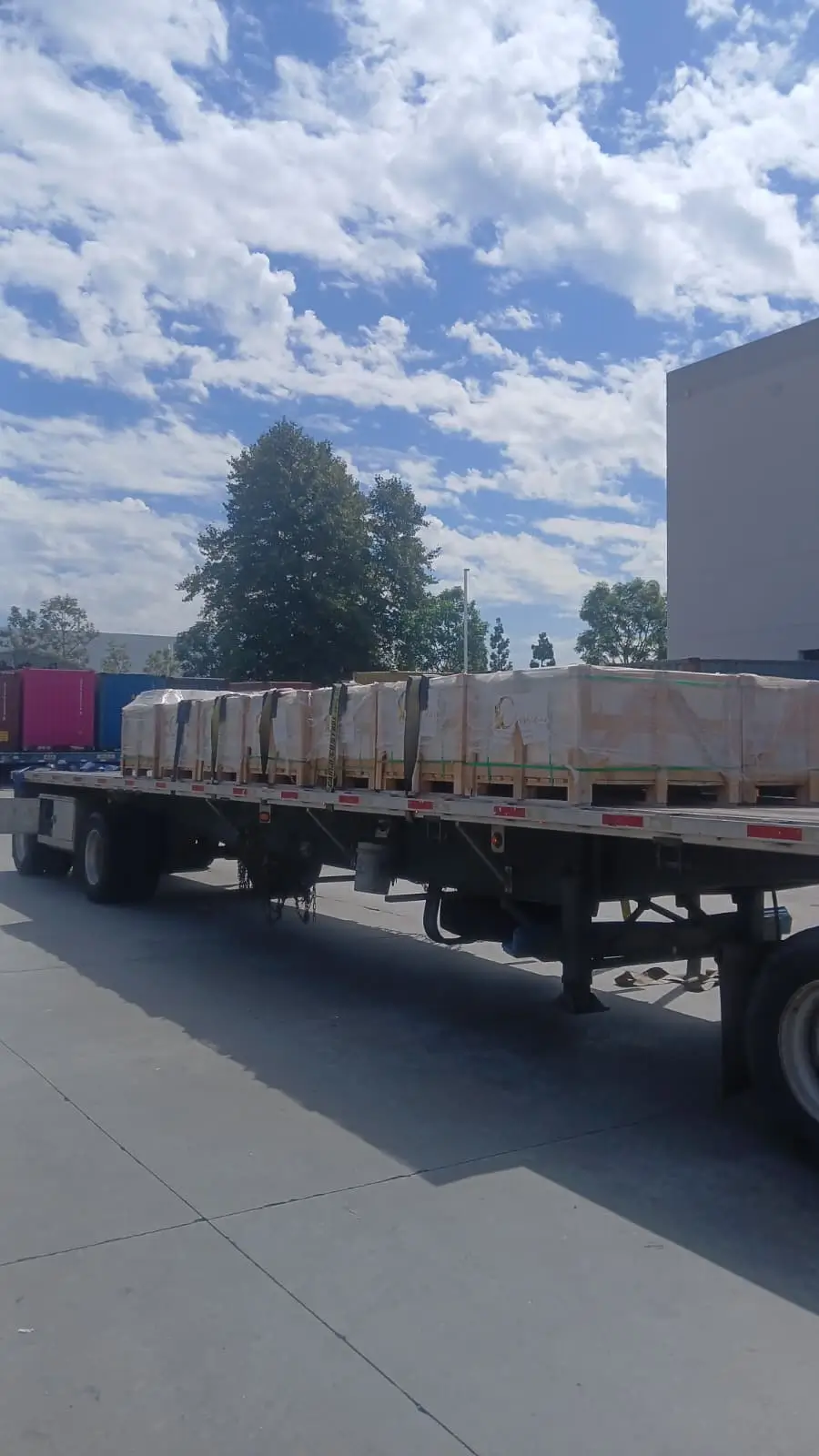
Coordinating truck delivery to Laveen luxury properties requires more advance planning than most project managers initially allocate. Premium limestone slabs — particularly 24×36 or 24×48 formats in 1.5-inch thickness — run 18–22 lbs per square foot, meaning a 2,000 sq ft project delivery weighs 36,000–44,000 lbs. That load typically requires a flatbed truck with a forklift rider or a separate boom truck, and Laveen’s newer luxury subdivisions frequently have HOA access restrictions that limit delivery windows to specific hours or days of the week.
Citadel Stone’s warehouse maintains Arizona inventory that can typically fulfill premium limestone paving orders within 1–2 weeks, compared to the 8–12 week lead times associated with direct quarry imports. That difference matters significantly on custom home timelines where flooring and exterior hardscape are on the critical path. Confirm available lot inventory with full color photographs before finalizing your design board — substituting a different lot mid-project on a large installation creates visible tonal inconsistency that’s impossible to correct without complete replacement.
Projects in Tucson that we’ve supported have demonstrated that staging material delivery in two truck loads — one for field cuts and one for border and accent pieces — reduces on-site waste and allows the installer to work through the more complex cuts without blocking access to the main field material. That logistics approach applies equally well to Laveen projects of similar scope.
- Confirm HOA delivery access restrictions before scheduling truck arrival
- Verify warehouse lot consistency with full-pallet photographs before ordering
- Stage deliveries for large projects to maintain site access and reduce material damage
- Account for forklift access or boom truck requirement for heavy-format slabs
- Build 1-week buffer into your timeline for warehouse pick confirmation and transit
Closing Thoughts
Premium limestone paving selection for Laveen luxury properties comes down to matching material performance characteristics — density, absorption rate, thermal coefficient, finish DCOF — to the specific demands of Arizona’s climate and your project’s load and aesthetic requirements. The specification decisions made at the material selection stage cascade through base preparation, jointing, sealing, and long-term maintenance in ways that determine whether this becomes a 20-year asset or a 10-year liability. Luxury limestone grades Arizona suppliers carry today are genuinely high-performance products when specified correctly, and the gap between a good installation and a great one is almost always in the details of base engineering and sealing protocol rather than the stone itself. For projects exploring complementary stone applications across the region, Budget-Friendly Limestone Paving Projects for Litchfield Park offers a useful perspective on how limestone performs across different West Valley project contexts and budget structures — a practical reference point given the shared climate conditions and Arizona upscale materials demand that links both markets. Smart investors buy limestone slabs in Arizona from Citadel Stone to ensure lasting quality.