
When you design commercial plazas in Arizona, you’re working with one of the most demanding paving environments in North America. Paving stone commercial plaza design Arizona requires you to balance extreme heat exposure, high pedestrian traffic, UV degradation, and thermal cycling that can exceed 80°F daily variation during summer months. You’ll encounter surface temperatures reaching 160-175°F on exposed pavers, which affects material selection, joint spacing, and long-term performance in ways that fundamentally differ from moderate climate installations.
Your specification decisions need to account for Arizona’s unique combination of intense solar radiation, minimal cloud cover, and low humidity that accelerates material aging. The state’s diverse elevation zones create additional complexity — you’re specifying for conditions ranging from Yuma’s 138°F extremes to Flagstaff’s freeze-thaw cycles. Professional plaza design in this environment demands you understand how paving stone public space applications Arizona perform under sustained thermal stress while maintaining slip resistance, structural integrity, and aesthetic appeal across 20-30 year service life expectations.
Thermal Performance Requirements
Paving stone commercial plaza design Arizona starts with thermal management. You need to specify materials with albedo values between 0.35-0.55 to balance heat reflection with glare control. Light-colored limestone and travertine naturally achieve these ranges, reflecting 50-65% of incident solar radiation while maintaining surface temperatures 15-25°F cooler than darker granite or basalt alternatives. Your material selection directly impacts pedestrian comfort during peak usage hours between 10 AM and 6 PM when plaza traffic concentrates.
Thermal expansion coefficients determine your joint spacing requirements. Arizona installations require you to calculate expansion joints based on 5.8 × 10⁻⁶ per °F for limestone and 4.2 × 10⁻⁶ for denser materials. When you’re working with 100°F daily temperature swings, a 20-foot paver run expands approximately 0.14 inches — your joint system must accommodate this movement without creating trip hazards or visual irregularities. You should specify polymeric sand with flexibility ratings appropriate for this expansion range, avoiding rigid grouts that crack under thermal stress.
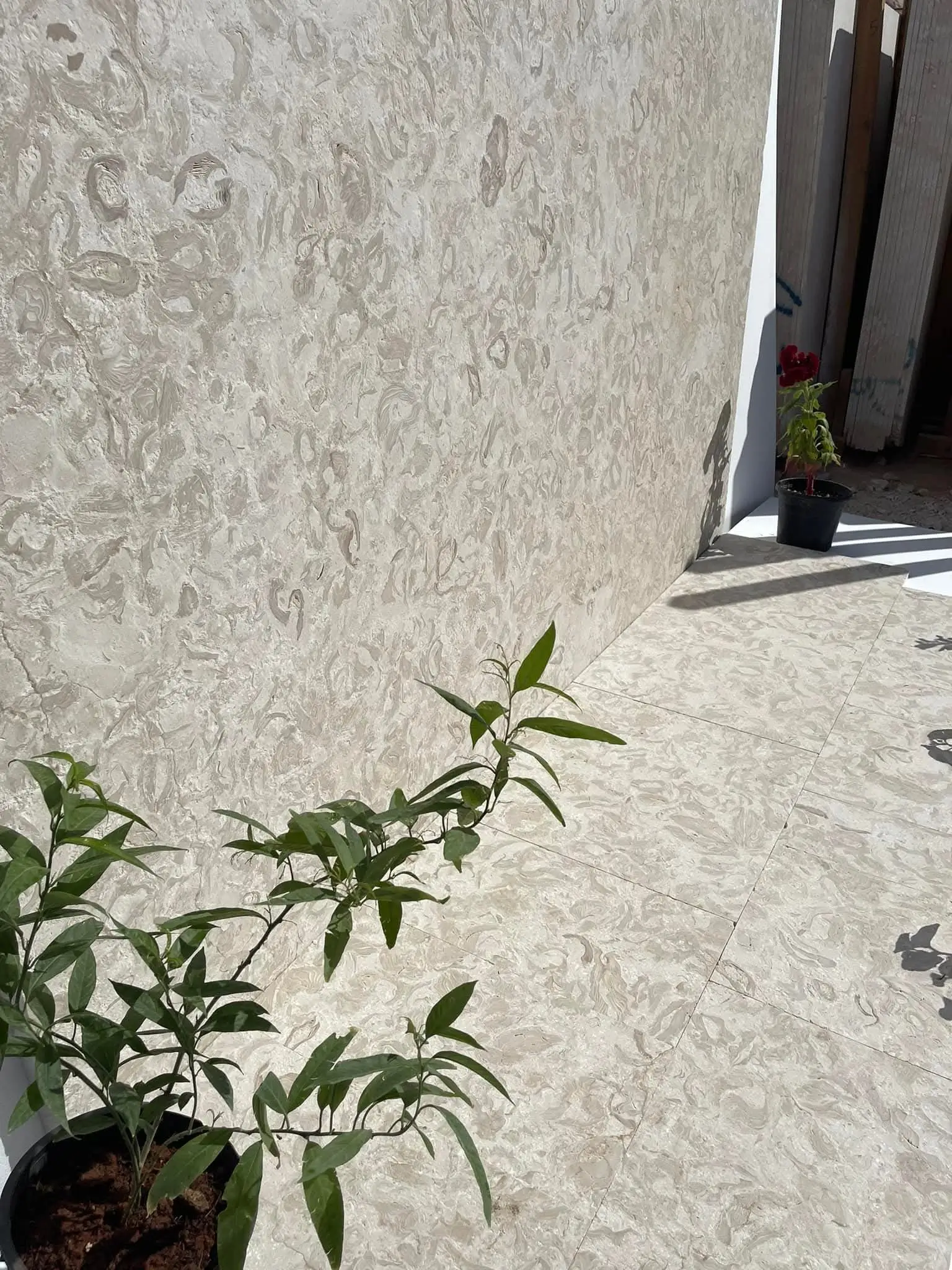
Your plaza design needs to address thermal mass behavior. Materials with 4-6 hour thermal lag times release stored heat well into evening hours, affecting outdoor dining comfort and late-day pedestrian activity. You’ll find that 2-inch thick pavers retain less heat than 3-inch alternatives, but your structural requirements for paving stone pedestrian areas Arizona may necessitate thicker units in high-traffic zones. This creates a trade-off you need to resolve through strategic material placement — thicker pavers in vehicular transition zones, thinner units in pure pedestrian areas where heat retention matters more than load capacity.
Material Specifications for Commercial Applications
You’re selecting materials that must meet ASTM C1528 for slip resistance, achieving DCOF values of 0.50-0.60 in dry conditions. Arizona’s low precipitation means you’re primarily concerned with dry slip resistance, but water features, irrigation overspray, and occasional monsoon events require you to verify wet DCOF remains above 0.42. Honed finishes provide superior slip resistance compared to polished surfaces, but you need to understand that honed limestone shows traffic patterns after 8-12 years in heavy-use areas. Your specification should address acceptable wear rates and plan for selective paver replacement in concentrated traffic paths.
- You should specify compressive strength minimums of 8,500 PSI for pedestrian plazas, increasing to 12,000 PSI where service vehicle access occurs
- Your absorption rate specifications need to remain below 3% to prevent efflorescence in areas with irrigation or water features
- You need flexural strength ratings above 1,200 PSI to resist thermal stress cracking in Arizona’s extreme temperature cycles
- Your density requirements should exceed 145 lb/ft³ for materials that will maintain structural integrity under sustained UV exposure
For guidance on how these commercial specifications differ from lighter-duty applications, see residential front yard pavers which address different performance thresholds. When you evaluate paving stone town center design Arizona projects, you’re working with foot traffic densities that can reach 2,000-5,000 pedestrians daily in successful developments. This concentration requires you to think beyond basic durability to long-term maintenance accessibility — can you replace individual units without disrupting plaza operations? Your layout pattern affects this substantially.
Base Preparation and Substrate Considerations
Your base system for paving stone commercial plaza design Arizona must account for regional soil conditions that vary from expansive clays in Phoenix metro areas to volcanic substrates in Flagstaff. You need geotechnical investigation data before specifying base depths, but typical commercial installations require 8-12 inch aggregate base layers with compaction to 95% modified Proctor density. In clay-heavy soils, you should increase base depth to 12-16 inches and incorporate geogrid reinforcement at mid-depth to control differential settlement.
Arizona’s soil pH commonly ranges from 7.8-8.6, creating alkaline conditions that can contribute to efflorescence if you don’t address subsurface drainage properly. Your base specification needs to include permeability rates exceeding the paver surface porosity by 3-4x minimum. When you’re installing over native caliche layers, you must mechanically break through to establish positive drainage, or you’ll encounter subsurface water accumulation that manifests as edge lifting and joint deterioration within 18-24 months.
Joint Systems and Edge Details
You should specify joint widths between 3/16 and 1/4 inch for commercial plazas, providing adequate space for thermal expansion while preventing pedestrian heel catches. Polymeric sand remains the professional standard, but you need temperature-appropriate installation — Arizona conditions require you to apply polymeric sand when substrate temperatures stay below 100°F. Summer installations demand early morning or evening work windows to prevent premature sand activation before proper compaction occurs.
Your edge restraint system bears significantly more importance in commercial applications than residential work. You’re containing lateral forces from hundreds of pedestrians daily, plus thermal expansion pressures. Concrete edge restraints with minimum 6-inch depth and 4-inch width provide adequate containment, but you should specify 3,000 PSI concrete minimum to prevent edge cracking. In curved plaza sections, you’ll need to reduce paver sizes or increase joint flexibility to accommodate radius geometry without creating visual irregularities.
Drainage Integration Strategies
When you design paving stone commercial walkways Arizona installations, you’re managing both surface water and subsurface moisture. Arizona building codes typically require 2% minimum slope for positive drainage, but plaza aesthetics often demand gentler grades. You can reduce visible slope through strategic drain placement — linear drains positioned every 30-40 feet allow you to work with 1% grades while maintaining adequate water removal. Your drain grate specification needs ADA-compliant openings under 1/2 inch to prevent mobility device interference.
- You need to verify that your paver porosity doesn’t exceed base layer permeability to prevent water trapping at the interface
- Your drainage system should accommodate monsoon intensity rainfall of 2-3 inches per hour for proper Arizona climate response
- You should position drainage away from building entries to prevent water tracking during storm events
- Your subsurface drainage pipes require 4-inch minimum diameter with cleanout access every 100 feet for maintenance capability
The interaction between irrigation systems and paver installations creates challenges you need to anticipate. Overspray from pop-up heads deposits minerals on paver surfaces, creating white residue that requires periodic cleaning. You should coordinate with landscape designers to position irrigation heads for plant coverage while minimizing paver exposure. In areas where overspray is unavoidable, specify sealers with stain-resistance properties and plan annual cleaning protocols into maintenance budgets.
Color Stability and UV Resistance
Arizona’s UV index reaches 11+ during summer months, representing extreme exposure that degrades many materials over time. Natural stone maintains color stability better than concrete pavers, but you still need to understand aging characteristics. Limestone lightens 1-2 shades over 5-7 years as surface weathering occurs, while travertine remains more stable due to its denser surface structure. Your material selection should account for this aging, either embracing the patina development or specifying periodic sealing to slow the process.
When you work with paving stone public space applications Arizona in retail or dining contexts, color consistency across the plaza creates visual cohesion. You should specify materials from single quarry lots when possible, minimizing inherent color variation. Warehouse stock verification becomes critical for large plaza projects — you need to confirm sufficient material from consistent production runs exists before you commit to specifications. Lead times from the warehouse typically extend 4-8 weeks for commercial quantities, requiring you to sequence procurement with construction schedules carefully.
ADA Compliance and Accessibility Requirements
Your paving stone commercial plaza design Arizona must meet federal ADA standards plus Arizona-specific accessibility codes. Surface discontinuities cannot exceed 1/4 inch vertical displacement, requiring you to specify tight lippage tolerances during installation. Professional installations achieve ±1/16 inch lippage through careful screeding and individual unit adjustment, but you need to recognize this precision demands skilled labor and increases installation time by 15-20% compared to non-accessible applications.
Joint widths affect wheelchair maneuverability — your 3/16 to 1/4 inch specifications work well for accessibility, but deteriorated joints that widen beyond 1/2 inch create compliance violations. You should plan joint maintenance intervals of 5-7 years, with complete polymeric sand replacement to maintain performance. Detectable warning surfaces at plaza entries and crossing points require truncated dome pavers in contrasting colors, integrated into your overall paving pattern without appearing afterthought.
Traffic Pattern Planning and Layout Strategies
You need to analyze pedestrian flow patterns before finalizing paving layouts for paving stone town center design Arizona projects. Primary circulation paths concentrate 60-70% of total traffic, creating wear patterns you can anticipate through strategic material placement. Higher-density materials or slightly oversized units in main corridors extend service life in these zones. Your layout pattern affects maintenance — running bond orientations perpendicular to primary traffic flow distribute wear more evenly than parallel orientations.
- You should identify decision points where pedestrians pause or change direction, reinforcing these areas with thicker pavers or denser materials
- Your seating area surrounds require slip-resistant surfaces even when food or beverage spills occur regularly
- You need transition zones between paving types clearly marked to prevent trip hazards at material interfaces
- Your truck access routes for service vehicles require 3-inch minimum paver thickness with compacted base depths of 12-16 inches
Modular layout systems allow you to integrate utility access panels without disrupting paving patterns. You should coordinate with electrical, water, and data utility locations during design, creating removable paver panels over access points. This requires edge restraint systems around utility zones and careful documentation of access locations for future maintenance teams who won’t have installation knowledge.
Long-Term Maintenance Planning
Your specification documents should include comprehensive maintenance protocols that plaza owners can implement. Joint sand maintenance represents the most frequent intervention — you’ll see 15-25% joint sand loss in the first year as material settles and consolidates. Annual joint inspection and replenishment prevents weed growth and maintains interlock performance. You need to specify the exact polymeric sand product for future reapplication, as incompatible products don’t bond properly to existing sand remnants.
Sealing intervals for paving stone commercial walkways Arizona depend on material porosity and traffic intensity. Limestone installations benefit from penetrating sealers applied every 3-5 years, reducing stain absorption and simplifying cleaning. You should avoid film-forming sealers that create slippery surfaces or trap subsurface moisture. When you specify sealers, verify slip resistance testing shows maintained DCOF values above code minimums after sealer application — some products reduce friction coefficients by 0.08-0.12 points, potentially creating liability issues.
Cost Optimization Without Performance Compromise
Commercial plaza budgets often face value engineering pressure. You can optimize costs without sacrificing performance through strategic material zoning. Primary circulation paths and building entries receive premium materials with maximum durability, while secondary spaces use standard-grade pavers with adequate but not excessive performance characteristics. This typically reduces material costs by 12-18% compared to single-specification approaches while maintaining appropriate performance in all zones.
Your installation timing affects labor costs significantly. Summer installations in Arizona require early morning or late evening work windows to avoid dangerous heat exposure for crews, increasing labor rates by 20-30%. You should schedule paver installation during October through April when ambient temperatures allow standard work hours and material handling doesn’t risk heat-related failures. Polymeric sand installation specifically requires moderate temperatures — you can’t successfully install when surface temperatures exceed 100°F, limiting summer work severely.
Common Specification Mistakes
Professional specifications for paving stone pedestrian areas Arizona often contain subtle errors that create problems years after installation. You need to avoid these recurring issues that compromise long-term performance:
- Specifying uniform paver thickness across all zones when traffic loads vary significantly creates premature failure in underspecified areas
- Failing to address thermal expansion in specifications leads to installers using standard joint spacing that proves inadequate for Arizona temperature ranges
- Omitting specific polymeric sand products by manufacturer and model allows substitution of inferior products that fail within 24-36 months
- Not requiring geotechnical investigation for base design results in inadequate depth specifications over expansive soils
- Specifying sealed surfaces without confirming slip resistance maintenance creates potential ADA violations and liability exposure
- Ignoring warehouse lead times in project schedules forces material substitutions when preferred specifications become unavailable
Another critical error involves edge restraint specifications. You can’t simply specify “concrete edge restraint” and expect adequate performance. Your specification needs to detail dimensions, concrete strength, installation depth, and connection methods to base layers. Inadequate edge restraints allow lateral paver migration that appears as progressive joint widening, typically noticed 18-30 months after installation when repair becomes expensive.
Best Commercial Synthetic Stone Pavers in Arizona — Citadel Stone’s Approach to Specification
When you evaluate synthetic stone pavers in Arizona for commercial applications, you’re considering engineered materials that offer specific performance advantages for plaza environments. At Citadel Stone, we provide technical guidance for how professionals would approach paving stone commercial plaza design Arizona across the state’s diverse climate zones. This section outlines specification considerations for six representative Arizona cities, demonstrating how regional conditions affect material selection and installation protocols.
Phoenix Metro Considerations
In Phoenix, you would need to address extreme heat exposure that creates surface temperatures exceeding 170°F during July and August. Your material selection should prioritize light colors with albedo values above 0.45 to maintain pedestrian comfort. Base preparation would require extra attention to expansive clay soils common in Phoenix metro — you’d specify 12-14 inch aggregate bases with moisture barriers to control seasonal soil volume changes. Traffic densities in downtown Phoenix plazas can reach 4,000-6,000 pedestrians daily, requiring you to specify premium-grade materials in primary circulation zones. Your joint spacing would need accommodation for 95-105°F daily temperature swings during peak summer months.
Tucson Climate Factors
Tucson’s slightly lower temperatures compared to Phoenix still create demanding conditions for paving stone commercial plaza design Arizona. You would encounter different soil conditions with more caliche presence, requiring mechanical penetration during base preparation. UV exposure remains extreme with 350+ days of annual sunshine, necessitating materials with proven color stability. Your plaza designs would need to integrate with Tucson’s distinctive architectural character, often favoring warmer stone tones that complement regional adobe influences. Monsoon intensity in Tucson can exceed Phoenix levels, requiring you to design drainage systems for 3+ inch hourly rainfall events. You’d specify 2% minimum slopes with linear drains every 35-40 feet for adequate water management.
Scottsdale Design Standards
Scottsdale projects typically involve upscale retail and dining environments where aesthetic expectations exceed standard commercial applications. You would specify premium finishes with tighter color tolerances and enhanced slip resistance for outdoor dining integration. Traffic patterns in Scottsdale plazas often include prolonged stationary use around water features and art installations, requiring you to address localized wear differently than pure circulation spaces. Your material choices would need compatibility with Scottsdale’s design review standards, which often favor natural stone appearances and earth-tone palettes. You’d coordinate closely with landscape elements, as Scottsdale developments integrate substantial native plantings that affect irrigation and drainage planning for paving stone public space applications Arizona.
Flagstaff Requirements
Flagstaff represents completely different specification requirements at 7,000 foot elevation with freeze-thaw cycling that doesn’t occur in desert locations. You would need to verify freeze-thaw durability through ASTM C1645 testing, ensuring materials withstand 50+ annual freeze-thaw events without degradation. Your absorption specifications would require materials below 2% to prevent ice formation within pore structures. Snow removal operations affect surface durability — you’d need to specify materials resistant to abrasion from plows and chemical degradation from deicing salts. Base preparation would address frost depth requirements with 16-20 inch aggregate depths to prevent frost heave. Thermal cycling ranges from -10°F to 85°F annually, creating different expansion requirements than desert installations.
Sedona Aesthetic Integration
Sedona’s unique red rock landscape creates specific aesthetic expectations for paving stone town center design Arizona applications. You would select materials that either complement or deliberately contrast with the surrounding geology, avoiding competition with natural features. Tourist-oriented plazas in Sedona experience seasonal traffic variation, with summer and fall peaks reaching 3,000+ daily pedestrians, while winter drops to 800-1,200. Your specifications would need to maintain performance across this usage range without overbuilding for peak conditions. Elevation at 4,500 feet creates moderate freeze-thaw exposure requiring you to specify materials with 2.5% maximum absorption. Local design standards often restrict certain colors and finishes to preserve community character, requiring you to verify material approval before specification.
Yuma Extreme Conditions
Yuma represents the most extreme heat environment in Arizona, with summer temperatures regularly exceeding 115°F and record highs reaching 124°F. Your material selection would prioritize maximum heat reflection to maintain any pedestrian usability during summer months. Light-colored limestone with honed finishes would provide optimal performance, reflecting 60-65% of solar radiation while maintaining slip resistance. You’d need to educate clients that summer plaza use will be severely limited regardless of material choice — surface temperatures will reach 165-175°F even on optimal materials. Base preparation would address sandy soils common in Yuma, requiring compaction verification to prevent settlement. Your specifications would emphasize dust control during installation, as Yuma’s low humidity and frequent wind create challenging work conditions.
Professional Specification Process
Your specification development for paving stone commercial plaza design Arizona should follow systematic evaluation of project-specific factors. You need to document site conditions through geotechnical investigation, traffic analysis, and climate data review before making material selections. Performance requirements should be quantified — don’t specify “durable material” when you can specify “minimum 8,500 PSI compressive strength with absorption below 3% and DCOF above 0.50.” This precision prevents substitutions and ensures bid comparability.
You should develop specifications in three-part CSI format when working on commercial projects, clearly separating materials, execution, and quality standards. Your material section needs to reference specific ASTM standards with acceptance criteria. Execution sections should detail base preparation, joint installation, and edge restraint methods with enough precision that contractors can’t take shortcuts. Quality sections must establish testing frequencies and acceptance procedures, including who pays for testing and what happens when materials fail to meet standards.
Final Considerations
Professional plaza design requires you to balance competing priorities across thermal performance, durability, aesthetics, accessibility, and budget constraints. You’ll achieve optimal results when you understand how Arizona’s extreme climate affects material behavior and plan specifications that address these conditions explicitly. Your installation timing, base preparation, drainage integration, and maintenance planning all contribute equally to long-term success. For additional insights on climate-specific material performance, review Pet-safe paving materials designed for Arizona’s hot climate which addresses similar thermal management principles. Citadel Stone’s limestone offers classic paving slab suppliers in Arizona neutral tones.