
When you specify paving slabs for pool decks in Arizona, you’re dealing with one of the most demanding installation environments in North America. Your material selection needs to address thermal performance that goes beyond standard specifications — surface temperatures routinely exceed 160°F during peak season, and that’s before accounting for reflected heat from pool water. You’ll find that the combination of intense UV exposure, minimal humidity, and extreme diurnal temperature swings creates performance requirements that separate premium materials from compromised installations within 36-48 months.
The challenge you face isn’t just heat resistance. Your pool deck specification must balance slip resistance when wet, barefoot comfort at high temperatures, and long-term structural integrity under conditions that accelerate material degradation. Most generic paving products fail in Arizona pool applications because they address only one or two of these factors. You need materials engineered specifically for this use case, and you need to understand how installation variables affect real-world performance.
Thermal Performance Requirements for Pool Deck Applications
Your thermal performance specification starts with understanding solar reflectance values. Paving slabs for pool decks in Arizona require minimum 60% solar reflectance to maintain surface temperatures below the 135°F threshold where barefoot contact becomes uncomfortable. Standard concrete pavers typically reflect 35-45% of solar radiation, which translates to surface temperatures 25-30°F higher than high-reflectance alternatives.
You should recognize that thermal mass behavior matters as much as reflectance. Materials with high thermal mass absorb heat during the day and release it slowly overnight, creating surfaces that remain uncomfortably warm until 10-11 PM. Low thermal mass materials with high reflectance cool within 45-60 minutes of direct sun exposure ending. For pool decks where evening use is common, you’ll want materials that combine reflectance above 60% with thermal conductivity below 1.2 W/mK.
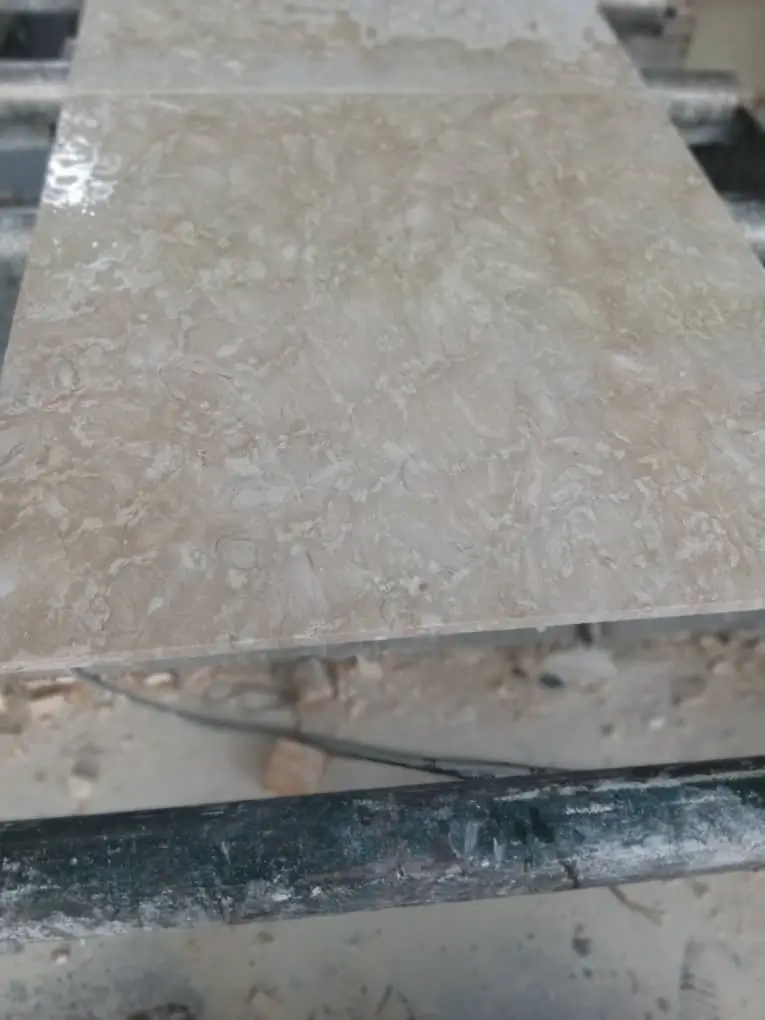
The interaction between material color and thermal performance isn’t linear. You might assume lighter colors always perform better, but surface texture and porosity influence heat absorption independent of color. A textured white limestone with 7% porosity can outperform a smooth cream-colored porcelain by 12-15°F under identical conditions because the texture increases surface area for convective cooling and the porosity allows minimal evaporative cooling from absorbed pool splash.
Slip Resistance Specifications When Wet
Your slip resistance specification for paving slabs pool decks Arizona installations must account for dynamic wet conditions, not just static dry ratings. ASTM C1028 measures static coefficient of friction, but pool decks experience continuous water exposure, algae growth potential, and sunscreen residue accumulation. You need Dynamic Coefficient of Friction (DCOF) ratings minimum 0.50 when wet, measured per ANSI A137.1 standards.
Here’s what catches most specifiers — slip resistance degrades over time based on surface wear patterns and maintenance protocols. A material with initial DCOF 0.55 may measure 0.42 after five years if your client uses high-pressure washing that erodes surface texture. You should specify minimum initial DCOF of 0.60 for commercial pool applications to ensure compliance throughout the warranty period after accounting for 15-20% degradation from maintenance and use.
- You need surface finishes that maintain texture depth minimum 0.8mm for consistent wet traction
- Your specification should require flamed, honed, or textured finishes rather than polished surfaces
- You’ll want to verify that finish texture won’t trap debris that creates cleaning challenges
- Consider how surface porosity interacts with local water chemistry to prevent algae colonization
The relationship between texture and barefoot comfort creates tension in your specification. Aggressive textures that provide excellent slip resistance (DCOF 0.65+) can be uncomfortable for barefoot traffic. You’re looking for the balance point around DCOF 0.55-0.60 with texture that provides traction without abrasiveness. Testing across multiple installation sites shows this range maintains safety while ensuring user comfort for extended barefoot exposure.
Material Durability in Desert Pool Environments
When you evaluate paving slabs for pool decks in Arizona, you need to understand how chlorinated water, pH fluctuations, and salt systems affect material integrity. Pool water chemistry creates more aggressive exposure than rain or irrigation. Chlorine concentrations between 2-4 ppm combined with pH levels that drift to 7.8-8.2 accelerate surface etching in calcium-based materials by 40-60% compared to non-pool applications.
Your material selection should account for porosity interactions with pool chemicals. Materials with interconnected pore structures below 3% porosity resist chemical penetration effectively. Above 8% porosity, you’ll see accelerated deterioration as chlorinated water wicks into the material, where evaporation concentrates chemicals and creates subsurface crystallization pressure. This manifests as spalling and surface delamination typically appearing 4-7 years post-installation in high-porosity materials.
Freeze-thaw cycles aren’t relevant in most Arizona locations, but you face a different challenge — salt crystallization from pool water evaporation. When pool water splashes onto paving slabs pool decks Arizona installations, rapid evaporation concentrates dissolved salts at the surface. Materials must resist salt crystallization pressure, which requires understanding pore size distribution. Pores larger than 5 microns accommodate crystal growth without generating destructive pressure, while smaller pores generate pressures exceeding 2,000 PSI during crystallization.
Color Stability and UV Resistance
You’re specifying materials that will receive 4,000+ hours of direct UV exposure annually in Arizona. UV degradation affects both natural stone and manufactured products, but through different mechanisms. Natural limestone and travertine experience minimal color shift because their coloration derives from mineral content stable under UV exposure. Manufactured products using pigments or surface treatments can shift 2-3 shades within 18-24 months unless specifically formulated for UV stability.
The pool environment accelerates UV degradation through reflected radiation. Water surfaces reflect 10-20% of incident UV back onto surrounding materials, effectively increasing UV exposure by that percentage. You should request accelerated weathering test data showing color stability after 2,000 hours ASTM G155 exposure, which approximates 5-7 years of Arizona service. Acceptable color shift is maximum Delta E of 3.0 units, with premium materials showing Delta E below 2.0.
Dimensional Stability and Thermal Expansion Management
Your installation design for paving slabs pool decks Arizona projects must accommodate thermal expansion that exceeds typical paving applications. Pool deck materials experience temperature swings from 40°F at dawn to 155°F at peak day, creating expansion cycles that stress joints and substrate connections. Limestone exhibits thermal expansion coefficient around 5.3 × 10⁻⁶ per °F, which translates to 0.06 inches per 10 linear feet across a 100°F temperature differential.
You need expansion joints every 12-15 feet in Arizona pool deck applications, decreasing to 10-12 feet for dark-colored materials that experience higher temperature extremes. Joint width should be minimum 3/8 inch, filled with polymeric sand or flexible sealant that accommodates ±25% compression and expansion. Standard masonry sand fails in this application because thermal cycling pumps sand out of joints, typically losing 40-60% of joint fill within the first two years.
- You should specify joint materials with Shore A hardness between 60-75 for optimal flexibility
- Your joint design needs to account for material thickness — thicker slabs generate more expansion force
- You’ll want to verify substrate materials have compatible expansion coefficients within 20% of surface materials
- Consider how joint orientation relative to dominant sun angles affects expansion stress distribution
Base Preparation Requirements
When you design base systems for paving slabs pool decks Arizona installations, you’re addressing unique drainage and stability requirements. Pool decks receive concentrated water exposure from splash-out, which can saturate base materials if drainage isn’t properly designed. You need base permeability minimum 50 inches per hour to prevent water accumulation that causes settlement and creates slip hazards from surface ponding.
Your base specification should include minimum 4 inches of open-graded aggregate base course over compacted subgrade. The aggregate needs to be angular crushed stone 3/4-inch nominal size with fines content below 5%. Round gravel doesn’t provide adequate interlock, and excessive fines reduce permeability by 60-70%. You’ll want to verify compaction to 95% modified Proctor density, tested at 6-inch lifts during placement.
The interaction between base materials and regional soils creates challenges you need to address. Arizona soils range from expansive clays to granular desert soils with minimal cohesion. Clay soils require separation fabric between subgrade and base course to prevent migration. You should specify non-woven geotextile with AOS (Apparent Opening Size) between 40-80 to prevent soil piping while maintaining drainage. For pool deck slab suppliers Phoenix projects, foundation engineers consistently recommend this specification after encountering base failures in installations without proper separation.
Edge Restraint and Perimeter Details
Your edge restraint design determines long-term installation integrity for paving slabs pool decks in Arizona. Temperature cycling creates lateral movement forces that push materials outward. Without proper edge restraint, you’ll see joint opening at perimeters, creating trip hazards and allowing base material migration. Edge restraints must resist minimum 1,200 pounds per linear foot of lateral force.
Aluminum or steel edge restraints provide adequate strength, but you need to account for differential thermal expansion between metal restraints and stone materials. Metal expands at roughly twice the rate of limestone, creating stress at connection points. You’re better served by concrete edge beams minimum 4 inches wide by 8 inches deep, cast against the perimeter of the paving field. The concrete beam should extend below frost depth (minimal in Arizona) but more importantly below the base course to prevent undermining.
Where paving slabs meet pool coping, you face a critical transition detail. The coping typically sits on a concrete bond beam that has different thermal properties than the paving field. You need a movement joint minimum 1/2 inch wide between coping and field pavers, filled with flexible sealant rated for ±50% movement capability. This joint prevents stress transfer that cracks coping or causes paver edge spalling.
Installation Timing and Weather Conditions
You should plan installation timing for paving slabs pool decks Arizona projects outside peak summer months when possible. Surface temperatures above 110°F affect setting bed materials and make work conditions challenging. Mortar-set installations become problematic when substrate temperature exceeds 100°F because rapid moisture evaporation prevents proper hydration. You’re looking at optimal installation windows October through April for mortar-set work.
Sand-set installations tolerate higher temperatures, but you still face challenges. When you install during summer months, sand temperature can reach 140°F, making handling difficult and affecting compaction characteristics. Vibratory plate compactors work more effectively on cooler sand that provides better interlock. Summer installations require you to water sand lightly before compaction, but excessive water creates mud that compromises the base.
Pool Chemistry Impacts on Material Selection
Your material selection needs to account for specific pool chemistry systems your client uses. Traditional chlorine systems maintain pH 7.4-7.6, which is relatively benign to most stone materials. Salt chlorinator systems create more aggressive conditions because salt concentration around 3,000 ppm combined with chlorine generation produces localized pH fluctuations that accelerate calcium carbonate dissolution in limestone-based materials.
When you specify for salt pool systems, you need materials with acid resistance verified by ASTM C267 testing. Acceptable weight loss is maximum 2% after 7-day exposure to 10% hydrochloric acid solution. Materials exceeding 4% weight loss show visible surface deterioration within 5-7 years in salt pool applications. This level of testing detail rarely appears in standard product literature, so you’ll need to request it specifically from pool surround suppliers near me when evaluating options.
Working with Slip Resistant Slabs Dealers
When you source materials, you’ll find significant variation in technical knowledge among slip resistant slabs dealers. Not all suppliers understand the specific requirements of Arizona pool deck applications. You should verify that your supplier can provide complete technical data including DCOF ratings, thermal properties, chemical resistance, and dimensional tolerances. Many dealers stock materials appropriate for patios or walkways but lack products meeting the more stringent pool deck performance requirements.
Your supplier selection should include verification of warehouse stock availability. Pool deck projects often require 2,000-4,000 square feet of material, and you need assurance that your specified product is available in sufficient quantity from current production lots. Color and texture variation between production runs can be significant enough to create visible differences. When you order from stock rather than waiting for new production, you eliminate this risk and reduce project lead times by 4-6 weeks typically.
- You should request samples from the actual lot you’ll receive, not generic product samples
- Your supplier needs to provide material test reports specific to the production lot, not generic spec sheets
- You’ll want confirmation of packaging methods that prevent edge damage during shipping
- Verify that supplier warranty terms specifically cover Arizona installation conditions
For technical guidance on related applications and material specifications, see Citadel Stone paving slab division for comprehensive performance data. You’ll find detailed information about thermal testing protocols and climate-specific installation requirements that inform professional specification decisions.
Maintenance Requirements and Long-Term Performance
Your maintenance specification affects long-term performance as much as material selection and installation quality. Pool deck materials require different maintenance protocols than typical paving because of chemical exposure and continuous moisture. You should specify initial sealing within 30 days of installation using penetrating sealers that don’t create surface film. Film-forming sealers become slippery when wet and degrade under UV exposure, requiring reapplication every 12-18 months.
Penetrating sealers absorb into the material and provide stain resistance without affecting surface slip resistance. You’re looking for silane or siloxane-based sealers that penetrate 3-5mm depth and provide water repellency while maintaining material breathability. Application rate varies by material porosity, typically 100-150 square feet per gallon for limestone with 5-7% porosity. Reapplication intervals extend to 3-5 years for quality penetrating sealers in pool deck applications.
Cleaning protocols need to avoid damaging surface texture that provides slip resistance. High-pressure washing above 2,000 PSI erodes textured surfaces, reducing DCOF by 0.05-0.08 units per treatment. You should specify pressure washing maximum 1,500 PSI with 25-degree nozzles, maintaining the nozzle 12+ inches from the surface. For pool surround suppliers near me that serve commercial facilities, this specification prevents maintenance practices that compromise safety performance.
Cool Paving Arizona Heat Solutions
When you evaluate cool paving Arizona heat solutions, you’re looking beyond simple color selection to understand how material properties interact with desert climate conditions. The concept of “cool paving” encompasses solar reflectance, thermal emittance, and thermal mass in combination. Materials can achieve “cool” designation through ASTM E1980 testing showing Solar Reflectance Index (SRI) above 29, but pool deck applications benefit from SRI above 50 for meaningful temperature reduction.
You’ll find that material thickness affects thermal performance in ways that aren’t immediately obvious. Thinner materials (20-30mm) have less thermal mass and cool more quickly after sun exposure ends, but they also heat faster during the day. Thicker materials (40-50mm) moderate temperature swings through higher thermal mass, maintaining more stable but potentially higher average temperatures. For Arizona pool decks where afternoon and evening use is common, thinner materials with high reflectance typically provide better user comfort.
Surface texture influences perceived temperature through its effect on radiant heat transfer. Smooth surfaces reflect heat more directly, creating higher radiant temperature even if surface contact temperature is acceptable. Textured surfaces scatter reflected radiation, reducing radiant heat sensation. This is why a textured white limestone at 130°F surface temperature often feels more comfortable barefoot than a smooth cream porcelain at 125°F — the radiant component matters as much as contact temperature.
Citadel Stone: Leading Paving Slabs Pool Decks Arizona Supplier
At Citadel Stone, we provide professional guidance for paving slabs pool decks Arizona applications across diverse climate zones and project requirements. This section outlines how you would approach specification decisions for six representative Arizona cities, considering regional climate variations, soil conditions, and installation challenges. The following scenarios represent hypothetical applications that demonstrate technical considerations relevant to professional specification development.
When you consider paving slabs for pool decks in Arizona from Citadel Stone, you’re evaluating materials engineered specifically for extreme heat performance, slip resistance when wet, and long-term durability under intense UV exposure. Our technical team provides specification guidance based on regional performance requirements that vary significantly across Arizona’s diverse climate zones.
Phoenix Pool Deck Specifications
In Phoenix, you would need to account for extreme heat that regularly exceeds 115°F during peak season, with surface temperatures on dark materials reaching 170°F. Your specification would require cool paving Arizona heat solutions with minimum 65% solar reflectance to maintain barefoot-safe surface temperatures. You should verify that materials meet ASTM C1028 slip resistance minimum 0.55 DCOF when wet, accounting for pool chemistry impacts on surface texture over time. Phoenix’s minimal rainfall means you’ll focus drainage design on pool splash and irrigation management rather than stormwater. The urban heat island effect in Phoenix amplifies thermal stress, requiring you to specify expansion joints every 12 feet rather than the 15 feet adequate in cooler regions.
Tucson Climate Considerations
Tucson applications would require you to address monsoon moisture that Phoenix installations don’t experience as intensely. You’ll encounter afternoon humidity spikes during July-August monsoon season that affect material drying characteristics and algae growth potential. Your material selection should include verification of bioreceptivity resistance — materials with surface porosity below 4% resist algae colonization more effectively than higher-porosity options. When you work with pool deck slab suppliers Phoenix warehouse inventory may not include materials optimized for Tucson’s slightly higher moisture exposure. Tucson’s elevation creates 5-8°F cooler temperatures than Phoenix, which allows some flexibility in solar reflectance requirements while still maintaining comfort standards.
Scottsdale Luxury Applications
Scottsdale projects typically involve high-end residential applications where you would balance thermal performance with aesthetic requirements. Your clients in this market often request premium surface finishes that require additional attention to slip resistance specifications. When you specify honed finishes for visual appeal, you need to verify DCOF ratings exceed 0.58 when wet to compensate for the smoother texture. Scottsdale pool designs frequently incorporate vanishing edges and beach entries that create extended wet zones, requiring you to expand slip-resistant material coverage 30-40% beyond traditional pool deck boundaries. You’ll want to coordinate with landscape architects early to ensure material selections integrate with desert landscaping while meeting performance requirements for paving slabs pool decks Arizona installations.
Flagstaff Freeze-Thaw Factors
Flagstaff represents the only Arizona location where you would need to address freeze-thaw durability for paving slabs pool decks Arizona projects. Your material specification must include ASTM C666 testing verification showing maximum 2% strength loss after 300 freeze-thaw cycles. You should specify materials with porosity below 3% and absorption rate maximum 0.5% by weight to prevent freeze-thaw damage. Flagstaff’s elevation creates conditions where pool decks remain covered or unused 5-6 months annually, but you still need materials that withstand temperature cycling from 15°F to 85°F during shoulder seasons. When sourcing from slip resistant slabs dealers, you’ll find that materials meeting Flagstaff’s requirements exceed specifications needed elsewhere in Arizona, creating opportunity for value engineering in thermal requirements while maintaining freeze-thaw resistance.
Sedona Aesthetic Integration
Sedona applications would require you to consider visual integration with the distinctive red rock landscape. Your material selection often focuses on warm earth tones that complement rather than contrast with surroundings. You’ll find that red and buff-toned limestones provide adequate solar reflectance (55-60%) while achieving desired aesthetic integration. Sedona’s elevation creates moderate temperatures relative to Phoenix, allowing you some flexibility in thermal performance requirements. When you specify for Sedona pool decks, drainage design becomes critical because intense monsoon rainfall on surrounding slopes creates runoff that can undermine pool deck base systems if not properly diverted. Your specification should include enhanced base drainage capacity 25% above standard recommendations to account for this exposure.
Yuma Extreme Conditions
Yuma represents the most extreme thermal environment you’ll encounter for paving slabs pool decks Arizona applications. Summer temperatures regularly exceed 118°F, creating surface temperatures that can reach 175°F on dark materials. Your specification in Yuma requires maximum solar reflectance materials — you’re looking at minimum 70% reflectance to maintain any level of barefoot comfort. You should verify thermal emittance exceeds 0.85 to ensure materials radiate absorbed heat efficiently. Yuma’s extremely low humidity accelerates pool water evaporation, concentrating chemicals more rapidly than other locations. When you work with cool paving Arizona heat specialists, Yuma applications represent the most demanding test of material thermal performance. You’ll want to specify lighter color options exclusively and consider surface treatments that enhance reflectance beyond base material properties if aesthetic requirements allow.
Key Takeaways
Your successful specification of paving slabs for pool decks in Arizona requires you to integrate thermal performance, slip resistance, durability, and aesthetic considerations into a comprehensive material selection and installation design. You’ve seen how Arizona’s extreme climate creates performance requirements that exceed standard paving applications, demanding materials specifically engineered for intense UV exposure, high surface temperatures, and chemical exposure from pool water. When you select from pool deck slab suppliers Phoenix and throughout Arizona, you need to verify complete technical data including DCOF ratings when wet, solar reflectance values, chemical resistance testing, and dimensional stability across temperature extremes that span 100°F or more.
Your installation design must account for thermal expansion through proper joint spacing and flexible joint materials, base preparation that provides drainage capacity exceeding 50 inches per hour, and edge restraints capable of resisting lateral forces from temperature cycling. You should plan installation timing outside peak summer months when possible to ensure proper material setting and worker safety, and specify maintenance protocols that preserve slip resistance while protecting material integrity over 20+ year service life. For additional technical guidance on installation best practices and load considerations, review Load-bearing specifications for vehicular paving slabs in Arizona to understand how structural requirements apply across different application types. Citadel Stone manufactures reinforced paving slabs and distributes across Arizona for vehicular and heavy-load zones.