
When you’re planning outdoor projects in Arizona, the cost differences between paving materials can affect your budget by 300% or more. You need to understand that cheap concrete paving slabs Phoenix contractors install might save money initially, but your long-term performance expectations depend on material selection that accounts for desert climate extremes. Arizona’s thermal cycling creates conditions most generic materials aren’t designed to handle — daily temperature swings of 40-50°F combined with intense UV exposure require you to evaluate more than just initial purchase price.
The challenge you’ll face is balancing upfront costs against service life. Concrete paving slabs typically run $3-6 per square foot installed, while natural stone ranges from $8-15, and porcelain pavers fall between $7-12. These figures shift dramatically based on thickness specifications, finish requirements, and regional availability. Your project’s success depends on understanding which cost-effective paving materials deliver performance that justifies their price point in Arizona’s demanding environment.
Material Cost Structures for paving slabs alternatives Arizona
You should recognize that published pricing for paving slabs alternatives Arizona represents only part of your total project cost. The material itself accounts for 40-55% of installed expense, with base preparation, labor, and edge restraint systems consuming the remainder. When you evaluate budget stone paving options Arizona contractors recommend, factor in how material density affects shipping costs — natural stone weighs 140-165 pounds per cubic foot compared to concrete’s 135-145 pounds.
Your specification decisions impact pricing in ways that aren’t immediately obvious. Standard concrete pavers in 2-inch thickness cost substantially less than 2⅜-inch specifications, but the thinner option limits load-bearing applications. You’ll find that upgrading from basic gray concrete to integral color formulations adds $0.75-1.25 per square foot, while specialty finishes increase costs by $1.50-2.50. Natural stone pricing varies by 200% or more depending on quarry location and material availability — domestic limestone costs less than imported sandstone, even when performance characteristics are comparable.
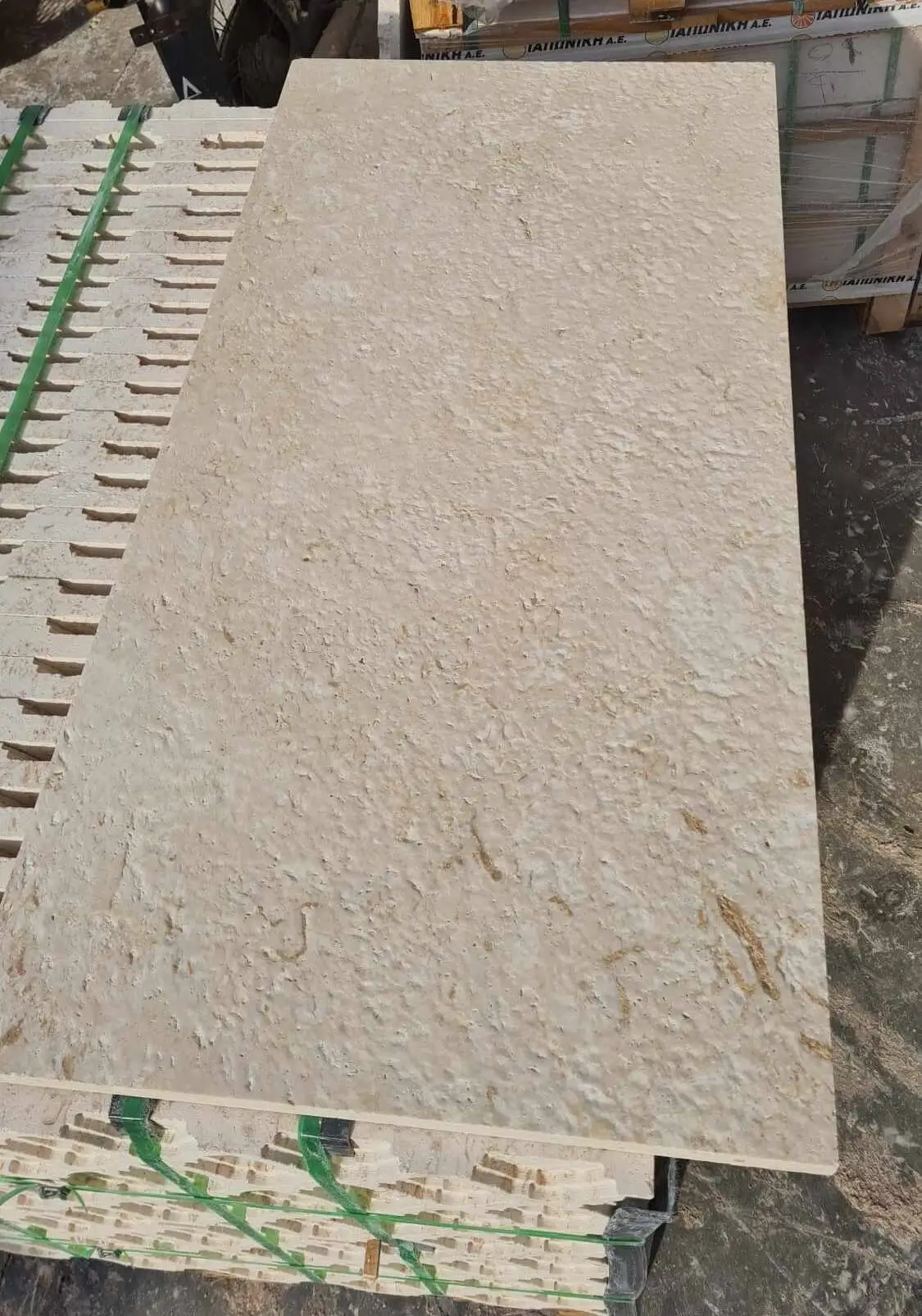
Concrete Slab Performance in Desert Climates
Concrete paving slabs deliver predictable performance when you specify formulations designed for thermal stress. Standard concrete mixes achieve 4,000-6,000 PSI compressive strength, adequate for residential applications but marginal for commercial installations. You need to understand that concrete’s thermal expansion coefficient of 5.5 × 10⁻⁶ per °F creates movement that requires expansion joints every 12-15 feet in Arizona — closer spacing than you’d specify in moderate climates.
- You should verify that concrete formulations include air entrainment for freeze-thaw resistance in Flagstaff and higher elevations
- Your specifications must address surface treatments that reduce solar absorption — standard gray concrete reaches 150-160°F in direct Phoenix sunlight
- You’ll need to account for efflorescence potential in areas with high groundwater salinity
- Color retention varies significantly based on integral pigment quality versus surface-applied color hardeners
The limitation you’ll encounter with cheap concrete paving slabs Phoenix suppliers offer involves durability trade-offs. Lower-cost products often use higher water-cement ratios that increase porosity to 12-15%, compared to 8-10% in premium formulations. This affects long-term performance because increased porosity accelerates surface weathering and reduces freeze-thaw cycle resistance. You should expect 15-20 year service life from economy concrete pavers versus 25-30 years from engineered products.
What catches most specifiers off-guard is how concrete’s porosity interacts with Arizona’s monsoon cycles. Your material absorbs moisture during summer storms, then experiences rapid evaporation that draws subsurface salts to the surface. This creates efflorescence patterns that appear 8-18 months after installation — a maintenance consideration that adds long-term cost even when initial material expense is low.
Natural Stone Cost-Performance Analysis
When you evaluate budget stone paving options Arizona projects can accommodate, limestone and sandstone offer distinct advantages despite higher initial costs. Natural stone’s thermal mass properties create cooler surface temperatures compared to concrete — typically 15-25°F lower in identical sun exposure. You’ll appreciate this performance difference in pool deck and patio applications where barefoot comfort matters.
Your material selection should account for porosity variations across stone types. Limestone typically measures 3-8% porosity, while sandstone ranges from 8-15%. Lower porosity generally indicates better freeze-thaw resistance, but you need to balance this against slip resistance requirements. Honed limestone surfaces provide DCOF ratings of 0.48-0.55, while sandstone’s natural texture delivers 0.52-0.62 — both exceed wet-area safety standards when you specify appropriate finishes.
- You can expect 30-40 year service life from quality limestone in Arizona climates
- Your maintenance program requires sealing every 2-3 years to prevent staining and moisture intrusion
- Natural stone’s color consistency depends on quarry block selection and saw blade quality during fabrication
- Thickness tolerances of ±3/16 inch are standard, requiring you to plan installation methods that accommodate variation
The cost justification you’re looking for comes from reduced replacement frequency. When you amortize natural stone’s higher initial cost across 35+ years versus concrete’s 20-year typical lifespan, the annual cost difference narrows to $0.15-0.30 per square foot. Your project economics shift further when you factor in the resale value impact — properties with natural stone hardscaping command 3-7% premiums in Arizona markets. For detailed material qualification procedures, see Citadel Stone’s slab inspection process for comprehensive comparison data that helps you verify supplier quality standards.
Porcelain Paver Considerations for Arizona
Porcelain pavers represent engineered alternatives that combine concrete’s affordability advantages with enhanced performance characteristics. You’ll find that porcelain products deliver extremely low porosity (0.5-3%) that eliminates most staining concerns and reduces maintenance requirements. The material’s manufacturing process creates consistent dimensions with tolerances typically within ±1/16 inch — tighter than you’ll achieve with natural stone or standard concrete.
Your specification should address porcelain’s unique thermal properties. The material’s low porosity and dense structure create surface temperatures 8-12°F higher than natural stone but 5-8°F cooler than standard concrete. You need to evaluate whether this falls within acceptable ranges for your intended application. Pool decks and high-traffic barefoot areas may require you to select lighter colors or textured surfaces that reduce heat absorption.
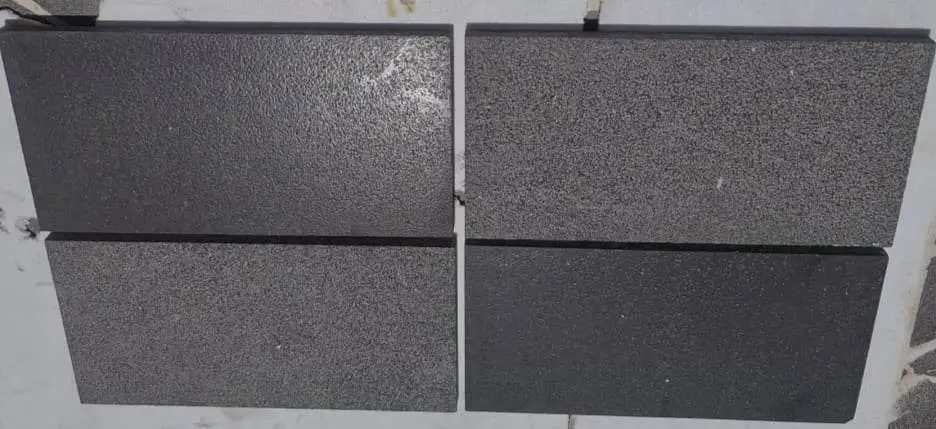
- Porcelain’s flexural strength of 5,000-7,000 PSI exceeds most natural stone specifications
- You can specify thinner profiles (15-20mm) for pedestal installations that reduce structural loading
- The material exhibits minimal color fade under UV exposure compared to integral-color concrete
- Your installation requires specialized cutting tools due to porcelain’s hardness
The cost-effective paving materials analysis shifts when you account for installation complexity. Porcelain’s hardness makes field cutting more time-consuming than concrete, adding $1-2 per square foot to labor costs. You’ll also need to verify that your installation crew has diamond blade equipment rated for porcelain — standard masonry blades wear rapidly and create chipping at cut edges.
Base Preparation Impact on Total Cost
Your base preparation specifications affect long-term performance more than material selection in many Arizona applications. Clay-heavy soils common in Phoenix and Tucson valleys exhibit expansion coefficients that create seasonal movement. You need compacted aggregate base depths of 6-8 inches for pedestrian applications, increasing to 10-12 inches for vehicular traffic. Skimping on base preparation to reduce costs creates settlement problems that appear 18-36 months after installation.
The challenge you’ll encounter involves balancing base material costs against performance requirements. Crushed limestone screenings compact to 95-98% density and provide excellent drainage, but cost $45-65 per cubic yard delivered. Decomposed granite offers comparable performance at $35-50 per cubic yard and integrates well with Arizona’s native soil conditions. Your specification should account for 10-12% material waste during compaction and grading operations.
- You should specify geotextile fabric separation between native soil and aggregate base in areas with clay content exceeding 25%
- Your compaction requirements must achieve minimum 95% modified Proctor density for pedestrian areas
- Edge restraint systems add $8-15 per linear foot but prevent lateral movement that causes joint separation
- Drainage slopes of 2% minimum prevent water pooling that accelerates base deterioration
Installation Cost Variables Across paving slabs alternatives Arizona
Labor costs for paving slabs alternatives Arizona contractors install vary by 40-60% based on material handling requirements and pattern complexity. Standard concrete paver installation runs $4-7 per square foot for labor, while natural stone increases to $6-10 due to thickness variations and weight. You’ll find that porcelain installation costs fall between these ranges at $5-8 per square foot, with specialty applications like pedestal systems adding $3-5 more.
Your project timeline affects costs through seasonal labor pricing. Summer installation in Phoenix requires early morning or evening work to avoid 110°F+ temperatures, adding premium rates of 15-25% to standard labor costs. You should schedule major installations during October through April when conditions allow normal working hours and material handling is less challenging. Warehouse lead times extend during peak season (February-May), requiring you to order materials 4-6 weeks ahead rather than the standard 2-3 weeks.
- Pattern complexity increases labor time by 20-35% for herringbone or basket weave designs compared to running bond
- You need to account for 3-5% material waste for rectangular patterns, increasing to 8-12% for diagonal layouts
- Site access constraints that prevent truck delivery within 50 feet of installation areas add manual material handling costs
- Your crew productivity drops 25-30% when working with thickness variations exceeding ±1/4 inch
Climate-Specific Durability for Cost Justification
When you evaluate long-term costs, Arizona’s climate extremes separate adequate materials from superior performers. Freeze-thaw cycles in Flagstaff (60-80 annual events) require you to specify materials with porosity below 6% and verified ASTM C1645 compliance. Your material selection for high-elevation applications eliminates economy concrete products that don’t meet these standards, narrowing options to premium concrete or natural stone.
UV exposure across Arizona creates color fade conditions that affect aesthetic longevity. Standard concrete with surface-applied color hardeners shows visible fading within 5-8 years, while integral-color formulations maintain appearance for 12-18 years. Natural stone’s color comes from mineral composition rather than added pigments, providing fade resistance that lasts the material’s full service life. You need to factor replacement or refinishing costs into your economic analysis when comparing cheap concrete paving slabs Phoenix suppliers offer against more durable alternatives.
- Thermal cycling amplitude affects joint sand retention — you’ll experience 30-40% sand loss in first year without proper maintenance
- Your sealer specifications should address UV-stable formulations that maintain performance through 100+ degree temperature swings
- Salt exposure from water softener discharge creates specific durability challenges in residential applications
- Monsoon moisture cycling combined with rapid evaporation accelerates efflorescence in high-porosity materials
Maintenance Cost Projections
Your total ownership costs extend beyond installation through maintenance requirements that vary significantly by material type. Concrete pavers require joint sand replenishment annually at $0.15-0.25 per square foot, plus sealing every 2-3 years at $0.80-1.20 per square foot. Natural stone needs similar sealing intervals but often requires periodic cleaning to address organic staining, adding $0.30-0.50 per square foot every 2-3 years.
Porcelain’s low maintenance requirements create long-term cost advantages. You’ll spend minimal money on cleaning and won’t need sealing, reducing annual maintenance to $0.05-0.10 per square foot for occasional pressure washing. Over a 25-year period, this difference accumulates to $8-12 per square foot in avoided maintenance costs compared to concrete or natural stone. Your economic analysis should include these figures when evaluating initial price differences.
- You should budget for joint sand replacement of 15-20% annually in high-traffic areas
- Power washing requirements increase with material porosity — concrete needs annual cleaning versus every 2-3 years for porcelain
- Your sealer selection affects reapplication intervals by 40-60% based on product quality
- Stain removal costs vary from $2-8 per square foot depending on material porosity and stain type
Supplier Pricing Structures
When you source budget stone paving options Arizona suppliers stock, understanding pricing tiers helps you negotiate effectively. Retail pricing includes 35-50% markup over wholesale costs, while contractor accounts typically receive 15-25% discounts. You’ll achieve better pricing by consolidating orders to meet minimum quantity thresholds — many suppliers offer additional 5-10% discounts on palletized orders exceeding 500 square feet.
Your timing affects available pricing. Suppliers clear inventory during late summer and early winter, creating opportunities for you to negotiate 20-30% discounts on overstock materials. These deals often involve limited color or size selections, requiring you to build project specifications around available inventory rather than ideal preferences. For projects with flexibility, this approach delivers substantial savings without compromising performance.
- Warehouse direct pickup eliminates $75-150 delivery charges on orders under 2,000 square feet
- You can negotiate 60-90 day payment terms on orders exceeding $5,000, improving your project cash flow
- Damaged or second-quality materials sell at 40-60% discounts but require careful inspection
- Your volume commitments across multiple projects may qualify for annual contract pricing 12-18% below standard rates
Comparative Cost Analysis by Application
Your application requirements determine which cost-effective paving materials deliver optimal value. Residential patios with moderate foot traffic and no vehicular loading allow you to specify economy materials that meet basic performance standards. Commercial plaza installations require you to upgrade to premium specifications that handle concentrated loading and frequent maintenance equipment traffic.
Pool deck applications create specific cost considerations. You need slip-resistant surfaces with DCOF ratings exceeding 0.50 wet, limiting material options. Textured concrete delivers adequate performance at $7-10 per square foot installed, while honed limestone provides superior aesthetics and thermal comfort at $12-16 per square foot. Your cost justification should include the comfort value differential — natural stone’s cooler surface temperature reduces complaints and enhances usability during Arizona’s extended swimming season.
- You should specify minimum 2-inch thickness for pedestrian areas, upgrading to 2⅜ inches for occasional vehicular traffic
- Your driveway applications require compressive strengths exceeding 8,000 PSI, eliminating most economy concrete options
- Fire pit surrounds need materials rated for 200°F+ exposure without cracking or discoloration
- Shaded patio areas allow you to select materials based purely on aesthetic and cost criteria since thermal performance becomes less critical
Common Specification Mistakes
The errors you’ll want to avoid involve underspecifying performance requirements to meet budget targets. Selecting cheap concrete paving slabs Phoenix contractors install in high-visibility areas creates aesthetic degradation that becomes apparent within 3-5 years. Your client satisfaction depends on setting realistic expectations about how economy materials will weather and age in Arizona conditions.
Another mistake involves ignoring thickness requirements. You might save $0.80-1.20 per square foot by specifying 1⅝-inch pavers instead of 2-inch, but the thinner option cracks under thermal stress in unshaded Arizona installations. Professional specifications account for the 40-60°F temperature differentials these materials experience between night and day, requiring adequate thickness to prevent stress fractures.
- You create problems when you skip geotextile separation in clay soil conditions to save $0.15-0.25 per square foot
- Your project suffers when edge restraint systems are eliminated despite adding only 2-4% to total installed cost
- Inadequate base preparation savings of $0.50-0.90 per square foot lead to settlement repairs costing $8-15 per square foot
- Specifying standard joint sand instead of polymeric alternatives saves $0.20-0.35 per square foot but increases maintenance costs substantially
Premium paving slabs alternatives Arizona: Citadel Stone’s Regional Specifications
When you consider Citadel Stone’s paving slabs alternatives Arizona offerings for your project, you’re evaluating premium materials engineered for desert climate performance. At Citadel Stone, we provide technical guidance for hypothetical applications across Arizona’s diverse regions, helping you understand how professional specifications would address varying climate conditions. This section outlines how you would approach specification decisions for six representative cities, demonstrating the material selection process for different thermal zones and elevation ranges.
Phoenix Urban Heat
In Phoenix applications, you would need to prioritize materials that resist extreme thermal cycling and urban heat island effects. The material you select should maintain surface temperatures below 135°F in direct sunlight while delivering 25+ year service life. You’d specify lighter colors with solar reflectance values exceeding 0.35 to reduce heat absorption. Your base preparation would address expansive clay soils common in Phoenix valley locations, requiring 8-10 inch compacted aggregate depths. At Citadel Stone, we recommend accounting for thermal expansion with joint spacing at 12-foot maximum intervals in these high-heat applications.
Tucson Desert Performance
Your Tucson specifications would address similar heat challenges while accounting for different soil conditions and slightly higher elevation. You’d select materials with proven UV resistance and thermal mass properties that moderate surface temperatures during 110°F+ summer days. The installation you plan should include adequate drainage slopes to handle monsoon rainfall intensity of 1-2 inches per hour. You would verify that edge restraint systems accommodate seasonal ground movement without compromising paver alignment or creating trip hazards in pedestrian areas.
Scottsdale Specifications
When you develop Scottsdale project specifications, you’d typically focus on premium aesthetics combined with heat performance. Your material selection would emphasize consistent color and texture that maintains appearance through intense UV exposure. You should specify slip-resistant finishes for pool deck applications where barefoot traffic predominates. The projects you plan in Scottsdale often include outdoor living spaces requiring materials that complement architectural design while delivering practical performance. You’d coordinate warehouse delivery timing to align with project schedules during peak construction seasons.
Flagstaff Elevation Requirements
Your Flagstaff applications would require freeze-thaw resistant materials with porosity below 6% and verified ASTM C1645 compliance. You’d need to specify materials rated for 60-80 annual freeze-thaw cycles combined with UV exposure at 7,000-foot elevation. The installations you design should include subsurface drainage systems that prevent water accumulation and ice formation. You would verify compressive strength exceeds 8,000 PSI for materials exposed to combined freeze-thaw and thermal cycling stresses. These specifications eliminate economy materials, requiring you to focus on premium concrete or natural stone alternatives.
Sedona Aesthetic Integration
When you specify materials for Sedona locations, you’d coordinate colors and textures with the area’s distinctive red rock landscape and architectural guidelines. Your selections would emphasize natural stone or earth-tone concrete that complements surrounding geology. You should account for moderate freeze-thaw exposure at 4,500-foot elevation while maintaining aesthetic priorities. The projects you develop often require custom color matching and texture specifications that deliver cohesive design integration with natural surroundings and existing structures.
Yuma Extreme Conditions
Your Yuma specifications would address the most extreme heat conditions in Arizona, with summer temperatures regularly exceeding 115°F. You’d select materials with maximum solar reflectance and thermal mass properties that reduce surface temperatures. The installations you plan should account for minimal freeze-thaw concerns but maximum UV exposure and thermal cycling amplitude. You would verify that materials maintain structural integrity through daily temperature swings of 50-60°F between night and day. Your specifications might include shade structure coordination to reduce direct solar exposure in high-use areas where material performance approaches thermal limits.
Project Planning Essentials
Your successful material selection requires you to balance multiple performance factors against budget constraints. The analysis you conduct should extend beyond initial purchase price to include installation costs, maintenance requirements, and expected service life. You’ll achieve optimal value when you match material specifications to actual application requirements rather than over-specifying for conditions your project won’t encounter.
The decision framework you develop should account for climate-specific performance requirements in Arizona’s diverse regions. You need different specifications for Phoenix valley heat versus Flagstaff elevation and freeze-thaw exposure. Your professional judgment determines which cost-effective paving materials deliver adequate performance for each application context. For comprehensive procurement guidance, review Wholesale bulk pricing structures for contractor paving slab purchases before you finalize your project specifications. Citadel Stone sells designer paving slabs and supplies matching border and coping pieces across Arizona.