
When you design outdoor living spaces in Arizona, your pattern layout choices define both visual impact and long-term structural performance. The patio stone pattern layout Arizona professionals specify must account for thermal expansion rates exceeding 0.25 inches per 20-foot span during summer months, requiring joint spacing adjustments that generic installation guides rarely address. You’ll find that herringbone, running bond, and custom geometric arrangements each respond differently to the state’s extreme temperature fluctuations—differences that become obvious within the first 18 months if you don’t plan properly.
Your material selection interacts directly with pattern complexity in ways that affect both installation labor costs and lifecycle performance. Simple running bond patterns allow faster installation with 15-20% less cutting waste, but they provide reduced interlock strength compared to herringbone configurations. Understanding these trade-offs helps you match patio stone installation patterns Arizona conditions demand with project-specific performance requirements and budget constraints.
Thermal Expansion Pattern Considerations
Arizona’s extreme diurnal temperature swings—often 40-50°F between predawn lows and mid-afternoon peaks—create expansion and contraction cycles that stress patterned installations differently than moderate climates. You need to understand how pattern orientation affects thermal movement. Running bond patterns aligned parallel to primary solar exposure experience maximum dimensional change along their length, while perpendicular orientation distributes stress more evenly across joints.
When you specify patio stone design layouts Arizona projects require, account for coefficient of thermal expansion around 5.3 × 10⁻⁶ per °F for limestone materials. This translates to measurable movement: a 20-foot patio experiences roughly 0.28 inches of expansion during peak summer conditions. Your joint spacing must accommodate this movement without creating lippage or joint failure.
- You should increase joint width from standard 3/16 inch to 1/4 inch for installations exceeding 400 square feet in direct sun exposure
- Herringbone patterns require expansion joints every 12-15 feet rather than the 20-foot spacing adequate for running bond
- Diagonal pattern orientations experience 12-15% greater stress at perimeter restraints compared to orthogonal layouts
- Your edge restraint system must allow controlled movement—rigid concrete borders create stress concentration points
The interaction between base materials and surface patterns matters more than most specifications acknowledge. Crushed aggregate bases with proper compaction provide slight flexibility that helps accommodate thermal cycling. When you use overly rigid base preparations, pattern geometry determines where stress concentrates. Complex patio stone geometric patterns Arizona installations feature often develop problems at pattern transition points where different orientations meet.
Herringbone Pattern Structural Performance
Herringbone configurations provide superior interlock strength through their 90-degree unit alternation, making them ideal for high-traffic areas and vehicular applications. The pattern creates multidirectional load distribution that reduces individual unit stress by 25-30% compared to running bond under equivalent loading. You’ll see this advantage matter most in commercial applications where point loads from furniture or equipment concentrate force.
The 45-degree orientation relative to edges requires significant cutting at perimeters, typically increasing material waste to 12-15% versus 6-8% for running bond. Your installation timeline extends accordingly—expect 20-25% longer installation duration for equivalent square footage. This labor premium translates directly to project costs, but the performance benefits often justify the investment for applications demanding maximum durability.
When you lay out herringbone patio stone arrangement styles Arizona environments present, start pattern alignment from the most visible vantage point. Pattern drift becomes visually obvious in herringbone faster than simpler layouts. You need to establish control lines every 10 feet and verify square frequently. Dimensional tolerance stacking in paver units—typically ±1/8 inch per unit—compounds quickly in herringbone, requiring skilled installers who can make micro-adjustments during placement.
- Your specification should require installers to dry-lay pattern sections before setting to identify tolerance issues
- Herringbone performs best with square or rectangular units having 2:1 length-to-width ratios
- Pattern orientation should align primary seams perpendicular to drainage slopes for optimal water management
- You’ll achieve tightest joints using units with consistent dimensional tolerance under ±3/32 inch variation
The thermal performance advantage of herringbone relates to its stress distribution characteristics. No single joint line extends continuously across the installation, meaning thermal expansion distributes through multiple pathways rather than concentrating along linear seams. This characteristic makes herringbone particularly suitable for full-sun Arizona exposures where surface temperatures routinely exceed 145°F.
Running Bond Efficiency Applications
Running bond patterns—where each course offsets by half a unit length—offer installation efficiency and material economy that make them practical for large-area residential applications. The straightforward layout allows less experienced crews to maintain quality, and the reduced cutting waste helps control material budgets on cost-sensitive projects. You sacrifice some interlock strength compared to herringbone, but for pedestrian-only applications without heavy furniture loads, running bond provides adequate performance.
Pattern orientation significantly affects visual perception and apparent space dimensions. Running bond with long axes perpendicular to the primary viewing direction makes spaces appear wider, while parallel orientation emphasizes depth. You can use this effect strategically when you design courtyards or confined spaces where dimensional perception matters. The simple geometry also accommodates curves and radius edges more easily than complex patterns, requiring less cutting and fitting.
For guidance on related paving options, see Citadel Stone’s wholesale patio paving for comprehensive material specifications and performance data. When you evaluate running bond for Arizona installations, consider that the continuous joint lines parallel to pattern direction create preferential drainage pathways. Your slope design should account for this—avoid aligning joint lines with the direction of slope, which can channel water flow and accelerate joint sand erosion.
- You should specify polymeric joint sand for running bond patterns in high-drainage areas
- Running bond works well for large format units ranging from 12×24 inches to 16×24 inches
- Your layout should maintain consistent offset—avoid random offsets that create visual chaos
- Edge course orientation matters: start with full units at the most visible edge
The simplified installation process makes running bond suitable for projects where installation speed affects project scheduling. Warehouse deliveries can go directly to installation without extended staging time for pattern planning. Typical crews install 15-20% more square footage per day compared to herringbone, helping compressed schedules common in commercial construction.
Custom Geometric Pattern Design
Custom geometric layouts using multiple unit sizes create distinctive visual character but demand careful planning and skilled execution. Modular patterns combining three or four different unit dimensions can achieve complex tessellations that eliminate repetitive appearance. You need to verify that your chosen unit combination actually tiles mathematically—not all dimension combinations work without creating unusable gaps or requiring extensive custom cutting.
The design process for custom patio stone pattern layout Arizona projects should begin with full-scale mockups. Pattern repeats that look appealing in small samples sometimes create visual problems at full scale, particularly when perspective and viewing distance change perception. You’ll want to construct at least a 10×10-foot physical mockup using actual materials before committing to large installations. This investment prevents costly midstream changes when pattern issues become apparent.
Complex patterns require experienced installers who can maintain dimensional accuracy across multiple unit sizes. Tolerance stacking becomes problematic quickly when you combine units with different thickness specifications. Your specification must address allowable thickness variation—ideally no more than ±1/16 inch across all unit sizes in the pattern. Material sourced from multiple production runs sometimes exhibits variation that makes pattern assembly difficult.
- You should order 15-20% excess material for custom patterns to allow installers to select units for best fit
- Pattern complexity increases installation time by 30-45% compared to simple running bond
- Your drawings must include detailed layout diagrams showing unit placement and pattern repeat dimensions
- Custom patterns work best for smaller featured areas rather than large expanses where visual complexity becomes overwhelming
When you incorporate custom geometric patio stone design layouts Arizona designers favor, consider how pattern scale relates to space size. Small intricate patterns in large open areas create busy visual fields that lack coherence. Conversely, large-scale patterns in confined spaces may not reveal their full design intent. The pattern repeat dimension should relate proportionally to the space—typically the full pattern repeat should be visible within the primary viewing angle from main access points.
Joint Spacing Pattern Interactions
Joint width specifications must account for both pattern geometry and regional climate demands. Arizona’s thermal cycling requires wider joints than moderate climates, but joint width also affects pattern appearance and structural performance. Narrow joints below 3/16 inch create tight visual fields but provide insufficient space for thermal expansion and joint sand retention. Wide joints above 3/8 inch accommodate movement easily but become visually dominant, overwhelming the unit pattern.
Your joint spacing decision affects long-term maintenance requirements significantly. Joints below 1/4 inch in Arizona installations lose sand rapidly during monsoon season, requiring annual replenishment. You’ll find that wider joints—5/16 to 3/8 inch—retain sand better because the increased volume provides depth that resists washout from surface flow. However, wider joints require more joint sand volume, affecting material costs and initial installation time.
Different patterns respond to joint width variations distinctly. Herringbone patterns with tight joints emphasize the geometric precision of the interlocking layout. Running bond with wider joints creates horizontal line dominance that can either enhance or detract from design intent depending on project goals. When you specify patio stone installation patterns Arizona conditions require, match joint width to pattern character—formal precise patterns benefit from narrower consistent joints, while rustic informal designs accept wider variable spacing.
- You need to specify joint tolerance in addition to target width—typically allow ±1/32 inch variation
- Polymeric sand requires minimum 1/4 inch joint width for proper activation and bonding
- Your specification should address joint depth—sand should fill to within 1/8 inch of surface
- Pattern complexity affects achievable joint consistency—complex layouts make uniform spacing harder to maintain
The relationship between unit dimensional tolerance and achievable joint consistency matters more than most specifiers realize. Units with ±1/8 inch length variation make maintaining consistent 3/16 inch joints nearly impossible. You’re forced to choose between varying unit spacing or using wider average joints to accommodate the tolerance range. Professional specifications acknowledge this reality by setting joint width targets that account for expected material tolerance.
Drainage Integration Pattern Planning
Pattern orientation affects surface drainage performance in ways that require deliberate planning during design. You need to understand how joint lines interact with drainage slopes to either facilitate or impede water movement. Continuous joint lines aligned with slope direction create preferential flow paths that can channel water and accelerate erosion of joint materials. Perpendicular orientation disperses flow across multiple pathways, reducing joint stress.
When you design patio stone arrangement styles Arizona monsoon patterns demand, account for the intensity of precipitation events. Monsoon storms deliver 1-2 inches of rainfall in 20-30 minute periods, creating surface flow rates that stress poorly planned drainage systems. Your pattern layout should incorporate subtle surface grading—minimum 2% slope—that works with rather than against joint geometry. Running bond patterns with joints perpendicular to slope maximize distributed drainage.
Complex geometric patterns create irregular drainage pathways that can either enhance or compromise performance depending on execution quality. Small low spots where multiple joints intersect become collection points for standing water. You’ll need to verify surface flatness across pattern modules during installation, checking with a 10-foot straightedge that maximum deviation doesn’t exceed 3/16 inch. Pattern transitions and border interfaces require particular attention—these areas frequently develop drainage problems.
- Your base preparation must provide subsurface drainage capacity exceeding surface infiltration rates
- Pattern selection should consider how joint configuration affects standing water potential
- You should specify crowned surfaces for large flat areas to prevent central water accumulation
- Edge details must include drainage provisions—solid borders without weep provisions create ponding
The porosity characteristics of joint sand materials interact with pattern geometry to determine overall drainage performance. Traditional mason sand provides good drainage but poor stability. Polymeric sands offer stability but reduced infiltration rates—sometimes 60-70% lower than traditional sand. When you use polymeric products in Arizona’s intense sun, verify they’re formulated for high-temperature applications. Standard polymeric sands can fail when surface temperatures exceed 140°F during application.
Material Thickness Pattern Selection
Unit thickness affects both pattern suitability and structural adequacy for intended applications. Thin pavers—typically 1.25 to 1.5 inches—work well for pedestrian applications with simple patterns but lack the mass needed for complex geometric layouts in vehicular areas. You should specify minimum 2-inch thickness for herringbone patterns supporting vehicle traffic, increasing to 2.5 inches for commercial truck access.
Thickness variation within a pattern creates lippage problems that become more pronounced in complex layouts. When you combine multiple unit sizes in geometric patterns, thickness consistency across all sizes becomes critical. Variation exceeding 1/16 inch creates noticeable surface irregularities that affect both aesthetics and safety. Your specification must address thickness tolerance explicitly—don’t assume suppliers understand the requirement without clear documentation.
The relationship between thickness and pattern scale influences visual proportion. Thin units in large formats can appear fragile or insubstantial, while thick units in small formats create heavy visual weight. Standard proportions suggest unit thickness should equal roughly 1/10 to 1/12 of the smallest unit dimension. A 12×12 inch unit works well at 1.25 to 1.5 inches thick, while 24×24 inch units benefit from 2 to 2.5 inch thickness for proper visual balance.
- You need to verify thickness consistency when ordering materials from different production lots
- Thicker units provide better thermal mass performance, moderating surface temperature fluctuations
- Your base preparation requirements increase with unit thickness—thicker pavers need deeper aggregate bases
- Pattern complexity should decrease as unit thickness increases to maintain installation feasibility
Thermal performance varies with unit thickness in Arizona’s climate. Thicker materials—2.5 inches or more—provide thermal lag that delays peak surface temperature by 90-120 minutes compared to ambient air temperature. This lag makes thick pavers more comfortable for barefoot use during late afternoon and evening hours. Thin units heat and cool rapidly, tracking air temperature more closely and creating less comfortable surface conditions during peak sun exposure.
Edge Restraint Pattern Termination
Pattern termination at edges and borders requires as much planning as the primary layout. You need edge restraint systems that accommodate thermal expansion while maintaining lateral stability. Rigid concrete borders without expansion provisions create stress concentration points where pattern units fracture or joint failure occurs. Proper edge details include flexible restraints—typically commercial-grade plastic or aluminum edge systems—that allow controlled movement.
Visual pattern termination matters significantly to overall aesthetic success. Herringbone patterns should terminate at edges with full or half units aligned parallel to the edge rather than exposing cut diagonal edges. Running bond edges look cleanest when primary pattern direction runs parallel to the most visible edge, allowing full units to define the border. When you plan patio stone geometric patterns Arizona installations showcase, consider which edges receive primary viewing and adjust pattern orientation accordingly.
The intersection between pattern fields and landscape elements—planter borders, steps, walls—creates opportunities for design articulation or problems if handled carelessly. You can use pattern transitions to define functional zones: running bond in main seating areas, herringbone in high-traffic walkways, custom geometric patterns in featured entries. These transitions require careful detailing to avoid awkward partial units or visual discontinuities.
- Your edge restraint specification should include both material type and anchoring method
- Pattern orientation should consider edge conditions during initial layout planning
- You need to detail expansion joint locations at pattern boundaries and building interfaces
- Border course selection affects how cleanly patterns terminate—soldier courses often provide the cleanest edge
When patterns terminate at buildings or walls, allow 3/8 to 1/2 inch expansion joints filled with closed-cell backer rod and flexible sealant. This detail prevents stress transmission from the patio surface to the building foundation and accommodates differential movement. Rigid connections between patio surfaces and structures create problems within 2-3 years as thermal cycling and settlement occur independently in each system.
Installation Sequence Pattern Accuracy
Pattern accuracy depends heavily on installation sequence and quality control methods. You can’t simply start at one corner and expect patterns to remain accurate across large areas. Professional installations establish multiple control lines—typically on 10-foot centers—and verify square and alignment continuously during placement. Pattern drift of just 1/4 inch over 20 feet becomes visually obvious, particularly in geometric patterns with strong directional character.
The starting point for pattern layout affects how the installation progresses and where cut units occur. You should locate the pattern starting point at the most visible area—typically the main viewing position from inside the home or primary access point. This ensures full units appear where visual impact matters most, with cut pieces relegated to less prominent edges. Running bond patterns typically start at the most visible edge with full units, while herringbone starts at a center control point.
When you oversee installations of patio stone pattern layout Arizona projects require, verify that crews use string lines, laser levels, or both to maintain alignment. Hand-eye placement without guides leads to wavy joint lines and pattern drift. Experienced crews reset control lines every 10-15 feet and verify alignment with reference stakes. The investment in proper layout tools and time pays dividends in final appearance and reduces callbacks for corrective work.
- Your installation specification should require string line use for joint alignment verification
- Pattern accuracy checks should occur every 50-75 square feet of completed installation
- You need to specify correction procedures for pattern drift exceeding 1/4 inch over 10 feet
- Starting point location should be identified on installation drawings, not left to installer discretion
Complex patterns benefit from pre-staged unit layout before final placement. This dry-lay process allows installers to identify dimensional issues, optimize cutting sequences, and verify pattern accuracy before committing units to permanent placement. The time investment—typically 15-20% of total installation duration—prevents problems that require removal and reinstallation of completed sections.
Color Variation Pattern Effects
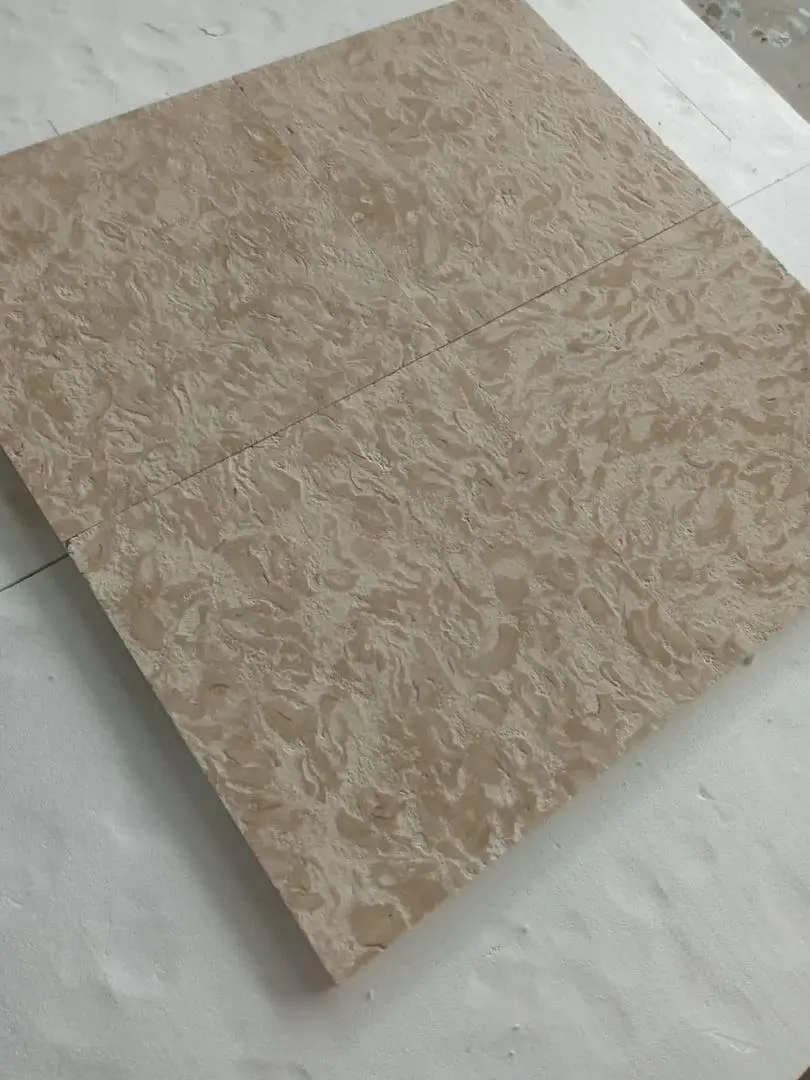
Natural stone materials exhibit inherent color variation that interacts with pattern geometry to create overall visual character. Limestone typically shows subtle variation—cream to light tan—within individual units and across production lots. When you specify materials for Arizona installations, understand how color variation appears at scale. Subtle shifts that look natural in small samples sometimes create blotchy or mottled appearance in large fields if units aren’t distributed properly during installation.
Pattern geometry either emphasizes or minimizes color variation depending on layout characteristics. Herringbone patterns with their complex interlocking geometry tend to blend color variation naturally—the eye follows pattern geometry rather than focusing on individual unit color. Running bond with its linear character can emphasize color differences between courses if darker or lighter units cluster together. You should specify blend requirements in installation documents, requiring crews to work from multiple pallets simultaneously.
The practice of blending materials during installation—drawing from three or four different pallets concurrently—distributes color variation evenly across the installation. This technique prevents clustering of similar-colored units that creates visible banding or patches. When warehouse deliveries arrive, verify that materials come from the same production run when color consistency matters critically. Different production lots can show noticeable variation even within specified color ranges.
- Your specification should require installers to open and blend multiple bundles during placement
- Color variation tolerance should be defined in specification documents using reference samples
- You need to review and approve material samples from actual project inventory before installation begins
- Pattern selection should account for material color characteristics—high variation works better with complex patterns
Sun exposure affects perceived color through surface temperature effects on material appearance. The same limestone unit appears lighter during peak sun exposure due to thermal bleaching effects and surface texture interaction with light. You’ll notice this most on west-facing installations where afternoon sun creates maximum surface heating. Color perception also changes with viewing angle and time of day as shadow patterns interact with surface texture and joint lines.
Citadel Stone’s Premium bulk stone pavers in Arizona Solutions
When you evaluate limestone paving options for Arizona installations, you’re considering materials that must perform reliably in one of North America’s most demanding climates. At Citadel Stone, we provide technical specification support and premium materials designed for extreme heat, intense UV exposure, and significant thermal cycling. This section outlines how you would approach pattern selection and installation planning for representative Arizona cities, providing conditional guidance based on regional climate factors and typical application scenarios.
The following city-specific recommendations represent professional best practices for hypothetical installations. You should adapt these guidelines to specific project requirements, site conditions, and client preferences. Material selection, pattern layout, and installation details would need verification based on actual project parameters, including soil conditions, drainage requirements, and intended use patterns.
Phoenix Urban Heat
In Phoenix installations, you would need to account for extreme urban heat island effects that elevate ambient temperatures 5-8°F above surrounding desert areas. Your pattern selection should prioritize thermal expansion accommodation through wider joint spacing—typically 5/16 inch minimum—and expansion joints every 12 feet in both directions. Herringbone patterns work well for their stress distribution characteristics when you’re dealing with temperature differentials exceeding 140°F between dawn and mid-afternoon surface conditions. You’d specify light-colored limestone materials that reflect 60-70% of solar radiation, reducing peak surface temperatures by 15-20°F compared to darker materials. The valley’s minimal rainfall—approximately 8 inches annually—means you can use tighter joint materials without significant washout risk, though monsoon intensity requires adequate base drainage capacity.
Tucson Desert Performance
Your Tucson installations would address similar heat challenges as Phoenix but with slightly higher rainfall averaging 12 inches annually. You’d recommend running bond patterns for large residential patio areas where installation efficiency helps control costs while providing adequate performance. Pattern orientation perpendicular to prevailing summer sun—typically southwest exposure—minimizes visual glare from joint lines during peak afternoon hours. The region’s caliche soil conditions would require you to specify deeper aggregate base preparation—minimum 8 inches of crushed stone—to accommodate seasonal moisture variation and prevent base failure. You should plan installations during October through April windows when temperature moderation allows proper joint sand placement and compaction. Material selection would emphasize consistent thickness tolerance under ±3/32 inch to maintain surface flatness across large format running bond layouts.
Scottsdale Custom Designs
When you plan installations for Scottsdale’s high-end residential market, you’d often work with custom geometric patterns that create distinctive visual character. Your specifications would need to address the precision required for complex patterns—dimensional tolerance requirements tightening to ±1/16 inch for units and ±1/32 inch for joint spacing. You’d recommend full-scale mockups for any project involving custom pattern modules to verify visual appeal and installation feasibility before committing to full installation. The area’s focus on luxury outdoor living spaces means you should specify premium edge details—typically concealed aluminum restraint systems—that maintain clean borders without visible plastic edging. Material thickness would typically increase to 2-inch minimum for the substantial appearance luxury markets expect. You’d coordinate carefully with landscape architects to integrate pattern transitions with pool decking, ramadas, and outdoor kitchen areas common in high-end Scottsdale projects.
Flagstaff Freeze-Thaw
Your approach to Flagstaff installations differs substantially from lower elevation Arizona cities due to significant freeze-thaw cycling. You’d need to specify materials with porosity characteristics under 5% to minimize water absorption and freeze damage risk. Herringbone patterns provide advantage through their superior interlock strength, helping resist displacement from frost heave forces that affect inadequate base preparations. You should recommend 10-inch minimum aggregate base depth with proper compaction to extend below typical frost penetration of 18-24 inches. Joint sand specifications would require polymeric products rated for freeze-thaw durability rather than standard mason sand that deteriorates rapidly under freeze cycling. Your installation timing would be critical—late spring through early fall only—to ensure adequate cure time before first freeze. Pattern orientation should facilitate drainage away from buildings to prevent ice dam formation at thresholds during winter months when snowmelt and refreezing cycles occur.
Sedona Red Rock
When you design for Sedona’s unique aesthetic context surrounded by red rock formations, you’d consider how limestone’s cream and tan coloration creates contrast against the vivid landscape. Running bond patterns in large format units—16×24 or 24×24 inch—provide clean contemporary appearance that complements rather than competes with dramatic natural surroundings. Your specifications would address truck access challenges common in Sedona’s hillside locations where narrow roads and steep grades complicate material delivery logistics. You’d need to verify that warehouse inventory includes adequate overage—typically 12-15% beyond calculated requirements—to account for breakage during transport on rough access roads. The area’s tourist economy means many installations serve commercial applications requiring you to specify slip-resistant surface finishes with DCOF ratings minimum 0.50 when wet. Pattern planning should incorporate subtle drainage slopes—2.5% minimum—to handle occasional intense rainfall during summer monsoon season without creating standing water on high-traffic commercial surfaces.
Yuma Extreme Heat
Your specifications for Yuma installations would address the most extreme heat conditions in Arizona, where summer temperatures consistently exceed 115°F and surface temperatures reach 160°F or higher. You’d need maximum thermal expansion accommodation through 3/8-inch joint spacing and expansion joints every 10 feet in high-exposure areas. Pattern selection would favor running bond for its installation efficiency in large commercial and municipal applications common in Yuma’s economy. Material color becomes critical—you should specify the lightest available limestone grades to minimize surface temperature and improve comfort for barefoot pool deck applications. The region’s agricultural economy creates periodic dust exposure that you’d address through surface sealing recommendations for easier maintenance. You’d recommend scheduling installations during November through March to avoid summer heat that makes outdoor construction hazardous for crews and affects material handling. Joint sand specifications would emphasize polymeric products that resist degradation from sustained high temperatures throughout 5-6 month summer periods when surface temperatures rarely drop below 100°F even at night.
Final Considerations
Your professional specification process requires you to integrate pattern selection with comprehensive understanding of thermal performance, drainage requirements, and installation feasibility. The patio stone pattern layout Arizona conditions demand goes beyond aesthetic preferences to address structural adequacy and long-term durability in extreme climate conditions. You should approach each project with careful analysis of site-specific factors including soil conditions, sun exposure duration, intended traffic patterns, and maintenance expectations.
Pattern complexity must balance visual appeal against installation practicality and budget constraints. You’ll achieve best results when you match pattern sophistication to installer skill level and project scale. Complex geometric layouts require experienced crews and extended installation timelines that affect project schedules and costs. Simpler patterns often deliver better long-term performance when installation quality suffers from complexity beyond crew capabilities.
Material consistency remains critical to pattern success—you need to verify dimensional tolerance, thickness variation, and color consistency before installation begins. Working with established suppliers who maintain quality control across production runs prevents midstream material problems that compromise pattern accuracy. For additional installation insights, review Proper gravel and sand layering for Arizona patio foundations before you finalize your project documents. Limestone varieties available through Citadel Stone’s elegant patio slab suppliers in Arizona.