
When you’re planning large-scale hardscape projects across Arizona, understanding palletized stone pavers Arizona procurement strategies becomes essential for your budget and timeline success. Your commercial projects demand volume efficiency that retail purchasing simply can’t deliver. You’ll find that bulk ordering through palletized systems provides cost advantages of 18-28% compared to piece-by-piece acquisition while ensuring material consistency across your entire installation.
Arizona’s construction landscape requires you to think beyond traditional ordering methods. Commercial hardscape supply chains operate differently than residential channels, and you need to understand these distinctions before you commit to specifications. Your project’s success depends on coordinating warehouse logistics, material availability, and delivery scheduling in ways that align with your construction timeline.
Understanding Palletized Ordering Systems
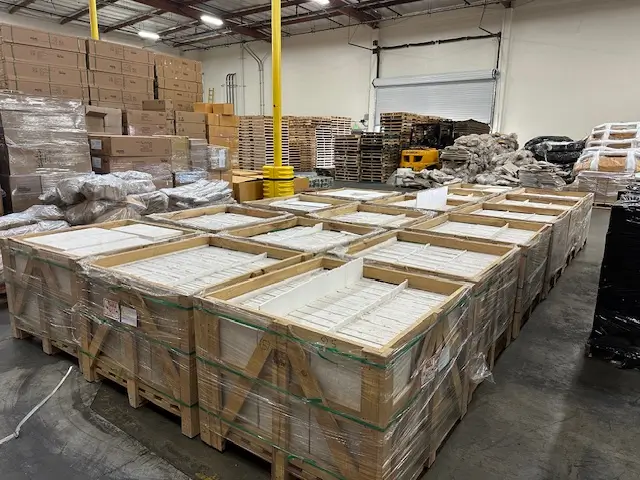
Palletized stone pavers Arizona delivery systems follow standardized configurations that affect your purchasing decisions. Standard pallets typically contain 400-500 square feet of material, though this varies with thickness specifications. When you buy pavers by the pallet, you’re committing to these preset quantities, which requires accurate project measurement and minimal waste calculations upfront.
The pallet system provides several advantages you should consider. Material consistency improves because all units come from the same production batch, ensuring color and texture uniformity. Your installation crews work more efficiently when material arrives pre-staged on pallets rather than requiring manual handling of individual pieces. Truck delivery becomes more predictable because pallet dimensions follow standard logistics protocols.
- You’ll encounter three standard pallet sizes: 42×42 inches (most common), 48×48 inches (heavy-duty), and 36×36 inches (specialty applications)
- Your cost per square foot decreases by 22-28% when ordering full pallets versus broken quantities
- You should verify that pallet weights don’t exceed your site’s crane or forklift capacity, typically ranging from 2,800 to 3,600 pounds
- Your project specifications must account for 3-5% material overage to compensate for cuts and edge details
Volume Pricing Structures Arizona Market
Volume stone discounts follow tiered structures that reward larger commitments. When you’re evaluating palletized stone pavers Arizona for commercial applications, understanding these break points determines your budget accuracy. Typical tier structures start at 5 pallets (minimum wholesale qualification), with additional discounts at 10, 25, and 50+ pallet orders.
Your pricing negotiations should focus on total project volume rather than individual delivery quantities. Most suppliers allow you to lock volume pricing for projects that span multiple delivery dates, provided you commit to the total quantity upfront. This becomes critical when your construction schedule requires phased material delivery over 3-6 month timelines.
The Arizona market operates with specific pricing dynamics you need to understand. Summer months (June through August) often feature promotional volume stone discounts of 8-12% as suppliers manage warehouse inventory during slower construction periods. Your procurement timing can significantly impact project costs when you coordinate specifications with these seasonal patterns.
Distance from primary Citadel Stone patio paving facility in Gilbert affects delivered pricing structures. You’ll see delivery surcharges ranging from $0.15 to $0.45 per square foot for locations beyond 75-mile radius from major distribution points. Your project budget must account for these logistics costs when evaluating total material expenses.
Commercial Procurement Specifications
When you specify palletized stone pavers Arizona for commercial applications, your documentation requirements differ substantially from residential projects. You need to address dimensional tolerances, compressive strength minimums, slip resistance coefficients, and thermal performance characteristics in ways that protect your liability exposure.
Your specifications should reference ASTM C1528 for slip resistance, requiring minimum DCOF ratings of 0.42 for standard applications and 0.50+ for pool decks and wet-area installations. Compressive strength specifications must meet or exceed 8,000 PSI for vehicular applications, though 6,500 PSI suffices for pedestrian-only installations. These aren’t arbitrary numbers—they reflect insurance requirements and liability standards for commercial projects.
Thickness specifications directly impact structural performance and cost. You’ll typically work with three standard thicknesses: 1.25 inches for pedestrian applications, 1.5 inches for light vehicular (golf carts, maintenance vehicles), and 2.0 inches for full vehicular loading. Each thickness increment adds approximately $1.20-$1.80 per square foot to your material cost, making accurate load specification essential for budget control.
Thermal Performance Arizona Climates
Arizona’s extreme temperature ranges demand specific attention to thermal properties when you select palletized stone pavers Arizona. Surface temperatures on dark pavers can reach 165-180°F during peak summer conditions, creating unsafe walking surfaces and accelerated material degradation. Your material selection must balance aesthetic preferences with thermal mass behavior and reflectance characteristics.
Light-colored stone options reflect 55-70% of solar radiation, maintaining surface temperatures 25-35°F cooler than dark alternatives. This difference isn’t merely about comfort—it affects material longevity, joint sand stability, and surrounding vegetation health. When you specify for commercial plaza applications or pool decks, thermal performance becomes a liability consideration.
- You should specify materials with thermal expansion coefficients below 6.0 × 10⁻⁶ per °F for Arizona installations
- Your joint spacing requirements increase from 3/16 inch to 1/4 inch when using darker materials in direct sun exposure
- You’ll need to account for 0.08-0.12 inch linear expansion per 10 feet of continuous paving in summer heat cycles
- Your edge restraint systems must accommodate thermal movement without creating trip hazards or joint degradation
Thermal mass properties affect microclimate conditions around your installation. High thermal mass materials absorb heat during day cycles and release it over 4-6 hour periods after sunset. This creates evening temperature elevations of 8-12°F in adjacent outdoor spaces, which you need to consider for restaurant patios and residential courtyards where evening use predominates.
Large Quantity Logistics Management
When you coordinate large quantity stone orders for commercial projects, logistics planning determines whether your installation proceeds smoothly or experiences costly delays. Truck access requirements, staging area preparation, and delivery scheduling become critical path items that affect your overall project timeline.
Standard delivery trucks require 14-foot overhead clearance, 12-foot lane width, and adequate turning radius for tractor-trailer configurations. Your site evaluation must confirm these parameters before you schedule warehouse deliveries. Many urban Arizona locations have overhead utility restrictions or narrow access routes that necessitate smaller truck configurations, which increases delivery costs by 15-25% through multiple-trip surcharges.
Staging area requirements scale with project size. You’ll need approximately 400 square feet of prepared surface per pallet, with additional clearance for forklift maneuvering. The staging area must provide stable, level surface capable of supporting concentrated loads of 850-1,100 pounds per square foot. Unprepared soil surfaces don’t meet this requirement—you need compacted aggregate base or concrete pads for safe material storage.
Your delivery scheduling should account for warehouse lead times that typically range from 5-12 business days for standard products. When you order specialty finishes or custom dimensions, lead times extend to 4-8 weeks. These timelines assume normal inventory conditions; during peak construction seasons (October through May in Arizona), you should add 30-40% buffer to quoted lead times.
Base Preparation Specifications
Your base preparation methodology directly determines long-term performance of palletized stone pavers Arizona installations. Commercial applications require engineered base systems that address soil bearing capacity, drainage performance, and load distribution characteristics. The common mistake is under-specifying base depth, which leads to settlement failures that appear 18-36 months post-installation.
Standard base specifications for pedestrian applications call for 4-6 inches of compacted aggregate over properly prepared subgrade. You need to increase this to 8-12 inches for vehicular applications, with specific depth determined by subgrade soil bearing capacity. Arizona’s variable soil conditions—from expansive clays in Phoenix valleys to decomposed granite in foothill regions—require site-specific geotechnical evaluation for projects exceeding 5,000 square feet.
Aggregate gradation affects drainage performance and interlock stability. You should specify clean, angular aggregate meeting ASTM D448 Size No. 57 (3/4-inch nominal) for base layers. Avoid rounded river rock or crushed recycled concrete, which don’t provide adequate interlock under load cycling. Your specification must require minimum 95% compaction (modified Proctor) for each 3-inch lift during base construction.
- You’ll need edge restraint systems capable of resisting 850 pounds per linear foot lateral force for commercial applications
- Your drainage design must slope base layer at minimum 2% grade to prevent subsurface water accumulation
- You should specify geotextile fabric separation between subgrade and aggregate base in areas with clay-content soils
- Your quality control protocol requires density testing every 2,500 square feet during base installation
Joint Stabilization Methods
Joint material selection and installation methodology significantly impact long-term stability of palletized stone pavers Arizona installations. Traditional polymeric sand dominates the market, but you need to understand its limitations in Arizona’s climate conditions. High temperatures (above 105°F) during installation cause premature polymer activation, leading to installation failures and haze problems on paver surfaces.
Your installation specifications should restrict polymeric sand application to periods when ambient temperatures remain below 95°F—typically limiting installation to October through April in Phoenix-area projects. When you require summer installation, conventional kiln-dried sand provides more reliable results, though it requires annual maintenance top-up of 8-15% to compensate for wind loss and joint settling.
Joint width directly affects stabilization performance. You’ll achieve optimal results with 3/16-inch joints for standard applications, though this increases to 1/4-inch for large-format pavers (24×24 inches and larger) to accommodate greater thermal expansion. Joints narrower than 1/8-inch don’t provide adequate sand retention, while joints exceeding 3/8-inch experience excessive sand loss and reduced interlock efficiency.
Application technique matters more than most installers realize. You need to make multiple passes with plate compactors (minimum 5,000 pounds centrifugal force) to achieve proper sand consolidation. Your specification should require initial compaction, joint filling to 95% capacity, second compaction, and top-up filling to final 92-95% capacity. The common mistake is single-pass installation, which leads to 25-35% joint sand loss in the first 90 days.
Warranty Considerations Commercial Applications
When you purchase palletized stone pavers Arizona for commercial projects, understanding warranty structures protects your long-term interests. Material warranties typically cover manufacturing defects, structural integrity, and dimensional compliance—but explicitly exclude installation-related failures. You need to clearly delineate responsibility boundaries between material suppliers and installation contractors.
Standard material warranties provide 1-3 year coverage for dimensional tolerance (±1/8 inch), structural soundness (no inherent cracking), and color consistency within production batch. These warranties don’t cover color variation between batches, surface wear from use, or damage from improper installation practices. Your specification documents must establish clear acceptance criteria during material delivery to preserve warranty rights.
Installation warranty coverage requires separate documentation from your construction contractor. Professional installations should carry minimum 2-year workmanship warranties covering base failure, joint degradation, and settlement issues. You’ll find that reputable contractors offer 3-5 year warranties when proper base preparation and quality control protocols are followed.
- You should require installation contractors to provide performance bonds for projects exceeding $75,000 in material value
- Your warranty documentation must specify maintenance requirements that preserve coverage validity
- You need to establish clear photographic documentation of material condition upon delivery and installation completion
- Your project close-out should include written maintenance protocols that satisfy warranty continuation requirements
Maintenance Protocols Extended Performance
Your long-term investment protection requires establishing proper maintenance protocols from project inception. Commercial hardscape supply specifications should include maintenance guidelines that preserve material performance and aesthetic quality over 15-25 year service life expectations. The reality is that maintenance directly affects total cost of ownership more than initial material selection.
Annual maintenance requirements for palletized stone pavers Arizona installations include joint sand inspection and replenishment, surface cleaning to remove organic accumulation, and sealant reapplication every 2-4 years depending on traffic intensity. You’ll find that deferred maintenance leads to accelerated deterioration—particularly joint degradation that allows weed growth and reduces interlock stability.
Sealing strategies depend on material porosity and traffic patterns. High-traffic commercial applications benefit from penetrating sealers that provide stain resistance without creating slip hazards. You should avoid topical film-forming sealers in Arizona climates, as thermal cycling causes premature delamination and surface whitening. Your maintenance specification should identify specific sealer products compatible with selected paver materials.
Cleaning protocols must avoid aggressive methods that damage joint sand or paver surfaces. You should specify low-pressure washing (1,200-1,800 PSI maximum) with appropriate cleaning agents. High-pressure washing above 2,500 PSI degrades joint sand and can cause surface spalling on softer stone materials. Your maintenance documentation should prohibit acid-based cleaners that etch limestone and travertine surfaces.
Cost Analysis Lifecycle Comparison
When you evaluate palletized stone pavers Arizona against alternative hardscape materials, lifecycle cost analysis provides more accurate comparison than initial installation cost alone. Your analysis should include material cost, installation labor, maintenance requirements, and expected service life to calculate true cost per year of service.
Initial installation costs for quality paver systems range from $14-28 per square foot installed, including proper base preparation and edge restraint systems. This compares to $8-12 per square foot for standard concrete flatwork. However, concrete’s 12-15 year service life (in Arizona’s climate) versus 25-35 years for properly installed pavers changes the economic equation substantially.
Maintenance cost differentials favor pavers in commercial applications. Concrete requires crack repair, surface sealing every 2-3 years, and eventual replacement when deterioration becomes unacceptable. Your paver installation allows selective replacement of damaged units, joint sand replenishment, and surface cleaning that extends service life indefinitely. Annualized maintenance costs average $0.35-0.55 per square foot for pavers versus $0.65-0.95 per square foot for concrete over 20-year periods.
Replacement cost analysis demonstrates long-term value advantages. When you need to replace failed concrete, you’ll incur demolition costs of $3-5 per square foot plus new installation costs. Paver systems allow targeted repairs at $8-12 per square foot for isolated areas without disturbing surrounding materials. This becomes particularly valuable for commercial properties where partial closures are preferable to complete reconstruction.
Bulk Paver Stones in Arizona: Citadel Stone Specification Guide
When you consider Citadel Stone’s bulk paver stones in Arizona for your commercial projects, you’re evaluating premium materials engineered specifically for southwestern climate performance. At Citadel Stone, we provide technical guidance for hypothetical applications across Arizona’s diverse climate zones. This section outlines how you would approach specification decisions for six representative cities, addressing the unique challenges each region presents for large-scale hardscape installations.
Phoenix Heat Management
In Phoenix applications, you would need to prioritize thermal reflectance properties due to extreme summer temperatures regularly exceeding 115°F. Your material selection should focus on light-colored options that maintain surface temperatures below 135°F during peak afternoon hours. You’ll want to specify edge details that accommodate 0.11-inch thermal expansion per 10 linear feet, requiring 1/4-inch joint spacing throughout the installation. When you plan commercial plaza projects in Phoenix’s urban core, you should account for heat island amplification that adds 8-12°F to ambient conditions, further stressing material performance. Your base preparation specifications would require deeper aggregate sections (minimum 8 inches) to address expansive clay soils common throughout the Phoenix valley.
Tucson Considerations
You would approach Tucson installations with attention to monsoon water management, as the region receives concentrated rainfall producing 1-2 inch per hour intensities during summer storm events. Your drainage design needs to accommodate rapid water movement across paver surfaces, requiring minimum 2.5% slope grades and permeable base systems. The material you select should exhibit porosity characteristics between 3-6% to facilitate water transmission without compromising structural integrity. You’ll find that Tucson’s slightly cooler temperatures (compared to Phoenix) allow more flexible installation scheduling, though you still need to address thermal performance for commercial applications. Your specification would include enhanced joint stabilization methods using polymeric products rated for high-flow water exposure.
Scottsdale Luxury Applications
When you specify for Scottsdale’s high-end commercial and hospitality projects, you would emphasize aesthetic refinement alongside performance characteristics. Your material selection typically incorporates premium finishes—honed or lightly textured surfaces that provide slip resistance (minimum DCOF 0.48) while maintaining sophisticated visual appeal. You should account for intensive maintenance protocols that preserve appearance standards expected in luxury applications, including quarterly sealing and monthly cleaning regimens. The projects you encounter in Scottsdale often feature complex geometric patterns and multiple material transitions, requiring 8-12% material overage for cuts and custom details. Your installation specifications would address precise joint alignment tolerances (±1/16 inch) that exceed standard commercial requirements.
Flagstaff Freeze-Thaw
Your Flagstaff specifications would address freeze-thaw cycling that occurs 110-140 times annually at 7,000-foot elevation. You need to specify materials with maximum 5% porosity and minimum 9,000 PSI compressive strength to withstand ice expansion pressures within the paver matrix. When you design for Flagstaff’s winter conditions, your base preparation should include deeper frost protection (minimum 12 inches aggregate base) and enhanced drainage to prevent subsurface ice formation. The installation timeline you establish must avoid periods when temperatures drop below 40°F, limiting optimal installation windows to June through September. Your material selection would prioritize dense stone varieties that resist water infiltration while maintaining slip resistance under snow and ice conditions.
Mesa Volume Projects
You would find Mesa’s commercial development landscape ideal for large quantity stone orders, with extensive retail, industrial, and mixed-use projects requiring 15,000-40,000 square foot hardscape installations. Your procurement strategy should leverage volume stone discounts available at 25+ pallet order quantities, achieving cost reductions of 24-28% compared to smaller orders. When you coordinate warehouse logistics for Mesa projects, you’ll benefit from proximity to major distribution centers that minimize delivery surcharges and provide flexible staging options. The relatively flat topography you encounter in Mesa simplifies base preparation and grading requirements, though you still need to address isolated areas with problematic caliche layers that require excavation and replacement with engineered fill.
Gilbert Installation Coordination
In Gilbert applications, you would benefit from centralized access to material supply infrastructure and experienced installation resources serving the Southeast Valley. Your project coordination becomes more efficient when you work with established supply chains that maintain consistent inventory levels and predictable delivery schedules. You should specify materials that align with Gilbert’s predominantly residential-commercial mixed-use developments, balancing aesthetic appeal with practical durability for moderate foot traffic applications. The soil conditions you encounter in Gilbert typically feature sandy loam with moderate bearing capacity, allowing standard base preparation protocols without extensive soil modification. Your installation timeline would account for Gilbert’s rapid development pace, coordinating material deliveries to avoid conflicts with concurrent utility and landscape construction activities.
Supplier Selection Criteria
When you evaluate commercial hardscape supply sources for large-scale Arizona projects, specific criteria determine reliable partnerships versus problematic procurement experiences. Your supplier evaluation should address inventory depth, delivery reliability, technical support capabilities, and warranty administration responsiveness. These factors affect project success as significantly as material quality itself.
Inventory depth becomes critical when your project timeline requires multiple deliveries spanning 3-6 months. You need suppliers who maintain warehouse stock levels sufficient to fulfill your entire project from consistent production lots. Mixed-lot deliveries create color and texture variations that become visually apparent post-installation. Your supplier qualification should verify minimum 45-day inventory positions for specified products.
- You should confirm supplier warehouse locations within 100 miles of your project site to minimize delivery costs and lead times
- Your supplier evaluation must verify they maintain dedicated commercial account management rather than routing large orders through retail channels
- You need to establish that technical support staff can provide jobsite consultations during critical installation phases
- Your agreement should specify material return policies for damaged or incorrect items discovered during installation
Delivery reliability directly impacts your construction schedule adherence. You’ll want suppliers who provide confirmed delivery windows (not just day, but 2-4 hour time slots) that allow you to coordinate labor and equipment resources efficiently. Unreliable delivery creates costly standby time and schedule disruptions that multiply throughout project timelines. For information on evaluating regional material sources, see Selecting reputable landscape stone suppliers for Arizona construction projects before finalizing your procurement decisions.
Procurement Documentation Requirements
Your procurement documentation establishes legal and technical frameworks that protect project interests when you buy pavers by the pallet for commercial applications. Comprehensive documentation includes material specifications, acceptance criteria, delivery schedules, payment terms, and dispute resolution procedures. The effort invested in thorough documentation prevents costly misunderstandings during project execution.
Material specifications should reference applicable ASTM standards while adding project-specific requirements that address your particular application conditions. You need to establish measurable acceptance criteria for dimensional tolerance, surface finish quality, color range variation, and structural soundness. Generic specifications that simply reference manufacturer literature don’t provide adequate protection when disputes arise about material acceptability.
Delivery scheduling documentation must specify quantities per delivery, acceptable delivery windows, jobsite access requirements, and responsibility for unloading and staging. You should establish clear procedures for documenting material condition upon delivery, including photographic evidence requirements and sign-off protocols. This documentation becomes essential if you later discover damaged materials or quantity discrepancies.
Payment term structures for large quantity stone orders typically follow progress-based schedules tied to delivery milestones. You’ll commonly encounter 30% deposit upon order placement, 60% upon delivery completion, and 10% retention released after installation acceptance. Your agreement should specify circumstances that justify retention withholding and time frames for resolution of punch-list items.
Quality Control Protocols
When you manage palletized stone pavers Arizona procurement for commercial projects, establishing rigorous quality control protocols protects your investment and reputation. Your QC program should address material receipt inspection, installation monitoring, and final acceptance verification. Professional project management requires documented verification at each phase rather than relying on contractor assertions of compliance.
Material receipt inspection begins with delivery documentation verification—confirming quantities, product codes, and batch numbers match purchase orders. You need to conduct visual inspection of minimum 15% of delivered units, examining for cracks, chips, dimension compliance, and color consistency. This inspection must occur before signing delivery receipts, as your acceptance signature limits later dispute options. Your protocol should photograph each delivery and maintain organized records tied to specific project areas where materials will be installed.
Installation monitoring requires periodic jobsite observation during critical phases: base preparation, edge restraint installation, paver placement, and joint stabilization. You don’t need continuous presence, but strategic verification at 25%, 50%, 75%, and 100% completion stages documents proper methodology. Your observations should include base compaction testing (nuclear density gauge or similar), joint spacing verification, and elevation/grade confirmation against project drawings.
- You should establish hold points requiring your approval before contractors proceed to subsequent phases
- Your documentation protocol needs to include dated photographs with project area identification for future reference
- You must verify that installation procedures follow manufacturer requirements to preserve material warranty validity
- Your final inspection should occur 30-45 days post-installation to assess joint sand retention and identify any immediate performance issues
Project Execution Strategies
Your successful execution of large-scale paver installations requires coordinating multiple trades, managing material flow, and maintaining quality standards throughout extended construction periods. Strategic planning before material ordering prevents common pitfalls that derail project timelines and budgets. You need to approach commercial installations as logistics operations, not merely construction activities.
Phased material delivery aligns inventory with installation progress, avoiding extended on-site storage that risks damage and theft. You should schedule deliveries to provide 5-7 day material buffer ahead of installation needs—sufficient to prevent work stoppages but limited enough to minimize staging area requirements. Your delivery schedule must account for weekend and holiday interruptions in both supply and installation operations.
Crew productivity varies with project phase and site conditions. You’ll typically see installation rates of 400-600 square feet per day per crew (3-4 workers) during main field work, dropping to 150-250 square feet per day for complex edge details and pattern work. Your schedule should reflect these productivity variations rather than applying uniform daily production rates. Weather impacts become significant in Arizona’s summer months, when afternoon temperatures above 105°F reduce productive hours to morning-only work windows.
Coordination with adjacent trades requires specific attention in mixed-use developments where paver installation coincides with landscape, irrigation, and lighting work. You need to establish clear area boundaries and completion sequences that prevent damage to finished paver sections from subsequent trade activities. Your coordination protocol should include protection measures for completed areas and damage repair procedures with cost responsibility clearly assigned.
Project Closeout Verification
Your project closeout phase establishes long-term success foundations and resolves outstanding items before final payment release. Professional closeout includes comprehensive inspection, documentation transfer, maintenance training, and warranty activation. You should allocate 8-12% of total project duration to proper closeout procedures rather than rushing through final acceptance.
Final inspection should occur 45-60 days after installation completion, allowing initial settling and joint sand consolidation to reveal any immediate performance issues. You’ll want to conduct this inspection during daylight hours under dry conditions that reveal surface drainage patterns and visual quality. Your inspection protocol should systematically verify specification compliance for joint spacing, elevation grades, edge details, and surface finish quality.
Documentation transfer provides essential records for facility management and future maintenance. You need to compile material specifications, installation details, maintenance protocols, warranty documentation, and as-built drawings showing actual installation dimensions and details. This documentation package becomes invaluable when future repairs or expansions require matching existing materials and replicating installation methodology.
Maintenance training for facility staff ensures proper care techniques that preserve material performance and warranty validity. You should provide written maintenance guidelines supplemented by hands-on demonstration of cleaning procedures, joint sand inspection methods, and sealer application techniques. This training investment prevents costly mistakes that void warranties or accelerate material degradation. Citadel Stone offers job-lot sales for project-sized bulk patio stones in Arizona quantities.