
Surface temperature differentials of 30–45°F between travertine and concrete under Arizona’s summer sun aren’t theoretical — they’re what you’ll measure on a south-facing Scottsdale patio at 2 p.m. in July. Outdoor travertine pavers Arizona installations consistently outperform dense concrete and porcelain in thermal comfort precisely because travertine’s interconnected pore structure dissipates absorbed heat rather than storing it in the slab mass. That physical characteristic isn’t incidental — it’s the core performance driver that separates travertine from most competing materials in this climate, and it shapes every specification decision you’ll make.
Why Travertine Performs in Arizona Heat
The thermal expansion coefficient for travertine runs approximately 4.8–5.6 × 10⁻⁶ per °F, which is notably lower than the 6.5–7.0 range you’ll see in dense concrete pavers. In a climate where surface temperatures swing from 45°F at a winter dawn to 165°F on a July slab face, that difference compounds into measurable joint stress over a decade. You’ll see fewer joint failures, fewer lifted corners, and less edge spalling when you’ve specified a material whose expansion rate aligns with your base prep rather than fighting it.
The porosity factor matters just as much. Travertine’s natural void structure — typically 7–12% open porosity in commercial-grade material — creates a micro-insulating effect at the surface. Heat doesn’t accumulate the way it does in vitrified porcelain or tumbled concrete. Field temperature data from natural stone outdoor pavers Arizona installations consistently shows travertine running 20–35°F cooler underfoot than adjacent concrete surfaces under matched solar exposure conditions. That’s not a marginal comfort improvement — it’s the difference between walking barefoot on your patio and staying indoors until sundown.
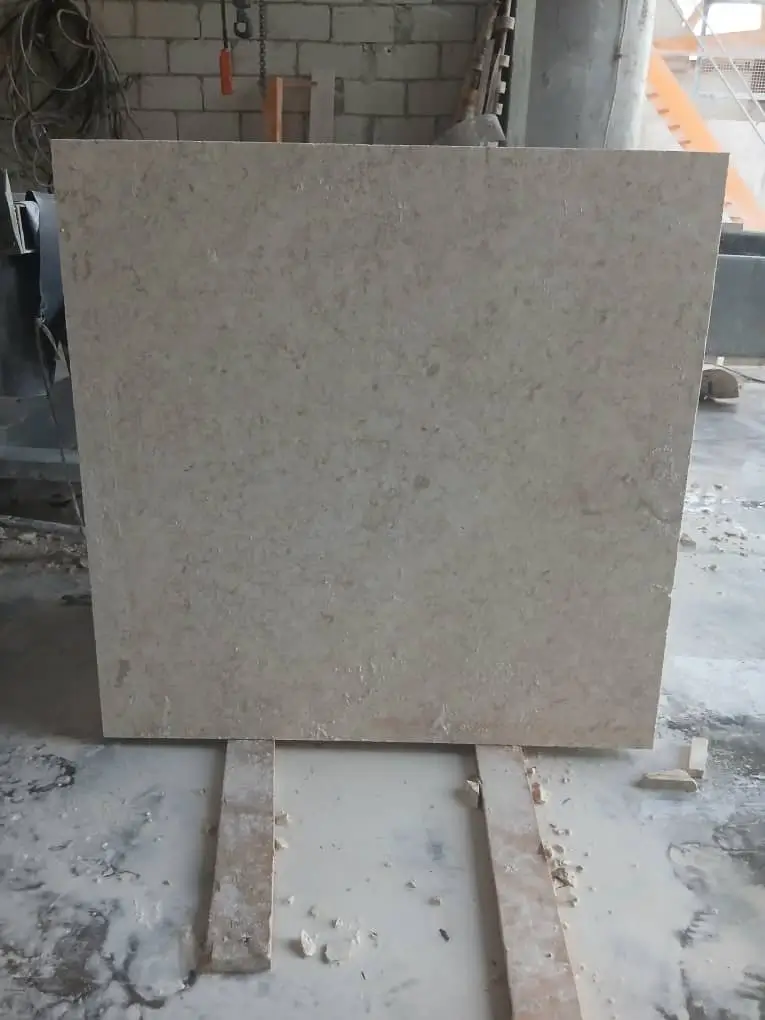
Travertine Paving Slabs Rated for Arizona Climate
Not all travertine performs equally in desert conditions, and the specification gap between a 20-year installation and a 10-year replacement often comes down to selecting the right grade and finish for your specific exposure. Travertine paving slabs rated for Arizona climate conditions need to meet a minimum compressive strength of 8,000 PSI — though you’ll want to target 10,000–12,000 PSI for driveways and heavy-use areas. Anything below that threshold starts showing surface pitting within five to seven years under sustained UV and thermal cycling.
Finish selection creates a performance cascade that most homeowners don’t fully consider until it’s too late. The primary options and their Arizona-specific performance profiles break down like this:
- Brushed travertine holds a Dynamic Coefficient of Friction (DCOF) above 0.42 when wet, meeting ANSI A137.1 standards for exterior wet areas — your pool deck specification should start here
- Tumbled travertine delivers the highest slip resistance but accumulates fine debris in its irregular surface pockets, requiring more frequent cleaning in dusty desert environments
- Honed travertine offers an elegant aesthetic but drops DCOF to 0.32–0.38 when wet, which puts it below recommended thresholds for pool surrounds and water feature areas
- Filled versus unfilled voids directly affect both maintenance frequency and structural integrity — filled travertine handles point loads better and resists cracking at joint edges under heavy furniture
- Travertine thickness in Arizona should default to 1.25 inches minimum for residential patios, with 2-inch slabs for driveways and any application receiving vehicular loads
Color selection also carries a functional dimension in this climate. Lighter ivory and cream tones reflect significantly more solar radiation than darker walnut or noce finishes. For large exposed patios in Phoenix, the albedo difference between a cream travertine and a dark walnut selection can translate to 15–20°F in surface temperature — a specification decision that directly affects how usable your outdoor space is from May through September.
Arizona Outdoor Travertine Paver Durability Benchmarks
Arizona outdoor travertine paver durability benchmarks should anchor your material selection conversations, not generic marketing claims. Field data gathered across installed projects in the low desert gives you concrete performance expectations to work from rather than manufacturer projections developed in controlled lab conditions.
Here are the benchmark ranges that align with observed outcomes in the Arizona climate zone:
- Surface wear depth after 10 years of residential foot traffic: 0.5–1.2mm on brushed finishes, negligible on tumbled finishes
- Color stability under UV exposure: minimal measurable fading in cream and ivory tones over 15 years when sealed biennially
- Compressive strength retention after 10 thermal cycles (ASTM C170): 93–97% for premium-grade filled travertine
- Water absorption rate per ASTM C97: typically 0.5–3.5% for exterior-grade travertine, compared to 8–12% for lower-grade material that shouldn’t be used outdoors in Arizona
- Slip resistance retention over 8 years on brushed finishes with standard maintenance: DCOF remains above 0.42 when resealed every 18–24 months
- Joint sand stability in high-wind desert conditions: polymeric sand outperforms standard joint fill by a factor of 3–4 in retention longevity
These aren’t numbers from a laboratory report — they reflect real outcomes from outdoor travertine pavers Arizona projects across the low desert elevations. You can reference our Arizona travertine paving research for more detailed performance tracking across specific installation types and exposure conditions.
Base Preparation Requirements for Arizona Soils
The specification failure rate for outdoor travertine pavers Arizona installations doesn’t usually originate with the stone — it starts 12 inches below it. Arizona’s caliche layers and expansive clay pockets create base conditions that can lift, crack, and laterally shift a properly specified travertine surface within three to five years if you haven’t accounted for regional soil behavior in your base design.
Your aggregate base depth should run 6–8 inches of compacted Class II road base for residential patios. In areas with confirmed caliche within 18 inches of the surface — common across the Tucson basin and parts of the Phoenix metro — you have an advantage: properly broken and compacted caliche provides excellent sub-base stability. The mistake most contractors make is trying to excavate through it when they should be fracturing it and using it as structural fill beneath the imported aggregate.
In Tucson, monsoon season introduces a variable that base prep calculations need to address explicitly. Summer moisture infiltration can compromise a poorly compacted base, causing differential settlement that appears as isolated low spots or rocking pavers within one to two seasons. Your drainage slope minimum is 1.5% away from structures — 2% is more reliable in areas with heavy monsoon exposure. A compacted decomposed granite layer beneath your road base helps manage water movement without creating hydrostatic pressure under the slab.
Sealing Protocols for Desert Climate Installations
Sealing protocols for exterior travertine surface data for Arizona homeowners differ from standard concrete maintenance because you’re managing both UV degradation and the accelerated drying cycle that Arizona’s low humidity creates. A sealant that performs adequately in a coastal climate for four years may break down in 18 months under Arizona UV intensity — that’s not a product quality issue, it’s a climate exposure calculation that needs to be reflected in your maintenance schedule from day one.
The right sealant chemistry for natural stone outdoor pavers Arizona installations points consistently toward penetrating silane-siloxane formulations rather than topical film-forming sealers. Here’s why that distinction matters in practice:
- Penetrating sealers bond within the pore structure rather than forming a surface film, so they don’t peel, blister, or create slip hazards when the film degrades under UV
- Film-forming sealers trap moisture vapor in high-solar-gain conditions, which accelerates spalling beneath the film — you’ll see this failure mode consistently on improperly sealed desert installations
- Silane-siloxane penetrating products provide hydrophobic protection while allowing the stone to breathe, which is critical when surface temperatures reach 155–165°F in July
- Application frequency in the Arizona low desert should be every 18–24 months for high-exposure south and west-facing surfaces, and every 24–30 months for shaded or north-facing applications
- First seal application should occur 30 days after installation, not immediately — allowing residual installation moisture to fully dissipate before sealing in prevents early adhesion failure
Factor in the warehouse storage condition of your travertine when scheduling your initial seal. Material that has been stored in a temperature-controlled warehouse maintains consistent moisture content and will accept sealant more uniformly than material that arrived on a truck and sat on a hot job site for two weeks before installation. Verifying warehouse conditions with your supplier before scheduling application is a small step that prevents uneven absorption patterns across your finished surface.
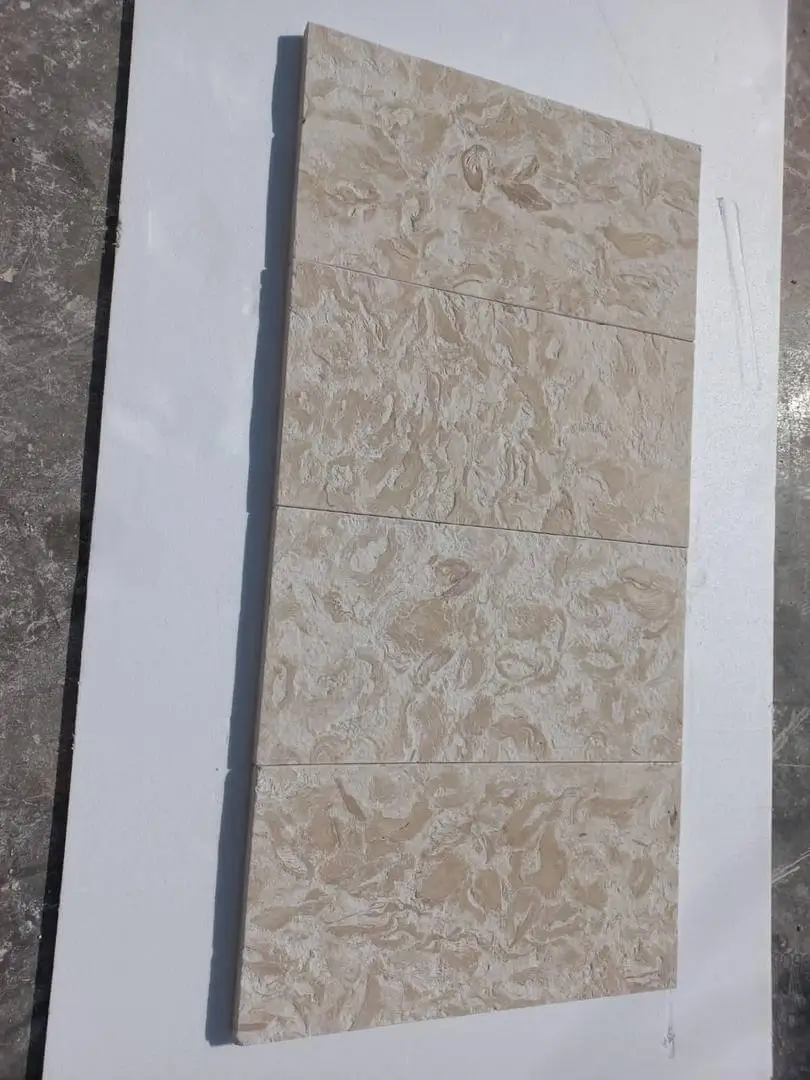
Thermal Cycling and Joint Spacing Data
The detail most specifiers underestimate on outdoor travertine pavers Arizona projects is expansion joint frequency. Generic installation guides specify 20-foot intervals — a standard derived from moderate-climate installations that simply doesn’t apply when your slab face is seeing a 120°F daily temperature swing in summer. For Arizona low desert conditions, you’ll want expansion joints at 12–15-foot intervals for large format slabs and at every pattern break for smaller format installations.
The math behind this isn’t complex once you understand it. A 12-foot travertine run at 5.0 × 10⁻⁶ per °F thermal expansion, experiencing a 120°F daily swing, generates approximately 0.086 inches of linear movement per cycle. Over a year of daily cycling, that’s measurable cumulative stress at the joint edges. Your joint filler needs to be flexible polymeric material rated for a minimum 25% compressive recovery — standard cement-based grout will fail at this movement rate within two to three seasons, and you’ll see cracking that migrates into the slab face from the joint edges.
Natural stone outdoor pavers Arizona performance data consistently validates the 12–15 foot joint interval for large-format travertine. Projects that deviate from this toward the 18–20 foot generic standard show joint distress at significantly higher rates — typically within five years in south-facing exposures and seven to eight years on north or covered applications.
Thickness Specifications for Arizona Applications
Thickness selection for travertine paving slabs rated for Arizona climate projects depends on both load requirements and the thermal mass calculation you want to achieve. Thicker slabs carry more thermal mass, which smooths the surface temperature curve over the course of a day — a 2-inch slab will reach peak temperature later in the afternoon and hold warmth longer into the evening than a 1.25-inch slab under identical solar exposure.
For most residential applications, here’s the thickness matrix that field performance supports:
- Walkways and low-traffic patios: 1.25-inch nominal thickness on a properly compacted 6-inch base performs reliably for pedestrian loads
- High-traffic patios and pool decks: 1.5-inch thickness provides meaningful additional resistance to point load cracking from furniture legs and outdoor kitchen equipment
- Driveways and parking areas: 2-inch minimum, full stop — anything less will show cracking within three years under vehicular loads regardless of base quality
- Pool coping applications: 2-inch thickness with a minimum 1-inch overhang provides the structural depth needed for cantilevered coping without edge fracture risk
- Elevated deck applications with structural framing below: consult a structural engineer — travertine dead load adds 12–15 PSF at 1.25-inch thickness and the deflection limits on the framing need explicit verification
At Citadel Stone, we recommend confirming thickness availability from warehouse stock before finalizing your project schedule. Truck delivery timelines for non-standard thicknesses can add two to four weeks to your project timeline if the specification requires material that isn’t in current regional inventory — a detail worth resolving during the specification phase rather than during active construction.
Maintenance Data and Long-Term Ownership Costs
Exterior travertine surface data for Arizona homeowners on long-term maintenance costs often surprises people who assumed natural stone would be high-maintenance. The reality is more nuanced — travertine requires consistent but low-intensity maintenance, and properties that adhere to a biennial resealing schedule with pH-neutral cleaning routinely achieve 25–30 year surface life without major restoration work.
The cost comparison against alternative materials becomes more favorable over time when you factor in the full ownership cycle. Concrete pavers typically require resurfacing or replacement at the 12–15 year mark in Arizona climates. Porcelain requires grout joint replacement at 8–10 years under heavy UV and thermal cycling. Travertine, properly specified and maintained, simply doesn’t accumulate the same level of structural degradation — the material’s natural thermal compliance prevents the progressive joint failure that eventually destabilizes competing materials.
What often gets overlooked in maintenance planning is the cleaning chemistry requirement. Travertine is calcium carbonate-based, which means acidic cleaners — including many common household products and pool deck cleaners marketed as “stone safe” — will etch the surface and accelerate wear. pH-neutral stone cleaners are the only appropriate option, and your pool maintenance team needs to know that splashout from pool shock treatments (pH 3–5) requires immediate rinse-down on travertine coping. This single maintenance protocol prevents the vast majority of surface etching complaints you see on Arizona pool installations.
The Bottom Line
Outdoor travertine pavers Arizona projects that hit 20-year performance benchmarks share a consistent set of decisions: the right material grade for the exposure, accurate base prep depth for regional soil conditions, correct joint spacing for thermal movement, and a sealing schedule that reflects desert UV intensity rather than national averages. The data supports travertine’s performance in this climate when the specification matches the environment — and it’s specific technical decisions, not general material enthusiasm, that produce those outcomes.
Your project’s long-term success depends on treating each specification variable as interdependent. Base depth affects drainage, which affects sealer longevity, which affects surface wear rate. Thickness affects thermal mass, which affects surface temperature, which affects how the space actually gets used. These relationships aren’t abstract — they’re what separates installations that age gracefully from ones that require expensive remediation within a decade. As you finalize your design direction, 9 Travertine Landscape Paver Design Ideas for Arizona offers practical layout and pattern approaches that complement the performance specifications covered here, connecting aesthetic choices to the functional framework your project needs.
The specification framework outlined here applies across Arizona’s major residential markets — whether your project is in the low desert floor of the Phoenix metro or in higher-elevation zones with more pronounced seasonal temperature variation. Getting the details right at the specification stage costs nothing beyond careful planning; getting them wrong costs significantly more in material and labor down the road. Citadel Stone documents real-world travertine paver outcomes across Arizona properties, providing homeowners in Tucson, Flagstaff, and Peoria with surface longevity benchmarks suited to intense desert conditions.