
Natural travertine paver cost in Arizona varies more dramatically than most homeowners expect — and the gap between a $4 per square foot estimate and a $14 per square foot reality almost always traces back to decisions made before a single stone is laid. The thickness grade, finish type, and quarry origin all shift pricing in ways that aren’t obvious from a product listing, and understanding those variables is what separates a well-planned budget from a mid-project shortfall. What makes Arizona’s situation genuinely distinctive, though, isn’t just climate math — it’s the way the state’s dominant design languages shape which travertine grades actually perform aesthetically and structurally over time.
Arizona’s Design Identity and Why It Drives Stone Selection
The architectural vocabulary of Arizona isn’t uniform — and that matters enormously when you’re trying to nail travertine paver pricing per square foot in Arizona. Sedona‘s red rock landscape creates a design context where warm-toned travertine in Walnut or Noce finishes integrates almost seamlessly, while the same palette would feel heavy-handed in a minimalist Scottsdale courtyard built around white stucco and clean geometry. Your stone selection can’t be divorced from the visual environment it’s entering — and selecting the wrong color family often means replacing the installation within a decade, not because it failed structurally, but because it never looked right.
Desert xeriscaping — the dominant planting approach across the Phoenix metro and low desert corridors — pairs best with travertine in the medium-to-warm tone range: Silver, Mocha, and Classic Cream all complement the gray-greens of agave, brittlebush, and desert willow. The travertine’s natural void structure echoes the organic texture of dry-stacked boulder walls, which makes it feel designed rather than installed. For projects leaning toward a more lush, water-feature-oriented aesthetic — increasingly common in higher-elevation Prescott Valley developments — a tumbled finish in a lighter tone reads more naturally than a honed slab would.
Understanding Natural Travertine Paver Cost in Arizona: The Pricing Tiers
Budget planning for natural stone pavers in Arizona starts with recognizing that the market divides into three distinct cost tiers, and each tier reflects real differences in quarry origin, void fill quality, and finish consistency — not just brand markups.
- Entry-level travertine (roughly $3–$5 per square foot, material only) typically comes from high-volume quarries in Turkey or China with inconsistent vein patterns and unfilled or poorly filled voids that require additional field work before sealing
- Mid-range material ($6–$9 per square foot) represents the largest selection pool — this is where most competent Turkish and Peruvian travertine lands, with factory-filled voids, stable color families, and predictable thickness tolerances within ±⅛ inch
- Premium travertine ($10–$15+ per square foot) includes select-cut Italian quarry stock, large-format custom pieces, and highly consistent architectural grades with matched veining across multiple pallets — the type of material you’d specify for a Scottsdale luxury resort or a high-end residential outdoor living project
These are material-only figures. Your total installed cost in Arizona typically runs 2.5 to 3.5 times the material cost when you add base preparation, sand setting bed, jointing, and sealing — so a $7 per square foot travertine project with 800 square feet of coverage should be budgeted in the $14,000–$20,000 range for a complete installation.
How Finish Type Affects Both Cost and Design Compatibility
The finish you choose does more than change the surface texture — it shifts the price point and determines how well the material reads in different Arizona design contexts. Honed travertine, which gets a flat grind without a reflective polish, runs about $0.50–$1.50 more per square foot than tumbled because it requires additional processing time. It also reads as more contemporary, making it the go-to for modern minimalist projects in the Scottsdale and Paradise Valley corridor.
Tumbled travertine — the rounded-edge, aged-surface finish most associated with Mediterranean and Southwestern aesthetics — tends to sit at the lower end of finishing costs while delivering some of the highest design compatibility scores for Arizona’s dominant architectural styles. The irregular surface texture also provides inherent slip resistance, which matters on pool decks and sun-exposed patios where barefoot traffic is common.
- Honed: $5–$10 per square foot, best for contemporary and transitional design styles, requires more attentive sealing maintenance in dusty desert environments
- Tumbled: $4–$8 per square foot, highest versatility for Southwestern and Mediterranean landscapes, natural texture reduces sealing frequency
- Brushed: $5–$9 per square foot, a middle-ground option that softens the flatness of honed while maintaining more dimensional consistency than tumbled — increasingly popular for transitional desert-modern projects
- Unfilled and chiseled edge: can reduce material cost by $1–$2 per square foot, but always budget for field filling labor which typically adds $2–$3 per square foot back to your installed cost
Thickness Grades and Structural Implications for Arizona Projects
The 1¼-inch nominal thickness is the most common spec for Arizona residential patios and pool decks, and it’s the sweet spot for balancing material cost against structural performance on a standard 4-inch compacted aggregate base over native desert soil. Travertine paver pricing per square foot in Arizona drops noticeably when you move from 1½-inch to 1¼-inch, typically $0.75–$1.50 per square foot — but that savings disappears fast if your soil prep isn’t right.
For driveway applications — a growing use case as more Arizona homeowners extend their travertine aesthetics from the pool deck to the motor court — you need 2-inch nominal minimum. The point loads from vehicle traffic on a 1¼-inch paver over anything less than a 6-inch mechanically compacted base invite cracking, and cracking in a 400-square-foot driveway is an expensive lesson. The 2-inch grade runs $1.50–$3.00 more per square foot than standard residential thickness, but it’s the correct specification for the load.
Regional Cost Variables Across Arizona
Arizona isn’t one market — it’s several, and affordable travertine paving options across Arizona look different depending on where your project sits. The Phoenix metro offers the broadest supply competition and the lowest delivered material costs because warehouse stock is dense and truck delivery distances are short. A 500-square-foot patio project in Gilbert or Chandler can be fully sourced and delivered within 5–7 business days under normal inventory conditions.
Projects in Flagstaff, however, face a different cost structure. At 6,900 feet elevation, Flagstaff introduces genuine freeze-thaw cycling — typically 100+ freeze-thaw events per year — which means your travertine specification needs a lower absorption rate (under 3% per ASTM C97 testing) to prevent spalling. That requirement eliminates the lower-cost, higher-porosity travertine grades and shifts your material cost floor upward by $2–$3 per square foot compared to a comparable Phoenix project. Delivery costs also increase due to the mountain logistics, and truck scheduling from most warehouses adds 3–5 days to lead times.
In the low desert around Yuma, the primary cost driver isn’t freeze-thaw — it’s UV intensity and surface temperature accumulation. Yuma averages over 4,000 sunshine hours annually, which accelerates sealer degradation on any natural stone surface. Your maintenance budget for travertine in Yuma should include annual inspection and sealing every 18–24 months rather than the 3-year schedule that works in higher-elevation or coastal climates. Factor that into your 10-year cost-of-ownership calculation when comparing travertine against competing paving materials — it’s a critical part of any honest Arizona homeowner guide to travertine paver expenses.
Base Preparation: The Cost Line Most Budgets Underestimate
Here’s what separates accurate budget planning for natural stone pavers in Arizona from wishful thinking — the base preparation line. Most Arizona soils in the Phoenix basin and low desert contain expansive clay fractions or caliche hardpan, and neither condition allows you to shortcut your base work. Caliche at 18–24 inches depth actually provides a good structural platform once scarified and compacted, but getting through it requires equipment rental or contractor time that adds $1.50–$3.00 per square foot to your installed cost before the first paver touches the ground.
Expansive clay soils — common in parts of the East Valley and in low-lying areas across Tucson — require geotextile fabric separation between native soil and your aggregate base, plus an additional 2 inches of base depth over standard recommendations. Skipping the geotextile saves $0.15–$0.25 per square foot on materials and guarantees differential settlement within 3–5 years. That’s not a trade-off worth making on a natural travertine installation.
- Standard residential base (4-inch compacted Class II aggregate): adds $2.50–$4.00 per square foot to installed cost
- Driveway or heavy-use base (6-inch compacted aggregate plus geotextile): adds $4.00–$6.50 per square foot
- Caliche excavation surcharge: $1.50–$3.00 per square foot depending on depth and hardness
- Expansive clay remediation (geotextile plus extra aggregate depth): adds $0.75–$1.50 per square foot
Sealing, Maintenance, and Long-Term Cost Realism
A complete Arizona homeowner guide to travertine paver expenses can’t stop the budget conversation at installation. Travertine is a calcium carbonate stone with interconnected porosity — it needs sealer, and in Arizona’s UV environment, that sealer works hard. A penetrating silane-siloxane sealer applied properly costs $0.35–$0.65 per square foot in labor and materials for a standard residential application. On a 600-square-foot pool deck, that’s $210–$390 per sealing cycle, every 2–3 years in moderate climates and every 18–24 months in Yuma-level UV exposure.
Void maintenance is the other line item most budgets miss. Factory-filled travertine voids inevitably release some filler during the first few thermal cycles — Arizona’s 70°F+ diurnal temperature swings in summer accelerate this. Plan for a void inspection and spot-fill at the 12–18 month mark post-installation, budgeting $0.20–$0.40 per square foot for that work. At Citadel Stone, we recommend scheduling this inspection before your first annual sealing application so the sealer locks down fresh filler rather than sealing over void gaps that will hollow out later.
Sourcing, Supply Chain, and What Affects Your Final Price
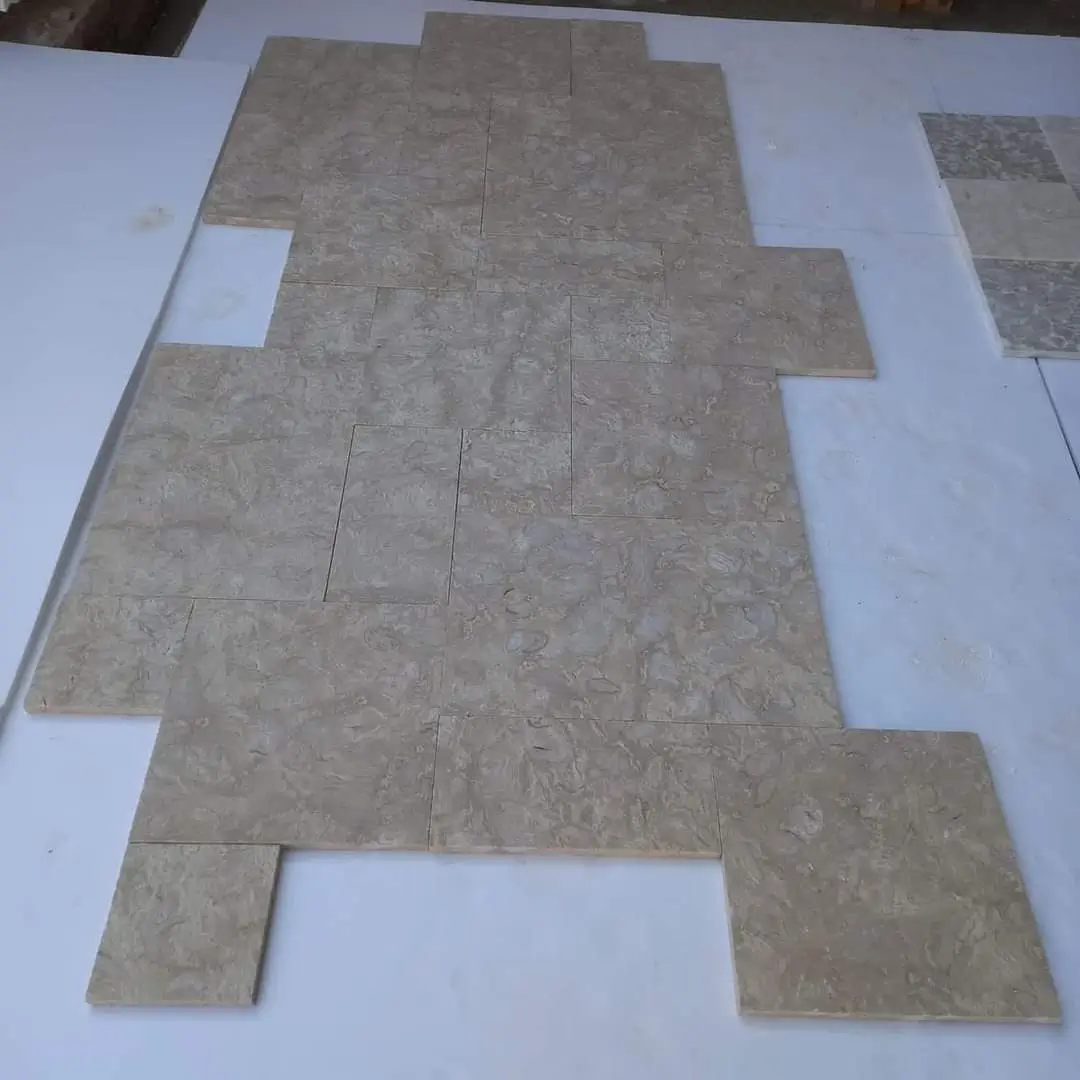
The path travertine takes from quarry to your Arizona project site has a direct impact on what you pay per square foot and how reliable your supply will be mid-project. Most travertine sold in the US originates from Turkish quarries — Denizli region stone dominates the mid-range market — with Italian quarries supplying premium architectural grades and some Peruvian and Mexican operations filling niche demand for specific color families. Understanding that origin chain helps you evaluate supplier quotes critically rather than accepting pricing at face value.
For your project’s supply planning, confirm warehouse availability before committing to a project start date. Import cycles for travertine run 8–12 weeks from order to warehouse receipt under normal freight conditions, and Arizona’s summer construction surge — running April through June before the monsoon slowdown — frequently depletes regional warehouse stock of popular grades like Silver and Classic Cream. Ordering 6–8 weeks ahead of your installation window gives your contractor enough buffer to work around delivery scheduling. You can explore our Arizona travertine paver supply to verify current stock and grade availability before your contractor begins mobilization planning.
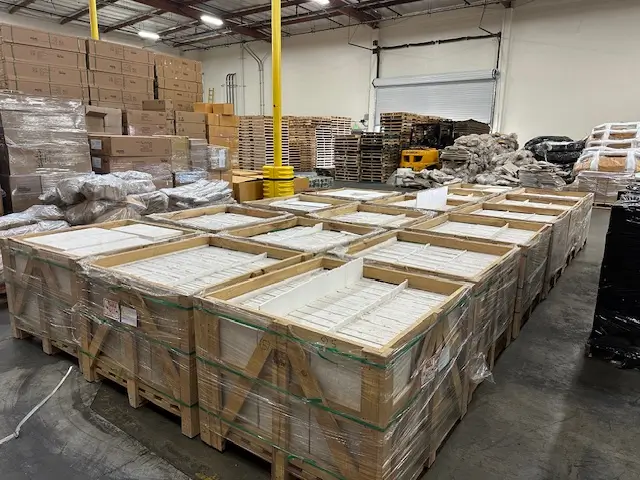
Truck delivery logistics also affect your total cost more than most buyers anticipate. Full pallet deliveries — typically 100–120 square feet per pallet — that can be offloaded with a liftgate truck to a flat driveway access point are significantly less expensive than deliveries requiring crane service or extended carries. If your project site has restricted access, discuss that with your supplier before pricing is finalized. Delivery surcharges for difficult sites run $150–$400 per truck load and rarely appear in initial quotes.
Comparing Natural Travertine Pavers to Alternative Materials in Arizona
The natural travertine paver cost in Arizona makes the most sense when you benchmark it honestly against competing options. Concrete pavers in the $2–$4 per square foot material range seem dramatically cheaper until you account for travertine’s thermal comfort advantage — surface temperatures on natural travertine in direct Arizona sun typically run 20–30°F cooler than concrete pavers of equivalent color, which is a measurable quality-of-life difference on a pool deck or outdoor dining area where barefoot traffic is expected.
Porcelain tile pavers, increasingly marketed as a low-maintenance travertine alternative, run $5–$11 per square foot in material and offer genuine maintenance advantages in high-traffic commercial settings. However, porcelain’s thermal mass characteristics work against comfort in Arizona’s climate — the material heats and cools more rapidly than natural stone, which translates to more uncomfortable surface temperatures during peak afternoon heat. For residential applications where aesthetic authenticity and thermal comfort are priorities, natural travertine maintains a genuine performance and design edge over its manufactured competitors.
- Concrete pavers: lower upfront cost but higher surface temperatures and a manufactured aesthetic that reads differently in high-design landscape contexts
- Porcelain tile pavers: low maintenance but poor thermal comfort in extreme heat and no natural variation in color or veining
- Limestone pavers: comparable cost range to travertine, excellent design versatility, but denser and less forgiving of base settlement
- Saltillo tile: affordable and authentically Southwestern, but very high maintenance demands and poor performance in freeze-thaw environments
Your Action Plan for Getting Natural Travertine Paver Cost in Arizona Right
Getting the natural travertine paver cost in Arizona right means working through the decision in the correct sequence — design intent first, then material grade, then base specification, then total installed budget. You’ll make better sourcing decisions when you know whether you’re building for a desert-modern aesthetic with honed Silver travertine at $8–$10 per square foot or a warm Southwestern courtyard with tumbled Mocha at $5–$7 per square foot, because those are genuinely different supply chains and different installation protocols.
Confirm your square footage requirements with a 10% overage allowance for cuts and pattern matching before contacting any supplier. That overage sounds conservative, but diagonal-pattern installations on irregularly shaped sites routinely consume 12–15% in cut waste, and running short mid-installation means a 6–8 week reorder wait if your grade isn’t in local warehouse stock. Build your contingency into the initial order — it’s far less expensive than a project delay. Reviewing affordable travertine paving options across Arizona before locking in a supplier also gives you useful price anchors and helps surface any regional availability gaps early in the planning process.
Once your material is specified and staged, the installation itself becomes the next critical variable. For detailed guidance on execution — base compaction, sand bed depth, jointing compound selection, and the specific Arizona considerations that affect setting times in summer heat — How to Install Travertine Pavers in Arizona walks through those field decisions with the specificity this climate demands. Property owners in Scottsdale, Peoria, and Flagstaff sourcing through Citadel Stone can compare travertine paver grades from internationally sourced quarries, allowing accurate square footage cost planning before installation begins.