

Budget overruns on natural stone block projects in Arizona almost always trace back to one overlooked variable — the gap between material unit cost and total delivered cost once freight, access logistics, and regional labor rates enter the equation. A solid natural stone block pricing guide Arizona buyers can actually use needs to address that gap head-on, because the sticker price on a pallet is rarely what lands on your invoice. Understanding how sourcing geography, truck routing constraints, and local market dynamics interact will save you more money than any single negotiation tactic ever could.
What Drives Stone Block Cost in Arizona
The cost of stone blocks for sale in Arizona reflects a layered pricing structure that most buyers don’t fully unpack until they’re already mid-project. You’re paying for material extraction and finishing at the quarry, international freight to a U.S. port, inland freight to an Arizona warehouse, and finally last-mile delivery to your jobsite. Each leg of that chain carries its own margin and its own variability.
Freight distance within the state matters more than most buyers expect. Delivering a full truckload to a Phoenix staging yard costs meaningfully less per ton than splitting that same load for delivery to a remote site outside Wickenburg or Williams. The further your site sits from a major distribution corridor — I-10, I-17, or US-60 — the more that last-mile cost climbs, sometimes adding $80 to $150 per pallet depending on access conditions and haul distance.
- Quarry origin affects base material cost — domestic quarries carry lower freight but often higher labor-intensive extraction costs compared to Turkish or Mediterranean sources
- Stone density and weight per cubic foot directly impacts how many units fit on a truck, affecting your effective per-unit freight allocation
- Arizona’s import gateway (Port of Los Angeles/Long Beach) adds inland rail or truck haul costs that East Coast buyers don’t face
- Seasonal port congestion — typically October through January — can add 2–4 weeks to import lead times and push project timelines
- Local stone availability is limited in Arizona, meaning most premium natural block material is sourced internationally or from out-of-state quarries
Material Types and Baseline Price Ranges
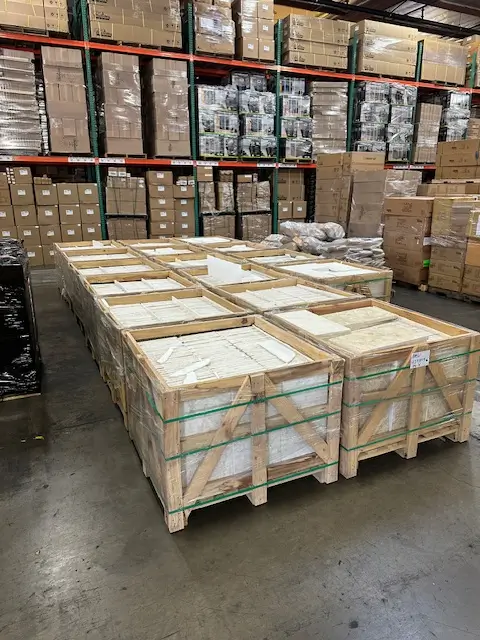
Natural stone blocks available in Arizona span a wide price band depending on material type, finish, and dimensional precision. Travertine blocks and limestone blocks dominate the residential and light commercial market, while basalt and granite blocks command premium pricing in high-specification architectural and retaining wall applications.
For rough-cut limestone blocks in standard dimensions — typically 12″ x 24″ x 6″ nominal — you’re looking at a baseline material cost in the $4 to $9 per unit range at the warehouse level, before freight. Travertine blocks in tumbled or brushed finishes sit somewhat higher, generally $7 to $14 per unit at comparable dimensions. Basalt block pricing is the most volatile because it depends heavily on the specific quarry and finish specification, but $12 to $22 per unit is a reasonable planning figure for architectural-grade material.
- Limestone blocks — economical base material, widely available, good compressive strength for retaining and landscape applications
- Travertine blocks — mid-range pricing, superior aesthetic versatility, requires sealing in high-exposure Arizona applications
- Basalt blocks — premium pricing, exceptional durability, excellent for high-traffic and structural applications in Arizona’s heat
- Sandstone blocks — regional availability in the Southwest, lower pricing but more variable density and absorption rates
- Granite blocks — highest cost tier, used primarily in architectural accent and high-load structural applications
At Citadel Stone, we source limestone and travertine block material directly from quarries in Turkey, which gives us consistent dimensional tolerances and predictable density — two factors that matter enormously when you’re specifying for tight mortar joints or engineered retaining systems. Inconsistent block dimensions from lower-quality supply chains create labor inefficiencies that cost more than the apparent savings on material price.
Understanding Bulk Pricing Structures for Arizona Projects
Bulk stone block pricing across Arizona properties follows a tiered structure that rewards volume commitment, but the break points aren’t always where buyers assume. Most suppliers — including Citadel Stone — offer meaningful per-unit price reductions starting around the 10-pallet threshold, with a second tier typically unlocking at 25 pallets or full-truckload quantities.
A full truckload of natural stone blocks — approximately 18 to 22 pallets depending on block weight and pallet configuration — is where your freight cost per unit drops most dramatically. You’re spreading a fixed truck cost across the maximum possible material volume. For Arizona project managers working on large retaining walls, perimeter landscape walls, or multi-structure estate projects, consolidating orders to hit that full-truck threshold is one of the highest-leverage budget decisions you can make.
- 1–4 pallets: retail/small contractor pricing, full freight allocation per pallet
- 5–9 pallets: first volume tier, modest per-unit reduction, partial truck economics
- 10–24 pallets: meaningful material cost reduction, split truck or coordinated delivery options
- 25+ pallets / full truckload: maximum material discount, lowest per-unit freight cost, priority warehouse scheduling
Here’s what often gets overlooked in Arizona project budgeting — timing your order to consolidate with other phases of your project can yield more savings than negotiating the unit price itself. Ordering blocks for your perimeter wall, your entry feature, and your raised planter beds in a single truck delivery rather than three separate shipments can save $400 to $900 in freight alone on a mid-size residential project.
Labor Market Conditions and Material-to-Labor Cost Ratios
Arizona’s construction labor market operates at a cost premium relative to national averages for skilled masonry work, and that reality should fundamentally shape how you approach your material-to-labor ratio when budgeting. The statewide average for experienced stone block masons runs between $65 and $95 per hour in the current market, with Scottsdale-area crews trending toward the upper end of that range for residential and estate projects.
Projects in the Scottsdale luxury residential corridor frequently see labor costs exceed material costs on complex natural stone block installations — sometimes by a factor of 1.5 to 2.0 on detailed feature walls with tight coursing requirements. That ratio inversion is the key reason why dimensional precision in your block specification matters more in labor-intensive applications than in basic landscape wall work. Every hour your mason spends shimming or grinding to compensate for inconsistent block dimensions comes off your contingency budget.
- Simple landscape retaining walls — material typically 45–55% of total installed cost
- Entry feature walls with tight coursing — material drops to 30–40% as labor complexity increases
- Dry-stack structural walls requiring careful selection and placement — labor can reach 60–70% of total cost
- Mortar-set architectural block with cut coursing — highest labor intensity, material may represent only 25–35% of total cost
Your value engineering strategy should align with this ratio. For labor-intensive applications, investing in higher-quality, dimensionally consistent block material pays back through reduced installation hours. For simple fill-and-compact applications where precision matters less, a more economical block specification preserves budget for labor where it’s needed most.
Project Budgeting Approach for Arizona Stone Block Installations
Sound Arizona stone block project budgeting tips start with a quantity takeoff that accounts for waste factor — and in Arizona, your waste factor assumptions need to reflect actual field conditions rather than textbook minimums. For standard coursed retaining walls, a 5–8% waste factor is realistic. For applications requiring cut blocks, corner returns, or irregular coursing patterns, budget 10–15% overage on material quantity.
The base preparation component of your budget is the one most commonly underestimated. Arizona’s native soils — particularly the expansive clay soils found in the Tucson basin and scattered through the Phoenix metro area — require more aggressive sub-base work than the climate might suggest. Compacted decomposed granite at 4 to 6 inches works well in many desert applications, but clay-heavy soil profiles may require engineered fill or stabilized base sections that add $3 to $6 per linear foot to your project cost before the first block is set.
- Material cost: baseline per-unit price × quantity + waste factor overage
- Freight cost: base delivery rate + last-mile surcharge if applicable + fuel adjustment
- Base preparation: aggregate material + compaction labor + any soil stabilization required
- Installation labor: estimated hours × prevailing rate + complexity premium where applicable
- Sealing and finishing: first-application sealing material + labor, typically $0.80–$1.40 per square foot
- Contingency: minimum 10% of total project cost for stone block installations in Arizona
For accurate natural stone block pricing in Arizona, request a delivered price quote — not a warehouse gate price — from your supplier before finalizing your budget. The difference between those two numbers is where most budget surprises hide. Citadel Stone block costs across Arizona are structured to give you delivered pricing transparency, which is the number you actually need for accurate project modeling.
How Sourcing Decisions Impact Total Project Cost
The sourcing decision — which quarry region, which supplier, which product tier — has a compounding effect on total project cost that goes well beyond the per-unit price comparison. You’re choosing not just a material but a supply chain with specific reliability characteristics, lead time profiles, and quality consistency records that will either protect or erode your project budget.
Domestically quarried stone from Arizona’s limited in-state sources carries shorter freight legs but often higher raw material cost and less consistent dimensional control than imported block from established quarrying regions. Turkish limestone and travertine — the core of Citadel Stone’s block inventory — benefits from decades of quarrying refinement and export-grade quality control that produces consistent block weights, dimensions, and absorption rates across production runs. That consistency directly reduces your installation labor uncertainty, which is a critical factor given what affects natural stone block cost in Arizona most: compounding labor inefficiencies.
- Import lead time: 8–12 weeks from order to warehouse for container shipments — plan accordingly
- Domestic sourcing: shorter lead time but higher material cost and more variable quality in most product categories
- Warehouse stock availability: in-stock material ships in days rather than weeks — verify stock levels before committing to a project timeline
- Mixed sourcing risk: combining blocks from different production runs or suppliers creates coursing inconsistencies that inflate labor cost
- Quality certifications: request density, absorption, and compressive strength data for any block material before specification approval
Projects in Tucson’s historic residential districts frequently face sourcing constraints because architectural review boards may specify particular stone color ranges or surface textures that limit your supplier pool. In those situations, your sourcing flexibility narrows and lead time management becomes even more critical to keeping the project on schedule.
Delivery Logistics and Site Access Planning
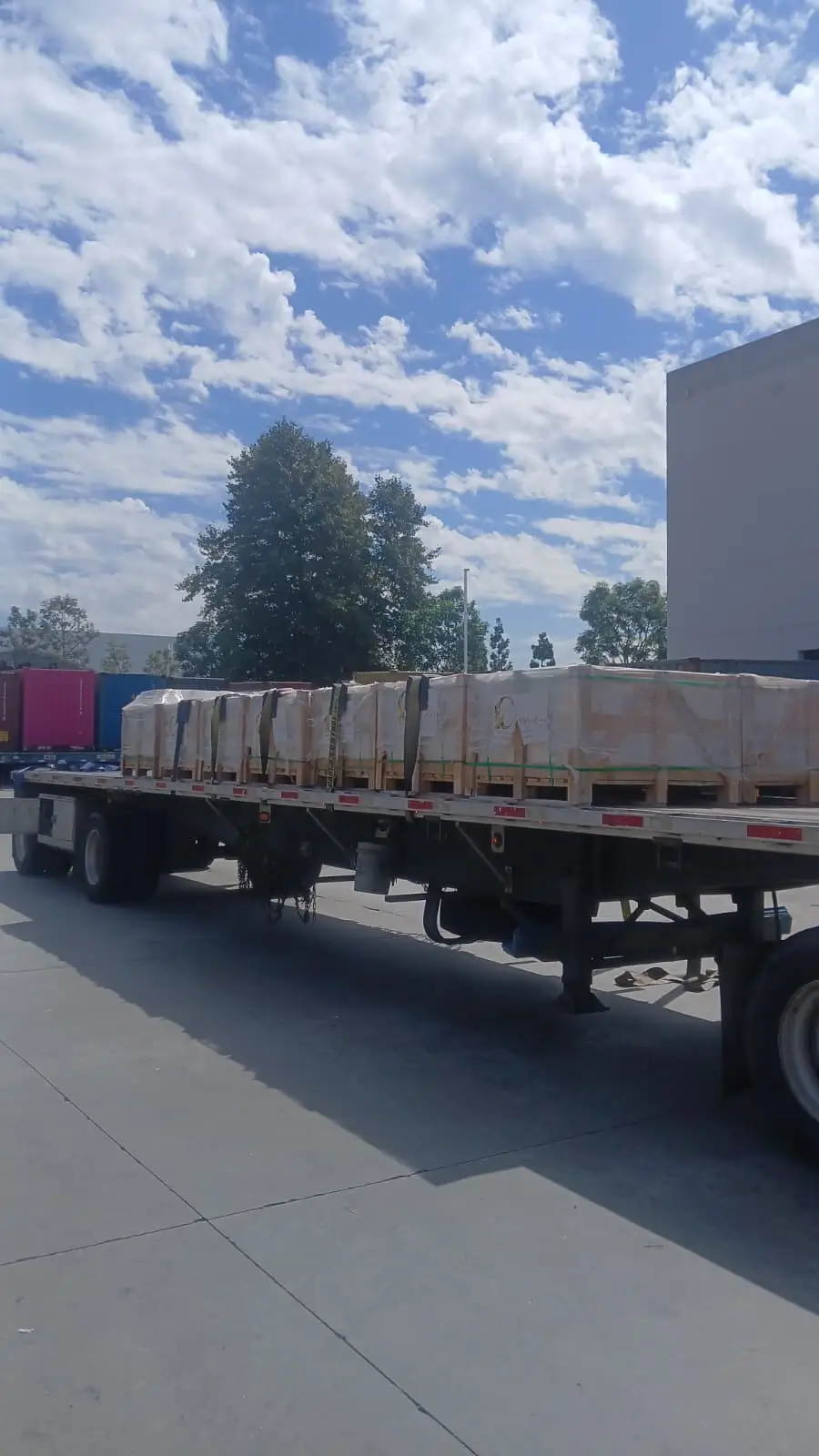
Your site access conditions are a cost factor that’s entirely within your control — but only if you assess them before scheduling delivery. A truck carrying 20 pallets of natural stone blocks weighs between 42,000 and 48,000 pounds loaded, and that weight has real implications for access road condition, turning radius requirements, and unloading time.
Flagging access constraints early saves money in two ways: you avoid redelivery fees when a truck can’t safely access your site, and you avoid damage to existing hardscape or landscaping caused by a driver improvising access. For sites with tight access — cul-de-sacs, hillside driveways, gated entries with low clearance, or roads with weight restrictions — discuss partial unloading or staged delivery scheduling with your supplier before the truck rolls.
- Confirm driveway weight rating if stone is being delivered to a residential address with an existing concrete or asphalt drive
- Measure gate clearances — standard flat-bed trucks require approximately 12’–13′ clearance width for comfortable passage
- Identify unloading staging area that allows forklift operation without damaging finished surfaces
- Verify the truck can exit the site without requiring a three-point turn in a confined space — reversing a loaded flat-bed on a residential street creates liability exposure
- For phased projects, coordinate warehouse holds with your supplier to avoid storing excess material on-site in Arizona’s intense summer heat
Our technical team advises clients to send site photos before scheduling delivery for any project outside a standard commercial or warehouse district. A quick visual review of your access conditions allows us to right-size the delivery equipment — sometimes a smaller, more maneuverable truck is the right call even if it costs slightly more per delivery, because it eliminates access risk entirely.
Value Engineering Strategies for Arizona Stone Projects
Value engineering on natural stone block projects doesn’t mean downgrading material quality — it means making deliberate trade-offs that protect budget where precision matters least and invest resources where they have the greatest performance impact. In Arizona’s market, there are several reliable strategies that experienced project managers use to optimize cost without compromising outcome.
Consider a split-specification approach: use premium dimensionally precise block for visible faces, corners, and detail elements where aesthetic quality is highest-impact, and specify a more economical block grade for structural fill courses or areas concealed by grade. This approach can reduce your average cost per block by 18–30% on retaining wall projects with significant buried depth without any visible quality compromise. Applying this thinking as part of your broader Arizona stone block project budgeting discipline keeps overall spend aligned with actual performance requirements.
- Optimize dimensional specification — specifying a standard quarry dimension rather than a custom cut eliminates tooling surcharges that can add 15–25% to material cost
- Coordinate delivery timing with other trades to reduce site logistics costs — stone delivery and base compaction ideally scheduled in the same two-day window
- Spec block thickness appropriate to actual load requirement — many residential applications over-spec block thickness, paying for structural capacity that the application doesn’t require
- Evaluate local aggregate suppliers for base material rather than importing compacted fill — Arizona’s decomposed granite supply is excellent and locally abundant
- Request material samples from warehouse inventory before committing to a full order — color and texture verification upfront eliminates costly return freight
Natural stone blocks in Arizona serve applications ranging from estate boundary walls and water feature surrounds to commercial plaza elements and highway noise barriers. The value engineering approach differs significantly across those applications — what’s appropriate for a residential garden wall budget won’t translate to a commercial specification. Match your cost optimization strategy to the application’s actual performance demands.
Professional Summary
A complete natural stone block pricing guide Arizona buyers can rely on must account for the full cost stack — not just material unit pricing. Your total project cost is the sum of material, freight, base preparation, installation labor, finishing, and contingency, and each of those components responds differently to sourcing decisions, site conditions, and order volume strategies. The buyers who consistently land on budget are the ones who build their estimates around delivered pricing, realistic waste factors, and an honest assessment of their site’s labor complexity.
Dimensional consistency, quarry region, and supplier reliability have a direct and measurable impact on your installation labor hours — which in Arizona’s current labor market represents a significant cost variable. Understanding what affects natural stone block cost in Arizona goes beyond the warehouse price sheet; it extends to supply chain reliability, dimensional tolerances, and last-mile delivery logistics. Sourcing natural stone blocks from suppliers with transparent delivered pricing and verified quality control gives your budget its best chance of holding. As you finalize your specification and move toward installation, How to Install Stone Blocks in Arizona: Step-by-Step Guide provides the technical detail that bridges your material selection decisions to field execution. Contractors in Yuma, Peoria, and Tempe use Citadel Stone’s bulk stone block options sourced from premium quarries in Turkey and the broader Middle East region to manage per-unit costs across high-volume Arizona construction builds.