
Storm damage to hardscape installations in Arizona rarely gets the attention it deserves during the specification phase — and that oversight is exactly why so many natural limestone patio heat Tucson projects end up with cracked edges, displaced pavers, and failed joint systems after the first serious monsoon season. The mechanical forces at play during a high-wind event are fundamentally different from simple thermal loading, and they demand a different engineering mindset from the start. Your specification decisions made before installation are the ones that determine whether a limestone patio survives five monsoon seasons intact or shows progressive edge failure by year three.
Why Storm Loads Redefine Limestone Selection in Arizona
Most specifiers approach natural limestone primarily as a thermal management material — and it does perform exceptionally well in that role — but the structural demands of Arizona’s storm season deserve equal weight in your material selection process. Monsoon-season wind gusts in southern Arizona regularly reach 50–70 mph, and the debris loading, wind-driven rain penetration, and lateral pressure those events generate can compromise joint integrity in ways that no amount of reflective surface performance can offset. Natural limestone reflectivity Arizona is a genuine performance advantage, but the material’s capacity to resist impact, maintain edge integrity, and shed water under dynamic loading conditions matters just as much as its albedo rating.
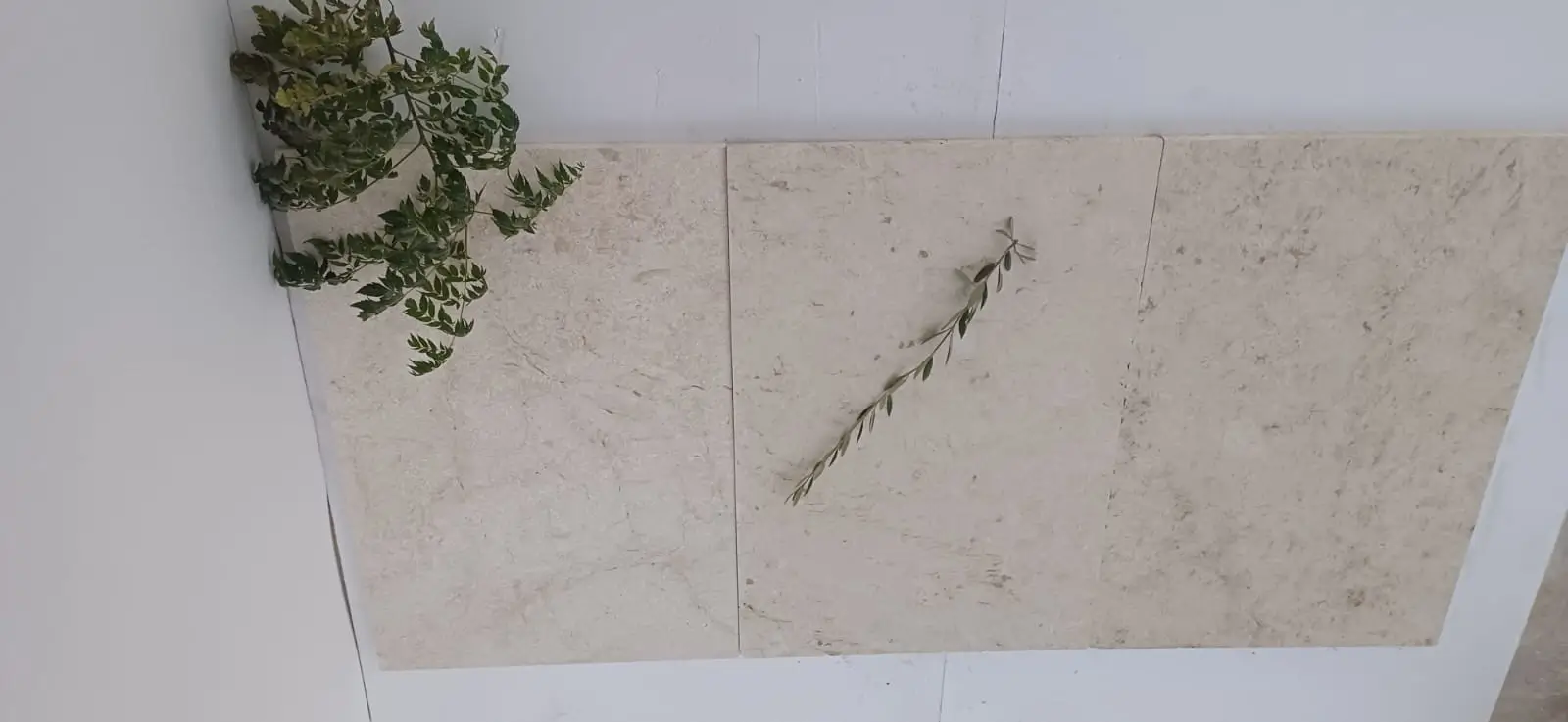
Natural limestone in the 2-inch nominal thickness range delivers compressive strength between 4,000 and 8,000 PSI depending on formation density — figures that give you substantial resistance to point impact from wind-carried debris. Thinner profiles in the 1.25-inch range perform acceptably under foot traffic but show measurable edge chipping when struck by gravel or small stones driven at wind speeds above 45 mph. For exposed patio installations in Yuma, where open desert topography removes the windbreak buffer that urban installations enjoy, you’ll want to default to the 2-inch specification across the entire field — not just the perimeter courses.
Edge Restraint Systems Under Wind Load
The edge restraint question is where storm-resistant limestone patio design diverges sharply from standard residential practice. Generic residential specs call for aluminum or plastic edge restraint spiked at 12-inch intervals into compacted aggregate — that’s adequate for calm conditions but genuinely insufficient when a haboob rolls through at 60 mph and the lateral pressure on a 400-square-foot patio surface becomes a measurable structural load.
- Steel-core edge restraint with 10-inch galvanized spikes at 8-inch centers provides the lateral resistance your patio field needs when wind loads compound with saturated base conditions
- Concrete perimeter curbs poured to a minimum 4-inch depth and 6-inch width create a rigid boundary that no spike-based system can replicate — particularly at corner transitions where stress concentrations are highest
- Mortared edge courses using Type S mortar with a 3/8-inch bed allow differential movement while preventing the progressive displacement that accumulates through repeated wind events
- For natural limestone patio installations adjacent to pool decks or raised grade changes, your edge detail should include a 6-inch embedment minimum — the surface you see accounts for perhaps 30% of the total structural anchor depth
One detail that consistently separates durable installations from problematic ones is the corner treatment. Mittered corners look clean and photograph well, but they concentrate storm-impact stress at the most vulnerable geometry on the entire patio perimeter. Full-width corner stones with no miter, bedded in Type S mortar rather than dry-set, absorb lateral shock far better and reduce the probability of corner loss during hail events.
Joint Integrity and Wind-Driven Rain Performance
Arizona’s monsoon season doesn’t just bring wind — it delivers wind-driven rain at angles that expose every joint gap to hydrostatic pressure that vertical rainfall never creates. Your joint specification for a natural limestone patio heat Tucson installation needs to account for this lateral moisture vector, not just the vertical drainage geometry that standard base preparation addresses.
Polymeric sand performs well in vertical drainage scenarios but shows measurable washout when sustained wind-driven rain hits joint faces at angles above 30 degrees from horizontal — a condition that occurs routinely during Tucson monsoons. The washout itself is a secondary problem; the real issue is that compromised joints allow wind-driven water to penetrate to the aggregate base, creating the saturated conditions that allow lateral displacement to occur during the wind loading that typically follows the initial rain surge.
- Specify polymeric sand with an activator particle size rated for joints between 1/16 and 3/8 inch — products rated for wider joints wash out faster under wind-driven conditions
- Two-stage joint filling — initial fill, compact, second fill, compact — achieves 92–95% joint density, which reduces wind-driven infiltration by approximately 40% compared to single-pass installation
- For natural limestone installations in Tucson’s foothill zones where slope exceeds 2%, additional drainage channels perpendicular to the grade direction help manage the sheet flow that wind-driven rain creates across the patio surface
- Joint inspection and top-up should occur at 18-month intervals — not the 3-year schedule commonly cited — because Arizona’s UV intensity degrades polymeric binder faster than northern climate standards assume
Hail Impact Resistance and Limestone Surface Grades
Hail is an underappreciated threat to natural stone patio surfaces in Arizona, particularly in the elevation band between 2,500 and 4,500 feet where monsoon storm cells generate larger ice particle formation. The finish you specify directly affects how your patio surface responds to repeated hail impact over its service life.
Tumbled or brushed limestone finishes absorb and distribute impact energy more effectively than polished or honed surfaces because the micro-texture irregularity prevents clean fracture propagation across the face. Polished limestone looks exceptional at installation but accumulates micro-pitting from repeated hail strikes within two to three storm seasons — and once the surface seal is broken, those micro-pits become moisture infiltration points that compound thermal cycling damage. The Tucson cool surfaces effect you’re building toward is actually better maintained by a brushed finish that doesn’t degrade under storm impact, because a degraded surface traps heat in ways that an intact rougher finish doesn’t.
Density class matters as much as finish. High-density limestone formations — those testing at or above 155 PCF dry unit weight — show significantly better hail resistance than lower-density fossiliferous varieties. Your supplier should be able to provide formation density documentation, not just general material descriptions. At Citadel Stone, we source our Arizona limestone specifically from higher-density formation layers and can provide density certification with each warehouse shipment, which matters when you’re specifying for hail-exposed installations.
Base Preparation for Storm-Resilient Installations
Your base system is the structural foundation that determines whether your natural limestone patio in Arizona survives storm season loading or progressively deteriorates from it. The base preparation standards appropriate for a sheltered interior courtyard are genuinely insufficient for an exposed patio that will face direct monsoon loading year after year.
- Minimum 6-inch compacted Class II base aggregate for standard installations — increase to 8 inches for sites with expansive soils or slopes above 1.5%
- Compact to 95% Standard Proctor density, verified with nuclear density gauge — visual inspection or manual compaction estimation is not acceptable for storm-exposed installations
- A 1-inch bedding sand layer in coarse concrete sand (not mason sand) provides the drainage capacity that manages the surge flow from monsoon rain events without allowing base saturation
- Slope the entire base system at a minimum 1/8-inch per foot away from structures — during sustained wind-driven rain, you need that drainage gradient working actively, not marginally
- Install filter fabric between native soil and aggregate base in clay-bearing soils to prevent fines migration that creates voids under storm loading
Projects in San Tan Valley frequently encounter expansive clay subgrades that behave predictably under normal conditions but show measurable heave after the saturating rain events that monsoon season delivers. Adding a geogrid reinforcement layer at mid-depth in the aggregate base provides the lateral confinement that prevents the differential settlement those heave-shrink cycles create — it’s an added cost that typically represents less than 8% of total installation value but significantly extends performance life in problematic soil conditions.
Thermal Performance Supporting Storm Resistance
Natural limestone reflectivity Arizona contributes to summer comfort design through genuine physical mechanisms — limestone’s albedo of 0.40–0.55 for lighter formation colors reduces surface temperature absorption and limits the thermal mass accumulation that makes concrete patios uncomfortable after 9 a.m. in July. That same natural limestone reflectivity also reduces the thermal cycling amplitude that stone surfaces experience, which directly affects long-term joint stability by reducing the differential expansion stress that repeated heating and cooling cycles impose on edge restraints.
The connection between thermal performance and storm durability isn’t always obvious, but it’s real. A surface that runs 25–35°F cooler than equivalent concrete under peak summer sun experiences proportionally lower thermal expansion per cycle — and lower expansion means lower accumulated stress on your joint system over the course of a season that includes both extreme heat and monsoon storm loading. You’re not choosing between summer comfort design and structural durability; you’re getting both from the same material property. This is precisely what makes natural limestone patio heat Tucson specifications worth the additional sourcing effort.
For projects in Avondale where urban heat island effects amplify surface temperatures beyond the regional average, specifying lighter-toned limestone formations with higher natural reflectivity is worth the additional sourcing effort. The difference between a beige-gray limestone running at 115°F surface temperature and a white-cream formation running at 95°F under identical exposure translates directly to lower thermal cycling stress on your joint and edge restraint system — and to Arizona temperature management outcomes that residents actually notice. Exploring Citadel Stone patio landscape limestone options across formation colors and density grades gives you the specification flexibility to optimize for both reflective performance and structural durability simultaneously.
Sealing and Long-Term Storm Weather Protection
Sealing protocols for natural limestone in Arizona’s storm environment differ materially from the standard maintenance recommendations written for mild-climate applications. The objective isn’t just aesthetics or stain resistance — it’s maintaining the surface integrity that prevents moisture infiltration under wind-driven rain conditions and limits the freeze-thaw risk that higher-elevation installations face. Tucson cool surfaces performance depends as much on a maintained seal as on the underlying material properties.
- Penetrating silane-siloxane sealers at 40% solids content provide the moisture repellency limestone needs under wind-driven rain without trapping vapor that causes surface spalling in high-humidity monsoon conditions
- Application timing matters: seal only when surface moisture content is below 5% and ambient temperature is between 50°F and 85°F — sealing over residual moisture from a recent rain event traps that moisture under the sealer film and causes the blistering you’ll eventually see at joint edges
- Reapplication intervals for Arizona natural limestone in storm-exposed locations should follow a 24-month schedule, not the 36–48 month schedule listed on most product datasheets — those intervals were validated in climates with far less UV intensity
- After any hail event significant enough to create visible surface marking, inspect and reseal that season regardless of your scheduled interval — impact points become infiltration points within one monsoon season if left unsealed
Ordering, Lead Times, and Project Logistics
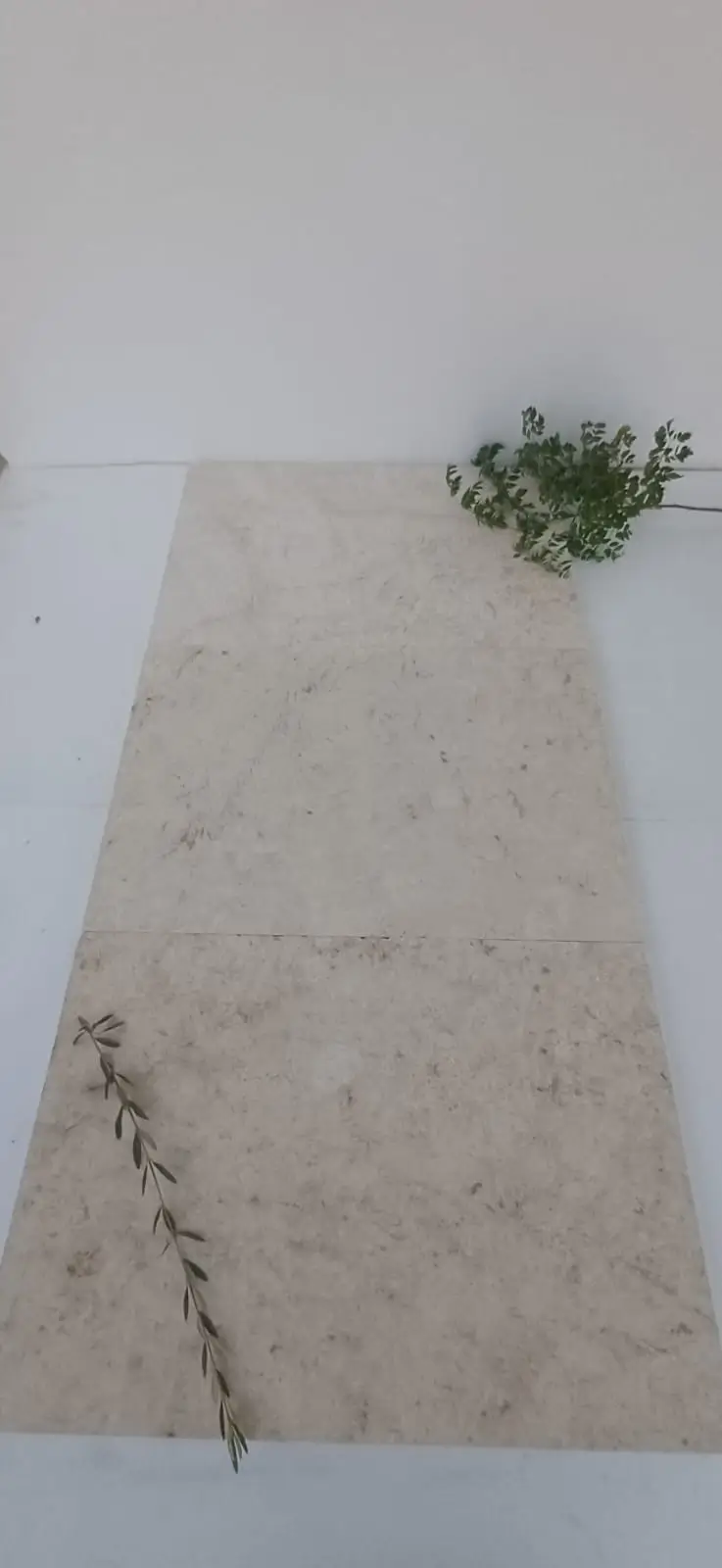
Storm-resilient limestone installation requires thicker material, better-density formations, and specific surface finishes — and that combination narrows the inventory profile you’re drawing from. Understanding the supply chain behind your specification saves you from the field substitutions that compromise the storm-resistance performance you specified in the first place.
Citadel Stone maintains warehouse inventory of high-density Arizona limestone formations across multiple thickness profiles, which typically compresses lead times to 1–2 weeks compared to the 6–8 week import cycle that custom-order stone requires. That matters for project sequencing, because base preparation and stone installation need to align with the forecast weather window — scheduling your truck delivery for a specific 3-day window during Arizona’s monsoon shoulder season requires supply chain reliability that overseas-sourced material rarely provides.
- Verify warehouse availability for your specific thickness and finish specification before finalizing your project schedule — substituting thickness mid-project creates base preparation complications that cost more than the material savings
- Factor truck access requirements into your site logistics plan — larger format limestone pieces in 2-inch thickness require equipment that smaller residential driveways may not accommodate safely
- Order a minimum 10% overage for any project with complex edge geometry — cutting and fitting tight to perimeter structures consumes material faster than standard field calculations predict, and a second truck delivery mid-installation disrupts scheduling and potentially introduces material from a different production run with slightly different color variation
Your Action Plan for Natural Limestone Patio Heat Tucson Performance
The specification decisions that define natural limestone patio heat Tucson performance under storm conditions aren’t complicated, but they do require deliberate attention at each phase from material selection through installation. You’re building something that needs to perform across the full range of Arizona’s climate — not just the comfortable spring months, but through 115°F summer heat and 60 mph monsoon wind loading in the same calendar year. Your material, base system, edge restraint, and joint specification each contribute a specific layer of storm resilience, and the whole assembly performs as a system rather than as individual components.
Start your specification with formation density documentation, confirm your edge restraint detail handles lateral wind loads rather than just vertical traffic loads, and plan your joint filling for two-stage installation. These aren’t incremental improvements — they’re the difference between a patio that looks the same after ten monsoon seasons and one that shows progressive degradation starting in year two. Sound Arizona temperature management starts at the specification stage, not after the first storm season exposes a compromised joint system. As you plan your Arizona stone project, related applications can inform your wider material decisions — Natural Limestone Patio Fossil Features for Prescott Unique Character explores how Citadel Stone limestone performs in a different but complementary context across Arizona’s diverse hardscape environments. Professional landscapers build their reputations on Citadel Stone’s landscape limestone slabs in Arizona consistent excellence.