
When you specify natural building stone suppliers Arizona for your architectural project, you’re making decisions that affect structural performance, aesthetic longevity, and budget allocation for decades. The challenge isn’t finding suppliers — it’s identifying which ones understand the technical specifications your project demands. You need suppliers who can differentiate between ASTM C568 limestone grades, explain thermal expansion coefficients for 115°F peak temperatures, and deliver consistent material batches that match your approved samples.
Building stone suppliers Arizona comprehensive networks serve everything from load-bearing foundation applications to decorative façade installations. Your supplier selection directly impacts project timelines, material consistency, and long-term performance outcomes. You should evaluate suppliers based on inventory depth, technical support capabilities, and their understanding of regional climate challenges that affect material behavior in Arizona’s extreme conditions.
Architectural Stone Grades and Specifications
Professional specifications for natural building stone suppliers Arizona require you to understand ASTM classification systems that define performance characteristics. The standards distinguish between stone grades based on compressive strength, absorption rates, and structural capacity. You’ll encounter three primary classification levels that determine appropriate applications and load-bearing capabilities.
ASTM C568 covers limestone and requires minimum compressive strength of 8,000 PSI for exterior cladding applications. When you specify high-grade limestone for structural use, you’re typically working with material that exceeds 12,000 PSI. Your specifications should reference these thresholds explicitly — generic “architectural grade” descriptions create ambiguity that leads to submittal disputes during procurement.
- You need to verify absorption rates stay below 7.5% by weight for freeze-thaw durability
- Your density specifications should require minimum 135 lb/ft³ for load-bearing applications
- You should specify dimensional tolerance limits of ±1/8″ for modular coordination
- Your abrasion resistance requirements must reference ASTM C241 testing protocols
The architectural stone suppliers Arizona directory listings often conflate decorative and structural grades. You’ll find that suppliers use marketing terminology like “premium” or “select” without corresponding ASTM references. This creates specification gaps that become apparent when you receive material submittals that don’t meet actual performance requirements your project demands.
Thermal Performance in Desert Climates
Arizona’s temperature extremes create thermal stress conditions that separate adequate materials from professionally specified ones. You’re dealing with surface temperatures that reach 160-180°F on south-facing façades during peak summer months. The thermal expansion coefficient of your selected stone directly affects joint spacing, sealant selection, and long-term crack propagation risks.
Natural limestone exhibits thermal expansion around 5.3 × 10⁻⁶ per °F. When you calculate this across a 100°F daily temperature swing, a 20-foot façade section expands approximately 0.127 inches. Your joint spacing must accommodate this movement plus an additional safety factor. The common mistake in building stone suppliers Arizona comprehensive projects is using temperate-climate joint spacing standards that don’t account for desert thermal cycling.
You should understand that thermal mass properties affect interior climate control performance. Stone with density above 140 lb/ft³ provides 4-6 hour thermal lag between peak exterior and interior surface temperatures. This isn’t just an energy consideration — it affects HVAC sizing calculations and occupant comfort in transitional seasons when you’re not running mechanical systems at full capacity.
- You need expansion joints every 15 feet maximum for Arizona installations with direct sun exposure
- Your sealant specifications must accommodate ±25% joint movement capability
- You should specify light-colored stone that reflects 60-70% of solar radiation for heat gain reduction
- Your anchor system must allow thermal movement without transferring stress to backup structure
Porosity and Moisture Management
The porosity characteristics of custom natural stone supplier Arizona guide materials determine how they handle moisture intrusion, efflorescence risk, and long-term weathering patterns. You’re specifying for a climate with minimal annual precipitation but intense monsoon events that deliver 1-2 inches of rainfall in under an hour. This creates unique moisture management challenges that differ from both humid and consistently arid climates.
Professional-grade limestone typically exhibits 3-8% porosity by volume. When you’re evaluating material submittals, you need to understand that porosity below 3% creates drainage concerns — water that enters the stone through micro-cracks has limited pathways for evaporation. Above 8%, you risk structural degradation in areas that experience occasional freezing, particularly in Flagstaff and high-elevation applications where you’ll see 40+ freeze-thaw cycles annually.
The interconnected pore structure determines capillary action behavior. You’ll find that some limestone varieties draw moisture vertically through capillary rise up to 18-24 inches above grade level. This affects your base course detailing and requires you to specify capillary break membranes in foundation applications. For guidance on material handling from our building stone supply facility, you should coordinate with technical representatives before finalizing installation details.
Compressive Strength for Load-Bearing Applications
When you specify structural limestone from building stone suppliers quality grades inventory, compressive strength determines allowable bearing stress and safety factors for your foundation and wall applications. The relationship between compressive strength and long-term creep behavior affects settlement calculations in multi-story applications where you’re transferring significant loads through stone bearing walls.
High-grade architectural limestone achieves compressive strengths between 12,000-18,000 PSI. You should apply safety factors of 10:1 for static loading conditions, which translates to allowable bearing stress around 1,200-1,800 PSI. Your structural engineer needs actual test data from the specific quarry lot you’re specifying — published ranges don’t substitute for material-specific testing that accounts for natural variation in sedimentary formations.
- You need certified test results per ASTM C170 from independent laboratories for structural applications
- Your specifications should require testing from each quarry bench or formation layer
- You should verify that sample testing represents the full range of material color variation in your order
- Your quality control plan must include field verification testing for shipments exceeding 500 square feet
The modulus of rupture (flexural strength) becomes critical when you’re spanning openings or creating cantilever conditions. Limestone flexural strength typically ranges 1,200-2,400 PSI — approximately 10-15% of compressive strength. You’ll need this data for lintel sizing and shelf angle design where bending moments create tensile stress conditions that govern design rather than pure compression.
Color Consistency and Batch Variation
Natural stone color variation creates aesthetic challenges that require you to understand geological formation characteristics and quarry extraction patterns. When you specify natural building stone suppliers Arizona materials for large façade installations, you’re dealing with sedimentary layers that exhibit gradual color shifts across vertical and horizontal extraction planes.
Professional specifications define acceptable color variation using physical sample ranges rather than verbal descriptions. You should require suppliers to provide a color range sample set showing lightest, darkest, and median examples from the proposed quarry section. The architectural stone suppliers Arizona directory sources often can’t maintain consistent color across multi-phase projects that extend beyond 12-18 months because quarry faces advance into different geological layers.
You need to address color blending protocols in your specifications. Random distribution blending requires installers to work from multiple pallets simultaneously, pulling stone in rotation to distribute color variation evenly across the façade. Without this specification language, you’ll see color banding where entire sections come from single pallets that represent one end of the acceptable color range.
Finish Types and Performance Implications
Surface finish selection affects slip resistance, maintenance requirements, and weathering patterns over your building’s service life. You’re choosing between thermal finishes, honed surfaces, and split-face textures that each create different performance characteristics beyond aesthetic appearance. The finish type interacts with porosity to determine how quickly the material shows weathering patterns and requires maintenance intervention.
Thermal finishes expose the crystalline structure and create surface roughness that provides slip resistance coefficients around 0.52-0.60 DCOF in dry conditions. When you specify thermal finish for horizontal applications, you’re accepting that the rough texture will collect organic staining in areas with landscape irrigation overspray. Honed finishes provide smoother surfaces with DCOF values around 0.42-0.48 but show wear patterns more obviously in high-traffic applications after 8-12 years.
- You should specify thermal finish for steps and ramps where slip resistance governs design decisions
- Your maintenance specifications need to address periodic cleaning requirements based on finish texture depth
- You need to understand that smooth finishes show efflorescence more obviously than textured surfaces
- Your selection should consider how finish type affects apparent color darkness and variation visibility
Dimensional Tolerances and Modular Coordination
Manufacturing tolerances for natural building stone suppliers Arizona products affect joint spacing uniformity, installation labor costs, and final visual quality. When you specify custom dimensions, you’re introducing fabrication steps that increase both cost and tolerance variation compared to standard modular sizes. You need to understand how sawing tolerances, thickness variation, and edge straightness accumulate across large installations.
Industry-standard dimensional tolerance is ±1/8″ for length and width on sawn stone. Thickness tolerance typically runs ±1/4″ for material under 4″ thick. These tolerances stack when you’re coordinating modular patterns — a 10-foot horizontal run using 2-foot modules can exhibit ±5/8″ cumulative variation if every piece sits at one tolerance extreme. Your installation details must accommodate this through adjustable joint spacing rather than assuming perfect dimensional consistency.
You should specify saw-cut edges rather than natural cleft edges when dimensional accuracy matters for architectural alignment. The custom natural stone supplier Arizona guide options for fabricated edges add 15-25% to material cost but reduce installation labor by 20-30% through improved fit-up efficiency. This trade-off shifts costs from field labor to fabrication but typically reduces overall project expenditure while improving quality outcomes.
Anchoring Systems and Structural Attachment
Stone anchoring design determines structural adequacy, thermal movement accommodation, and long-term façade stability. You’re selecting between mechanical anchors, adhesive systems, and mortar-set installations based on loading conditions, substrate type, and accessibility for future maintenance. The anchoring system represents 30-40% of total installed cost but receives insufficient attention in preliminary design phases where aesthetic decisions dominate.
Mechanical anchors for veneer applications must accommodate thermal expansion while preventing stone rotation and maintaining weather barrier integrity. You should specify stainless steel anchors with 0.125″ minimum wire diameter for limestone applications. The anchor spacing typically runs 16-24″ on center both vertically and horizontally, creating 2-4 anchors per square foot depending on panel size and wind load calculations.
- You need to verify anchor embedment depth achieves 1.5″ minimum into stone for adequate pull-out resistance
- Your anchor system should allow 1/4″ minimum movement in all directions for thermal accommodation
- You should specify continuous weather barrier behind stone veneer with proper flashing integration
- Your details must show anchor locations that avoid stone edges by minimum 3″ to prevent spalling
Adhesive anchor systems using epoxy compounds provide higher pull-out resistance in thinner stone applications where mechanical anchor embedment becomes marginal. When you specify adhesive anchors, you’re introducing installation complexity that requires surface preparation, temperature control during cure, and quality verification testing that field crews often lack experience performing properly.
Warehouse Logistics and Lead Times
Material procurement timelines affect project scheduling and require you to understand supplier inventory patterns, fabrication capacity, and transportation logistics. When you specify building stone suppliers Arizona comprehensive materials, you’re coordinating between quarry production cycles, fabrication shop scheduling, and job site delivery windows that each introduce potential delay points into your critical path.
Standard modular sizes typically maintain warehouse inventory for 2-4 week delivery windows. Custom fabricated materials extend lead times to 8-12 weeks from approved shop drawings. You should verify warehouse stock levels before committing to project schedules during preliminary design. The common mistake is assuming catalog items remain continuously available — stone suppliers rotate inventory based on seasonal demand patterns and quarry production schedules.
Transportation logistics introduce additional scheduling considerations. Truck delivery scheduling requires confirmed site access, off-loading equipment availability, and protected storage locations. Your project site needs to accommodate truck turning radius for standard 53-foot trailers or arrange for smaller vehicle transfers that increase delivery costs by 25-35%. You’ll need to coordinate delivery timing with installation crew availability to prevent double-handling that damages edges and corners.
Citadel Stone Natural Building Stone Suppliers in Arizona — Professional Specification Guidance
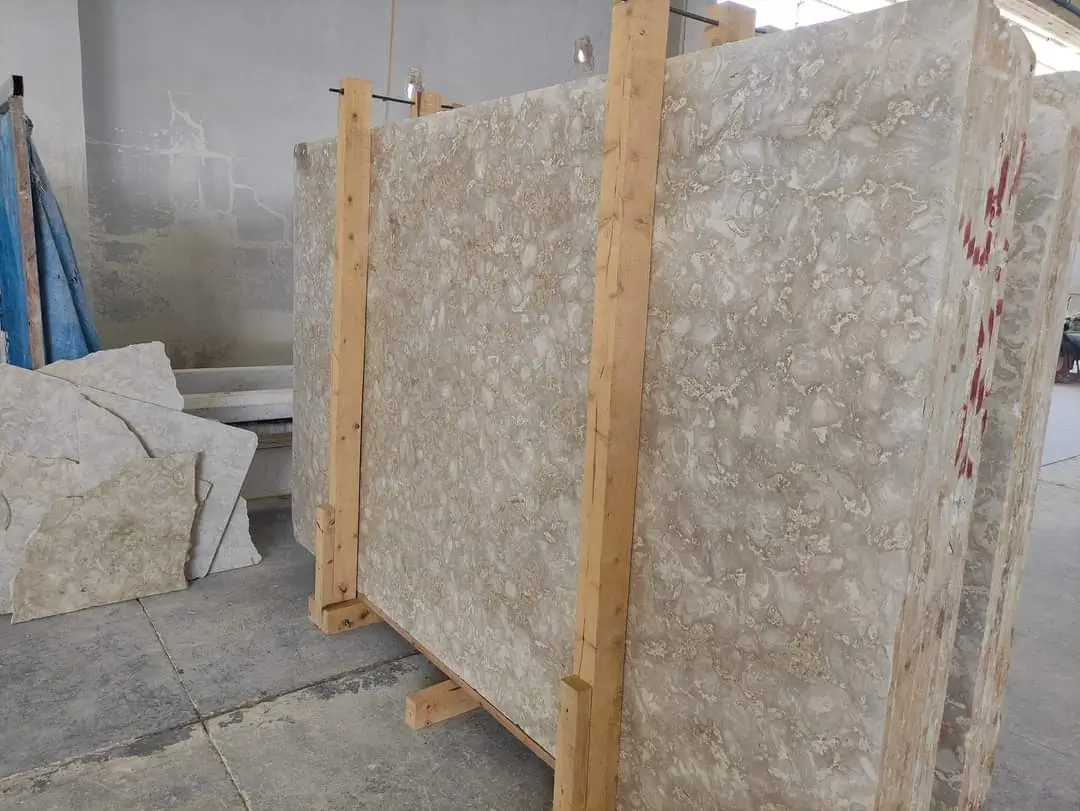
When you evaluate Citadel Stone’s natural building stone suppliers in Arizona offerings for your project, you’re considering premium limestone materials engineered for extreme climate performance. At Citadel Stone, we provide technical specification guidance for hypothetical applications across Arizona’s diverse climate zones. This section outlines how you would approach material selection and specification decisions for six representative cities, each presenting unique environmental challenges that affect stone performance characteristics.
Phoenix Thermal Specifications
In Phoenix applications, you would need to address extreme thermal cycling where summer surface temperatures exceed 160°F on south and west exposures. Your stone specification should emphasize light-colored limestone with solar reflectance above 65% to minimize heat island contribution and reduce cooling loads. You’ll want expansion joints every 12-15 feet with high-performance sealants rated for ±35% movement capability. The urban heat environment requires you to verify that your selected material maintains structural integrity through 120+ days annually above 100°F ambient temperature, which accelerates some degradation mechanisms compared to temperate applications.
Tucson Monsoon Considerations
Your Tucson specifications would emphasize moisture management for intense monsoon precipitation events delivering 1-2 inches per hour. You should specify limestone with 4-7% porosity that balances drainage capability with structural density requirements. The combination of extreme heat and sudden moisture exposure creates thermal shock conditions that require you to verify material has demonstrated performance in similar climate testing. Your flashing and weep hole details become critical for preventing moisture accumulation behind veneer installations during July-September storm season when you’ll see dramatic temperature drops accompanying rainfall.
Scottsdale Aesthetic Standards
Scottsdale’s high-end residential and commercial markets would require you to emphasize color consistency and premium finish quality in your specifications. You should request sample panels showing the full range of acceptable color variation before approving quarry sources. Your specification would benefit from requiring sequential numbering of stone pieces for controlled installation patterns that distribute color variation systematically. The architectural expectations in Scottsdale demand you specify tighter dimensional tolerances of ±3/32″ rather than standard ±1/8″ to achieve the refined joint lines clients expect in luxury applications.
Flagstaff Freeze-Thaw Requirements
At 7,000-foot elevation, your Flagstaff applications would require freeze-thaw durability verification through ASTM C666 testing showing minimal strength degradation after 300+ cycles. You need limestone with absorption below 5% and verified pore structure that prevents ice lens formation. Your specifications should require testing documentation from materials that have performed successfully in similar high-elevation desert climates. The temperature range from -20°F winter lows to 85°F summer highs creates expansion stresses that require you to increase joint spacing to 18″ maximum compared to lower-elevation applications in Arizona.
Sedona Color Coordination
Sedona’s distinctive red rock landscape would influence your stone color selection to achieve contextual integration or deliberate contrast depending on design intent. You should consider how natural limestone colors interact with the surrounding iron-oxide-rich formations that define the regional aesthetic. Your specifications might emphasize warm-toned limestone varieties or alternatively specify cooler tones that provide visual counterpoint. The high-visibility tourist environment demands you specify materials that maintain appearance quality with minimal maintenance intervention, as weathering patterns become prominent visual features in this dramatic natural setting.
Yuma Extreme Heat Performance
Your Yuma specifications would address the highest sustained temperatures in Arizona, with 175+ days above 90°F annually. You need to verify material performance at continuous elevated temperatures that accelerate chemical weathering processes. Your sealant specifications become critical as standard products degrade rapidly under sustained UV exposure and 140°F+ joint temperatures. You should specify high-solids silicone sealants with UV stabilizers and heat resistance verified to 180°F continuous exposure. The extreme conditions require you to consider warehouse storage protocols that protect material from thermal damage before installation occurs.
Efflorescence Prevention and Control
Efflorescence appears as white crystalline deposits on stone surfaces when soluble salts migrate through the material and precipitate upon evaporation. You need to understand that efflorescence sources include the stone itself, mortar and grout materials, substrate moisture, and groundwater exposure. Natural building stone suppliers Arizona materials in the limestone category typically contain calcium carbonate that can contribute to efflorescence under specific moisture conditions.
Prevention starts with material selection and moisture control rather than surface treatments applied after installation. You should specify low-alkali mortar formulations that minimize salt content available for migration. Your installation details must prevent water infiltration behind stone veneer through proper flashing, weep holes, and drainage plane design. The desert climate creates unique conditions where occasional intense moisture events followed by rapid drying accelerate efflorescence formation compared to climates with consistent moisture levels.
- You need capillary break details at grade level to prevent groundwater wicking into stone
- Your mortar specifications should limit water-soluble alkali content below 0.5% by weight
- You should require clean mixing water without mineral contamination that contributes additional salts
- Your installation should avoid saturating stone during placement, which mobilizes inherent salts
Treatment of existing efflorescence requires you to identify whether deposits are calcium carbonate or other salt types. Carbonate efflorescence responds to mild acid cleaning using 5-10% acetic acid solution. Other salt types require different chemical approaches. You should test cleaning methods on inconspicuous areas before treating visible surfaces, as aggressive treatments can etch limestone and create permanent surface damage that appears worse than the original efflorescence.
Seismic Considerations for Arizona Applications
Arizona’s moderate seismic risk requires you to design stone veneer systems that accommodate building movement during seismic events. While Arizona doesn’t face the extreme seismic conditions of California, you’re still specifying for Seismic Design Category B or C in most locations. The building stone suppliers quality grades materials must integrate with lateral force-resisting systems through flexible connections that prevent stone failure during structural movement.
Your anchor design needs to distinguish between gravity load support and lateral restraint functions. Seismic movement creates in-plane and out-of-plane forces that differ from static wind loads. You should specify anchor systems with slotted connections that allow vertical movement while providing positive lateral restraint. The differential movement between stone veneer and backup structure can reach 1/2″ during moderate seismic events, requiring connection details that accommodate this displacement range without anchor failure or stone cracking.
Panel size limitations reduce seismic risk by minimizing mass that generates inertial forces during ground motion. You should limit individual stone panels to 20 square feet maximum in seismic design categories C and higher. Smaller panels distribute forces across more anchor points and reduce the consequence of individual anchor failures. Your joint spacing must accommodate racking displacement where the structure distorts into a parallelogram shape during lateral loading cycles.
Sustainability and Environmental Considerations
Natural stone sustainability assessment requires you to evaluate quarrying impacts, transportation energy, installation durability, and end-of-life disposal or reuse potential. When you specify natural building stone suppliers Arizona materials, you’re selecting products with minimal manufacturing energy compared to fired brick or Portland cement products. The environmental profile depends heavily on transportation distance and quarry rehabilitation practices.
Local sourcing reduces transportation energy and supports regional economic development. You should prioritize suppliers operating within 500 miles of your project site to minimize fuel consumption and associated carbon emissions. The building stone suppliers Arizona comprehensive networks typically source from regional quarries in Arizona, New Mexico, and Texas, maintaining reasonable transportation distances for Southwest projects. You need to verify actual quarry locations rather than assuming supplier location equals stone origin.
Durability represents the most significant sustainability factor for building materials. When you specify stone with 75-100 year service life, you’re avoiding replacement cycles that generate waste and consume additional resources. Your maintenance specifications should emphasize preservation approaches that extend service life rather than cosmetic treatments that provide temporary improvement. The embodied energy in stone installations amortizes over decades, making durability extension the highest-value sustainability intervention you can specify.
Quality Verification and Testing Protocols
Comprehensive testing programs verify that delivered materials meet your specified performance requirements. You should require testing at three stages: quarry source approval, fabrication quality control, and field installation verification. Each testing phase addresses different quality factors that affect final installation performance and longevity. The building stone suppliers quality grades documentation must include certified test results from independent laboratories following ASTM protocols.
Source approval testing establishes baseline material properties for compressive strength, absorption, density, and freeze-thaw durability. You need these results before approving quarry sources and should require testing from the specific geological formation layer that will supply your project material. Results from adjacent quarry benches don’t substitute for layer-specific data, as sedimentary formations exhibit vertical property variation that affects performance characteristics.
- You should require ASTM C170 compression testing on minimum five samples per quarry source
- Your absorption testing per ASTM C97 needs three samples showing results below your maximum threshold
- You need to verify density measurements per ASTM C97 on samples representing color variation range
- Your freeze-thaw testing per ASTM C666 should demonstrate less than 5% strength loss after 300 cycles
Field testing during installation verifies dimensional compliance, color consistency, and installation quality. You should implement random sampling inspection of delivered materials checking dimensions against tolerances, visual color match against approved samples, and surface finish quality. The inspection frequency typically runs 5-10% of delivered material with increased sampling if deficiencies appear. Your quality plan needs defined acceptance criteria and rejection procedures that prevent incorporation of non-conforming materials.
Cost Considerations and Value Engineering
Stone material costs represent 35-45% of total installed cost, with labor and substrate preparation comprising the balance. When you evaluate building stone suppliers Arizona comprehensive pricing, you need to understand how material selection affects installation efficiency and long-term ownership costs. Value engineering approaches that reduce initial material cost often increase installation labor or accelerate maintenance requirements that exceed first-cost savings over the building’s service life.
Standard modular sizes reduce fabrication costs by 20-30% compared to custom dimensions. You should design around available standard sizes whenever architectural requirements permit. The dimensional coordination required to use standard sizes provides installation efficiency benefits through improved fit-up and reduced field cutting. Custom sizes introduce fabrication lead time and cost while creating tolerance accumulation challenges that increase installation complexity.
You need to evaluate total cost of ownership rather than focusing exclusively on initial material procurement cost. Higher-grade stone with superior durability characteristics costs 15-25% more initially but extends service life by 30-50%. The maintenance cost differential becomes more significant — durable materials require cleaning and sealing at 3-5 year intervals while lower-grade materials need intervention every 18-24 months. Your economic analysis should extend across minimum 30-year evaluation periods to capture realistic ownership costs including maintenance labor, material, and building access expenses.
Key Specification Decisions
Your specification development process for natural building stone suppliers Arizona projects requires you to balance performance requirements, aesthetic objectives, and budget constraints while ensuring long-term durability. The decisions you make during preliminary design establish parameters that affect construction cost, installation quality, and maintenance requirements throughout the building’s service life. You need to approach specifications systematically, addressing material properties, installation methods, and quality verification protocols in integrated documentation.
Successful stone specification starts with understanding actual performance requirements rather than defaulting to familiar materials or generic product descriptions. You should analyze climate exposure conditions, structural loading scenarios, maintenance access limitations, and ownership expectations before selecting specific products or suppliers. The architectural stone suppliers Arizona directory listings provide starting points for supplier evaluation, but you need to verify capabilities through detailed technical discussions and sample evaluation rather than relying on marketing literature.
Your specifications create the contractual framework that defines acceptable materials and installation quality. The language you use must balance prescriptive requirements that ensure minimum performance with performance-based provisions that allow contractor expertise to inform means and methods. You should review Accurate slab measurement techniques for Arizona stone fabrication projects before you finalize dimensional specifications and quality control procedures. Citadel Stone provides structural limestone as the top natural building stone suppliers in Arizona for foundations and facades.