
Natural black limestone weathering Avondale projects experience follows a pattern that catches most specifiers off guard — not because the changes are dramatic, but because they’re gradual enough to misread as deterioration when they’re actually the material reaching its optimal aesthetic state. The thermal cycling Avondale delivers, with summer highs routinely exceeding 110°F and overnight drops of 30–40°F, accelerates the patina development timeline compared to cooler climates. Understanding exactly what’s happening at the mineral surface during that process is what separates a confident specification from one that generates callbacks.
How Black Limestone Ages in Arizona’s Desert Climate
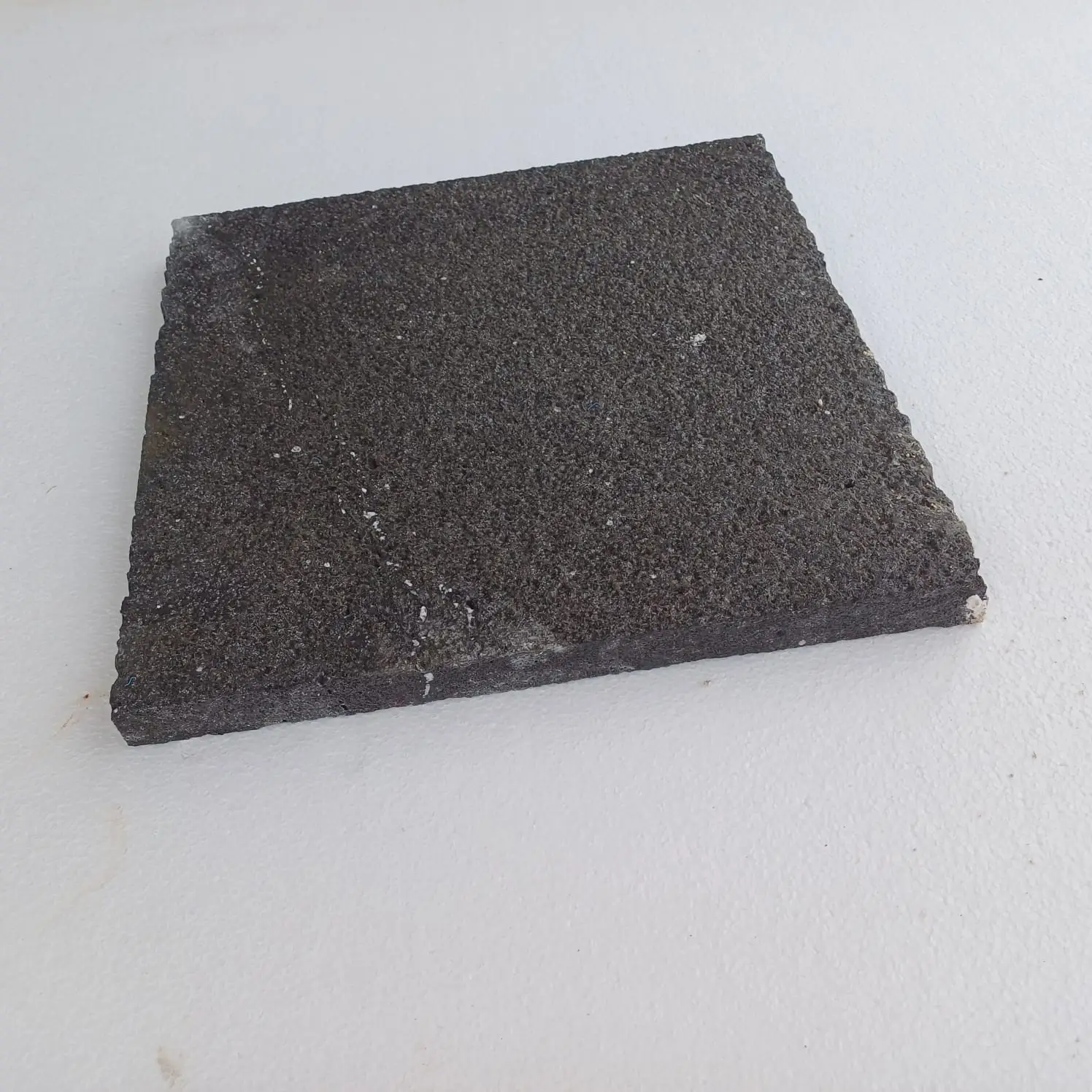
The color shift you’ll observe in black limestone over its first three to five years isn’t fading — it’s a controlled oxidation of iron-bearing minerals embedded in the calcite matrix. Arizona’s intense UV load drives this faster than manufacturers’ published timelines, which are typically based on temperate European quarry test data. What starts as a deep charcoal tone will develop warm undertones, and in high-sun exposures, the surface can lighten to a refined graphite-grey that most clients end up preferring over the original appearance.
The natural weathering process also brings out crystalline texture variations that were invisible under the quarry finish. Surface micro-relief increases slightly as softer calcite pockets respond to thermal expansion, creating what experienced stone masons call a “live surface” — one that reads differently in morning versus afternoon light. Your project timeline should account for this three-to-five-year maturation window rather than treating the installation-day appearance as the permanent benchmark.
Arizona Thermal Cycling and Its Effect on Surface Integrity
Thermal expansion in dense black limestone runs approximately 4.5–5.0 × 10⁻⁶ per °F, which sounds manageable until you multiply that coefficient across a 70°F diurnal swing at an Avondale installation. A 10-foot run of paving can see 0.03–0.04 inches of net daily movement at the surface skin, even when the structural mass below barely registers the change. That micro-movement is what drives the Avondale aging process at the surface level — not chemical breakdown, but mechanical cycling of the outermost mineral layer.
- Joint widths below 3/16 inch accelerate edge spalling under Arizona thermal load — spec 1/4 inch minimum for exposed installations
- North-facing surfaces age at roughly 60% the rate of south-facing slabs, so mixed-orientation layouts will develop uneven patina without a deliberate maintenance schedule
- Sealed surfaces slow the patina timeline by 30–40% — factor this in if your client wants the natural weathering look to develop within a specific timeframe
- Thin-format pavers under 3/4 inch are significantly more vulnerable to thermal delamination during peak summer cycles in the Phoenix metro
For projects in Scottsdale, where west-facing installations contend with both peak afternoon sun and radiant heat from adjacent masonry walls, you’ll need to spec 1.25-inch minimum thickness to prevent the thermal gradient from exceeding the material’s flexural strength at the base.
Reading the Black Limestone Patina in Arizona Conditions
The black limestone patina Arizona conditions develop isn’t uniform across all product grades — and this is where your material selection decision carries real long-term weight. Dense, low-absorption limestone (absorption rates below 0.5% per ASTM C97) develops a tight, even patina because moisture ingress is minimal and the oxidation front stays at the surface. Higher-absorption material, above 1.5%, allows mineral-laden water to penetrate and re-deposit calcite deposits that create white efflorescence blooms on the darkened surface — a combination that’s extremely difficult to manage aesthetically.
At Citadel Stone, we test absorption rates on every pallet before warehouse release specifically because this characteristic varies even within the same quarry batch. What leaves the extraction point at 0.4% absorption can arrive at 0.7% if it’s been exposed to humidity during shipping — so our warehouse quality checks include both moisture content verification and a spot-check density test before your order goes on the truck. That step prevents the efflorescence problems that appear at six to eighteen months and are almost impossible to trace back to the source without batch documentation.
Natural Weathering vs. Maintenance: Finding the Right Balance
The central question for any Avondale project is how much you want to manage the natural weathering trajectory versus allow it to develop organically. Both approaches are defensible, but they require different sealing protocols from day one — and switching approaches mid-cycle is expensive and technically challenging.
- Penetrating silane/siloxane sealers allow natural color evolution while blocking moisture and salt intrusion — best choice when clients want organic aging with durability protection
- Topical film sealers lock the appearance closer to the installation-day color but require full stripping and reapplication every 3–5 years in Arizona UV conditions
- Unsealed black limestone in Avondale will develop a consistent patina within 4–6 years but is vulnerable to oil staining in cooking or vehicle zones during that unprotected window
- Impregnating color-enhancer sealers deepen the black tone permanently and slow patina development, but they require reapplication every 3 years to maintain the enhancement effect
Natural weathering of natural black limestone paving slabs in Arizona typically follows a predictable arc when the base is properly constructed — but that predictability collapses quickly on installations with drainage problems. Standing water changes the oxidation chemistry and produces uneven, blotchy patina patterns that look like material defects rather than natural aging.
Base Preparation for Avondale Soil Conditions
Avondale sits on expansive clay soils with a plasticity index commonly ranging from 18 to 35 — significantly higher than the Scottsdale caliche zones most Arizona specifiers are familiar with. That clay expansion under moisture introduces a vertical movement component that standard 4-inch compacted base designs don’t adequately address. Your base spec should start at 6 inches of Class II aggregate and include a geotextile separation layer to prevent the clay fines from migrating upward and compromising compaction over time.
In Phoenix projects on similar soil profiles, installations that skipped the geotextile layer showed measurable surface irregularity at the five-year mark — not from the limestone itself, but from differential base settlement driven by seasonal moisture fluctuation. That movement shows up as lippage at joints and eventually as the kind of uneven patina bands that are really just reflections of the surface plane variation below.
- Minimum 6-inch compacted aggregate base on Avondale clay soils — not the 4-inch standard spec
- Geotextile separation layer between native soil and aggregate base, minimum 4 oz/yd² nonwoven fabric
- Slope minimum 1/8 inch per foot away from structures to prevent sub-base saturation
- Compact aggregate base in two lifts, not one — single-lift compaction on deep bases leaves a soft zone at mid-depth that settles differently than the top layer
Arizona Time Evolution: Tracking Color and Tone Changes
The Arizona time evolution of black limestone color follows three distinct phases that you should communicate clearly to clients before installation. Phase one, years zero to two, is the adjustment period where the surface protective coating from quarry processing wears off and the stone begins interacting directly with UV and atmospheric conditions. Phase two, years two to five, is the active patina development stage where color shifts are most noticeable — this is when client communication matters most because uninformed homeowners sometimes mistake normal patina for a product problem.
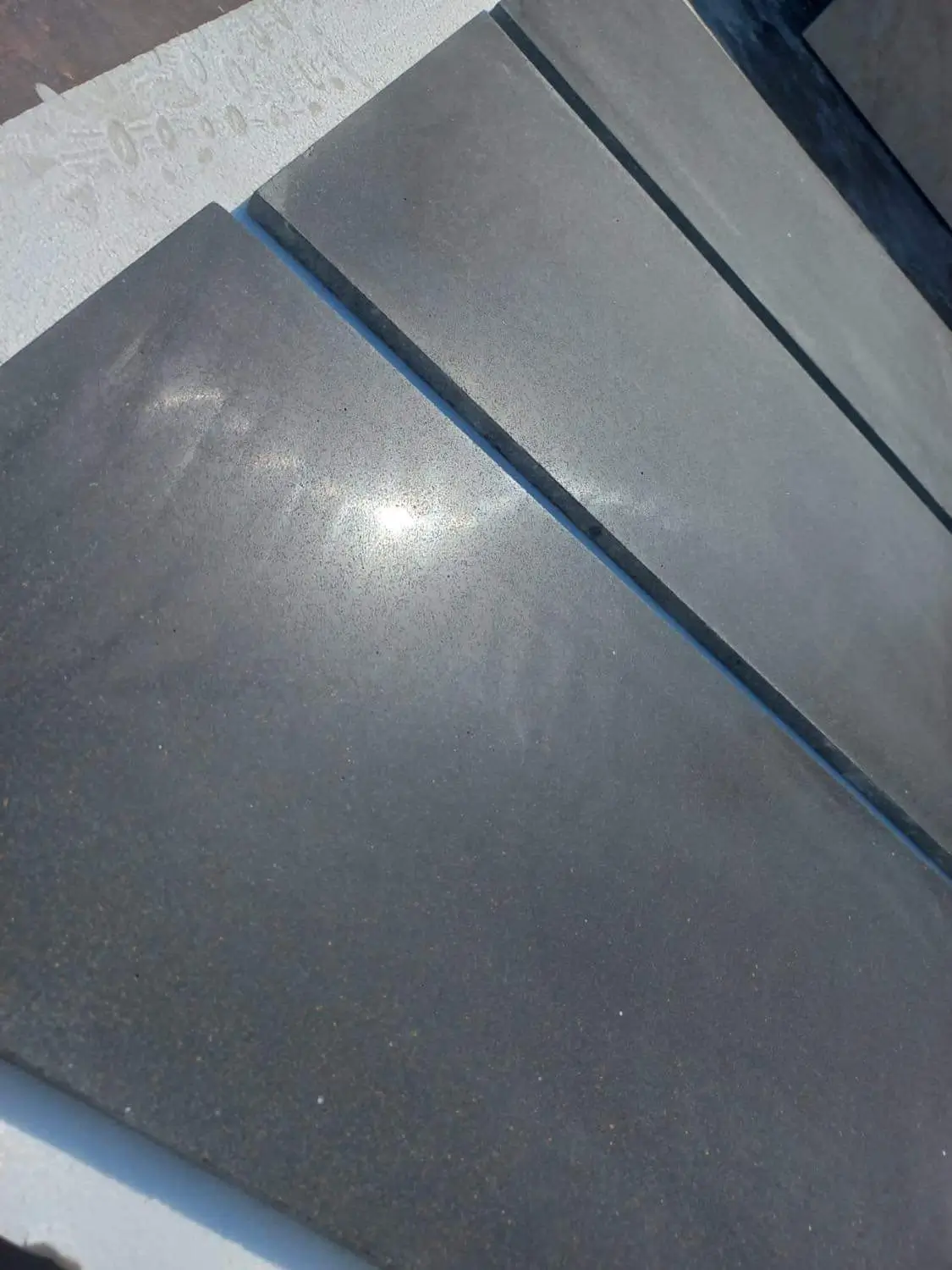
Phase three, year five onward, is the stable maturation phase. The surface has established its equilibrium appearance and changes become imperceptibly slow. For reference, you can explore our black limestone selection to see the range of finish options that affect how this three-phase evolution unfolds — brushed finishes tend to stabilize faster than polished because there’s less surface tension between the finish layer and the natural mineral expression.
How Your Finish Selection Influences Weathering Outcomes
Finish choice is probably the most underappreciated variable in the natural black limestone weathering Avondale conversation. Flamed finishes open the surface crystalline structure significantly, which accelerates patina development but also increases the absorption rate at the surface skin — not the bulk stone, just the top 1–2 mm. That elevated surface absorption means the flamed finish will show efflorescence more readily if drainage is poor and will require sealing within 30 days of installation rather than the 90-day window acceptable for honed or brushed material.
- Brushed finish: develops the most even, consistent patina across Arizona exposures — the mechanical texture holds light evenly as the color evolves
- Honed finish: slower patina development, higher visual contrast between aged and protected zones — requires diligent sealing maintenance to keep the aging process uniform
- Flamed finish: fastest patina development, most natural appearance trajectory, but highest maintenance demand in the first two years
- Sandblasted finish: intermediate behavior — more durable surface texture than flamed but more open than brushed, good choice for high-traffic zones
Long-Term Performance Benchmarks Across Arizona Climates
Natural black limestone paving in Arizona performs differently at different elevations and humidity profiles, and those differences are directly relevant to weathering rate and maintenance intervals. Projects in Tucson experience a monsoon moisture cycle that Avondale and the Phoenix metro don’t get at the same intensity — that late-summer humidity spike accelerates biological weathering and can introduce surface algae growth on north-facing or shaded slabs that would never appear in the low-desert west valley.
Field performance data from natural black limestone installations across Arizona shows that properly sealed material in the Phoenix metro corridor maintains structural integrity for 25+ years with biennial sealing and annual joint sand maintenance. The weathering is cosmetic, not structural — the compressive strength of dense black limestone, typically 12,000–15,000 PSI, is largely unaffected by the surface oxidation and color evolution that defines the aesthetic aging process. Your client’s 20-year performance expectation is realistic if the base is right and the sealing schedule is followed.
Project Planning, Lead Times, and Material Logistics
Getting your material quantities right matters more with black limestone than with lighter stones because color-matching replacement pieces after a year of natural weathering is essentially impossible — the original batch will have aged and a new batch won’t match regardless of nominal specification. Order 8–10% overage on every black limestone project and store the surplus in warehouse conditions away from direct sun. That surplus becomes your repair inventory, and it weathers alongside the installation if you stage it in a low-traffic outdoor zone from day one.
Citadel Stone’s warehouse inventory for black limestone product typically allows 1–2 week fulfillment on standard pallet quantities, which is considerably faster than the 6–8 week lead time common with direct import orders. For phased projects where you’re doing initial installation and then a second phase six months later, verify warehouse stock allocation at the time of first order — matching dye lots and quarry batches across phases is a detail our technical team manages during order processing, not something you want to sort out at the truck delivery point.
What Matters Most for Natural Black Limestone Weathering Avondale
Natural black limestone weathering in Avondale is manageable, predictable, and ultimately produces a beautiful result — but only when the foundational decisions are made correctly. Your base design, finish selection, initial sealing protocol, and overage order percentage collectively determine whether the natural weathering process looks intentional and refined or uneven and problematic. The material itself is extremely capable; the variables that create trouble are almost always specification or installation decisions made before the first slab goes down.
For projects where the rustic finish dimension of black limestone aging plays a central role in the design concept, Natural Black Limestone Paving Rustic Finishes for Fountain Hills covers how intentional surface texture selection shapes the long-term weathering character in ways that complement Arizona’s hardscape aesthetic — extending the same specification principles covered here into a different finish category and project profile. Understanding both the weathering science and the finish selection strategy gives you a complete specification framework. Citadel Stone offers brushed black limestone paving slabs in Arizona.