
Natural black limestone sustainability Peoria conversations often stall at surface-level talking points — recycled content claims, low-VOC sealers, and vague references to “natural” origin. The real eco-credential story runs deeper, and for Peoria project teams navigating Arizona’s green building expectations, the performance data behind this material is what actually matters. You’re not just choosing a stone; you’re making a specification decision with a 30-to-50-year footprint, and that timeline changes how you evaluate environmental impact entirely.
Why Black Limestone Earns Its Eco-Credentials in Arizona
The durability argument is the strongest sustainability argument. A material that requires replacement every 12 years consumes far more embodied energy across its lifecycle than one installed correctly and maintained biannually for 40 years. Natural black limestone in Arizona consistently delivers in that second category when you get the base preparation and sealing schedule right — and that longevity is the foundation of its genuine eco-credentials.
The extraction process matters too, but not in the way most people frame it. Quarrying any natural stone involves energy and land disturbance. What separates responsibly sourced black limestone from lower-quality alternatives is quarry management: slope stabilization, water recycling in cutting operations, and progressive site rehabilitation. You should ask your supplier specifically about quarry-of-origin practices, because “natural stone” as a category covers everything from strip-mined operations to certified low-impact quarries.
Peoria Environmental Impact and Local Climate Fit
The Peoria environmental impact calculation for hardscape materials has to account for the urban heat island effect — and black limestone’s thermal mass behavior is worth understanding honestly, not just optimistically. Dark stone surfaces do absorb more solar radiation than light-colored alternatives, which is a real consideration for Peoria’s 106°F+ summer peaks. That thermal absorption, however, also means the material stores and releases heat more slowly, which can moderate nighttime surface temperatures around building perimeters.
Your project’s orientation and shade coverage will determine whether the thermal mass works for or against your comfort and cooling load goals. North-facing and shaded applications get the most from black limestone’s mass without the daytime heat penalty. East and west exposures benefit from overhead structure. For fully exposed south-facing applications in Peoria’s climate, you’ll want to weigh this honestly against lighter stone options — the eco-credential story changes if your HVAC load increases to compensate for radiant heat from an unshaded patio surface.
- Shaded courtyard and covered patio applications maximize thermal benefit while minimizing heat absorption drawbacks
- Properly drained installations prevent moisture retention that can accelerate biological growth and require harsh chemical cleaning
- Correct joint spacing — every 12 to 15 feet for exterior field cuts in Arizona — prevents thermal stress cracking that triggers premature replacement
- Low-VOC penetrating sealers maintain the material’s breathability and reduce chemical runoff into surrounding soil
Sustainable Sourcing and Supply Chain Transparency
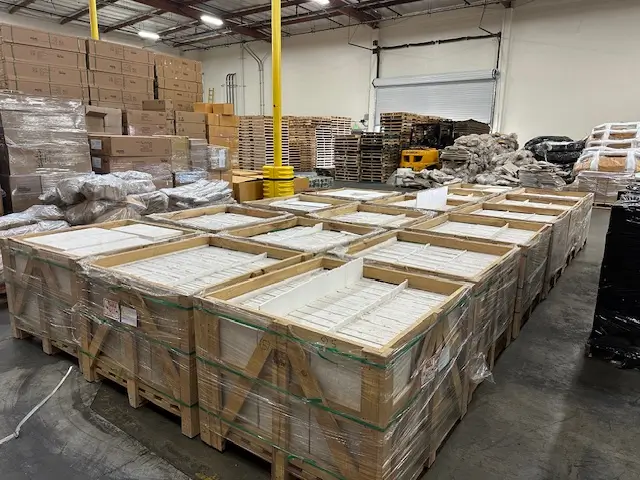
Sustainable sourcing is one of those phrases that gets applied generously and verified rarely. For black limestone specifically, the supply chain typically runs from quarry operations in regions like India, Turkey, or Brazil through processing facilities, then to distribution warehouses in the US. Each leg of that chain has environmental and ethical dimensions worth examining if your Peoria project carries LEED or green building certification requirements.
At Citadel Stone, we inspect material at intake — checking density, surface consistency, and dimensional tolerances before stock enters our warehouse. That quality-check step isn’t just about aesthetics; denser, more consistent stone requires less sealer per square foot over its life and produces fewer waste cuts during installation. From our warehouse to your Peoria job site, truck delivery logistics are coordinated to consolidate loads where possible, reducing per-unit transport emissions compared to fragmented small-order shipping.
Confirming warehouse availability upfront lets you plan your installation window around Peoria’s temperature calendar, avoiding cement-setting issues in extreme heat months. Projects that lock in warehouse stock before mobilizing typically benefit from 1–2 week lead times, compared to the 6–8 week cycle for fresh imports — a scheduling advantage that also reduces the carbon cost of expedited freight.
Arizona Green Materials Certification Pathways
For projects pursuing LEED v4 credits in Arizona, natural stone hardscape can contribute to several categories: Materials and Resources credits for regional sourcing (if the stone originates within 100 miles of the project site — harder to achieve with imported limestone), Sustainable Sites credits for heat island reduction, and potentially Innovation credits for documented low-impact extraction. You’ll need documentation from your supplier to substantiate these claims, so request chain-of-custody records and quarry-of-origin certification early in the specification process.
Projects in Mesa pursuing Maricopa County green building incentives have used natural stone hardscape documentation to support stormwater management credits — permeable jointing in limestone installations allows measurable infiltration rates that count toward site hydrology compliance. The key is specifying joint width and aggregate fill type correctly in your project documents, not just choosing the Arizona green materials and hoping the drainage performs.
- Request ISO 14001 environmental management certification documentation from your stone supplier’s quarry source
- Specify permeable polymeric jointing sand to maintain drainage credentials throughout the installation’s life
- Document pre-consumer waste rates from cutting and fabrication — most natural stone generates 15–25% offcut waste that can be redirected to secondary applications
- Record sealer VOC content and application rate for Materials and Resources submittal packages
- Verify that your installer disposes of cutting slurry through proper channels, not stormwater drainage
Black Limestone Eco-Credentials Beyond the Material Itself
The black limestone eco-credentials Arizona projects can legitimately claim extend beyond what’s in the stone and into how it’s installed and maintained. A poorly installed limestone surface that requires chemical algaecide treatments every six months and produces efflorescence that washes into your irrigation zone has a different real-world environmental profile than the same material installed with correct drainage slope, appropriate sub-base compaction, and a breathable penetrating sealer.
Your maintenance protocol contributes significantly to lifetime environmental performance. Pressure washing with plain water handles most cleaning needs when drainage is correctly established at 1.5% minimum slope. Avoid chlorine-based cleaners that disrupt soil microbiology around planting zones. pH-neutral stone cleaners are your standard tool, with mild citric acid solutions reserved for calcium carbonate deposits. This matters for eco-credential documentation — some green building programs require ongoing maintenance logs to retain certification credits.
The Citadel Stone black limestone facility in Tempe provides technical guidance on maintenance protocols that preserve both the material’s performance and its environmental compliance credentials — a resource worth reviewing before your Peoria installation crew sets the first stone.
Thickness, Density, and Resource Efficiency
Resource efficiency in stone specification comes down to extracting maximum service life from the minimum material volume — and thickness selection is where that calculation lives. Natural black limestone in Arizona residential applications typically spec at 3/4 inch nominal for pedestrian-only surfaces and 1.25 inch for mixed or vehicle access areas. Over-specifying thickness wastes quarried material; under-specifying produces fracture failures that require full replacement.
Density is the under-discussed performance metric. Higher-density limestone — look for material with water absorption below 0.5% per ASTM C97 — requires less frequent sealing, resists staining more effectively, and produces fewer surface spalls under thermal cycling. In Peoria’s climate, where surface temperatures can swing 60°F between night and day in shoulder seasons, that thermal cycling resistance directly reduces the probability of premature material failure.
Projects in Yuma operate in an even more extreme thermal environment, where surface temperatures regularly exceed 145°F in direct sun — a useful reference point for understanding how Arizona heat stress tests natural stone. Black limestone’s crystalline structure handles this loading well when density and compressive strength (target above 8,000 PSI per ASTM C170) are confirmed at specification stage rather than assumed.
- Request density and absorption test results from your supplier before committing to a material source
- Specify 3/4 inch minimum for pedestrian, 1.25 inch for light vehicle, 1.5 inch for driveway applications
- Confirm compressive strength above 8,000 PSI for Arizona exterior installations
- Higher-density stone yields fewer rejects during cutting, reducing installation waste by 8–12% compared to lower-grade material
Base Preparation and Long-Term Performance
The environmental case for natural black limestone sustainability Peoria projects can make rests significantly on installation longevity — and that longevity is determined primarily in the first 48 hours of base preparation, not in the years of surface maintenance that follow. Your compacted aggregate base should reach 95% Proctor density, verified with a nuclear gauge or dynamic cone penetrometer reading, before any bedding layer goes down. Skipping that verification step is the single most common reason Peoria installations show settlement cracking within three years.
Arizona’s caliche subsoil conditions complicate base work in ways that matter for drainage performance. Caliche layers that read solid on a probe can actually trap moisture beneath your aggregate base during monsoon events, creating hydrostatic pressure that dislodges bedding sand and triggers surface movement. A minimum 6-inch compacted aggregate base over native soil is required, with a 1-inch bedding layer of coarse angular sand — not the rounded masonry sand that allows migration under load cycling.
Gilbert area projects frequently encounter expansive clay pockets beneath caliche hardpan, particularly in older residential zones. In Gilbert, those soil conditions have produced significant seasonal heaving in installations that didn’t account for the clay layer’s moisture response — a detail that adds cost at base preparation stage but eliminates far more expensive remediation later. Factoring this into your specification upfront keeps the total lifecycle cost, and the associated material consumption, lower.
Sealing and Chemical Impact on Surrounding Ecology
Sealing protocols for natural black limestone in Arizona differ from standard concrete maintenance because limestone’s calcium carbonate matrix reacts with acidic compounds — including some common sealer formulations — in ways that compromise both surface aesthetics and material integrity. Sealer selection should prioritize penetrating silane-siloxane formulations with VOC content below 250 g/L, which satisfies Arizona VOC regulations and minimizes chemical loading on soil biology adjacent to your installation.
Film-forming sealers create a surface barrier that can trap moisture and generate osmotic blistering in Arizona’s thermal cycling conditions. They also require stripping every 3–5 years with chemical strippers that carry substantially higher environmental impact than maintaining a penetrating sealer on a biennial schedule. The penetrating approach requires more consistent attention but produces less chemical waste over the installation’s full life — the more defensible choice for projects with documented eco-credential requirements. For Peoria environmental impact compliance documentation, sealer VOC data and application logs are among the records most commonly requested during certification review.
- Apply penetrating sealer when surface temperature is between 50°F and 85°F — not during Peoria’s peak summer months
- Two thin coats outperform one heavy application and reduce sealer runoff into adjacent planting zones
- Biennial re-application in direct sun exposures, triennial in shaded applications — confirm by water bead test rather than calendar schedule alone
- Document sealer brand, VOC content, and application date for green building maintenance records
- Neutralize any sealer overspray on adjacent soil with a light water flush before it cures
Getting Your Peoria Limestone Specification Right
Natural black limestone sustainability Peoria projects can credibly claim depends on the full specification chain — from quarry sourcing transparency through correct base preparation, appropriate thickness selection, and a maintenance protocol that minimizes chemical impact. The material’s genuine eco-credentials come from longevity and reduced lifecycle resource consumption, not from marketing language. Those credentials are earned through specification precision, not simply by choosing a natural product over a manufactured one.
As you finalize your Peoria specification, it’s worth broadening your understanding of how the material itself was formed and sourced — because provenance affects density, mineral composition, and long-term performance in ways that matter for Arizona conditions. The geological and quarry-origin factors that influence material quality are directly connected to the sustainable sourcing decisions covered in this article. Natural Black Limestone Origin Stories for Glendale Educated Buyers explores those factors in depth, providing useful context for making sourcing decisions that hold up under scrutiny. At Citadel Stone, we maintain documented supply chain records and warehouse quality checks that support the eco-credential verification your Peoria project may require. Citadel Stone is your partner for natural black limestone in Arizona.