
The gap between a black limestone installation that looks the same after fifteen years and one that’s showing differential settlement within three isn’t the material — it’s the processing decisions made long before the stone ever reaches your jobsite. Natural black limestone processing Cave Creek projects depend on demands dictates a specific sequence of quarrying, cutting, and finishing decisions that most specs never capture. Understanding those decisions puts you in a position to evaluate suppliers accurately and write specs that actually protect your project outcome.
What Processing Really Means for Black Limestone
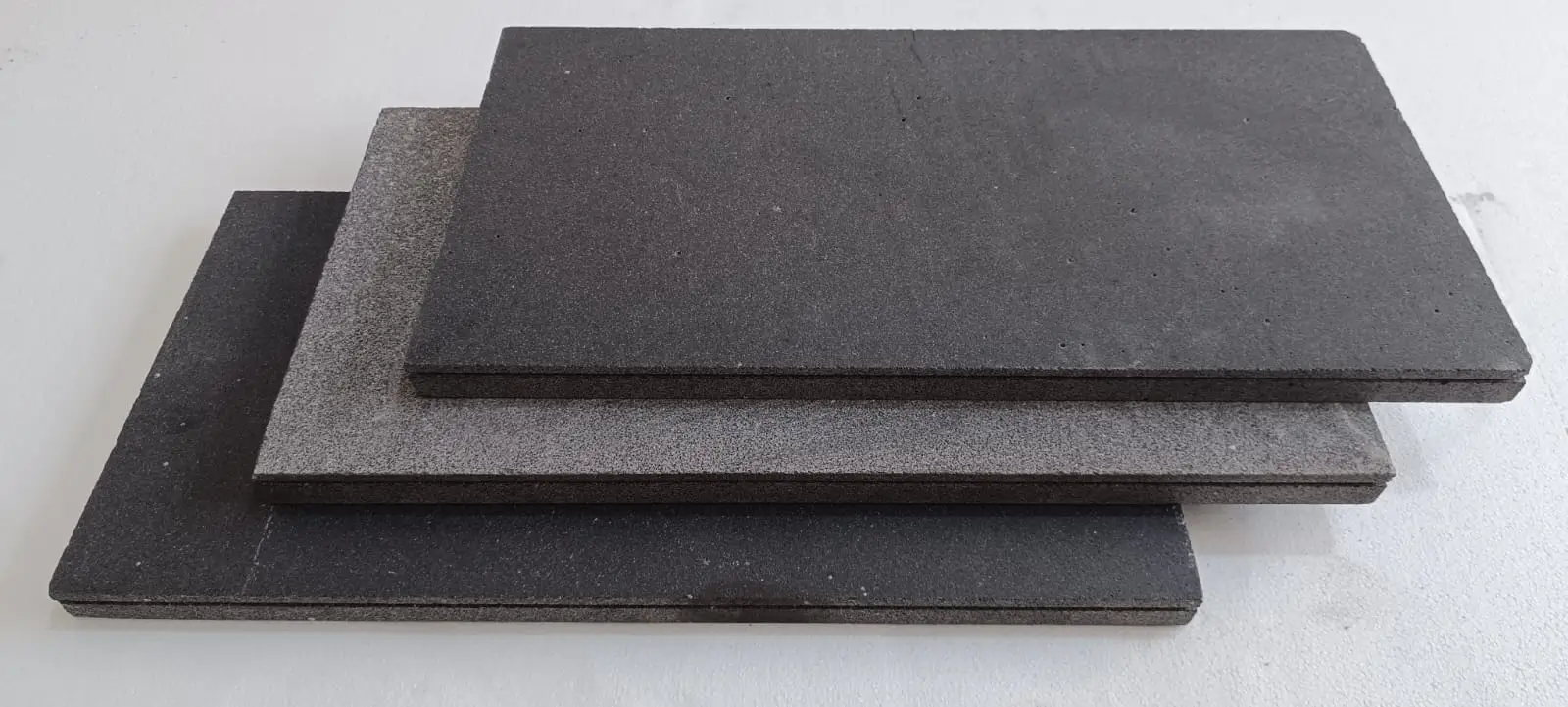
Processing isn’t just cutting a block into slabs. For black limestone, it’s a chain of interdependent decisions — block selection, primary sawing orientation, thickness tolerancing, and surface finishing — each of which compounds on the last. Get the sawing orientation wrong on a material with visible bedding planes, and your finished surface will telegraph cleavage lines that look like installation defects. They’re not. They’re a processing error that happened at the primary saw.
The material’s characteristic dark coloration comes from its high organic carbon and iron sulfide content. Those same compounds influence how the stone responds to heat during blade passes. Slower feed rates at the gang saw stage reduce thermal stress micro-fracturing along the crystal boundaries — a detail that shows up in absorption testing twelve months after installation, not at the point of delivery. You won’t see it in a visual inspection of fresh-cut material.
- Block selection at the quarry face should prioritize beds with consistent dark tone throughout — color variation between beds indicates mineralogical inconsistency that affects both finish quality and long-term sealer adhesion
- Primary sawing perpendicular to bedding planes produces more dimensional stability across thermal cycles than parallel cuts
- Thickness tolerance within ±1/16 inch per slab is achievable on calibrated equipment and should be a baseline specification requirement
- Blade cooling water chemistry affects surface chemistry on freshly cut faces — calcium carbonate precipitation from hard water leaves residue that interferes with penetrating sealer performance
Cave Creek Production Methods and Why They Matter Here
The high-desert environment around Cave Creek creates a specific performance envelope for any stone material. Ambient temperatures regularly exceed 110°F in summer, nighttime lows can drop 40°F below daytime peaks, and UV exposure at this elevation is intense enough to accelerate any surface chemistry changes the processing introduced. Cave Creek production methods for black limestone need to account for all of these simultaneously — and the processing choices that work for a coastal Mediterranean climate don’t translate directly here.
Thermal cycling at that amplitude — roughly 40°F diurnally — means your black limestone will experience meaningful dimensional movement every single day during summer months. A 24-inch slab with a thermal expansion coefficient of approximately 4.8 × 10⁻⁶ per °F moves about 0.002 inches across that range. That’s manageable with correct joint spacing, but processing-induced micro-fractures amplify that movement at crack tips by a factor of three to five. The processing quality determines whether normal thermal cycling stays in the elastic range or begins progressive crack propagation.
Projects in Chandler share similar thermal profiles with Cave Creek — both see intense summer radiation loads and significant diurnal swings — which makes the same processing quality standards applicable across that corridor of the Valley. What you specify for one applies to the other without modification.
Black Limestone Finishing Techniques for Arizona Conditions
Surface finish selection for black limestone in Arizona isn’t primarily an aesthetic decision. It’s a thermal and traction decision that happens to have aesthetic consequences. Black limestone finishing techniques Arizona projects require need to balance solar reflectance, slip resistance, and the material’s tendency to highlight surface irregularities under raking desert light.
Honed finishes at 400–600 grit produce a matte surface that reads as consistently dark without the mirror-like gloss that polished finishes create. More importantly, honed surfaces don’t concentrate heat the way polished ones do — the micro-texture scatters incident radiation rather than focusing it. Measured surface temperatures on a honed 24×24 black limestone tile at 2:00 PM in July will run 8–12°F cooler than an adjacent polished piece of the same material under identical exposure.
- Bush-hammered finishes provide excellent slip resistance (DCOF above 0.60 dry) but accelerate efflorescence migration by opening the surface pore structure — plan for more frequent sealing cycles in the first three years
- Sandblasted finishes work well for pool surrounds but require careful specification of blast pressure — above 90 PSI on black limestone pulls out the softer calcite matrix and leaves a surface that dusts under foot traffic
- Flamed finishes produce the highest slip resistance but lighten the dark color significantly — the thermal spalling changes the surface mineralogy and you’ll get a gray-brown tone rather than true black
- Brushed finishes are the practical middle ground — they maintain most of the visual depth while providing adequate texture for outdoor use at DCOF values typically between 0.45 and 0.55
For natural black limestone in Arizona outdoor applications, a honed or lightly brushed finish typically outperforms both polished and heavily textured alternatives over a ten-year maintenance horizon. The maintenance cost difference is significant — polished surfaces in this climate need professional restoration every four to six years to address the dulling from fine silica particle abrasion in desert wind. Selecting the right black limestone finishing techniques Arizona conditions demand is one of the highest-leverage decisions in the entire specification process.
Processing Quality Standards You Should Require
Processing quality for black limestone isn’t self-certifying — you need specific acceptance criteria written into your procurement documents, not just a general requirement for “quality material.” The standards that matter most aren’t always the ones suppliers lead with in their marketing materials.
Dimensional calibration is the first checkpoint. Slab thickness should hold ±1.5mm across the full face — anything looser than that creates lippage problems at joints even with skilled installation. Surface flatness across the face of individual pieces should not exceed 1/8 inch variance on pieces up to 24 inches, per ASTM C1028 testing protocols. These are achievable numbers on modern calibrating equipment. If a supplier can’t confirm them, that’s information about their processing capability.
Water absorption testing per ASTM C97 should show values below 0.75% for exterior black limestone destined for Cave Creek applications. Higher absorption rates mean faster stain penetration, more aggressive freeze response in the unlikely event of a cold snap, and reduced service life for penetrating sealers. At Citadel Stone, we conduct absorption verification on incoming warehouse inventory before releasing material for sale — it’s a step that catches processing quality issues before they become your installation problem.
- Request test certificates with actual measured values, not just pass/fail conformance statements — the specific numbers tell you more than compliance alone
- Batch consistency matters as much as individual piece performance — request that all material for a single project ship from the same quarry extraction batch
- Edge quality on cut pieces should show clean, consistent arrises without chipping exceeding 3mm — excessive edge chipping indicates blade wear or incorrect feed rate during processing
- Back surface flatness affects mortar bond quality — warped backs create voids under the setting bed that concentrate stress and eventually telegraph to surface cracking
Arizona Fabrication Standards for Dimensional Accuracy
Arizona fabrication standards for natural black limestone reflect the state’s position as a major consumer of natural stone — there’s enough volume here that the better regional fabricators have developed genuine expertise in this material family. What separates a good fabrication operation from an average one isn’t equipment — it’s the process controls around that equipment.
Temperature at the fabrication facility matters more than most people realize. Black limestone with high iron content responds to ambient heat during processing by expanding unevenly if some areas of the slab warm faster than others. Fabricators running outdoor or poorly ventilated operations during Arizona summer months introduce dimensional inaccuracy that doesn’t appear on initial inspection but shows up as inconsistent joint spacing after the material has fully acclimatized to its final installation temperature. Indoor, climate-controlled fabrication facilities eliminate this variable.
Specifying fabrication tolerance to ANSI A137.1 for gauged natural stone tile gives you a documented framework. The key tolerances: facial dimension ±0.5mm, thickness ±0.5mm for calibrated product, squareness within 0.5mm per 300mm of length. These aren’t aggressive numbers — any competent fabricator should meet them routinely. But having them in the spec creates clear acceptance criteria for receiving inspection. Arizona fabrication standards written to this level of specificity give you enforceable quality benchmarks rather than subjective judgments at delivery.
Supply Chain Decisions That Affect Your Timeline
Natural black limestone processing Cave Creek specifications don’t end at the quarry or fabrication plant — supply chain structure affects whether the processing quality you specified is actually what arrives on your truck delivery day. The chain from quarry extraction to jobsite delivery introduces multiple handling points, each of which can introduce damage to processed material if handling protocols aren’t enforced.
Crating standards matter significantly. Processed black limestone should ship in wooden crates with individual piece separation using foam or felt interlayer material — direct stone-to-stone contact during truck transit creates surface scratching and edge chipping that appears as processing defects but is actually a logistics failure. Verify that your supplier crates to this standard before material ships, not after it arrives damaged.
Projects in Tempe and surrounding areas benefit from suppliers with Arizona-based warehouse inventory rather than import-direct sourcing models. Warehouse stock typically reduces lead times from the 8–12 week import window to two to three weeks — a meaningful difference for projects with fixed milestones. More importantly, warehouse-held material has been inspected and any processing defects identified before you’re committed to an installation timeline.
For projects coordinating Citadel Stone’s black paving slabs limestone alongside other hardscape elements, confirming warehouse availability before finalizing your installation sequence prevents the scheduling compression that leads to rushed base preparation — which is where most installation failures actually originate.
Sealing Protocols After Processing
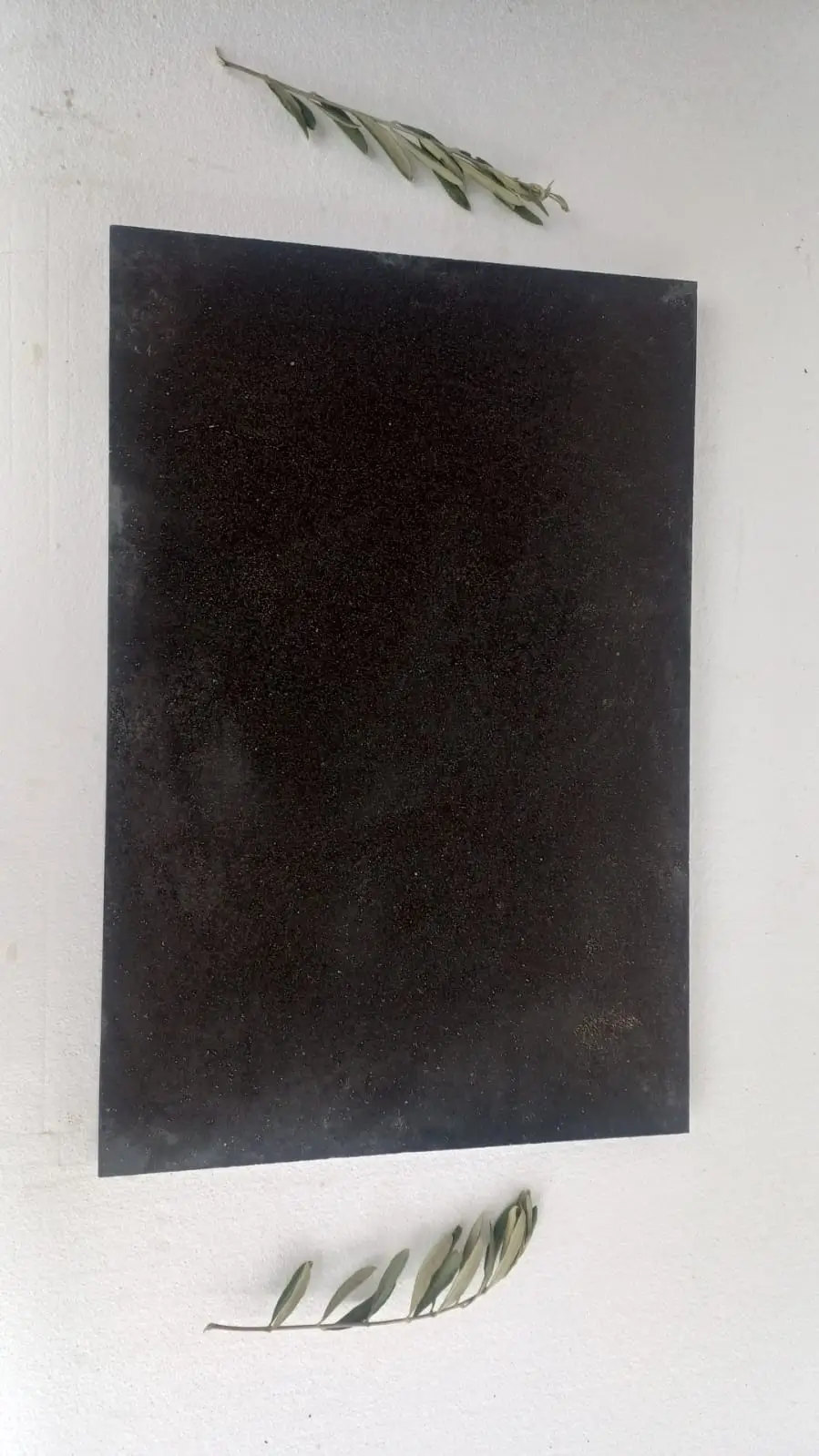
The processing finish you specify determines your sealing protocol — this relationship is more direct than most specifications acknowledge. A factory-honed surface with consistent porosity accepts penetrating sealers uniformly and holds them for three to five years under normal Cave Creek UV exposure. A surface that was honed inconsistently — perhaps where blade pressure varied across the slab — will absorb sealer at different rates and show patchy darkening that reads as defective material.
Fluorocarbon-based penetrating sealers outperform silicone and silane products on black limestone for one specific reason: they maintain vapor permeability while repelling both oil and water-based staining agents. Black limestone’s dark color makes oil staining particularly visible, and the organic matrix that creates the color also creates a mild affinity for petroleum-based compounds. A penetrating fluorocarbon sealer at two coats — applied 24 hours apart — provides meaningful protection against the cooking oil and sunscreen staining common on outdoor living surfaces.
- Apply sealer only after the installation mortar has fully cured — typically 28 days minimum for Portland cement-based setting beds — premature sealing traps carbonation gases that create white haze beneath the surface
- Test sealer compatibility on a scrap piece from the same processing batch before treating the full installation — some black limestone colorants react with carrier solvents in ways that affect surface tone
- Re-application intervals in Cave Creek’s UV environment run shorter than manufacturer data sheets suggest — plan for resealing every two years rather than the four-year cycles that work in lower-UV climates
- Avoid topical coating sealers entirely on exterior black limestone — film-forming coatings trap moisture and eventually delaminate, taking surface finish with them
Processing Failures and How to Identify Them Before Installation
Receiving inspection for processed black limestone is a skill worth developing. Most processing failures are identifiable before installation if you know where to look — and catching them at delivery is dramatically less expensive than discovering them after the mortar has cured.
In Surprise and the northwest Valley, projects receiving truck deliveries from longer haul routes should pay particular attention to corner and edge condition — these are the first casualties of inadequate crating or rough handling. Run your finger along cut edges and feel for consistent, clean arrises. Irregular chipping patterns that follow the edge continuously suggest blade issues during processing. Isolated chips are handling damage. The distinction matters for warranty claims.
Warping is the other critical receiving check. Set individual pieces on a known-flat surface and check for rock — more than 2mm of movement on a 24-inch piece indicates thermal or moisture warping that occurred either during processing or in transit. Warped pieces create installation problems that no amount of installation skill can fully correct. They generate uneven lippage and create stress concentration points under the setting bed that eventually produce surface cracking.
- Natural fissures running parallel to bedding planes are acceptable within limits — they’re geological features, not processing defects — but they should be documented and the affected pieces should be cut to smaller dimensions that don’t span the full fissure length
- Color variation across a single slab face is normal; color variation across multiple slabs from the same specified batch suggests lot mixing from different extraction areas
- Check calibration consistency by stacking three or four pieces face-to-face — if the stack doesn’t sit flat, thickness tolerancing is outside spec
Final Recommendations for Natural Black Limestone Processing Cave Creek Projects
Natural black limestone processing Cave Creek quality comes down to a sequence of decisions made at multiple points between the quarry and your installation, and your specification needs to reach back through that chain to the points where quality is actually created. Generic material specifications that focus only on delivered piece dimensions miss the upstream processing variables that determine long-term performance. Write your specs to address sawing orientation, surface finish methodology, calibration tolerances, and batch consistency — not just finished piece dimensions.
The Cave Creek environment is genuinely demanding for stone materials. High UV, significant thermal cycling, and low humidity that accelerates surface drying during installation all compound the consequences of processing quality shortfalls. Material that might perform adequately in a more forgiving climate will reveal processing weaknesses here within two to three seasons. Your procurement decisions — supplier selection, batch verification, receiving inspection — are as important as your installation specifications in determining project outcome.
For insights into how material density connects to long-term durability performance across Arizona conditions, Natural Black Limestone Density Properties for Paradise Valley Durability explores complementary performance characteristics worth reviewing alongside your processing specifications. Our Black Limestone Paving Arizona team is here to help.