
Surface texture governs long-term performance in Arizona paving specifications far more than most project documents acknowledge — and natural black limestone cleft Queen Creek installations make this point with unusual clarity. The cleft face isn’t a cosmetic detail; it’s a structural characteristic that alters drainage geometry, thermal absorption patterns, and slip resistance in ways that smooth or honed finishes simply cannot replicate. Understanding exactly how the cleft plane behaves under Queen Creek’s intense solar load is essential before committing to installation depths and joint configurations.
What Cleft Finish Actually Means for Black Limestone
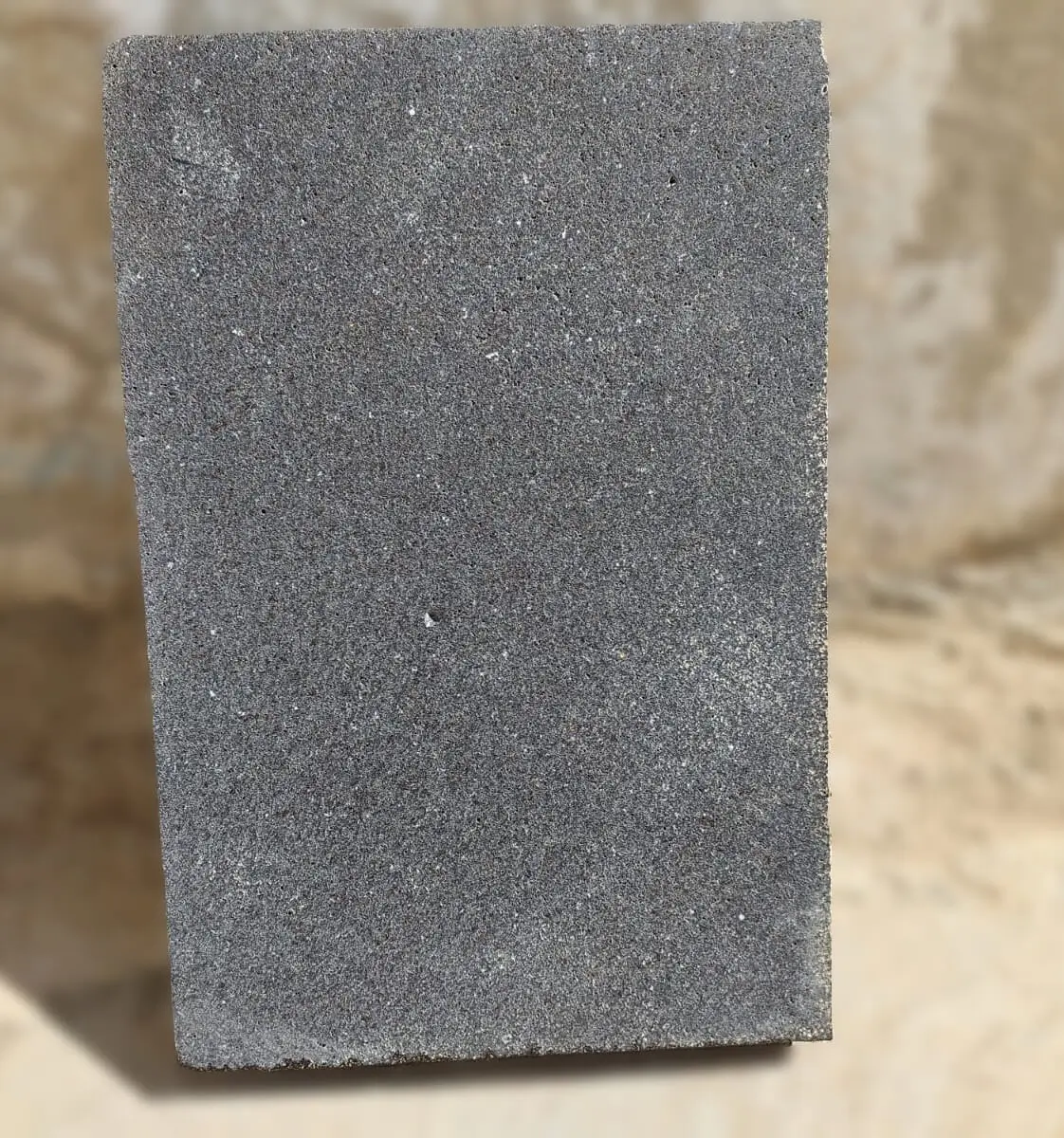
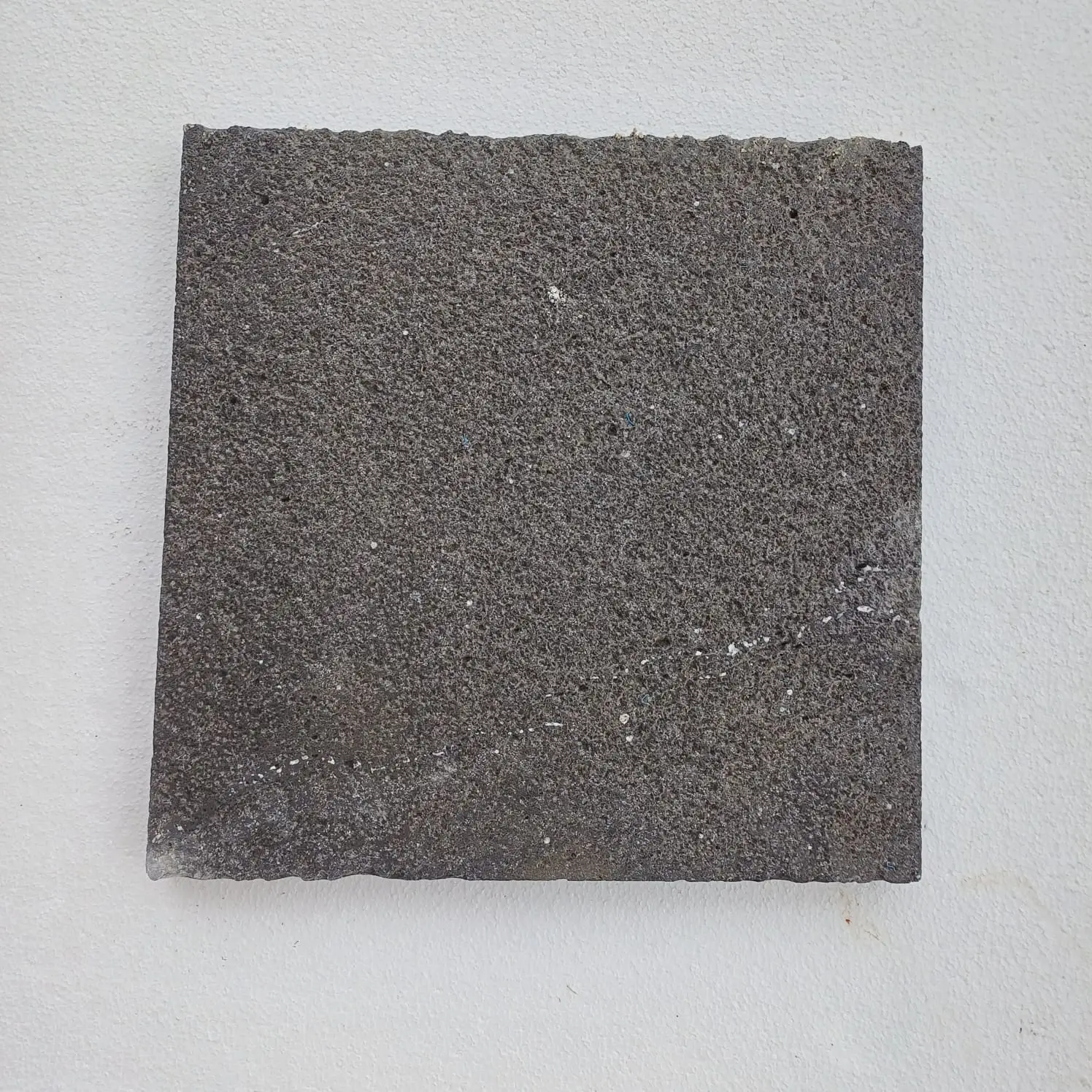
The term “cleft finish” gets used loosely in the trade, so let’s define it precisely for black limestone. Cleft surface results from hand-splitting the stone along its natural bedding planes — the same planes laid down during sediment compression millions of years ago. You’re not cutting or grinding a face into the material; you’re revealing what was already there. That distinction matters because the exposed surface retains the stone’s original crystalline microstructure, with micro-ridges and valleys typically ranging from 2mm to 8mm in relief depending on the quarry stratum.
Black limestone with a cleft face exhibits a directional texture — the ridges run roughly parallel to the original sediment layers. This directionality affects how water sheds from the surface and where foot traffic creates wear patterns over time. Your layout orientation relative to slope and prevailing foot traffic direction should account for this grain before installation begins.
The rough surface also increases effective surface area significantly compared to sawn or honed limestone, which has direct consequences for sealing product consumption and resealing intervals in Arizona’s UV-intense environment. This is one reason natural black limestone cleft Queen Creek specifications deserve closer attention than standard paving documents typically provide.
Thermal Performance in Queen Creek Conditions
Queen Creek’s summer ambient temperatures routinely push past 110°F, and that’s air temperature — surface readings on dark paving materials run substantially higher. Black limestone’s darker coloration absorbs more solar radiation than buff or cream varieties, which means your surface temperatures can reach 140–155°F on unshaded sections during peak afternoon hours. That’s a real consideration for barefoot pool surround applications.
Here’s what most specifications miss: the cleft surface texture actually works in your favor thermally. The micro-ridges create micro-shadow at low sun angles — early morning and late afternoon — which reduces peak surface temperature by 8–12°F compared to a polished black limestone surface under identical exposure. The texture scatters direct radiation rather than allowing flat-plane absorption. You won’t eliminate the heat differential versus lighter stones, but you do gain a meaningful performance buffer that’s absent from honed or polished alternatives.
- Thermal expansion coefficient for black limestone runs approximately 4.2–5.1 × 10⁻⁶ per °F — manageable with proper joint spacing
- Queen Creek’s diurnal temperature swing of 30–40°F creates daily expansion-contraction cycles demanding compressible joint fill
- Thermal mass accumulation through the afternoon benefits evening entertaining spaces — slabs retain warmth 2–3 hours past sunset
- North-facing and shaded installations behave fundamentally differently and require separate joint specifications
In Peoria, where residential lots typically have less mature tree canopy than older East Valley neighborhoods, full-sun exposure is the default assumption — sizing your expansion joints at 3/8 inch rather than the standard 1/4 inch gives you adequate accommodation for the full thermal cycle without visible gapping in winter.
Slip Resistance and the Cleft Advantage
Pool surrounds, outdoor kitchen areas, and covered patios with water exposure demand slip resistance that you can quantify, not just describe qualitatively. The cleft face on black limestone delivers measurable traction improvement over smooth-finish alternatives. ASTM C1028 wet dynamic coefficient of friction (DCOF) testing on cleft black limestone typically returns values in the 0.62–0.74 range depending on the specific stratum’s relief depth — comfortably above the 0.42 minimum threshold required for wet pedestrian applications under most commercial specifications.
The Queen Creek natural split texture achieves this performance without any applied texture treatments or sandblasting, which means it doesn’t degrade the way mechanically textured surfaces can over years of cleaning and UV exposure. Your installed slip resistance at year 15 will be functionally identical to day-one performance, provided joints are maintained properly.
- DCOF values above 0.60 on cleft black limestone qualify it for pool deck use in most Arizona jurisdictions
- Wet barefoot testing should be conducted — dry DCOF values are not the relevant specification for pool applications
- Micro-ridges channel water away from the pedestrian contact surface even on near-flat installations
- Textured grout joints add secondary drainage capacity — specify non-sanded grout at 1/4 inch minimum for cleft profiles
Base Preparation for Cleft Limestone in Arizona
The cleft surface’s irregular bottom face creates a specific challenge that smooth-cut limestone doesn’t present. The split underside of each slab is just as irregular as the top, which means your mortar bed needs to accommodate variation in bearing contact that can reach 6–8mm across a single 24×24 inch paver. Standard wet-set mortar beds work well here — back-buttering each piece before setting eliminates the void pockets that lead to hollow-sounding, rocking pavers within the first year.
Arizona’s expansive soils introduce movement below the slab that compounds this challenge. In Queen Creek specifically, native caliche layers at 24–36 inches provide good bearing capacity, but the upper soil profile can exhibit 1–2 inches of seasonal movement in wet years. Your base specification should include a minimum 6-inch compacted Class II base aggregate, with geotextile fabric separating native soil from aggregate to prevent fines migration during monsoon saturation events.
- Compaction to 95% Proctor density is the minimum acceptable standard — field verify with nuclear densometer testing, not visual inspection
- Mortar bed thickness of 1.5–2 inches accommodates the variable cleft back face without void formation
- Perimeter restraint edges prevent lateral creep that cleft pavers are slightly more susceptible to than dimensionally consistent sawn pavers
- Slope of 1/8 inch per foot minimum maintains drainage without creating a perceptible grade underfoot
Thickness Selection for Natural Black Limestone Paving in Arizona
Natural black limestone paving in Arizona comes in several nominal thicknesses, and the cleft surface format complicates dimensional tolerancing beyond what standard specifications assume. A “30mm nominal” cleft slab may range from 24mm to 38mm across a single piece — that’s the nature of hand-split material, and it’s not a defect. Your setting bed must absorb this variation rather than fighting it.
For residential pedestrian applications in Queen Creek, 30mm nominal (1.25 inch) is the practical minimum. At this thickness, the material handles the point loads of patio furniture, outdoor kitchens, and normal foot traffic without deflection risk. Vehicular applications — driveway approaches, motor courts, golf cart paths — need 40mm nominal minimum, and even then, a continuous mortar bed rather than sand-set is mandatory.
At our black limestone paving facility, we pre-sort cleft limestone by thickness tolerance bands before warehouse staging, which allows you to specify tighter dimensional ranges when your project detail requires it. This sorting step is particularly valuable for elevated deck applications where consistent bearing height matters structurally.
Sealing Strategy for Black Limestone Rough Surface in Arizona
The Arizona textured paving environment creates a sealing challenge that flat-climate specifications don’t adequately address. UV radiation at Queen Creek’s elevation degrades most penetrating sealers in 18–24 months rather than the 3–5 year cycles manufacturers project for temperate climates. You’ll need to build a more aggressive resealing schedule into your maintenance specification from day one.
For black limestone rough surface applications specifically, the increased surface area from the cleft finish means sealer consumption runs 15–25% higher than smooth limestone of the same square footage. This isn’t a flaw — it’s a specification reality you should build into your material budget. Silane-siloxane penetrating sealers perform better than film-forming acrylics for this application because they don’t create a surface layer that peels when thermal cycling breaks the bond between sealer film and stone.
- Apply sealer to dry stone only — moisture content above 0.5% prevents proper penetration at the micro-ridge level
- Two-coat application on the cleft face is standard practice, not an upgrade — single coats leave ridge peaks unsealed
- Annual inspection for water beading is a reliable field test — when water absorbs rather than beads within 30 seconds, resealing is overdue
- Avoid solvent-based sealers near pool water chemistry — water-based formulations are compatible with standard pool sanitizer concentrations
- Dark limestone shows efflorescence more visibly than light stone — quality sealing prevents the calcium migration that creates white streaking on black surfaces
In Sedona, the combination of UV intensity and occasional freeze events in winter months demands a sealer formulated for both UV stability and freeze-thaw resistance — standard desert-spec sealers may not cover both requirements, so verify product data sheets carefully before specifying.
Ordering, Logistics, and Lead Times
Cleft limestone isn’t a commodity material — each shipment from the quarry has its own character, and color variation between truck deliveries can be noticeable in side-by-side installation. The practical solution is ordering your full project quantity from a single warehouse lot rather than splitting orders across multiple deliveries. This is the single most common source of field complaints on natural black limestone projects, and it’s entirely avoidable with upfront planning.
Your project timeline should account for the reality that cleft black limestone requires thickness sorting and quality inspection before it’s ready to ship. From warehouse stock, typical lead times run 1–2 weeks for Queen Creek deliveries. Import lead times for material not in domestic inventory run 8–12 weeks, so confirming warehouse availability before finalizing your project schedule is worth a phone call before your contractor mobilizes.
- Order 10–12% overage on cleft material — irregular dimensions mean more field cutting waste than dimensionally consistent sawn pavers
- Coordinate truck delivery access with your contractor — cleft limestone pallets typically run 2,200–2,800 lbs and require forklift or pallet jack capability on site
- Request a sample from the specific lot before full order commitment — black limestone coloration varies between quarry strata
- Hold back 3–5% of material as job-site inventory for future repairs — matching cleft texture from a different lot years later is difficult
In Flagstaff, higher elevation means winter installation windows close earlier than in the low desert — if your project timeline approaches November, confirm that your mortar and sealer products are rated for the overnight temperatures your crew will actually encounter on site.
Design Integration and Architectural Compatibility
Natural black limestone cleft Queen Creek installations read differently than polished or honed stone in architectural photography and in person — the texture creates depth that flat-finish materials simply can’t replicate at the same scale. Contemporary architecture benefits from this quality; the rough cleft face introduces organic variation that softens what might otherwise be an overly rigid hardscape composition.
Consider how your joint width and color interact with the cleft surface. Dark grout at 3/8 inch joints creates a monolithic appearance that emphasizes the stone mass. Light grout at the same width creates a grid pattern that emphasizes individual piece dimensions. The cleft texture itself reads most effectively when joint width is kept at 3/8 inch or narrower — wider joints shift visual attention to the grout rather than the stone surface, which defeats the purpose of specifying a textured material in the first place.
- Mixed-format layouts (large format with soldier course borders) work particularly well with cleft black limestone — the texture variation between pieces is less noticeable than it would be in a uniform grid pattern
- Cleft black limestone contrasts effectively with warm-toned desert landscape materials — the cool darkness reads as a deliberate counterpoint rather than a mismatch
- Vertical applications of cleft limestone on retaining walls or feature walls create visual continuity with horizontal Arizona textured paving installations
- LED strip lighting at low angles reveals the cleft texture dramatically in evening settings — worth discussing with your lighting designer early in the project
Parting Guidance
The performance decisions that determine whether your natural black limestone cleft Queen Creek project delivers 20-year satisfaction or 10-year regret come down to three specification commitments: base preparation that addresses Arizona’s soil movement honestly, joint configuration that accommodates the full thermal cycle rather than mid-range assumptions, and a sealing protocol calibrated for actual UV intensity rather than temperate-climate manufacturer guidelines. Get those three elements right and the material performs exactly as it should in this climate.
Material selection, layout design, and architectural integration all matter — but they’re secondary to getting the structural and maintenance specifications correct. The cleft surface texture on black limestone provides genuine functional advantages in Arizona’s environment: inherent slip resistance, directional drainage, and thermal scatter that honed alternatives don’t deliver. Those advantages compound over time when the installation underneath them is built correctly. As you finalize your specification package, the complementary detail work covered in Natural Black Limestone Paving Authentic Appearance for Buckeye Estates provides additional context on authentic finish standards that apply across Queen Creek and broader East Valley project conditions — particularly relevant where Queen Creek natural split character and cleft finish integrity are non-negotiable project requirements. Our black natural limestone paving in Arizona complements modern architecture.