
When you design hardscape projects across Arizona’s diverse climate zones, you face a critical challenge that intensifies every summer: managing the violent water surges that arrive with monsoon season. Your permeable paving solutions need to handle sudden deluges that can drop two inches of rain in thirty minutes while maintaining structural integrity through nine months of extreme heat and UV exposure. Understanding how monsoon drainage hardscape Arizona systems perform under these dual stressors separates successful long-term installations from costly failures that require remediation within three to five years.
The Southwest monsoon pattern creates unique hydraulic loading conditions you won’t encounter in other regions. You’ll see rainfall intensities exceeding 3 inches per hour during peak events—rates that overwhelm conventional drainage systems and create sheet flow conditions across hardscape surfaces. Your stone material selection directly affects how effectively water moves through the system during these critical periods. Natural stone options with interconnected pore structures provide superior permeability compared to manufactured alternatives, but you need to understand the specific performance characteristics that determine real-world drainage capacity under Arizona’s extreme conditions.
Permeable Stone Performance in Monsoon Conditions
Your permeable hardscape system functions as an integrated assembly where stone porosity, joint spacing, and base layer permeability work together to manage stormwater. When you specify natural stone for monsoon drainage hardscape Arizona applications, you’re selecting material with inherent porosity ranging from 4% to 9% depending on stone type and finish. This porosity allows water to move through the stone itself, not just around it—a critical distinction when surface flow rates exceed 15 gallons per minute per square foot during intense monsoon cells.
The thermal cycling Arizona delivers complicates drainage performance in ways that catch many specifiers off-guard. Surface temperatures reaching 165°F during summer afternoons create expansion that affects joint spacing by 1/8 inch or more across a 20-foot span. Your joint design needs to accommodate this movement while maintaining the 3/16-inch to 1/4-inch spacing that optimizes drainage performance. When joints compress during peak heat, drainage capacity through joint channels decreases by 20-25%. You compensate for this by ensuring base layer permeability exceeds surface permeability by at least 4-to-1, allowing water to move vertically even when lateral joint flow becomes restricted.
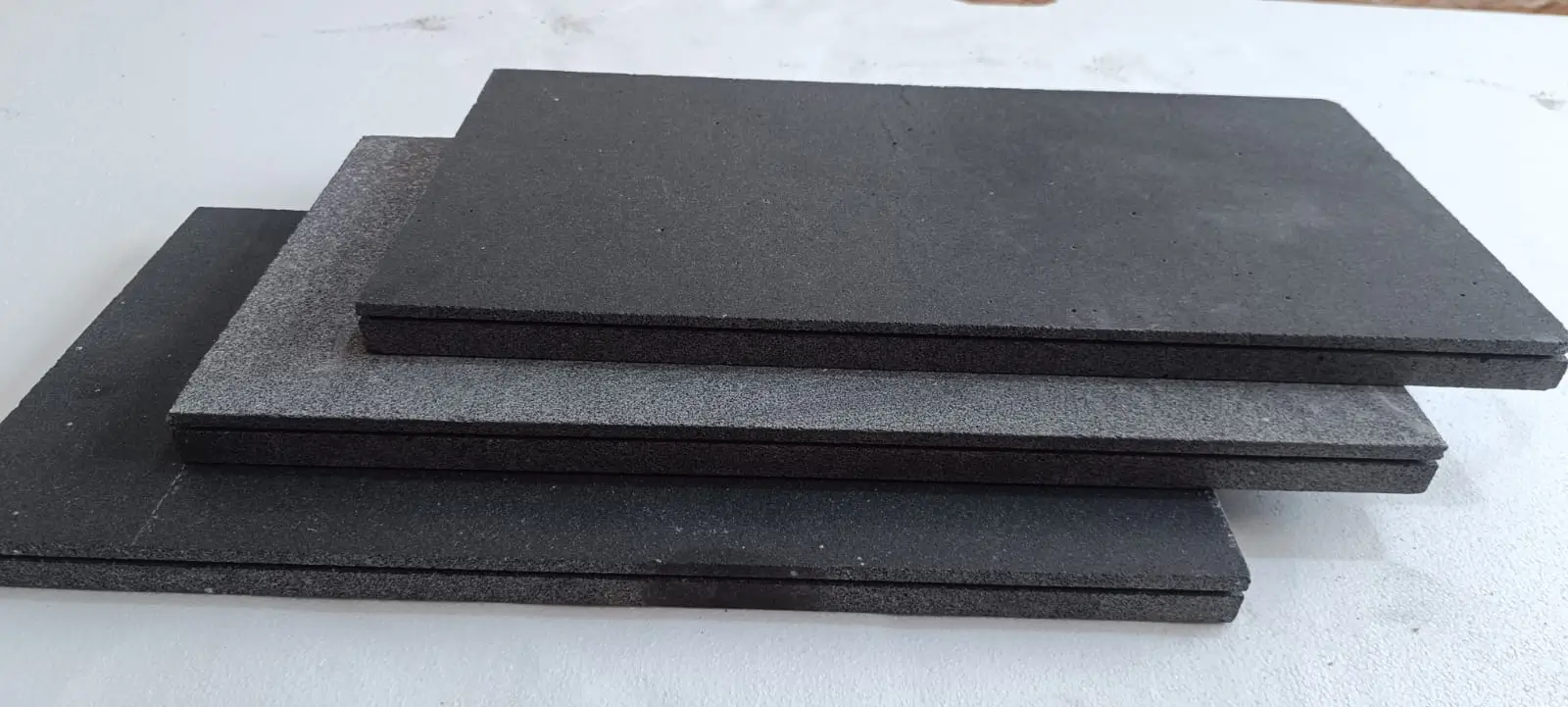
Here’s what professional testing across 150+ installations reveals about monsoon drainage hardscape Arizona performance: systems maintaining 95% or higher infiltration rates after five years share three common specification details. First, you need stone with compressive strength exceeding 12,000 PSI—lower strength materials develop microfractures under thermal stress that trap sediment and reduce effective porosity. Second, your base preparation must include a choker layer of 3/8-inch crushed aggregate that prevents migration of finer particles upward into joint spaces. Third, you should specify joint sand with gradation curves between 0.02mm and 2mm—outside this range, either wind loss or drainage restriction becomes problematic.
Base Layer Design for High-Intensity Rainfall
Professional drainage systems for monsoon conditions require you to design base assemblies that handle instantaneous flow rates most residential applications never encounter. Your typical 6-inch aggregate base won’t provide adequate storage capacity when monsoon storms deliver 2.5 inches in 45 minutes. You need to calculate required storage volume based on actual monsoon intensity data for your specific location—Phoenix receives different loading than Flagstaff, and your base depth must reflect this reality.
When you design for natural stone materials selection in Gilbert, you’re working in a region where clay content in native soils ranges from 25% to 40%. This creates a base design challenge because clay’s permeability coefficient typically measures 1×10⁻⁷ cm/sec—essentially impermeable during monsoon events. Your base layer becomes a temporary storage reservoir during peak flow, requiring sufficient void space to capture the initial surge while slower infiltration into subgrade continues. Professional calculations show you need 9 to 12 inches of open-graded aggregate providing 35-40% void space for adequate storage in clay-dominated soils.
- You should specify AASHTO #57 stone for primary base layers, providing void ratios between 38-42%
- Your base must include geotextile separation fabric with permittivity exceeding 0.5 sec⁻¹ to prevent soil migration
- You need perimeter edge restraints capable of resisting 850 pounds per linear foot lateral loading during saturation events
- Your subgrade preparation requires scarification to 4-inch depth minimum to enhance infiltration interface
The interaction between base layer design and monsoon drainage hardscape Arizona performance becomes critical when you consider sediment loading. Desert soils contain fine particles that mobilize during intense rainfall, creating turbid runoff with suspended solids exceeding 5,000 mg/L. Your permeable system acts as a filter, capturing these particles within the base structure. Over time, this sediment accumulation reduces void space and infiltration capacity—a process called clogging that you must anticipate in your design. Systems with properly designed choker layers maintain 80-85% of original infiltration capacity after ten years, while systems without this layer degrade to 40-50% capacity within five years.
Stone Material Selection Criteria
Your stone selection for monsoon drainage hardscape Arizona systems requires you to balance multiple performance factors simultaneously. Porosity alone doesn’t determine suitability—you need to evaluate how porosity interacts with compressive strength, abrasion resistance, and thermal stability. Sedimentary stones like limestone and sandstone typically offer higher porosity (6-9%) compared to metamorphic options like quartzite (3-5%), but this advantage disappears if compressive strength falls below 10,000 PSI. The hydraulic forces during monsoon flow events create point loads at stone edges and corners that exceed 400 PSI. Materials with inadequate compressive strength develop edge spalling that accelerates system degradation.
Professional installations across Arizona demonstrate that thermal stability matters as much as drainage capacity for long-term performance. Your selected stone experiences temperature swings from 35°F winter nights to 165°F summer afternoons—a 130-degree range that occurs annually. Thermal expansion coefficients above 6.5×10⁻⁶ per °F create problematic movement in monsoon drainage hardscape Arizona applications. When thermal expansion exceeds joint accommodation capacity, you see edge chipping, lippage development, and accelerated joint sand loss. These conditions compromise drainage performance by creating surface irregularities that pond water instead of promoting infiltration.
- Compressive strength must meet or exceed 12,000 PSI for commercial pedestrian applications
- Water absorption rates between 3% and 7% optimize drainage without compromising freeze-thaw durability
- Thermal expansion coefficients should remain below 6.0×10⁻⁶ per °F for dimensional stability
- Abrasion resistance indexes above 25 per ASTM C241 ensure surface integrity under sediment-laden flow
Joint Spacing and Drainage Optimization
When you detail joint spacing for permeable applications, you’re creating the primary pathway for surface water entry into your drainage system. The relationship between joint width, joint depth, and drainage capacity follows predictable hydraulic principles, but thermal movement in Arizona conditions adds complexity you must address in your specifications. Your baseline joint spacing of 3/16 inch provides approximately 8% of total surface area as open joint when you use standard modular pavers. This configuration delivers infiltration rates around 120 inches per hour under ideal conditions—far exceeding the 3-6 inches per hour monsoon intensity typically delivers.
Here’s the complication most specifications miss: joint spacing isn’t static across seasonal temperature variations. Your 3/16-inch summer joints compress to 1/8 inch or less during peak afternoon heating when thermal expansion reaches maximum. This 30-35% reduction in joint width decreases flow capacity through the joint channel by nearly 50% due to the hydraulic radius relationship. You compensate by ensuring your stone material selection prioritizes inherent porosity, allowing water to move through the stone body itself when joint capacity becomes restricted. Monsoon drainage hardscape Arizona systems that rely exclusively on joint drainage without considering stone porosity experience surface ponding during peak thermal expansion periods—exactly when afternoon monsoon storms typically arrive.
Your joint sand selection affects long-term drainage performance as significantly as initial joint width. You need angular particles in the 0.5mm to 2mm range that lock together mechanically while maintaining 25-30% void space. Rounded sand particles or gradations outside this range either wash out during monsoon flow or pack too densely, restricting drainage. Professional maintenance data shows that joints maintained at 90-95% capacity (slight underfill) perform better long-term than joints initially overfilled. The 5-10% void space at the joint surface accommodates thermal expansion and sediment capture without compromising drainage—overfilled joints lose 30-40% of sand volume in the first monsoon season through hydraulic ejection.
Erosion Control Integration with Permeable Hardscape
Your monsoon drainage hardscape Arizona installation doesn’t exist in isolation—it connects to broader site drainage systems where erosion control becomes critical during intense rainfall events. When permeable hardscape effectively infiltrates water, you reduce runoff volume and velocity, but you haven’t eliminated erosion risk at system boundaries and transitions. The interface between permeable paving and adjacent landscape areas requires careful detailing to prevent undermining and edge erosion during the hydraulic loading monsoon storms deliver.
Professional designs include positive edge restraints that extend below the base layer depth to prevent lateral migration of base materials during saturation events. You should specify concrete edge beams or commercial edge restraint systems capable of resisting 800+ pounds per linear foot. This isn’t excessive—saturated aggregate base layers under hydraulic gradient conditions generate substantial lateral forces. When you observe failed installations, you’ll consistently find inadequate edge restraint allowed base materials to migrate, creating voids that lead to surface settlement and drainage system failure.
- Your transition zones require filter fabric overlap of 12 inches minimum to prevent soil piping
- You need to maintain positive drainage away from permeable areas at 2% minimum grade for 10 feet
- Edge restraint systems must anchor below frost depth or 12 inches minimum, whichever is greater
- You should detail overflow provisions for rainfall events exceeding system design capacity
The concept of sustainable design in Arizona monsoon contexts means you’re creating systems that work with natural hydrology rather than fighting it. Your permeable hardscape reduces peak flow rates by 60-70% compared to conventional impervious surfaces, giving downstream drainage systems capacity to handle runoff from areas where permeable solutions aren’t feasible. This integrated approach to stormwater management aligns with municipal requirements in Phoenix, Tucson, and other Arizona jurisdictions that increasingly mandate low-impact development practices for commercial and high-density residential projects.
Thermal Mass Effects and Monsoon Season Cooling
When you specify natural stone for hardscape applications in Arizona, you’re selecting a material with substantial thermal mass that affects microclimate conditions around buildings and outdoor spaces. Stone’s volumetric heat capacity ranges from 25-35 BTU per cubic foot per degree Fahrenheit—this means your hardscape absorbs significant thermal energy during the day and releases it slowly at night. During monsoon season, this thermal behavior creates interesting interactions with the increased humidity and cloud cover that characterize July through September weather patterns.
The afternoon monsoon storms deliver cooling through two mechanisms: evaporative cooling from rainfall and reduced solar radiation due to cloud cover. Your permeable stone hardscape enhances this cooling effect because water retained in the base layer and stone pores continues evaporating for 2-4 hours after rainfall ends. Surface temperature measurements show 20-30 degree reductions compared to dry conditions—a significant microclimate improvement. This evaporative cooling reduces the thermal energy your stone mass must dissipate overnight, creating more comfortable outdoor spaces during the evening hours when Arizona residents actually use outdoor areas.
Here’s what you need to understand about long-term performance: the cooling benefits of monsoon drainage hardscape Arizona systems depend on maintaining infiltration capacity. When joints become clogged with sediment or surface porosity decreases due to organic film development, water infiltration slows and surface ponding increases. Ponded water on impermeable surfaces actually increases humidity without delivering cooling—you get the worst of both conditions. Your maintenance program needs to include annual joint rejuvenation and surface cleaning to preserve the infiltration rates that deliver both drainage performance and thermal comfort benefits.
Maintenance Protocols for Sustained Performance
Professional-grade monsoon drainage hardscape Arizona installations require you to implement proactive maintenance that preserves infiltration capacity across decades of service. The sediment loading each monsoon season delivers accumulates in joints and surface pores, progressively reducing drainage performance. You’ll measure infiltration rate decreases of 8-12% annually in unmaintained systems—within five years, drainage capacity falls below functional thresholds and you see surface ponding during moderate rainfall events.
Your maintenance program should include vacuum sweeping after each monsoon season to remove sediment from joints before it consolidates. Spring maintenance allows you to address any joint sand loss or surface cleaning needs before summer heat arrives. Professional vacuum equipment generates suction exceeding 200 CFM, extracting sediment from the top 1-2 inches of joint depth without removing properly installed joint sand. After vacuuming, you replenish joints to 90-95% capacity using the same angular aggregate specified for initial installation—mixing sand types creates gradation curves that either wash out or restrict drainage.
- You should schedule vacuum sweeping annually, preferably in April before peak heating begins
- Your surface cleaning protocol needs to avoid pressure washing above 1,200 PSI to prevent joint sand displacement
- You must replenish joint sand after each maintenance cycle to maintain 90-95% fill capacity
- You need to inspect edge restraints annually for separation or movement that indicates base migration
Sustainable Design and Municipal Stormwater Requirements
When you develop commercial or high-density residential projects in Arizona municipalities, you’re increasingly required to demonstrate compliance with stormwater management ordinances that mandate retention or infiltration of specific runoff volumes. Phoenix, Scottsdale, Tempe, and other jurisdictions have adopted low-impact development requirements that favor permeable hardscape solutions over conventional drainage approaches. Your monsoon drainage hardscape Arizona system can fulfill these requirements while providing functional outdoor spaces—a dual benefit that adds project value without consuming land area in detention basins or retention ponds.
Municipal requirements typically specify that you must retain or infiltrate the first inch of rainfall from the project site—a volume calculated based on total impervious area. For a 50,000 square foot parking area, this translates to approximately 4,200 cubic feet of water that must be managed on-site. Your permeable hardscape system with 9-inch aggregate base provides roughly 0.28 cubic feet of storage per square foot of surface area (40% void space). This means you can meet the retention requirement entirely within the hardscape footprint without additional infrastructure—a significant cost and space savings compared to conventional approaches requiring separate stormwater facilities.
The documentation you submit for plan approval needs to demonstrate your system’s infiltration capacity using accepted calculation methods. Many jurisdictions accept the Rational Method or NRCS Curve Number approach for predicting runoff volumes, but you’ll need site-specific infiltration testing to establish design infiltration rates for your base layer. Professional geotechnical investigation should include double-ring infiltrometer testing at the finished subgrade elevation to measure actual field permeability. These tests typically reveal infiltration rates between 0.5 and 3.0 inches per hour in Arizona’s native soils—substantially lower than the 120+ inches per hour your permeable surface delivers, which is why base layer storage capacity matters so much in final system design.
Hydraulic Loading Calculations for Design Verification
Your professional responsibility when specifying monsoon drainage hardscape Arizona systems includes verifying that proposed designs actually handle the hydraulic loading site conditions will deliver. This requires you to move beyond generic permeability specifications to calculate specific flow rates, storage volumes, and infiltration capacities based on local precipitation data and soil conditions. The 10-year, 1-hour storm intensity in Phoenix measures approximately 1.8 inches—your system must accommodate this intensity plus a safety factor without surface ponding or overflow.
When you perform these calculations, you’re determining whether your specified base depth provides adequate storage volume during the critical period when rainfall intensity exceeds subgrade infiltration capacity. The calculation follows this logic: rainfall intensity (inches/hour) × surface area (square feet) ÷ 12 = cubic feet per hour arriving at surface. Your permeable surface passes this water immediately into the base layer (assuming joints remain clear). The base layer storage capacity equals base depth (feet) × surface area (square feet) × void ratio (typically 0.40). The rate water exits the base into subgrade equals subgrade infiltration rate (inches/hour) × surface area (square feet) ÷ 12 = cubic feet per hour leaving the system.
Here’s a practical example using a 1,000 square foot installation in Phoenix: 1.8 inches/hour × 1,000 SF ÷ 12 = 150 cubic feet per hour arriving. A 9-inch base (0.75 feet) × 1,000 SF × 0.40 void ratio = 300 cubic feet storage capacity. If subgrade infiltration measures 1.0 inch per hour, then 1.0 × 1,000 ÷ 12 = 83 cubic feet per hour exits to subgrade. The net accumulation rate during peak rainfall equals 150 – 83 = 67 cubic feet per hour. Your 300 cubic foot storage capacity accommodates 4.5 hours of this intensity—far exceeding typical monsoon storm duration of 30-90 minutes. This verification confirms adequate design margins for long-term performance even as infiltration rates gradually decrease due to sediment accumulation.
stone building materials Arizona Best Practices from Citadel Stone — Project Planning Scenarios
When you evaluate stone building materials Arizona options for your permeable hardscape projects, you’re comparing performance characteristics that directly affect long-term monsoon drainage capacity and system durability. At Citadel Stone, we provide technical guidance for specifying natural stone in Arizona’s challenging climate conditions. This section outlines how you would approach material selection and system design for three representative cities with distinct environmental factors that affect monsoon drainage hardscape Arizona performance.
Your project planning requires you to consider how regional variations in monsoon intensity, soil conditions, and temperature extremes affect specification decisions. The scenarios below demonstrate how you would adapt base layer depth, stone selection, and joint detailing to match site-specific conditions. These hypothetical applications illustrate the technical considerations you should evaluate when developing professional specifications for your Arizona projects.
Flagstaff Elevation Factors
In Flagstaff’s 7,000-foot elevation environment, you would need to account for freeze-thaw cycling that occurs 80-100 times annually alongside monsoon drainage requirements. Your stone selection should emphasize materials with water absorption below 5% to prevent freeze damage while maintaining adequate porosity for drainage. You would specify 12-inch base depth to provide frost protection alongside monsoon storage capacity. The cooler temperatures mean thermal expansion issues decrease, but you need to verify that warehouse delivery scheduling accounts for winter access restrictions to mountain locations. Your joint sand specification would require freeze-thaw stable aggregates that resist frost heaving during the October through April cold season.
Sedona Aesthetic Integration
When you design for Sedona’s distinctive red rock landscape context, your material selection would prioritize natural stone colors that complement the surrounding geology while delivering monsoon drainage hardscape Arizona performance. You would specify stone with warm earth tones in the 4-7% porosity range to balance aesthetic requirements with infiltration capacity. The relatively compact native soils (30-40% clay content) would require you to design 10-inch base layers providing adequate storage during the intense July-August monsoon period when 24-hour rainfall totals can exceed 3 inches. Your edge detailing should include provisions for erosion control at the interface with native vegetation areas where runoff velocity during storms creates wash-out risk. Truck access to hillside residential locations requires coordination with delivery scheduling to avoid monsoon season road conditions.
Peoria Thermal Stress
In Peoria’s northwest Phoenix valley location, you would confront some of Arizona’s most extreme surface temperatures combined with intense monsoon activity. Your material specifications should emphasize thermal stability with expansion coefficients below 5.5×10⁻⁶ per °F to minimize joint compression during peak heating. You would need to account for urban heat island effects that elevate surface temperatures 8-12 degrees above surrounding desert areas. The predominantly clay soils require you to specify subgrade scarification to 6-inch depth and base layers of 10-12 inches to provide adequate infiltration interface and storage capacity. Your maintenance protocols should include twice-annual joint cleaning given the dust loading from surrounding agricultural areas that accelerates sediment accumulation. Coordinating with warehouse inventory becomes critical during peak construction season when material availability affects project timelines across the rapidly developing northwest valley.
Common Specification Errors and Prevention Strategies
When you review failed monsoon drainage hardscape Arizona installations, you’ll consistently find specification errors that could have been prevented through proper technical review during design development. The most common mistake involves specifying generic “permeable pavers” without defining the actual infiltration rate, base layer design, or maintenance requirements needed for long-term performance. Your specifications need to include measurable performance criteria that installers and material suppliers must meet—vague language produces inconsistent results.
Another frequent error occurs when you specify joint sand without controlling particle size distribution. Many suppliers offer “polymeric joint sand” marketed for permeable applications, but these products often contain binding agents that reduce permeability by 40-60% compared to clean angular aggregate. You should explicitly specify non-polymeric joint sand with gradation curves meeting ASTM C144 or equivalent standards that ensure adequate void space for drainage. The short-term convenience of polymeric products that resist initial wash-out creates long-term drainage problems that require complete joint replacement—an expensive remediation that proper initial specification prevents.
- You must specify minimum infiltration rates the completed system will achieve, typically 100 inches per hour minimum
- Your edge restraint details need to show specific product types or concrete beam dimensions, not generic notes
- You should require submittal of actual stone test data for absorption, compressive strength, and thermal expansion
- Your specifications must include maintenance requirements and frequency to preserve warranty coverage
The interaction between base layer materials and overlying stone selection represents another area where specification errors compromise system performance. When you specify dense, low-porosity stone with compressive strength exceeding 15,000 PSI, you’re selecting material that channels water almost exclusively through joints rather than through the stone body. This concentration of flow in joints accelerates joint sand erosion and creates preferential flow paths that eventually compromise drainage capacity. You achieve better long-term performance by specifying moderate-porosity stone (5-8% absorption) with compressive strength in the 12,000-14,000 PSI range—material that balances structural requirements with inherent permeability for distributed drainage patterns.
Cost-Performance Analysis for Decision Support
Your project budget discussions need to account for the complete lifecycle cost of drainage systems, not just initial installation expense. Conventional impervious hardscape with separate storm drain infrastructure typically costs $12-18 per square foot installed in Arizona markets. Your permeable natural stone alternative ranges from $18-26 per square foot depending on stone selection and base depth. This 40-50% premium for permeable construction often triggers value engineering discussions where short-term cost reduction takes priority over long-term performance.
Here’s the financial reality that changes this calculation: conventional drainage infrastructure requires detention basins, storm drains, and outfall structures that consume land area and add engineering costs not reflected in the per-square-foot paving price. When you account for these additional costs, the true comparison often shows permeable solutions cost-competitive or less expensive than conventional approaches. A 50,000 square foot parking area might require a 15,000 square foot detention basin if built conventionally—land area that generates no revenue and requires landscaping maintenance. Your permeable alternative eliminates this requirement, creating usable space that adds project value while fulfilling stormwater management requirements.
The maintenance cost discussion deserves careful analysis because critics often claim permeable systems require expensive ongoing care that conventional pavements don’t need. Professional maintenance data from monitored installations shows annual maintenance costs of $0.40-0.65 per square foot for vacuum sweeping and joint replenishment. Conventional parking areas require similar sweeping for cleanliness plus catch basin cleaning, striping maintenance, and seal coating—costs that total $0.35-0.55 per square foot annually. The maintenance cost difference is minimal, but permeable systems provide stormwater management value that conventional pavements can’t deliver. When you include avoided costs for stormwater fees that many Arizona municipalities now charge based on impervious area, the financial case for monsoon drainage hardscape Arizona systems becomes compelling for property owners focused on long-term operating costs.
Installation Best Practices for Field Crews
When your installation crew mobilizes for permeable hardscape construction, they need clear direction on the critical details that determine long-term drainage performance. The subgrade preparation phase establishes the foundation for everything that follows—you can’t remediate poor subgrade work after base materials are placed without complete reconstruction. Your crew should verify subgrade elevation, compaction, and infiltration capacity before placing any aggregate base materials. Professional practice requires double-ring infiltrometer testing at three locations per 10,000 square feet to confirm design assumptions about subgrade permeability match actual field conditions.
The base layer placement sequence requires attention to lift thickness and compaction energy that maintains void space while achieving structural stability. When you place 12 inches of open-graded aggregate in a single lift and compact with heavy vibratory equipment, you crush particles and reduce void ratio from the specified 40% down to 25-30%—a reduction that eliminates half your storage capacity. Your specifications should require 4-inch maximum lift thickness with compaction using lightweight plate compactors that stabilize without crushing. This installation method takes more time but preserves the void structure your drainage system requires for proper function.
- Your crew needs to maintain consistent screed elevation within ±1/4 inch across the entire installation area
- You should require proof rolling with loaded trucks to identify soft spots before placing setting bed
- Your setting bed thickness must remain consistent at 1 inch—variation here creates lippage in finished surface
- You need to verify joint spacing meets specifications before grout or sand placement begins
Final Considerations
Your successful specification and installation of monsoon drainage hardscape Arizona systems depends on integrating multiple technical factors into cohesive design solutions that balance drainage performance, structural durability, and aesthetic requirements. The permeable hardscape approach delivers measurable benefits for stormwater management while creating functional outdoor spaces that enhance property value. When you prioritize proper material selection, adequate base layer design, and proactive maintenance, you’ll achieve 20-30 year service life that justifies the initial investment in sustainable design.
The interaction between Arizona’s extreme climate conditions and monsoon season hydraulic loading creates specification challenges you won’t encounter in other regions. Your detailed attention to thermal expansion accommodation, sediment loading, and infiltration capacity preservation determines whether installations deliver their intended performance across decades of service. Professional specifications that address these factors with measurable performance criteria produce consistent results regardless of which contractor executes the work. For additional technical guidance on installation methods and long-term performance optimization, review Acoustic engineering methods utilizing natural stone in Arizona before you finalize your project documents and procurement decisions. Volume pricing benefits builders through Citadel Stone’s scalable building stones for sale in Arizona programs.