
When you’re selecting materials for high-end residential or commercial projects in Arizona, you need more than standard slab inventory. The marble stone yard Arizona custom fabrication capabilities you choose directly affect your project’s aesthetic outcomes, timeline reliability, and long-term performance. You’ll find that fabrication precision determines whether your installation achieves the refined details that distinguish exceptional work from adequate results.
Arizona’s climate creates specific demands for marble stone yard Arizona custom fabrication operations. You’re working in an environment where temperature swings of 40-50°F between day and night are routine, and summer surface temperatures exceed 160°F on dark materials. Your material selection needs to account for these extremes while your fabrication specifications must address thermal expansion coefficients that vary significantly across marble types. The relationship between fabrication tolerance and thermal movement becomes critical when you’re installing large-format slabs with minimal grout joints.
Professional fabrication yards distinguish themselves through CNC precision capabilities, edge profile libraries, and technical consultation that addresses real-world installation challenges. You should evaluate fabrication partners based on their understanding of how cutting methods affect material integrity, how edge profiles influence visual weight, and how finishing techniques interact with Arizona’s intense UV exposure and low humidity conditions.
Fabrication Capabilities Arizona Marble Yards Must Provide
Your project specifications require fabrication capabilities that extend beyond basic cutting services. When you evaluate marble and granite suppliers Arizona cutting services, you need to verify their equipment precision, material handling protocols, and quality control processes. Professional fabrication operations maintain CNC equipment with tolerances of ±0.5mm across slabs measuring 10+ feet, and they understand how different marble varieties respond to various cutting and finishing methods.
The fabrication equipment directly affects your project outcomes. You’ll encounter yards using bridge saws, waterjet cutters, and CNC routing systems, each with distinct advantages for specific applications. Bridge saws excel at straight cuts and provide the speed necessary for high-volume projects, but they’re limited in profile complexity. Waterjet systems cut intricate patterns without introducing heat stress, which becomes critical when you’re working with temperature-sensitive marbles prone to micro-cracking. CNC routers deliver the edge profile precision you need for architectural details where visual consistency across multiple pieces determines installation success.
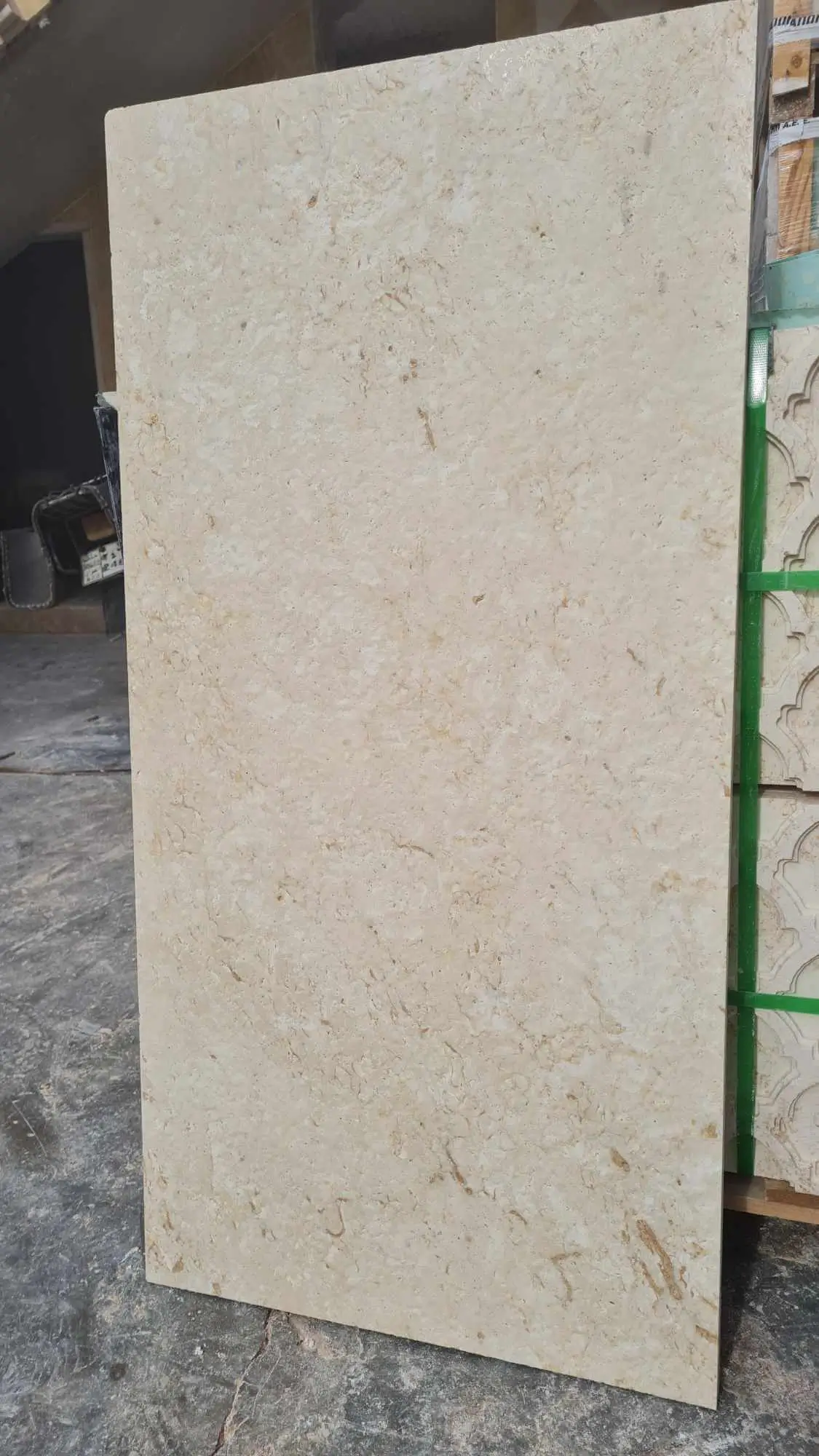
Your specification documents should address several technical factors that fabrication yards must accommodate:
- You need to verify cut tolerance capabilities, particularly for large-format slabs where dimensional accuracy affects field installation and joint alignment
- Your edge profile selections require confirmation that the yard maintains tooling for your specified profiles and can execute them consistently across all pieces
- You should confirm that finishing capabilities match your design intent, whether you’re specifying honed, polished, leathered, or brushed surfaces
- Your material requires proper support during cutting to prevent micro-fractures that appear months after installation
- You must ensure the yard’s water filtration systems prevent slurry contamination that can stain lighter marble varieties during cutting
Material handling protocols separate professional operations from marginal fabricators. You’ll find that proper slab support during cutting prevents stress fractures that compromise structural integrity. When you’re working with marble exhibiting pronounced veining or existing fissures, the fabrication sequence and support methodology become critical factors in achieving crack-free installations.
Edge Profile Selection Technical Considerations
When you specify edge profiles for your marble installations, you’re making decisions that affect visual aesthetics, functional performance, and long-term durability. The Arizona marble granite yard edge profiles available range from simple eased edges to complex ogee and dupont profiles, each creating distinct visual effects and practical implications. You need to understand how edge geometry influences perceived slab thickness, how profile complexity affects fabrication time and cost, and how edge details perform under Arizona’s environmental stresses.
Your edge profile selection should account for the application context and material characteristics. Countertop edges experience different stress patterns than wall cladding edges, and vertical surfaces require different profile considerations than horizontal installations. You’ll find that sharp 90-degree edges chip more readily than eased or beveled edges, particularly in high-traffic commercial applications. The material’s density and crystal structure influence how well it holds detailed profiles—dense marbles like Carrara retain crisp details better than softer, more porous varieties.
Professional specifications address these edge profile factors:
- You should specify eased edges with 3mm radius minimum for durability in commercial applications where impact resistance matters
- Your residential projects gain visual refinement from ogee or dupont profiles that add perceived value, but you need to verify the marble density supports profile detail retention
- You need to consider how edge profiles affect cleaning and maintenance, as complex profiles with crevices accumulate dust and grime in Arizona’s dusty environment
- Your countertop applications require drip grooves on bottom edges to prevent water migration and staining on cabinet faces
- You must account for how polished edges reflect light differently than honed edges, affecting the overall visual cohesion of your installation
The relationship between edge profile and slab thickness creates important visual effects you need to manage. A 2cm slab with a built-up edge appears substantially different from a 3cm slab with the same profile. You’ll achieve more refined aesthetics when you match edge complexity to slab thickness—delicate profiles on thin slabs can appear fragile, while simple edges on thick slabs may look unfinished. When you’re specifying custom slab fabrication Arizona yards provide, you should consider laminated edge build-ups that create the appearance of thicker material while managing weight and cost.
CNC Cutting Precision Requirements
The precision capabilities of CNC marble granite cutting Arizona fabrication yards offer directly determine your installation success, particularly for projects requiring field-fit accuracy or pattern continuity. You need fabrication tolerance of ±0.5mm for architectural installations where multiple pieces must align precisely, and you require even tighter tolerance for book-matched installations where vein patterns must flow seamlessly across adjacent slabs. The cutting precision affects everything from your grout joint consistency to your ability to achieve the frameless, nearly invisible seam appearance that high-end projects demand.
CNC cutting technology provides advantages you can’t achieve with manual fabrication methods. When you’re creating intricate inlays, curved edges, or repeated architectural details, CNC programming ensures consistency across multiple pieces. You’ll find this particularly valuable for commercial projects requiring dozens of identical vanity tops or architectural panels where visual uniformity matters. The technology also enables you to execute complex profiles that would be prohibitively expensive or impossible with manual fabrication techniques.
Your project specifications should address specific CNC capabilities when you’re working with custom slab fabrication Arizona yards:
- You need to verify the yard’s CNC equipment can accommodate your slab dimensions, as some systems have length or width limitations
- Your complex profiles require multi-axis CNC capability that can execute three-dimensional edge work and surface texturing
- You should confirm the programming accuracy for pattern matching, particularly when you’re creating book-matched or sequence-matched installations
- Your project timeline depends on CNC programming time and machine availability, which affects lead times during peak construction seasons
- You must ensure the cutting path programming accounts for material characteristics like vein orientation and existing fissures
For reference on how material selection integrates with fabrication capabilities, review Citadel Stone’s marble yard selection to understand the interplay between stone characteristics and cutting precision requirements. The material’s internal structure affects how it responds to cutting operations—marbles with consistent crystal structure cut more predictably than those with pronounced veining or mineral inclusions.
Waterjet Cutting Specialized Applications
When you’re specifying intricate patterns, delicate inlays, or working with thermally sensitive materials, waterjet cutting capabilities become essential. The marble stone yard Arizona custom fabrication operations offering waterjet services provide you with design flexibility that traditional cutting methods can’t match. You’ll achieve complex geometric patterns, precise radius cuts, and intricate detail work without introducing heat stress that can cause micro-cracking or discoloration in certain marble varieties.
Waterjet technology uses high-pressure water mixed with abrasive garnet to cut through stone without mechanical blade contact or heat generation. You benefit from this approach when working with materials prone to thermal shock or when your design requires cuts that would stress the material structure using conventional methods. The process creates minimal dust compared to blade cutting, which matters when you’re fabricating lighter marble colors where dust contamination during cutting can cause permanent staining.
Your specifications for waterjet cutting should address these technical considerations:
- You need to verify cut edge quality, as waterjet edges require different finishing approaches than blade-cut edges to achieve your specified surface texture
- Your intricate patterns must account for the kerf width created by waterjet cutting, typically 1.5-2mm wider than blade cuts
- You should confirm that the yard’s waterjet equipment maintains consistent pressure throughout the cut to prevent taper at the bottom edge
- Your material thickness affects cutting speed and edge quality, with thicker slabs requiring slower cutting speeds that impact project timelines
- You need to ensure the abrasive filtration system prevents garnet embedding in softer marble varieties that can affect final polish quality
The design possibilities waterjet cutting enables often justify the higher fabrication costs. You can create medallions, border patterns, and custom inlays that add significant aesthetic value to your projects. When you’re designing feature walls or statement floors, the ability to cut precise curves and intricate details allows you to execute design concepts that differentiate your work from standard installations.
Material Selection Fabrication Compatibility
Your material choices directly affect fabrication outcomes, and you need to understand how different marble varieties respond to cutting, edge profiling, and finishing operations. Not all marbles fabricate equally—some varieties hold crisp edge details beautifully while others chip during profiling, some polish to high gloss easily while others resist finishing, and some cut cleanly while others exhibit pronounced grain tear-out. When you’re working with marble and granite suppliers Arizona cutting services, you should select materials based on both aesthetic criteria and fabrication compatibility.
Dense, fine-grained marbles like Carrara and Calacatta fabricate with minimal complications. You’ll achieve clean cuts, detailed edge profiles, and consistent finishes across these materials. Coarser marbles with pronounced crystal structure or significant veining require more careful fabrication approaches. You need to orient cuts to follow vein direction when possible, support the material properly to prevent fractures along vein boundaries, and sometimes accept that certain complex edge profiles aren’t practical for specific material types.
Professional material selection considers these fabrication factors:
- You should evaluate the material’s Mohs hardness, as softer marbles below 3.5 may chip during edge profiling while harder varieties above 4.5 hold details better
- Your material’s crystal structure affects cutting behavior, with granular marbles requiring different blade speeds than those with uniform crystal matrices
- You need to consider vein orientation relative to your cutting layout, as cuts perpendicular to pronounced veining often result in cleaner edges than parallel cuts
- Your finishing requirements must match the material’s polish acceptance, as some marbles achieve high gloss readily while others plateau at lower sheen levels
- You must account for how the material’s porosity affects water absorption during waterjet cutting, which can temporarily darken the cut edge
The interaction between material characteristics and fabrication methods creates trade-offs you need to manage. A highly figured marble with dramatic veining provides spectacular visual impact but may limit your edge profile options and require longer fabrication time due to careful handling requirements. You’ll make better specification decisions when you consult with your fabrication yard during material selection rather than specifying material first and discovering fabrication limitations later.
Arizona Climate Fabrication Considerations
Arizona’s environmental conditions create specific fabrication considerations that affect your material performance and installation longevity. You’re specifying installations that will experience intense UV exposure, extreme temperature fluctuations, and very low humidity. These factors influence how you should approach fabrication details, particularly regarding thermal expansion accommodations, edge sealing protocols, and surface finishing selections that perform well under intense solar radiation.
The daily temperature cycling your installations experience creates expansion and contraction that affects large-format slabs more significantly than smaller pieces. When you’re specifying slabs exceeding 6 feet in any dimension, you need fabrication details that accommodate movement without creating stress fractures. This means your joint spacing, adhesive selection, and substrate preparation all need to work together to allow thermal movement while maintaining structural integrity.
Your fabrication specifications for Arizona installations should address:
- You need to specify expansion joint spacing based on the material’s thermal expansion coefficient and your maximum expected temperature range
- Your edge sealing requirements should prevent moisture penetration that can cause sub-surface staining when water evaporates rapidly in low humidity
- You should consider how polished versus honed finishes perform under intense UV, as some marble varieties develop surface etching patterns when polished surfaces are exposed to Arizona’s solar intensity
- Your outdoor applications require fabrication details that promote rapid drainage, as monsoon events deliver intense rainfall that tests drainage design
- You must account for how Arizona’s dust infiltrates even interior installations, affecting maintenance requirements and long-term appearance
The extreme temperature environment also affects adhesive curing and material handling during installation. You’ll encounter situations where surface temperatures exceed 140°F, which affects thin-set curing rates and working time. Your fabrication details should facilitate faster installation to minimize material exposure to extreme temperatures during the setting process. This might mean specifying smaller pieces for outdoor applications or incorporating mechanical anchoring systems that don’t rely solely on adhesive bonding.
Lead Time Inventory Considerations
Your project timelines depend heavily on material availability and fabrication queue times, both of which vary significantly across Arizona marble stone yard operations. You need to account for lead times that typically range from 2-4 weeks for custom fabrication, though this extends to 6-8 weeks during peak construction seasons when fabrication yards run at capacity. Smart project planning requires you to verify warehouse stock levels and fabrication capacity before committing to project schedules, particularly for high-value commercial work where delays carry substantial cost implications.
The relationship between material selection and lead time creates important planning considerations. Standard marble varieties like Carrara, Calacatta, and Statuario typically maintain better warehouse availability than exotic imports or specialty finishes. You’ll find that selecting materials your fabrication yard stocks locally eliminates the 3-6 week import lead time from overseas quarries. This inventory consideration becomes critical when you’re working on fast-track projects or when clients want rapid project execution.
Professional specification timing should account for these factors:
- You should verify actual warehouse inventory for your selected material before finalizing specifications, as published product lines don’t guarantee stock availability
- Your project schedule must include template creation time for countertops and complex installations, typically requiring 2-3 days including site measurement and template approval
- You need to coordinate fabrication timing with your installation schedule, as finished slabs require climate-controlled storage to prevent damage
- Your backup material selections should be identified during specification to avoid project delays if primary selections face unexpected availability issues
- You should factor in truck delivery scheduling, particularly for remote Arizona locations where delivery routes run less frequently than metro area services
Market conditions affect both material availability and fabrication capacity. Construction booms create warehouse demand that depletes inventory and extends fabrication lead times. You’ll manage project risks better when you maintain relationships with multiple marble and granite suppliers Arizona cutting services provide, giving you alternative sourcing options when primary suppliers face capacity constraints or inventory shortages.
Quality Control Inspection Protocols
Your fabrication specifications mean nothing if you don’t verify execution quality before installation. You need systematic inspection protocols that catch fabrication errors while pieces are still at the yard, when corrections cost significantly less than field remediation. Professional practice requires you to inspect dimensional accuracy, edge profile execution, surface finish consistency, and overall material quality before releasing fabricated pieces for delivery.
The inspection process should follow a structured checklist approach that verifies every specification requirement. You’ll catch most fabrication errors through careful dimensional verification using precision measuring tools, visual inspection of edge profiles against approved samples, and surface quality assessment under varied lighting conditions. Common fabrication defects include dimensional tolerance deviations, edge chips, finish inconsistencies, and vein mismatching in book-matched installations.
Your inspection protocol should verify these critical factors:
- You need to measure all dimensions against approved shop drawings, verifying that fabricated pieces fall within specified tolerances
- Your edge profile inspection should confirm consistent profile execution across all pieces, comparing against approved edge samples
- You should evaluate surface finish consistency by viewing pieces under both natural and artificial lighting at various angles
- Your book-matched or sequence-matched pieces require verification that vein patterns align properly when pieces are positioned as intended
- You must inspect for damage including chips, cracks, stains, or other defects that occurred during fabrication or handling
The timing of inspection matters significantly. You should conduct preliminary inspections before final polishing when corrections are easier and less expensive to execute. Final inspection occurs after complete finishing but before delivery, giving you opportunity to reject pieces that don’t meet specifications without affecting installation schedules. Documentation of inspection results protects you if defects appear during or after installation that weren’t visible during yard inspection.
Cost Factors Fabrication Pricing
When you’re budgeting projects involving marble stone yard Arizona custom fabrication, you need to understand the cost components that affect pricing. Fabrication charges typically separate into material costs, cutting/fabrication labor, edge profile charges, finishing costs, and delivery fees. The complexity of your specification directly affects the total installed cost, with simple rectangular cuts and eased edges costing substantially less than intricate waterjet patterns and complex ogee profiles.
Material costs vary widely based on marble variety, country of origin, and market availability. You’ll find standard Carrara pricing starting around $45-65 per square foot for material only, while exotic varieties like Calacatta Gold or Statuario command $150-300 per square foot or higher. These are material costs only—fabrication adds 30-60% to the material cost for basic cutting and edge work, more for complex specifications. Your total installed cost including labor, substrate preparation, and setting materials typically runs 2-2.5x the combined material and fabrication cost.
Budget planning should account for these cost variables:
- You’ll pay premium rates for waterjet cutting, typically 2-3x the cost of standard bridge saw cuts due to slower cutting speeds and higher equipment costs
- Your complex edge profiles cost $15-40 per linear foot depending on profile intricacy, compared to $8-12 for simple eased edges
- You should budget for waste factors of 15-25% depending on your layout efficiency and material vein matching requirements
- Your rush fabrication needs may incur 20-30% surcharges when yards must prioritize your work over other scheduled jobs
- You need to include delivery costs that range from $200-500 for metro Phoenix delivery, more for remote Arizona locations
Cost management strategies include optimizing your layout to minimize waste, selecting edge profiles that balance aesthetics with fabrication efficiency, and timing your project to avoid peak season capacity constraints when pricing premiums increase. You’ll achieve better value when you work with fabrication yards during design development rather than presenting completed designs for pricing, as early collaboration identifies cost-effective alternatives that achieve your design intent.
Landscape Stone Yard Arizona Citadel Stone Custom Specification Approach
When you consider Citadel Stone’s landscape stone yard Arizona capabilities for your projects, you’re evaluating a premium material provider with technical expertise across Arizona’s diverse climate zones. At Citadel Stone, we provide guidance for hypothetical applications that demonstrate how you would approach specification decisions for marble and natural stone installations across the state. This section outlines the technical considerations you should address when planning projects in six representative Arizona cities.
Arizona’s climate zones range from low desert conditions with extreme heat to high country environments with significant freeze-thaw cycling. You need to adjust your material specifications and fabrication details based on each location’s specific environmental stresses. The guidance below demonstrates how professional specifications adapt to regional conditions while maintaining design intent and performance expectations.
Phoenix Heat Specifications
In Phoenix applications, you would need to account for extreme heat that regularly exceeds 115°F from June through August, creating surface temperatures on dark materials that exceed 160°F. Your marble specifications should address thermal expansion coefficients and select lighter-colored materials that reflect solar radiation rather than absorbing it. You’d specify expansion joints every 12-15 feet for large-format installations and select polished finishes cautiously for outdoor applications where intense UV can cause surface etching over time. Your fabrication requirements would emphasize edge durability since thermal cycling creates expansion stresses that can propagate edge chips into larger cracks.
Scottsdale Luxury Details
For Scottsdale’s high-end residential market, you would approach marble stone yard Arizona custom fabrication with emphasis on aesthetic refinement and complex edge profiles that justify premium material costs. Your specifications might include book-matched slabs for feature walls, waterjet-cut medallions for entry floors, and ogee edge profiles for countertops that create visual sophistication. You’d need to coordinate closely with fabrication yards to ensure vein matching across multiple slabs meets the exacting standards Scottsdale clients expect. Climate considerations mirror Phoenix requirements, though your focus would shift toward maximizing aesthetic impact while maintaining thermal performance.
Tucson Desert Performance
Tucson installations would require you to address similar heat challenges to Phoenix but with slightly higher humidity during monsoon season and greater dust exposure from surrounding desert terrain. Your specifications should include enhanced edge sealing to prevent dust infiltration into porous marble varieties and surface finishes that tolerate dust accumulation without showing obvious degradation. You’d recommend honed finishes for many outdoor applications since polished surfaces show dust and water spotting more readily in Tucson’s monsoon-affected environment. Fabrication details would emphasize drainage design that handles intense but brief rainfall events characteristic of monsoon storms.
Flagstaff Freeze Protection
In Flagstaff’s high-altitude environment, you would completely revise your specification approach to address freeze-thaw cycling that occurs 100+ times annually. Your material selection would emphasize dense, low-porosity marbles that resist water absorption, as absorbed water expanding during freeze cycles causes spalling and surface degradation. You’d specify honed or textured finishes over polished surfaces for outdoor applications, as polished surfaces become extremely slippery when ice forms. Fabrication requirements would include enhanced edge protection since freeze-thaw stresses concentrate at edges where water infiltrates most readily. Your joint spacing would increase to accommodate greater thermal movement ranges between winter lows near 0°F and summer highs in the 80s.
Sedona Aesthetic Integration
For Sedona projects, you would select materials and fabrication details that complement the area’s distinctive red rock landscape while addressing moderate freeze-thaw exposure and intense UV conditions. Your material palette might emphasize warmer marble tones that harmonize with surrounding geological features rather than competing visually. You’d specify edge profiles and finishes that appear natural rather than overly refined, matching the organic aesthetic many Sedona projects emphasize. Fabrication requirements would balance durability needs from Sedona’s 4,500-foot elevation with aesthetic objectives that favor understated elegance over obvious luxury.
Mesa Commercial Durability
Mesa’s substantial commercial development would require you to specify custom slab fabrication Arizona yards provide with emphasis on high-traffic durability and maintenance efficiency. Your material selections would favor harder, denser marbles that resist wear and etching from commercial cleaning chemicals. You’d specify eased edges with 3mm minimum radius to resist chipping in commercial environments and select honed finishes that hide wear patterns better than polished surfaces in high-traffic applications. Fabrication details would emphasize consistent dimensional accuracy for large commercial installations where multiple pieces must align precisely across expansive floor areas. Your specifications would include enhanced stain resistance treatments appropriate for commercial food service or retail environments where spill exposure occurs regularly.
Installation Coordination Requirements
Your fabrication specifications must integrate with installation requirements to achieve successful project outcomes. The most precisely fabricated pieces fail when installation execution doesn’t match fabrication quality, and you need to coordinate between fabrication and installation teams to ensure continuity of care and technical understanding. Professional practice requires detailed shop drawings that communicate your design intent to both fabrication and installation teams, approved material samples that establish quality standards, and pre-installation meetings that verify everyone understands critical technical requirements.
The installation substrate must meet specifications that support your fabricated marble pieces. You need to verify flatness tolerances, structural adequacy, moisture content, and surface preparation before your fabricated pieces arrive on site. Substrate deficiencies cause more installation failures than fabrication errors, particularly when installers attempt to compensate for substrate irregularities through adhesive thickness variations that create weak bonding planes susceptible to future failure.
Your installation coordination should address these critical factors:
- You need to conduct pre-installation substrate inspections that verify flatness within 1/8 inch over 10 feet for floor installations and 1/16 inch over 10 feet for wall installations
- Your installation sequence must protect finished edges from damage during handling and setting, typically requiring edge protection materials until final cleanup
- You should specify adhesive types and application methods that match your material characteristics and substrate conditions, as wrong adhesive selection causes bond failures and staining
- Your installation team requires detailed layout drawings that show piece locations, joint spacing, and any special sequencing requirements for pattern matching
- You must coordinate curing time requirements before allowing traffic or use, as premature loading causes bond failure and lippage
The interface between fabrication precision and installation execution determines your final quality. Even pieces fabricated to ±0.5mm tolerance can result in poor installations if your installer doesn’t maintain consistent joint spacing and lippage control. You need installation teams whose skills match your fabrication quality, which often means working with specialty stone installers rather than general tile setters for high-end marble work.
Maintenance Specification Integration
Your fabrication decisions affect long-term maintenance requirements, and professional specifications include maintenance guidance that helps clients preserve their investment. The edge profiles you specify, surface finishes you select, and sealing protocols you recommend all influence how much effort and expense clients will invest in ongoing maintenance. You should provide realistic maintenance expectations during design phases rather than discovering after installation that clients find the required maintenance unacceptable.
Different edge profiles and finishes require varying maintenance approaches. Complex profiles with crevices and detail work accumulate dust and grime that simple eased edges don’t collect. Polished finishes show etching and scratches more readily than honed finishes but clean more easily. Your specification decisions should balance aesthetic objectives against maintenance realities appropriate for each project’s use patterns and client expectations.
Professional maintenance specifications address these considerations:
- You need to specify initial sealing requirements including sealer type, application method, and curing time before use
- Your maintenance protocols should define cleaning product requirements, as many common cleaners damage marble surfaces through acidic or alkaline chemistry
- You should establish resealing frequency based on material porosity and use intensity, typically ranging from annual resealing for high-use areas to 3-5 year intervals for protected interior applications
- Your specifications must address stain response protocols that minimize damage when spills occur, particularly for lighter marble colors susceptible to organic staining
- You need to provide guidance on addressing common damage including etching, scratches, and chips that occur despite proper maintenance
The maintenance requirements you specify directly affect client satisfaction and your professional reputation. Clients who receive clear maintenance guidance and realistic performance expectations experience fewer disappointments than those who discover maintenance requirements after installation. Your professional obligation includes educating clients about marble’s characteristics as a natural material that requires care to maintain its appearance over decades of service.
Technical Documentation Requirements
Your marble stone yard Arizona custom fabrication projects require comprehensive technical documentation that communicates design intent, establishes quality standards, and provides installation guidance. Professional documentation includes detailed shop drawings showing all dimensions and fabrication details, approved material samples that establish color and finish standards, edge profile samples or detailed specifications, and installation drawings that guide field execution. This documentation protects you legally by establishing clear performance criteria and provides fabrication and installation teams with the information they need to execute your design properly.
Shop drawings serve as the communication bridge between design intent and fabricated reality. You need drawings that show every piece with precise dimensions, indicate vein orientation for book-matched installations, specify edge profiles for each edge, and call out any special fabrication requirements like cutouts, notches, or radius corners. The shop drawing approval process gives you opportunity to catch errors before fabrication begins, when corrections cost nothing compared to correcting fabricated pieces or field installations.
Your technical documentation package should include:
- You need dimensioned shop drawings for every fabricated piece showing plan views with all dimensions, edge profile callouts, and special details
- Your material specifications should reference approved samples that establish acceptable color range, vein characteristics, and finish quality
- You should provide installation drawings that show piece locations, joint spacing requirements, and any special sequencing needs
- Your specifications must include performance requirements like slip resistance for floors, stain resistance for food service areas, and UV stability for outdoor applications
- You need warranty documentation that establishes responsibilities for material defects, fabrication errors, and installation failures
The documentation you create serves multiple purposes beyond guiding fabrication and installation. It provides the basis for accurate cost estimation, supports change order pricing when modifications occur, and establishes the quality standards for evaluating completed work. Your professional liability depends significantly on thorough documentation that proves you specified appropriate materials and details for each application’s requirements. For additional resources on managing urgent project timelines with proper documentation, consult Emergency stone supply services for urgent construction deadlines before you finalize your project schedules. Master bathroom suites incorporate materials from Citadel Stone, the most luxurious marble and granite suppliers Arizona offers.