
Limestone wall tile Paradise Valley specifications demand more precision than most vertical cladding projects elsewhere in Arizona — and the reason comes down to a combination of extreme thermal cycling and the architectural expectations of one of the state’s most design-conscious markets. You’re dealing with surface temperatures that swing 60°F between a February morning and a July afternoon, and you’re doing it on a vertical plane where adhesive bond strength carries all the load. Get the substrate prep wrong, the tile thickness under-specified, or the joint spacing too tight, and you’re looking at delamination within 18 to 24 months — not decades. The breakdown that follows addresses every critical decision point so your installation holds up as long as the design deserves.
Why Limestone Suits Vertical Applications in Arizona
The thermal expansion coefficient for quality limestone sits around 4.4 to 5.8 × 10⁻⁶ per °F — a range tight enough to remain dimensionally stable on a wall face where differential movement between the stone and its substrate is your primary long-term risk. Concrete block, stucco, and even engineered wood substrates expand and contract at rates that can be three to five times higher, which means the adhesive layer is doing constant work between cycles. Limestone’s low coefficient reduces that stress significantly.
For limestone vertical applications Arizona, the material’s density also matters. You want a tile in the 140 to 160 lb/ft³ range — dense enough to resist moisture infiltration from monsoon-driven lateral rain, but not so heavy that you’re fighting weight load on standard metal furring systems. Tiles above ¾-inch nominal thickness in that density range hit the performance sweet spot without requiring structural engineering sign-off on most residential accent wall assemblies.
The other factor that rarely shows up in spec sheets is limestone’s behavior at thermal mass. Interior feature walls facing west-facing glazing in Paradise Valley absorb substantial radiant heat through the afternoon. That stored energy releases slowly into the evening — which is actually a comfort benefit in climate-controlled spaces if your HVAC is sized for it. The detail that matters most is ensuring your tile setter understands this isn’t a fast-cycling material; it moves predictably and slowly, which is exactly why it’s forgiving when everything else is done right.
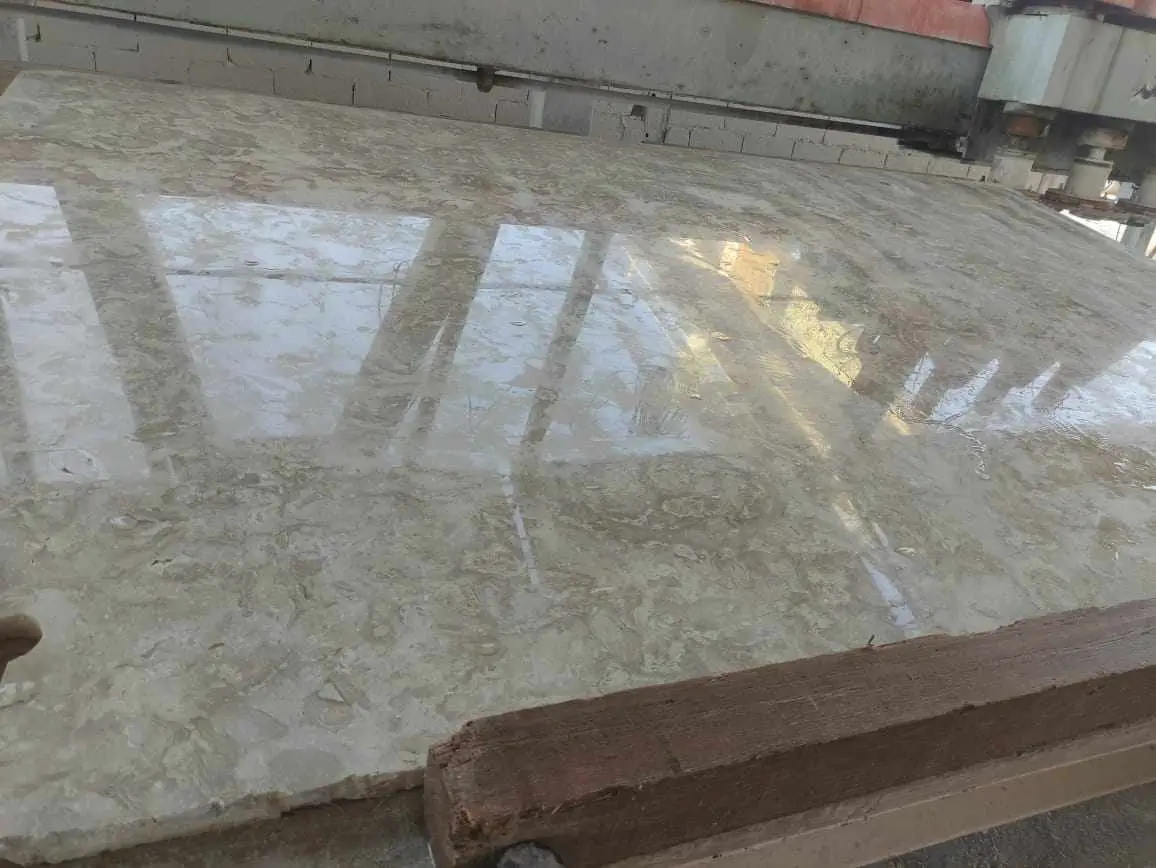
Substrate Requirements for Wall Cladding Stone
Your substrate is the single largest variable in a limestone wall tile installation — not the stone itself. In Paradise Valley’s custom residential market, you’ll encounter three common substrate conditions: CMU block with parge coat, steel-framed walls with cement board backer, and existing stucco finish. Each requires a different preparation approach before you set a single tile.
- CMU block with parge coat: Check for efflorescence along mortar joints — if it’s present, you need a two-part crystalline waterproofing treatment before any adhesive is applied, or you’ll be chasing mineral deposits behind your tile face within two years
- Steel stud with cement board: Ensure board joints are offset from stud centers by at least 2 inches, and tape all seams with alkali-resistant mesh before skim-coating — unsupported joint edges telegraph through thin tile over time
- Existing stucco: Test adhesion with a tap test across the full surface area — hollow spots greater than 25% of any 10-square-foot section require mechanical removal, not skim coating over the problem
- All substrates: Flatness tolerance for wall cladding stone should be held to ⅛ inch in 10 feet — tighter than floor applications because lippage on a vertical surface is far more visible
- Moisture barrier continuity: Flash all penetrations (electrical boxes, sconces, outlet rough-ins) before tile work begins — fixing this after installation means removing and resetting surrounding tile
The detail that gets missed most often on interior accent walls is the transition at floor level. Where your limestone wall tile meets the flooring material, you need a compressible filler at the base — not grout. Grout locks the assembly together at its most vulnerable point and creates a stress concentration exactly where thermal movement from the floor slab is greatest.
Thickness and Format Selection for Paradise Valley Feature Walls
Paradise Valley feature walls typically call for one of two aesthetic directions: large-format slabs running 24×24 inches or larger, or stacked ashlar patterns in the 6×24 to 12×24 range. Your thickness specification depends heavily on which format you choose and whether the wall is interior or exterior-facing.
For large-format interior applications, ⅜-inch to ½-inch nominal thickness performs well when back-buttered with a polymer-modified large-format tile mortar (ANSI A118.15 compliant). The back butter step isn’t optional — it’s what achieves the 95% minimum contact coverage that large tile requires to prevent hollow spots from developing into cracks under point-impact loads. Exterior applications exposed to direct weather should step up to ¾-inch minimum to provide adequate freeze-thaw durability and wind-driven rain resistance.
- Interior accent walls: ⅜ to ½ inch nominal, large-format or ashlar pattern
- Exterior cladding with partial weather exposure: ½ to ¾ inch nominal
- Full exterior applications exposed to monsoon rain: ¾ inch minimum, mechanical clip anchorage above 8 feet
- Fireplace surrounds: ¾ inch minimum — thermal shock from firebox cycling demands added mass
- Thin-cut veneer (⅜ inch or less): Limit to interior walls, avoid heat sources, and spec a flexible epoxy adhesive rather than standard thinset
In Sedona, the regional precedent for warm-toned limestone on exterior feature walls has shaped how Arizona specifiers think about tone matching — the earthy buff and cream hues of local geology naturally complement the red rock context, and Paradise Valley clients often reference that regional palette when selecting limestone wall tile.
Adhesive and Mortar Specifications for Arizona Interior Walls
The mortar selection for Arizona interior walls is where plenty of well-intentioned installations go sideways. Standard Type S mortar is fine for exterior CMU applications but poorly suited to interior limestone cladding — its compressive strength of 1,800 PSI exceeds the tensile bond requirement and leaves you with a rigid assembly that doesn’t accommodate the movement cycles you’ll see in a climate-controlled Paradise Valley home.
Your spec should call for a medium-bed large-format tile mortar with a minimum shear bond strength of 300 PSI per ANSI A118.4. For polished or honed limestone surfaces, verify that the mortar is non-staining — certain Portland-rich formulations can leach through the stone face and leave permanent ghost patterns, particularly on cream and white-toned limestone. Testing a sample tile face-down in the mortar for 72 hours before installation is worth the two days it saves in potential remediation time.
For projects referencing Citadel Stone limestone slabs available in Scottsdale, the material data sheets include specific mortar compatibility guidance that aligns with the absorption rate and surface finish of each product line — a useful cross-reference before you finalize your adhesive selection.
Joint Spacing and Grout Selection
Joint width for limestone wall tile Paradise Valley projects should be set at a minimum of 3/16 inch — not the 1/16-inch hairline joints you see specified on ceramic subway tile. Limestone isn’t manufactured to the ±0.02-inch dimensional tolerance of porcelain, and the slight variation in natural stone dimensions requires room in the joint to absorb it without lippage. Trying to push hairline joints on natural limestone results in uneven reveals that catch shadow lines and read as installation error.
Grout selection follows directly from finish and color. For honed or brushed limestone, unsanded grout in a color-matched tone reads cleanest and minimizes the visual interruption of the joint. For tumbled or pillowed limestone, a sanded grout at the 3/16 to ¼-inch width range provides the mechanical strength the wider joint needs. Epoxy grout is worth the premium on kitchen backsplash applications and any wall adjacent to a wet area — its stain resistance and impermeability dramatically reduce long-term maintenance burden.
- Minimum joint width: 3/16 inch for standard cut limestone
- Honed/polished finish: unsanded grout, color-matched to tile tone
- Tumbled/brushed finish: sanded grout, width 3/16 to ¼ inch
- Kitchen and wet-adjacent walls: epoxy grout specified, not optional
- Expansion joints: Required at all changes of plane, at ceiling and floor transitions, and at every 12 linear feet of continuous wall — use a compressible backer rod and sealant, not grout
Sealing Limestone for Paradise Valley Conditions
The sealing question for limestone cladding on interior walls is more nuanced than the standard “seal everything” advice you hear at the supply counter. Your sealer selection should be driven by the stone’s finish, the wall’s proximity to moisture sources, and the aesthetic outcome you want to preserve over the long term.
For interior accent walls away from moisture sources, a penetrating silane-siloxane sealer at 15% to 20% active ingredient concentration provides adequate stain resistance without changing the stone’s visual character. Applied after installation and complete grout cure (minimum 28 days from grout set), one coat penetrates sufficiently for interior conditions. Re-application is typically needed no more than every four to five years in a climate-controlled interior environment.
Walls adjacent to cooking areas, bathroom vanity backsplashes, or outdoor kitchens require an impregnating sealer rated for oil and water-based stain resistance — look for formulations with fluoropolymer chemistry, which outperforms standard silane in greasy cooking environments. In Peoria, where many newer homes feature open kitchen-to-great-room layouts with limestone feature walls behind range areas, specifying the higher-grade sealer upfront avoids the conversation about oil staining six months post-occupancy.
At Citadel Stone, we recommend testing any sealer on a full tile sample from the same production batch before committing to a wall application — batch variation in porosity between production runs is real, and a sealer that penetrates beautifully on one sample can pool on the surface of another if absorption rates differ by more than 15%.
Exterior Wall Cladding Stone Performance Factors
Exterior applications of limestone wall tile in Paradise Valley introduce a different set of performance demands than interior work. You’re managing UV degradation, monsoon-driven hydrostatic pressure, and thermal cycling across a much wider range — surfaces facing south and west regularly exceed 160°F in July, then drop below 45°F on January nights. That’s a 115°F differential happening on the same tile face across seasonal cycles.
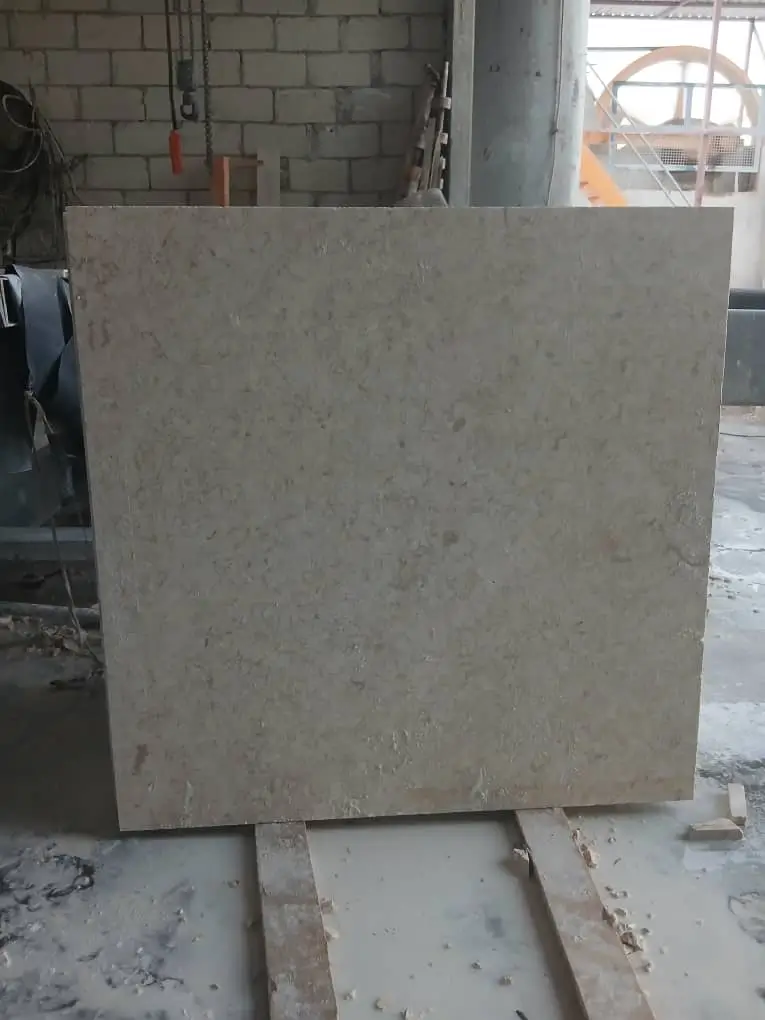
The absorption rate of your limestone becomes critical here. Specify stone with an absorption rate below 3% by weight (ASTM C97 testing) for exterior walls in Arizona’s low desert. Above that threshold, seasonal moisture uptake during monsoon season followed by rapid drying creates micro-spalling at the surface — not in year one, but predictably by year five or six. Requesting quarry test data before ordering lets you verify compliance; reputable limestone tile suppliers in Arizona maintain these certificates as standard documentation.
- UV-stable color tones: Beige, buff, and white-range limestone resists UV bleaching better than darker-toned varieties with iron oxide coloring
- Mechanical anchorage: Required for tiles above 15 lb/ft² installed weight at heights exceeding 8 feet above grade — adhesive-only assemblies are not code-compliant at these thresholds in most Arizona jurisdictions
- Weep screed placement: Exterior cladding systems require weep screeds at the base and at horizontal ledge conditions to allow moisture drainage from behind the tile assembly
- Mortar joint sealant: Exterior joints should be filled with a siliconized acrylic sealant rather than cementitious grout at all penetrations and plane changes
- Re-sealing schedule: Exterior limestone walls should be re-sealed on a two-year cycle in Arizona’s low desert — UV accelerates sealer degradation faster than the four-to-five-year interior schedule
Planning and Logistics for Your Wall Tile Project
Your project timeline for a limestone wall tile installation in Paradise Valley needs to account for material lead time as a primary scheduling driver. Unlike ceramic or porcelain tile available from distribution warehouses on short notice, matched limestone from a specific quarry batch can require four to eight weeks for import cycle, plus warehouse receiving and quality check time. Ordering from domestic warehouse stock when it’s available cuts that window to one to two weeks and eliminates the risk of batch color variation between initial shipment and any supplemental material.
Calculate your order quantity with a 12% to 15% overage for natural stone wall tile — higher than the standard 10% floor tile overage. Wall applications involve more cuts around outlets, switch plates, sconce rough-ins, and trim conditions than a comparable floor area. Running short on material mid-installation from a lot-matched batch creates real problems; limestone from a subsequent quarry pull will often show measurable color and tone variation even from the same nominal product.
In Flagstaff, job sites above 7,000 feet elevation see morning temperatures that can affect adhesive open time during shoulder seasons — mortar that performs at 72°F in the valley may require extended working time adjustments above 5,500 feet, where cool morning air slows the cement hydration cycle. For Paradise Valley feature walls, the inverse applies in summer: schedule adhesive work in early morning hours and avoid setting tile when ambient wall surface temperatures exceed 95°F, since rapid moisture loss from the mortar reduces bond strength.
Truck access to Paradise Valley job sites also matters more than most clients anticipate at the planning stage. Many custom residential properties have gated entries, narrow driveways, and landscaping that limits where a flatbed delivery truck can stage material. Coordinating warehouse delivery windows with the site superintendent — and confirming truck clearance heights for any covered motor courts — prevents the kind of delivery day complications that delay tile setting by a full day.
Final Recommendations
The decisions that determine whether your limestone wall tile Paradise Valley installation performs for 25 years or needs remediation in five come down to three non-negotiable factors: substrate flatness and moisture preparation, adhesive compatibility with the specific stone finish and absorption rate, and joint and sealer specifications matched to the wall’s actual exposure conditions. Every other variable — tile format, grout color, pattern layout — is secondary to getting those three right.
Limestone wall tile also performs differently once ongoing moisture exposure is introduced, which is worth considering if your project scope includes bathroom spaces. For detailed guidance on how this material holds up under continuous wet-area conditions, Limestone Tile Bathroom Installations for Peoria Wet Areas addresses the additional sealing, adhesive, and drainage considerations that wet-area assemblies require beyond the standard interior wall spec.
At Citadel Stone, we maintain warehouse stock of the most specified Paradise Valley limestone profiles and can confirm lot availability before you finalize your material schedule — which means you’re working from confirmed inventory, not a lead time estimate that can shift with import delays. Citadel Stone supplies premium limestone wall tile in Arizona backed by direct quarry relationships and hands-on technical support for every specification stage.