
Reliable limestone supplier service in Chandler isn’t just about having stone in stock — it’s about whether your supplier can actually support your project timeline, answer technical questions before you commit to a specification, and deliver without the delays that blow out your schedule. The difference between a smooth project and a frustrating one often comes down to how your supplier handles communication, inventory transparency, and last-minute field questions. These are the variables that most people underestimate when evaluating vendors.
What Professional Supplier Service Actually Looks Like
Limestone supplier service in Chandler spans a wide spectrum — from suppliers who simply take orders and deliver pallets to those who function as technical partners throughout your project. The second category is significantly more valuable, especially when your project hits the unexpected complications that are almost inevitable in Arizona’s caliche-heavy soil conditions. A supplier who can tell you the compressive strength range of a specific limestone lot, the expected thermal movement coefficient, or the recommended sealer compatibility isn’t a luxury — it’s a baseline expectation for high-value projects.
Chandler vendor support quality shows itself most clearly when something goes wrong mid-project. Whether that’s a delayed truck, a material variance between lots, or a moisture issue discovered during installation, the supplier’s response time and technical depth in those moments define the relationship far better than any sales conversation ever could.
- Suppliers should be able to confirm current warehouse inventory within one business day — not quote you estimated lead times that keep shifting
- Technical staff should be reachable during field hours, not just 9-to-5 office windows
- Written product data sheets — including absorption rates, flexural strength, and slip resistance values — should be available without a two-week wait
- Clear communication about lot consistency matters enormously when matching to existing stone or specifying tight color ranges
Inventory Transparency and Lead Times You Can Actually Plan Around
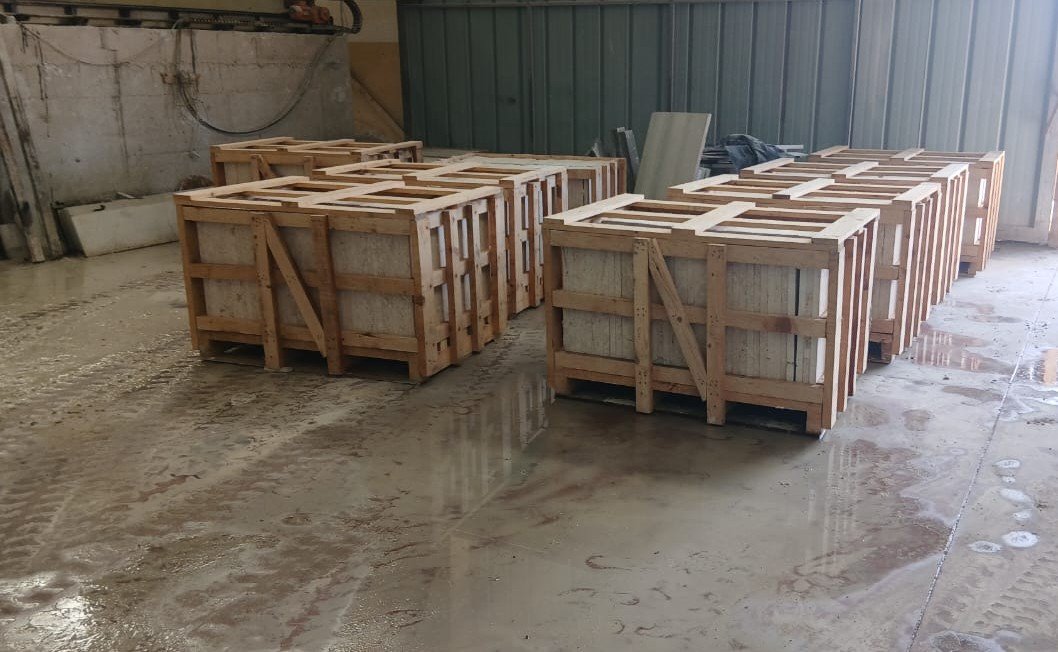
Here’s what most project managers don’t realize until it costs them two weeks: limestone sourced through import channels carries a 6-to-8-week lead time minimum, and that window can stretch further when shipping containers are delayed. A project schedule built around a 3-week delivery estimate from a supplier who hasn’t confirmed warehouse availability is a project schedule that will fail. Before finalizing your limestone specification, verify whether the material is sitting in domestic warehouse stock or still moving through an import cycle.
For projects in Chandler — where construction timelines are often compressed by HOA completion deadlines or commercial occupancy requirements — domestic warehouse availability isn’t just convenient, it’s sometimes the deciding factor in material selection. Citadel Stone maintains Arizona warehouse inventory specifically to reduce that gap, typically bringing lead times down to one to two weeks for stocked product lines. That timeline difference is significant when coordinating subcontractor schedules around a stone delivery.
- Always request a written inventory confirmation, not a verbal assurance — lot numbers and pallet counts protect you if there’s a discrepancy
- Ask specifically whether material is in domestic warehouse or awaiting import clearance
- Build a minimum five-day buffer into your delivery schedule for Arizona summer heat delays, which can affect truck routing and driver availability
- Confirm pallet weights before scheduling delivery — your site access conditions and lifting equipment capacity need to match the load
Technical Consultation Before You Lock In a Specification
The supplier assistance that delivers the most value doesn’t happen at delivery — it happens three weeks before the purchase order. A well-qualified limestone supplier service in Chandler should be able to walk you through material selection criteria before you commit. That means discussing porosity ranges for outdoor versus covered applications, thermal expansion characteristics relative to your joint spacing plan, and finish options that meet your slip-resistance requirements under wet conditions.
Arizona service quality from a stone supplier is easy to evaluate with one test: call them with a technical question about absorption coefficient and see what happens. If you get transferred twice and end up with a sales rep who promises to email you a brochure, that’s your answer about the depth of support you’ll receive when your project hits a real complication. Limestone customer care Arizona-wide varies more than most buyers expect, and this gap shows up most painfully during installation, not before it.
- Porosity rates below 3% are preferable for exterior limestone exposed to Phoenix metro monsoon saturation
- Thermal expansion of approximately 4.4 to 5.3 × 10⁻⁶ per °F for dense limestone requires joint spacing adjustments compared to standard concrete gap specifications
- Flexural strength above 1,800 PSI is the minimum threshold for residential driveway applications under Arizona axle loads
- Finish selection — honed versus brushed versus natural split — affects both aesthetics and COF slip ratings under Arizona pool-adjacent conditions
Evaluating a Limestone Paver Supplier in Arizona for Your Project
Selection criteria for a limestone paver supplier in Arizona should go beyond price per square foot and delivery radius. The technical consistency of material across multiple orders matters as much as the initial quote, especially for large-format commercial projects where Phase 2 material needs to match Phase 1 visually and physically. Lot-to-lot variation in Arizona limestone supply is a real issue — color shift, density variation, and finish inconsistency between quarry pulls can create visible mismatches in a finished installation.
Projects in Sedona deal with a specific layering challenge: the local aesthetic expectation for warm-toned natural stone means that a bluish-gray limestone lot — even if technically equivalent — will get rejected by the client on visual grounds. Knowing which quarry sources produce consistent warm-buff and cream-limestone tones is the kind of sourcing knowledge that separates a supplier with genuine field experience from one that simply lists products in a catalog. At Citadel Stone, we track quarry lot characteristics across our supply chain so we can match material to project aesthetic requirements with a much higher confidence level than a generic purchase order allows.
Supplier assistance at this stage also means reviewing the return and replacement policy for material with manufacturing defects before the first pallet arrives on-site. Discovering a significant percentage of unusable units after delivery, with no clear path to replacement, is the kind of problem that derails budgets fast.
Delivery Logistics and Site Access Planning
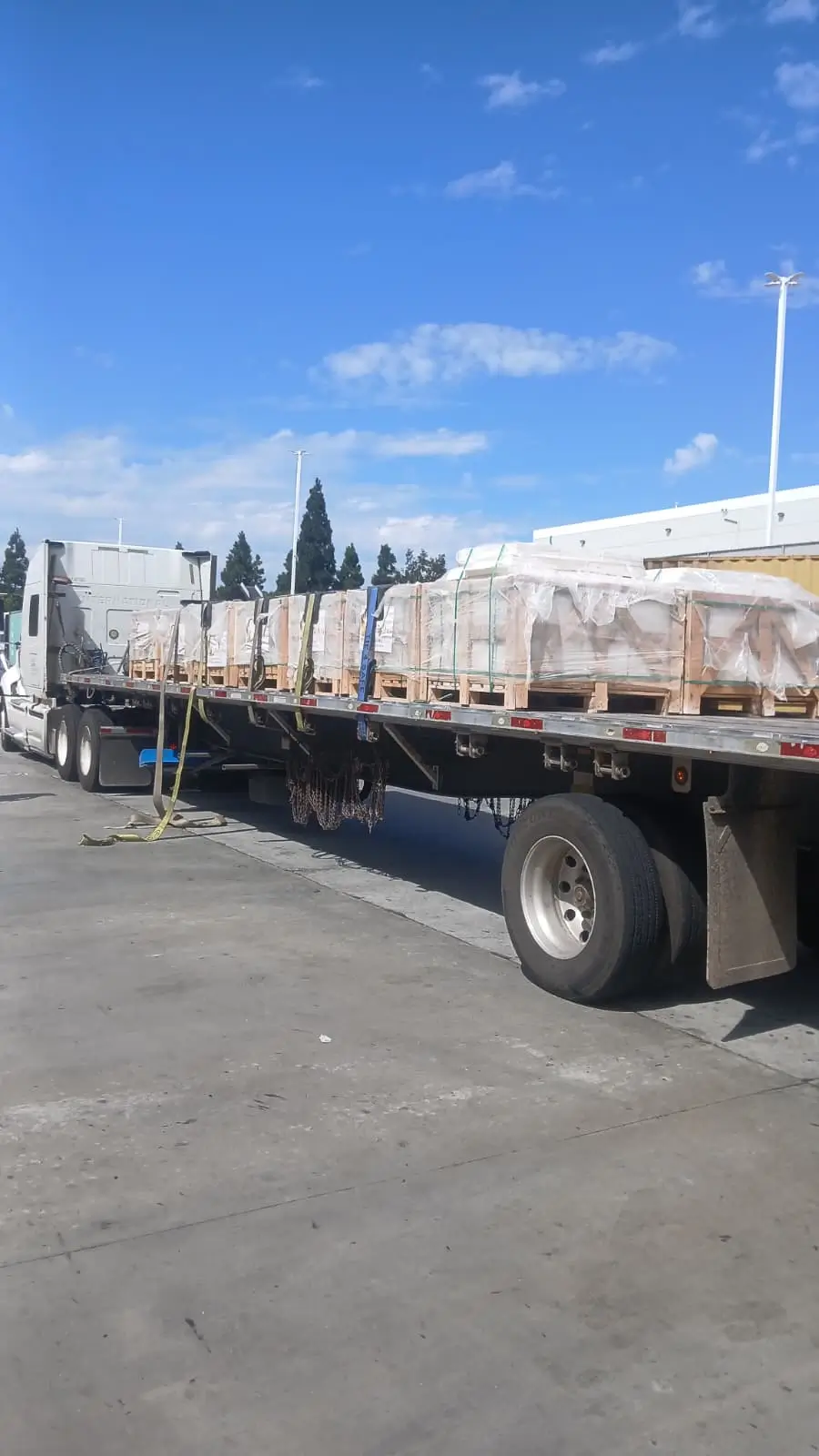
Truck access planning is one of those details that gets glossed over in supplier conversations and then causes real problems on delivery day. Standard flatbed truck delivery to a Chandler residential project assumes a clear approach path, adequate turning radius, and a drop zone within 50 feet of where the stone will be staged. None of those conditions are guaranteed, especially on infill residential lots with narrow driveways, overhead utilities, or soft soil conditions that follow monsoon saturation.
For projects where direct truck access is restricted, have that conversation with your limestone supplier service in Chandler before the purchase order is placed — not when the driver calls from the street corner. Some suppliers have alternative delivery configurations for restricted-access sites, including smaller vehicle options or crane-assisted off-load arrangements, but these require advance scheduling and sometimes carry additional logistics costs. The detail that matters most here is time: you need these logistics resolved before your installation crew is standing on-site waiting for material.
- Confirm curb-to-drop-zone distance during your pre-delivery site walkthrough
- Verify overhead clearance if your delivery path includes covered parking or low utility lines
- Communicate soil conditions honestly — wet caliche after monsoon rains can fail under loaded truck weight
- Identify whether you need a forklift on-site or if the supplier’s truck has a liftgate — these are different configurations that need different preparation
Limestone Customer Care Through the Full Project Lifecycle
The most reliable limestone customer care Arizona suppliers offer extends past the delivery date. Post-installation support — answering questions about sealing schedules, stain treatment protocols, or re-ordering material for a Phase 2 expansion — reflects a supplier’s actual investment in the relationship rather than the transaction. The quality of that engagement tells you quickly whether your supplier treats the relationship as closed once the invoice is paid.
For high-traffic commercial projects in Peoria, where limestone surfaces face foot traffic loads, UV exposure, and cleaning chemical contact from maintenance crews, having supplier access to sealing and maintenance guidance can extend installation lifespan meaningfully. Surface protection applied on a 12-to-18-month cycle using a penetrating sealer rated for limestone — not a surface-film sealer — can maintain absorption rates below 1% and prevent the subsurface moisture migration that causes delamination in thinner limestone gauges. That’s the kind of ongoing technical support that translates directly to client satisfaction and long-term project performance.
Evaluating Arizona Service Quality Benchmarks Across Suppliers
Arizona service quality in the stone supply industry doesn’t have a universal certification or rating system, which means you’re doing the evaluation yourself through experience, references, and early-stage interactions. The most reliable indicators of a supplier’s service capability are visible in the pre-sale phase: how quickly they respond to technical inquiries, whether they proactively share material data or wait to be asked, and how clearly they communicate what’s in stock versus what requires ordering.
Request references from completed projects with similar scope and material type before committing to a supplier for a significant limestone order. A supplier with genuine Arizona project experience will readily connect you with contractors or architects who’ve worked with them through full project cycles — not just smooth deliveries, but projects that had complications, required re-orders, or needed technical intervention. Strong Chandler vendor support means that assistance doesn’t disappear after the sale. For more information about choosing the right limestone product for your Arizona project, explore our limestone slab selection to understand the full range of format and finish options available for Chandler and surrounding markets.
- Response time to a technical inquiry within 24 hours signals operational depth — longer delays suggest the supplier doesn’t have in-house expertise
- Supplier assistance should include help interpreting ASTM test data, not just forwarding a manufacturer’s PDF
- References from projects completed in the last 18 months are more relevant than older testimonials — supply chains and staffing change
- Ask specifically how the supplier handled a material defect or delivery delay on a past project — the answer reveals their service culture better than any sales pitch
High-Elevation Projects and How Supplier Support Differs
Limestone projects at elevation introduce variables that lower-desert suppliers sometimes underestimate. For work near Flagstaff, where freeze-thaw cycles can occur 50 or more times per year, your limestone specification needs to shift significantly from standard Chandler or Phoenix metro criteria. Absorption rates that are acceptable at 1,100 feet elevation become problematic at 6,900 feet, where water infiltration followed by freeze expansion creates internal fracturing over a relatively short number of cycles.
A limestone supplier service in Chandler that also serves high-elevation markets should be able to differentiate their material recommendations by application zone — not simply offer the same product for all Arizona projects. Suppliers with genuine field experience across Arizona’s elevation range will tell you, without prompting, that a limestone rated for Chandler’s dry heat may not meet the durability criteria for an exposed Flagstaff terrace application. That kind of proactive, honest guidance is the clearest signal you can receive that a supplier prioritizes your project’s long-term performance over a quick sale. Limestone customer care Arizona contractors rely on must account for these elevation-driven specification differences, not treat the entire state as a single climate zone.
Final Recommendations
The practical reality of limestone supplier service in Chandler is that the best partnerships form before the purchase order — through technical conversations, clear inventory communication, and honest discussion of project-specific requirements. Your supplier should be functioning as a project resource, not just a logistics operator. Evaluate them on the quality of their pre-sale technical engagement, their willingness to provide written inventory confirmation, and the depth of their experience with Arizona-specific installation conditions.
Supplier assistance that includes post-delivery support, lot documentation, and responsive communication during installation is what separates a strong vendor relationship from a transactional one. Arizona service quality benchmarks are self-set in this industry, which means the evaluation burden falls on you — and the pre-sale phase is where that evaluation is most revealing. As you plan your broader Arizona hardscape and sourcing strategy, it’s worth reviewing how supplier type affects material access and pricing — Local Limestone Suppliers vs National for Mesa Sourcing Decisions covers that dimension in detail and is directly relevant to how you structure your supply chain for ongoing projects across the Phoenix metro. We provide marketing support to dealers who stock our wholesale limestone pavers in Arizona.