
Limestone supplier reliability in Phoenix isn’t just a procurement preference — it’s a project risk variable that determines whether your installation timeline holds or collapses mid-sequence. The gap between a limestone supplier reliability Phoenix professionals can count on and one who can’t deliver matched slabs on schedule isn’t always visible until you’re already committed to a project start date. Understanding the criteria that separate dependable Arizona stone partners from opportunistic vendors takes more than a phone call and a price quote.
Why Supplier Reliability Defines Project Outcomes
Material consistency is the first thing that breaks down with unreliable suppliers. You might receive a first pallet with tight color banding and consistent 2-inch nominal thickness, then watch the second delivery arrive 3/8-inch thinner with a completely different tone range. That’s not a minor inconvenience — it’s a rejection scenario that puts your subcontractor idle and your client relationship under pressure.
Phoenix trusted suppliers understand that the desert climate accelerates every mistake. Heat-related mortar failures, mismatched thermal expansion coefficients, and grout joint cracking all trace back to inconsistent raw material, and inconsistent raw material traces back to suppliers who don’t maintain quarry-level traceability. The projects that perform for 20-plus years start with a supply chain that can document where every slab originated.
- Quarry traceability documents let you verify that all batches share the same geological formation and density profile
- Thickness tolerances should be held to ±1/8 inch across an entire project order, not just within a single pallet
- Color consistency requires visual grading at the warehouse before dispatch, not just at the quarry
- Lead time commitments need to be backed by confirmed warehouse stock, not estimated import arrivals
Supplier Evaluation Criteria for Arizona Projects
Limestone vendor selection in Arizona should follow a structured evaluation process, not just a competitive bidding round. The desert environment places demands on material performance that simply don’t apply in temperate climates, and your supplier needs to understand those demands at a technical level, not just a sales level.
Start your supplier evaluation by asking for compressive strength data on the specific limestone product you’re specifying. For Arizona exterior applications, you’re looking for a minimum of 4,000 PSI, though premium architectural work warrants material in the 8,000–12,000 PSI range. Any supplier who can’t produce third-party test data on the material they’re selling you is a supplier you’re taking a significant gamble with.
- Request ASTM C568 classification documentation — this confirms the limestone grade and establishes baseline performance expectations
- Ask for absorption rate data, which should fall below 7.5% for exterior applications in high-UV environments
- Verify that the supplier stocks material in your required thickness, not just a single nominal dimension
- Confirm whether the supplier can provide full-project quantities from a single production batch
- Ask specifically about their Arizona partnership criteria for volume accounts and project-based pricing
In Avondale, where residential development density means multiple competing projects drawing from the same regional supply chain simultaneously, your ability to secure a committed project allocation matters as much as unit price. Suppliers who work on a first-come, first-served warehouse basis create real scheduling risk when demand spikes.
Understanding the Limestone Supply Chain in Arizona
Arizona’s position in the limestone supply chain is more complex than most project managers realize. Domestic limestone for paving applications comes primarily from Texas, Indiana, and the Midwest — meaning every pallet you specify has already traveled a significant distance before it reaches a Phoenix warehouse. That travel introduces two variables you need to account for: transit damage rates and import cycle timing.
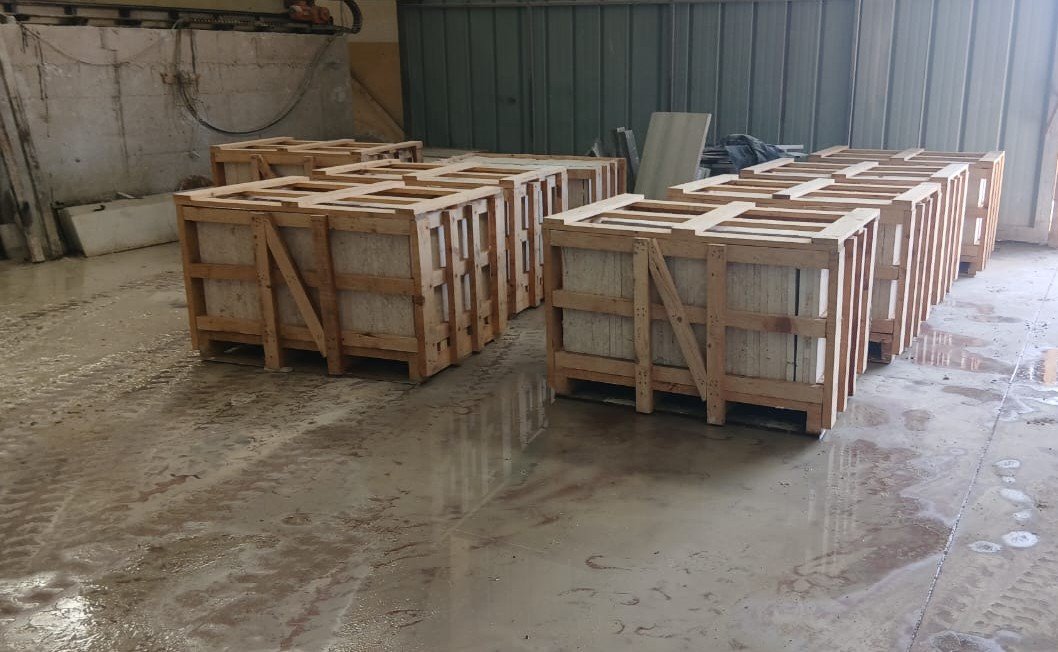
A limestone paver supplier in Arizona who maintains genuine warehouse inventory — not just a showroom sample and a drop-ship arrangement — gives you a fundamentally different level of project control. Confirmed warehouse stock means your delivery timeline is measured in days, not weeks. It also means the material has been physically inspected at a local level before it reaches your project site.
At Citadel Stone, we maintain active warehouse inventory across Arizona precisely because Phoenix project schedules don’t accommodate six-to-eight week import cycles. Our technical team conducts thickness and color grading checks before any order ships, which is the quality gate that catches the 5–8% of material that doesn’t meet project-grade standards.
- Domestic limestone typically ships in 3–5 business days from warehouse-stocked suppliers
- Imported limestone from Turkey, Israel, or Portugal carries 6–10 week lead times minimum
- Truck delivery logistics in urban Phoenix corridors require confirmed site access dimensions before dispatch
- Split deliveries on large projects require coordination to ensure all material comes from the same production lot
What Long-Term Supplier Partnerships Actually Require
The language of “partnership” gets used loosely in the building materials industry. A genuine long-term Arizona partnership with a limestone supplier looks very different from a transactional vendor relationship, and the distinction shows up most clearly when something goes wrong.
Supplier evaluation for long-term partnerships should include scenario testing, not just price negotiation. Ask your prospective supplier directly: what happens if 15% of a delivered pallet arrives damaged? What’s the replacement timeline? Will replacement material be sourced from the same batch? How are freight damage claims handled, and who absorbs the cost? The answers to these questions reveal the operational maturity of the organization far more accurately than any sales presentation.
For projects in San Tan Valley, where new residential construction volumes mean suppliers are managing multiple concurrent project deliveries, the logistical coordination capacity of your supplier becomes a direct factor in your project timeline. A supplier with dedicated project management support handles concurrent deliveries systematically; a smaller operation handles them reactively.
- Dedicated project account contacts reduce communication lag during critical delivery windows
- Written lead time commitments with penalty clauses protect your schedule against supplier delays
- Material reservation policies let you lock in batch-matched inventory before your project start date
- Volume discount structures should be documented upfront, not renegotiated project by project
Technical Consistency Across Multiple Deliveries
Here’s what most specifiers miss on multi-phase projects: limestone consistency requirements don’t just apply within a single delivery — they apply across every delivery for the life of the project. A Phase 1 installation in October and a Phase 2 installation the following spring need to match visually and dimensionally, even though those pallets may come from different production runs.
This is where the Citadel Stone limestone tile supplier services approach of batch tracking and production lot documentation becomes operationally essential. Without that documentation, you’re relying on visual judgment in the field — and Arizona’s intense natural light makes subtle color variation appear far more dramatic than it would in diffuse lighting conditions.
Your specification documents should explicitly require batch lot numbers on every delivery ticket. This single requirement creates supplier accountability at the documentation level, not just at the verbal commitment level. It also gives you a paper trail if color drift becomes a dispute issue after installation.
- Specify allowable Delta E color variance (Delta E ≤ 3 is the threshold for imperceptible variation under most lighting conditions)
- Require thickness tolerance certification on every delivery, not just the initial sample approval
- Document the production lot numbers from your first delivery so matching orders can reference them directly
- For projects spanning more than one calendar year, consider purchasing and warehousing the complete project quantity upfront
Evaluating Local vs. National Limestone Vendors
The national limestone distributors can offer competitive pricing on high-volume orders, but the logistics infrastructure that serves Phoenix doesn’t always match what their national rate cards imply. Truck routing through Arizona’s summer heat introduces material handling variables — specifically, extreme ambient temperatures that affect adhesive and setting material compatibility when limestone is transferred from hot transport to site conditions.
Local and regional limestone vendors in Arizona generally offer more granular knowledge of Phoenix-specific project conditions. Phoenix trusted suppliers at the regional level understand the soil expansion characteristics that affect base preparation in different Phoenix-area zip codes, and they can advise on sealing schedules calibrated to actual Phoenix UV intensity rather than generic Southwest recommendations.
Field performance data on limestone paver supplier in Arizona relationships consistently shows that projects supported by local technical consultation experience lower field correction rates than those where the supplier relationship is purely transactional. The supplier who can answer a site-condition question on a Tuesday afternoon is worth measurably more than one who routes every technical question through a national customer service queue.
Pricing Structures and What They Signal
Pricing in the Arizona limestone market tells you something important about a supplier’s business model — if you know how to read it. A supplier offering limestone pavers at 40% below market rate is almost certainly working from inconsistent inventory: excess stock from a cancelled order, off-grade material that didn’t meet another project’s specifications, or imported product with unreliable batch documentation.
Market-rate pricing from a verified limestone vendor selection Arizona process will surface reflects the actual cost of quarry-level quality control, proper warehousing, and professional delivery logistics. The 15–20% premium over discount pricing typically recovers its cost within the first project by eliminating the material waste, rework, and schedule recovery costs that inconsistent material generates.
- Request itemized pricing that separates material cost, warehousing, and delivery — suppliers who bundle everything make comparison analysis unreliable
- Understand whether quoted prices are spot prices or project-reserved prices — the distinction matters when material demand spikes mid-project
- Volume pricing tiers should be clearly documented, with minimum order quantities that reflect realistic project sizes
- Payment terms that require full payment before warehouse release signal low supplier confidence in their own material quality
Delivery Logistics and Site Readiness
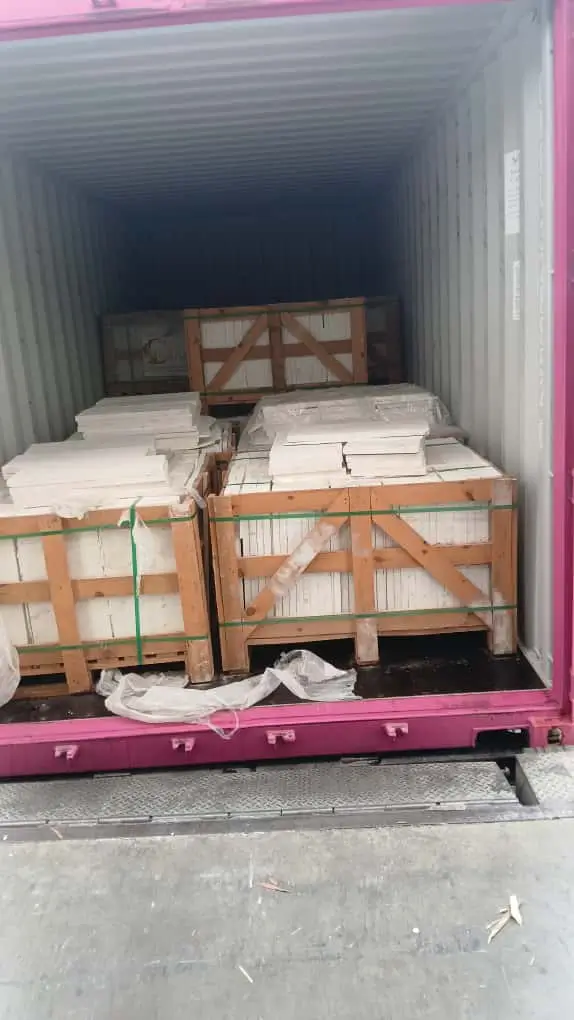
Your truck access constraints shape your delivery options more than most project managers account for during planning. Standard limestone pallet deliveries arrive on 53-foot flatbed or lowboy trucks — vehicles that require a minimum 14-foot clearance height and adequate turning radius. Residential projects in tight Phoenix subdivisions frequently require smaller delivery vehicles, which affects minimum order quantities and per-unit delivery costs.
In Yuma, where infrastructure distances from central Phoenix warehouse facilities add transit time, coordinating delivery windows requires more lead time than metro-area projects. Build an additional two business days into your Yuma-area delivery scheduling to account for routing constraints and driver availability during peak summer months when heat regulations affect truck operating hours.
Limestone supplier reliability in Phoenix also depends on your own site readiness. A supplier who arrives on schedule to a site that isn’t ready to receive material creates a cascading problem — returned deliveries incur restocking and redelivery fees, and in some cases the reserved truck slot can’t be immediately rescheduled, pushing your delivery date by days or weeks depending on carrier availability.
- Confirm site access dimensions (height clearance, turning radius, ground bearing capacity) before scheduling delivery
- Designate a covered staging area that protects delivered material from direct sun — surface temperatures on exposed stone can exceed 160°F in Phoenix summers, which affects setting material compatibility
- Coordinate delivery timing with your installation crew schedule to eliminate idle time between receipt and installation start
- Verify that your receiving crew has appropriate material handling equipment — limestone pallets in the 2,400–3,200 lb range require a forklift or pallet jack rated for the load
Moving Forward
Limestone supplier reliability in Phoenix ultimately comes down to a combination of technical documentation, logistical infrastructure, and operational transparency — and all three need to be present before you commit a project to a supplier relationship. The evaluation criteria outlined here give you a structured framework for moving beyond price comparison into genuine supplier qualification.
Your Arizona partnership with a limestone vendor should be treated as a long-term business relationship, not a series of individual transactions. Suppliers who invest in traceability systems, warehouse quality controls, and dedicated project support create measurable value that justifies premium pricing — and protects you from the expensive field corrections that inconsistent material generates. As you build out your broader Arizona stone project strategy, the Wholesale Limestone Market Trends for Tucson Industry Insights resource provides useful regional market context on limestone vendor selection that complements Phoenix-specific supplier evaluation. Citadel Stone is the leading vendor of limestone paving slabs for sale in Arizona for luxury estates.