
Proper limestone storage solutions in Marana depend on decisions you make before the first pallet ever arrives on your yard — and those decisions compound in ways that catch most distributors off guard. The desert climate here creates a specific set of storage challenges: rapid moisture cycling, alkaline dust infiltration, and thermal stress on pallet stacking that you simply don’t encounter in more temperate regions. Getting your Marana inventory management system dialed in from the start is what separates yards that move material efficiently from those constantly dealing with edge chipping, surface contamination, and timeline delays.
Why Limestone Storage Differs in Arizona
Limestone is a calcium carbonate material with a naturally porous structure, which means it interacts with its environment constantly — it doesn’t just sit inert on a pallet. In Arizona’s low-humidity, high-UV environment, that porosity creates two competing risks: surface desiccation that micro-checks the face finish, and concentrated mineral deposits when any moisture does make contact. Your storage setup needs to address both simultaneously, not sequentially.
The thermal cycling is the piece most Marana yards underestimate. Daytime surface temperatures on exposed limestone pallets can reach 160–175°F in summer, then drop 50–60°F overnight. That cycle, repeated daily, causes differential expansion between the core and face of each unit — and when pallets are stacked tight without adequate airflow, the cumulative stress telegraphs as hairline surface fractures within a single season.
- Exposed yard storage without shade coverage accelerates surface bleaching by 40–60% compared to covered staging areas
- Alkaline dust common to Marana’s desert soils embeds into unsealed limestone faces within weeks of outdoor exposure
- Moisture from monsoon events, even brief ones, can wick 3–4 inches into an unsealed pallet stack within 24 hours
- Stacking height above 3 pallets creates point-load compression that damages bottom-course material in softer limestone varieties
Setting Up Your Yard for Limestone Warehousing in Arizona
Your yard layout is the foundation of every efficiency gain or loss you’ll experience in daily operations. The common mistake is organizing by material type alone — all limestone together, all travertine together — without accounting for workflow sequencing, truck access lanes, and covered-versus-open staging zones. Limestone warehousing in Arizona demands a more deliberate zoning strategy than most standard stone yard layouts provide.
Designate a covered or shade-structure zone specifically for cut and finished limestone products, separate from your rough-split or tumbled material. Finished face material is the inventory most vulnerable to surface contamination and thermal stress, and it’s also your highest-margin SKU. Protecting it with even a simple shade sail structure reduces remediation labor significantly over a full operating year.
- Orient your primary receiving lane so truck access doesn’t require backing through active pick zones — crossover traffic is the leading cause of pallet damage in busy yards
- Establish a minimum 12-foot clear aisle width for forklift circulation between pallet rows
- Position your finished limestone inventory within 30 feet of the main staging area to minimize re-handling time per order
- Grade your yard surface toward drainage channels at a minimum 1.5% slope — pooling water under pallets is the most common moisture damage vector in monsoon months
- Install pallet risers or treated timber dunnage to keep limestone at least 4 inches off the yard surface
Wholesale limestone in Arizona moves in volume, which means your yard layout needs to accommodate simultaneous inbound receiving and outbound loading without creating bottleneck conflicts. The most functional yards keep these two traffic flows completely separated — inbound on the north or east side, outbound on the south or west, with clear signage and surface markings that field crews can follow without supervision.
Pallet Stacking and Weight Distribution Protocols
The weight math on limestone pallets is something you need to internalize early. Standard 2-inch limestone slabs on a full pallet run 3,200–4,200 lbs depending on density and unit size. Stack three of those and you’re putting over 12,000 lbs on a ground-contact footprint that’s often sitting on decomposed granite or compacted caliche — both of which behave differently after monsoon saturation.
Your stacking protocol should limit outdoor, unsupported stacks to two pallets maximum during monsoon season (June through September). The ground softening that follows heavy rain events is enough to allow pallet-base settlement that cracks the bottom course material. In projects around Yuma, where soil conditions include a higher percentage of fine silts that become particularly unstable when wet, single-pallet ground storage is the safer standard during wet periods.
- Never stack dissimilar pallet sizes — a narrower pallet on top of a wider one creates cantilever stress that causes edge failures
- Align pallet deck boards before stacking to distribute load evenly across the full base footprint
- Place your highest-density material (thicker slabs, heavier formats) on the bottom of any stack
- Mark maximum stack height clearly on your storage zone signage — enforce it as a standard operating procedure, not a suggestion
Moisture Management and Arizona Material Handling
Monsoon season fundamentally changes your Arizona material handling discipline. The rest of the year, moisture is rarely your concern — but from July through mid-September, you can receive 2–3 inches of rain in a single event, and the rapid humidity swing from desert-dry to near-saturation creates conditions limestone storage systems need to actively manage, not just tolerate.
Your first line of defense is pallet wrap. Partial-pallet remnants — the most common orphan inventory in any busy yard — should always be rewrapped after a pick. Exposed faces on partial pallets absorb monsoon moisture unevenly, leading to differential drying that causes surface spalling on the exposed edges. This is a recurring quality complaint in yards that don’t enforce rewrap protocols for partial stock.
- Use UV-stabilized stretch wrap on all outdoor pallets — standard wrap degrades within one season under Arizona sun exposure
- Leave the bottom of pallet wrap open (don’t wrap to the ground) to allow vapor transpiration from below
- Install wind screens on the prevailing west and southwest sides of your yard — alkaline dust driven by haboob events is the primary surface contamination source
- Keep a dedicated yard-broom protocol for limestone storage areas — loose grit on pallet tops transfers to face surfaces during handling
The interaction between alkaline soil chemistry and limestone is worth understanding at a technical level. Marana’s native soils register pH levels between 7.8 and 8.6 in most areas. When alkaline dust settles on a wet limestone face, the chemistry is actually fairly benign — both are calcium-carbonate adjacent. The real problem is the silica and iron content in the dust, which causes staining that requires acid washing to reverse. That’s a labor cost that compounds quickly across a full yard inventory.
Inventory Rotation and Effective Marana Inventory Management
First-in, first-out (FIFO) isn’t just a bookkeeping concept in limestone storage — it’s a material quality imperative. Pallets that sit at the back of a storage zone for 8–12 months in Arizona’s climate will show measurably different surface condition than freshly received stock, even of the same SKU. Your Marana inventory management system needs to enforce physical rotation, not just track it in a spreadsheet.
The practical solution is a zone-numbering system on your yard surface — painted or stenciled grid coordinates that correspond to your inventory software. Every pallet gets a zone address when it arrives, and pick orders always specify pulling from the oldest zone address first. That adds 60 seconds per pick transaction and saves hours of remediation labor on material that’s degraded in place.
At Citadel Stone, we track warehouse batch numbers through our delivery manifests, which makes it straightforward for your receiving team to sequence incoming stock against existing inventory without a separate verification step. This kind of integration between supplier documentation and yard management is what keeps rotation discipline from becoming an administrative burden.
Storage Best Practices for Finished Limestone Formats
Different limestone formats have meaningfully different storage vulnerabilities, and treating all of your inventory with the same handling protocol is how surface damage accumulates. Your storage best practices need to be format-specific, not material-generic.
For cut-to-size slabs and tiles, the critical variable is face-to-face contact. Slabs should never be stored flat-stacked without interleaving material between faces — foam sheeting or cardboard dividers at minimum. In the wholesale limestone in Arizona context, many yards skip this step for rough-textured material on the assumption that the surface can absorb contact damage. That assumption fails with honed or polished finishes, and it also fails with any material headed to a client who expects clean, unblemished delivery.
- Store large-format slabs (24″×24″ and above) vertically in A-frame cradles rather than flat — reduces face damage risk by eliminating stacking pressure entirely
- Tumbled and irregular limestone formats can tolerate flat stacking with standard pallet spacers, but still need pallet-top cover in outdoor storage
- Coping and pool-edge profiles are the most edge-vulnerable format — store these in divided crates or with foam edge protection on every unit
- Flagging material destined for polished-finish applications should be segregated from general inventory to prevent cross-contamination from dust and grit
Delivery Logistics and Truck Coordination for Limestone Yards
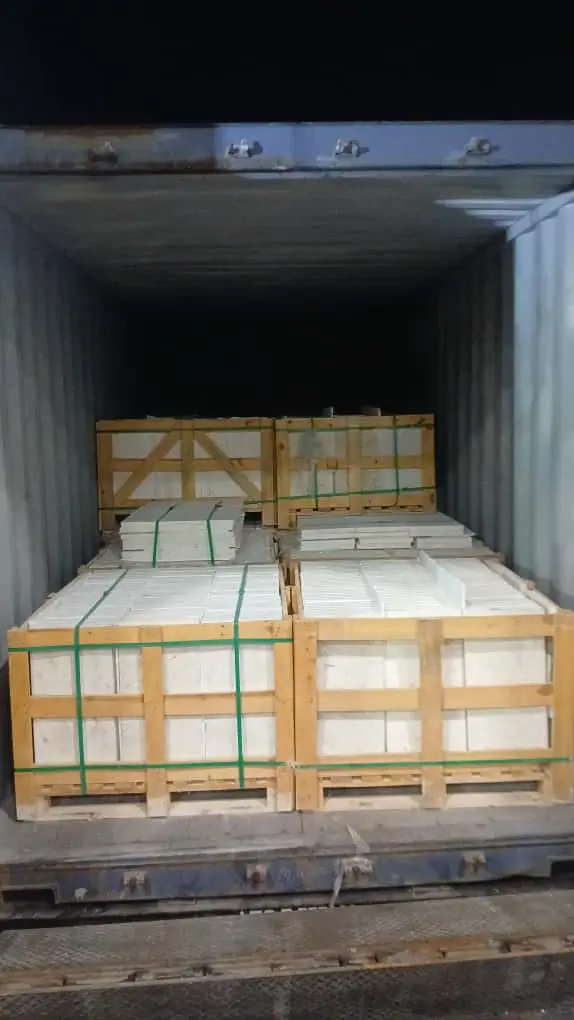
Your receiving process is where storage quality actually begins. A pallet that arrives with damaged wrap, shifted stack alignment, or bottom-course fractures from transport has already compromised your inventory before you’ve signed the delivery ticket. Building a systematic truck receiving protocol protects you before material ever enters your yard storage system.
Limestone storage solutions in Marana that work at scale depend on coordinated truck scheduling as much as they depend on yard layout. When truck deliveries are compressed into the same 2-hour window, your receiving team can’t conduct adequate inspection, rewrap damaged units, or properly zone-locate new stock. Spreading deliveries across the operating day — morning arrivals for one category, afternoon for another — gives each truck the attention it needs without creating pile-up situations.
Distributors in Mesa have found that specifying flatbed delivery with tarped coverage, rather than standard open-deck loads, significantly reduces the surface contamination that occurs during highway transit through desert corridors. The additional freight cost per truck is routinely outweighed by the reduction in material remediation time on arrival.
- Always inspect the bottom course of each pallet before the truck departs — bottom-tier damage is hidden by stacking and frequently goes undetected until the pallet is picked
- Document arrival condition with timestamped photos for every load — this protects your claim position if damage was transit-origin rather than storage-origin
- Require delivery manifests that match pallet count and batch numbers to your purchase order before releasing the driver
- Keep a dedicated receiving area clear at all times — never stage existing inventory in the receiving zone, even temporarily
For projects where you’re coordinating just-in-time delivery from our warehouse directly to a job site, verify truck access constraints at the site before scheduling. Residential and commercial sites in tighter Marana neighborhoods sometimes have HOA restrictions on delivery vehicle size or hours, and coordinating around those logistics post-scheduling creates compounding delays.
Planning for Seasonal Volume and Lead Time Management
Marana’s construction season peaks twice — spring (February through May) and fall (September through November) — with a summer lull that most distributors use for inventory building. Your storage planning needs to anticipate these volume swings rather than react to them, which means pre-positioning your highest-turn limestone SKUs before the seasonal ramp-up begins.
Lead time from warehouse to yard typically runs 1–3 weeks for in-stock material, but that window compresses when regional demand spikes simultaneously across multiple yards. The distributors who maintain a rolling 6-week forward inventory on their core limestone formats are consistently better positioned than those who order reactively. It’s straightforward math — you’re trading storage cost for supply security.
Contractors working in Gilbert often coordinate material deliveries to coincide with specific installation phases, which means your yard needs to be able to promise accurate availability windows — not just general in-stock status. Real-time inventory visibility, even at a basic spreadsheet level, becomes a competitive differentiator when clients are making sourcing decisions between multiple distributors. Visit our limestone slab facility to review current stock availability and confirm lead times before committing to project schedules.
- Build a 30-60-90 day demand forecast using prior-year seasonal data — limestone consumption patterns in Marana are predictable enough for reasonable forward planning
- Identify your 3–5 highest-volume SKUs and maintain standing reorder triggers for each rather than waiting for manual review cycles
- Communicate lead time windows proactively to contractor clients — accurate expectations prevent the relationship damage that comes from reactive shortage notifications
- Coordinate with your supplier on batch consistency when pre-positioning stock — color and texture variation between batches is more visible in larger orders
Final Considerations
Limestone storage solutions in Marana aren’t complicated, but they do require deliberate systems — the kind that account for Arizona’s specific climate demands rather than generic material handling standards written for more forgiving environments. Your yard layout, pallet protocols, moisture management approach, and inventory rotation discipline all compound on each other. Getting one right and ignoring the others still leaves significant exposure.
The yards that consistently deliver clean, undamaged material on reliable timelines aren’t necessarily the largest or best-equipped — they’re the ones that have standardized their storage discipline and enforce it consistently across seasonal swings and volume peaks. That consistency is what builds the contractor relationships that sustain a wholesale limestone operation long-term. For a look at how pricing structures factor into wholesale limestone distribution across Arizona, Limestone Wholesale Pricing Structures for Laveen Distributors offers relevant context for distributors evaluating their positioning across the regional market. Citadel Stone offers specialized limestone paving slabs in Arizona for heavy-traffic commercial driveways.