
Quick Overview: Types of Limestone Samples & When to Request Each
Limestone suppliers typically offer several sample formats, each serving a different decision-making purpose. Understanding which type to request—and when—saves time and helps avoid surprises at installation.
Small color chips (1–3 inches) are ideal for initial color matching only. These thin pieces show face color but often miss undertone variation and finish texture. Use chips when narrowing down material families or matching existing stone, but do not rely on them alone for final approval. Most suppliers provide chips free or at minimal cost.
Four to six-inch finish swatches show more of the stone’s character. At this size, you begin seeing undertone nuance and can assess polish, brushed, or honed finish authenticity. This is the entry-level paid sample—typically $15–$40 depending on the supplier and material rarity. Request swatches when you’re comparing two or three finishes within the same material line and want to confirm surface texture in person.
Six to twelve-inch cut samples are the working professional’s choice. Large enough to reveal true color, undertone variation, and edge detail, these samples justify spending 30–60 minutes examining them under Arizona sun and shade. Most suppliers charge $50–$150 per sample to recover the cost of fabrication time. Use 6–12-inch samples for final color and finish confirmation before placing a material order.
Twelve-inch-by-twelve-inch or remnant strips (up to 24 inches) allow edge mock-ups and partial seam simulations. When you need to see how material meets adjacent surfaces—such as a countertop edge against a wall or a floor seam alongside tile—request a 12×12 or larger remnant. These are charged based on material cost and availability; many suppliers keep short remnant racks specifically for this purpose. Plan on $100–$300+ for remnant samples of premium materials.
Full 24-inch-by-24-inch remnant panels are for major spatial decisions or official client/architect approvals. A true “mock-up” at near-full scale, this size justifies a complete visual walk-around under multiple lighting conditions and is often refundable (credited toward an order) or held on consignment. Request these when your project scope is large or stakeholder sign-off is required before fabrication begins.
Free Samples vs Paid Samples — Common Supplier Policies
Arizona limestone suppliers follow fairly consistent practices when it comes to sampling, though policies vary by supplier size and account type.
Small color chips are almost always free. Suppliers know that giving away a few chips costs them pennies and establishes goodwill. Expect no charge for chips, though shipping may apply if mailed.
Cut samples and swatches carry a labor charge. Fabricating a 6-inch swatch requires saw time, finishing, and handling. Most Arizona suppliers charge $20–$60 per cut sample depending on finish (honed limestone cuts faster than brushed) and material rarity. Some suppliers waive the sample fee if you’re an established trade account; others credit the fee against your first material purchase if you proceed to ordering.
Refundable sample deposits are standard for larger remnants. When requesting a 12×12 or 24×24 sample, ask whether the supplier offers a “sample deposit” or “return credit.” Most do: you pay $100–$250, receive the sample, inspect it on your property for 5–10 days, and either return it for full credit or credit it against your material invoice. This is the fairest arrangement for both buyer and supplier. Ask in writing to confirm the credit window and return condition requirements.
Shipping or handling charges apply separately. If a supplier is mailing cut samples or arranging overnight delivery, expect a $15–$40 shipping fee depending on weight and distance. Some suppliers bundle shipping into the sample price; others itemize it. Always ask upfront. For free limestone samples Phoenix, contact a few suppliers first to identify which ones offer complimentary chips and local pickup—many do if you’re willing to drive to their yard.
Trade account and repeat-customer waivers are common. If you’re a contractor, architect, or repeat buyer, many suppliers waive sample fees entirely or offer standing credit (e.g., “$100 sample credit per year for our trade partners”). It never hurts to ask: “Do you waive sample fees for contractors or offer volume credits?” Most suppliers appreciate the directness and will respond honestly.
Sample Ordering Process — Step-by-Step Workflow
Following a clear workflow reduces back-and-forth and keeps supplier communication efficient.
Step 1: Shortlist slab IDs or material names. Before contacting a supplier, decide which limestone varieties interest you: Jerusalem Gold, Jerusalem Cream, Turkish Travertine, or local Arizona-sourced limestone. Jot down the product names or ask the supplier for their standard inventory codes. Having 2–3 options ready speeds up the conversation.
Step 2: Request slab photographs (both faces and back). Email or call the supplier and ask: “Do you have photos of current stock for [material name]? I need to see both the face and the back side of each slab.” Most suppliers have phone-shot inventory photos on hand or can email a few within 24 hours. Seeing the back side helps you spot significant resin fills, fissure work, or color anomalies before committing to a sample.
Step 3: Request a specific sample type and size with justification. Now that you’ve reviewed the photos, be specific: “I’d like a 12-inch-by-12-inch sample of slab #447 in the honed finish. I need to mock up the edge detail against existing granite and approve the undertone under north-facing light.” This clarity helps the supplier cut the right piece the first time, and it demonstrates you’re a serious buyer.
Step 4: Confirm fees, lead time and shipping/pickup options. Ask three things: (1) “What is the sample fee?” (2) “How long until it’s ready?” (3) “Can I pick it up in-yard, or do you ship locally?” If pickup is available, verify the yard’s hours and whether you need an appointment. If shipping is required, confirm the cost and delivery timeline. This is where the limestone sample ordering process becomes operationally clear—you know exactly what to expect before ordering.
Step 5: Schedule in-yard staging or home sample drop-off. If the supplier offers staging (laying multiple slab samples in sun and shade on their yard), book a specific time. If you’re arranging home delivery of a sample, confirm the date and window. Send a follow-up email confirming the appointment: date, time, contact person, and any special instructions (gated complex, specific entrance, etc.).
Step 6: Inspect and document samples. When samples arrive or you visit the yard, spend 20–30 minutes examining them in multiple light conditions, photograph each sample with slab ID visible, and take brief notes on undertone, texture, and edge detail. Document everything.
Step 7: Confirm hold/reserve if accepting. Once you’ve approved a sample, ask the supplier in writing: “Please hold slab #447 and place a reserve on it. I plan to place my material order within [timeframe].” Having a reserved slab in writing prevents frustration if the material is sold to another customer in the interim.
How to Request Staged Slab Viewing & Why It’s Important
Staging is when a supplier positions multiple full slabs—not cut samples—in specific lighting and layout scenarios on the supplier’s yard. Seeing full slabs in the positions where they’ll actually be used is invaluable for large projects, seam planning, and final color approval.
What to ask the yard to stage: Provide a list of specific slab IDs you want to see together. Request that they be laid side-by-side in the approximate layout you’re planning (for example, if you’re designing a 20-foot counter run, ask for two slabs positioned end-to-end to simulate the seam). For ambitious projects, ask the yard to stage a mock seam between two materials (limestone next to granite, for instance) so you can preview how adjacent colors interact.
Best times to schedule: In Phoenix and much of Arizona, morning light (8 AM to 11 AM) is ideal. Early morning sun is bright but not harsh, and it reveals true undertone without the intense midday glare that can wash out or distort color. Avoid scheduling after 2 PM in summer months—the heat and intense sun create glare that obscures detail. Winter is more forgiving, but morning sessions are still preferred.
What to bring to compare: Bring paint chip samples, fabric swatches, or photos of adjacent finishes you’re coordinating with. Place these next to the staged slabs to confirm color harmony. Also bring a small notebook or phone to document your observations and photograph the staging arrangement.
Sample phrasing to request staging: “Hi [supplier name], I’m planning a limestone project and would like to schedule a yard visit to stage slabs #447, #489, and #521 in the proposed layout. Can you set those aside and position them in sun and shade? I’d also like to see how slab #447 looks next to the granite sample I’m bringing. What times work best next week?” This email gives the supplier everything needed to prepare.
How to Inspect Physical Samples Correctly — Arizona-Specific Checks
Arizona’s intense sun, low humidity, and fine dust create unique challenges for stone sample inspection. A checklist ensures you’re evaluating material honestly and under conditions that match your final installation environment.
View under direct sun and deep shade. Hold the sample in direct sunlight for 2–3 minutes, then move it completely into shade (or view it indoors away from windows). Undertone and color shift are normal and expected—document which light condition is most similar to where the stone will be installed in your space. If a sample looks dramatically different in sun versus shade, note whether that’s acceptable for your use case.
Check undertones against fixed swatches. If you’re matching adjacent materials, place the limestone sample directly next to paint chips, fabric, or existing stone and view all together in the light where they’ll be seen. Undertones matter more than face color; limestone that appears warm-gold in one light and cool-cream in another is normal for natural stone, but you need to confirm that shift works with your palette.
Inspect the back side for fissures and resin fills. Flip the sample over. Look for long cracks (fissures), white or colored resin patch-work, or extensive fill work. Small resin fills are cosmetic; large filled sections may indicate repair and could be a red flag depending on your finishing process. Ask the supplier: “Are these fissures and fills typical for this material, or is this particular slab heavily worked?”
Perform a small water blot test for porosity. Use a drop of water on the polished or honed face. On polished limestone, water should bead; on honed limestone, it may absorb slightly. Excessive absorption suggests high porosity and may require additional sealing in Arizona’s dusty environment. Ask the supplier about sealing recommendations for the finish you’re selecting.
Feel the texture and edges. Run your hand (clean hand, or wear a white cotton glove) across the finish. Polished limestone should feel glass-smooth; honed should feel matte and slightly rough. Brushed limestone has a pronounced grain. Feel the edges—polished edges should be smooth and sharp; any chipping or feathering is a quality red flag.
Check the edge for chip risk. Limestone edges can be vulnerable, especially if the stone is thin or contains significant fissures. Press gently on edge corners; they should not crumble or separate. Ask: “How is this edge finished, and what is the typical edge thickness in your standard fabrication?”
Photograph the sample with slab ID visible. Take at least three photos: front face in direct sun, front face in shade, and back side with the slab ID number visible in the shot. These photos are your documentation if a dispute arises later about color or quality.
Record sample orientation. Note whether the sample shows a vertical or horizontal grain pattern and how the natural veining runs. Grain direction affects how multiple slabs read together and can influence design flow. Ask the supplier: “Does the source material allow us to grain-match these slabs, or are they random pattern?”
Ordering & Shipping vs Pickup — Pros, Cons & Best Practices
Once you’ve approved a sample, you’ll need to decide how to receive your full material order. Both pickup and shipping are common in Arizona; each has tradeoffs.
In-yard pickup: advantages. Picking up material from the supplier’s yard is typically free, fast (often same-day or next-morning availability), and allows you to do a final quality walk-through before loading. You also avoid shipping damage and can inspect the full slabs that will be installed. Most Arizona suppliers have loading equipment on-site or will help you arrange freight to the job site.
In-yard pickup: logistics. Confirm pickup hours, whether an appointment is required, and the supplier’s loading capacity. Have your fabricator or installer confirm they can receive material on the pickup date. If slabs are large or heavy, ensure your truck or freight company is booked in advance. Ask about overnight storage fees if you need to pick up outside standard hours.
Shipped samples or material: advantages. Shipping is convenient—you avoid the drive to the yard, and material is delivered on schedule. If you’re out of state or managing a multi-location project, shipping is often the only option.
Shipped samples or material: logistics and cost. Shipping is typically charged by weight and distance, ranging from $50–$200+ for sample-sized pieces and $500–$2,000+ for full fabricated slabs depending on material and destination. Always request a shipping quote in writing before approving. Ask the supplier about insurance, damage claims process, and whether they pack samples with protective padding or wood crating. Request photos of the packaged sample before it ships so you have a damage baseline.
Packaging best practices. For samples, ask the supplier to use bubble wrap, foam sheets, and sturdy cardboard or small wooden crates. For full slabs, professional wood crating is mandatory. Request confirmation that the sample is marked with your name, tracking number, and any handling instructions (e.g., “Fragile—Natural Stone”).
Sample Fees, Credits & Return Policies — Wording to Request
Clarifying fee and credit terms upfront prevents surprises and protects both you and the supplier.
Common fee structures:
Most suppliers structure sample fees in one of three ways: (1) non-refundable flat fee ($25–$100), (2) fee credited 100% against an order, or (3) partial credit (fee credited if order meets a minimum dollar amount). Ask the supplier which model they use. The best scenario for buyers is 100% credit on any subsequent order.
How to ask for fees in writing:
Send an email requesting sample fees and credit terms explicitly: “What is your sample fee for a 12-inch sample of material [name]? Is the fee credited against a material order, or is it non-refundable? Please confirm in writing.” Having this in an email thread is your documentation if disputes arise later.
Sample Return & Credit Terms Template
Use this template to request written confirmation from your supplier. Ask them to sign or email back confirmation:
“We confirm that the sample fee of $[amount] for slab sample #[ID] is credited 100% against any limestone material order placed within [30/60/90] days of sample delivery. If the order is cancelled or postponed beyond [date], the sample fee is forfeited unless otherwise agreed in writing. Samples must be returned within [5/10] business days of order shipment to qualify for credit. Samples showing damage from mishandling by the buyer are not eligible for credit.”
Common Sample Red Flags — When to Push Back or Walk Away
Some supplier behaviors signal that communication, inventory management, or professionalism may be weak. Recognizing red flags early saves time and prevents project delays.
Red flag: no slab ID provided. If a supplier sends a sample without writing the material name and slab number on or near the sample, that’s a bad sign. You won’t know which exact slab you approved, and if you order material with the same description, you might receive a completely different piece. Push back: “Please mark the slab ID clearly on the sample and email me the matching documentation.” If they refuse, find another supplier.
Red flag: refusal to photograph both faces. A supplier who only provides face-side photos and refuses to show the back is hiding something. Perhaps the back is heavily resin-filled, or they want to avoid scrutiny. Insist: “I need photos of the front, back, and edge of this slab before proceeding.” If they refuse, this is a walk-away moment.
Red flag: no staging offered. For projects requiring seam mock-ups or large layout decisions, a supplier should offer to stage slabs. If they say “we don’t do that,” it signals they’re reluctant to invest in customer success or have space/labor constraints. A good supplier views staging as a value-add that builds confidence. Seek out a supplier who offers it.
Red flag: non-refundable sample fees with no credit policy. Charging a flat, non-refundable sample fee without promising credit against an order suggests the supplier is monetizing samples rather than using them as a sales tool. This is particularly problematic if the sample doesn’t meet expectations. Ask them to clarify: “Will this fee be credited against an order?” If the answer is no, question whether you want to do business with them.
Red flag: supplier unwilling to commit a hold/reserve in writing. After you’ve approved a sample, the supplier should agree to reserve the slab for a reasonable timeframe (usually 10–30 days). If they refuse to hold it in writing, they may sell it to another customer before you’re ready to order. Require it: “Please email me written confirmation that slab #447 is reserved under my name through [date].” If they won’t, assume the material is not reliably available.
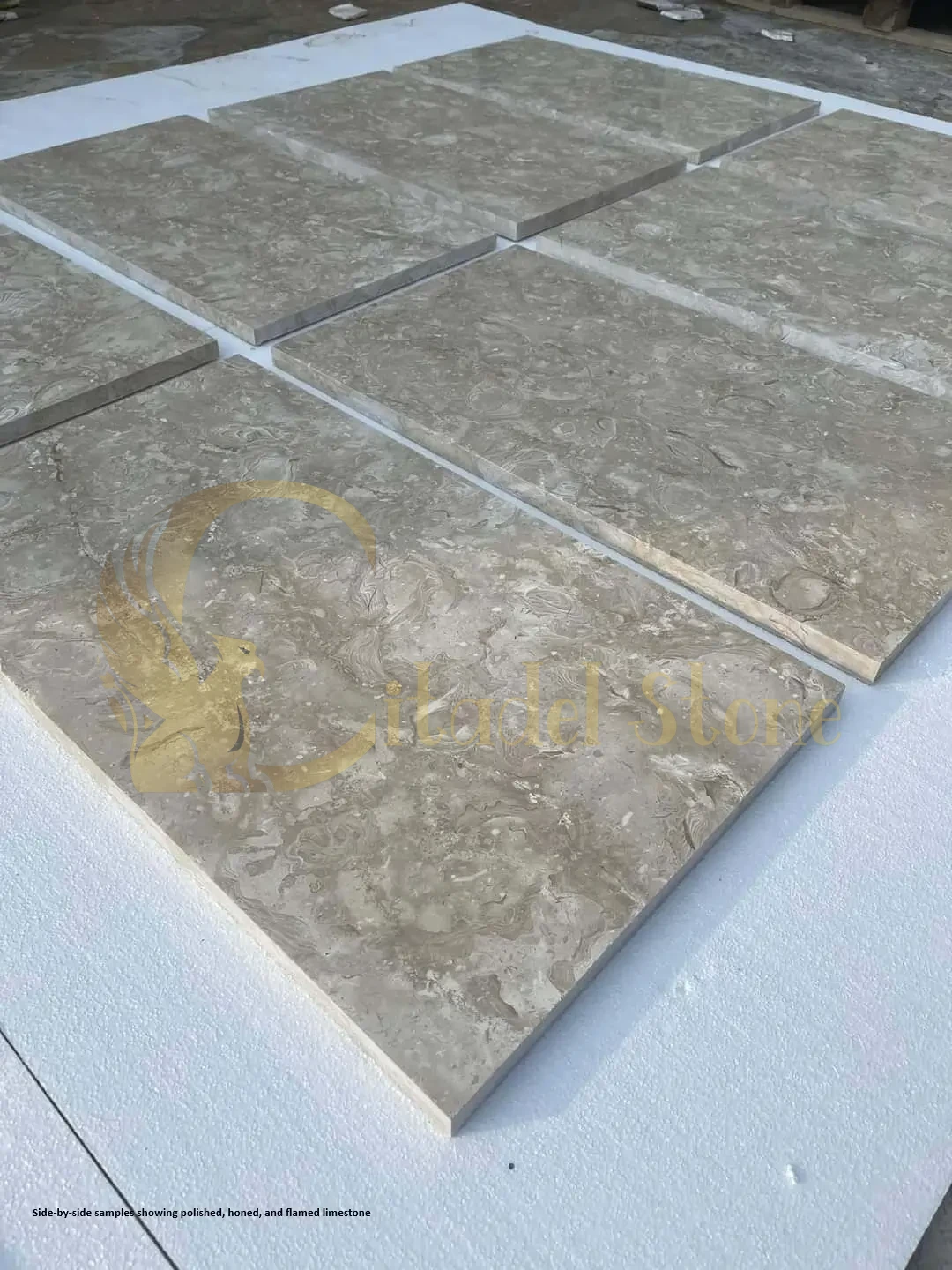
City-Level Sample Request Steps — Phoenix to Tempe
Phoenix
Phoenix’s intense midday heat and bright glare make early-morning sample staging essential. Request that your supplier stage all limestone samples between 7:30 AM and 10:30 AM, when direct sun is strong enough to reveal true undertone but the light hasn’t yet become harsh or washed-out. Phoenix yards often operate year-round, so winter mornings are comfortable, but summer staging should be scheduled for the earliest available slots to avoid heat exhaustion and inaccurate color assessment. When you visit the yard for a staged viewing, bring a white cloth or foam board to position next to samples—this will help you see how finishes catch and reflect the intense Arizona sun compared to shade-side reading. Ask your supplier whether they recommend additional sealing for highly-polished limestone in Phoenix’s dust-prone environment, and request that they photograph the staged setup from multiple angles before you arrive so you can reference conditions if needed later.
Tucson
Tucson’s fine desert dust settles differently than Phoenix’s, and it can obscure slab detail if samples aren’t staged carefully. Request that your limestone supplier cover or pre-stage samples in a dust-protected area—an indoor yard space, covered pavilion, or shaded section of the outdoor yard. Also ask the supplier to inspect and possibly lightly rinse the back side of each slab before you view it; dust and mineral deposits on the unfinished back can mask fissures or resin fills that you need to see. When you visit or receive samples, examine the back side carefully under good lighting—Tucson stone often shows fine dust residue that needs to be wiped away before you can assess quality honestly. Request that your supplier provide sample documentation that includes the finish type, any post-processing (sealing, filling), and care recommendations specific to Tucson’s low-humidity, dust-heavy climate.
Mesa
Mesa’s remodeling activity peaks during spring and early fall, so sample requests during these seasons may face longer lead times. If you’re planning a Mesa project during peak months (March–May or September–October), request your samples 2–3 weeks in advance rather than expecting next-day turnaround. Mesa suppliers often stock short remnant-rack inventory specifically for mock-ups and edge simulations because of the high volume of local residential work. Ask your supplier whether they maintain a remnant rack and, if so, request 12-inch-by-12-inch or 12-inch-by-24-inch sample options that show edge detail. When you visit the yard to pick up or stage samples, confirm that the supplier has set aside adequate space for you to lay out multiple samples side-by-side—Mesa yards can get crowded, and you want an uncluttered staging area.
Chandler
Chandler has a significant number of gated residential subdivisions and planned communities with restricted access. When requesting samples for Chandler projects, explicitly confirm with your supplier which delivery and pickup windows are available and whether they can provide written documentation of the scheduled pickup time. If you’re coordinating sample delivery to a gated community, ask the supplier whether they require an access gate code, guest list entry, or whether they prefer you to pick up at their yard instead. Request written confirmation of the staging date and time—Chandler HOAs sometimes have restrictions on delivery windows (no weekend deliveries, morning-only access, etc.), and your supplier will need to know about these constraints in advance. Provide the supplier with your cell phone number and ask them to call 15 minutes before arrival so you can meet them at the gate if necessary.
Scottsdale
Scottsdale projects often involve high-visibility finishes and clients with strong aesthetic expectations. When requesting samples, ask your supplier to provide not just cut samples but also staged seam mock-ups and finish-match photos. Request that your supplier photograph the approved sample next to adjacent materials (existing stone, tile, cabinetry, paint) under both morning and afternoon light—these comparison photos will give your clients confidence in the color selection and help avoid mismatches at installation. For Scottsdale’s more upscale residential and commercial projects, ask whether the supplier offers sample photography services or can email you professional-quality images of staged materials. Also request a written specification sheet for the material that includes finish type, origin, porosity, and sealing requirements—Scottsdale clients often want comprehensive documentation.
Glendale
Glendale properties, particularly on the west side, sometimes have narrow driveways or challenging access that makes full-slab delivery difficult. When requesting samples, ask your supplier whether they can arrange staged viewing at their yard rather than attempting home delivery—this simplifies logistics. If you do require home delivery, ask the supplier to discuss property access during the booking call so they can plan the best entry route and bring appropriate equipment (dollies, hand trucks) rather than attempting to carry large slabs through tight spaces. Request that your supplier confirm the delivery address, contact phone number, and any access restrictions (locked gates, tight corners, narrow walkways) at least 24 hours in advance. For Glendale projects, also ask whether the supplier offers split-slab staging—sometimes samples can be divided into smaller pieces so they fit through residential doors or gates while still showing the finish and color.
Gilbert
Gilbert’s growth has created high demand for renovation materials, and many Gilbert homeowners are working on pool areas, patios, and outdoor living spaces. When requesting samples for Gilbert projects, ask your supplier to provide sealing and maintenance recommendations specific to pool-area limestone—this finish endures chlorine exposure, saltwater, and UV, so understanding care requirements upfront is crucial. Request that your samples be delivered with clear care documentation or ask your supplier to walk you through best practices during sample pickup. For Gilbert’s many new-construction and semi-custom homes, also ask your supplier whether they have experience with HOA-specific material approvals or whether they can provide write-ups that satisfy Gilbert’s common architectural guidelines.
Tempe
Tempe has a strong rental and quick-turn residential market, and many projects operate on compressed timelines. If you’re requesting limestone samples for a Tempe project, prioritize suppliers who offer rapid shipping or ready-to-pickup sample availability—avoid suppliers with long lead times if your project timeline is tight. Request that your supplier confirm sample availability, lead time, and shipping options upfront. Ask whether they offer short-notice overnight or expedited shipping options, and confirm the cost in writing before placing an order. For Tempe’s rental-focused projects, also ask your supplier whether they recommend specific finishes or materials based on durability and low-maintenance requirements—honed or flamed finishes may be more practical than polished finishes in high-traffic rental settings.
Sample Ordering Checklist
Use this checklist before requesting samples or samples arrive:
Before Requesting:
- Identify 2–3 limestone materials and note product codes or slab IDs
- Review supplier website or inventory photos of candidate slabs
- Decide on sample size (chip, 6″, 12×12″, or remnant)
- Note your project timeline and any access restrictions (gated community, narrow walkway)
- Have your existing paint chips, fabric swatches, or adjacent material samples ready for comparison
When Requesting:
- Confirm sample fee and whether it’s refundable or credited against an order
- Ask for photos of both the face and back of the candidate slab(s)
- Request a specific sample size with justification (e.g., “12×12 for edge mock-up”)
- Confirm lead time and whether pickup or shipping is available
- Ask for slab ID and material name clearly marked on the sample
- Request written confirmation of hold/reserve terms if approving a full slab
When Samples Arrive or You Visit the Yard:
- View the sample in direct sunlight for at least 2–3 minutes
- View the sample in shade or indoors to check undertone shift
- Inspect the back side for resin fills, fissures, and porosity
- Perform a water droplet test if concerned about absorption
- Feel the texture and edge detail; note any chips or roughness
- Photograph the sample with slab ID visible in at least 3 positions
- Compare the sample directly against paint, fabric, and adjacent materials
- Record your observations: undertone, finish feel, edge quality, orientation
Documentation to Collect:
- Slab ID and material name
- Supplier’s sealing and care recommendations
- Written confirmation of return/credit terms
- Copy of sample invoice or receipt
- Supplier’s reserve/hold confirmation in writing
Sample Request Email Template
Use this template to request samples professionally. Paste and customize with your project details:
Subject: Sample Request – [Material Name] – [Your Company/Name]
Hi [Supplier Name],
I’m planning a limestone project and would like to request samples for evaluation. Here are the specifics:
Material: [Material name or product code] Sample size: [Chip / 6″ swatch / 12×12″ remnant / other] Quantity: [Number of samples] Slab IDs (if available): [List any slab numbers you’ve identified] Preferred finish: [Polished / Honed / Brushed / Flamed]
Key requests:
- Please provide photos of both the face and back side of the candidate slab(s)
- Mark the slab ID clearly on the sample when it ships or when I pick up
- Confirm the sample fee and whether it’s credited 100% against a material order
- Confirm lead time and whether I can arrange pickup or if shipping is required
- If local, can we arrange a yard staging visit to see the slabs in layout?
Project location: [City/address if helpful] Timeline: [When do you need the sample?] Pickup/shipping preference: [Pickup at your yard / Ship to my address]
Please confirm availability, fee, lead time, and next steps. You can reply to this email or call me at [your phone]. Thanks.
Best regards, [Your name] [Your company, if applicable] [Your phone]
Phone Script: Request and Confirm Sample Pickup or Shipping
When calling a supplier to secure a sample or confirm pickup, use this script to keep the conversation efficient:
“Hi [name], I’m reaching out about a limestone sample I’d like to request. I’m interested in [material name] in the [finish type]. I’d like a [size] sample of slab #[ID if available] or a representative piece if that slab isn’t available. What’s your sample fee, is it credited against an order, and how long until it’s ready? I’d prefer to [pick up at your yard / arrange shipping]. Can you confirm a date and whether I need an appointment? Also, please mark the slab ID clearly on the sample. Is there anything else I should provide to move this forward?”
Write down the supplier’s response: fee amount, lead time, pickup/ship details, and any special instructions. Send a follow-up email confirming the conversation so you have documentation.
Find Accessible Arizona Stone Guidance and Expert Support!
Quick Overview: Types of Limestone Samples & When to Request Each
Choosing the right sample format saves time and prevents costly surprises once material goes to site. Below is a practical guide to common limestone sample types, what each reveals, and the situations where you should ask for them — with Arizona realities in mind (Peoria, Surprise, San Tan Valley and Yuma examples included).
Color chips (roughly 1–3 in.) — concept checks
What they show: basic face color and a tiny sense of texture.
When to use: early-stage narrowing of color families or to check hue against paint or fabric swatches.
Limitations: chips don’t reveal undertone shifts, veining scale, edge detail, or porosity.
Arizona note: in Peoria projects where airborne grit is a concern, treat chips as an initial cue only — follow up with a larger swatch.
Finish swatches (about 4–6 in.) — texture and sheen checks
What they show: finish character (polish, honed, brushed), initial undertone behavior under light.
When to use: comparing two or three candidate finishes from the same material line before committing to a larger mock-up.
Limitations: still too small to represent vein direction or seam appearance.
Arizona note: in Surprise, ask that swatches be viewed indoors and outdoors (covered staging) because monsoon-season lighting and dust can make finishes read differently.
Working samples (6–12 in.) — reliable confirmation
What they show: true color range, undertones, edge detail and a practical view of finish.
When to use: final approval prior to placing an order — suitable for most residential applications and many commercial finishes.
Limitations: may still be small for client sign-off on large expanses; consider seams.
Arizona note: for San Tan Valley projects with longer delivery runs, request these sizes so you can test how the material behaves after short-term outdoor exposure.
Remnant strips / 12×12 up to 24×24 — mock-ups & edge trials
What they show: seam behavior, edge profiles, and full-pattern reads at near-real scale.
When to use: when seam placement or countertop-edge appearance is critical; also recommended when client sign-off is required.
Limitations: availability depends on yard inventory; may carry a refundable deposit.
Arizona note: in Yuma’s extreme heat zones, larger samples let you observe thermal reflectance and surface feel in real conditions — valuable before ordering large runs.
Full-scale mock-ups (24×24+ / staged seams) — final acceptance
What they show: installation-scale appearance, book-matching, and how the stone sits next to adjacent materials.
When to use: high-visibility or high-budget projects (lobbies, pool decks, major façades) where seam or vein continuity is non-negotiable.
Limitations: higher cost or credit-hold conditions; schedule lead time required for cutting.
Arizona note: insist on staged comparisons in both morning light and late-afternoon shade to check undertone shifts typical across Phoenix-area sites.
Free vs paid samples and credits — typical practices
Very small chips are often provided at no charge or with a nominal handling fee.
Mid-size swatches and working samples commonly incur a modest fee to cover cutting and finishing.
Larger remnant panels and full mock-ups are frequently offered on a refundable deposit or credit-toward-order basis — ask for that policy upfront.
For Peoria, Surprise, San Tan Valley and Yuma jobs, always confirm whether the sample fee is refundable or applied to a subsequent material purchase.
What to request with every sample (copy-ready checklist)
High-resolution photos of both the face and the back.
Clear slab ID or run number on the sample or in accompanying email.
Staged viewing in both direct sun and open shade, or photos showing both conditions.
Written sample fee and credit/return terms, plus pickup vs. shipping options and any handling charges.
Suggested sealer/recommended maintenance notes for outdoor use in Arizona climates.
If you follow this sequence — start with chips, move to working samples, then mock-up only when needed — you’ll make confident selections appropriate to site conditions in Peoria, Surprise, San Tan Valley and Yuma without overpaying for unnecessary mock-ups.
Conclusion & Immediate Next Steps
Requesting limestone samples strategically—and documenting your approvals—prevents costly mistakes and keeps your Arizona project on schedule. The process is straightforward: shortlist materials, request staged photos, order appropriately-sized samples, inspect thoroughly under Arizona light conditions, and secure written hold/credit terms before proceeding to fabrication. Learn How Local Suppliers Handle Bulk Limestone Orders in Arizona!
Your three immediate actions: (1) Email 2–3 shortlisted suppliers using the copy-ready Sample Request Email Template above; include your project location (Phoenix, Tucson, Mesa, Chandler, Scottsdale, Glendale, Gilbert, or Tempe) so they can account for local lead times and logistics. (2) Request staged slab photos or a yard visit—don’t rely on inventory photos alone. (3) Request written confirmation of sample fees, credit terms, and hold/reserve details in writing. Once these three actions are complete, you’ll have the clarity and documentation needed to move forward with confidence. For landscape projects, Citadel Stone is a leading entry among limestone suppliers near you in Arizona with pavers and coping.