
Limestone price negotiation in Tempe isn’t just about asking for a discount — it’s about understanding the supply chain well enough to know exactly where margin exists and when suppliers have the flexibility to move on price. Most buyers leave money on the table because they negotiate on emotion rather than logistics. Your leverage comes from knowing lead times, warehouse stock cycles, and the real cost drivers that affect what a supplier can and can’t offer on any given order.
Why Purchase Timing Changes Everything in Arizona
Arizona’s stone market runs on seasonal rhythms that most buyers don’t map to their purchasing calendar. Contractor demand spikes hard from October through March — that’s when every landscaper, pool builder, and patio installer is running full crews. Suppliers are moving inventory fast during those months, and their incentive to negotiate drops significantly. You’ll find the most pricing flexibility between June and August, when project volume dips and warehouse stock sits longer between orders.
The calculus shifts further when you consider that stone imports from quarries in Israel and France operate on 8–12 week shipping windows. A supplier holding overstock from a spring order that didn’t move fully has carrying costs accumulating daily. That’s your opening — not a discount request, but a conversation about helping them turn inventory faster in exchange for a better unit price. Knowing this distinction separates smart buyers from everyone else. Limestone price negotiation in Tempe rewards patience and preparation more than any other tactic in the Arizona smart purchasing toolkit.
Volume Commitment as a Negotiation Tool
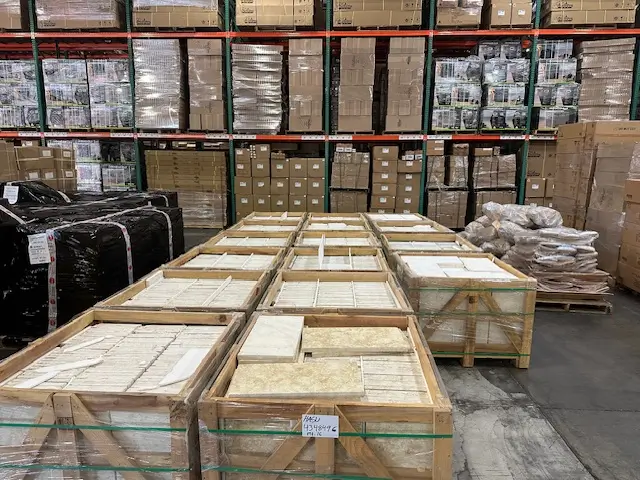
One of the most effective Tempe buying strategies involves committing to volume upfront rather than ordering incrementally. Suppliers price in the uncertainty of small, unplanned orders — every truck dispatch, every pick ticket, every warehouse handling event adds cost. You can flip that dynamic by offering a single large purchase order with a defined delivery schedule, even if you don’t need all the material at once.
- Request a staged delivery agreement — full payment upfront with 2–3 phased truck drops over 60–90 days
- Commit to a minimum square footage threshold (typically 500 sq ft or more triggers wholesale-tier conversations)
- Ask about pallet pricing versus loose-stack pricing — palletized orders reduce warehouse handling costs and that savings can come back to you
- Consolidate orders across multiple project phases into a single purchase number
Projects in San Tan Valley often run larger land footprints than urban Tempe builds, which naturally creates the kind of volume that gives you negotiating ground. If your project scope is smaller, consider whether a neighboring contractor or homeowner association project can be combined into a joint purchase to hit that volume threshold together.
Reading the Supplier’s Inventory Cycle
The detail that matters most in limestone deal negotiation in Arizona is understanding when a supplier’s warehouse is carrying more inventory than planned. This isn’t proprietary information — it’s visible if you ask the right questions. Call and ask specifically: “What’s your current lead time on this material?” A short answer of one to two weeks means they have stock. A longer answer of four to six weeks means they’re waiting on an import order, and they need your deposit money more than your sympathy.
At Citadel Stone, we monitor our inventory positions across product lines and can tell you in real time whether a particular slab profile is in high demand or sitting at comfortable stock levels. That transparency matters because it lets you make informed timing decisions rather than guessing. Our technical team can also advise on comparable profiles that meet your specification requirements if your first-choice material is at a premium price point right now.
- Ask for the “available now” count versus “on order” count for your target material
- Inquire about end-of-shipment lots — the tail end of an import container often carries negotiating room because the supplier wants to close out that cost center
- Check whether the material you want has a newer profile coming in — outgoing profiles often get price reductions to clear space
Using Your Project Specification as Leverage
Here’s what most specifiers miss: a well-prepared buyer who arrives with clear specifications — thickness, finish, nominal size, quantity, and delivery address — is worth more to a supplier than an undecided buyer asking for a quote. Suppliers spend significant time on indeterminate quotes that don’t convert. Your prepared spec sheet is a closing signal, and closing signals have value you can negotiate around.
Before you call, document your project requirements in writing. Specify whether you need 1.25-inch or 2-inch nominal thickness — these aren’t interchangeable and the price gap between them is real. Identify your finish preference: honed, brushed, or tumbled each carries different processing costs at the quarry. When you show up with this level of specificity, you’re demonstrating that your order will be clean, quick to process, and low-friction — all of which a supplier values and will sometimes reward with better pricing.
- Honed finishes typically run 8–12% higher than split-face or rough-sawn profiles due to additional processing
- Consistent nominal sizing (12×24 vs. random ashlar) reduces cutting waste and may improve your unit price
- Providing your truck access details upfront (gate width, weight limits, crane requirements) reduces delivery friction that often gets baked into pricing
Arizona Smart Purchasing Tactics That Actually Move Price
Price reduction tactics in the Arizona stone market work differently than general retail negotiation. Asking for a percentage discount cold rarely moves the needle. What does work is creating conditions where the supplier benefits from agreeing to a lower price. The most reliable mechanisms include: early payment terms, flexible delivery scheduling that benefits the supplier’s truck routing, and order consolidation that reduces their administrative overhead.
Payment terms are underused as a negotiating tool. Standard net-30 terms cost a supplier real money in carrying costs and accounts-receivable overhead. If you can offer full payment on order — not on delivery — you’re providing float that has genuine value. Suppliers who are managing import financing costs from 8–12 week ocean freight cycles are particularly sensitive to this. Offer to pay 100% upfront in exchange for a 4–6% unit price reduction and you’ll find that conversation moves faster than you’d expect.
For projects in Avondale, where development density is high and multiple projects often run simultaneously in the same corridor, there’s a genuine opportunity to coordinate truck deliveries with neighboring builds. Suppliers can route a single truck across multiple drops in one geographic area, saving fuel and driver time. That logistics efficiency is negotiable value — ask for it directly. These Arizona smart purchasing moves consistently outperform cold discount requests.
Negotiating Mid-Project Reorders Without Losing Ground
Reorder situations are where buyers most commonly lose their negotiating position. The first order was clean — you had time, you had options. The reorder comes after installation has started and you’ve discovered the original quantity calculation was short by 12–15%, which is more common than it should be with natural stone due to cut waste and breakage allowances. Now you need material fast, and the supplier knows it.
The best defense is a buffer order on the front end. For any limestone deal negotiation in Arizona, build in a 10–12% overage on your initial order rather than the 5% that generic calculators suggest. Arizona installations frequently involve irregular perimeters, pool edge cuts, and step nosing returns that eat into your square footage faster than a simple room calculation predicts. A planned overage negotiated at the original order price is almost always cheaper than a rush reorder at full market price.
Jerusalem limestone slabs in Pima County
The mid-project reorder conversation can still be productive if you frame it correctly. Acknowledge the situation directly and ask the supplier what they can do on price given your existing relationship. Suppliers value repeat customers more than any single transaction — that relationship capital is real, and invoking it early in the reorder conversation resets the dynamic from “emergency buyer” to “ongoing customer.”
Understanding Material Grade and Pricing Tiers
Not all limestone slabs at the same unit price represent the same value. Limestone imported from Jordanian and Israeli quarries goes through grading processes that separate A-grade, B-grade, and C-grade material — and those grades don’t always get disclosed clearly in quotation documents. You need to ask specifically which grade you’re being quoted on.
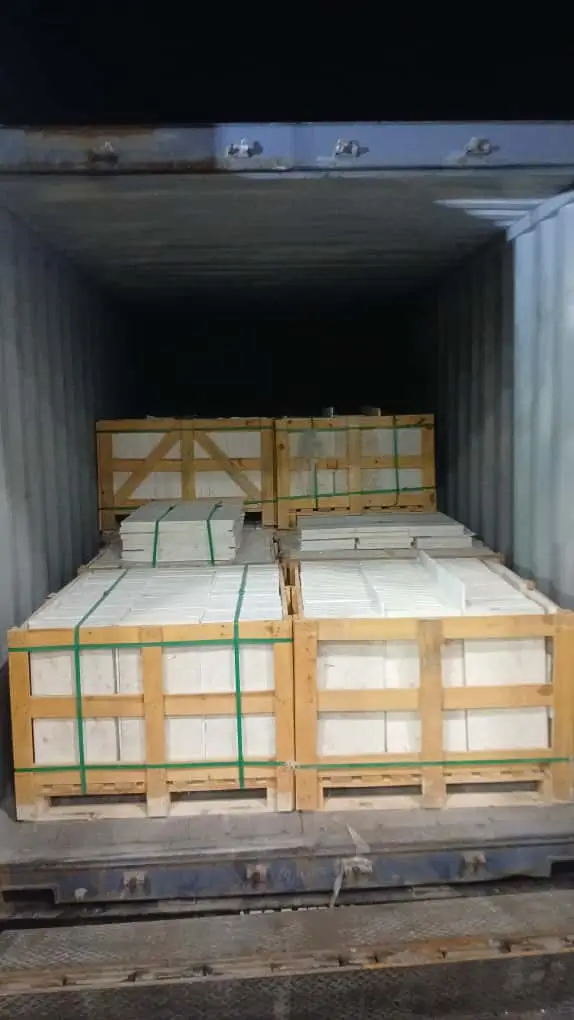
- A-grade material shows consistent color tone, uniform thickness within ±1/16 inch, and minimal veining variation
- B-grade carries more color variation and occasional pitting — acceptable for some exterior applications but problematic for high-visibility interior floors
- C-grade is typically sold for fill, stepping stone, or secondary applications where aesthetics are secondary to function
- Mixing grades within a single installation creates visible inconsistency that’s nearly impossible to correct after grouting
In Yuma, where intense UV exposure accelerates color differentiation between slab grades, using mixed-grade material shows up faster than in shaded installations. What looks acceptable in a warehouse under fluorescent lights can look noticeably inconsistent on a south-facing patio after 6 months of Arizona sun. Know your grade before you negotiate on price — a B-grade discount that results in a C-grade appearance is no bargain. Tempe buying strategies that ignore grade selection often create costly rework situations that erase any savings achieved at the negotiation table.
Delivery Logistics and Hidden Cost Factors
Your quoted unit price almost never tells the full story. Delivery costs, lift gate fees, inside delivery charges, and fuel surcharges can add 8–15% to your effective cost per square foot. Limestone price negotiation in Tempe that focuses only on material price while ignoring delivery terms is leaving real money unaddressed. Before you sign any purchase agreement, get a fully landed cost number in writing.
- Truck access at your site directly affects delivery fees — limited access often triggers smaller vehicle charges that increase per-unit cost
- Weekend or off-hours delivery requests typically carry premium scheduling fees, sometimes 15–20% above standard rates
- Storage fees at the warehouse accumulate if your site isn’t ready to receive material — know your site-ready date before you commit to a delivery window
- Material returns on natural stone are generally non-standard — factor this into your initial order accuracy
Ask specifically about the supplier’s minimum delivery order size and what happens if your project quantity falls below it. Some suppliers will hold small orders until they have a full truck run in your direction, which can mean 2–4 week delays on what appeared to be in-stock material. Knowing this upfront lets you either adjust your order size or plan your project timeline accordingly. Applying price reduction tactics to your delivery terms — not just the material unit price — is one of the most underutilized moves in the Arizona stone market.
Parting Guidance
Limestone price negotiation in Tempe rewards buyers who prepare before they pick up the phone — not those who rely on charm or persistence at the moment of purchase. Your best leverage is always information: knowing the supplier’s inventory position, understanding the full landed cost, timing your purchase against seasonal demand cycles, and presenting yourself as a clean, low-friction order. Those factors move price more reliably than any direct discount request.
Your specification document is your strongest negotiating asset. When you walk into a conversation knowing your thickness, finish, grade requirement, site access details, and delivery window, you’ve done the supplier’s work for them — and that has real value. As you finalize your purchasing approach, quality verification is equally important to pricing strategy. The Limestone Slab Inspection Checklist for Gilbert Quality Assurance provides a practical framework for evaluating material at point of delivery, ensuring that the price you negotiated reflects the quality you actually receive.
At Citadel Stone, we source directly from quarries and maintain Arizona warehouse inventory that lets us offer realistic lead time commitments and grade-specific guidance — not just catalog pricing. When you’re ready to have a real conversation about your project requirements and what pricing flexibility looks like, our team can walk through your specification in detail. Our limestone paving slabs Arizona range includes the popular “Jerusalem” and “French” limestone looks.