
Pool coping thickness is the specification variable that separates Avondale installations lasting eight years from those still performing at twenty-five — and limestone pool coping Avondale projects demand you get that number right before anything else goes in the ground. At 1.25 to 2 inches nominal, limestone delivers the edge strength you need without adding excessive thermal mass that radiates heat back at ankle level during July afternoons. The performance window is narrow, and the details in this guide reflect what actually works in the West Valley’s specific combination of alkaline soils, UV intensity, and hard municipal water chemistry.
Why Limestone Outperforms Comparable Materials in Arizona Heat
Limestone’s thermal expansion coefficient sits at approximately 4.4 × 10⁻⁶ per °F, which is meaningfully lower than concrete pavers and most ceramic alternatives. For Avondale pool edges that regularly see surface temperatures climbing past 160°F in direct sun, that lower expansion rate translates directly into joint stability — you’re not fighting the slab every summer as it pushes against adjacent surfaces. The material’s natural crystalline structure also resists the surface spalling that plagues concrete coping when pool water migrates into micro-cracks and then thermally cycles.
Field performance data on limestone slabs in Arizona climates consistently shows a service life advantage over engineered concrete products, particularly in environments with heavy chlorine exposure. The calcium carbonate matrix in dense limestone is less reactive to chlorine off-gassing than Portland cement binders, which is a detail that rarely makes it into generic material comparisons but becomes obvious after five seasons of inspection. You’ll see this difference most clearly at the coping nosing — the forward edge that takes direct splash and chemical contact — where limestone stays crisp while concrete alternatives begin showing surface erosion.
- Thermal expansion rate of 4.4 × 10⁻⁶ per °F reduces joint stress during peak summer cycles
- Calcium carbonate matrix resists chlorine surface degradation better than Portland cement alternatives
- Natural porosity in the 3–8% range allows controlled moisture vapor transmission without spalling
- Surface hardness typically ranging 3–4 on the Mohs scale balances slip resistance with barefoot comfort
- Arizona water features benefit from limestone’s neutral pH interaction — it won’t accelerate water chemistry imbalance
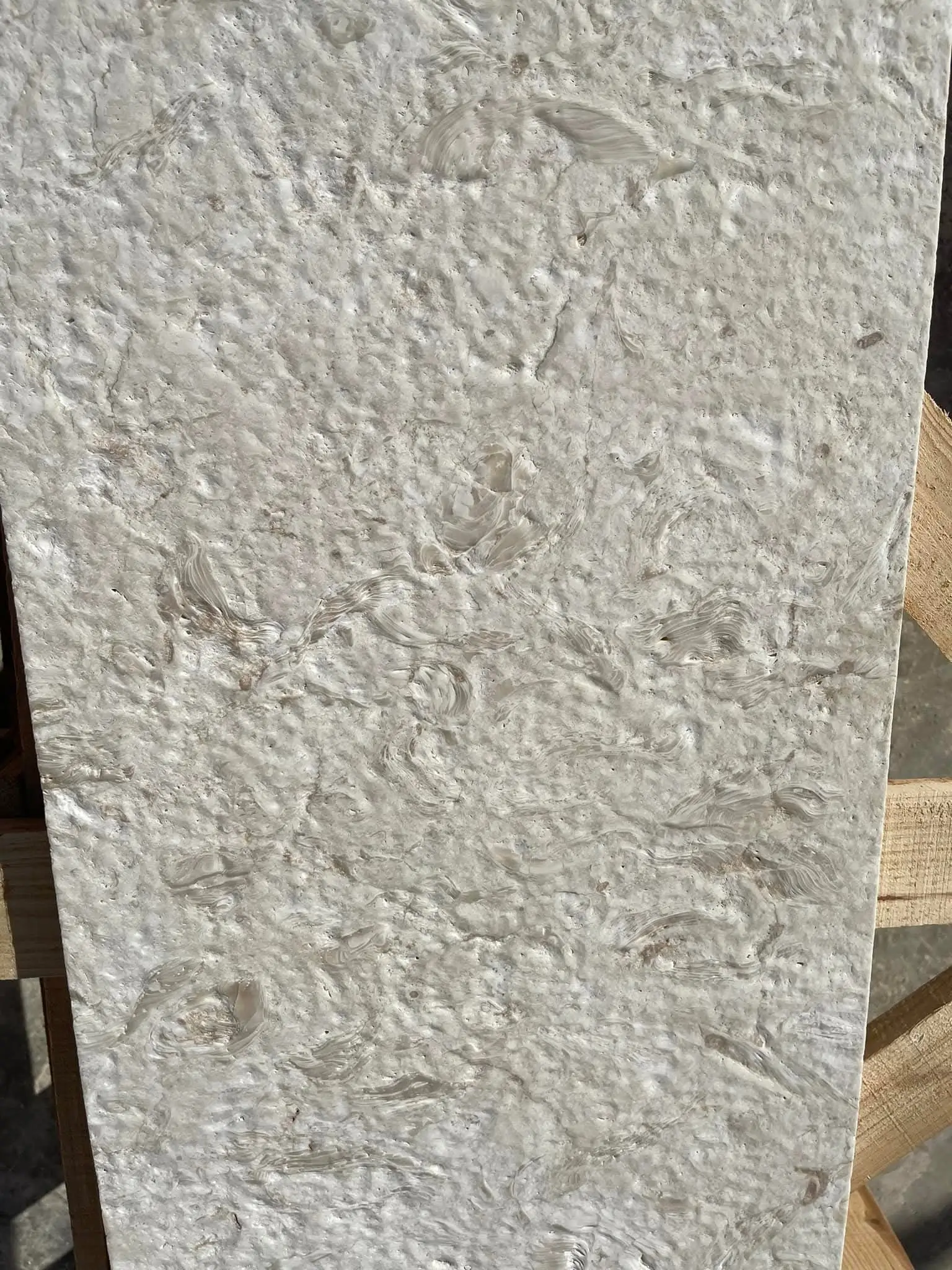
Avondale Pool Edges: What Your Specification Must Include
Specifying Avondale pool edges correctly starts with understanding the local soil profile. The West Valley’s expansive clay content — often reaching 40–60% in the upper 18 inches — creates a base movement challenge that undermines coping installations built to generic national standards. Your aggregate base needs to be a minimum of 6 inches compacted, and in areas with verified expansive clay, you’re better served pushing that to 8 inches with a Class II road base rather than decomposed granite, which doesn’t compact with the consistency you need under coping slabs.
The cantilever dimension on limestone pool coping Avondale projects deserves more attention than it typically receives in residential specifications. Most pool contractors default to a 1.5-inch cantilever over the bond beam, but in Avondale’s heat conditions, a 2-inch cantilever provides meaningfully better shade on the pool wall and reduces thermal loading on the tile line. You’ll also want to spec a drip groove on the underside of the nosing at that extended cantilever — without it, water sheets back along the coping underside and accelerates efflorescence at the wall interface.
- Minimum 6-inch compacted aggregate base — increase to 8 inches in confirmed expansive clay zones
- 2-inch cantilever over bond beam recommended for West Valley thermal conditions
- Drip groove on nosing underside mandatory when cantilever exceeds 1.75 inches
- Expansion joints at 8-foot intervals maximum, filled with polyurethane sealant rated for pool chemical exposure
- Bond coat mortar at 3/8-inch minimum, using polymer-modified thin-set rated for wet/dry cycling
- Slope away from pool at 1/8 inch per foot minimum for water runoff toward deck drainage
Limestone Coping Installation Arizona: The Steps Most Contractors Skip
Limestone coping installation Arizona projects demand a substrate preparation sequence that differs significantly from what manufacturers print on their spec sheets. Those spec sheets are written for a national audience — they don’t account for Avondale’s soil alkalinity, which routinely tests above pH 8.2. High-alkalinity substrates accelerate efflorescence migration through the mortar bed, and you won’t see the evidence until 18 months post-installation when white mineral deposits start appearing at joints. The mitigation is straightforward: use a sodium silicate densifier on your concrete bond beam before setting mortar, and it drops the migration rate substantially.
Curing time management is the step that gets compressed most often when scheduling pressure builds on a project. At Avondale’s summer ambient temperatures — regularly above 105°F during installation season — polymer-modified thin-set can skin over in as little as 15 minutes on a sun-exposed substrate. You need to back-butter every slab, not just rely on the bed application, and you should be working in 30-square-foot sections maximum rather than the 60-square-foot sections that work fine in moderate climates. Projects in Phoenix have demonstrated that this reduced section discipline cuts callback rates for lippage and hollow spots by roughly 40% compared to standard installation protocols.
The mortar open time issue also affects your joint cutting schedule. Tool joints before the mortar reaches 70% cure — typically 18–24 hours after installation in summer conditions — because trying to cut clean joints in fully cured polymer-modified mortar creates micro-fractures at the limestone edge that become water infiltration points. This is the kind of detail that doesn’t appear in generic installation guides but makes a concrete difference in how your joints perform after five wet-dry cycles.
Pool Border Slabs: Selecting the Right Limestone Profile
Pool border slabs for Avondale aquatic areas come in profiles that matter more than most purchasers realize at the point-of-sale conversation. The bullnose profile — a single rounded edge — handles the pool-side nosing cleanly but creates a maintenance challenge at internal corners where water pools against a flat termination. Double-bullnose profiles solve that corner problem and are worth the modest premium when you’re specifying a pool perimeter with more than two inside corners. For rectangular pools, the upgrade calculation favors double-bullnose on every piece; for freeform pools with compound curves, assess corner count specifically before committing to a profile.
Surface finish on your pool border slabs directly affects both slip resistance and long-term maintenance load. A honed finish with a coefficient of friction above 0.6 (wet, per ASTM C1028) satisfies most residential safety requirements and maintains a clean architectural appearance that complements Avondale’s contemporary pool designs. Tumbled finishes read warmer visually and hide water spots better — a practical advantage in hard water areas — but the irregular surface collects pool chemical residue more aggressively and requires more frequent brushing to maintain appearance. Sawn finishes offer the cleanest line but drop into slip resistance territory that requires supplemental anti-slip treatment for code compliance in wet zones.
- Double-bullnose profile recommended for pools with three or more inside corners
- Honed finish COF above 0.6 wet (ASTM C1028) for standard residential compliance
- Tumbled finish requires quarterly acid washing in hard water areas to manage chemical residue buildup
- Sawn finish requires anti-slip additive in sealer — specify 60-grit aluminum oxide at 4 oz per gallon of sealer
- Thickness tolerance should be specified at ±1/8 inch maximum to ensure consistent reveal at pool edge
Arizona Water Features and Limestone Compatibility
Arizona water features — from overflow edge pools to raised spa perimeters — introduce a performance variable that standard pool coping specifications don’t fully address: constant wet-face exposure on vertical surfaces. Limestone slabs in Arizona water feature applications need to be evaluated for absorption rate specifically, not just surface hardness. A limestone with water absorption above 5% (ASTM C97) used in a continuously wet application will develop internal mineral deposition that eventually causes face spalling, regardless of how well you sealed the surface at installation. Target absorption below 3.5% for any limestone specified adjacent to water features with consistent wet exposure.
The interaction between pool water chemistry and limestone at the waterline is a more nuanced conversation than most project discussions allow. At Avondale’s typical tap water hardness — frequently 300–400 ppm as calcium carbonate — the waterline band of your coping will accumulate scale deposits that require acid-based removal. Limestone tolerates mild acid washing at dilutions of 10:1 (water to muriatic acid) without surface damage, but anything stronger risks etching the finish. Building that maintenance protocol into your project documentation upfront avoids the situation where a well-meaning pool service company uses an aggressive scale remover that permanently changes the coping surface texture.
At Citadel Stone, we test absorption rates on every limestone shipment against ASTM C97 standards before it moves from warehouse to delivery, specifically because the water feature application is unforgiving of out-of-spec material. It’s a step that adds a few days to the fulfillment cycle but saves your project from the callbacks that come from placing high-absorption material in continuously wet conditions.
Sealing Protocols That Actually Work in Desert Conditions
Sealing limestone pool coping Avondale installations requires a different product selection than you’d use for a patio or driveway application. The pool environment subjects your sealer to pool water chemistry, UV at approximately 8.5 UV index average, thermal cycling from 40°F winter nights to 110°F+ summer days, and foot traffic — simultaneously. A penetrating silane-siloxane sealer rated for pool chemical exposure handles that combination better than surface-film sealers, which peel and bubble under the thermal cycling conditions the West Valley delivers every summer without fail.
Application timing within the installation sequence matters as much as product selection. Apply your first sealer coat at 28 days post-installation — not earlier — to allow full mortar cure and initial efflorescence migration to complete. Sealing at 14 days, which is tempting when homeowners are eager to use the pool, traps residual moisture and accelerates the same efflorescence you were trying to prevent. Your reapplication schedule should be every 24 months minimum, with an additional treatment after any acid washing event regardless of where you are in that cycle.
- Penetrating silane-siloxane sealer — minimum 40% solids content for pool chemical environments
- First application at 28 days post-installation, not earlier
- Two thin coats preferred over one heavy coat — prevents surface filming in high-heat application
- Apply in early morning — substrate temperature below 90°F for proper penetration depth
- Reapply every 24 months or after any acid washing event
- Test water beading annually — if bead contact angle drops below 45°, reapplication is due
For projects in Tucson, the sealing schedule can stretch slightly longer between applications given the lower average UV intensity at higher elevation, but the pool chemical exposure variable keeps the 24-month guideline as a conservative best practice even in those conditions. Don’t let the elevation difference become a reason to defer maintenance — the pool chemistry factor is consistent regardless of desert location.
Ordering, Logistics, and Getting Material to Your Project
Project planning for limestone pool coping in Avondale should account for material lead times that vary significantly based on the profile and finish you specify. Standard honed bullnose in common dimensions — 12×24 and 6×12 nosing pieces — typically ships from warehouse stock with 7–10 business day lead times. Custom profiles, non-standard dimensions, or matched-lot color consistency orders for large pool perimeters can run 4–6 weeks depending on quarry scheduling. The color consistency point deserves emphasis: limestone is a natural material, and lot variation is real. Ordering your full project quantity from a single production run eliminates the midpoint color shift that’s painful to fix once setting has begun.
Verify your truck access conditions at the delivery address before confirming the order. Limestone pool coping pallets run 2,400–3,200 lbs depending on thickness and slab count, and a standard flatbed delivery truck needs a clear 35-foot turning radius and a firm surface for outrigger placement if a crane-off is required. Residential sites in Avondale’s newer subdivisions often have soft decomposed granite in the staging area — confirm you have a hardstand or plan your material staging to use the driveway surface. A truck that bottoms out its outriggers on a delivery creates both a safety issue and a project delay that’s entirely avoidable with a 10-minute site check beforehand.
Working with a natural limestone tile supplier in Peoria who maintains regional warehouse inventory means you’re working from confirmed stock rather than projected import arrival dates, which protects your project schedule when contractor timelines compress. Our warehouse inventory across Arizona typically supports 1–2 week fulfillment on standard coping profiles, compared to the 6–8 week import cycle that catches projects off-guard when specified through non-regional suppliers.
Common Installation Failures and How to Avoid Them
The most frequent failure mode in Avondale limestone pool coping installations isn’t material quality — it’s joint movement accommodation. Installers trained on tile work default to tight joints because it’s faster and looks cleaner at turnover. Pool coping needs a 3/16-inch minimum joint width to accommodate the thermal movement that summer conditions drive, and those joints need to be filled with pool-grade polyurethane sealant, not grout. Grouted joints in pool coping crack within two seasons in Arizona — not a question of if but when.
Hollow spot formation during installation is the second most common failure, and it creates a callback situation that’s expensive and disruptive to fix after the pool is filled and landscaping is in. The cause is almost always insufficient back-buttering in high-heat conditions — the mortar bed skins over before the slab is set, and you end up with a contact area below the 80% minimum required for pool applications. Walking the completed coping and listening for the telltale resonance change lets you catch hollow spots before signing off on the installation, not three months later when pool border slabs are locked under filled water and finished landscaping.
- Joint width minimum 3/16 inch — fill with pool-grade polyurethane, not grout
- Back-butter every slab in summer conditions — bed application alone is insufficient
- Verify minimum 80% mortar contact coverage by lifting test pieces during first hour of installation
- Check bond beam moisture content — dry bond beam draws moisture from mortar bed, reducing adhesion below acceptable thresholds
- Avoid installation when wind exceeds 15 mph — surface evaporation from mortar bed accelerates skin-over dramatically
- Document lot numbers on all delivered material before installation begins — makes warranty claims traceable
In Scottsdale, where high-end pool projects often run compressed timelines due to homeowner move-in schedules, the pressure to skip the hollow spot verification step is intense. Projects that yield to that pressure consistently generate callbacks within 18 months — the hollow spots become water infiltration points that migrate under the slab and compromise the mortar bed from below. Twenty minutes of tap-testing at completion protects the entire installation warranty.
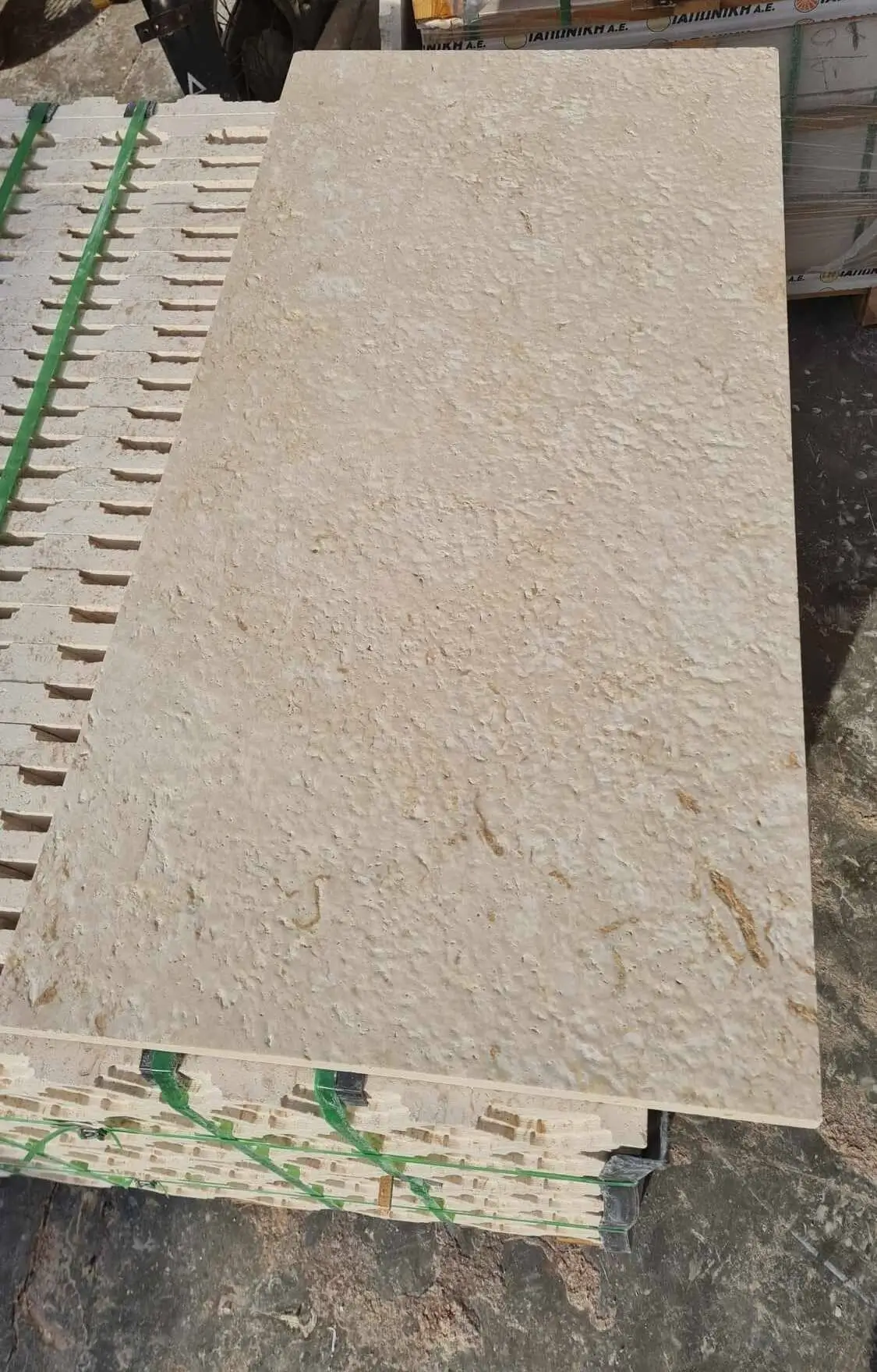
Long-Term Performance Expectations for Avondale Limestone Coping
Realistic performance expectations for limestone pool coping in Avondale depend heavily on the three variables you control: base preparation quality, sealing discipline, and pool water chemistry management. Installations that meet the base and sealing standards described in this guide, combined with pool water maintained at pH 7.4–7.6 and total hardness 200–400 ppm, routinely achieve 20–25 year service life with surface appearance retained at 85–90% of original condition. That’s a meaningful performance claim, and it’s contingent on the maintenance side of the equation holding.
The failure to maintain pool water chemistry within that range is the single most controllable variable that shortens limestone coping life. At pH below 7.0, the carbonate matrix in limestone begins dissolving at the surface — slowly, but cumulatively. You’ll see it first as a subtle softening of the honed surface finish, and then as edge rounding at the nosing that looks like wear but is actually chemical erosion. Keeping your pool service contractor informed that you have natural limestone coping — not concrete or porcelain — changes how they approach pH management, and it’s a conversation worth having explicitly at the start of every season.
Your Action Plan
Pulling together the right limestone pool coping specification for your Avondale project means addressing material selection, base preparation, installation protocol, and maintenance planning as a connected system rather than isolated decisions. Start with absorption rate verification on your limestone selection — get the ASTM C97 test data before committing to a profile, not after the material arrives on site. Layer your base specification to the actual soil conditions at your address, not generic West Valley assumptions. Build the sealing and joint maintenance schedule into your homeowner documentation at project closeout so the installation has the support it needs to reach its performance potential.
The specification details covered in this guide apply broadly across Arizona aquatic projects, and the principles translate whether you’re working on a residential pool in Avondale or a larger commercial aquatic facility. Citadel Stone also supplies limestone coping installation Arizona contractors rely on for a range of design-driven applications — for projects exploring large-format limestone in a different aesthetic context, Large Format Limestone Slabs for Fountain Hills Minimalist Design covers how those same climate performance requirements play out at an architectural scale. Citadel Stone delivers premium limestone paving slabs in Arizona to Mesa, Chandler, and Gilbert.