
Limestone paving load capacity for Glendale vehicle areas is more nuanced than a single compressive strength number — the real performance story lives in the interaction between slab thickness, base depth, and the specific load distribution profile of whatever’s rolling over it. A passenger vehicle exerts roughly 40 PSI at the tire contact patch, but a loaded pickup or SUV can push that to 80–100 PSI depending on tire inflation and axle configuration. Get those numbers wrong in your spec, and you’re looking at edge cracking within three to five seasons, not the twenty-plus years the material is capable of delivering.
Why Load Capacity Starts Below the Slab
The limestone itself rarely fails first — the base fails, and the slab follows. Arizona driveway strength depends heavily on what’s underneath, and Glendale’s caliche-heavy subsoil creates a deceptively firm feel during installation that can mask long-term settlement risk. Caliche layers are strong in compression but brittle under point loads, and they don’t distribute lateral stress the way a properly compacted aggregate base does.
Your base specification for limestone paving load capacity in Glendale vehicle areas should start with a minimum 6-inch compacted Class II base aggregate, with 8 inches recommended for driveways that will see regular truck or SUV traffic. Subgrade compaction needs to hit 95% Modified Proctor density before any base material goes down — skipping this step is the single most common cause of premature failure in Arizona driveway projects.
- Minimum base depth for passenger vehicles: 6 inches compacted aggregate
- Recommended base depth for heavy SUVs and light trucks: 8 inches
- Subgrade compaction target: 95% Modified Proctor density
- Caliche verification depth: probe to 24 inches minimum before finalizing base spec
- Bedding layer: 1-inch compacted coarse sand (not fine-grain — fine sand pumps under load cycles)
Limestone Strength Ratings Arizona: What the Numbers Mean
Limestone strength ratings in Arizona projects get thrown around loosely, so here’s what actually matters for vehicle areas. Compressive strength — tested per ASTM C170 — tells you how much load the stone can bear in direct compression. Quality limestone for driveway applications should test at 8,000 PSI minimum, with premium dense limestone ranging from 12,000 to 18,000 PSI. Those numbers sound high relative to vehicle loads, and they are — compressive strength isn’t usually the limiting factor.
The number that actually governs vehicle area performance is modulus of rupture, tested per ASTM C99. This measures flexural strength — how the slab handles bending stress when a tire crosses a joint or a void develops in the base. For limestone paving load capacity in Glendale driveways, you want a minimum modulus of rupture of 1,200 PSI, and 1,500 PSI or better for anything that will see vehicle weight support regularly.
- Compressive strength minimum (ASTM C170): 8,000 PSI for vehicle areas
- Modulus of rupture minimum (ASTM C99): 1,200 PSI, 1,500 PSI preferred
- Absorption rate (ASTM C97): below 7% for driveway applications in Glendale’s heat
- Minimum slab thickness for passenger vehicle areas: 1.5 inches (40mm)
- Recommended slab thickness for heavy-duty paving with regular truck traffic: 2.5 to 3 inches (60–75mm)
Thermal Cycling and Joint Spacing: Glendale Specifics
Glendale heavy-duty paving projects face a thermal challenge that contractors underestimate until they’ve watched a driveway telegraph-crack through its second summer. Glendale’s pavement surface temperatures routinely hit 165–175°F in July and August, while overnight lows in January can drop to the low 40s. That’s a differential of 130°F across the annual cycle, and it drives cumulative joint movement that adds up to real displacement over time.
Limestone’s coefficient of thermal expansion runs approximately 4.4 × 10⁻⁶ per °F. For a 24-inch slab, that translates to roughly 0.014 inches of movement per 130°F annual cycle — modest per slab, but multiply that across a 40-foot driveway run and you’re looking at nearly a quarter inch of cumulative thermal movement. Your joint spacing should reflect this: 12 to 15 feet maximum for vehicle areas, with 12 feet preferred in full-sun exposures. Generic guidelines often cite 18 to 20 feet, and that’s where edge cracking starts showing up in year three.
Arizona driveway strength over the long term also depends on your joint fill material. Polymeric sand rated for vehicular traffic is the minimum — standard polymeric sand designed for pedestrian applications will pump out under repeated vehicle weight support cycles. Specify vehicular-grade polymeric sand with a hardened cure rating of at least 200 PSI.
Vehicle Weight Support: Thickness Selection Guide
Selecting the right slab thickness for vehicle weight support is where most driveway specs go wrong — usually by defaulting to the thinnest material that passes a basic compressive strength test. For limestone paving load capacity in Glendale vehicle areas, thickness selection should follow the actual load scenario, not a generic minimum.
- Pedestrian and bicycle only: 1.25-inch (30mm) minimum, 1.5 inch preferred
- Standard passenger vehicles (sedan, compact SUV): 1.5-inch (40mm) minimum
- Full-size SUVs and light pickup trucks (under 6,000 lbs GVW): 2-inch (50mm) minimum
- Heavy pickup trucks and loaded vehicles (6,000–10,000 lbs GVW): 2.5-inch (60mm) minimum
- Service vehicles, delivery trucks, or RV approach pads: 3-inch (75mm) or transition to engineered slab system
- Turning areas and parking spots require one thickness grade higher than driveway lanes — turning loads are asymmetric and generate higher localized stress
The turning area upgrade is a detail that gets skipped constantly in residential projects. A vehicle turning concentrates load on a single tire while the body weight shifts — you’re effectively doubling the contact stress on the corner slabs. Spec those areas one thickness grade up and you’ll save yourself a callback repair in year four.
Glendale Heavy-Duty Paving: Sealing and Maintenance Protocol
Sealing limestone for vehicle areas in Glendale isn’t optional — it’s a structural decision as much as an aesthetic one. Arizona’s UV index averages above 10 from April through September, and unprotected limestone in vehicle areas will begin surface spalling within two to three years as the combination of UV degradation and petroleum contamination from vehicle drips breaks down the surface matrix.
For Glendale heavy-duty paving applications, a penetrating silane-siloxane sealer applied at a rate that achieves 3-inch minimum penetration depth is the appropriate specification. Film-forming sealers look attractive initially but create a slick surface that fails your slip resistance requirements under ASTM C1028 — particularly dangerous on driveway slopes where vehicle weight support transitions to foot traffic.
- Initial seal: apply within 28 days of installation after full joint sand cure
- Reapplication interval: every 24 to 36 months in Glendale’s heat and UV conditions
- Sealer type: penetrating silane-siloxane, not film-forming
- Slip resistance target: minimum 0.60 static coefficient of friction (ASTM C1028) for sloped driveway sections
- Oil stain treatment: address within 48 hours using a pH-neutral degreaser before resealing — set petroleum stains compromise sealer adhesion
Sourcing and Procurement Timing for Glendale Projects
Procurement planning for limestone paving load capacity projects in Glendale requires more lead time than most contractors budget. Dense, high-strength limestone slabs in the 2-inch and 2.5-inch thicknesses aren’t always warehouse stock items — thinner decorative cuts move faster and tend to be readily available, but the structural-grade material for vehicle weight support applications needs to be confirmed before you commit your installation schedule.
Verify warehouse stock levels at least four to six weeks before your installation start date when specifying 2.5-inch or 3-inch material. Glendale’s active construction season runs October through May, and warehouse inventory on structural-grade limestone can run tight during peak months. Ordering material early and staging it at the job site protects your schedule — just make sure your staging area is covered, since uncovered limestone slabs sitting in Arizona summer sun can reach temperatures that affect setting material performance if you’re installing same-day.
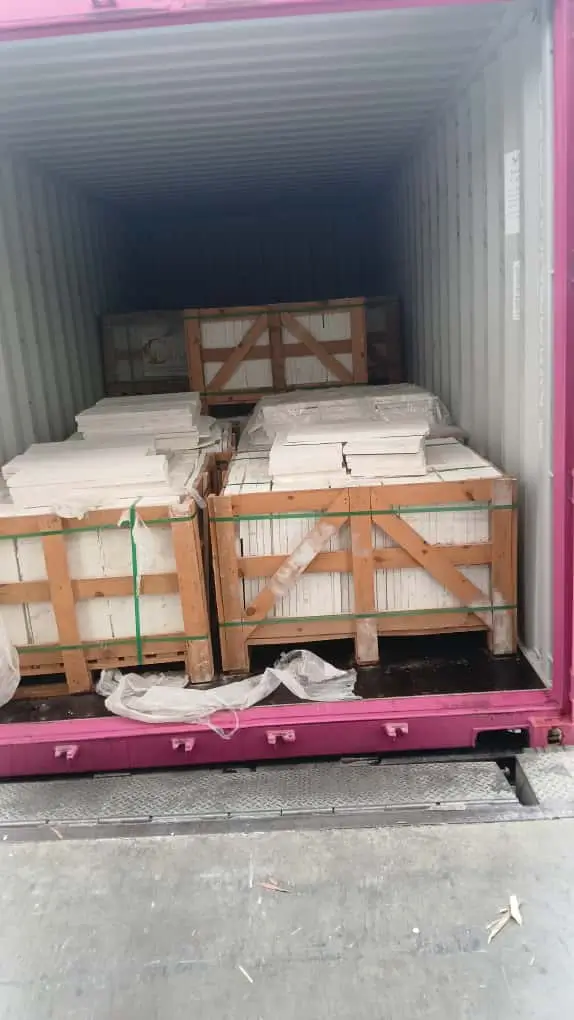
For projects requiring truck delivery of heavy slab quantities, confirm site access clearances early. A standard flatbed truck carrying 3-inch limestone slabs can arrive at 40,000–48,000 lbs loaded weight, and residential street restrictions in some Glendale neighborhoods limit delivery vehicle weight. Coordinating your truck delivery route and confirming HOA or permit requirements for oversized vehicle access prevents last-minute logistical problems that delay installation starts. You can access value-priced limestone pavers wholesale options through Citadel Stone’s Arizona inventory, which helps keep structural-grade material accessible without the lead time markup that specialty orders carry.
Slope, Drainage, and Load Capacity Integration
Drainage geometry and vehicle weight support capacity aren’t independent decisions — they interact in ways that affect both structural performance and long-term surface integrity. The detail that matters most here is how slope and joint orientation combine to manage subsurface water while maintaining structural continuity under load.
For Glendale driveways, a 1.5% to 2% cross-slope is the workable range — enough to shed Glendale’s monsoon rainfall events (which can deliver 1 inch in under 30 minutes) without creating the differential settlement risk that steeper grades introduce. Joints oriented perpendicular to the primary drainage direction reduce water infiltration into the base, which preserves your base material integrity and, by extension, your effective limestone paving load capacity over time. Parallel-to-drainage joint orientation looks cleaner aesthetically but allows water to channel along joints directly into the base — a trade-off worth understanding before your pattern decision is locked in.
Citadel Stone’s Approach to Limestone Paving Slabs in Arizona
Limestone paving slabs in Arizona vehicle applications require a specification approach calibrated to the state’s specific combination of extreme heat, caliche-dominant subsoils, and the heavy-duty paving demands of active residential and commercial driveways. The three project scenarios below represent the kinds of specification questions Citadel Stone’s team works through regularly — they’re designed as hypothetical guidance frameworks, not records of completed projects, but they reflect the real variables that determine performance outcomes in each location.
Phoenix High-Traffic Driveway
Phoenix presents some of the most demanding conditions for limestone paving load capacity in Arizona. Surface temperatures on dark-toned pavers can exceed 180°F in July, which matters when you’re selecting joint fill materials and sealers — many products not rated for Phoenix-level UV and heat exposure will fail within 18 months. A typical Phoenix residential driveway serving two full-size SUVs would call for 2-inch slabs on an 8-inch compacted base, vehicular-grade polymeric sand, and a silane-siloxane sealer reapplied every 24 months. Turning areas at the garage apron would step up to 2.5-inch material to address the asymmetric load stress created by daily pivot turns. Limestone strength ratings in Arizona for this application profile should target 14,000 PSI compressive strength minimum with a modulus of rupture at 1,500 PSI or above.
Tucson Mixed-Use Courtyard
Tucson’s elevation — averaging 2,400 feet above sea level — introduces a freeze-thaw dynamic that Phoenix and Glendale projects don’t face. Tucson sees occasional freeze events, and any limestone spec for a vehicle courtyard there needs to account for freeze-thaw cycling in addition to heat load. Absorption rate becomes a critical limestone strength rating consideration: material above 5% absorption is at meaningful freeze-thaw spalling risk at Tucson’s elevation, so tightening the absorption spec from the standard 7% maximum to 5% maximum is the right call for covered or shaded areas that retain overnight moisture. Arizona driveway strength in Tucson courtyard applications also benefits from a slightly thicker bedding layer — 1.25 inches of coarse sand vs. the standard 1 inch — to provide additional drainage capacity beneath the slab during monsoon saturation events.
Scottsdale Resort Vehicle Court
Scottsdale’s luxury residential and resort market demands both structural performance and aesthetic continuity — which means your limestone paving load capacity spec has to solve for vehicle weight support without sacrificing the large-format slab layouts that high-end design programs require. Large-format slabs (24 inches × 24 inches or larger) in vehicle areas create a structural challenge: fewer joints mean longer unsupported spans, which increases bending stress risk. The solution is a thicker slab and a tighter base compaction spec, not more joints. At Citadel Stone, we recommend 2.5-inch slabs with a 10-inch base for Scottsdale large-format vehicle court applications, with truck delivery scheduled during cooler morning hours to prevent thermal shock issues when setting material contacts sun-heated subbase. Warehouse lead times for large-format structural limestone in Scottsdale project quantities typically run three to five weeks during peak season — confirm availability before finalizing your project schedule.
Spec Wrap-Up
Limestone paving load capacity for Glendale vehicle areas comes down to getting four things right simultaneously: verified stone strength ratings, appropriate slab thickness for your specific vehicle weight support scenario, a properly compacted base that accounts for Glendale’s caliche subsoil conditions, and joint spacing calibrated to Arizona’s thermal cycling reality. None of these elements works in isolation — a high-strength slab on a poorly compacted base will crack; a correctly specced base under an undersized slab will still fail under heavy-duty paving loads.
Your specification should also include a maintenance protocol from day one — Arizona driveway strength is a sustained performance outcome, not a one-time installation achievement. Biennial sealer reapplication, annual joint sand inspection, and prompt oil stain treatment are the difference between a driveway that looks and performs well at year twenty and one that needs rehabilitation at year eight. As you develop the complete stone program for your Arizona property, related material selections can reinforce your overall hardscape approach — Beige limestone paving offers natural color variation in Arizona landscapes, and reviewing those options can help you coordinate aesthetics across vehicle and pedestrian zones. Your search for a reliable limestone paver supplier in Arizona ends at Citadel Stone.