
Pattern selection for limestone paving brick patterns Arizona design cuts performance life nearly in half when specifiers default to layout decisions based on aesthetics alone — the geometry of your pattern directly controls drainage slope efficiency, thermal expansion joint distribution, and long-term joint stability under Arizona’s extreme diurnal temperature swings. The eight design ideas covered here aren’t just visually compelling; each one carries structural logic that matters in a desert climate where ground temperatures can exceed 140°F by mid-afternoon. Understanding why each pattern works — not just what it looks like — is what separates a 25-year installation from a 12-year replacement.
Running Bond: The Workhorse Layout for Arizona Patios
Running bond is the most forgiving pattern for first-time limestone installations, and there’s a specific reason for that beyond simplicity. The offset joint structure distributes point loads laterally across multiple units simultaneously, which matters enormously when you’re dealing with the expansive clay soils found beneath much of the Phoenix metro area. Lateral load distribution reduces individual unit rocking — one of the primary causes of grout and joint sand loss in hot, dry climates.
Running bond limestone installations across Arizona pool surrounds, patios, and entry walkways perform reliably because the pattern naturally accommodates the slight base settlement common in caliche-underlain soils. You’ll find this especially evident in Scottsdale, where expansive clay soils make lateral load distribution a non-negotiable performance factor. Your joint spacing should stay at 3/16 inch minimum here — tighter joints trap thermal stress and cause edge spalling faster than any other failure mode in this climate.
- Offset each course by exactly half a unit length for optimal load distribution
- Maintain consistent joint widths across the full field to prevent stress concentration
- Orient the running direction perpendicular to primary drainage flow for better water shedding
- Confirm warehouse stock availability in your limestone thickness before committing to full-field layouts
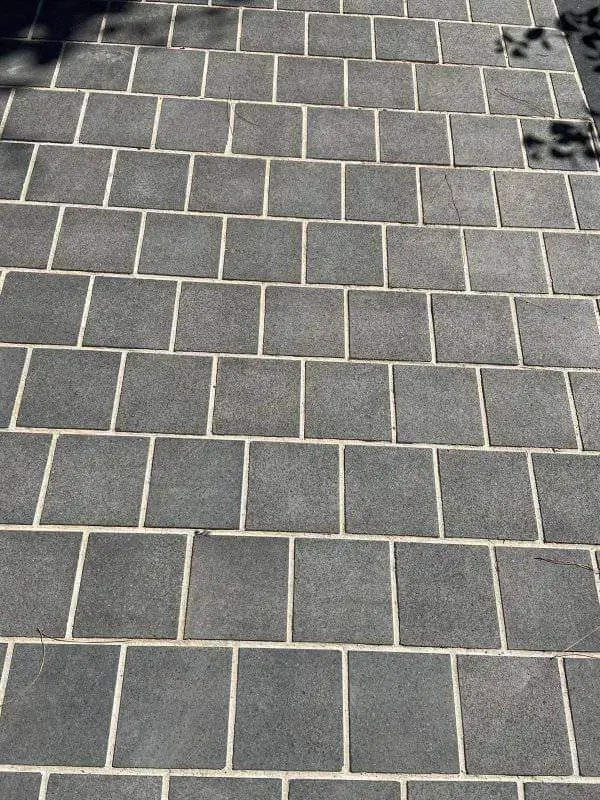
Herringbone Brick Paver Layouts Arizona Homes Rely On for High-Traffic Zones
Herringbone stands apart from every other layout because it’s the only pattern that achieves true bi-directional interlock. Units placed at 45-degree or 90-degree angles create a mechanical interlocking system that resists horizontal creep — the slow lateral displacement that undermines flexible-set installations over time. For limestone paving brick patterns Arizona design teams specify across driveways and high-foot-traffic courtyards, herringbone significantly outperforms in load-cycling resistance.
Your layout decision between 45-degree and 90-degree herringbone comes down to your border geometry. The 45-degree version produces angled cuts at every perimeter edge, which increases material waste by 12–18% but creates a diagonal visual energy that works exceptionally well in contemporary designs. The 90-degree variant simplifies border cuts and suits traditional or Mediterranean architectural styles more naturally.
- Herringbone brick paver layouts Arizona homes use most frequently run at 45 degrees relative to the dominant sight line
- You’ll need to account for additional material order when specifying 45-degree herringbone — calculate a 15% waste factor minimum
- Pre-plan your starting centerline precisely; even a 2-degree error cascades visibly across large fields
- Polymeric sand performs better than standard joint sand in herringbone layouts due to the angled joint geometry
Basket Weave: Classic Texture for Courtyard Applications
Basket weave earns its place on this list because it creates visual texture without requiring complex cuts — pairs of limestone pavers laid in alternating horizontal and vertical orientations produce a woven appearance that reads beautifully in enclosed courtyard settings. The pattern works best with square or near-square limestone units in the 4×8 or 6×6 range; rectangular formats with strong aspect ratios lose the woven illusion at viewing distance.
The structural consideration most specifiers overlook with basket weave is joint continuity. Unlike running bond, basket weave creates continuous joint lines that run the full width or length of the field in alternating directions. You need to verify that your base preparation achieves absolute flatness within ±1/8 inch over a 10-foot straightedge, because continuous joints telegraph base irregularities more visibly than offset patterns do.
For geometric paving pattern inspiration in Arizona’s upscale residential market, basket weave in cream or buff limestone tones against adobe-colored walls produces the kind of cohesive palette that photographs exceptionally well and ages gracefully under UV exposure. Geometric paving pattern inspiration Arizona designers draw from most consistently places basket weave in enclosed courtyard environments where the repeating texture anchors the space visually.
Diagonal Square Layout: Visual Expansion for Narrow Spaces
Rotating a standard square grid 45 degrees transforms how a space reads spatially. The diagonal square layout makes narrow side yards and elongated patios appear significantly wider because the eye follows diagonal lines toward the perimeter rather than tracking the length. This is a genuinely useful design tool — not just an aesthetic preference — and it works especially well with lighter limestone tones that reflect Arizona’s intense sunlight.
Your installation challenge with diagonal square is border management. Every perimeter edge requires a triangular cut, and those cuts need to be executed cleanly to maintain the pattern’s visual precision. Spec a diamond blade wet saw with a fence guide for this work — freehand cuts on limestone will show variance at the grout line. The pattern also benefits from a contrasting border unit in a complementary tone, which frames the diagonal field and eliminates the awkward half-unit termination at the edges.
- Calculate your field dimensions in advance to determine if you’ll land on full or partial units at the border
- Diagonal layouts require 20–25% more cutting labor than rectilinear patterns — factor this into your project timeline
- Lighter limestone tones in diagonal layouts reflect more solar radiation, which matters for barefoot comfort in July
Random Ashlar: Organic Elegance for Natural Arizona Landscapes
Random ashlar mimics the appearance of naturally occurring stone coursing by combining multiple limestone unit sizes — typically three to four dimensions — laid in a pattern that appears irregular but follows strict layout rules beneath the surface. You’re not actually randomizing the placement; you’re following a controlled sequence that prevents same-size units from aligning across more than two adjacent courses. That discipline is what separates a professional ashlar installation from a chaotic jumble.
This pattern pairs exceptionally well with Sedona-influenced landscape design, where Sedona‘s red rock aesthetic and warm desert tones create a regional vernacular that celebrates natural stone variation. Limestone in warm buff and tan tones reads as an organic extension of that landscape character rather than an imposed formal element. The multi-size format also allows you to work around existing landscape features — trees, boulders, planting beds — more fluidly than grid-based patterns permit.
At Citadel Stone, we recommend confirming your ashlar unit mix ratios before ordering — a typical three-size ashlar blend runs approximately 50% large, 30% medium, and 20% small by square footage, and ordering outside that ratio creates field layout headaches that slow installation considerably. Verify these proportions with warehouse stock levels to avoid mid-project shortages.
Pinwheel Pattern: Modern Geometry for Contemporary Arizona Homes
The pinwheel pattern — a large central square unit surrounded by four smaller units of equal dimension — creates a repeating geometric motif that reads as intentionally designed even at a distance. It’s one of the more visually distinctive custom brick paver arrangements Arizona designers reach for when a project calls for something beyond the standard layout vocabulary. Among limestone paving brick patterns Arizona design professionals specify for contemporary homes, pinwheel commands immediate visual attention without sacrificing structural discipline.
Your unit sizing relationship is critical here: the smaller surrounding units must each measure exactly half the dimension of the central unit. A 12×12 center unit pairs with 6×6 border units; a 16×16 center unit pairs with 8×8 border units. Deviation from this ratio by even a quarter inch creates cumulative joint width inconsistencies that become visible across a large field. Spec your limestone units from a single quarry run to ensure dimensional consistency — color and thickness variation between production batches creates challenges that no amount of skilled installation can fully conceal.
- Pinwheel patterns highlight limestone color variation, so inspect your pallet mix before installation begins
- The pattern’s repeating geometry makes it ideal for square or near-square installation fields
- Joint sand must be consolidated in multiple passes — the pattern’s geometry creates isolated corners that resist single-pass compaction
- Confirm truck delivery access before scheduling — full-pallet pinwheel material orders typically require a straight-bed truck with liftgate access
For further design guidance tailored to Arizona conditions, explore our Arizona limestone paving brick designs, which covers material selection and layout options across the full Citadel Stone limestone range.
Stacked Bond: Bold Minimalism with Structural Caveats
Stacked bond aligns all joints continuously in both directions — a pattern that delivers powerful visual discipline and suits ultra-modern architecture exceptionally well. It’s worth being direct about the structural trade-off: stacked bond is the weakest interlock configuration available. Continuous joints in both directions mean there’s no lateral interlocking mechanism, so the pattern relies entirely on base rigidity and bedding layer cohesion to resist horizontal movement.
Stacked bond can work reliably as part of custom brick paver arrangements Arizona installers specify for decorative applications, but it requires a stiffer base specification than offset patterns. Use a minimum 6-inch compacted Class II aggregate base with a concrete bedding course rather than sand setting for installations that will see any vehicular or heavy foot traffic. In purely decorative or light-duty pedestrian applications — garden paths, pool equipment surrounds, meditation courtyards — the structural limitation becomes largely academic. Confirm warehouse stock of your chosen limestone unit before finalizing this pattern, since stacked bond consumes uniform-dimension inventory at a higher rate than multi-size patterns.
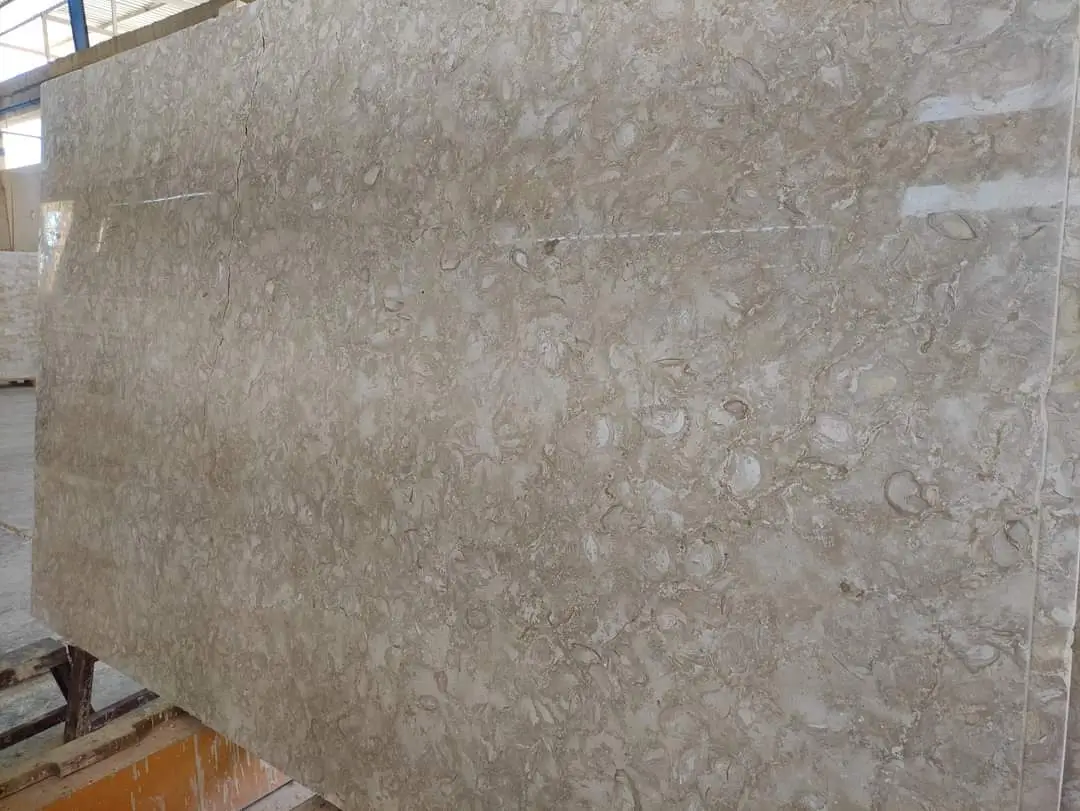
Versailles Pattern: Premium Complexity for Statement Installations
The Versailles pattern — also called the French pattern — combines four unit sizes in a specific repeating configuration that produces an elegant, old-world surface texture that reads as luxurious in almost any design context. It’s the most material-efficient multi-size pattern available, achieving visual complexity without excessive waste, and it’s become a signature choice for high-end custom brick paver arrangements Arizona’s luxury residential and resort markets consistently request.
The installation complexity is genuine and shouldn’t be understated. Your installer needs to maintain the pattern sequence across the full field without breaking the repeat, which requires marking the field layout in advance and setting dry before committing to mortar or sand. In Flagstaff‘s higher-elevation climate, where freeze-thaw cycling adds seasonal stress to joint systems, the Versailles pattern’s varied joint lengths require a flexible polymer-modified grout rather than standard sanded grout — rigid grout fails at the transition points between unit sizes when freeze-thaw forces are present. Truck delivery logistics also require advance planning for Versailles projects; the four-size unit mix typically ships on multiple pallets, and a straight-bed truck with liftgate access is standard for full-project deliveries.
- Standard Versailles unit ratios: one 16×16, one 16×8, one 8×8, and one 8×4 per repeat module
- You’ll need to dry-lay the first three repeat modules before cutting begins to confirm dimensional accuracy
- Limestone thickness consistency across all four unit sizes is critical — spec from a matched production batch
- Allow for 10–12% additional material to accommodate the pattern’s perimeter cut requirements
What Matters Most for Limestone Paving Brick Patterns in Arizona Design
Pattern selection is where your project’s long-term performance and visual character get determined simultaneously — and these two considerations don’t always point toward the same answer. The pattern that looks most compelling in a design rendering may carry installation complexity or structural limitations that matter in Arizona’s specific climate conditions. The right choice aligns your aesthetic goal with your base conditions, traffic load, and maintenance commitment over a 20-plus-year horizon.
Limestone paving brick patterns Arizona design rewards specifiers who think through the geometry before the first unit is set. Joint orientation relative to drainage slope, expansion joint placement, unit size compatibility with your field dimensions, and base rigidity requirements all flow from pattern selection — which is why that decision belongs early in the design process, not as a finishing detail. As you evaluate performance expectations for your specific conditions, Limestone Brick Pavers in Arizona Heat? Here Is How to Fix It addresses the thermal performance dimension in depth and is worth reviewing alongside your pattern decision.
The eight patterns covered here represent the full spectrum of what limestone handles well in Arizona’s outdoor environments — from the structural reliability of running bond limestone installations across Arizona driveways and patios to the visual ambition of Versailles and pinwheel configurations. Each one performs when the base is right, the units are consistent, and the joint system suits the pattern geometry. Citadel Stone’s limestone paving bricks bring structural elegance to Arizona outdoor spaces, with pattern installations completed for clients in Flagstaff, Yuma, and Tempe.