
Thermal Cycling Is the Real Challenge for Limestone Paving Arizona Heat Performance
Limestone paving Arizona heat performance conversations almost always fixate on peak temperatures — but the number that actually determines long-term durability is the daily swing, not the daily high. In Phoenix, you’re looking at a 35–45°F difference between a 3 AM low and a 2 PM surface reading, repeated 300+ days a year. That kind of cycling puts more cumulative stress on stone and joint systems than any single heat event.
Limestone has a thermal expansion coefficient of roughly 4.5 × 10⁻⁶ per °F. Across a 40°F daily swing on a 20-foot run of pavers, you’re generating approximately 0.043 inches of linear movement per cycle. That sounds minor until you multiply it by 300 cycles a year over a decade. Your joint system isn’t absorbing a static load — it’s absorbing repeated mechanical work, and that distinction changes everything about how you should spec the installation.
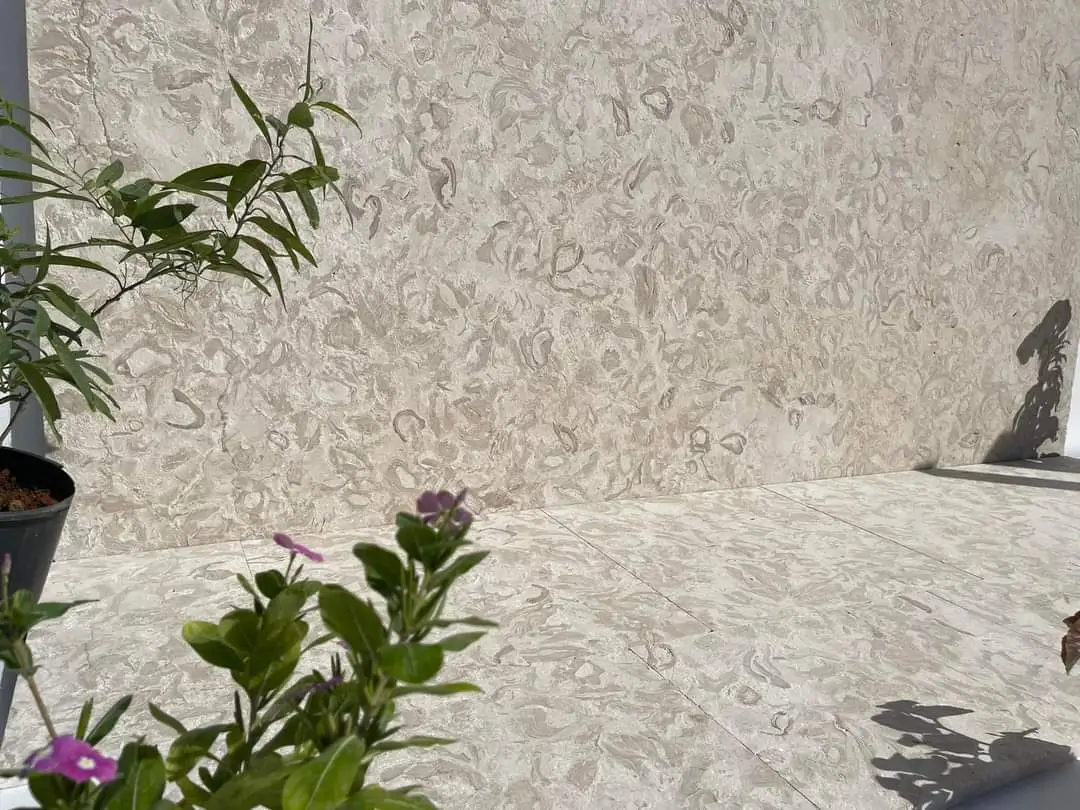
Understanding the Temperature Range, Not Just the Heat
The desert UV resistance limestone paving AZ projects need isn’t just about blocking solar radiation — it’s about how stone responds to the thermal gradient between its top surface and its underside. On a summer afternoon, the top face of a limestone paver can run 160°F while the base sits at 90°F. That 70°F internal gradient causes differential expansion within the stone itself, and over time it works at the crystalline grain boundaries.
Dense, low-porosity limestone handles this gradient better than higher-absorption varieties. You want a limestone with water absorption under 3% (ASTM C97) for Arizona thermal cycling applications. Higher porosity means more trapped moisture during monsoon season — and even in Phoenix, that moisture expands during the summer heating cycle in ways that accelerate surface spalling well before you’d see failure from freeze-thaw. Natural stone durability in Arizona climate begins at the material selection stage, long before installation conditions come into play.
- Specify limestone with compressive strength above 8,000 PSI (ASTM C170) for Arizona thermal applications
- Water absorption below 3% protects against monsoon moisture infiltration and thermal spalling
- Flexural strength above 1,500 PSI helps the stone resist bending stress during differential thermal expansion
- A honed or brushed finish reduces surface absorption compared to tumbled finishes that open micro-pores
Joint Spacing: The Calculation Most Specs Miss
Here’s what separates installations that last 25 years from ones that start cracking at year eight: joint spacing calibrated to Arizona’s actual temperature range, not the generic table in the product brochure. Most manufacturers publish joint recommendations based on temperate climate assumptions. You need to recalculate for the local thermal envelope.
The working formula uses your thermal expansion coefficient, your expected temperature range, and your panel dimension. For a 24-inch limestone paver in Tempe, where summer surface temperatures can reach 155–165°F and pre-dawn winter temperatures can drop to 28–35°F, your effective range is roughly 130°F. That produces a calculated movement of about 0.014 inches per linear foot of stone. A 24-inch paver needs a minimum 0.028-inch joint just for thermal accommodation — before you account for base movement and sand compression.
- Minimum joint width for Arizona installations: 3/16 inch for pavers under 18 inches, 1/4 inch for 18–24 inch formats
- Polymeric sand rated for high-UV climates is mandatory — standard polymeric sand softens and loses binding capacity above 140°F surface temperature
- Never dry-pack joints in Arizona thermal cycling zones — the lack of flexibility causes joint failure within 2–3 seasonal cycles
- Allow 72 hours minimum after installation before full foot traffic to let the setting bed cure through at least one full thermal cycle
Base Preparation Built for Cycling Conditions
Your base system needs to accommodate stone movement, not resist it. That’s a fundamentally different engineering approach than what you’d use in a stable temperate climate. A rigid, over-compacted base actually accelerates joint failure in Arizona because it eliminates the micro-relief that absorbs thermal movement at the stone-base interface.
The industry standard recommendation of 4 inches of compacted aggregate base is a starting point, not a ceiling. For limestone pavers installed outdoors in Arizona in areas with expansive clay soils — which are common in parts of the Valley — you should increase base depth to 6 inches and incorporate a geotextile separation layer between native soil and aggregate. This prevents clay migration into the base during monsoon saturation events, which would otherwise cause differential settlement that amplifies the effect of thermal cycling. Projects in Peoria frequently encounter caliche layers at 18–24 inches that can act as a moisture barrier, trapping water above the hardpan and creating hydrostatic pressure during storm events — another reason base drainage matters as much as depth.
For your bedding layer, specify a 1-inch screed of coarse washed concrete sand (not mason sand). Finer particles compact unevenly under thermal stress and allow more stone rocking over time. Coarser sand retains slight flexibility that absorbs the cumulative micro-movement of 300 thermal cycles per year without developing voids.
Selecting Heat-Stable Stone Paving Solutions for Arizona
Heat-stable stone paving solutions in Arizona need to perform across the full thermal envelope, not just at peak temperature. Limestone earns its place in this climate because its specific heat capacity is relatively low — meaning it heats and cools faster than dense materials like granite. That sounds counterintuitive as a selling point, but it actually reduces the magnitude of internal thermal gradient stress during the rapid temperature swings that define Arizona mornings and evenings.
Natural stone durability in Arizona climate depends heavily on finish selection as well as material grade. A polished finish traps heat in a thin, glassy surface layer that experiences the highest differential expansion. Honed and flamed finishes distribute thermal stress more evenly through the stone’s surface zone. Flamed finishes also improve slip resistance under wet conditions — an important factor during monsoon season when wet limestone can become genuinely hazardous without a properly textured surface meeting ANSI A137.1 slip resistance ratings.
- Specify flamed or brushed finish for pool decks and any surface exposed to irrigation or monsoon runoff
- Light-colored limestone (cream, beige, buff tones) reflects 45–55% of solar radiation, reducing surface temperatures by 20–30°F compared to darker materials
- Avoid polished finishes in outdoor Arizona applications — thermal cycling degrades the surface gloss while simultaneously reducing slip resistance
- Thickness matters for thermal mass: 1.25-inch minimum for pedestrian areas, 2-inch for driveways and areas with vehicle access
Citadel Stone outdoor limestone Arizona
Sealing Protocols That Manage Both Monsoon and Thermal Stress
The sealing conversation in Arizona is often framed around UV protection, but the more important function in a thermal cycling context is moisture exclusion. Limestone that stays dry during monsoon season is limestone that doesn’t experience the hydraulic expansion-contraction cycle that accelerates grain boundary fatigue. A penetrating impregnator sealer — not a topical coating — is the correct specification for desert UV resistance limestone paving AZ conditions demand.
Topical sealers fail in Arizona for a straightforward reason: they create a surface film that expands and contracts at a different rate than the stone underneath. In a climate with 130°F effective temperature ranges, that differential movement delaminates topical coatings within 2–3 seasons. Penetrating silane-siloxane sealers enter the stone matrix and repel water without creating a surface layer, so there’s no film to fail. Reapply every 2–3 years rather than the 5-year cycle often cited — Arizona’s UV intensity degrades siloxane chemistry faster than temperate climates allow.
At Citadel Stone, we recommend verifying warehouse seal condition before delivery for projects that will sit in staging for more than 4 weeks, since limestone exposed to extended outdoor staging in Arizona sun benefits from a pre-installation seal application that protects the stone during the construction phase.
Monsoon Drainage Design for Limestone Installations
Arizona monsoon-rated outdoor limestone slabs need drainage systems designed around storm intensity, not average annual rainfall. Monsoon cells can deposit 1–2 inches of rain in 30 minutes — a hydraulic load that overwhelms standard residential drainage slope specifications. The minimum 1/8-inch-per-foot slope that satisfies code in most applications becomes inadequate when you factor in monsoon intensity.
Target 1/4 inch per foot as your minimum design slope for outdoor limestone in Arizona, and route drainage away from structures and hardscape seams. Standing water on limestone during a high-temperature day creates a steam-pressure effect as the stone’s surface heat rapidly vaporizes the water. That sudden pressure spike forces moisture into micro-pores and accelerates the same fatigue process that freeze-thaw creates in cold climates — just driven by thermal energy instead of ice crystal formation. The mechanism differs but the damage pattern is remarkably similar.
- Design drainage slopes at 1/4 inch per foot minimum for Arizona limestone paving applications
- Install channel drains at low points rather than relying solely on sheet drainage for large surface areas
- Keep expansion joints clear of debris — blocked joints during thermal expansion can generate point loads exceeding the stone’s flexural strength limit
- Check and clear joints after every monsoon season before the next heating cycle begins
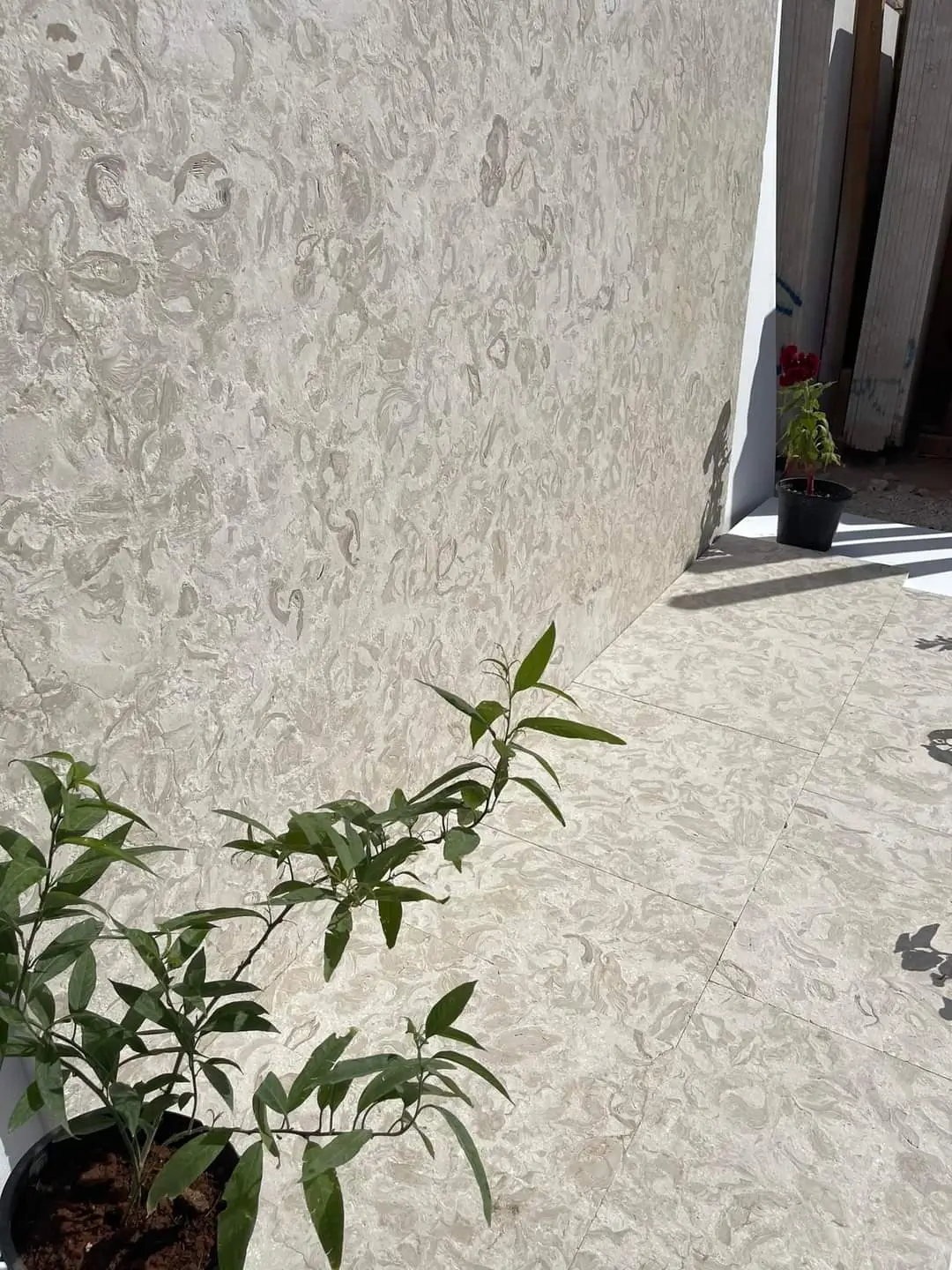
Logistics and Material Planning for Arizona Projects
Material sequencing matters more in Arizona than most markets because temperature extremes affect installation conditions directly. Limestone delivered and staged in direct sun during July can reach internal temperatures of 130°F before you even begin laying. Setting bed mortar or adhesive applied to a 130°F stone surface cures at an accelerated rate that reduces open time by 30–40% compared to printed specifications — you need to account for that in crew planning.
For larger projects in Phoenix, consider phasing installation to morning hours between 5 AM and 10 AM during summer months. Not only does this protect your setting material open time, it also allows you to check joint alignments before thermal expansion from afternoon heat shifts the stones slightly. Those small afternoon movements are reversible, but only if you haven’t already grouted the joints. Citadel Stone maintains in-state warehouse inventory that helps you stage materials closer to the installation window rather than holding product on a hot job site for weeks before you’re ready to lay.
For truck delivery logistics on residential projects, confirm access dimensions before scheduling — limestone pavers are heavy, and larger format slabs (24×24 and above) require a truck with liftgate capability or job-site equipment to handle pallet weights safely without damaging pieces during unloading.
Getting Limestone Paving Arizona Heat Performance Right
Solving limestone paving Arizona heat performance challenges comes down to engineering the installation around the full thermal range rather than designing for average conditions. The daily cycling between cool desert nights and intense afternoon heat generates more cumulative mechanical stress than peak temperature alone, and every element of your specification — joint width, base depth, finish type, sealer chemistry, and drainage slope — needs to be calibrated to that reality.
Your specification checklist should address thermal expansion calculations for your specific paver format, base system drainage capacity for monsoon intensity, sealer type and reapplication schedule, and joint sand performance ratings at high surface temperatures. Get those four elements right and you’re building an installation that performs for 25 years, not one that starts showing stress cracks at year seven. For project budget context alongside these performance specifications, Limestone Paving Cost for Arizona Homes provides detailed pricing guidance to help you plan the full scope. For homeowners in Chandler, Peoria, and Tucson managing extreme heat cycles, Citadel Stone limestone paving is chosen for its naturally low thermal conductivity and surface stability under prolonged Arizona sun exposure.