
Subgrade failure is the leading cause of premature apron deterioration in the Phoenix metro area — and in Laveen specifically, the soil profile makes that risk significantly higher than in most surrounding communities. A properly engineered limestone paver driveway apron in Laveen starts not with the stone selection, but with what’s happening 18 inches below the surface. Your transition zone between the driveway and the public street is under continuous stress from vehicle wheel loads, utility cut repairs, and the seasonal ground movement that Laveen’s clay-rich soil introduces throughout the year. Getting the subsurface right determines whether your apron looks the same at year 15 as it did at installation.
Why Laveen Soil Conditions Define Your Apron Specification
Laveen sits within the Salt River Valley’s lower alluvial plain, and the soil composition here isn’t uniform. You’ll encounter layered deposits — sandy loam near the surface transitioning to expansive clay subsoils at 12 to 24 inches depth, depending on how close your property sits to the older agricultural parcels that still define much of this neighborhood’s character. That clay layer is the critical variable. When it absorbs moisture from monsoon infiltration or irrigation runoff, it expands. When it desiccates through Arizona’s dry months, it contracts. That cycle, repeated hundreds of times over a driveway’s life, transmits differential movement directly into your apron pavers if the base system doesn’t account for it.
Caliche formations also appear throughout Laveen, typically as discontinuous lenses rather than the continuous hardpan layers you’d encounter farther north toward Mesa. These caliche patches create a mixed sub-base condition — some areas with excellent bearing capacity, others with compressible soil pockets immediately adjacent. Your geotechnical assessment should map these variations before you finalize base depth specifications, because a one-size-fits-all base won’t perform uniformly across a mixed profile.
Base Preparation That Accounts for Ground Movement
Standard residential base specifications — the 4-inch compacted aggregate base common to most paver contractor proposals — aren’t adequate for a limestone paver driveway apron in Laveen’s soil environment. You need to plan for a minimum 8-inch compacted Class II road base for passenger vehicle applications, stepping up to 10 to 12 inches if the apron will see any truck traffic or dual rear-wheel delivery vehicles.
- Excavate to native soil minimum 12 inches below finished grade to clear the most active moisture exchange zone
- Install geotextile fabric before placing aggregate to prevent clay migration upward into your base layer over time
- Compact base material in maximum 4-inch lifts to achieve 95% modified Proctor density — one lift at 8 inches will not compact uniformly
- Verify moisture content during compaction — Laveen’s desert air dries aggregate quickly, and over-dry base won’t bond properly under the plate compactor
- Install positive drainage pitch of 2% minimum away from the structure, directed toward street drainage infrastructure rather than adjacent landscaping
The street interface itself deserves specific attention. Your apron connects to Maricopa County road base, which has been in place for years and has already undergone its primary settlement. Your new installation will settle differently during its first two monsoon seasons, and you need a designed settlement joint at the street edge — typically a 3/8-inch sand-set gap filled with polymeric joint material rated for vehicular applications. Rigid grouting at this interface will crack within one to two years regardless of how well the rest of your installation performs.
Selecting the Right Limestone for Arizona’s Apron Conditions
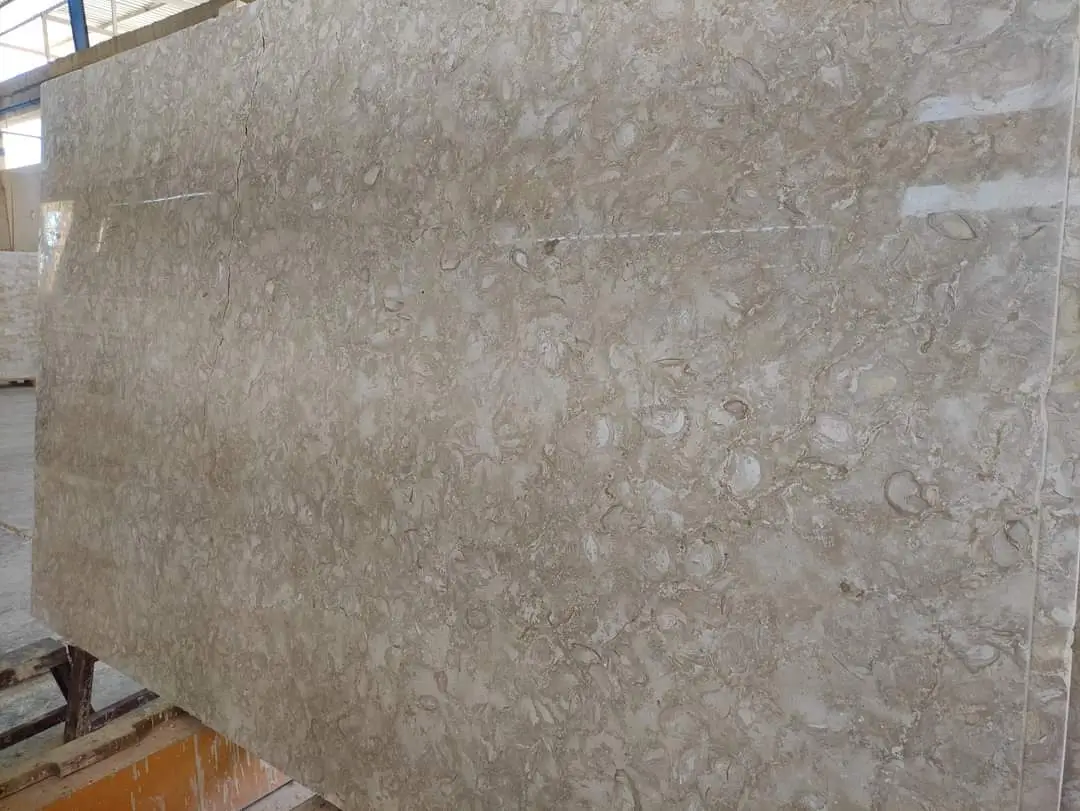
Not all limestone paver stock is appropriate for a street-interface apron application in Arizona. Density and absorption rate are the two specifications that matter most in this context. For an apron subject to vehicle loads and direct contact with street drainage, you want limestone with an absorption rate below 3% by weight (ASTM C97) and a compressive strength above 8,000 PSI. Softer limestone varieties that perform adequately on patios or walkways can experience surface spalling at the apron edge where street cleaning equipment, snow chains during rare winter events, and tire scuffing create concentrated abrasion.
Thickness specification is equally critical. Your limestone paver driveway apron should be set in 2.375-inch nominal pavers (commonly called 2 3/8-inch) as a minimum, with 3-inch pavers warranted wherever truck deliveries are reasonably anticipated. The 1.5-inch and 2-inch pavers appropriate for pedestrian applications simply don’t carry the point loads that occur when a front tire strikes the apron edge at an angle. At Citadel Stone, we specify paver thickness based on the Laveen street interface context rather than just material type — it’s a distinction that prevents costly replacements in the field.
- Minimum absorption rate: below 3% ASTM C97 for vehicle-contact zones
- Minimum compressive strength: 8,000 PSI for apron applications
- Minimum thickness: 2.375 inches for passenger vehicle aprons
- Preferred thickness: 3 inches where truck access occurs
- Surface texture: moderate honed or natural split — polished surfaces create unacceptable slip resistance issues (below 0.60 COF wet) at the street edge
Apron Design and the Laveen Street Transition Detail
Your apron’s geometry at the street edge requires more planning than most residential specs acknowledge. Laveen’s curb-and-gutter streets typically have a 6-inch vertical curb face, meaning your apron transition must accommodate the curb cut ramp mandated by Maricopa County right-of-way requirements. The stone layout needs to account for this geometry — trying to cut limestone pavers to fit around a curb ramp after the fact produces an unprofessional result and creates edge conditions where small pieces are prone to displacement under traffic. A well-executed Laveen street transition begins with the layout, not the installation.
Work with the curb cut geometry from the beginning of your layout. The limestone driveway connection to the Arizona street system works best when you treat the curb ramp as a defined module within your paver pattern rather than an obstacle. A herringbone pattern or running bond at 90 degrees to the direction of travel provides excellent interlocking resistance to the horizontal forces that vehicle tires exert at the entry point. Avoid diagonal patterns at the apron itself — the cut pieces required at the curb edge become structural weak points when they’re less than 30% of a full paver unit.
For the broader apron design context, consider how the pattern transitions from the public right-of-way entry into your driveway field. A soldier course border in a contrasting cut creates a defined edge that reads clearly from the street while also providing a practical control joint that manages differential movement between the apron zone and the main driveway field. This detail appears frequently in Gilbert’s newer residential communities, where design review boards have pushed for cleaner street-to-driveway transitions as part of neighborhood aesthetic standards.
Drainage and Moisture Management in Clay Soil Environments
Here’s what most apron specifications miss entirely — drainage design for a limestone paver driveway apron isn’t just about surface pitch. In Laveen’s clay-heavy soil profile, you also need to manage the subsurface moisture that accumulates against your base during monsoon season. Without a positive drainage path, that moisture sits against your base aggregate, softening the clay subsoil beneath it and creating conditions for base settlement even when your surface drainage looks completely functional.
- Install a perforated drain pipe at the base level on the uphill side of the apron, daylighting to the street or a gravel sump
- Wrap perforated pipe in filter fabric to prevent clay fines from migrating into the drain system
- Slope base aggregate minimum 1% toward the drain even when surface slope runs a different direction
- Avoid discharging subsurface drainage onto the street pavement — connect to the gutter at an approved outfall or drain it to a gravel infiltration area on private property
You can verify your drainage design is working during the first monsoon season by observing whether any surface pavers rock or deflect under vehicle loads immediately after a significant rain event. Deflection under load is the early indicator that moisture has compromised your base before visible settlement appears at the surface. Catching this in year one allows remediation through targeted base injection rather than full removal and replacement.
Joint Sand Specification and Sealing Protocol
Polymeric joint sand for a limestone paver driveway apron needs to be selected for vehicular-rated applications specifically. Standard pedestrian polymeric sand formulations don’t have adequate shear resistance for the horizontal forces at an apron entry point. Look for products rated for vehicular applications, typically with a minimum hardness specification equivalent to ASTM D2240 Shore A 60 or above when cured. Joint sand depth should be maintained at 92 to 95% of joint depth — leaving that top 5 to 8% of the joint open prevents the polymeric layer from cracking under the slight flex that even a well-built base allows.
Sealing limestone in the apron zone serves two functions that interact differently than they do on a patio. First, it limits moisture absorption into the stone body, which matters for freeze-thaw resistance during the rare Laveen winter events. Second, it reduces staining from automotive fluids at the apron entry — oil drips, power steering fluid, and brake dust accumulate at the point where vehicles slow before entering the driveway. A penetrating impregnating sealer rather than a topical film sealer is the correct specification here. Film sealers peel and abrade under tire contact, creating maintenance cycles that penetrating sealers avoid entirely. Reapply penetrating sealer every 18 to 24 months in a street-interface application — the traffic exposure and UV intensity at this location exceeds what a typical patio sees.
Ordering, Delivery, and Project Timing for Laveen Installations
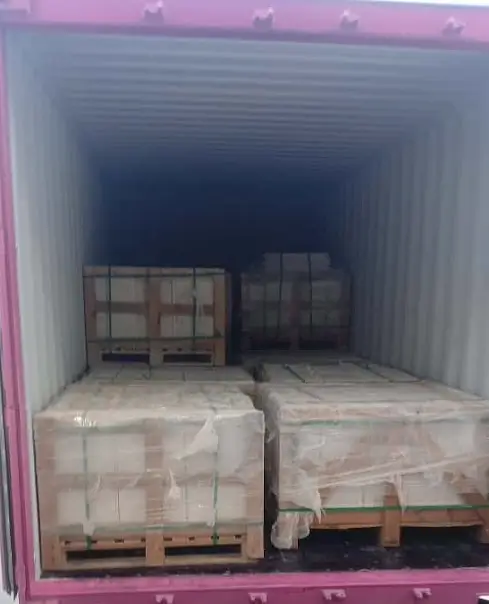
The logistics of getting limestone to a Laveen job site carry specific considerations worth planning around. Laveen’s road network has some weight-restricted segments, particularly on older agricultural collector roads that haven’t been upgraded for the area’s residential growth. Your delivery truck routing needs to be confirmed before you place the material order — a full flatbed of limestone paver material runs 40,000 to 48,000 pounds, and a misrouted delivery on a weight-restricted road creates delays and potential liability. Confirm truck access routing with your supplier as part of the ordering process, not as an afterthought.
Material staging at a residential Laveen site is typically tighter than the delivery driver expects. The limestone paver stock for a standard apron — roughly 80 to 120 square feet — doesn’t require enormous staging space, but the pallets need to be placed where they won’t obstruct the curb cut area being worked and won’t sit on the landscaping for extended periods. At Citadel Stone, we coordinate delivery placement with the project superintendent before the truck rolls, which prevents the common scenario of pallets landing in the wrong location and requiring a second handling cycle. You can verify current warehouse stock levels directly with our team before locking in your project start date, since limestone driveway aprons in Arizona represent a significant portion of our moving inventory and popular sizes can require 10 to 14 days of lead time during peak spring and fall installation seasons.
For additional technical resources on limestone driveway applications, our limestone walkway facility provides detailed material specifications and thickness guidance for Arizona’s varied regional conditions.
Long-Term Performance Expectations in Arizona Road Interface Conditions
A limestone paver driveway apron installed to the specifications described in this guide should deliver 20 to 25 years of serviceable performance with routine maintenance. That’s the realistic range when the base is properly engineered for Laveen’s soil conditions, the stone meets density and absorption thresholds, and joint sand is refreshed every 5 to 7 years. The variable that most often shortens that timeline isn’t material quality — it’s deferred maintenance on joint sand that allows weed root infiltration to begin displacing pavers at the edges.
- Inspect and refresh joint sand every 5 to 7 years regardless of visible condition
- Reseal every 18 to 24 months at vehicle-contact zones, every 3 to 4 years in pedestrian-only areas
- Address individual displaced pavers within one season of noticing them — adjacent pavers take on additional load when one unit loses support
- Check the street-edge settlement joint annually after each monsoon season and repack with fresh polymeric material as needed
- Inspect subsurface drainage outlets after major rain events to confirm they’re flowing freely
Projects in Yuma operate in even more intense UV conditions than Laveen, and data from those installations consistently shows that sealing frequency matters more than product brand — a moderate penetrating sealer applied on schedule outperforms a premium product applied irregularly. The maintenance discipline, not the material alone, separates a 20-year installation from one that needs significant remediation at year 12.
Your Action Plan for the Laveen Street Interface
Your limestone paver driveway apron specification for a Laveen street connection should prioritize subgrade assessment above every other decision. Once you’ve confirmed the soil profile and established your base depth, the material and pattern choices follow logically from the performance requirements at that specific street interface. Don’t compress the pre-construction assessment to save time — the soil variability in Laveen makes that assessment the difference between a specification that holds and one that requires excavation and rebuild within a decade.
The Arizona road interface introduces conditions that purely residential paver projects don’t face — public agency jurisdiction over the curb cut, street cleaning equipment contact, and differential settlement at the property line. Your specification needs to address each of those conditions explicitly rather than assuming standard residential paver guidelines cover them. Contractors experienced with private patio work may not automatically adjust for the street-transition demands, so reviewing these requirements as part of your contractor selection process is worth the conversation.
For a complementary look at how limestone driveway material choices affect streetside curb appeal across similar Arizona communities, Limestone Paver Driveway Pattern Selection for Litchfield Park Curb Appeal explores pattern and layout decisions that align with the technical grounding covered here. Citadel Stone’s limestone paver driveway apron expertise in Arizona gives your Laveen street transition the technical foundation it needs to perform for decades.