
Drainage geometry is the specification variable that separates a limestone patio stone dining Carefree installation that performs flawlessly for twenty-five years from one that starts failing at year seven. Arizona’s monsoon season delivers intense, short-duration rainfall events — Maricopa County regularly sees 1.5 to 2.5 inches in under an hour — and the compacted caliche soils beneath most residential sites have hydraulic conductivity rates that can’t handle that kind of surface loading without proper drainage design. Your dining surface specification needs to account for water before it accounts for anything else.
Why Drainage Defines Your Dining Patio
The architectural charm of an outdoor dining setup in Carefree is real, but it’s built on a drainage plan that most homeowners never see. Limestone is a naturally porous material with interconnected pore structures that absorb a percentage of surface water — but that porosity works for you or against you depending on what’s happening at the base. Your base preparation isn’t just about structural support; it’s the primary mechanism for moving monsoon rainfall away from the stone before hydrostatic pressure starts compromising mortar joints and bedding layers.
Here’s what field experience confirms: the grade of your dining patio surface needs a minimum 1.5% cross-slope for Arizona conditions, not the 1% you’ll see in generic installation guides written for temperate climates. That extra half-percent matters significantly when you’re dealing with sheet flow from a monsoon event hitting a 400-square-foot dining surface simultaneously. You’ll also want to think about where that water goes — directing it away from foundation walls and toward landscape areas with permeable groundcover is the right approach for most San Tan Valley residential projects, where lot grading often concentrates runoff toward the home’s rear elevation.
Limestone Performance in Arizona Monsoon Conditions
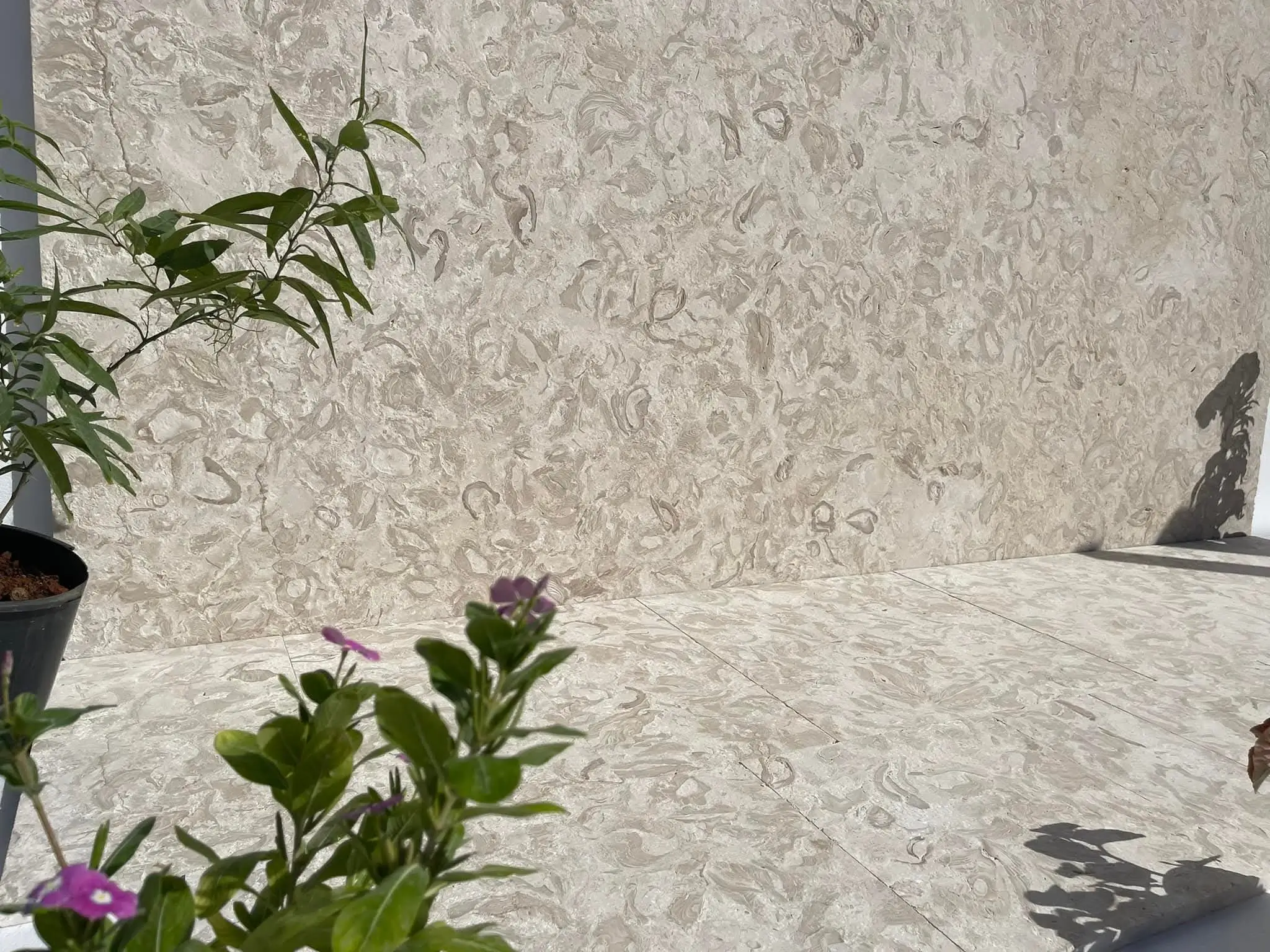
Limestone’s absorption rate typically falls between 3% and 7% by weight depending on the formation and density of the specific slab. For outdoor dining applications in Arizona, you want material from the lower end of that range — denser stone with tighter pore structures handles repeated saturation and rapid drying cycles better over time. The monsoon pattern in Arizona creates a specific stress cycle: prolonged dry heat followed by sudden deep saturation, then rapid evaporation in high heat. That cycle is harder on porous stone than steady wet climates.
- Specify limestone with water absorption below 5% for dining surfaces that receive direct sky exposure during monsoon season
- Confirm that your chosen material has been tested to ASTM C97 standards for absorption and bulk specific gravity
- Thicker slabs — 2 inches nominal — handle the thermal mass fluctuation from saturation to high-heat drying better than 1.25-inch material
- Lighter-colored limestone reflects significantly more solar radiation, which reduces surface heating and accelerates evaporation after rain events
- Dense limestone with compressive strength above 8,000 PSI resists the micro-fracturing that repeated wet-dry cycling causes in softer formations
At Citadel Stone, we source limestone from formations with documented density and absorption testing, so you’re not making material selection decisions based on visual inspection alone. That matters when you’re specifying for Carefree entertaining spaces, where the stone needs to perform through both the hottest dry months and the most intense monsoon events of the year.
Base Preparation: The Drainage Foundation
Your aggregate base isn’t just a structural layer — it’s your drainage reservoir. In Arizona’s clay-bearing soils, which expand measurably when saturated and contract again as they dry, a properly designed base redirects monsoon water laterally before it ever reaches the native soil. The standard 4-inch compacted aggregate base that works fine in well-draining sandy soils isn’t adequate for the expansive soils you’ll encounter across much of the Phoenix metropolitan region.
For limestone patio stone dining applications in Carefree where entertaining is the primary function, a 6-inch compacted crushed aggregate base provides the drainage reservoir depth your system needs. Use a graded aggregate with a gradation that allows free-draining characteristics — gap-graded material or open-graded base course, not dense-graded aggregate, which behaves more like a water-retaining layer than a drainage layer. The distinction is critical. Dense-graded base holds water against the underside of your limestone slabs and creates the saturation cycles that accelerate deterioration.
- Install a perforated drain pipe at the base perimeter if your dining area is bounded by walls or structures on two or more sides
- Geotextile fabric between native soil and aggregate base prevents clay migration into your drainage layer over time
- Compact aggregate in 2-inch lifts to 95% standard Proctor density — not a single 6-inch pour
- Set your bedding sand layer to no more than 1 inch — thicker bedding layers become unstable under furniture point loads
- Verify that downspout discharge from any adjacent roof structure is redirected away from the dining patio entirely
Joint Design for Water Movement
The joints in your limestone patio stone dining Carefree installation are water management elements as much as they are aesthetic decisions. Tight-set joints with sanded mortar create a surface that sheds water faster and limits infiltration — which sounds like the right approach for monsoon conditions, but it creates a different problem: hydrostatic pressure at the joint perimeter when water volume exceeds the surface’s sheet-flow capacity. That pressure is what dislodges mortar and creates the edge-lifting you’ll see in installations that weren’t designed for Arizona social areas with concentrated foot traffic.
The better approach for high-volume entertaining spaces is a joint width of 3/8 to 1/2 inch filled with polymeric jointing compound rated for high-flow conditions. Polymeric compounds flex with the thermal expansion and contraction that Arizona’s temperature swings create, while still maintaining enough cohesion to resist water infiltration during monsoon events. Check that your specified compound carries a rating for 120°F sustained surface temperatures — not all products on the market do, and failure under summer heat stress is the most common joint failure mode in Arizona dining stone installations.
Limestone Selection for Carefree Outdoor Meals
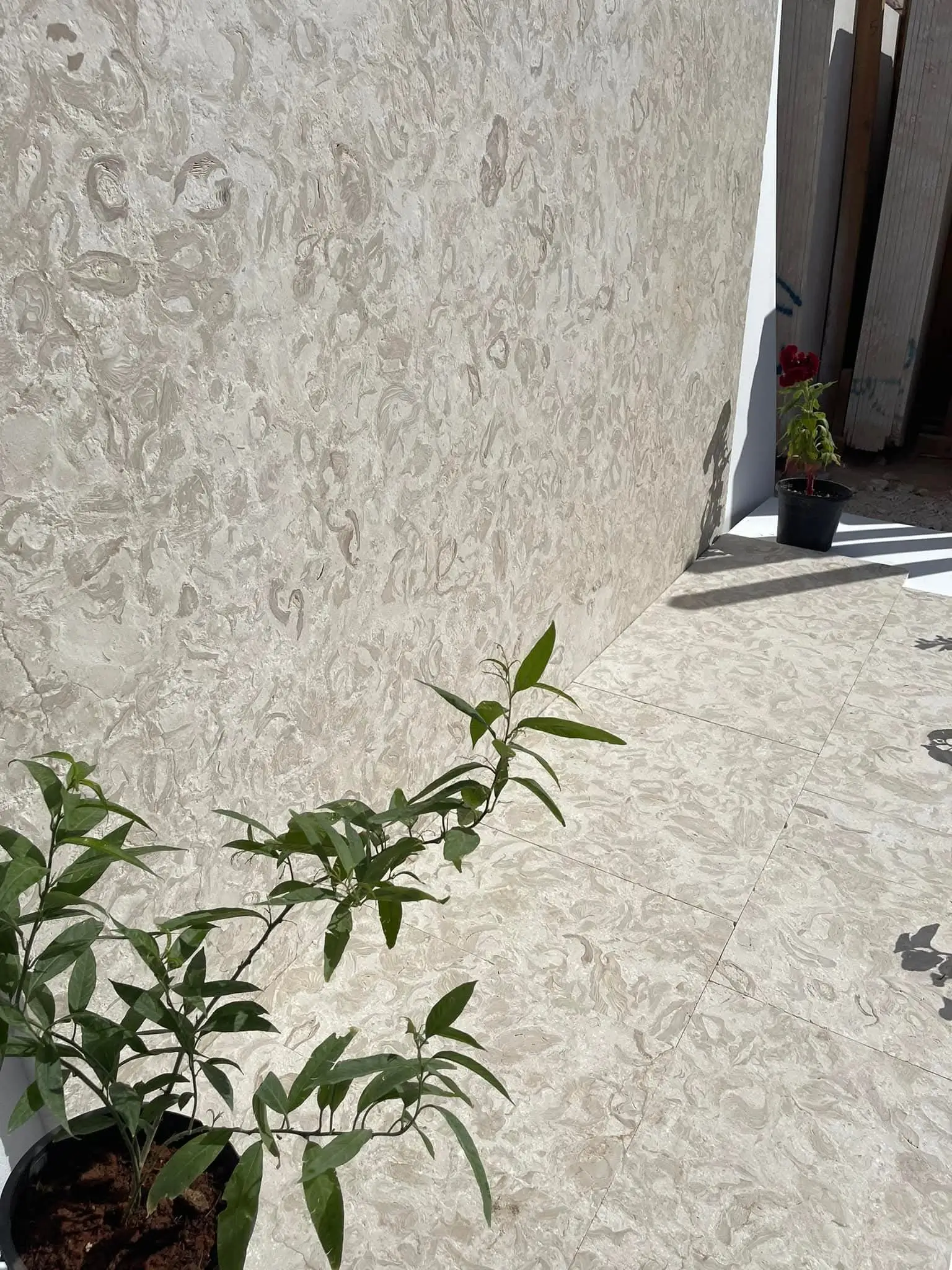
Selecting limestone for a space designed around Carefree outdoor meals means balancing surface texture, thermal comfort, and drainage performance simultaneously. A honed finish with a slight brush texture reads as elegant in an outdoor dining context while providing enough surface grip to meet slip resistance requirements under wet conditions — you’ll want a coefficient of friction above 0.60 when wet, which is the threshold where most stone installations remain safely walkable even during active rainfall.
Explore our landscape slab limestone options if you’re comparing finish profiles for your dining surface — the slab format gives you a larger visual field with fewer joints, which improves both drainage geometry and the visual continuity that formal dining setups benefit from. Slab formats also reduce the number of joint intersections where water infiltration risk concentrates.
- Buff and cream-toned limestone keeps surface temperatures 15 to 25°F lower than darker stone under direct afternoon sun — critical for dining comfort in summer months
- Avoid highly polished finishes for any outdoor dining surface in Arizona — the finish degrades rapidly under UV exposure and becomes slippery when wet
- Cross-cut limestone (cut perpendicular to the bedding plane) performs better under freeze-thaw conditions than vein-cut — though Carefree outdoor meals are rarely interrupted by hard freezes, elevation variations can create occasional frost events
- Limestone with consistent fossil or shell matrix content tends to be denser and more dimensionally stable than highly variable travertine-adjacent formations
Furniture Loading and Surface Thickness
Outdoor dining furniture creates point loads that generic patio specifications don’t fully address. A six-person dining table with chairs occupied represents a concentrated load pattern that differs significantly from uniform foot traffic, and limestone patio stones in Arizona specified at minimum thickness can develop stress fractures at those concentration points over time — particularly if your base layer has any voids or soft spots that weren’t caught during installation.
The specification that holds up in practice is 2-inch nominal thickness for dining surfaces receiving standard residential furniture, and 2.5 inches for any application where commercial-grade furniture or occasional heavy equipment access is expected. In Yuma, where extreme heat creates more aggressive expansion cycling in concrete sub-bases, thinner limestone has been observed to crack at furniture legs during the hottest months when the combination of thermal stress and concentrated loading exceeds the material’s tensile capacity. Specifying adequate thickness eliminates that failure mode entirely.
Sealing Strategy for Arizona Social Areas
Sealing limestone for Arizona social areas requires a different product approach than most standard sealers provide. The goal in Carefree’s climate is a penetrating impregnating sealer — not a surface film sealer — that occupies the pore structure of the stone without blocking vapor transmission. Film sealers trap moisture that migrates through the slab from below during monsoon saturation events, and that trapped vapor creates the spalling and surface delamination you’ll see after three to five monsoon seasons on improperly sealed installations.
Penetrating sealers with a fluorocarbon or silane-siloxane chemistry are the right choice for limestone dining stone Arizona projects in this climate. Apply them every two years in Carefree’s UV intensity, not the three-to-five-year schedule suggested on most product labels — those labels are written for temperate climates, not Arizona’s UV index, which can degrade sealer chemistry significantly faster. Your warehouse stock check for sealer should confirm UV-stable formulations rated for sustained 120°F surface exposure, as not all penetrating sealers carry that rating.
- Apply sealer when stone surface temperature is between 50°F and 85°F — never in midday Arizona summer heat, as the sealer will cure too rapidly at the surface and not penetrate adequately
- Allow new limestone installation to cure for a minimum of 28 days before initial sealing application
- Clean the surface with a pH-neutral stone cleaner before each sealing cycle — do not use acidic cleaners, which etch limestone chemically
- Two thin applications outperform one heavy application — let the first coat absorb fully before applying the second
- Reapply immediately if water no longer beads on the surface — don’t wait for the scheduled interval
Logistics and Project Planning
Your project timeline needs to account for both material availability and installation sequencing. Limestone patio stones in Arizona sourced through Citadel Stone’s regional warehouse inventory typically arrive within one to two weeks of order confirmation — a significant advantage over import-cycle materials that carry six to eight week lead times and create scheduling conflicts when contractors are ready to pour base courses before stone arrives.
Truck access to your site affects delivery planning more than most homeowners anticipate. A standard flatbed truck carrying dimensional limestone slabs requires a minimum turning radius and a firm, level approach surface — gravel driveways and soft desert soil can cause delivery complications that delay your installation start date. Verify your site access with the delivery coordinator before finalizing your order, particularly for projects in areas where narrow residential streets limit truck maneuverability. In Avondale and similar suburban communities with newer development patterns, HOA gate clearances occasionally create delivery constraints worth confirming in advance. Coordinating a brief site evaluation with our technical team before your delivery date prevents the kind of last-minute logistics problems that compress installation schedules and create quality compromises.
Parting Guidance
The limestone dining stone Arizona specification decisions that define long-term performance all trace back to water — how it moves across the surface during monsoon events, how it drains through the base, how it interacts with your joint system, and how your sealer strategy manages it at the pore level. Getting those four elements right in sequence creates an entertaining space that holds its structural integrity and visual quality through decades of Arizona’s characteristic weather extremes.
Beyond the technical specification, your dining space should also reflect the regional character that makes Carefree’s outdoor living culture distinctive. As you consider complementary stone detailing for your project, Limestone Patio Stone Mortar Joint Styling for Queen Creek Character offers useful perspective on how mortar joint aesthetics interact with limestone selection across Arizona’s varied residential architecture — a consideration that shapes the finished look of your dining space as much as the stone itself. Your entertaining space deserves both the structural foundation of sound drainage design and the finishing detail of thoughtful joint specification. Citadel Stone’s limestone patio stones in Arizona come with technical support that ensures perfect installation every time.