
Budgeting realistically for a limestone patio color scheme in Laveen starts long before you pick a tone palette — it starts with understanding how freight distance, regional material availability, and local labor rates shape what your project actually costs. The color decisions you make will influence not just aesthetics but material thickness choices, sealer specifications, and sourcing lead times, all of which carry real dollar figures in the Phoenix metro market. Getting your limestone patio color scheme Laveen selection right means reconciling design intent with a procurement reality that differs meaningfully from, say, a comparable project in coastal California.
How Regional Pricing Dynamics Shape Your Color Selection
You’ll encounter a market condition in the greater Phoenix area that surprises many first-time specifiers: color availability isn’t uniform across price points. Lighter tones — creams, warm whites, and soft buffs — tend to move fastest through Arizona distribution channels because they align with the regional architectural vernacular, which drives higher warehouse turnover and, counterintuitively, more competitive pricing on those SKUs. Darker charcoals and deep taupes, while visually striking against desert plantings, often carry a freight premium because they’re sourced from quarries further afield, with longer truck hauls adding cost before the stone even reaches a local staging yard.
The material-to-labor cost ratio in Laveen’s immediate market typically runs around 40:60 for residential patio installations — meaning labor costs actually exceed material costs on most projects. That changes your value-engineering calculus considerably. Spending an extra $2–$3 per square foot on a premium color that you love is often a smarter investment than cutting corners on material quality, because the labor cost stays essentially fixed regardless of whether you specify a budget buff or a premium warm ivory.
Understanding Laveen Desert Color Palettes Before You Commit
Laveen’s landscape sits at roughly 1,100 feet elevation on the southwestern edge of the Phoenix metro, surrounded by the Estrella Mountain Regional Park’s dusty sage greens, terracotta soils, and muted olive desert scrub. Your color palette decisions should reference those existing landscape tones rather than fight against them. Laveen desert color palettes naturally favor warm neutrals — sun-bleached sand tones, aged parchment, and light caramel ranges — that echo the surrounding Sonoran terrain without looking artificially matched.
The practical consideration here is that Arizona’s intense UV exposure will shift your stone’s perceived color over time. Lighter limestones experience less dramatic visual change than mid-tone stones, which can develop a slightly washed appearance after three to four seasons of direct sun exposure without adequate UV-protective sealing. Your initial color selection should account for this weathering arc — specifying a tone that looks good both as-installed and at the 5-year mark after some UV bleaching. Laveen desert color palettes work best when the stone you select holds its character through that natural aging process rather than requiring color correction down the road.
- Warm ivory and cream tones age predictably and maintain aesthetic coherence with desert landscaping
- Buff and light caramel shades offer the best harmony with Arizona’s red-brown native soil tones
- Silver-grey and cool white options create striking contrast but require more frequent cleaning in dusty desert conditions
- Deep charcoal and dark taupe selections carry higher freight costs and can read as higher-maintenance in dust-prone Laveen conditions
Patio Paver Shade Coordination for Arizona Homes
Patio paver shade coordination on Arizona projects starts with your home’s exterior finish — stucco color, roofline trim, and any masonry accent walls. In Laveen’s newer residential developments, you’ll frequently encounter warm beige and light terracotta stucco finishes that pair cleanly with limestone in the buff-to-cream range. The goal isn’t to match exactly — you’re coordinating, not matching — which means selecting a stone tone that shares undertone family with your home’s exterior palette without being identical.
For homes with cooler grey or white stucco finishes, which appear less frequently in Laveen but are present in newer luxury builds near Dobbins Road, a limestone in the warm white or soft grey-veined range creates the visual balance you need. The stone’s natural variation handles the visual transition between a cool exterior finish and warm desert surroundings more gracefully than manufactured concrete pavers, which tend to read as either too uniform or too artificial in the Sonoran context.
Projects in Yuma face even more intense sun and heat than Laveen, and specifiers there have consistently found that reflective limestone tones in the 60–70% solar reflectance range meaningfully reduce patio surface temperatures — a performance consideration that also supports your color choice on purely practical grounds. Effective patio paver shade coordination in those high-UV environments follows the same logic that applies across the broader Arizona market: warm, reflective tones outperform darker alternatives on both comfort and longevity.
Freight Distance and Sourcing Costs in the Laveen Market
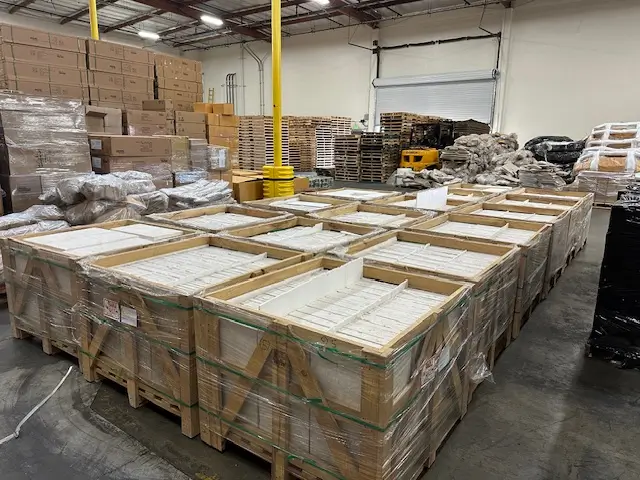
Your total project cost for limestone patio pavers in Arizona is directly influenced by where the material originates and how it reaches your jobsite. The Phoenix metro is well-served by Interstate 10 and US-60 corridors, which keeps truck delivery costs from Phoenix-area distribution points relatively competitive. However, specialty colors and finishes that aren’t stocked locally face the full freight burden of long-haul transport from Texas, Indiana, or international ports — and that cost lands on your project budget, not the supplier’s.
At Citadel Stone, we maintain warehouse inventory of the highest-demand Arizona color ranges specifically to avoid the 6–8 week import cycle that specialty orders typically require. For the most popular Laveen-market color families — creams, buffs, and warm ivories — our warehouse stock typically supports 1–2 week delivery timelines, which matters considerably for projects with fixed landscaping contractor schedules. Coordinating your truck delivery window with your installation crew’s availability is one of the most underestimated scheduling tasks on patio projects; a week’s delay on material delivery can push your labor start date by three weeks in a busy Phoenix market.
- Standard buff and cream limestone colors: typically available from local warehouse stock within 1–2 weeks
- Premium specialty colors with longer haul distances: budget 4–6 weeks lead time and factor in freight surcharges
- Oversized or custom-cut formats: add 2–3 weeks to any baseline lead time and verify truck access to your Laveen jobsite
- Split orders (phase one and phase two installation) create color matching risks — order full quantities from a single warehouse lot
Harmonious Design Principles for Desert Patio Aesthetics
The harmonious design principle that matters most for Laveen projects isn’t about color theory in the abstract — it’s about understanding how your patio reads at different times of day in intense Arizona sun. Limestone behaves differently at 7 AM, noon, and 5 PM because of how directional sunlight interacts with the stone’s surface texture and natural veining. Honed finishes flatten the color range and read consistently throughout the day; tumbled or brushed finishes create shifting shadow play that makes the same stone appear warmer in morning light and cooler in late afternoon shadows.
Applying harmonious design thinking to your limestone patio color scheme for Laveen means testing stone samples under actual outdoor conditions before committing. A stone that appears slightly too cool in a warehouse sample will warm considerably when installed flat in Arizona sunlight. Conversely, a sample that looks beautifully warm under showroom lighting may wash out to near-white in midday Laveen sun exposure. Always evaluate your final color candidates under actual Arizona outdoor conditions, or request a loaner sample tile from your supplier to test on-site before committing to a full order.
Visiting Mesa showrooms and installed project references gives you a real sense of how specific limestone colors age and perform in comparable desert conditions — particularly useful for understanding how a stone’s color evolves over two to three years in the Phoenix metro’s climate.
You can review the full limestone patio color selection resources and available material samples through our limestone patio stone facility, where current inventory reflects actual regional stock rather than catalog options that may require special ordering.
Thickness Selection and Value Engineering for Your Budget
The limestone thickness you specify for your patio affects both material cost and freight weight — two factors that compound each other. A 1.25-inch nominal limestone paver costs meaningfully less per unit and ships with lower freight weight than a 2-inch nominal equivalent, but it limits your installation options and performs differently under concentrated point loads. For standard residential patio use in Laveen with a properly prepared compacted aggregate base, 1.5-inch nominal limestone patio pavers in Arizona hit the performance-value sweet spot for most projects.
Value engineering on thickness only makes sense if your base preparation budget remains intact. The most common budget compromise — reducing slab thickness while also reducing base depth — creates a failure combination that leads to rocking, cracking, and premature joint sand loss, usually within three to five years. If you need to reduce costs, cut material finish upgrades before cutting base specification.
- 1.25-inch nominal: appropriate for pedestrian-only patios with excellent base preparation and concrete subbase
- 1.5-inch nominal: standard residential patio specification, handles typical furniture loads and foot traffic
- 2-inch nominal: recommended for outdoor kitchen areas, heavy furniture zones, and projects with variable soil conditions
- Freight cost difference between 1.5-inch and 2-inch nominal can run $0.80–$1.20 per square foot delivered — factor this into your thickness upgrade decision
Color and Finish Combinations That Work in Arizona Natural Tones
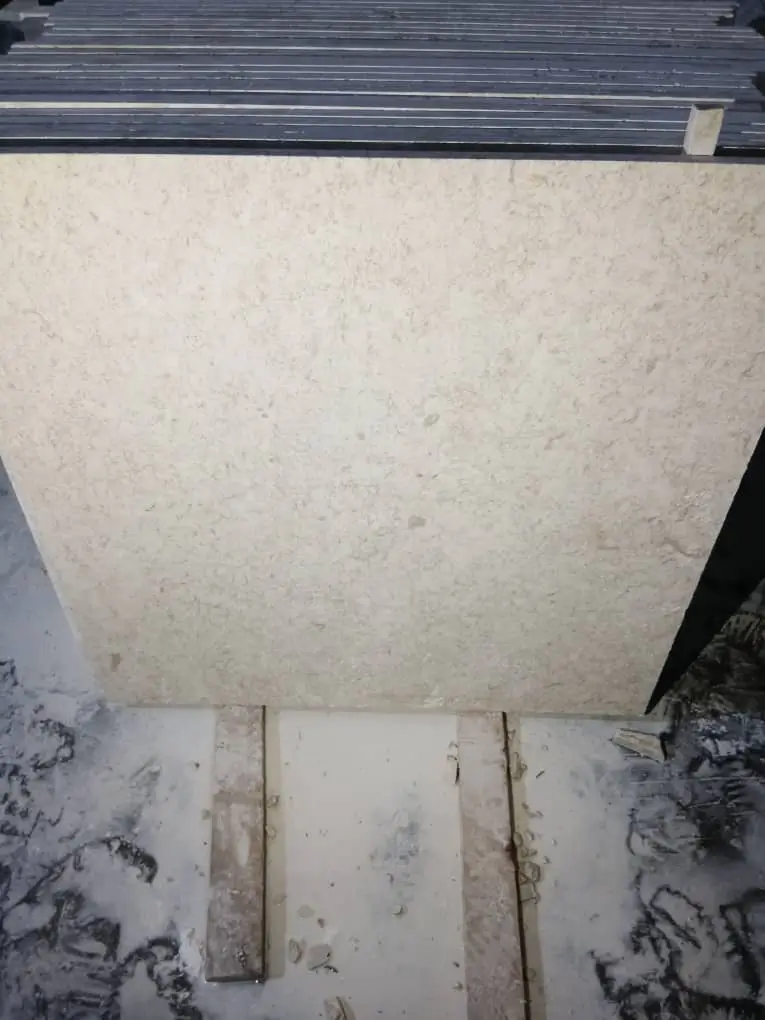
The Arizona natural tones that dominate successful Laveen patio installations share a consistent characteristic: they carry warm undertones rather than cool ones. Even stones marketed as grey read warmer in person because the regional sunlight spectrum contains more red and amber wavelengths than northern markets. Your limestone patio color scheme for Laveen should test warm rather than cool in direct sunlight — the stone’s undertone determines how it integrates with the desert surroundings rather than conflicting with them.
Finish selection interacts with color in ways that affect both aesthetics and maintenance budgets. Honed finishes make color variations more uniform and predictable but show dust accumulation more visibly — a real consideration in Laveen’s dusty southwest Phoenix environment. Brushed or antiqued finishes hide dust between cleaning cycles but emphasize the stone’s natural color variation, which reads as either desirable character or visual noise depending on your design intent. A tumbled finish splits the difference and tends to hide both dust and minor surface scratches better than either honed or brushed alternatives. Selecting Arizona natural tones with a finish that suits your maintenance tolerance is as important as the color choice itself.
Sealing Protocols That Protect Your Color Investment
Your color selection commits you to a sealing protocol, whether you acknowledge that at the specification stage or not. Unsealed limestone in Arizona’s climate will absorb airborne dust, cooking oils, and tanning products that alter the surface color within one to two seasons. An enhancing sealer deepens and enriches the stone’s natural tone, which works beautifully for buff and caramel ranges but can make lighter creams appear artificially darkened. A natural-look penetrating sealer protects the stone without significantly shifting the installed color — the right choice for light limestone patio color schemes where maintaining the as-installed appearance matters.
Application timing matters more than most specifications acknowledge. Applying sealer during Laveen’s summer months — when surface temperatures can exceed 140°F by early afternoon — causes premature sealer cure and poor penetration. Schedule your first sealer application for either early morning in summer or during the fall and winter months when ambient and surface temperatures allow proper dwell time and absorption. Plan to reseal every 24–36 months, adjusting for sun exposure intensity and foot traffic volume in your specific patio zone.
- Penetrating impregnating sealers: best color stability, good stain resistance, recommended for light limestone tones
- Enhancing penetrating sealers: deepens color 15–25%, suitable for buff and warm caramel stones where richer appearance is desired
- Topical film-forming sealers: avoid in high-UV Arizona conditions — they degrade rapidly and peel within 12–18 months
- Resealing interval: 24 months for high-traffic zones, 36 months for low-traffic covered patio areas
Labor Market Conditions and Installation Timing in Laveen
The Phoenix metro labor market for stone installation contractors runs counter-seasonal to most other US markets. Your best contractor availability and most competitive labor pricing occurs during October through February, when temperatures make outdoor installation comfortable and contractor schedules open up from the summer slowdown. If your project timeline allows flexibility, specifying a limestone patio color scheme in Laveen for fall installation gives you negotiating leverage on labor rates that spring and summer projects simply don’t have.
In Gilbert and other high-growth Phoenix suburbs, installation contractor backlogs during spring and early summer can push start dates out by eight to twelve weeks — a delay that also means your material needs to sit in warehouse storage or on-site, both of which carry risk and cost. Coordinating your material delivery timing with your confirmed installation crew window prevents the scenario where your stone arrives weeks before anyone can lay it, exposing it to jobsite damage and color variation from UV pre-exposure.
The labor cost differential between peak and off-peak seasons in the greater Phoenix market runs approximately 12–18% for experienced stone installation contractors, which on a 500-square-foot patio project can translate to $800–$1,500 in real savings — enough to upgrade your limestone patio pavers to a premium color tier or invest in better sealing products.
Before You Specify Your Limestone Patio Color Scheme in Laveen
A limestone patio color scheme for Laveen that performs well over a 20-year horizon requires you to make interconnected decisions — color, finish, thickness, sealer type, and installation timing — that each affect the others and the total project budget. The regional pricing dynamics unique to the southwest Phoenix market mean your sourcing decisions have direct cost consequences, not just aesthetic ones. Verifying warehouse stock availability before finalizing your color selection protects you from the costly mistake of committing to a color that requires a premium freight order with 6-week lead times when your contractor is available next month.
Beyond your patio surface, complete Arizona hardscape projects often include complementary drainage and water management elements that influence how your stone performs over time. Proper drainage specification is especially relevant for limestone patio pavers in any Arizona climate zone — protecting the base from monsoon saturation is as important as the surface color and finish you select. Limestone Patio Paver Drainage Planning for Litchfield Park Water Management addresses how proper drainage specification protects your investment — a relevant consideration for any Arizona limestone patio, including Laveen installations where monsoon season water management matters. Citadel Stone’s limestone patio pavers in Arizona are sourced from established quarries with documented performance records across the state’s most demanding climate conditions.