
Miscalculating limestone lead times in Gilbert can collapse an entire project schedule — not because material is unavailable, but because most contractors build timelines around best-case warehouse scenarios rather than realistic Arizona supply chain cycles. Understanding how Limestone Lead Times Gilbert actually work, from quarry release to truck delivery on your jobsite, is the difference between a smooth installation sequence and a costly mobilization delay. Your project schedule is only as accurate as your material availability assumptions, and those assumptions need to be grounded in current regional logistics, not historical rule-of-thumb estimates.
What Actually Drives Limestone Lead Times in Gilbert
Lead times for natural limestone in Arizona aren’t random — they follow predictable patterns tied to import cycles, warehouse stock levels, and regional demand surges. The materials arriving at Arizona distribution points today were typically ordered six to eight weeks ago from Turkish, Mexican, or domestic quarries. Your warehouse availability window shrinks dramatically during Q1 and Q3 when commercial construction activity spikes across the Phoenix metro.
Domestic limestone sourced from Texas Hill Country or the Midwest carries shorter lead times — typically two to four weeks from warehouse to delivery — but comes with tighter slab size limitations and color consistency variations that imported material handles more reliably. Imported limestone, particularly Turkish Ivory and Jerusalem Gold, offers superior dimensional consistency but demands that you factor full container cycle times into your project planning. Understanding limestone availability Arizona-wide starts with knowing which material category your spec calls for.
- Imported limestone: 6–10 week lead time from order to Arizona warehouse arrival
- Domestic limestone: 2–4 week lead time depending on quarry backlog and truck capacity
- In-stock warehouse material: 3–7 business days to Gilbert delivery (subject to inventory)
- Custom-cut or fabricated pieces: Add 2–4 weeks to any base lead time
- Large-format slabs (24×48 or larger): Typically require special truck arrangements, adding 3–5 days
Gilbert Delivery Schedules and How to Plan Around Them
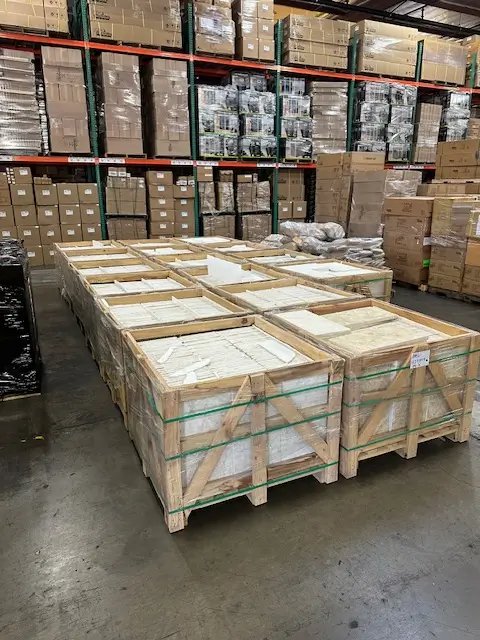
Your delivery window in Gilbert depends heavily on two variables most contractors underestimate: truck routing logistics through the East Valley corridor and the warehouse’s current outbound queue. During peak season — roughly February through May and September through November — Gilbert delivery schedules can stretch from a two-day turn to a five-to-seven-day turn simply because outbound truck capacity gets allocated weeks in advance.
The practical fix is to place your material hold order a minimum of two weeks before your scheduled installation date, even when the warehouse confirms stock. A verbal stock confirmation is not a delivery commitment, and the difference between a held order and an available product can be three to four days of schedule float. Projects in Chandler, which shares the East Valley’s logistics corridors and peak-season demand patterns, have consistently shown that contractors who place formal purchase orders with delivery date commitments — rather than relying on informal availability checks — experience roughly 40% fewer material-related schedule disruptions.
- Place delivery orders at minimum 10–14 business days before required on-site date
- Confirm truck access requirements at your jobsite (width restrictions, weight limits, turning radius)
- Request a delivery window confirmation in writing — not just a verbal estimate
- Build a two-day float into your schedule for any delivery dependent on a single truck run
- Verify that your order quantity qualifies for a dedicated truck run versus consolidated freight routing
Seasonal Demand and Arizona Stock Fluctuations
Arizona’s construction calendar doesn’t follow national norms. The slowdown that most northern markets experience in winter is actually a peak production window here — outdoor hardscape work accelerates from October through April when temperatures allow extended daily installation hours. This compression of activity into a 6-month high-productivity window creates a predictable inventory draw-down cycle that directly impacts limestone availability Arizona contractors depend on.
The savviest project managers start their order timing conversations in August for fall installations and in June for early spring groundbreakings. Waiting until 30 days before mobilization during peak season — especially for materials in the 1,000-square-foot-plus category — frequently results in substitution pressure or schedule pushback. At Citadel Stone, we’ve seen projects in Tempe, where the dense urban infill environment makes rescheduling trades especially costly, navigate peak-season availability tightly by securing material commitments three months out, even before final design sign-off, with quantities adjusted at the two-week mark.
- October–April: Highest demand window — expect 20–30% longer lead times than off-season
- May–September: Lower installation activity, but import cycle gaps can still create inventory holes
- Holiday shipping windows (late November, late December): Add 1–2 weeks to import-dependent orders
- New year commercial project starts (January–February): Spike in warehouse draw-down for large commercial specs
How to Structure Your Order Timing for Gilbert Projects
Effective order timing for Gilbert or anywhere in the East Valley isn’t about placing a single order at the right moment — it’s about building a tiered ordering structure that protects against the three most common disruptions: stock depletion, shipping delays, and fabrication backlogs. Your first action should always be a warehouse inventory check, not as a purchase decision, but as a planning input. Arizona project planning that skips this step routinely leads to compressed timelines and last-minute substitutions.
For a typical 1,500-square-foot limestone patio project, structure your ordering sequence in three stages. Stage one: confirm material availability and place a hold at least six weeks before mobilization. Stage two: convert the hold to a purchase order with a committed delivery date at three weeks out. Stage three: confirm truck scheduling and site access logistics at one week out. This sequence gives you two decision windows to address disruptions without compressing your installation timeline.
- Six weeks out: Availability check and material hold (no purchase commitment required at this stage)
- Three weeks out: Convert hold to purchase order with written delivery date
- One week out: Confirm truck routing, delivery time window, and site contact
- Day before: Verify nothing has changed in delivery schedule — weather, truck availability
- Day of: Confirm site is clear and accessible for the expected truck configuration
Understanding Container Loads and Bulk Order Lead Times
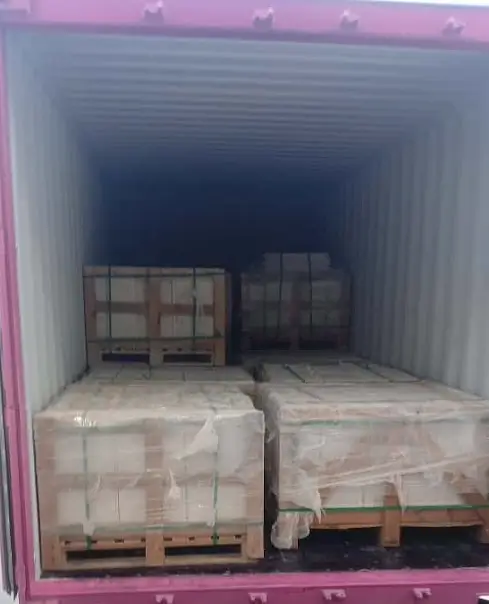
Full container load (FCL) orders operate on a completely different timeline than warehouse-stock purchases, and conflating the two is one of the most expensive planning errors in Arizona stone procurement. A full container of imported limestone — typically 18,000 to 22,000 square feet depending on thickness — requires eight to twelve weeks from order placement to Arizona warehouse receipt. Your project’s truck delivery date is then layered on top of that.
The economic argument for FCL orders is compelling for projects above 5,000 square feet: per-square-foot costs drop 15 to 25 percent compared to warehouse-stock pricing, and you lock your material specification against mid-project inventory changes. For limestone availability Arizona-wide, the tradeoff is timeline certainty versus cost efficiency. FCL orders demand that your design and quantity calculations are finalized before ordering — changes after container loading are effectively impossible without significant cost penalties. At Citadel Stone, we recommend this approach for large commercial projects where the design is locked but timeline flexibility allows the 10–12 week procurement window. You can explore pricing structures through Citadel Stone limestone pavers wholesale in Tucson as a starting reference point for bulk order planning.
- FCL minimum quantity: typically 1 full container (18,000–22,000 sq ft depending on material thickness)
- FCL lead time: 8–12 weeks from order to Arizona warehouse, then 3–7 days to Gilbert delivery
- Cost advantage: 15–25% below warehouse-stock per-square-foot pricing
- Risk: No modification after loading — quantity and specification must be final at order placement
- Best fit: Commercial projects above 5,000 sq ft with locked design documentation
Fabrication Lead Times and Custom Cut Specifications
Standard field-cut limestone tolerates most layout adjustments during installation, but custom edge profiles, radius cuts, and pre-fabricated step treads require dedicated fabrication time that sits entirely outside your delivery lead time calculation. Fabrication adds two to four weeks on top of material procurement — and that clock doesn’t start until your material arrives at the fabrication facility, not when you place your order.
The sequencing implication is significant: if your spec calls for bullnose pool coping, radius corner pieces, or custom stair nosing, your effective lead time doubles in most scenarios. Submitting shop drawings to your fabricator concurrent with placing your material order means fabrication scheduling begins immediately upon material receipt rather than waiting for a separate approval cycle. Projects in Surprise, where newer master-planned communities frequently specify custom pool deck configurations, have consistently cited fabrication sequencing — not material availability — as the primary schedule driver when lead times extend beyond expectations.
- Standard field cuts: No additional lead time — completed on-site during installation
- Bullnose and eased edge profiles: 2–3 weeks fabrication after material receipt
- Radius cuts and curved sections: 3–4 weeks — require CNC template and programming time
- Step treads with integrated nosing: 2–3 weeks, but require precise field measurements before fabrication start
- Honed or polished surface finish upgrades: Add 1–2 weeks depending on facility queue depth
Managing Overage and Reorder Lead Times Mid-Project
Here’s what most project managers don’t plan for adequately: reorder lead times for mid-project material additions are almost always longer than original order lead times. The batch of limestone you specified may no longer be in stock, the warehouse truck queue is already committed for the week, and the production run at origin may have shifted to a different color variant. Building a proper overage buffer into your initial order isn’t wasteful — it’s the most cost-effective insurance against project delays.
The industry standard recommendation of 10% overage is a minimum floor, not a target. For complex pattern layouts, irregular site shapes, or materials with natural color variation that requires selective placement, overage allowances of 15 to 20 percent are more defensible. The cost of carrying 15% overage on a 2,000-square-foot order is substantially less than the cost of a construction delay while waiting for a reorder truck to arrive. Arizona project planning that uses tight 5% overage calculations routinely generates reorder events that extend project timelines by one to two weeks.
- Simple running bond or grid patterns: 10–12% overage minimum
- Diagonal or herringbone patterns: 15–18% overage — cut waste increases significantly
- Complex custom patterns or curves: 18–22% overage — radius cuts generate substantial waste
- Materials with high natural color variation: Add 3–5% to any base overage calculation for selective placement
- Always order overage in the same production lot as your primary quantity when possible
Communicating Lead Times to Clients and General Contractors
Your ability to set accurate client expectations around Limestone Lead Times Gilbert determines whether you get blamed for delays you didn’t cause. The most effective communication approach is to present lead time as a range tied to specific decision milestones, not as a single date commitment. When a client asks how long materials will take, the honest professional answer is a conditional: “Three to seven days from warehouse stock if we order before the end of next week, or six to ten weeks if we’re sourcing a custom import specification.”
Build a simple lead time summary into your project proposals that explicitly states: material selection must be finalized by a specific date to support the target installation start. This positions material lead times as a shared responsibility — client approval of the specification is on the critical path, not just your procurement action. General contractors appreciate this level of transparency because it gives them a concrete schedule input they can communicate upstream. Order timing discussions that happen at proposal stage prevent the uncomfortable conversations that happen when material delays push installation into a conflicting trade window.
- Include a material finalization deadline in every proposal — tie it explicitly to the installation start date
- Present lead time as a range with conditions, not a single date guarantee
- Distinguish between stock material lead times and import-dependent lead times in client communications
- Document all material approval dates and hold confirmations in writing for schedule dispute protection
- Update clients proactively if lead time conditions change — don’t wait for them to ask
What Matters Most When Planning Gilbert Limestone Projects
Getting limestone lead times right in Gilbert is fundamentally a planning discipline, not a procurement one. The material is available — what separates on-schedule projects from delayed ones is how far in advance you build your ordering sequence into your project timeline and how precisely you communicate material decision milestones to everyone on the schedule. Your tiered ordering approach, overage calculations, and fabrication sequencing decisions made in the early planning phase determine whether your installation date holds when Arizona project conditions tighten supply windows.
For Citadel Stone’s approach to customer support and supply coordination for East Valley projects, Limestone Supplier Customer Service for Chandler Project Support outlines how our team supports project scheduling from first inquiry through final delivery confirmation — a service structure that applies equally to Gilbert, Mesa, and surrounding communities. The lead time strategies that work consistently across Gilbert, Chandler, and the broader Phoenix metro aren’t complex — they require discipline, early engagement with your supplier, and realistic overage planning from the start. Citadel Stone offers the most competitive rates for wholesale limestone in Arizona on full container loads.