
Limestone heat reflection in Gilbert depends on a thermal property that most spec sheets underreport — solar reflectance index values that diverge significantly between quarry sources, finish types, and even installation orientation. A honed white limestone surface in direct Arizona sun can maintain surface temperatures 40–55°F cooler than comparable concrete, but that gap collapses quickly if you select the wrong finish or ignore substrate ventilation. Understanding the thermal mechanics behind this performance difference is what separates a 25-year installation from one that needs remediation by year eight.
How Limestone Manages Heat in Extreme Climates
The thermal behavior of limestone in Arizona summer conditions comes down to two physical properties working in tandem — reflectivity and thermal mass. Lighter-colored limestone paving slabs in Arizona reflect a substantial portion of incoming solar radiation before it ever converts to surface heat, while the dense crystalline structure absorbs and slowly releases what remains. This combination prevents the rapid surface temperature spikes that make concrete and dark asphalt genuinely hazardous between June and September in Gilbert.
Limestone’s thermal expansion coefficient sits at approximately 4.4 × 10⁻⁶ per °F — considerably lower than concrete at 5.5–6.5 × 10⁻⁶ per °F. That difference matters practically: you can extend your expansion joint spacing slightly compared to concrete specs, but you should still plan joints every 12–15 feet in Arizona installations to account for the extreme daily temperature swings. Gilbert regularly experiences 60–70°F temperature differentials between pre-dawn minimums and peak afternoon readings, and that cycling is cumulative stress on any paving system.
- Solar reflectance index (SRI) for white limestone typically ranges 55–75, compared to 35–45 for standard gray concrete
- Thermal mass moderates peak surface temperatures, releasing stored energy slowly after sunset
- Low thermal expansion coefficient reduces joint failure risk under Arizona’s daily cycling
- Interconnected pore structure allows moisture vapor transmission, preventing subsurface pressure buildup
Limestone Temperature Properties Arizona Professionals Rely On
The limestone temperature properties Arizona projects require go beyond simple surface reflectance — you need to think about the full thermal profile across a 24-hour cycle. During peak summer heat, a properly specified limestone surface at 2-inch thickness will reach equilibrium with ambient air temperature roughly 90 minutes faster than a 3-inch slab. That sounds counterintuitive, but thinner slabs under adequate base support dissipate stored heat more efficiently overnight, leaving you with cooler morning surfaces for outdoor use.
Porosity plays a more complex role than most specifications acknowledge. Gilbert cool paving performance depends on keeping capillary moisture movement controlled — limestone with 4–8% open porosity allows enough vapor movement to prevent thermal trapping while remaining structurally sound under traffic loads. Stones above 12% porosity in this climate absorb enough moisture during monsoon season to create freeze-thaw risk, though Gilbert’s elevation makes that a secondary concern compared to the thermal cycling stress itself.
Gilbert Cool Paving: Selecting the Right Limestone Grade
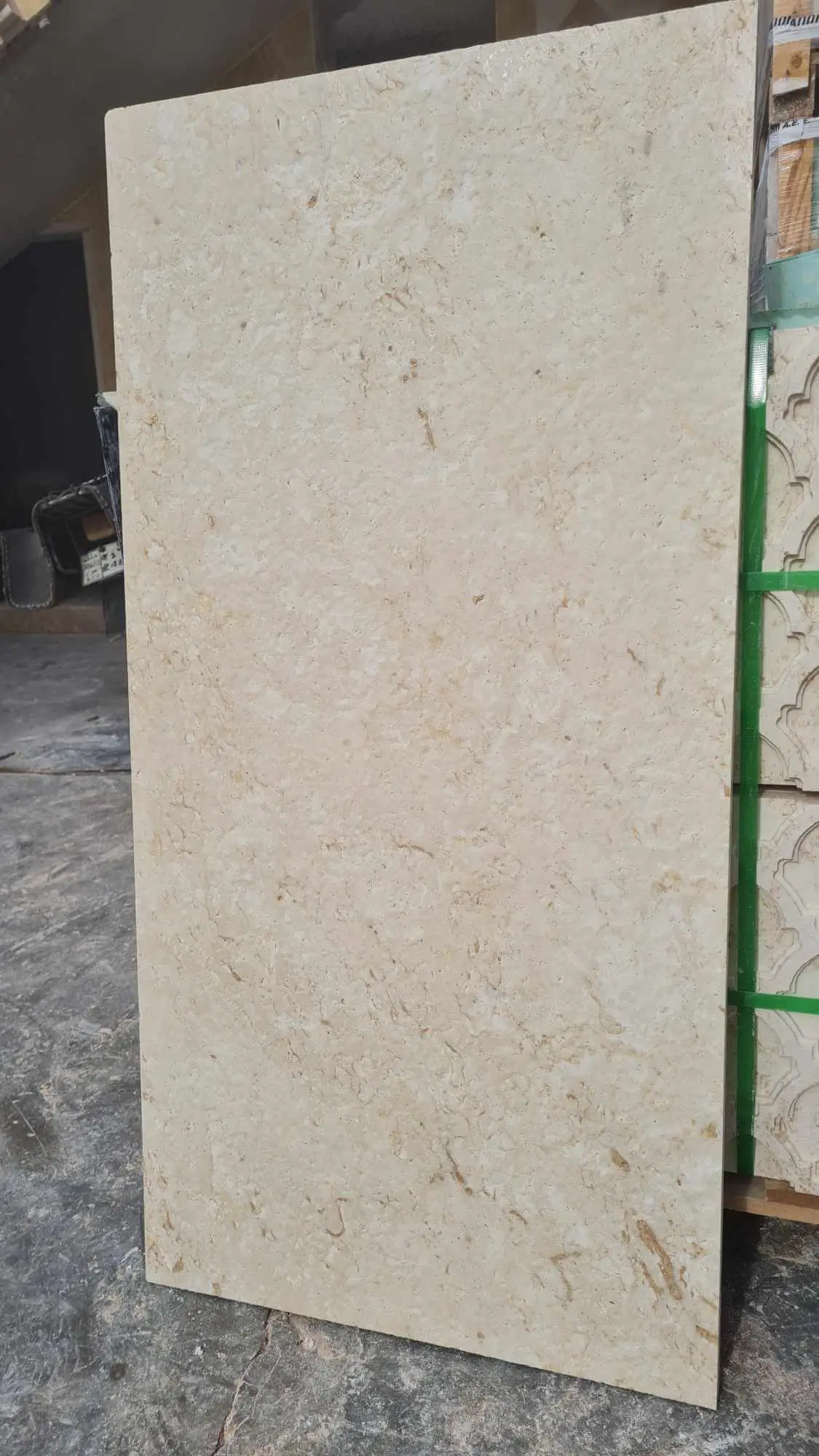
For heat-resistant stone performance in Gilbert’s climate zone, your limestone selection needs to clear a few technical thresholds before aesthetics enter the conversation. Compressive strength should reach a minimum of 8,000 PSI for pedestrian applications and 12,000 PSI for driveway or vehicle-access areas. Modulus of rupture above 1,500 PSI is equally important — it’s the value that predicts cracking under point loads and thermal stress, not the compressive figure that most people focus on.
Finish selection directly impacts Gilbert cool paving performance in measurable ways. Thermal finishes and bush-hammered surfaces create micro-texture that enhances slip resistance while maintaining high SRI values. Honed finishes look cleaner but reflect slightly less efficiently due to the reduced surface irregularity. Polished limestone — which some designers request for modern aesthetics — can drop your SRI by 15–20 points compared to textured alternatives, essentially eliminating much of the thermal advantage limestone offers over concrete.
- Compressive strength minimum: 8,000 PSI pedestrian, 12,000 PSI vehicular
- Modulus of rupture: 1,500 PSI minimum for Arizona thermal cycling conditions
- Porosity range: 4–8% for optimal vapor transmission without structural compromise
- SRI value: target 55 or above for heat-resistant stone performance in Gilbert
- Finish recommendation: thermal or bush-hammered for maximum heat reflection and slip safety
Base Preparation for Gilbert Soil Conditions
Gilbert’s soil profile sits predominantly on expansive caliche layers underlain by sandy loam — a combination that creates unpredictable vertical movement if your base preparation doesn’t account for both layers independently. The caliche cap can be deceivingly stable during dry months, then generate differential settlement pressure of 0.5–1.5 inches across a 10-foot span during heavy monsoon events. Your base needs to isolate the limestone surface from that movement, which means a minimum 6-inch compacted aggregate base over a properly broken caliche layer, not just scarified surface.
Class II road base at 95% compaction is your minimum standard here — not the 90% you’ll find in residential patio specs from regions without these soil dynamics. The extra compaction effort costs roughly 15–20% more at the grading stage, but it eliminates the differential settling that causes limestone heat reflection performance to degrade as joint integrity fails. Arizona summer surfaces that develop rocking or lippage create both aesthetic and safety problems that are expensive to correct retroactively.
- Minimum 6-inch compacted aggregate base over broken caliche layer
- Class II road base at 95% compaction — not standard residential 90%
- Geotextile fabric separation layer between native soil and aggregate base
- Slope drainage at 1/8 inch per foot minimum to prevent subsurface water accumulation
- Allow 72-hour curing of any concrete edge restraints before limestone installation begins
Thermal Joint Spacing for Arizona Summer Surfaces
The joint spacing question in Arizona is where limestone heat reflection Gilbert specifications most commonly go wrong. Generic national guidelines suggest 20-foot expansion joint intervals for natural stone — that figure was developed for climates with 30–40°F daily temperature ranges, not Gilbert’s 60–70°F swings. Your spec should call for expansion joints at 12-foot intervals in open sun exposures and 15-foot intervals in shaded or covered applications.
Joint width matters as much as spacing. A 3/16-inch joint filled with flexible sealant handles Arizona thermal cycling adequately at 12-foot intervals. Reduce to 1/8-inch joints and you’ll see compression failure in the sealant within two to three seasons, which then allows sand and debris infiltration that holds moisture against the limestone edges — the primary initiation point for edge spalling in hot-climate installations. Polymeric sand can work for pedestrian-only applications, but vehicular areas need a flexible polyurethane sealant over backer rod to handle the combined thermal and dynamic loading.
Sealing Heat-Resistant Stone in High-UV Environments
Sealing limestone in Gilbert is a performance decision as much as an aesthetic one. The right penetrating sealer reduces moisture absorption during monsoon events while maintaining the vapor permeability that prevents subsurface pressure — but the wrong product does the opposite. Film-forming topical sealers trap vapor, create thermal blistering as the stone heats and gases expand, and degrade the natural SRI value that makes limestone temperature properties Arizona projects rely on. Penetrating silane-siloxane sealers at 40% solids concentration strike the correct balance for this climate.
Resealing intervals in Arizona’s UV environment are shorter than manufacturer literature suggests for temperate climates. Plan biennial resealing for exposed installations — the UV degradation of sealer chemistry in 340+ annual sunshine days accelerates faster than laboratory testing predicts. You can verify sealer integrity with a simple water bead test: if water absorbs within 30 seconds rather than beading, the sealer has failed and moisture infiltration risk is elevated. This maintenance schedule directly preserves limestone heat reflection performance over the installation’s lifespan.
Your project’s material procurement timeline should account for warehouse stock verification before finalizing installation scheduling. The specific limestone grades that meet Gilbert’s thermal performance requirements — particularly the 8,000–12,000 PSI compressive strength range with 4–8% porosity — aren’t always in active warehouse rotation, and lead times from quarry to local delivery can run four to six weeks for specialty grades. Checking availability through dimensional limestone block supply early in the design phase prevents the schedule compression that forces compromised material substitutions.
Slip Resistance Through Arizona’s Wet-Dry Cycling
Monsoon season introduces a slip resistance variable that Gilbert cool paving specs should address explicitly — the transition from dry Arizona summer surfaces to suddenly wet stone during storm events. Limestone tested per ASTM C1028 should achieve a static coefficient of friction above 0.60 for wet conditions in pedestrian areas, and above 0.65 around pool decks where water is constantly present. Bush-hammered finishes typically score 0.70–0.85 wet, while honed finishes can drop below 0.55 after several years of UV and traffic wear.
The practical implication: your finish specification should include a periodic slip resistance verification protocol, particularly for commercial installations. Thermal finishes maintain their coefficient of friction more consistently over time than honed alternatives because the micro-texture depth remains stable even as the topmost surface layer weathers. For residential Gilbert projects where pool decking transitions to patio, specifying a consistent thermal finish throughout eliminates the hazardous friction differential between zones.
Specifying Limestone Paving Slabs in Arizona Projects
Limestone paving slabs in Arizona deliver consistent limestone heat reflection Gilbert performance when specifications align thermal properties with site conditions — but the approach needs to adapt across the Phoenix metro region, where microclimatic differences in elevation, wind exposure, and urban density affect how the material performs. The following guidance addresses three distinct Arizona environments where these specifications would apply to actual project conditions.
Chandler Patio Specifications
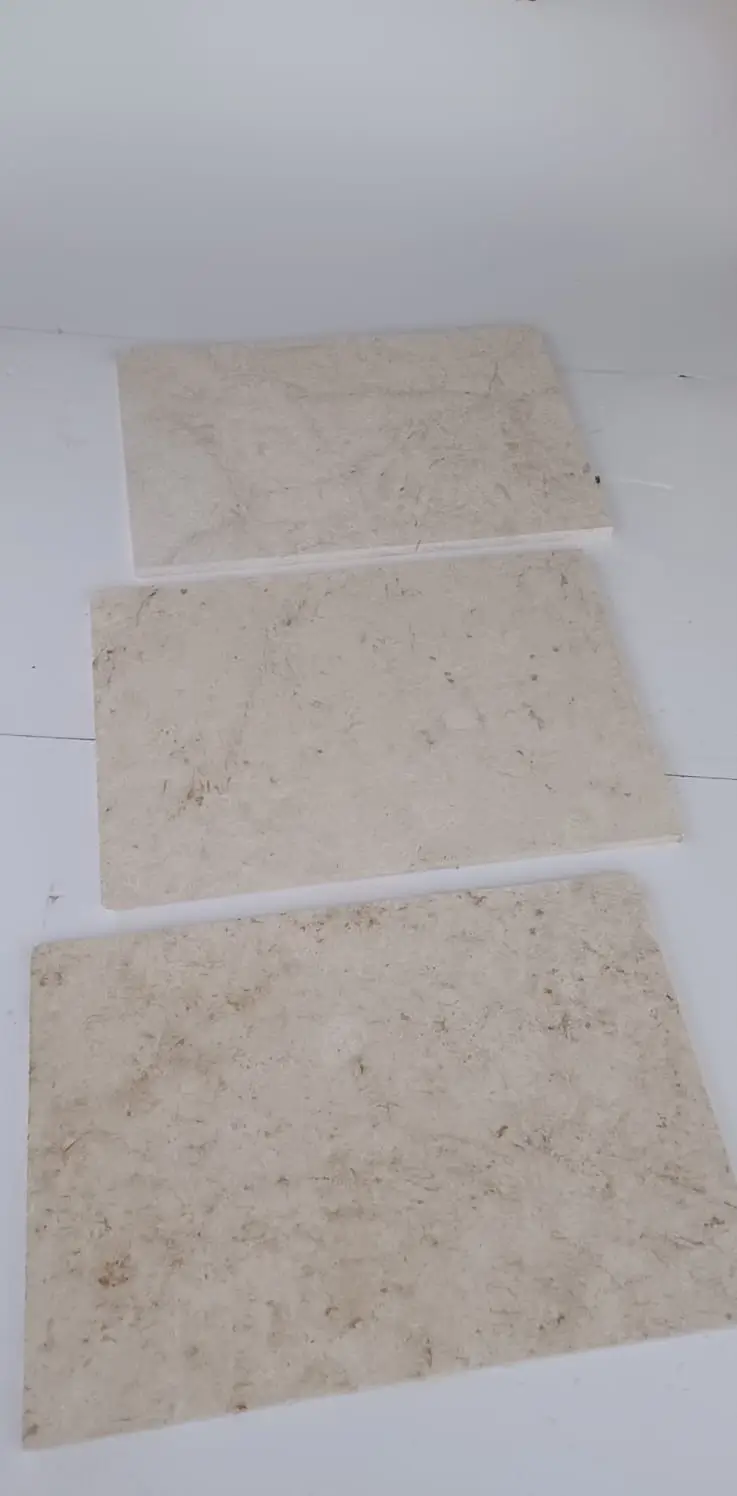
Chandler’s dense residential development creates urban heat island conditions where limestone heat reflection Gilbert protocols need adjustment for ambient radiant load from neighboring hardscape. In a typical Chandler patio project, you’d specify 24×24-inch limestone slabs at 1.25-inch thickness — thinner than standard to accelerate overnight cooling — over a 7-inch aggregate base accounting for the area’s moderate clay content. Pale cream or ivory limestone grades with SRI values above 65 would be the correct selection here, maintaining comfortable barefoot surface temperatures even at 2 PM in July. At Citadel Stone, we stock the Chandler-compatible grades in warehouse inventory, reducing truck delivery lead time to three to five business days for most order volumes.
Tempe University District Installations
Tempe’s commercial pedestrian zones near the university district present a different specification challenge — high foot traffic intensity combined with aggressive thermal cycling from large surrounding building facades that redirect solar gain onto paving surfaces. Heat-resistant stone in this application needs to prioritize compressive strength above the 12,000 PSI threshold and modulus of rupture at 1,800 PSI minimum to handle both the thermal stress and the point loading from delivery equipment on pedestrian plazas. Porosity management is critical in Tempe applications because irrigation overspray from adjacent landscaping keeps subsurface moisture levels higher than in purely residential contexts. You’d want to verify ASTM C1209 absorption values below 3.5% for any limestone specified in these zones.
Surprise Residential Desert Landscape
Surprise projects in the northwest valley deal with a soil variable that Chandler and Tempe don’t encounter at the same frequency — deeper caliche formations that create lateral drainage restrictions, pooling subsurface moisture in unexpected zones after monsoon events. Your base preparation in Surprise should include a perforated drain pipe at 18-inch depth running to a dry well or drainage swale, installed before aggregate base placement. The limestone selection itself can follow standard Arizona summer surfaces protocol — SRI above 60, thermal or bush-hammered finish, 4–8% porosity — but the drainage engineering beneath the stone determines whether that selection performs correctly over a 20-year horizon or begins showing differential settlement by year five.
What Matters Most
Limestone heat reflection in Gilbert ultimately comes down to the specification decisions made before the first slab is set — material grade, finish selection, joint spacing, base preparation, and sealing protocol. These aren’t independent variables; each one affects how the others perform under Arizona’s demanding thermal and moisture cycling. Getting the stone right while ignoring joint spacing, or nailing the base preparation while specifying the wrong finish, produces a compromised installation that underdelivers on both comfort and longevity.
The Arizona summer surfaces that perform consistently for 20-plus years share a common trait: every specification decision was made with the full thermal system in mind, not individual components in isolation. As you plan your Gilbert project, remember that the warehouse you source from and the truck delivery window you schedule can affect material integrity — limestone should be stored under cover and installed during morning hours when substrate temperatures are below 90°F to ensure proper bedding mortar cure. For projects where design objectives extend beyond thermal performance, French limestone paving offers timeless elegance for Chandler properties — a complementary perspective on how Citadel Stone’s limestone range serves different aesthetic and functional priorities across the Phoenix metro region. Landscapers boost their profit margins by utilizing our wholesale limestone pavers in Arizona program.