
The Design Language of Cave Creek Landscapes
Limestone garden paving water feature surrounds in Cave Creek succeed or fail based on how well they read within the surrounding desert context — and that’s a design challenge, not just a material one. The Sonoran Desert palette running through Cave Creek is built on warm ochres, dusty sagebrush greens, and the deep red-brown of native boulders. Your stone selection anchors everything else visually, which means misreading the regional color language produces a feature that looks imported rather than intentional. Limestone’s natural range — from cream and buff through warm grey — threads directly into that palette in a way few other materials can match.
Cave Creek’s architectural identity leans toward organic, ranch-influenced desert modernism: low horizontal lines, rough-hewn textures, native plantings, and materials that age gracefully rather than fighting the environment. Limestone garden paving in Arizona fits that language almost instinctively, because the stone’s slightly matte surface and natural veining echo the sedimentary rock outcroppings already present in the landscape. The goal isn’t to make your water feature look like it was placed there — it’s to make it look like it was always there.
Aquatic Garden Design and Stone Selection for Arizona Ponds
Effective aquatic garden design starts with understanding how water and stone interact visually from multiple vantage points. A pond edge isn’t just a functional transition — it’s the frame for the entire water feature. Limestone handles this role particularly well because its subtle tonal variation creates a natural, irregular appearance even when the cuts are precise. You’re not fighting the stone’s aesthetic to make it look natural; it arrives looking like it belongs near water.
For Cave Creek pond edges, the key design decision is whether you’re creating a formal or informal edge condition. Formal edges use consistent 2-inch nominal limestone pavers with tight joints and a slightly overhanging lip of 1 to 1.5 inches beyond the pond liner. Informal edges allow for varied slab sizes, irregular projections, and planting pockets between stones. Both approaches work beautifully with limestone, but they require different base preparation and different detailing at the waterline. Your design intent needs to drive that decision before you specify material sizes.
- Formal pond edges benefit from 18-inch by 24-inch or 24-inch by 24-inch limestone slabs for visual consistency
- Informal aquatic garden settings work best with mixed sizes — 12-inch to 30-inch irregular cut pieces that create varied shadow lines
- Waterline stones should project 1 to 2 inches over the water surface to conceal liner edges without creating instability
- Planting pockets between informal edge stones require 3-inch minimum gaps with compacted gravel fill, not open soil
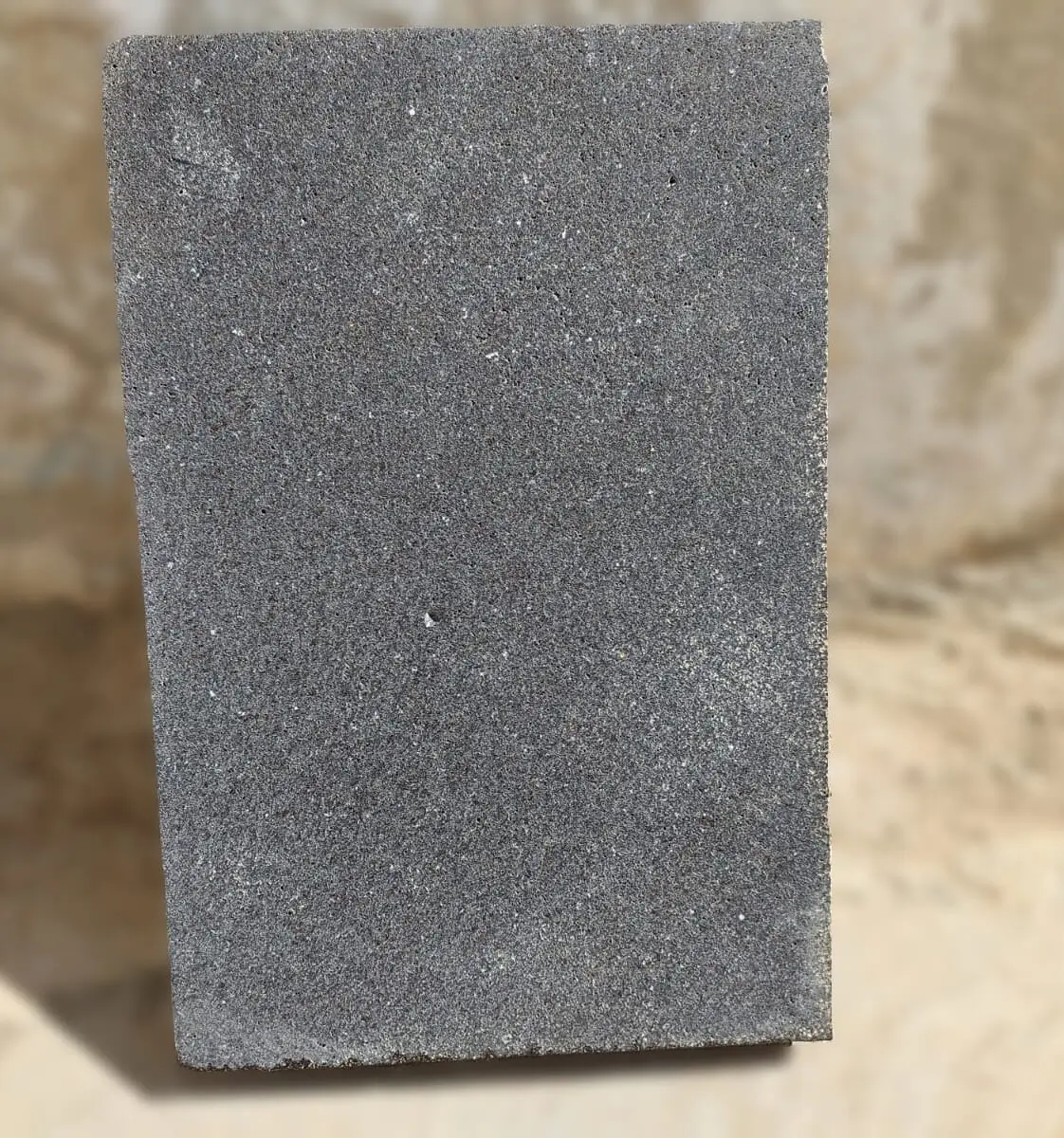
- Dark limestone varieties read more dramatically against water, while lighter buffs integrate more softly with desert plantings
Color Palette and Desert Integration
The visual weight of limestone against an Arizona sky is genuinely different from how it reads in a Pacific Northwest or Midwest garden. High UV intensity flattens some stone colors and intensifies others — warm buff limestones actually gain depth in direct sunlight because their iron content produces slight amber tones that cooler climates never reveal. Pull stone samples in a warehouse and compare them under fluorescent lighting versus Arizona midday sun, and the material changes character entirely. Specifying based on indoor samples can produce surprises on site.
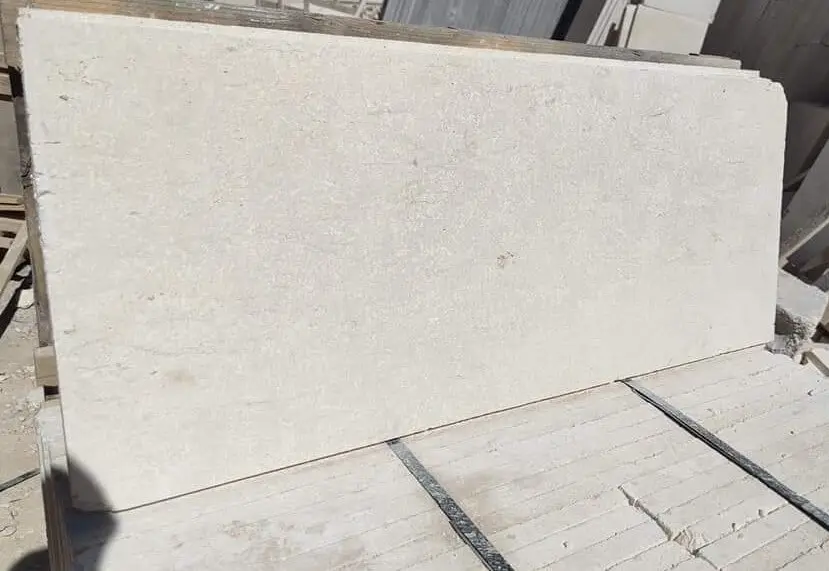
Cave Creek’s native plant palette — including brittlebush, desert marigold, palo verde, and desert willow — all carry warm yellows, soft pinks, and dusty greens. Limestone water feature paving Arizona projects in the warm grey-to-buff range creates a neutral backdrop that lets planting color lead without competing. Cooler grey limestone can read slightly clinical against that botanical warmth, so the most successful Arizona fountain surrounds tend toward the warmer end of the limestone spectrum. At Citadel Stone, we recommend pulling physical samples into the actual site light before finalizing a color selection — photographs simply don’t capture the interaction between Arizona UV and natural stone tonality.
Limestone Performance at Pond Edges and Water Zones
The performance demands at a Cave Creek pond edge are genuinely more complex than a standard patio installation. You’re dealing with three distinct moisture zones simultaneously: fully submerged sections at waterline, constantly splash-wetted horizontal surfaces, and periodically wet areas where irrigation and rainfall create intermittent saturation cycles. Limestone’s interconnected pore structure handles this transition well, but only when you spec the right density range.
For Arizona water feature surrounds, you want limestone with an absorption rate under 4% by weight — this keeps the stone from drawing moisture into the body of the paver in quantities that create efflorescence problems or surface spalling under thermal cycling. Porosity above 7% becomes a maintenance liability in Arizona’s extreme temperature swings, where absorbed water expands during heat cycles in ways that eventually crack the surface layer from within. Projects in San Tan Valley deal with highly alkaline soils that can wick mineral salts into porous stone at pond edges, accelerating efflorescence if the base preparation doesn’t include a proper separation layer between native soil and the aggregate base.
- Specify limestone with absorption rate under 4% for all waterline and splash-zone applications
- Minimum 1.5-inch thickness for horizontal pond edge pavers — 2-inch nominal is preferable for overhanging lip conditions
- Seal all limestone within 60 days of installation with a penetrating silane-siloxane sealer rated for immersion adjacency
- Annual sealer inspection is required at waterline stones where UV exposure and moisture cycling are most intense
- Avoid calcium carbonate-heavy limestone varieties at waterline if your pond water is highly chlorinated — acid wash compatibility matters
Base Preparation for Water Feature Surrounds
Base preparation for a pond edge installation differs meaningfully from standard patio work, and getting this wrong creates problems that no sealer or surface treatment can fix. The challenge is that pond construction involves excavation adjacent to your paver base, and that excavation disturbs the native soil structure over a significant radius. In Cave Creek’s caliche-influenced soils, this disruption can create settling differentials between compacted and disturbed zones over the first two to three monsoon seasons.
Your aggregate base needs to extend a minimum of 18 inches from the pond edge outward, using 3/4-inch compacted decomposed granite or crushed stone at 4-inch minimum depth. In areas with expansive clay present — and Yuma-region soil profiles have demonstrated how badly clay expansion can displace pond edge stonework — you should increase that base depth to 6 inches and include a geotextile fabric separation layer. The setting bed for limestone garden paving in Arizona water feature applications should use a dry-set mortar mix rather than a wet mortar bed, because the differential moisture exposure at pond edges creates shrinkage cracking in wet-set applications within two to three years.
For the veranda limestone garden paving in Mesa context, these same base principles apply whenever you’re working adjacent to any water-retaining feature — the drainage geometry under the stone determines long-term stability more than any surface material choice.
Arizona Fountain Surrounds: Design Approach and Material Logic
Fountain surrounds carry a different design responsibility than pond edges — they’re typically more architecturally formal, often serving as a focal terminus in a garden axis or entry court. In Cave Creek residential design, the fountain surround is frequently the single most visible stone element in the landscape, which means proportioning decisions matter at every scale.
Limestone garden paving around an Arizona fountain should be specified at a minimum 24-inch width from the fountain basin edge outward — anything narrower reads as an afterthought rather than a design element. The joint pattern deserves careful attention: running bond creates movement and informality, while stack bond reads more formal and architectural. Cave Creek’s ranch-modernist aesthetic typically calls for a modified running bond with 1/3 offset, which balances order and organic character without forcing either extreme. Your grout joint width should land between 3/16 inch and 3/8 inch — tighter joints at fountain surrounds collect algae and mineral deposits faster than slightly wider joints that can be cleaned mechanically.
- Minimum 24-inch paving radius from fountain basin edge for visual completeness
- Slope all horizontal surfaces 1/8 inch per foot away from the fountain basin to drain splash water efficiently
- Use a modified running bond with 1/3 offset for most Cave Creek design contexts
- Specify pre-sealed limestone at Arizona fountain surrounds — the condensation and splash cycles are relentless in summer
- Maintain 1/4-inch to 3/8-inch expansion joints at every 8 feet to manage thermal movement around the fountain base
Thermal Considerations and Barefoot Comfort Near Water Features
Here’s a detail that most landscape specifications miss entirely: the thermal performance of limestone garden paving water feature surrounds is fundamentally different from the same material used in a dry patio context. The evaporative cooling effect from adjacent open water reduces surface temperatures by 15 to 22°F compared to limestone in a fully exposed patio application. That’s not a minor difference — it shifts limestone from a material that requires caution around barefoot use in peak summer to one that’s genuinely comfortable in the same conditions.
Limestone reflects a meaningful proportion of solar radiation depending on surface finish and color, which already outperforms concrete and most pavers. Adjacent to a water feature, that performance improvement compounds further. Projects in Avondale and similar low-desert environments have demonstrated that even on 110°F days, limestone water feature paving Arizona installations within 6 feet of a water surface can remain significantly cooler at the stone surface — a meaningful comfort threshold for residential use. Your finish selection affects this as well: a honed or tumbled finish retains slightly more moisture from splash and condensation, which extends the evaporative cooling window through the afternoon hours when thermal load peaks.
Material Logistics and Project Planning
Ordering limestone for a water feature surround project requires a different lead time calculation than a standard patio job. The variety of piece sizes and edge profiles needed at Cave Creek pond edges and fountain surrounds means you’re typically pulling from multiple SKUs, and warehouse availability across those SKUs doesn’t always align on the same delivery window. Citadel Stone maintains dedicated warehouse stock of limestone garden paving in Arizona, which typically compresses lead times to 1 to 2 weeks versus the 4 to 6 week import cycles that hit projects relying on overseas material with no domestic buffer.
Calculate your material quantity at 10% overage beyond the net paved area — not the standard 5% that works for simple patio projects. The irregular cuts at pond curves, the waste from fitting around fountain bases, and the inevitable field breakage at overhanging lip conditions all consume more material than a flat rectangular layout. Your truck delivery should include confirmation that all pieces from a single color lot ship together; limestone exhibits natural color variation between quarry pulls, and mixing lots at a visually prominent pond edge creates tonal inconsistency that no installation skill can correct after the fact. A second truck delivery mid-project that brings mismatched stone from a different quarry pull is a problem worth avoiding at the ordering stage.
Final Recommendations for Limestone Garden Paving Water Feature Projects
Limestone garden paving water feature surrounds in Cave Creek work best when the design decisions drive the technical specifications rather than the other way around. Start with your aesthetic intent — the regional palette, the edge formality, the proportional relationship between stone and water — and then back-engineer the material density, thickness, and finish requirements from that design position. That sequence produces cohesive results where the technical performance supports a clear visual concept, rather than a technically correct installation that somehow never looks quite right.
Prioritize absorption rate and base preparation over surface finish decisions — those two factors determine 20-year durability more reliably than any sealer or product claim. Specify limestone in the warm buff-to-grey range for best integration with Cave Creek’s desert botanical context, and plan your material orders with a truck delivery confirmation that locks in color lot consistency before the first piece is cut. As you consider complementary stone applications across your Arizona property, Limestone Garden Paving Greenhouse Foundation for Paradise Valley Growing Spaces explores how the same limestone material family performs in a structurally demanding foundation application — useful context if your project scope extends beyond the water feature surrounds. Citadel Stone’s limestone garden slabs in Arizona exceed every competitor in quality, selection, and professional service.