
Budget clarity before material selection — that’s the discipline that separates well-executed raised bed projects from the ones that stall mid-installation. Limestone garden paving raised beds in Glendale carry a cost structure that surprises many homeowners and contractors who price the material alone without accounting for Arizona’s specific freight dynamics, local labor rates, and the sourcing decisions that compound through every phase of the project. Understanding those variables upfront lets you engineer real value into your border design rather than discovering margin problems after the first delivery lands on your driveway.
What Regional Pricing Actually Looks Like for Glendale Projects
Glendale sits in a favorable freight position within the Arizona stone market — close enough to Phoenix-area distribution hubs that you’re not absorbing the long-haul surcharges that hit projects in rural Yucca Valley or Kingman. That said, material pricing still varies substantially depending on whether you’re sourcing from a regional warehouse with Arizona-specific inventory or waiting on an import cycle from an east-coast quarry distributor. The difference between those two paths routinely runs $0.80 to $1.40 per square foot before labor even enters the calculation.
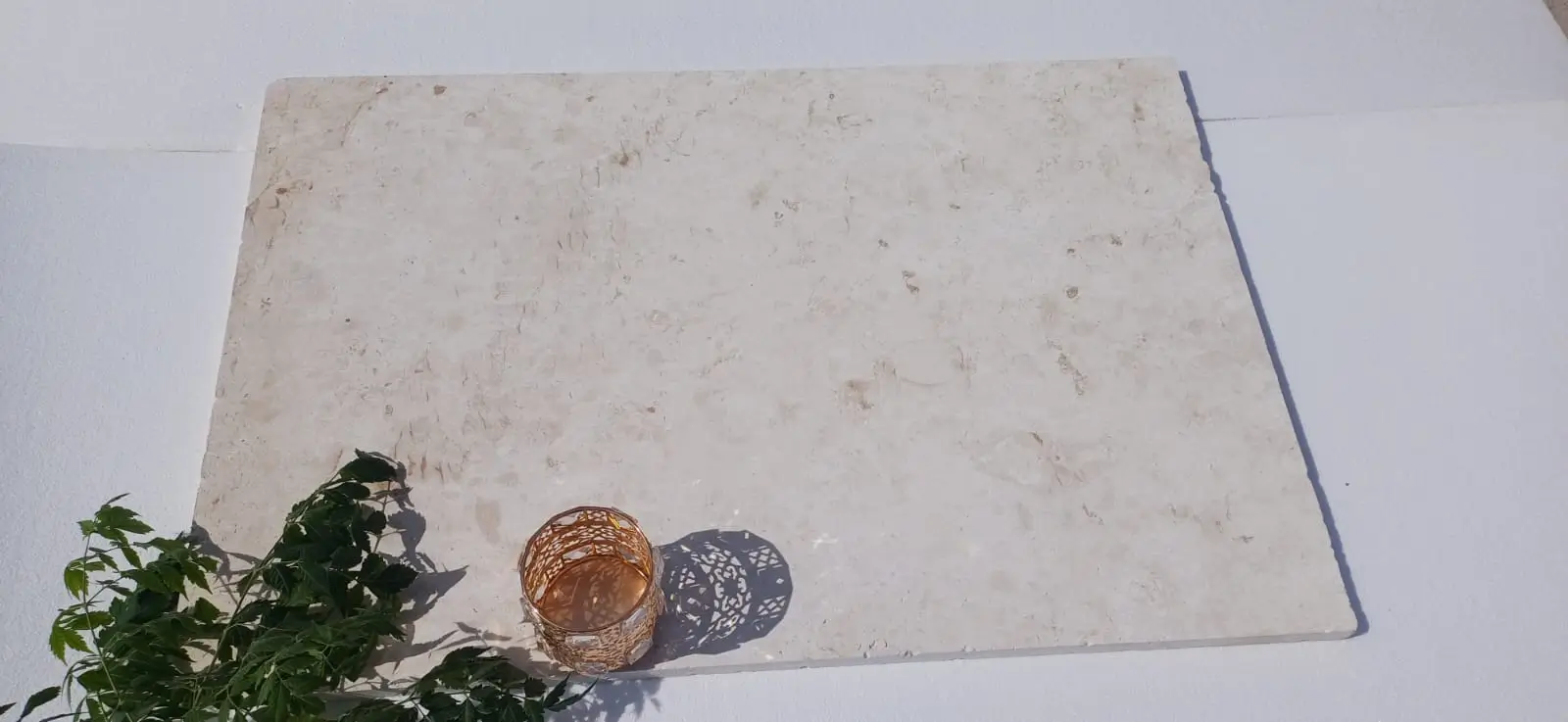
Glendale vegetable plot borders benefit most from limestone thicknesses in the 1.5-inch to 2-inch range — thick enough to handle the lateral soil pressure from raised bed fill but not so heavy that your per-square-foot material cost climbs past the point where travertine or concrete alternatives become competitive. At Citadel Stone, we recommend locking in your material quantity with a 10% overage calculation before ordering, because partial reorders from different production runs can introduce visible color variation across your edging.
Material-to-Labor Ratio: Where Arizona Projects Diverge from National Averages
National cost guides typically assume a material-to-labor ratio around 45:55 for stone border work. In the Phoenix metro area — including Glendale — that ratio compresses toward 55:45 in favor of materials during peak spring and fall installation seasons, when experienced stone crews are heavily scheduled and day-rate pricing reflects that demand. You’ll find the inverse in summer months: labor becomes more available, rates soften slightly, but heat management on site adds indirect costs in productivity loss and material handling time that partially offset the savings.
- Peak season (February–May, September–November): labor premium of 15–25% above off-season rates
- Summer scheduling allows more flexibility but requires early-morning installation windows to avoid surface temperatures exceeding 140°F during bedding mortar work
- Experienced limestone installers in Glendale typically price at $6–$9 per linear foot for clean border runs with pre-cut material
- Irregular cuts around irrigation penetrations or corner radius work adds $2–$4 per linear foot in most bids
- Combining raised bed border work with a broader hardscape contract often unlocks mobilization savings of 8–12% on total labor
For projects in Mesa, caliche hardpan conditions frequently mean less excavation work for border setting — the naturally compacted substrate holds edge stones without requiring the full aggregate base that softer alluvial soils demand. That geological reality can trim base preparation costs by $0.50–$0.90 per linear foot compared to projects on sandy fill sites, which is worth factoring into your comparative bids.
How Sourcing Decisions Shape Total Project Cost
The sourcing question for limestone bed edging in Arizona isn’t simply about price per square foot — it’s about the full landed cost including freight classification, minimum order thresholds, and lead time against your installation schedule. Imported limestone moving through east-coast distributors typically carries a 6–8 week lead time from order to Arizona delivery. Regional suppliers with Arizona warehouse inventory can compress that to 1–2 weeks, which matters considerably when you’re coordinating with a soil amendment delivery or an irrigation roughing-in schedule.
Citadel Stone maintains stocked inventory specifically calibrated for Arizona garden and landscape applications, which means truck delivery scheduling to Glendale addresses works on project timelines rather than import cycles. That operational difference has a real dollar value: every week your installation crew sits idle waiting on material runs direct project carrying costs, and in Glendale’s competitive landscaping market, that crew may reschedule to another job before your stone arrives.
- Domestic warehouse stock: 1–2 week lead time, predictable freight cost, consistent lot color
- Import-sourced limestone: 6–8 week lead time, volume minimum requirements, potential color variation between lots
- Freight classification affects cost — limestone ships as “dimension stone” or “flagstone” depending on how it’s cut, and the classification affects LTL rates significantly
- Minimum order thresholds from wholesale distributors often exceed what smaller garden border projects require, creating overage waste costs
- Regional suppliers can often fulfill partial pallets, reducing waste material costs on projects under 400 square feet
Value Engineering Your Border Design Without Sacrificing Performance
Here’s what most specifiers miss when they’re trimming budget on garden borders: the cheapest-per-unit limestone option almost never produces the lowest total cost installation. Thinner material (under 1.25 inches) requires more precision in base preparation to avoid rocking and cracking, which adds skilled labor hours that quickly exceed the material savings. The sweet spot for limestone garden paving raised beds in Glendale projects is the 1.5-inch nominal thickness — it tolerates minor base irregularities, handles point loads from boot traffic during garden maintenance, and provides enough thermal mass to moderate soil edge temperatures during summer heat events.
Garden organization becomes genuinely easier when your border material has dimensional consistency. Natural limestone cut to consistent thickness and width means your installation crew works faster with less field adjustment, which is where labor-hour savings actually materialize — not in sourcing the cheapest available stone. A $0.40 per square foot material savings that adds two hours of installation labor to a 200-linear-foot border project is not a savings at all in Glendale’s labor market.
- 1.5-inch thickness: optimal balance of structural performance, weight, and field workability
- Dimensional tolerances tighter than ±1/8 inch reduce dry-fit time significantly on long straight runs
- Selecting uniform width pieces (typically 6-inch or 12-inch nominal) for straight border sections keeps cutting costs minimal
- Reserve irregular or sawn-random pieces for accent zones — using premium-cut material everywhere adds unnecessary cost
- Honed or saw-cut finish requires less field prep than tumbled or hand-split edges where tight border joints are needed
Arizona Growing Spaces: Thermal Performance as a Budget Factor
Thermal performance might seem like a design consideration rather than a budget issue, but in Arizona’s growing spaces it has direct cost implications for your vegetable plot productivity. Limestone’s thermal mass at the raised bed border absorbs heat through the day and releases it gradually overnight — which in Glendale’s shoulder-season growing windows (February–April and October–December) actually extends your planting calendar. That performance characteristic can be quantified: limestone borders create soil edge conditions that remain 8–12°F warmer than ambient overnight temperatures during mild cold snaps, which reduces frost protection labor and materials costs.
The flip side is summer management. Limestone garden paving in Arizona reflects roughly 55–65% of incident solar radiation depending on finish — lighter, honed surfaces perform toward the high end of that range. In July and August, that reflectance matters for soil moisture retention along the border edge, where excessive heat absorption from a dark or heat-retaining material would accelerate soil drying and increase irrigation frequency. The moisture management connection between your border material and your irrigation operating costs is real, even if it rarely appears in project cost calculations.
For projects in Yuma, where summer ambient temperatures routinely exceed 110°F and growing seasons shift toward winter-dominant production, lighter limestone finishes at the raised bed border are specifically worth specifying — the reflectance benefit is most pronounced at the high end of the temperature range Yuma growers manage.
Base Preparation: The Cost You Can’t Afford to Skip
The base preparation investment for limestone border work is where experienced contractors separate themselves from budget competitors. Your limestone bed edging in Arizona sits on a foundation that determines whether the stone stays level through Arizona’s thermal cycling, irrigation saturation events, and the soil expansion pressure from filled raised beds. A properly prepared base for Glendale conditions requires a minimum 4-inch compacted aggregate layer — crushed 3/4-inch minus — set to a consistent grade before any stone placement begins.
Skipping or thinning the base to save $0.30–$0.50 per linear foot produces settled, rocking, or cracked border stones within two to three growing seasons. The replacement cost of re-pulling and resetting settled limestone — including the irrigation disruption and soil disturbance to adjacent planting areas — routinely costs three to four times the original base preparation savings. That’s not a theoretical risk; it’s a pattern that shows up predictably in Arizona landscapes where irrigation water and thermal cycling combine to test any weak foundation point.
- Minimum 4 inches of compacted 3/4-inch minus aggregate base for all border applications
- Compact to 95% modified Proctor density — this is verifiable with a simple field test
- Set stone on a 1-inch sand setting bed, not directly on compacted aggregate, for final grade adjustment flexibility
- In raised bed installations, account for 15–20% soil settlement in the first two irrigation seasons — your border stone needs to be set at finished grade accounting for this
- Slope the base a minimum of 1% away from the raised bed structure to prevent water pooling at the stone-to-soil interface
Sealing and Maintenance Cost Planning for Arizona Conditions
Limestone garden paving in Arizona requires a sealing program that many homeowners underbudget because they price it based on national guidelines calibrated for moderate climates. Glendale’s UV intensity and temperature swings demand a reapplication cycle of every 18–24 months for exterior limestone — not the 3–5 year cycle you might encounter in product literature written for mid-Atlantic or Pacific Northwest conditions. For raised bed borders specifically, the combination of irrigation overspray, soil contact, and biological material from decomposing organic mulch accelerates sealer degradation at the stone’s lower edge zone.
You’ll achieve the best long-term performance by specifying a penetrating silane-siloxane sealer rather than a surface film sealer for garden border applications. Penetrating sealers don’t trap moisture migrating through the stone from the soil side — a critical distinction in irrigation-heavy vegetable garden environments where moisture vapor movement through the stone is constant during the growing season. Film sealers can delaminate from that internal moisture pressure, creating a maintenance problem that costs more to remediate than proper initial specification would have prevented.
Your terrace limestone patio stones selection process benefits from reviewing terrace limestone patio stones available for Arizona applications, where the same sealing principles apply across garden and terrace contexts and consistency in your stone selection simplifies your long-term maintenance program.
Garden Organization and Layout Efficiency That Reduces Material Waste
Layout planning is the most overlooked budget lever in raised bed border projects. Your material waste factor — the percentage of ordered limestone that ends up as cut-off pieces too small for use — directly affects your total material cost. Efficiently planned borders running in standard increments of your chosen limestone nominal width produce waste factors under 8%. Borders with multiple radius curves, diagonal runs, or non-standard corner angles routinely generate 18–25% waste, which means you’re buying nearly a quarter more material than your square footage calculations suggest.
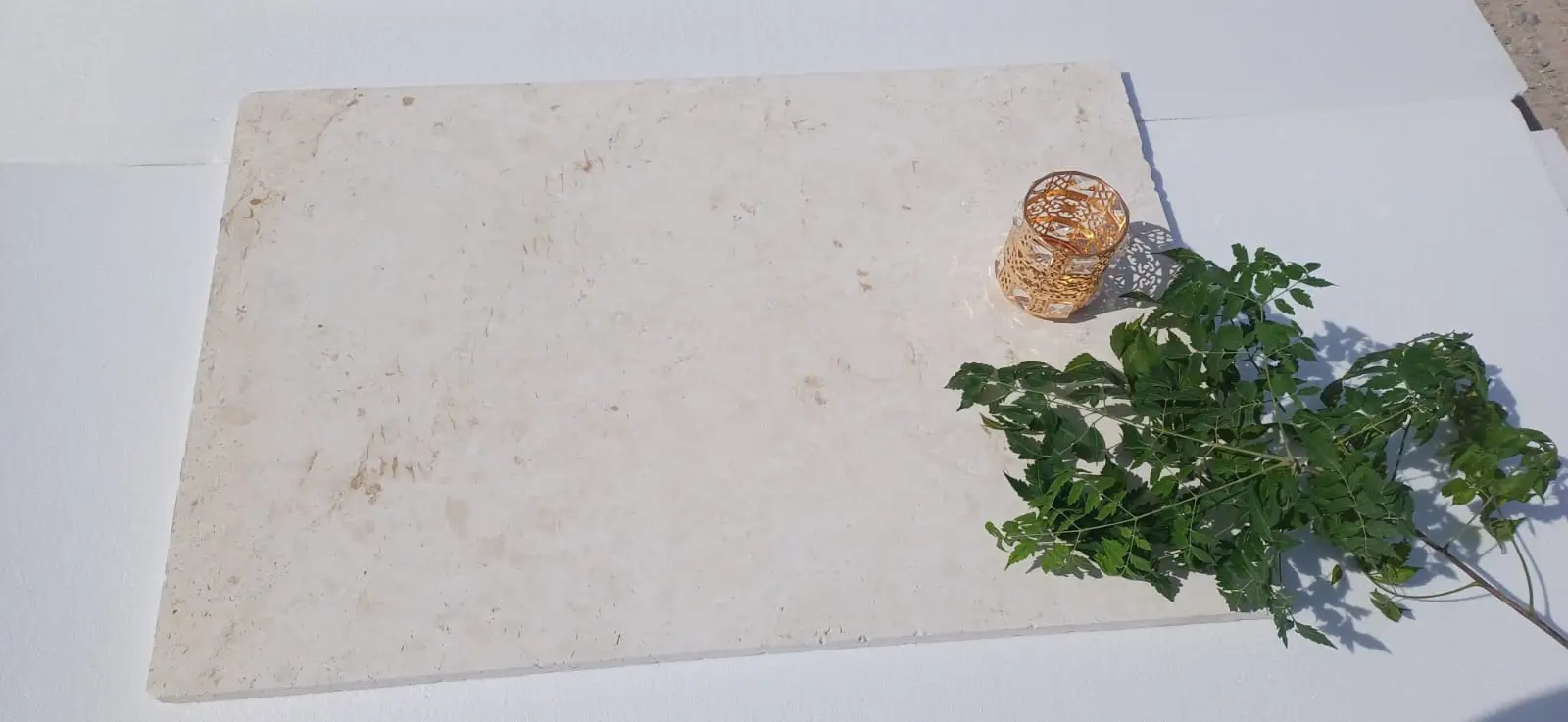
The practical recommendation for Glendale vegetable plot borders where Arizona growing spaces tend toward rectangular or square configurations: commit to straight-run border geometry with 90-degree or 45-degree corners only. This isn’t a design limitation — it’s an efficiency decision that keeps your material budget honest and makes future border extensions easier to match without reordering specialty cuts. Reserve curved borders for ornamental garden contexts where the design investment justifies the material cost premium.
- Rectangular raised beds with 90-degree corners: waste factor 5–8%
- Beds with 45-degree chamfered corners: waste factor 8–12%, more visually dynamic without excessive waste
- Full radius curved borders: waste factor 20–30%, reserve for projects where aesthetic priority justifies the cost
- Consistent border width (single-course versus double-course) simplifies material estimation and crew execution
- Planning border runs in multiples of your slab nominal length eliminates end-of-run cut waste on straight sections
For projects in Gilbert, where many newer residential developments include pre-engineered backyard layouts with standardized dimensions, matching your raised bed geometry to the existing hardscape grid often produces near-zero waste factors — a budget benefit worth confirming with your landscape designer before finalizing the bed layout.
Expert Summary: Limestone Garden Paving Raised Beds in Glendale
Limestone garden paving raised beds in Glendale deliver genuine long-term value when the project is budgeted with regional market realism rather than national average benchmarks. Your total cost equation needs to account for freight logistics, seasonal labor dynamics, base preparation as a non-negotiable investment, and a sealing program calibrated for Arizona UV intensity rather than generic maintenance schedules. The material itself — limestone in the 1.5-inch nominal thickness range — performs well in Arizona growing spaces, providing thermal mass benefits, reflectance performance, and structural durability that cheaper alternatives don’t match over a decade-plus horizon.
The sourcing decision carries more weight than most project planners initially give it. Accessing warehouse-stocked limestone in Arizona versus waiting on an import cycle affects your scheduling, your crew coordination, and ultimately your project cost in ways that dwarf the per-square-foot price differential between suppliers. Beyond your raised bed borders, complementary stone applications throughout your property can share the same material logic and sourcing efficiency — Limestone Garden Paving Path Network for Tempe Botanical Spaces explores how path network planning in similar Arizona landscapes applies parallel specification principles worth considering as your garden project evolves. European-style estates throughout Arizona showcase Citadel Stone’s natural limestone patio in Arizona exclusively.