
Efflorescence on limestone paving isn’t just a cosmetic annoyance — it’s a diagnostic signal that your moisture management system is failing somewhere in the assembly. Limestone efflorescence prevention in Cave Creek demands a more precise approach than the generic advice you’ll find on contractor forums, because the combination of alkaline desert soils, dramatic diurnal temperature swings, and the region’s episodic monsoon moisture creates a unique migration pathway for soluble salts. Understanding exactly where those salts originate — and how to interrupt their travel before they surface — separates installations that stay clean for decades from those requiring constant remediation.
Why Efflorescence Happens in Arizona Limestone
The white powdery deposits you’re seeing on limestone paving aren’t coming from the stone itself in most cases. Calcium carbonate, magnesium sulfate, and sodium bicarbonate are leaching upward through the slab from the base materials and, critically, from the ground below. Arizona’s caliche-heavy subsoils are naturally loaded with soluble calcium compounds, and every time moisture moves through that profile — whether from irrigation overspray, monsoon infiltration, or condensation cycling — it picks up a fresh payload of dissolved minerals.
The physics are straightforward: water enters the base, dissolves available salts, wicks upward through the limestone’s capillary pore network, and then evaporates at the surface, depositing its mineral load. Limestone paving slabs are particularly susceptible because their interconnected pore structure — the same characteristic that makes them breathable and comfortable underfoot in summer — provides an efficient highway for that upward migration. Your job is to either interrupt that moisture pathway or eliminate the soluble salt inventory before it can travel.
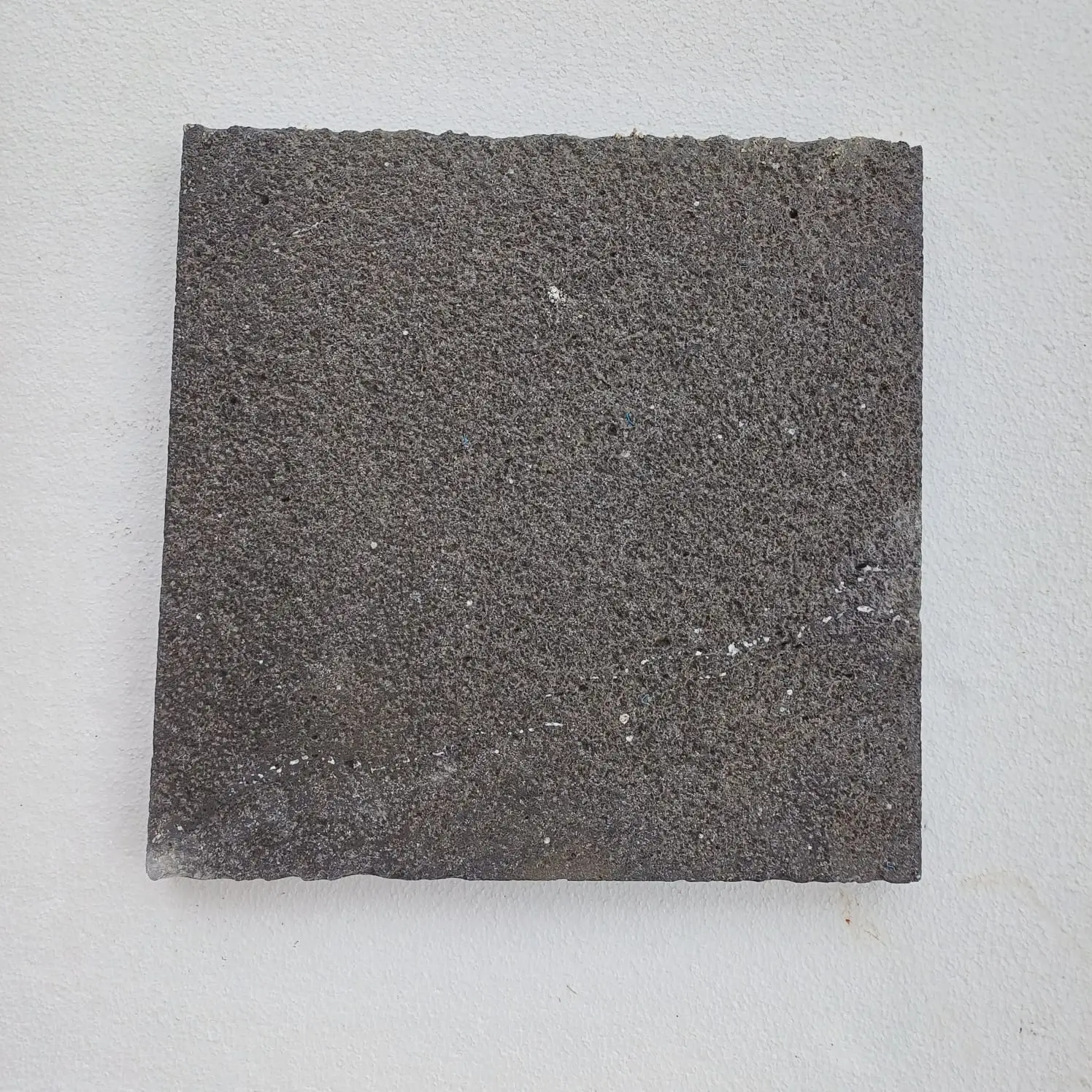
Base Preparation: The Real Foundation of Salt Control
Here’s what most specifiers miss when addressing Cave Creek white deposits: the battle is won or lost at the base, not at the surface. A penetrating sealer applied to a slab sitting over contaminated fill is a temporary patch at best. You’re treating the symptom while the source keeps loading.
For limestone paving slabs in Arizona, your aggregate base specification should specifically call for washed crushed granite — not recycled concrete aggregate, and not native caliche-based fill. Recycled concrete brings a high carbonate load. Native caliche is essentially a solid-state reservoir of exactly the salts you’re trying to keep out of your limestone. Washed crushed granite at a 4-inch minimum compacted depth over native soil gives you a relatively inert drainage layer that doesn’t contribute to the soluble salt inventory.
- Specify angular washed granite, 3/4-inch minus, compacted to 95% modified Proctor
- Install a 10-mil polyethylene vapor retarder between subgrade and aggregate base in areas with high irrigation frequency
- Slope base toward drainage at a minimum 1.5% grade — 2% is better in low spots
- Avoid using calcium chloride or magnesium chloride dust suppressants anywhere near the project footprint
- In areas where native soil pH exceeds 8.5, a lime stabilization layer actually worsens efflorescence risk — excavate and replace rather than stabilize
Projects in Chandler frequently encounter expansive clay lenses beneath the surface caliche, and those clays hold moisture longer than the sandy profiles typical of Cave Creek. If your geotechnical report shows clay content above 20%, add a drainage mat layer between the subgrade and your aggregate base to accelerate lateral moisture movement away from the assembly.
Sealing Strategies That Actually Work for Limestone Staining Prevention Arizona
Sealer selection for limestone staining prevention in Arizona gets complicated by the same factor that makes everything complicated here — extreme UV exposure combined with wide temperature swings. A product that performs well in the Pacific Northwest will degrade in two seasons under Cave Creek sun, and once the sealer fails, moisture infiltration accelerates because the failed sealer residue actually traps moisture rather than repelling it.
Penetrating silane-siloxane sealers in the 40% solids range outperform both acrylic topcoats and lower-concentration penetrants for this specific application. The silane molecule is small enough to penetrate deeply into the limestone’s pore structure, while the siloxane component provides the hydrophobic lining that interrupts capillary rise. You’re not creating a surface film — you’re lining the capillary walls, which means UV can’t degrade the protection from the top down.
- Apply sealer only when stone surface temperature is between 50°F and 85°F — Cave Creek’s summer heat makes early morning application mandatory
- Two thin coats outperform one heavy coat; allow full cure between applications (typically 4-6 hours at 75°F, longer in high humidity monsoon conditions)
- Reapply on a 2-3 year cycle minimum; test annually using the water bead test in the most sun-exposed zones
- Never apply sealer to damp limestone — moisture trapped beneath the sealer film will cause delamination and accelerate the same salt migration you’re trying to prevent
- Lithium silicate densifiers applied prior to the penetrating sealer further reduce porosity and provide an additional barrier layer
Salt Buildup Solutions Through Joint and Drainage Design
Joint design is the most underspecified element in limestone paver installations, and it directly governs your long-term salt buildup solutions strategy. Polymeric sand joints that were properly installed in year one degrade under UV and thermal cycling, allowing moisture infiltration at precisely the joints where your vapor retarder has gaps. By year three in most Arizona installations, polymeric sand has failed at the surface regardless of brand.
Consider specifying a modified Portland cement-based grout with a latex additive for joints in areas subject to direct sun exposure. The cement grout is more durable under UV, and when mixed at the correct water-to-cement ratio (typically 0.45-0.50), it resists the salt crystallization pressure that fractures weaker joint materials. Crystallization pressure from salt growth inside joint material is actually one of the primary mechanisms that eventually disrupts the paver surface — addressing the joint failure addresses a root cause, not just a visual symptom.
For Portuguese limestone slabs and similar dense-format materials, check the full range of installation specifications — Portuguese limestone slabs in Glendale covers regional installation considerations that translate directly to Cave Creek conditions.
Arizona Maintenance Tips for Long-Term Prevention
The limestone efflorescence prevention program you establish at installation needs a maintenance schedule to stay effective. Arizona’s conditions don’t give you the luxury of a set-and-forget approach — UV degradation of sealers, irrigation system overspray, and the annual monsoon season all work against your initial installation quality.
Your maintenance calendar for Cave Creek limestone paving should include quarterly visual inspections focused on joint integrity and surface sealer condition. Look specifically at areas downslope from irrigation valve boxes — those are the first locations to show Cave Creek white deposits because valve box drainage channels irrigation water directly into your base assembly. Address those drainage issues before applying any treatment.
- Use a dry bristle brush to remove dry efflorescence deposits before any wet cleaning — wetting dry deposits drives them deeper into the pore structure
- For established salt buildup solutions, a diluted white vinegar solution (5% acetic acid) addresses carbonate deposits without damaging the limestone surface; avoid stronger acids entirely
- Rinse thoroughly after any acid treatment and allow 48 hours before resealing
- Check and correct irrigation overspray twice yearly — drip irrigation conversion in planting beds adjacent to limestone paving reduces moisture loading by 60-70% compared to spray heads
- Inspect downspout termination points annually; redirecting roof drainage away from paver fields is one of the highest-impact Arizona maintenance tips available at zero material cost
Product Selection and Performance Factors for Cave Creek
Not all limestone performs equally in the context of limestone efflorescence prevention in Cave Creek, and the density and absorption characteristics of the stone you specify make a measurable difference. Dense European limestones — particularly Portuguese and French varieties — exhibit water absorption rates below 3% (ASTM C97), which meaningfully reduces the volume of moisture available for salt transport compared to softer domestic limestones that can absorb 8-12% by weight.
Thickness also matters more than most specifications acknowledge. A 1.25-inch nominal slab provides roughly 40% more capillary path length than a 3/4-inch slab, giving the moisture more opportunity to deposit its salt load within the stone body rather than at the surface. That sounds counterintuitive, but the longer migration path combined with better sealer penetration depth actually results in less visible efflorescence over time. Specify 1.25-inch minimum for horizontal paving surfaces in Cave Creek.
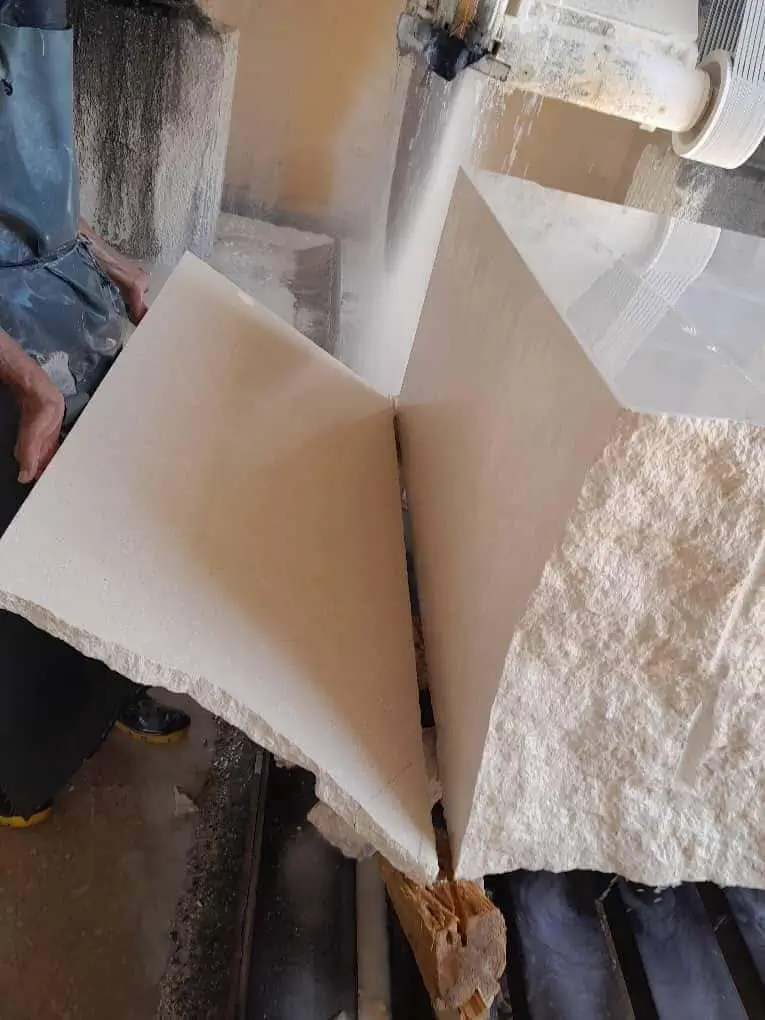
At Citadel Stone, we source limestone directly from quarries where we’ve verified density and absorption specifications against ASTM standards — the warehouse quality check before material ships to your project ensures you’re getting stone that matches the technical properties you specified, not the lower-end product that sometimes arrives when supply chains get stretched.
Delivery Logistics and Project Planning in Arizona
Timing your limestone delivery in relation to your base preparation work affects efflorescence outcomes more than most project managers realize. Stone that gets delivered and sits on site before the vapor retarder is installed can absorb ground moisture from below, loading the slab with soluble salts before the first paver is set. Your delivery schedule should target arrival within 48 hours of base completion and vapor retarder installation.
Projects in Tempe and other Valley cities can typically work with 1-2 week lead times from warehouse stock when material is pre-confirmed. Cave Creek projects should account for truck access constraints on the narrower ranch roads — confirm turning radius and weight limits with your driver before scheduling delivery, because a rescheduled truck adds a week to your timeline minimum and leaves your prepared base exposed to weather and contamination longer than planned.
Our warehouse carries Arizona maintenance tips documentation alongside material specifications, so your installer gets both the product data and the region-specific guidance in a single package. Coordinating delivery logistics early — especially for larger projects requiring multiple truck loads — prevents the sequencing problems that lead to rushed installation and the moisture management errors that follow.
Common Mistakes and Remediation Realities
The most expensive limestone staining prevention failures share a common thread: the installer treated the visible deposit rather than the source. Pressure washing calcium carbonate deposits off the surface provides a clean appearance for 60-90 days. Without addressing base drainage, joint integrity, and sealer condition simultaneously, you’re on a quarterly remediation cycle that costs more annually than a proper installation would have cost upfront.
Acid washing is the second most common mistake. Diluted acid will dissolve carbonate deposits effectively, but if the pH of your base materials is driving salt migration, you’ve done nothing to interrupt that process — and the etched surface texture left by acid treatment actually increases the capillary draw rate, making the next efflorescence cycle worse than the first. Reserve acid treatments for truly stubborn established deposits, and always follow with a densifier application and fresh sealer coat.
- Never seal over existing efflorescence — the trapped salts will continue migrating, and you’ll see the deposits reappear through the sealer within weeks
- Avoid sodium hypochlorite (bleach) on limestone — it reacts with calcium carbonate to produce calcium hypochlorite, which is itself a source of salt deposits
- Don’t use muriatic acid at concentrations above 3% on polished or honed limestone; the surface etching cannot be reversed without mechanical grinding
- Polymeric sand repairs on failed joints must include complete removal of the degraded material — applying fresh polymeric sand over failed residue produces adhesion failure within one thermal cycle
Projects in Surprise on the west side of the Valley encounter higher levels of naturally occurring sulfate in the soil profile, which generates a sulfate efflorescence that is visually similar to carbonate deposits but requires a different treatment protocol. A simple field test — pour a few drops of diluted vinegar on a dry deposit — will tell you whether you’re dealing with carbonates (fizzing reaction) or sulfates (no reaction). Sulfate deposits require a higher concentration of the diluted acid treatment and more thorough subsequent rinsing.
Before You Specify
Your specification package for limestone paving in Cave Creek should include the base assembly details, vapor retarder specification, joint material spec, and sealer product data sheet as a coordinated set — not as separate afterthoughts. A stone contractor who receives only a material specification and no system specification will default to their standard regional practice, which often means the recycled concrete aggregate base and polymeric sand combination that maximizes their margin rather than your long-term performance.
Verify warehouse stock levels and confirm material density specifications before committing to a project timeline. The difference between a 2.4% absorption limestone and a 7% absorption limestone isn’t visible to the eye on delivery day, but it’s the difference between a 20-year installation and a 7-year maintenance headache in Cave Creek’s conditions. Ask for ASTM C97 test data with your material quote — any reputable supplier should have it available without hesitation.
As you plan the full scope of your Arizona stone project, related hardscape applications often influence how you approach surface treatment and maintenance scheduling across the property. Outdoor kitchen surrounds share many of the same moisture management and sealing considerations covered here — Limestone Paving Outdoor Kitchen Surrounds for Paradise Valley explores how Citadel Stone materials perform in that adjacent context. At Citadel Stone, we provide Arizona-specific technical guidance with every limestone paving project to help you build a system that performs, not just a surface that looks good on day one.
We offer unbeatable value with our line of limestone paving slabs in Arizona — sourced to spec, verified against ASTM standards, and backed by the regional technical guidance your Cave Creek installation requires.