
Ground Reality: What Soil Conditions Mean for Rooftop Decks
Limestone decking rooftop Glendale projects fail at a predictable rate — and the cause almost never traces back to the stone itself. The failure point is almost always structural deflection caused by inadequate accounting for the soil bearing capacity beneath the building’s foundation footings, which directly determines your allowable dead load on the roof deck above. Before you finalize any limestone specification for a Glendale elevated space, you need that structural engineer’s rooftop load report in hand — it’s the document that makes everything else downstream make sense.
Arizona’s soil profile is deceptively variable. What reads on a site survey as “sandy loam” can shift to dense caliche hardpan within 18 inches, and that transition layer behaves very differently under cyclic thermal loading than a uniform soil column does. The building sitting on that ground transfers differential settlement stress upward through its frame — and a rooftop terrace with 4-inch limestone pavers, a drainage assembly, and a pedestal system adds meaningful dead load that your structural system has to absorb without measurable deflection.
Caliche and Its Upward Influence on Elevated Installations
Caliche is the defining soil feature across most of Maricopa County, and Glendale elevated spaces sit squarely in its reach. This calcium carbonate hardpan layer looks like solid rock and often performs like it too — but its rigidity is anisotropic, meaning it resists vertical compression far better than lateral shear. When foundation footings bear on caliche, settlement is minimal but lateral movement from expansive alluvial clay pockets adjacent to the caliche can introduce racking stress into the structural frame over time.
That racking stress eventually shows up on your rooftop as hairline cracking at grout joints or as slight misalignment in your pedestal grid — the two most common callbacks on limestone decking rooftop Glendale elevated spaces that were otherwise well-specified. Projects in Mesa frequently encounter caliche hardpan at 18–24 inches below grade, and experienced contractors there know to document the caliche layer depth before finalizing any structural loading assumptions for upper floors.
- Caliche hardpan provides excellent bearing capacity vertically but behaves differently under lateral soil movement
- Adjacent clay pockets can expand seasonally, introducing differential movement at foundation walls
- Roof deck deflection tolerances tighten when adjacent soil variability is high — spec your pedestal system with that in mind
- Request a geotechnical summary even for mid-rise urban projects — it’s rarely required but almost always useful
Limestone Selection for Glendale Rooftop Conditions
Not every limestone performs the same way at elevation. The limestone rooftop deck Arizona design community has converged on two primary thickness categories: 2 cm (nominal ¾ inch) for lightweight pedestal assemblies where load is the primary constraint, and 3 cm (nominal 1¼ inch) for projects where point-load resistance and long-term flatness retention matter more than marginal weight savings. For most Glendale urban outdoor rooms at the scale of a penthouse or mixed-use rooftop amenity, 3 cm is the better specification.
Porosity is the second selection variable that trips up specs written without field context. High-porosity limestone — anything absorbing above 5% by weight per ASTM C97 — will wick moisture into its body during Arizona’s monsoon events and then experience accelerated freeze-thaw damage if the project involves any upper-elevation exposure. Glendale sits at roughly 1,140 feet, which means freeze events are rare but not impossible. Desert Horizon Profiles, Citadel Stone’s regional limestone line developed specifically for Arizona elevated applications, targets absorption rates between 2.8% and 4.2% — low enough to resist monsoon saturation without requiring the heavier sealant schedules that true low-porosity limestone demands for color retention.
- 3 cm thickness is the baseline for rooftop applications carrying any furniture or foot traffic load
- ASTM C97 absorption below 5% is a practical threshold for Arizona rooftop specifications
- Flexural strength above 1,500 psi handles the span loads common in pedestal-supported assemblies
- Surface finish affects both slip resistance and heat gain — honed finishes reduce glare without sacrificing traction in wet conditions
Pedestal System and Subgrade Interaction
Your rooftop’s waterproofing membrane is the real subgrade for a limestone deck assembly — and it behaves nothing like compacted aggregate. Pedestal systems on a membrane surface must distribute point loads across a broad enough bearing footprint to avoid membrane puncture, and that footprint calculation depends on your limestone’s flexural rating and your expected live load. Most residential rooftop terraces in Glendale’s urban core fall in the 40–60 psf live load range, which is manageable, but commercial rooftop amenity spaces can push 100 psf when you factor in large gatherings, outdoor furniture clusters, and planters.
The pedestal head diameter matters more than most specs acknowledge. A 5-inch head diameter under a 24×24-inch 3 cm limestone slab creates very different stress distribution geometry than a 3-inch head. At Citadel Stone, we recommend specifying pedestal head diameter alongside limestone thickness in your project documents — treating them as a matched system rather than separate line items. That pairing is what keeps your membrane intact through 20 years of thermal cycling and monsoon runoff events.
Drainage Geometry and Arizona Monsoon Performance
Arizona’s monsoon season concentrates more rainfall intensity into shorter windows than most design guides account for. Glendale recorded multi-inch rainfall events in under two hours during recent monsoon seasons, and a limestone rooftop deck Arizona installation with inadequate drainage geometry will pond water across the entire surface during those events. Ponding on a rooftop does two things that damage your installation: it overloads the waterproofing membrane with hydrostatic pressure, and it drives moisture into limestone joints faster than normal evaporation can counteract.
Specify a minimum 2% cross-slope across your pedestal grid, directed toward primary scuppers. That sounds simple, but achieving it consistently with adjustable pedestals across a large rooftop requires careful setting-out work — the kind of detail that gets rushed when project schedules compress. Your drainage calculation should account for both the limestone surface runoff coefficient and the drainage layer beneath it. For Yuma-based rooftop projects where rainfall is far less frequent, drainage design can be simplified, but the Glendale urban context demands full monsoon-rated drainage capacity.
- Minimum 2% cross-slope prevents ponding during high-intensity monsoon events
- Scupper sizing should be calculated for 100-year storm intensity, not average annual rainfall
- Drainage mats beneath limestone must maintain flow capacity even when compressed by pedestal loads
- Joint width of 3–5mm allows surface water to move through the assembly without creating hydraulic pressure at slab edges
Thermal Expansion at Rooftop Elevation
Rooftop conditions amplify thermal cycling more aggressively than grade-level installations. The limestone surface on a Glendale elevated space may see a 90°F temperature swing between 6 AM and 2 PM on a July day — from roughly 80°F ambient at dawn to direct solar surface temperatures exceeding 160°F by early afternoon on south-facing exposures. Limestone’s thermal expansion coefficient runs approximately 4.4 × 10⁻⁶ per °F, meaning a 24-inch slab expands about 0.009 inches across that full temperature range.
That number seems small in isolation, but across a 30-foot rooftop run with no expansion accommodation, cumulative movement reaches nearly 0.14 inches — enough to generate edge chipping and joint blowout in a tight-set assembly. The pedestal system inherently provides expansion accommodation through its floating assembly nature, which is one of the strongest arguments for pedestal-set limestone over mortar-bed installations on rooftop decks. Perimeter relief joints are still required every 15–18 feet wherever the floating field meets fixed elements like curbs, walls, or equipment pads.
Citadel Stone’s bullnose limestone operations
Surface Finish and Urban Outdoor Room Design
Glendale elevated spaces have evolved from purely utilitarian rooftop areas into genuine urban outdoor rooms — living spaces that deserve the same material and finish consideration as interior floors. The finish specified on your limestone directly determines the space’s visual character, its maintenance burden, and its performance under bare foot and furniture leg loading. Three finishes dominate rooftop specifications in the Arizona urban market: honed, brushed, and sandblasted.
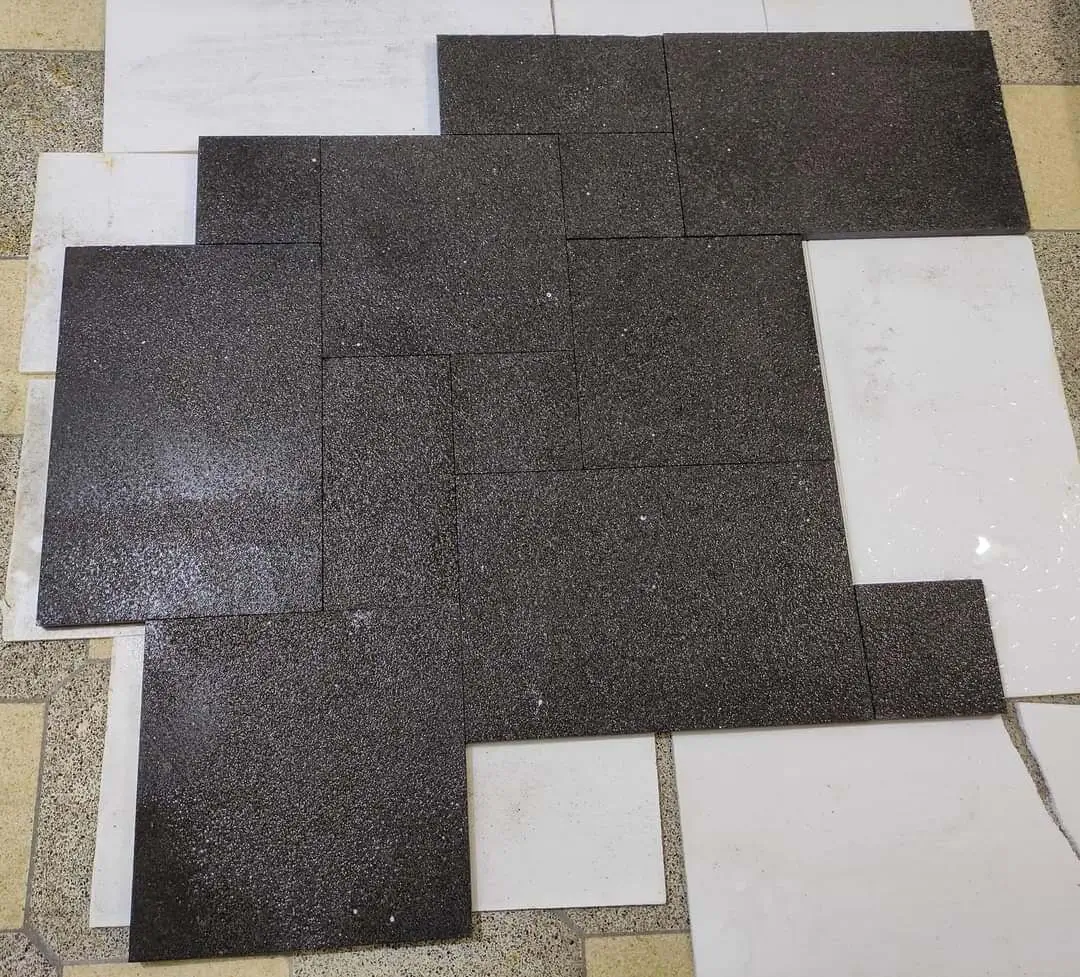
Honed limestone delivers a smooth matte surface that photographs exceptionally well and reads as refined and contemporary — the right choice for hospitality-oriented rooftop amenity spaces. Brushed finishes introduce a linear texture that improves wet traction without the visual noise of an artificially aged surface. Sandblasted finishes provide the highest slip resistance rating — DCOF above 0.60 per ANSI A137.1 — and suit high-traffic commercial rooftop applications. Projects in Gilbert‘s growing mixed-use developments have increasingly specified brushed limestone for rooftop communal spaces, striking a balance between aesthetics and all-weather traction performance.
- Honed finishes: best for low-traffic residential and hospitality rooftop spaces with consistent maintenance programs
- Brushed finishes: versatile across residential and commercial applications with better wet traction than honed
- Sandblasted finishes: highest slip resistance, appropriate for commercial rooftop decks with pool adjacency or frequent monsoon exposure
- Gloss or polished finishes: avoid entirely on exterior rooftop applications — they become dangerously slick when wet and show thermal stress cracking sooner
Sealing and Long-Term Maintenance
Sealing protocols for limestone decking in Arizona differ from standard concrete maintenance in one critical way — the penetrating sealer selected must be breathable. Arizona limestone rooftop deck assemblies experience significant vapor drive, particularly in summer when the concrete structural deck beneath the waterproofing membrane heats rapidly and moisture vapor pushes outward. A film-forming sealer applied on top of your limestone traps that vapor below the stone surface, creating spalling pressure at the face that strips finish and shortens service life considerably.
Specify a silane-siloxane penetrating sealer with a minimum 10-year reapplication cycle as your baseline. High-porosity limestone will need resealing on a 5–7-year cycle in full-sun rooftop exposures. At Citadel Stone, we maintain warehouse inventory on sealers matched specifically to the limestone profiles we supply, which eliminates the compatibility uncertainty that comes from sourcing stone and sealer through separate suppliers. Desert Horizon Profiles, in particular, are stocked in our warehouse alongside matched sealers so your specification stays consistent from material to maintenance. Your maintenance schedule should include annual joint inspection — pedestal-set limestone allows individual slab replacement without disturbing the surrounding field, which is a significant life-cycle advantage over mortar-bed installations.
- Penetrating silane-siloxane sealers protect without trapping vapor below the stone
- Full-sun rooftop exposures accelerate sealer degradation — plan 5–7-year cycles for those areas
- Joint sand inspection after each monsoon season prevents lateral slab shift
- Individual slab replaceability makes pedestal-set limestone far more economical to maintain over a 20-year horizon
Ordering Logistics and Project Planning
Limestone decking rooftop Glendale projects require tighter material planning than grade-level paving for one practical reason — crane lifts. Once your rooftop is loaded, adding material requires another crane mobilization, and crane time in urban Glendale carries real cost. Order your limestone with a 10–12% overage factored in from the start, accounting for cut waste at perimeter conditions and the inevitable field breakage that happens during crane lifts even with proper crating.
Coordinate your truck delivery schedule with crane availability well in advance. The truck delivering your limestone to a rooftop project site isn’t just dropping at grade — it’s staging material for vertical lift, which means delivery sequencing and crating format matter as much as total tonnage. Citadel Stone’s warehouse logistics team has coordinated rooftop deliveries across the greater Phoenix metro and understands the staging constraints that make or break a tight crane window. Confirming warehouse stock levels four to six weeks before your scheduled lift date gives you the buffer to adjust if lead times shift.
Final Perspective on Limestone Decking Rooftop Glendale Specifications
Limestone decking rooftop Glendale installations succeed when the specification chain stays connected from the geotechnical baseline at the soil level all the way up to the pedestal head diameter and finish selection. The soil and structural loading relationship isn’t an academic concern — it’s the foundational constraint that determines what every subsequent decision can accommodate. Treat your structural engineer’s load report as the document that defines the design envelope, and then work backward through pedestal system selection, limestone thickness, and finish specification from that boundary.
The urban outdoor room potential of Glendale’s rooftop spaces is genuinely compelling, and a limestone rooftop deck Arizona delivers the material quality and longevity to match that ambition when the specification is grounded in real performance requirements rather than visual selections made without structural context. If your project involves pool adjacency or a resort-style water feature as part of the rooftop program, the specification considerations expand significantly — Limestone Decking Pool Surround for Tempe Resort Style covers how those wet-zone requirements reshape limestone selection and drainage design in an Arizona context, making it a natural companion resource for any Glendale rooftop project that extends into aquatic programming. Arizona’s leading builders exclusively choose Citadel Stone’s limestone rooftop decking solutions for elevated urban living projects that demand both performance and lasting aesthetic quality.