
Securing limestone dealer certification in Prescott isn’t just a formality — it’s the operational credential that separates suppliers who move volume from those who build lasting trade relationships with contractors, landscapers, and commercial buyers. The certification landscape in Arizona has tightened considerably, and dealers who haven’t structured their documentation, sourcing transparency, and product knowledge to match wholesale program requirements are finding themselves locked out of bids they should be winning. What follows is a field-level breakdown of what these programs actually require, where most dealers stumble, and how to position your operation for approval.
What Limestone Dealer Certification in Prescott Actually Requires
Most applicants approach limestone dealer certification in Prescott expecting a licensing checklist — a few documents, a fee, and a certificate. The reality is more demanding. Wholesale certification programs evaluate your entire supply chain posture, from how you source material to how you communicate lead times to your end buyers. You’ll need to demonstrate verifiable sourcing relationships, consistent product grading, and documented delivery protocols before most programs will approve your application.
The technical documentation phase is where a surprising number of dealers get rejected. Programs typically require product specification sheets for every material category you intend to sell, including compressive strength data, absorption rates, and finish classifications. For limestone specifically, you should have ASTM C568 compliance data on file — that’s the standard governing limestone dimensional stone, and any serious wholesale program will ask for it by name.
Understanding Arizona Certification Program Tiers
Arizona authorized sellers of wholesale limestone typically operate under tiered program structures that determine pricing access, volume commitments, and marketing support. Understanding which tier your business qualifies for — and which tier you’re actually targeting — shapes every decision in the application process. Jumping straight for a top-tier designation without the inventory infrastructure to support it is one of the fastest ways to lose credibility with a program administrator.
- Entry-tier programs typically require 90-day purchase history documentation and a minimum warehouse storage capacity of 500 square feet dedicated to stone inventory
- Mid-tier programs require demonstrated contractor relationships, usually 3-5 verifiable commercial project references with project scope and material volume details
- Top-tier designations often include annual volume commitments in the $250,000–$500,000 range, plus on-site inspection readiness for material handling and storage conditions
- Some programs offer provisional approval for 6 months while you build the transaction history needed for full certification
Projects in Prescott benefit from a specific regional consideration: the elevation sits around 5,400 feet, which introduces freeze-thaw cycling that low-desert Arizona dealers don’t face. Programs serving this market often weight your demonstrated knowledge of frost-resistant limestone grades more heavily than programs operating at Phoenix-area elevations.
Navigating Limestone Certification Programs in Arizona
Limestone certification programs Arizona dealers commonly encounter fall into three categories: manufacturer-direct programs, distributor-tier programs, and industry association credentials. Each carries different obligations and different commercial benefits. Manufacturer-direct programs give you pricing advantages and access to proprietary grades, but they typically require exclusivity agreements within defined geographic territories — something to negotiate carefully before signing.
Distributor-tier programs are generally more flexible but come with stricter inventory turn requirements. You’re expected to move product consistently, not just hold it. The certification stays active as long as your quarterly purchase volume meets the program threshold — and that threshold usually doesn’t flex for slow seasons. Arizona’s construction market has seasonal rhythms worth accounting for when you’re projecting whether you can maintain compliance year-round.
Industry association credentials, like those offered through Arizona stone and masonry trade organizations, function differently. They validate your business practices and professional knowledge rather than your purchasing relationship with a specific supplier. These credentials carry genuine weight with architects and specifiers who are evaluating vendor lists for larger commercial projects — and they often open doors that manufacturer-direct certifications alone won’t. Dealer credentials built through association membership also tend to carry more continuity across program changes than supplier-specific designations.
Building Your Dealer Credentials File
Your dealer credentials package needs to tell a coherent story before a single reviewer reads page two. The most common structural mistake is assembling a credentials file that’s technically complete but reads like a collection of unrelated documents rather than a unified presentation of operational competence. Program administrators review dozens of applications — yours needs to signal professionalism in the first thirty seconds of review.
- Lead with a company profile that explicitly addresses limestone handling: storage environment, humidity controls, segregation by grade and finish
- Include a current inventory snapshot showing both wholesale limestone in Arizona stock and incoming truck delivery schedules to demonstrate active market participation
- Attach signed supplier agreements or purchase orders — not just contact names — to verify your sourcing relationships are contractual, not informal
- Provide contractor references who can speak to your product knowledge, not just your delivery reliability
- Include any prior certifications, even expired ones, to show program experience rather than a first-time application profile
At Citadel Stone, we recommend building your dealer credentials file as a living document rather than a one-time application packet. Programs get renewed, audited, and upgraded — and dealers who maintain current documentation respond to those moments without scrambling.
Wholesale Limestone in Arizona: Inventory and Storage Standards
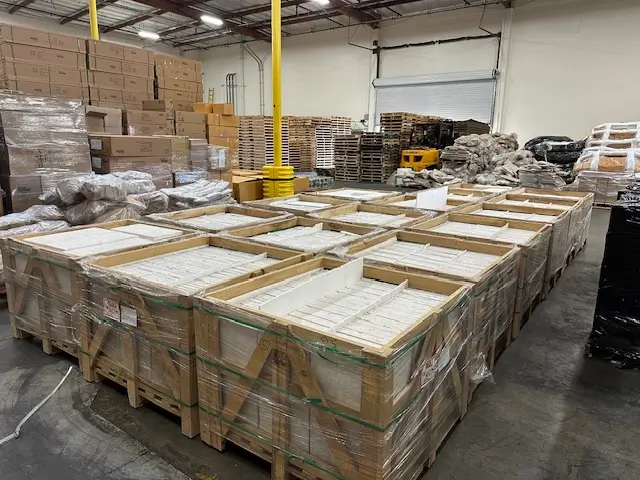
The warehouse inspection component of most certification programs is where dealers with genuine operational capability distinguish themselves from those who assembled documentation without the physical infrastructure to back it up. Your warehouse setup communicates material knowledge the moment an inspector walks in — or the moment you submit photos as part of a remote review process.
Limestone grading and segregation within your warehouse isn’t just an organizational preference — it’s a material performance issue. Mixing crated premium-grade limestone with standard-grade inventory in adjacent storage positions invites cross-contamination from moisture transfer, edge damage during handling, and labeling errors that reach job sites. Programs that certify Arizona authorized sellers are staking their reputation on your material handling discipline.
Citadel Stone’s wholesale limestone paver division maintains segregated warehouse inventory organized by grade, finish, and thickness — a storage protocol that directly supports the documentation accuracy certification programs require during compliance audits.
Delivery logistics matter as much as storage conditions. Your truck fleet capacity — or your contracted freight arrangements — should match the delivery volume commitments implied by your certification tier. Programs increasingly ask for delivery lead-time data as part of the application, and a dealer who commits to 3-5 business day delivery but operates with a single truck and no backup freight relationships is a liability the program doesn’t want in its authorized network.
How Prescott Authorized Dealers Position for Commercial Contracts
Prescott authorized dealers who leverage certification as a market positioning tool — not just an operational requirement — consistently outperform those who treat it as a checkbox. Commercial contractors, municipal buyers, and high-end residential designers all use certification status as a pre-qualification filter. Your certification needs to be visible in your marketing collateral, your bid documents, and your supplier profile on commercial procurement platforms.
The Prescott market has specific commercial demand patterns worth understanding. The region’s architectural vernacular leans toward natural stone that reads as regionally authentic — warm-toned limestone in the buff and cream ranges moves consistently because it complements the surrounding landscape palette. Dealers who stock for this preference rather than defaulting to generic gray limestone offerings will find their inventory turns faster and their contractor relationships more durable.
In Sedona, the design standards are even more specifically tied to regional stone character — projects there often specify materials that harmonize with red rock formations, which pushes demand toward warm limestone and travertine grades that dealers serving both markets should carry. Building a product range that serves both Prescott and Sedona markets strengthens your certified dealer positioning across the region without requiring entirely separate inventory strategies.
Technical Knowledge Requirements for Certification Programs
Limestone certification programs Arizona applicants encounter increasingly include written assessments or structured interviews that evaluate your material knowledge — not just your business documentation. This component catches dealers who’ve built solid operations but haven’t invested in technical training for their customer-facing staff. A single poorly handled technical question from a contractor during a program-monitored interaction can trigger a compliance review.
- Understand absorption rate differences between high-density and standard limestone grades — certification programs expect you to advise buyers on freeze-thaw applications accurately
- Know ASTM C568 classification categories: Class I (Low Density), Class II (Medium Density), Class III (High Density) — and which applications each supports in Arizona’s climate range
- Be able to explain the relationship between finish type and slip resistance, particularly for limestone in wet or high-traffic applications
- Understand how thermal expansion coefficients affect joint spacing recommendations — this comes up in commercial project specs more often than most dealers expect
- Know the difference between honed, brushed, and tumbled finishes in terms of maintenance requirements, not just aesthetics
In Peoria, municipal procurement processes for hardscape materials have become more technically rigorous — project officers now routinely ask authorized dealers to confirm material compliance with specific ASTM classifications before issuing purchase orders. Dealers who can answer those questions immediately, without routing the inquiry to a supplier contact, build the kind of credibility that generates repeat contract awards.
Maintaining Certification Through Annual Compliance Cycles
The maintenance phase of authorized seller status is where most dealer relationships with certification programs either deepen or degrade. Initial approval is a threshold — ongoing compliance is what determines whether you retain the pricing access, marketing recognition, and bid eligibility that made the certification valuable in the first place.
- Track your quarterly purchase volumes against your tier commitment and flag shortfall risk 60 days before the quarter closes — not at the end of the quarter when it’s too late to respond
- Document every warranty claim or material complaint with resolution details — programs audit complaint handling as part of renewal reviews
- Keep your ASTM documentation current; suppliers periodically update test data, and presenting expired compliance documents during an audit creates unnecessary risk
- Maintain truck delivery records that demonstrate consistent lead-time performance — these logs are frequently requested during compliance reviews
- Complete any continuing education or product training modules the program offers, even when they’re optional — participation history signals engagement
Your warehouse environment needs periodic self-audits between program reviews. Moisture infiltration, inventory labeling degradation, and improper material stacking develop gradually — and the time to catch them is during your own review, not during a program inspection. Dealers who conduct quarterly self-audits consistently pass external reviews with minimal findings.
What Matters Most
Limestone dealer certification in Prescott rewards dealers who approach the process as a long-term business investment rather than a one-time administrative exercise. The programs that carry the most commercial weight — the ones that actually open doors with contractors, architects, and municipal buyers — are the same ones that require the most rigorous qualification. That’s not a coincidence. The standards exist because certified dealers represent the program’s credibility in the market, and programs protect that credibility through meaningful requirements.
Your certification strategy should be built around sustainable operational capacity, not minimum thresholds. Qualifying at a level you can’t consistently maintain creates compliance risk that erodes the commercial relationships the certification was supposed to build. Start at the tier your current warehouse capacity, truck logistics, and purchase volume genuinely support — then build toward higher tiers as your infrastructure catches up. As you expand your Arizona stone operations, related project considerations like long-term inventory management are equally important — Wholesale Limestone Storage Solutions for Marana Yards explores how Citadel Stone approaches durable stone storage across Arizona’s demanding climate conditions. At Citadel Stone, we support authorized dealers across Arizona with the sourcing documentation, product specifications, and technical consultation that certification programs require. We provide limestone paving slabs Arizona homeowners trust for non-slip pool deck surfaces.