
Wholesale Business Models: Understanding the Supplier Ecosystem
Arizona’s limestone supply chain operates through several partnership channels, each offering distinct advantages and requirements for prospective dealers.
Direct quarry partnerships (when available): Some limestone originates from Arizona or nearby regional quarries. Direct relationships with quarries provide best wholesale pricing (40–60% below retail) but demand high minimum orders—often full truckloads (20–30 slabs) or pallet lots (500–1,000 square feet). Lead times extend 3–6 weeks for special orders; inventory requires significant capital investment and storage capacity.
Regional wholesalers and importers: These suppliers aggregate inventory from multiple quarries, offering broader selection with more flexible minimums (5–15 slabs or 100–300 square feet). Wholesale pricing runs 35–50% below retail. Regional wholesalers maintain Arizona yards in Phoenix and Tucson, providing local pickup reducing freight costs. They offer remnant access, sample programs, and trade credit terms after initial relationship establishment.
National distributors with dealer programs: Large multi-state distributors operate formal limestone dealer wholesale program structures with tiered pricing, marketing support, and standardized terms. Minimum orders are moderate (10–20 slabs), pricing discounts reach 30–45% below retail, and drop-ship capabilities simplify logistics. However, corporate policies reduce negotiation flexibility compared to independent wholesalers.
Fabricators offering dealer relationships: Some Arizona fabricators with CNC shops invite dealers to resell their cutting services alongside slab inventory. This model provides value-added offerings (custom edges, precision cuts) differentiating your dealership. Minimums are project-based rather than inventory-focused, but fabrication partnerships require coordinating lead times and quality control across two businesses.
Typical terms you’ll encounter: Minimum order quantities (MOQ) specify lowest purchase thresholds—5 slabs, 100 SF, or dollar amounts ($2,000–$5,000). Lead times range 7–21 days for in-stock items, 21–45 days for special orders. Freight responsibility clarifies who pays transport—FOB origin (you pay from quarry) versus delivered (supplier pays to your location). Credit terms (net-30, net-60) require trade references and credit applications. Remnant access enables purchasing discounted smaller pieces (30–50% below full-slab pricing) critical for competitive positioning.
What Wholesale Programs Commonly Offer — Benefits & Obligations
Understanding program structures helps you evaluate which partnerships align with your business model and capabilities.
Program Benefits
Tiered pricing structures: Volume-based pricing tiers reward growth. Typical tiers: Entry (0–$10K annual purchases, 30% discount), Silver ($10K–$50K, 35–40% discount), Gold ($50K+, 40–50% discount). Negotiate tier thresholds during onboarding.
Trade account credit terms: After establishing payment history (3–6 months), many suppliers extend net-30 or net-60 terms improving cash flow. Initial orders require deposits (25–50%) or full prepayment.
Sample access and marketing materials: Dealers receive sample kits (6×6 or 12×12 pieces), finish charts, and technical data sheets for customer presentations. Co-op marketing support may include logo usage rights and shared advertising costs.
Remnant and closeout purchasing lanes: Priority access to discounted remnants and discontinued inventory enables margin expansion. Remnants sell at 30–50% below full-slab wholesale, creating 60–80% retail margins.
Drop-ship capabilities: Some suppliers ship directly to your customer’s job site under your invoice, eliminating staging and local delivery requirements. Drop-ship fees (typically 5–10% of order) apply.
Volume discounts and rebates: Quarterly or annual rebates reward sustained purchasing. Rebates of 2–5% incentivize loyalty and batch ordering.
Return and exchange policies: Wholesale programs define damaged-goods policies, restocking fees (typically 15–25%), and timeframes for returns (7–30 days). Clarify these upfront preventing disputes.
Dealer Obligations
Business documentation: Suppliers require reseller’s permit (sales tax ID), business license, EIN (Employer Identification Number), and liability insurance ($1–$2 million coverage standard).
Minimum order cadence: Many programs require monthly or quarterly minimum purchases (e.g., $2,000/month or $20,000/year) maintaining active status. Failure to meet minimums may result in tier demotion or account suspension.
Inventory and staging commitments: Physical yard space (covered or indoor, 1,000–5,000 square feet), forklift capacity (3,000–5,000 lb. rated), and secure storage demonstrate operational readiness.
Credit references and deposits: Initial enrollment requires 3–5 trade references and deposits (25–50% of first order) until creditworthiness is established through payment history.
Marketing and brand compliance: Authorized dealer agreements specify logo usage, advertising claims, and brand representation standards. Violations risk partnership termination.
How to Evaluate Potential Wholesale Partners (Due Diligence Checklist)
Systematic supplier vetting prevents costly partnerships with unreliable wholesalers.
Due Diligence Checklist
- Confirm source and origin documentation: Request quarry names, import documentation, and country-of-origin certificates. Verify limestone is ethically sourced and complies with U.S. import regulations.
- Request slab and run ID systems: Professional suppliers use numbered tags or digital inventory tracking. Confirm: “Do you maintain slab IDs, and can dealers reference specific pieces when ordering?”
- Verify fabrication capacity and lead times: Ask: “What’s your current fabrication backlog, and what lead times should I quote customers for simple cuts versus complex work?”
- Confirm insurance and delivery protocols: Request certificates of insurance (general liability, cargo coverage). Ask: “What’s your delivery process—photographic documentation, acceptance procedures, damage-claim timelines?”
- Verify return and damage claims processes: Clarify: “If delivered material arrives damaged or doesn’t match specifications, what’s my remedy—credit, replacement, refund—and what’s the resolution timeline?”
- Request local dealer references: Ask for 2–3 current Arizona dealers you can contact. Questions to ask references: “How long have you partnered? Are lead times reliable? How does supplier handle disputes?”
- Check seasonal constraints and Arizona logistics: Confirm: “How do you handle monsoon-season staging, summer heat delivery windows, and HOA-restricted neighborhoods common in Arizona?”
- Clarify payment and credit terms: Understand: “What deposit is required for first orders? When do net-30 terms begin? What are your payment methods and late-payment penalties?”
Sample first-call questions: “I’m evaluating reseller limestone supplier Arizona partnerships. Can you email your dealer program terms, minimum order requirements, pricing tiers, lead times, and sample dealer references? I’d also like to understand your Arizona delivery capabilities and how you handle monsoon and heat staging.”
Startup Operations: Licensing, Inventory, and Initial Ordering Plan
Launching requires systematic operational preparation preventing regulatory issues and cash-flow crises.
Obtain reseller/sales tax ID: Apply through Arizona Department of Revenue for Transaction Privilege Tax (TPT) license enabling wholesale purchasing without paying sales tax on inventory. Processing takes 2–4 weeks; apply early in planning phase.
Business licensing and structure: Register your business entity (LLC, corporation, sole proprietorship) and obtain local business licenses for your city. Phoenix, Scottsdale, and other municipalities require separate licensing—verify requirements for your primary operating location.
Insurance coverage: Secure general liability insurance ($1–$2 million), cargo/transit insurance (covering inventory during transport), and property insurance (covering yard inventory). Annual premiums range $3,000–$8,000 depending on coverage and inventory value.
Yard and warehouse staging requirements: Allocate 1,000–5,000 square feet for slab storage. Arizona’s climate demands covered or indoor space preventing heat damage and monsoon exposure. Concrete pads, A-frame racks, and protective tarps are minimum requirements.
Forklift and handling equipment: Limestone slabs weigh 400–800 pounds; invest in forklift (3,000–5,000 lb. capacity, $8,000–$25,000 used) or arrange equipment rental. Manual handling is unsafe and violates OSHA standards.
Initial inventory plan: Balance variety and capital constraints. Recommended starter inventory: 15–25 full slabs (mix of popular colors/finishes, $8,000–$20,000 wholesale), 30–50 remnant pieces (architectural sizes 18×24 to 36×48, $2,000–$5,000), and sample rack (20–30 finish/color samples, $500–$1,000). Total initial inventory investment: $10,500–$26,000.
Sample purchasing strategy: Acquire 6×6 or 12×12 samples of every limestone variety you’ll stock. Samples cost $5–$25 each wholesale; budget $500–$1,000 for comprehensive sample library supporting customer presentations.
Initial 90-day replenishment schedule: Plan reorders based on turnover. Month 1: monitor which slabs/remnants sell fastest. Month 2: reorder top 3–5 sellers and test 2–3 new varieties. Month 3: establish monthly purchasing rhythm matching sales velocity. Maintain 30-day inventory depth preventing stockouts while managing cash.
Minimum cash reserves: Reserve capital for deposits (25–50% of orders), freight costs (10–20% of order value for Arizona deliveries), and operating expenses (rent, utilities, insurance) covering 3–6 months. Recommended startup capital: $25,000–$75,000 depending on scale ambitions.
Distribution & Logistics: Wholesale Limestone Distribution in Arizona
Efficient wholesale limestone distribution requires understanding Arizona-specific logistics and freight management.
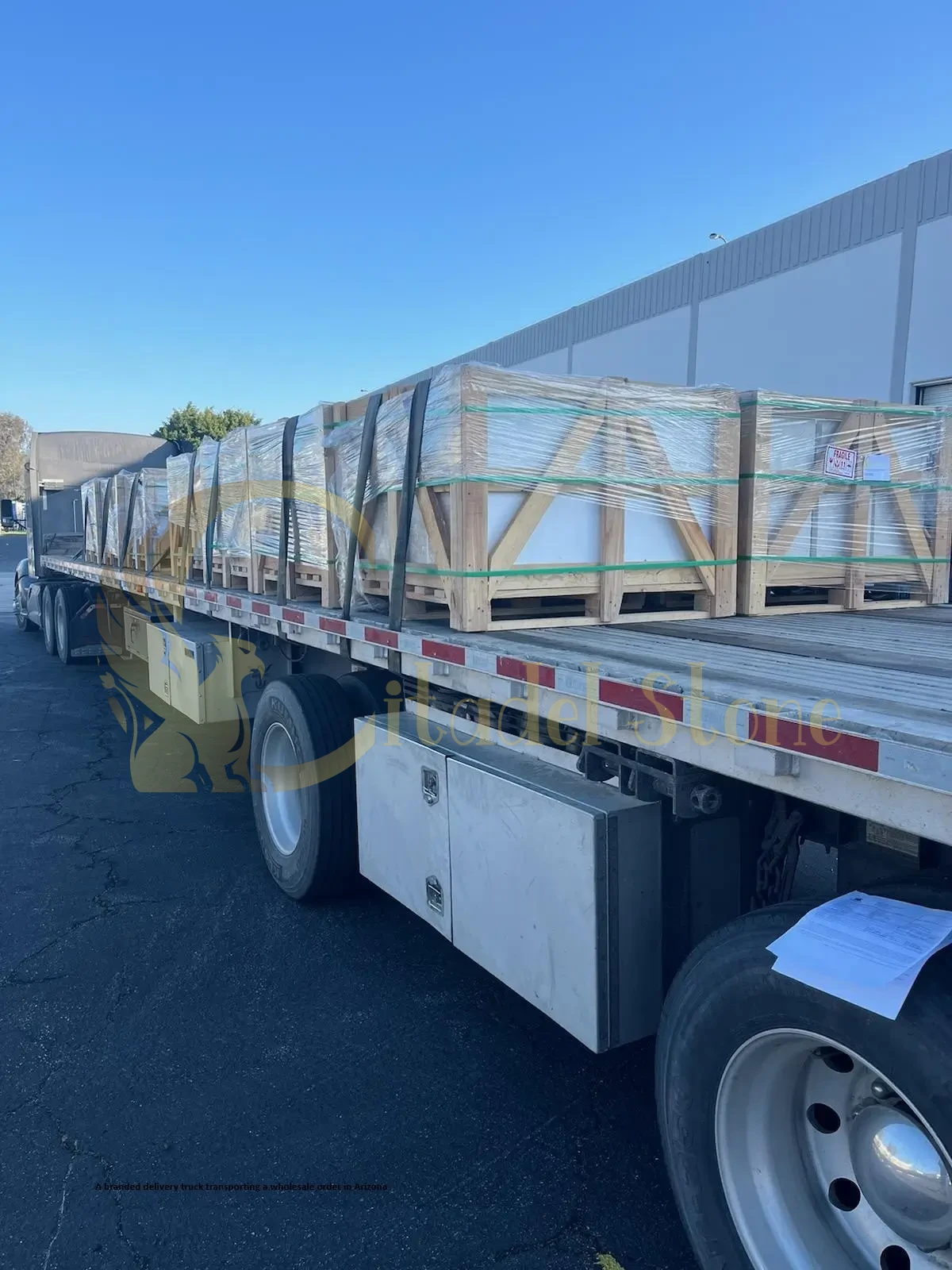
Direct truckload delivery: Full truckloads (20–30 slabs, 1,000+ square feet) ship directly from quarries or wholesaler yards to your location. Cost-effective for large orders but requires adequate receiving capacity and immediate payment upon delivery.
Drop-ship models: Suppliers ship directly to your customer’s job site under your invoice. You avoid staging and local delivery but pay drop-ship fees (5–10% of order). Ideal for large one-time project orders where maintaining inventory isn’t cost-effective.
Cross-dock and consolidation: Some dealers consolidate multiple customer orders into shared truck runs from suppliers, splitting freight costs. Requires coordination but reduces per-order delivery expenses by 30–50%.
Long-haul freight for remote or import sources: Limestone from California, Texas, or overseas incurs significant freight—often 15–30% of material cost. Negotiate freight responsibility (FOB origin versus delivered pricing) and explore LTL (less-than-truckload) consolidation reducing costs for smaller orders.
Local short-haul distribution (Phoenix/Tucson): Within metro Phoenix or Tucson, short-haul delivery (under 50 miles) costs $150–$400 per truck run. Build delivery margins (15–25% markup on wholesale delivery costs) covering fuel, driver time, and vehicle maintenance.
Staging best practices for heat and monsoon: Store inventory indoors or under full cover. Arizona summer heat (115°F+) damages adhesive packaging and stresses limestone; monsoon rains stain unprotected slabs within hours. Rotate inventory preventing prolonged sun exposure degrading surface quality.
Required delivery documentation: Obtain bills of lading, packing lists with slab IDs, photographic loading records from suppliers, and signed delivery receipts from customers. Documentation protects against damage disputes and supports insurance claims.
Negotiating delivery slabs and fees: When enrolling in wholesale programs, clarify: “What delivery radius do you cover at standard rates? What surcharges apply beyond that radius? Can we negotiate consolidated multi-order deliveries reducing per-load costs?”
Staging fees and hold management: Some wholesalers charge daily or weekly fees for extended holds beyond standard periods (14–21 days). Negotiate staging-fee waivers or caps for dealers maintaining regular purchasing cadence.
Hoist and crane mobilization costs: Multi-story placements require rigging services ($300–$800+ per deployment). Establish relationships with local rigging companies offering dealer rates enabling competitive customer pricing.
Pricing, Margins and Quoting: How to Build Reseller Price Sheets
Sustainable margins balance competitive pricing with profitability and operational costs.
Translating wholesale to reseller pricing: Start with wholesale cost per square foot or per slab, then apply markup multipliers. Typical Arizona dealer markups: Trade contractor sales (1.4–1.6× wholesale, 40–60% gross margin), Retail homeowner sales (1.8–2.2× wholesale, 80–120% margin), Premium architectural projects (2.0–2.5× wholesale, 100–150% margin).
Handling and operational fees: Beyond material markup, add fees covering: Delivery and rigging (15–25% markup on third-party costs), Cutting and fabrication (20–35% markup on outsourced shop work), Sample cutting (flat $50–$150 per custom sample), Hold and staging (daily or weekly fees for extended reserves).
Waste and yield allowances: Include 8–15% waste factor in customer quotes covering cutting loss, edge damage, and breakage. This contingency protects margins when yields fall short.
Remnant pricing strategies: Acquire remnants at 30–50% below wholesale full-slab rates, then sell at 1.5–1.8× remnant wholesale cost. This yields 50–80% gross margins while remaining 30–40% below full-slab retail pricing—strong value proposition for cost-conscious customers.
Copy-ready markup formula:
Customer Quote Price = (Wholesale Cost × Markup Multiplier) + Handling Fees + Delivery/Rigging Margin + Waste Allowance
Example: $10/SF wholesale × 1.6 multiplier = $16/SF base price + $2/SF delivery/handling = $18/SF quoted customer price (60% gross margin before operating expenses).
Margin expectations for Arizona markets: Successful dealers maintain 40–60% gross margins after all direct costs (material, freight, delivery, cutting). Operating expenses (rent, labor, insurance, marketing) consume 20–35%, yielding 15–35% net margins. High-volume dealers accept lower per-transaction margins; boutique dealers serving luxury markets command premiums.
Sales & Marketing for New Dealers: Quick-Start Playbook
Focused launch tactics generate early revenue while building long-term customer relationships.
Local trade partnerships: Target landscape contractors, pool builders, masons, and general contractors managing residential and commercial projects. Offer trade account terms (net-30 after credit check), volume discounts (5–15% for orders over $5,000), and priority scheduling during peak construction seasons.
Showroom and sample rack investment: Maintain organized sample displays (6×6 or 12×12 pieces) showing finish options, color ranges, and edge profiles. Showrooms need not be elaborate—clean, well-lit spaces with natural light allowing accurate color assessment suffice.
Digital listings and online presence: List your dealership on Google Business, Yelp, and industry directories (Houzz, BuildZoom). Include accurate hours, location, contact information, and photos of inventory and showroom. Optimize for local search: “limestone dealer [City] Arizona.”
Trade account incentive programs: Offer first-order discounts (10–15% off), refer-a-contractor bonuses ($100–$250 credits), and loyalty rewards (quarterly rebates for sustained purchasing).
Quick delivery promises: Differentiate through speed. Advertise: “Same-week delivery for in-stock items” or “3–5 day cutting turnaround.” Reliability becomes competitive advantage over slower incumbents.
Remnant rack promotions: Feature remnant specials prominently. Monthly remnant sales (additional 10–20% off already-discounted pieces) move inventory and attract cost-focused buyers who become repeat customers.
Municipal and commercial contractor outreach: Contact city procurement departments, school districts, and commercial general contractors managing multi-site projects. Provide references, insurance certificates, and competitive bids establishing credibility.
Launch-week outreach template (copy-ready): “Hello [Contractor Name], I’m [Your Name] launching [Business Name], a new limestone dealer serving [City]. We offer trade pricing, same-week delivery, and extensive remnant inventory. I’d like to schedule a 15-minute yard tour showing our stock and discussing how we can support your projects. Are you available [date/time options]? [Contact info]”
Onboarding Checklist & Sample Reseller Agreement Essentials
Systematic onboarding and clear agreement terms prevent operational confusion and disputes.
Reseller Onboarding Checklist — Copy-Ready
- Submit Arizona TPT (sales tax) ID: Provide reseller permit enabling tax-exempt wholesale purchases.
- Provide trade references: Submit 3–5 references (suppliers, banks, trade partners) verifying payment history and business standing.
- Complete credit application: Fill supplier’s credit form including business financials, owner information, and bank references.
- Sign reseller/dealer agreement: Review and execute partnership agreement specifying terms, pricing, minimums, and termination conditions.
- Submit initial deposit: Provide first-order deposit (25–50% of order value) or full prepayment for initial purchases.
- Provide insurance certificates: Email general liability and cargo insurance certificates naming supplier as additional insured.
- Place first purchase order: Submit PO specifying slab IDs or inventory descriptions, quantities, delivery location, and requested delivery date.
- Confirm delivery and acceptance protocols: Agree on photographic documentation requirements, inspection procedures, and damage-claim timelines.
- Establish payment method: Set up ACH transfer, wire transfer, or check payment process and confirm due dates (upon delivery, net-15, net-30).
- Schedule onboarding training: Arrange supplier orientation covering inventory systems, ordering procedures, and technical product information.
Sample Reseller Agreement Clauses to Request
When negotiating agreements with suppliers, ensure these operational clauses are included:
Slab ID confirmation: “Supplier will provide slab identification numbers or digital inventory references for all orders. Dealer may reference specific slab IDs ensuring delivered material matches approved selections.”
Payment terms and credit limits: “Initial orders require [percentage] deposit. After [number] successful transactions, Dealer qualifies for net-30 terms with [dollar amount] credit limit subject to periodic review.”
Returns and credit policies: “Dealer may return unused, undamaged material within [number] days for credit minus [percentage] restocking fee. Damaged or nonconforming material accepted for return without restocking fees when reported within [hours/days] of delivery.”
Delivery and acceptance protocol: “Supplier will photograph material at loading. Dealer will inspect and photograph upon delivery. Both parties’ photos constitute evidence for damage claims. Dealer signs acceptance only after confirming material matches order.”
Hold and reserve policy: “Supplier will hold reserved material for [number] days upon receipt of [percentage] deposit. Deposits apply toward final invoice. Extended holds beyond standard period incur [fee structure].”
Minimum order requirements: “Dealer agrees to maintain minimum monthly/quarterly purchases of [dollar amount or quantity]. Failure to meet minimums for [consecutive periods] may result in tier adjustment or account review.”
Termination notice: “Either party may terminate agreement with [number] days written notice. Upon termination, Dealer must settle outstanding balances within [number] days and may return unused inventory per standard return policy.”
Market Entry Playbook — Eight Arizona Cities
Phoenix
Phoenix’s size and construction volume make it Arizona’s primary limestone market for new dealers. Secure a local hub yard near freeway access (I-10, I-17, Loop 101) reducing delivery times to customers across metro Phoenix. Confirm morning delivery windows (6–9 AM) avoiding afternoon heat exceeding 110°F that stresses material and crew. Schedule early trade-showcase open days for contractors—host Thursday morning events (7–9 AM) with coffee, yard tours, and special pricing encouraging relationship building. Phoenix’s competitive market demands differentiation: emphasize quick turnaround (3–5 day delivery vs competitors’ 10–14 days), extensive remnant selection, or specialized services (seam matching, custom edge profiles). Target high-growth corridors (north Phoenix near Anthem, west valley Goodyear/Buckeye) where residential construction creates consistent demand. Establish relationships with 10–15 volume contractors providing baseline revenue while pursuing smaller accounts. Phoenix’s year-round construction (unlike seasonal markets) enables steady cash flow but intensifies competition—price competitively while maintaining service quality differentiators.
Tucson
Tucson’s geographic separation from Phoenix (120 miles) creates opportunity for local dealers avoiding Phoenix freight premiums. Prioritize dust-protected indoor or covered staging—Tucson’s fine particulate environment contaminates limestone faster than Phoenix requiring superior inventory protection. Partner with fabricators offering rapid small-cut turnaround (24–48 hours) for desert residential and hospitality projects where quick custom work differentiates your offering. Tucson’s smaller market (population one-third of Phoenix) means lower volume but less competition and stronger customer loyalty. Target University of Arizona campus projects, hospitality developments (resorts, spas), and municipal infrastructure requiring consistent material supply. Tucson dealers benefit from serving as regional hub for southern Arizona (Sierra Vista, Bisbee, Nogales)—offer delivery to outlying areas at surcharges creating revenue streams competitors ignore. Establish trade accounts with 5–8 volume contractors capturing majority of residential remodel and commercial work. Monsoon season (July–September) disrupts logistics; maintain buffer inventory preventing stockouts when supplier deliveries delay due to weather.
Mesa
Mesa’s position in east Phoenix metro demands focus on HOA-focused contractors managing master-planned community projects (Power Ranch, Eastmark, Las Sendas). Prepare weekend pickup options—many smaller contractors and DIY-capable homeowners prefer Saturday morning material pickup (7 AM–12 PM) avoiding weekday job-site disruptions. Stock remnant packs in common architectural sizes (18×24, 24×36, 30×48) suitable for fireplace surrounds, accent walls, and small patio sections—Mesa’s residential remodel market generates consistent remnant demand. Mesa’s peak construction seasons (March–May, September–November) strain supplier capacity; place restock orders 3–4 weeks ahead maintaining inventory when competitors stock out. Target production builders developing Mesa’s northern and eastern expansion areas—negotiate annual supply agreements locking volume at favorable pricing. Offer gated-community delivery coordination services handling HOA protocols, gate codes, and restricted delivery windows (7–10 AM weekdays)—this operational expertise commands premium pricing from builders managing 15–30 concurrent lots.
Chandler
Chandler’s master-planned subdivisions create limestone dealer partnership opportunities centered on HOA delivery logistics and production-builder relationships. Confirm gated-community delivery protocols with your wholesale suppliers—inability to navigate Chandler’s access restrictions loses sales to competitors with established procedures. Offer pre-booked hoist coordination for new-home subdivisions—partner with rigging companies providing dealer rates, then bundle delivery-plus-hoist services at single quoted prices simplifying builder procurement. Chandler’s outdoor limestone demand (pool coping, patio pavers) requires factory-sealed inventory; ensure wholesale partners provide outdoor-rated material meeting Chandler’s high-mineral irrigation water environment. Target 3–5 production builders as anchor clients—annual contracts supplying 20–50 homes each provide revenue foundation. Chandler’s stringent HOA rules mean missed delivery windows cost builders hundreds in crew downtime; reliable scheduling and real-time communication (text alerts, driver tracking) differentiate professional dealers from marginal competitors. Stock thinner limestone options (3/4-inch, 1cm) simplifying DIY homeowner installations—Chandler’s owner-occupancy rates create retail opportunities beyond contractor trade.
Scottsdale
Scottsdale’s luxury residential and design-focused commercial markets demand elevated service standards and premium inventory. Provide seam mock-up services—invest in creating 24×36 or larger mockups showing adjacent slab joins, allowing architects and designers to approve aesthetic before production begins. Maintain high-visibility sample racks in naturally-lit showroom spaces—Scottsdale clients expect curated presentations, not warehouse environments. Enforce strict finish tolerances (honed to ±100-grit, polished to ±200-grit)—premium pricing requires premium quality consistency. Target interior designers, architects, and luxury-home builders through professional organization membership (ASID, AIA local chapters) and showroom events. Scottsdale’s gated estates require advance security coordination; offer white-glove delivery including protective staging, installation coordination, and post-delivery cleanup—these concierge services justify 15–25% premiums over standard delivery. Stock rare and exotic limestone varieties unavailable at commodity dealers—Scottsdale’s design community values uniqueness and will pay for exclusive materials. Build relationships with 3–5 high-end fabricators providing seamless templating-to-installation workflow; integrated service offerings capture full project value versus material-only sales.
Glendale
Glendale’s diverse housing stock (older tight-access homes, newer subdivisions) and school-zone traffic require operational flexibility. Plan early-morning deliveries (6–8 AM) avoiding school traffic peaks (8–9 AM, 2:30–3:30 PM) that congest residential streets near schools. Build remnant-rush lane stocking 50–100 small pieces (under 20 SF each) enabling same-day or next-day pickup for small jobs—Glendale’s retrofit and repair market generates frequent urgent orders where speed outweighs price. Offer split-slab cutting services for tight-access properties—pre-cut slabs into manageable sections with numbered reassembly sequences enabling navigation through 32-inch doorways and narrow hallways. Partner with local handyman services and small remodel contractors lacking established supplier relationships—these high-frequency, lower-dollar customers create steady cash flow. Glendale’s west-valley location means some contractors prefer local pickup over Phoenix east-valley yards—emphasize convenience and avoid Phoenix cross-town traffic as value proposition. Stock thinner profiles (3/4-inch, 1cm) and lightweight options simplifying handling in retrofit scenarios common in Glendale’s older neighborhoods.
Gilbert
Gilbert’s rapid growth and production-builder activity create opportunities for dealers partnering with irrigation and pool subcontractors needing sealed outdoor stone. Establish relationships with 5–10 pool builders and landscape contractors managing 20–50 installations annually—these specialists generate consistent volume and value reliable supply chains. Offer sealed stone with reseal scheduling reminders—provide customers with 12-month and 24-month reseal alerts via email or text creating service touchpoints and upsell opportunities. Gilbert’s master-planned communities enforce strict delivery protocols; become the dealer known for HOA coordination excellence—maintain updated contact lists for major Gilbert subdivisions (Val Vista Lakes, Cooley Station, Morrison Ranch) expediting access approvals. Target DIY-capable homeowners through weekend showroom hours and sample displays—Gilbert’s owner-occupancy rates and home-improvement culture create retail demand beyond contractor trade. Stock outdoor-rated inventory exclusively for Gilbert operations—unsealed limestone fails within months in Gilbert’s irrigation-heavy environment, causing warranty headaches. Provide technical data sheets and sealing product recommendations with every sale—educating customers prevents misuse and builds reputation as knowledgeable partner versus transactional supplier.
Tempe
Tempe’s urban density and Arizona State University area demand short-lead packages and flexible scheduling. Offer 3–5 day delivery guarantees for in-stock items and advertise quick templating slots (24–48 hour turnaround)—rental-turnover contractors managing student housing and multi-family properties pay premiums for speed. Coordinate with commercial general contractors managing Tempe’s mixed-use developments (near Tempe Town Lake, Mill Avenue District)—these projects require phased deliveries aligning with construction milestones and benefit from consolidated supplier coordination. Tempe’s compact urban environment limits yard size; consider inventory-light model emphasizing drop-ship and just-in-time ordering versus maintaining large on-site stock. Partner with ASU facilities management and campus contractors—university projects provide steady institutional demand with formal bidding processes requiring insurance documentation and compliance verification. Offer evening and weekend pickup hours (Saturday 7 AM–12 PM) accommodating contractors balancing multiple concurrent projects. Tempe’s fast-paced market rewards responsiveness—invest in mobile-friendly quoting systems, text-message coordination, and real-time inventory visibility enabling rapid customer decision-making. Target multi-family and student-housing developers as anchor clients—annual supply agreements for 50–200 units create predictable revenue despite lower per-unit margins.
Partnership Outreach Templates (Copy-Ready)
Supplier Introduction Email
Subject: Dealer Program Inquiry – New Arizona Limestone Dealer
Hello [Supplier Contact],
I’m [Your Name], launching [Business Name], a limestone dealership serving [City/Region, Arizona]. I’m evaluating limestone dealer partnership opportunities with wholesale suppliers and would like to learn about your dealer program.
My business profile:
- Business structure: [LLC / Corporation / Sole Proprietorship]
- Primary markets: [list cities or project types]
- Projected first-year volume: [estimate square footage or dollar value]
- Current licenses: Arizona TPT ID, business license, [others]
- Yard capabilities: [square footage, covered storage, forklift capacity]
Please provide information on:
- Dealer program terms and pricing tiers
- Minimum order requirements and credit terms
- Available limestone varieties and lead times
- Delivery capabilities and freight responsibility
- Remnant access and sample programs
- Application process and required documentation
- Current Arizona dealer references I may contact
I’m available [days/times] for a call to discuss partnership potential. Thank you for your consideration.
[Your Name]
[Business Name]
[Contact Information]
Reseller Account Application Checklist
Send this to suppliers to streamline your application:
Reseller Account Application Submission – [Your Business Name]
Enclosed please find the following documentation for dealer account setup:
☐ Arizona Transaction Privilege Tax (TPT) ID
☐ Business license (City of [___])
☐ EIN (Employer Identification Number)
☐ Certificate of Insurance (general liability $___M, cargo coverage)
☐ Completed credit application with financial references
☐ Trade references (3–5 contacts with phone/email)
☐ Business bank reference (account verification letter)
☐ Yard photos showing storage capacity and equipment
☐ Initial order proposal (quantities, delivery location, requested date)
Please confirm receipt and advise on next steps in the dealer onboarding process.
Contractor Outreach Email
Subject: New Limestone Dealer – [City] – Trade Pricing & Quick Delivery
Hello [Contractor Name],
I’m [Your Name], owner of [Business Name], a new limestone dealer serving [City/Region]. We offer:
✓ Trade contractor pricing (net-30 terms after credit check)
✓ Same-week delivery for in-stock material
✓ Extensive remnant inventory (30–50% below full-slab pricing)
✓ In-house cutting coordination and quick turnaround
✓ HOA delivery coordination for gated communities
I’d like to schedule a brief yard tour (15–20 minutes) showing our inventory and discussing how we can support your projects. Are you available [day/time options]?
View our current remnant specials: [if you have web presence, reference it; otherwise] Visit us at [address] during business hours [days/times].
Thank you,
[Your Name]
[Business Name]
[Phone]
[Email]
Risk Management & Quality Controls for Dealer Operations
Systematic risk controls protect margins and reputation preventing costly claims and disputes.
Photo-based slab confirmation: Photograph every slab at intake (when receiving from wholesale supplier) and at outbound delivery (when shipping to customer). Time-stamped images with visible slab IDs document condition at custody transfer points. Store photos digitally for 2–3 years supporting insurance claims and dispute resolution.
Holdback procedures for customer claims: Withhold 10–15% of supplier payment until customer accepts delivered material. Holdbacks protect against supplier-caused issues (wrong slab, undisclosed defects) by maintaining leverage for rapid remedy.
Insurance and cargo coverage verification: Maintain current general liability ($1–$2 million), cargo insurance (covering full inventory value), and verify wholesale suppliers carry matching coverage. Request certificates quarterly ensuring coverage lapses don’t create exposure gaps.
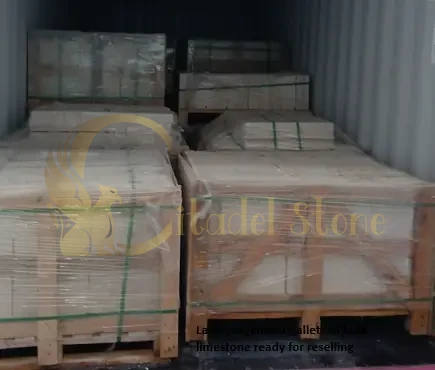
Inventory rotation and sun-damage prevention: Rotate slab positions monthly preventing prolonged UV exposure degrading surfaces. Cover outdoor inventory with UV-resistant tarps; indoor storage is ideal but costly. Track inventory age—slabs stored over 12 months may degrade in Arizona’s climate; discount or liquidate aging stock.
Damage escalation workflow: (1) Customer reports damage within 2 hours of delivery with photos. (2) Dealer inspects photos and determines fault (transit damage, pre-existing, installation error). (3) If transit damage, dealer files claim with cargo insurer and coordinates replacement with supplier. (4) Dealer provides customer with replacement timeline (typically 7–14 days). (5) Dealer documents outcome and adjusts processes preventing recurrence.
Copy-ready delivery acceptance language: “Delivered material inspected and photographed upon arrival [date/time]. Slab IDs match order: [list IDs]. Condition acceptable / [describe defects if any]. Signature constitutes acceptance of conforming material only; nonconforming items documented separately and subject to remedy per agreement.”
Common Legal & Tax Considerations (Brief)
These high-level items require professional guidance—consult local experts for specific advice.
Resale certificates and tax-exempt purchasing: Arizona Transaction Privilege Tax (TPT) resale certificates enable tax-exempt wholesale purchases. Submit certificates to suppliers with each order. Maintain organized records; audits require proof of legitimate resale intent.
Sales tax collection and remittance: Collect TPT from retail customers (rates vary by city: Phoenix 8.6%, Scottsdale 7.95%, Tucson 8.7%). Remit monthly or quarterly per Arizona Department of Revenue requirements. Trade contractor sales may be exempt if purchasing for resale—verify buyer’s resale certificate.
Proper invoicing and record-keeping: Invoices must itemize material costs,
freight, handling fees, and taxes separately. Maintain records for 5–7 years supporting tax filings and potential audits.
Liability insurance requirements: $1–$2 million general liability coverage is industry standard. Commercial auto insurance covers delivery vehicles. Workers’ compensation required if you have employees. Umbrella policies provide additional protection for high-net-worth owners.
When to consult professionals: Engage local business attorney for contract review (supplier agreements, customer terms), employment compliance (if hiring), and entity formation (LLC versus S-corp tax implications). Hire accountant or CPA for tax planning, quarterly filing support, and financial reporting. Cost of professional guidance ($2,000–$8,000 annually) prevents expensive mistakes and optimizes tax efficiency.
This is not legal or tax advice. Every business situation is unique—retain qualified local professionals providing guidance specific to your circumstances.
Citadel Stone’s limestone knowledge base — Wholesale Business Models: Understanding the Supplier Ecosystem
If you plan to buy or resell limestone in Arizona, the supplier you choose — and the business model they operate under — changes everything: price, lead time, minimums, and how much legwork you must do. Below is a fresh, plain-language guide that breaks the ecosystem into practical options and tells you what to expect when you work with each type of partner.
Quick orientation — why models matter
Different channels exist because limestone moves from quarry → processor → yard → jobsite. Each step adds cost and capability. Picking the right partner depends on whether you want low unit cost, fast local availability (Peoria, Surprise, San Tan Valley, Yuma and other Arizona markets), smaller minimum buys, fabrication support, or drop-ship convenience.
The four channel types (what they are, who they suit)
1) Direct quarry or origin sourcing
What it is: You buy the material straight from the source or through an exclusive import run.
Who it’s for: Buyers handling very large projects or dealers with storage and capital.
Pros: Lowest base material cost; consistent run/lot matching when you buy enough of the same batch.
Cons: High minimums, long lead times, freight and customs logistics if imported; requires space to store large shipments.
2) Regional wholesalers & import consolidators
What it is: Companies that buy from multiple quarries and keep yard inventory near Phoenix/Tucson.
Who it’s for: Local dealers, contractors, and designers who want wider selection and manageable minimums.
Pros: Better variety, smaller order sizes, local pickup reduces freight and turnaround.
Cons: Still require deposits for holds; the best pieces move quickly so you may need to act fast.
3) National distributors with dealer programs
What it is: Multi-state networks with formal reseller terms and standardized SKUs.
Who it’s for: Businesses that need predictable terms, marketing support, and multi-location logistics.
Pros: Consistent pricing tiers, formal warranty/return policies and easier reorders across sites.
Cons: Less flexibility on negotiation; limited access to one-off or exotic runs.
4) Fabricator partnerships (value-add model)
What it is: Fabricators offering dealer relationships — slabs + precision cutting as a combined service.
Who it’s for: Firms that want to sell finished pieces and offer fabrication without owning a full shop.
Pros: Differentiated product (custom edges, precision cutouts), simplified supply chain for customers.
Cons: Scheduling depends on fabrication backlog and requires close coordination between partners.
What wholesale programs normally include (and what they expect)
Pricing tiers: Discounts increase with volume and loyalty. Expect formal thresholds and performance reviews.
Sample & remnant access: Dealers often get priority on cut samples and discounted remnants for resale.
Credit & deposit rules: New accounts typically pay deposits; credit opens after demonstrated payment history.
Marketing support: Some national programs include co-op marketing, photos, and sample kits — useful when selling to homeowners in Peoria or Surprise.
Obligations: Suppliers often require business documentation, proof of insurance, and minimum purchase cadence to keep dealer status active.
Simple due-diligence checklist (call these things out on first call)
Ask for origin of the stone and slab/run identifiers.
Confirm sample availability and whether sample fees are credited back on order.
Verify lead times for stocked vs. special-order material.
Request proof of insurance (cargo + liability).
Get references: other Arizona dealers or contractors who buy from them.
Clarify delivery rules for outlying places (example: Yuma or San Tan Valley may have special freight scheduling).
Practical startup advice for a reseller/dealer
Minimum viable inventory: start with a limited but varied set of slabs and a healthy remnant rack — this moves faster than too many slow-selling full slabs.
Storage: covered, ventilated staging prevents heat and monsoon damage — critical in Phoenix-area climates and places like Yuma.
Equipment: forklift access and secure crate storage are baseline requirements. Don’t rely on manual handling.
Cash flow: expect deposit requirements; budget for freight and temporary staging fees during hold periods.
Logistics realities (Arizona specifics)
Short-haul vs long-haul: local yards in the valley typically deliver quickly; deliveries to remote cities incur higher per-load charges — plan accordingly for San Tan Valley or Yuma projects.
Staging for heat & storms: insist on covered crating and early-morning delivery windows in summer to avoid thermal and monsoon damage.
Consolidation: if you can combine customer deliveries in a single truck run, you’ll cut freight per job significantly.
Pricing, margins & quoting basics
Build quotes from a few line items, not a single “all-in” number: material, cutting, delivery, rigging, waste allowance, and contingency.
For small contractor jobs or retail homeowners, smaller markups are acceptable; for complex, finish-sensitive architectural work, allow room for higher margins and QA costs.
Remnants are a powerful margin lever — buy cheap, price competitively, and convert bargain hunters into repeat customers.
Fast negotiation scripts (two lines to use now)
With supplier: “Send your dealer terms including minimums, sample policy, lead times, and references for Arizona dealers.”
With a fabricator: “If I bring you regular weekly work, what cut time and partner pricing can you guarantee for same-week turnaround?”
Final checklist before you sign
Slab ID and photo documentation process agreed in writing.
Deposit, hold period, and storage fees clearly spelled out.
Lead time and production schedule documented for any cut/fabrication work.
Delivery terms (FOB origin vs delivered) and who carries freight risk defined.
Dispute resolution and replacement policy (timing, credit, or swap) confirmed.
Choosing the right wholesale partner is a business decision as much as a product decision. Whether you’re stocking a small showroom in Peoria, supplying contractors in Surprise, staging for repeat builders in San Tan Valley, or fulfilling big orders headed to Yuma, match the partner’s model to your operational strengths—not the other way around.
Check Limestone Supplier Hours & Availability: See Who is Open Now Near You in Arizona!
Conclusion & Next Steps (Copy-Ready Checklist)
Launching your Arizona limestone dealership requires systematic execution across supplier partnerships, operational setup, and market entry. Follow this immediate action plan:
Action 1 — Select and contact 3 prospective wholesale partners: Use the Supplier Introduction Email template contacting suppliers serving your target Arizona cities. Request dealer program terms, pricing, minimums, and references. Evaluate responses against the due diligence checklist.
Action 2 — Secure reseller tax ID and insurance: Apply for Arizona TPT resale certificate through Department of Revenue (2–4 weeks processing). Obtain general liability insurance ($1–$2M coverage) and cargo insurance covering initial inventory value.
Action 3 — Place pilot initial order: Start small managing risk—order 8–12 slabs plus 20–30 remnants (total $8,000–$15,000 wholesale). Test supplier reliability, assess market demand, and refine inventory mix before scaling.
Action 4 — Schedule first contractor showcase: Host Thursday morning event (7–9 AM) at your yard inviting 15–20 local contractors. Provide coffee, yard tours, and introductory trade pricing (10–15% discount) building initial customer base.
Execute these four actions within your first 30 days establishing operational foundation for sustainable growth in Arizona’s limestone market. Citadel Stone is one of the most accessible limestone suppliers near you in Arizona offering virtual consultations and slab tours.