
Budget First: What Laveen Projects Actually Cost
Limestone bullnose steps pool Laveen installations carry a cost structure that surprises most homeowners the first time they price one out — the stone itself is often the smallest line item once freight, prep labor, and setting materials are factored in. You’re looking at a material-to-labor ratio that typically runs 40:60 in the greater Phoenix West Valley market, meaning a $3,000 stone order can carry $4,500 or more in installation costs depending on site conditions and crew availability. Understanding that dynamic up front changes how you evaluate your sourcing options and which trade-offs actually matter.
Laveen sits at the southwestern edge of the Phoenix metro, which puts it at a meaningful freight disadvantage compared to projects in Mesa or the East Valley. Truck delivery from centralized warehouse facilities adds mileage that compounds on heavy stone orders — limestone bullnose units in the 3-inch nominal thickness range run 15 to 18 pounds per linear foot, and a standard entry configuration of eight to ten steps can push your pallet weight past 1,800 pounds before you account for additional pool coping or adjacent deck material. That weight means you’re looking at a dedicated delivery rather than a consolidated run, and the scheduling window matters.
Freight Distance and Sourcing Decisions
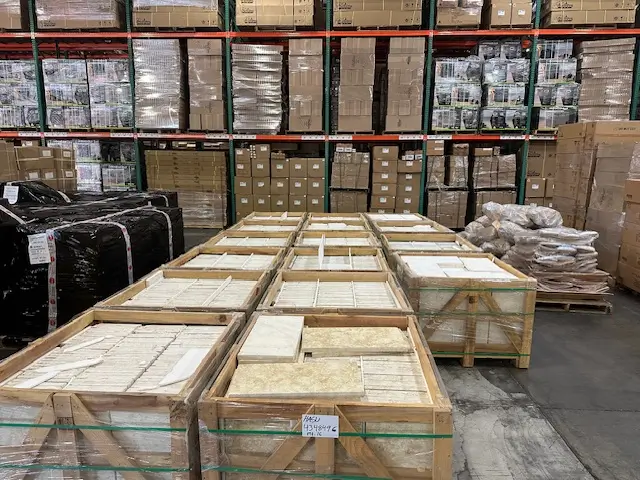
The sourcing decision for limestone bullnose steps pool projects in Laveen isn’t just about price per square foot — it’s about total delivered cost and lead time reliability. At Citadel Stone, we maintain warehouse inventory specifically calibrated for Arizona pool contractors, which typically compresses lead times to one to two weeks versus the six to eight week import cycle that catches residential projects off guard. That gap matters enormously when your pool contractor has a pour date locked in and your stone needs to be on-site before the deck crew mobilizes.
Your decision to source locally versus import directly affects more than just timing. Arizona swimming entrance configurations involve stepped profiles that require consistent color matching across multiple units — something that’s genuinely difficult to guarantee when you’re ordering from overseas in smaller quantities. Domestic warehouse stock lets you inspect units before they’re delivered, verify matching, and pull replacements without delay if a unit arrives with a fissure or edge chip that disqualifies it for a nosing application.
- Freight surcharges for Laveen deliveries typically run 8–15% above central Phoenix rates due to distance from major distribution corridors
- Minimum order quantities for specialty bullnose profiles can force you to over-order by 10–20% when sourcing from import suppliers — domestic warehouse stock reduces that waste
- Lead time variability from overseas suppliers has run 4–12 weeks depending on port conditions, which creates real scheduling risk on projects with fixed pool-fill dates
- Local warehouse availability allows phased delivery — your bullnose steps arrive first, coping follows on a separate truck — which simplifies site logistics considerably
Labor Market Conditions in the West Valley
The West Valley labor market for pool stone installation operates differently than what you’d encounter in Scottsdale or North Phoenix. Experienced natural stone setters who understand bullnose profile installation — specifically the back-buttering technique and the slight forward pitch required for aquatic access design — are less concentrated in Laveen’s immediate area. That translates to either longer scheduling lead times or a premium rate for crews willing to travel from the East Valley or central Phoenix job corridors.
Your project budget should account for that labor premium honestly. The aquatic access design for a residential pool entry isn’t complicated from a structural standpoint, but the finish quality is unforgiving — the rounded nosing on a bullnose step is exactly where an inexperienced setter will leave lippage or an uneven mortar bed that creates both an aesthetic and a safety problem. Budgeting $18–26 per square foot for skilled installation (2024 West Valley market rates for natural stone in wet environments) is realistic, and cutting that number to find savings usually shows up in the finished product.
Limestone Performance at Pool Entry Points
Arizona’s pool environments subject limestone water entry steps to a specific stress cycle that other hardscape applications don’t replicate — constant wetting and drying, chlorinated water exposure, and foot traffic that concentrates at the leading edge of each tread. Limestone bullnose steps pool applications demand a material that handles all three simultaneously, and not all limestone performs equally here. You’ll want to specify a dense, low-absorption limestone — absorption rates below 3% by weight per ASTM C97 — rather than the softer, higher-porosity varieties that work fine for dry patio applications but deteriorate noticeably within three to four seasons in a pool environment.
The bullnose profile itself serves a specific functional purpose that’s worth understanding at a technical level. The rounded nosing eliminates the sharp corner that would otherwise concentrate chlorinated water and create a surface where crystalline salt deposits accelerate edge spalling. In practice, you’ll see significantly less edge degradation on properly specified bullnose units than on square-edged steps that were simply rounded in the field — the profile needs to be formed during the finishing process, not cut afterward, to maintain the surface integrity of the stone face.
- Specify limestone with minimum 12,000 PSI compressive strength for pool step applications — lower-strength material develops micro-fractures at the nosing under repeated thermal cycling
- ASTM C1028 wet static coefficient of friction should reach 0.60 or higher — this is the threshold where barefoot pool entry becomes reliably safe across age groups
- Thermal expansion coefficient for quality limestone runs approximately 3.3–4.5 × 10⁻⁶ per °F, which requires you to include expansion joints every 10–12 linear feet in full-sun Arizona installations
- Limestone water entry steps in Arizona should carry a minimum 3-inch nominal thickness — 2-inch material is adequate for deck applications but insufficient for the point loading at pool entry nosings
Installation Variables That Shift Your Budget
The base condition at your pool entry point is the single largest variable in installation cost — and it’s the one most frequently underestimated in early project budgets. Pool decks in Laveen often sit over compacted fill that was placed during pool construction, and that fill’s settlement behavior over two to three years determines whether your stone installation goes in cleanly or requires additional substrate work before the mortar bed can be established. A full thinset mortar installation over a 1.5-inch bed on a stable substrate runs straightforward. A substrate that shows deflection or soft spots requires either additional concrete work or a deeper setting bed, which adds both material and labor cost that your initial quote won’t have captured.
For limestone bullnose steps in Arizona, the mortar mix specification also matters more than most homeowners realize. Standard thinset isn’t adequate for wet, submerged, or splash-zone applications — you need a polymer-modified thinset rated for wet areas, and your grout selection needs to be unsanded with a chemical resistance rating appropriate for chlorinated environments. That upgrade in setting materials adds roughly $200–400 to a typical residential step installation but is the difference between a joint that holds for 15 years and one that starts failing at the grout-to-stone interface within three seasons.
Citadel Stone bullnose step facility
Value Engineering Your Step Configuration
Your pool entry configuration presents real value engineering opportunities that don’t compromise performance — but they require you to make decisions early, before your contractor has committed to a layout. The tread depth specification is where most residential projects leave money on the table. Standard aquatic access design calls for a 12-inch tread minimum, but moving to 14 or 16 inches feels significantly more comfortable for families with young children and reduces the tripping risk that creates liability exposure. The material cost difference between 12-inch and 16-inch treads on a six-step entry is typically under $300 — a worthwhile investment that’s virtually impossible to retrofit later.
Riser height uniformity matters both for code compliance and for installation efficiency. In Gilbert and similar East Valley markets, inspectors have tightened tolerance on riser height variation to ¼ inch maximum across any flight of steps — Laveen’s Maricopa County jurisdiction maintains similar standards. Your installer needs to account for that tolerance during the mortar bed stage, not after the stone is set. Correcting riser uniformity after installation requires removal and reset, which easily doubles the labor cost on the affected steps.
- Six to eight steps covers most residential pool entries at standard deck-to-water-surface transitions — more steps than this usually indicates a design issue with deck elevation that should be resolved before stone installation
- Corner returns on entry step configurations add roughly 15–20% to your stone cost but eliminate the exposed aggregate or concrete edge that otherwise shows on side walls
- Specifying consistent bullnose profile units from a single production lot — which warehouse-stocked material makes easier — eliminates color and profile variation that shows at nosing joints
- A landing pad at pool level using the same limestone water entry steps material ties the installation together visually and provides a consistent maintenance protocol
Regional Climate as a Supporting Specification Factor
Laveen’s desert climate does influence your specification even if budget and sourcing decisions come first. The relevant thermal variable for Laveen pool stairs isn’t the air temperature — it’s the surface temperature differential between the shaded pool water and the sun-exposed upper steps, which can swing 60–80°F across the entry flight on a July afternoon. That differential creates a daily thermal cycling load at the stone-to-mortar interface that accumulates over years, and it’s why your expansion joint placement in the step configuration matters as much as your stone selection. Joints placed every 10–12 feet along the step run, and at the transition between the step structure and the surrounding pool deck, relieve that cycling stress before it concentrates at grout joints.
Limestone bullnose steps in Arizona pool environments also interact with sunscreen, pool chemicals, and algae in ways that affect your sealing protocol. A penetrating silane-siloxane sealer applied to the pool entry steps at commissioning — and renewed every 18 to 24 months — provides the chemical resistance needed to prevent chlorine migration into the stone matrix. In Yuma, where pool season extends nearly year-round and UV intensity is exceptionally high due to lower elevation and more direct sun exposure, resealing intervals closer to 18 months rather than 24 are warranted. For Laveen’s climate, 24 months is a defensible interval if you’re using a high-quality penetrating sealer at the correct application rate.
Ordering Logistics and Project Timeline
Your project timeline for limestone bullnose steps pool installation in Laveen should work backward from the pool completion date, not forward from when you start shopping. Pool contractors typically need entry steps installed and cured before water fill — that’s a fixed constraint. Working back from fill date, you need to allow 7 days minimum cure time after installation, 1 day for installation, and the material needs to be on-site at least 48 hours before installation begins so it can acclimate and be inspected. That puts your confirmed order date at a minimum of 10 days before fill, and realistically 3 weeks if you need to account for delivery scheduling and any warehouse stock confirmation.
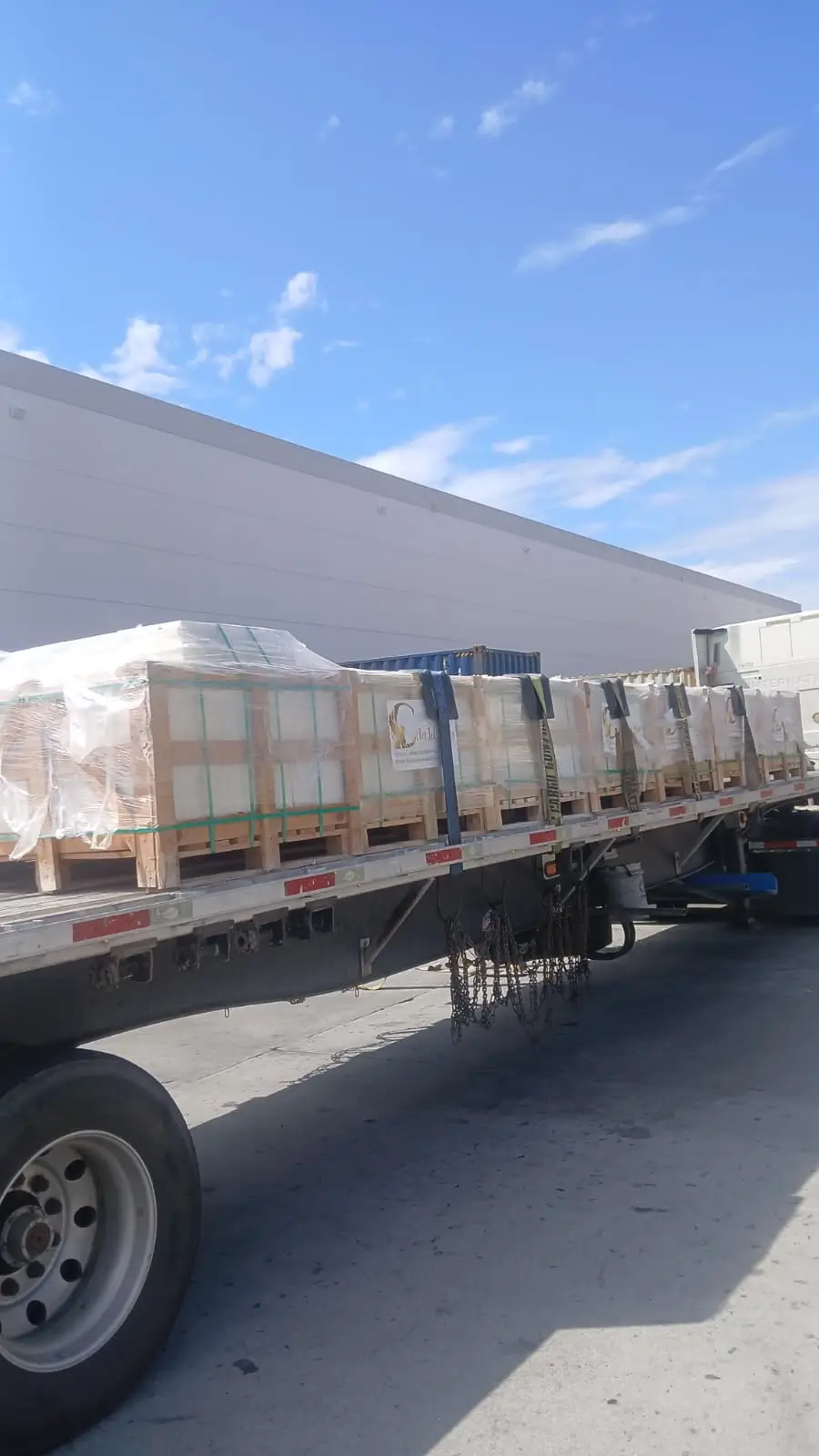
The truck delivery logistics for Laveen sites deserve specific attention. Many Laveen residential streets handle truck access without issue, but if your project site has restricted access — narrow gates, overhead obstructions, or soft soil adjacent to the delivery path — you need to communicate that to your supplier before the delivery is scheduled. A pallet of limestone bullnose steps requires a lift gate truck or forklift for safe unloading, and a delivery that arrives without the right equipment creates a costly reschedule. At Citadel Stone, we coordinate site access details before scheduling delivery specifically because West Valley sites have more variability in truck access than projects closer to the Phoenix core.
- Confirm warehouse stock availability for your specific bullnose profile and thickness before signing a contractor agreement — stock levels for specialty profiles fluctuate and lead times should be verified, not assumed
- Order 10% overage on your linear footage calculation to account for cuts at transitions and any units that arrive with edge damage
- Delivery timing relative to other trades matters — stone pallets sitting on a freshly formed pool deck can damage the surface if not placed on protective padding
- Request lot documentation from your supplier so all units in your order come from the same production batch — this matters for color consistency across the full installation
Decision Points
The most impactful decisions in a limestone bullnose steps pool project for Laveen come before your contractor breaks ground — specifically, your sourcing choice, your setting material specification, and your mortar bed depth requirement. These three decisions interact with each other and with your budget in ways that don’t reverse easily once the project is underway. Sourcing from domestic warehouse inventory gives you the inspection access and lead time reliability that Arizona pool project schedules require. Specifying polymer-modified setting materials rated for wet environments protects the joint integrity that determines long-term performance. Requiring a 1.5-inch minimum mortar bed over a verified substrate gives your installer the working depth needed to hit riser uniformity tolerances without shortcuts.
For a complementary perspective on design decisions involving similar Arizona swimming entrance applications in the West Valley, Limestone Bullnose Steps Safety Design for Litchfield Park Outdoor Stairs explores how safety specification criteria shape installation decisions in a related project context — worth reviewing as you finalize your own Laveen pool stairs configuration. Your project deserves the same level of specification rigor regardless of project scale, because the failure modes in wet-zone stone installation don’t scale down with project size. Citadel Stone’s limestone bullnose steps represent decades of perfecting natural stone selection for Arizona aquatic environments.