
Compressive strength ratings for limestone block walls in Arizona regularly exceed 8,000 PSI when you source material from formations with low absorption coefficients — but that number means nothing if your footing depth doesn’t account for the expansive clay soils that underlie much of the Fountain Hills terrain. Limestone block walls Fountain Hills projects demand a fundamentally different approach than what works in flat-valley installations, because the elevation, the drainage dynamics, and the aesthetic context all push your specifications in directions that generic guides simply don’t address. Get the foundation geometry right and you’re building something that outlasts the neighborhood. Miss it, and you’ll be re-setting blocks within a decade.
Why Limestone Works So Well in Fountain Hills
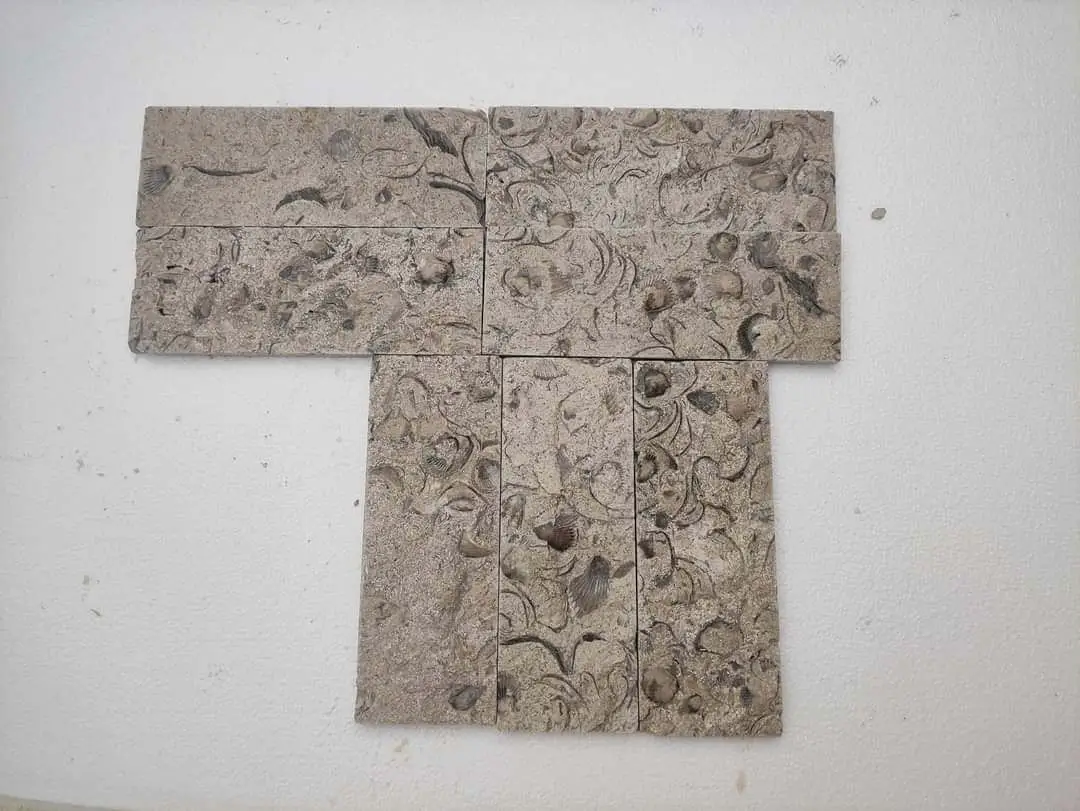
The geology of the McDowell Mountain foothills does something interesting for limestone performance: the natural desert palette, the warm ochre and buff tones of surrounding rock faces, and the angular terrain all align almost perfectly with what well-selected limestone block brings to a boundary wall. You’re not fighting the landscape — you’re extending it. That visual continuity is one reason limestone block construction Arizona designers and landscape architects keep coming back to this material for high-desert residential applications.
Beyond aesthetics, limestone’s thermal mass characteristics work in your favor here. Block walls absorb solar radiation through the day and release it gradually in the evening, which actually moderates the microclimate along property boundaries. Surface temperatures on a well-specified limestone wall typically run 15–20°F cooler than adjacent CMU or concrete block under the same afternoon exposure. That difference matters when you’re establishing shade gardens or outdoor living spaces directly adjacent to the wall face.
- Limestone’s natural buff and tan tones integrate with desert landscaping without requiring painted finishes that degrade under UV exposure
- The material’s inherent porosity allows minor moisture vapor transmission, reducing hydrostatic pressure behind retaining applications
- Block-coursed construction permits selective removal and replacement without compromising full-wall integrity
- Surface texture provides natural traction and ages gracefully in desert conditions, unlike smooth concrete finishes that chalk and stain
Footing and Base Requirements for Arizona Structural Walls
Here’s what most boundary wall projects get wrong before the first block is ever set: the footing depth is calculated against frost penetration tables written for northern climates. In Fountain Hills, your concern isn’t frost — it’s the volume change in Vertisol clay-influenced soils that swell 8–12% with seasonal moisture cycles. Your footing needs to extend a minimum of 24 inches below finish grade, with a continuous concrete footing width of at least 1.5 times the block thickness you’re using.
For a standard 12-inch limestone block wall, that means an 18-inch-wide by 12-inch-deep reinforced concrete footing as a minimum — but in areas with documented expansive soil, bumping that to a 24-inch wide footing with #4 rebar on 12-inch centers eliminates the differential movement that cracks mortar joints and displaces block courses over time. Projects in San Tan Valley have demonstrated that under-engineered footings on expansive soils account for the majority of premature boundary wall failures across the east Valley region.
- Perform a soil expansion index test before finalizing footing dimensions — don’t assume uniform soil conditions across a single parcel
- Install compacted granular fill (3/4-inch clean crush) at a minimum 6-inch depth below the footing to interrupt capillary moisture rise
- Use isolation joints between the wall footing and any adjacent structures to allow independent movement
- Grade drainage away from both wall faces at a minimum 2% slope to prevent water pooling against the footing perimeter
Block Sizing and Coursing Decisions
Your block dimensions determine the wall’s structural behavior more than almost any other variable. Standard nominal dimensions for Arizona structural walls run 12 × 8 × 4 inches through 16 × 8 × 6 inches for boundary wall block construction applications, but the choice between them isn’t just aesthetic. Thicker blocks carry higher compressive loads and provide superior thermal mass, but they also add dead weight to the footing — a factor that circles back to your soil expansion calculations.
For walls between 36 and 48 inches in height (the most common boundary wall range in Fountain Hills HOA-governed communities), a 4-inch-nominal block in running bond is structurally adequate when you reinforce pilasters at 8-foot intervals. Exceeding 48 inches of exposed wall height triggers a different engineering regime entirely — you’re now in engineered retaining wall territory with geogrid or deadman anchor requirements depending on the surcharge behind the wall face. Don’t let a contractor talk you into a taller wall without updated engineering drawings.
Mortar Specifications and Joint Performance
Type S mortar is the correct specification for Arizona boundary wall block construction — not Type N, regardless of what the bag recommends for general masonry. The compressive strength difference matters less than Type S’s superior bond strength and resistance to the moisture cycling that happens even in desert climates during monsoon season. Type N mortar joint failures at the block face appear within 5–8 years in high-UV desert exposure; Type S consistently outperforms it across a 15–20-year evaluation window.
Joint width deserves more attention than it typically receives on residential projects. A 3/8-inch nominal mortar joint is standard, but the thermal expansion coefficient of limestone block at roughly 4.4 × 10⁻⁶ per °F means a 20-foot wall run can see nearly 3/16-inch of dimensional change between winter nights and summer afternoons. Tooled concave joints manage this movement better than flush or raked joints because the geometry distributes stress across the joint face rather than concentrating it at the block edge.
- Pre-wet limestone blocks immediately before setting in warm weather — dry block draws moisture from the mortar too quickly and reduces bond strength by 30–40%
- Do not mix mortar batches larger than can be used within 45 minutes during temperatures above 90°F
- Control joints (un-mortared joints with backer rod and sealant) should be incorporated every 25–30 linear feet on long wall runs
- Pointing and tuck-pointing should use a mortar match for compressive strength — never use a stronger mortar than the original to repair joints
Drainage Integration in Limestone Block Wall Design
The drainage design for limestone block walls Fountain Hills applications cannot be treated as an afterthought. The McDowell Sonoran terrain generates significant sheet flow during monsoon events, and a solid boundary wall that lacks adequate drainage accommodation becomes a dam — building hydrostatic pressure that pushes block faces outward and undermines mortar adhesion from behind. Weep holes at 4-foot horizontal intervals at the lowest course above grade are a non-negotiable minimum specification.
For walls with backfill on one side — even shallow backfill for grade transition — a perforated drain pipe wrapped in filter fabric at the base of the fill column makes the difference between a wall that performs across decades and one that develops an outward lean within five monsoon seasons. You can visit Citadel Stone’s limestone paver facility to review the full range of drainage accessories and complementary limestone products that integrate with structural wall applications in Arizona.
Surface water management above the wall footprint matters equally. Grade the soil within 3 feet of the wall base to direct water away at a minimum 5% slope. In cut-slope applications common in Fountain Hills’ hillside lots, upslope interceptor drains routed to daylight prevent the saturation events that silently damage wall foundations over years of accumulated seasonal cycles.
Capstone and Coping Details
The capstone course is where many otherwise-solid Fountain Hills stone walls compromise their longevity. An unprotected top course exposes the full block face to water infiltration — rain sits in the block’s natural porosity, migrates into mortar joints during thermal contraction, and cycles through freeze-thaw stress even in low-desert climates during the brief but real January cold snaps Fountain Hills experiences at its 1,520-foot elevation.
Specify a capstone unit with a minimum 1-inch overhang on each wall face and a wash slope of at least 5° to direct water runoff away from the wall face. Sawn limestone capstones with a honed top surface and rough-split face profile are a practical choice — they shed water predictably, they match the block coursing material for visual continuity, and they maintain the boundary wall’s architectural character without the cost premium of custom cut coping. For walls with finished-grade pilasters, a cap-and-base detail in matching limestone block frames the structural element and reinforces the design intent throughout the entire boundary wall block construction Arizona specification.
Sealing and Long-Term Maintenance
Sealing limestone block walls in Fountain Hills isn’t optional — it’s maintenance scheduling. The high UV index and the seasonal moisture swings between dry winter and monsoon summer create conditions that accelerate calcite surface degradation and biological staining (algae, iron oxide) on unprotected surfaces. A penetrating silane-siloxane sealer applied at initial installation and renewed every three to four years provides adequate protection without changing the block’s visual character.
Avoid film-forming sealers on outdoor block walls — they trap vapor within the block matrix, and when that vapor pressurizes during temperature cycling, it spalls the face of the block in sheets. That failure mode is frustrating to diagnose if you’re not familiar with it, because the surface damage appears without any obvious cause. Limestone block suppliers in Arizona familiar with desert performance conditions consistently specify penetrating sealers for boundary wall applications rather than the coating-type products that work fine on indoor tile.
Maintenance schedules should also include annual mortar joint inspection after monsoon season. Water infiltration behind cracked joints is typically invisible until the damage is significant. A quick visual walk-along in October — after the wet season but before the joints cool and contract for winter — catches hairline cracking when it’s still a tube-of-sealant repair rather than a tuck-pointing project. Projects in Yuma and comparable low-desert environments show that this annual inspection discipline consistently extends mortar joint service life by 30–40% compared to deferred maintenance approaches.
Project Planning and Material Logistics
Logistics for Fountain Hills limestone block wall projects involve a detail that surprises first-time builders in this location: truck access. The community’s hillside road geometry, combined with the weight of full limestone block deliveries, means your truck routing needs to be mapped before material is ordered. A standard flatbed carrying 20,000 pounds of block requires a turning radius and road width that not all Fountain Hills residential streets accommodate without coordination with the driver in advance.
At Citadel Stone, we recommend confirming your warehouse order with a minimum 10-business-day lead time on large block quantities — this allows our team to stage material in the correct unit sizes and avoid the mix-up between nominal and actual dimensions that causes block-short situations mid-installation. Confirming your exact block count with a 7–10% overage allowance accounts for cutting waste and the occasional defective unit without requiring a second truck delivery that disrupts the installation schedule.
- Calculate block quantities by wall face area divided by individual block face area, then add 8–10% for waste and cuts
- Confirm weight per pallet with your warehouse contact — limestone block pallets typically run 2,400–3,200 lbs depending on block size, which affects your site access planning
- Stage material as close to the work area as truck access allows to minimize hand-carry distances for heavy block units
- Inspect each pallet upon delivery for corner damage and mortar face defects — returns and replacements are far easier to arrange before installation begins
For projects in Avondale and other west Valley communities, Citadel Stone’s distribution logistics allow for coordinated delivery scheduling that keeps project timelines tight without requiring contractors to hold excess material on-site. The same coordination applies to Fountain Hills projects with constrained staging areas.
Wrapping Up
The decisions that define limestone block wall performance in Fountain Hills aren’t made at the block face — they’re made underground and in the specification document. Footing geometry calibrated to actual soil conditions, mortar type matched to desert exposure, drainage designed for monsoon-scale events, and a maintenance schedule that catches joint deterioration before it compounds: these are the variables that separate 15-year walls from 40-year walls on the same street. Limestone block walls Fountain Hills property owners invest in are worth specifying correctly from the start, because remedial work on an established wall costs multiples of what the original specification upgrade would have.
As you finalize your Arizona structural walls specification and consider complementary stone features across your property, it’s worth exploring the decorative dimension of limestone in greater detail. Limestone Tile Mosaic Options for Cave Creek Decorative Details covers how Citadel Stone limestone products perform in a different but related hardscape context — useful background when you’re coordinating material selections across multiple features on the same Arizona property. Our limestone block materials for Arizona boundary walls are sourced from quarry formations selected specifically for their high compressive strength and low absorption performance in desert climates.