
Limestone block retaining in Avondale doesn’t announce itself as a failure risk — slope failure builds quietly through repeated wet-dry cycles until a retaining system that looked solid on day one starts rotating forward at the base. Limestone block retaining systems interrupt that process with mass and permeability working together, but the performance gap between a well-specified installation and a marginal one comes down to decisions made before the first block is set. Understanding what drives those decisions is what separates retaining walls that last decades from ones that need remediation within five years.
Why Limestone Works for Avondale Slope Conditions
The soil profile across much of Avondale runs to expansive clay beneath a sandy cap — a combination that punishes rigid wall systems and rewards mass-based designs. Limestone block retaining systems carry inherent weight that resists lateral earth pressure without depending entirely on tie-backs or geogrid reinforcement, which is a meaningful advantage when subsurface conditions make anchor installation unpredictable. The material’s natural porosity also allows water to migrate through the block face rather than pool behind it, reducing the hydrostatic pressure that causes most wall failures.
Compressive strength for quality limestone block typically runs between 8,000 and 15,000 PSI depending on formation density, which puts it well above the structural demands of residential and light commercial slope retention. Limestone is not chosen because it’s decorative first — it earns its place because its density-to-cost ratio makes it one of the most efficient ways to move load into competent subgrade. These Avondale slope solutions work because the physics are sound, not because the material is fashionable.
Base Preparation and Footing Depth for Arizona Retaining Systems
Footing depth in Avondale needs to account for two things most generic specs ignore: the presence of caliche at variable depths and the thermal cycling that causes shallow footings to heave over time. Caliche can be an asset or an obstacle depending on its depth and consistency — a continuous layer at 18 inches provides excellent bearing capacity, while a fractured or inconsistent layer creates differential settlement that tilts block courses over years. Probing for it before finalizing footing depth is essential rather than assuming a standard 12-inch embedment will perform.
- Minimum footing width should be 1.5 times the block depth for walls exceeding 3 feet in height
- Compacted crushed aggregate base of 4–6 inches beneath the footing course prevents fine migration into block joints
- Batter the wall face at 1 inch per foot of height as a minimum — steeper cuts on unstable slopes may require 1.5 inches per foot
- Drainage aggregate backfill (3/4-inch clean gravel) should extend at least 12 inches behind the block face for the full wall height
- Weep openings or drain pipe at the footing course are non-negotiable — omitting them is the single most common cause of hydrostatic failure in Arizona retaining systems
In Phoenix and the surrounding West Valley, soils often contain sulfate concentrations that can degrade Portland cement-based grout used in some block systems. If you’re mortaring block courses, specify a sulfate-resistant mix or rely on dry-stacked mass for walls under six feet where site conditions permit.
Block Sizing and Course Layout for Slope Control
The block dimensions you select drive every other decision in the wall system. Standard landscape limestone blocks run in nominal 6×12×4-inch and 6×12×6-inch profiles, but for Avondale slope solutions requiring walls above 4 feet, stepping up to larger format blocks — 8×16×8 nominal or equivalent — reduces the number of courses needed to achieve design height while improving stability against overturning. The increased mass per course is the key variable, not aesthetics.
Limestone block terracing in Arizona projects often involves stepped wall systems rather than a single tall wall, and that’s intentional from an engineering standpoint. A series of 3-foot walls with level terraces between them distributes the retained earth load across multiple structures, reduces the surcharge on any single wall base, and creates opportunities for planting pockets that add visual interest and root-based slope stabilization. Each terrace level should be treated as a separate drainage zone with its own outlet path rather than letting water cascade from level to level.
- Running bond patterns (half-block offset per course) outperform stacked bond in lateral load resistance by 25–35%
- Cap blocks should be set with a compatible mortar or construction adhesive to prevent displacement from foot traffic or equipment
- Corner and end block treatment requires special attention — exposed ends should use full-depth corner units rather than cut faces
- For walls over 4 feet, consult a licensed geotechnical engineer for a site-specific stability analysis before finalizing block sizing
Drainage Design Behind Retaining Block Systems
Drainage is where retaining block systems succeed or fail in Arizona’s monsoon climate, and the design challenge is different here than in most of the country. Avondale slopes can receive 2–3 inches of rain in a single afternoon storm event, creating flash saturation conditions that push hydrostatic pressure to multiples of the static design load within minutes. The drainage system needs to handle peak flow, not average flow — specify it for the 10-year storm event at minimum.
Behind the block face, a continuous column of 3/4-inch washed gravel works better than drainage fabric alone because fabric can clog with Arizona’s fine caliche dust over time. Run a perforated 4-inch drain pipe at the base of the gravel column with the perforations facing down, sloped at 1% minimum to a daylight outlet or collection basin. Citadel Stone’s technical team consistently advises clients to add cleanout access points at wall ends and corners — it costs almost nothing during installation and saves significant excavation expense if the drainage line needs servicing later.
Specifying limestone block suppliers in Arizona who carry split-face profile blocks with intentional surface texture also helps manage surface runoff velocity down the wall face during heavy rain events — reducing erosion at the base of the wall where the block meets grade. This is a detail that separates purpose-built Arizona hillside support systems from generic retaining designs imported from wetter climates.
Limestone Block Terracing for Arizona Grade Changes
Limestone block terracing Arizona projects demand careful attention to the horizontal dimension as well as the vertical one. The terrace width between wall faces should be at least equal to the wall height for residential applications — a 3-foot wall needs a minimum 3-foot terrace — but wider terraces give you flexibility to incorporate drip irrigation, groundcover planting, and gravel mulch that significantly reduce maintenance burden on the slope. Narrow terraces collect debris, restrict access for inspection, and limit the root zone for any vegetation used for additional stabilization.
In Scottsdale, where hillside residential development has produced decades of terraced landscape data, the projects that hold up best over time consistently share two characteristics: adequate terrace width for maintenance access and positive drainage on each terrace level directed away from the wall face. Both are design decisions, not material decisions — the limestone block performs regardless, but the system around it determines longevity.
- Grade each terrace at 2% minimum away from the upper wall face to prevent water pooling against the block
- Plan irrigation systems before backfilling — retrofitting drip lines after wall completion damages drainage aggregate
- Use native or drought-adapted plants on terraces to minimize irrigation volumes that add to soil moisture loading behind the wall
- Install terrace surfaces with decomposed granite or gravel rather than impermeable hardscape to maintain infiltration capacity
Material Sourcing and Lead Times for Arizona Retaining Projects
Sourcing limestone block for retaining applications in Arizona means navigating availability gaps that can affect your project schedule significantly. Domestic quarried block — particularly from Texas Hill Country formations — typically reaches Arizona warehouse stock within 2–3 weeks, while imported block from Mediterranean sources runs 8–12 weeks from order to delivery. For projects in Avondale with firm grading or permit windows, domestic material is almost always the right choice even if the cost per ton is slightly higher.
Verifying warehouse stock levels before committing your project timeline to a specific block profile is essential. Limestone block retaining systems require consistent coursing height across the full wall, which means matching block from the same production run is non-negotiable. Mixing batches from different quarry cuts can introduce variation in block height that accumulates across courses and creates visible irregularity at the cap level. At Citadel Stone, we source and batch-verify our limestone block inventory specifically to prevent this issue — it’s a quality step that matters more for retaining applications than decorative paving because the structural coursing has to be consistent.
Truck access to the installation site is worth evaluating early in the planning process. Full truckloads of limestone block weigh 40,000–44,000 pounds, and delivery vehicles need a clear turning radius of at least 60 feet and a firm surface capable of supporting that load without rutting. Avondale slope sites often have narrow access paths — scheduling split deliveries or arranging material staging in a nearby flat area and hauling by smaller equipment to the wall location may be necessary. A second truck delivery run is always cheaper than repairing a rutted access drive or a damaged retaining installation.
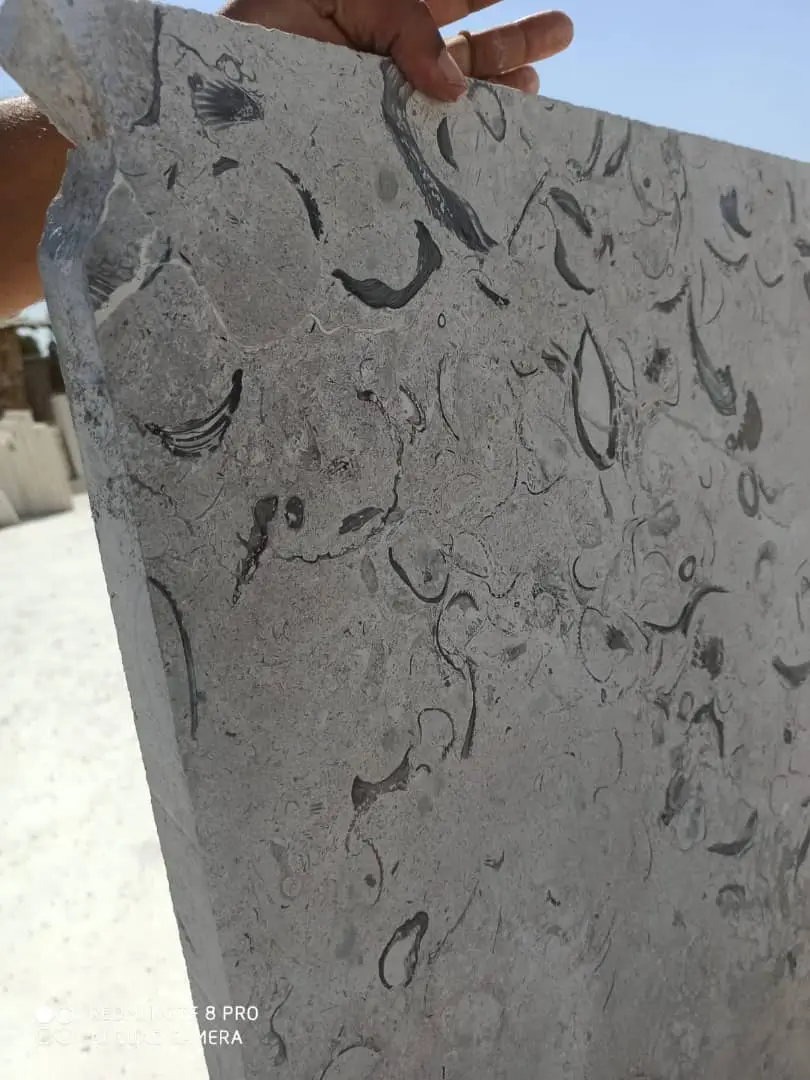
You can browse our limestone slab inventory to understand the range of limestone products available for Arizona projects, including formats that complement block retaining systems with surface treatments for adjacent grade areas.
Surface Finish and Weathering Performance in Arizona Conditions
Limestone block for retaining applications in Arizona should be specified with split or tumbled face finishes rather than sawn smooth faces. The textured surface provides better interlock friction between dry-stacked courses, improves drainage off the face during rain events, and weathers more gracefully in the desert environment where sun bleaching and dust accumulation affect appearance over time. Sawn face block looks sharp on installation day and increasingly institutional five years in — the textured alternative improves with age.
Arizona’s UV intensity accelerates surface weathering on all natural stone, but limestone’s calcium carbonate composition responds by developing a surface patina that actually improves stain resistance over time. Sealing limestone block retaining walls is unnecessary — sealing is appropriate for horizontal limestone paving where liquid penetration is the concern, but vertical retaining block faces shed water naturally and don’t benefit from sealer application. Save the sealing budget for cap stone and any adjacent paving elements.
- Split face block: best for rustic and naturalistic applications, maximum friction for dry-stacked systems
- Tumbled face block: rounded edges reduce chipping risk from equipment contact during landscape maintenance
- Sawn face block: appropriate only for mortared systems in formal settings where coursing alignment is architecturally critical
- Natural cleft face: highest variation in texture and color, works best in informal terraced settings with native plantings
Permits and Engineering Requirements for Avondale Retaining Walls
Avondale follows Maricopa County and Arizona state requirements for retaining wall permits, and the threshold that triggers a required permit and structural review is generally 30 inches of retained height — but verifying with the City of Avondale Development Services directly is essential since local amendments can lower that threshold in hillside overlay districts. The permit requirement also applies cumulatively: two 24-inch walls in close proximity may be treated as a single taller structure for code purposes.
For walls exceeding 4 feet of retained height, a licensed engineer’s stamp on the wall design is typically required regardless of material. A limestone block retaining Avondale project will need a cross-section detail showing block dimensions, footing depth and width, batter angle, drainage assembly, and any geogrid or deadman anchors used for taller configurations. Getting that drawing right the first time is faster than responding to plan check corrections — budget for a geotechnical consultation early in the design phase rather than at permit submittal.
In Tucson, hillside development ordinances have become progressively more specific about retaining wall design documentation over the past decade, and similar regulatory tightening is visible across Arizona municipalities. Designing to a higher standard from the outset — even for walls below the permit threshold — protects your project if the rules change before a multi-phase slope development is complete. Arizona hillside support requirements are moving in one direction, and that direction is more documentation, not less.
Last Word
Limestone block retaining for Avondale slope control succeeds when three elements align: a drainage system designed for peak monsoon flow, block sizing and batter appropriate to the retained height, and a sourcing plan that ensures consistent material from matched production runs. The material itself is proven for Arizona conditions — it’s the system design and installation sequencing that determine whether you’re looking at a 10-year repair cycle or a 30-year performance record. Every decision made before the first block is set matters more than any decision made during installation.
As you finalize your retaining wall specification, related Arizona hardscape applications can inform your broader site approach — Limestone Block Wall Construction for Fountain Hills Boundary Walls covers how limestone block performs in a different structural context that shares many of the same Arizona climate and material considerations. At Citadel Stone, we supply limestone block retaining systems to Arizona projects with the batch consistency and delivery logistics that slope control installations demand. We offer tumbled limestone paving slabs Arizona residents love for their Old World charm.