
Porosity is the variable that determines whether your limestone bathroom tile Peoria installation performs for 25 years or starts showing problems in five — and most specs get it wrong from the start. Natural limestone in wet area applications demands a level of pre-treatment and sealing specificity that generic tile guides consistently underestimate. The chemistry of calcium carbonate under sustained moisture exposure isn’t forgiving, and Arizona’s hard water compounds the issue by accelerating mineral deposit buildup inside the stone’s open pore network.
Understanding Limestone Performance in Wet Areas
The material’s porosity range — typically 5% to 20% depending on formation density — is the first number you need to nail down before specifying for any shower or bathroom floor. Tighter-grained Jura limestone sits at the lower end of that range and behaves almost like a closed-surface material when properly sealed. Looser-grained varieties from certain Turkish and Spanish quarries can run above 15%, which changes your sealing protocol entirely and increases your maintenance commitment significantly.
Field performance data on limestone shower applications Arizona installers have tracked over the past decade consistently shows that the failure point isn’t the stone itself — it’s the interface between stone and substrate when moisture migrates through inadequate waterproofing membranes. You’re not just sealing the surface; you’re managing the entire moisture pathway from tile face to framing.
- Porosity above 12% requires a penetrating consolidant applied before any surface sealer
- Water absorption testing per ASTM C97 should be completed on your specific lot before installation
- Surface finishes dramatically affect slip resistance — honed limestone at 0.42 COF is borderline for wet floor applications under ANSI A137.1
- Tumbled or brushed finishes elevate COF to 0.65–0.72, which meets ADA wet floor recommendations comfortably
- Thermal sensitivity in limestone is lower than granite but still requires movement joints every 8–10 feet in floor applications
Substrate and Waterproofing Requirements for Bathroom Stone Tile
Here’s what most specifiers miss when working with bathroom stone tile in Arizona wet areas: the substrate deflection tolerance for natural stone is considerably tighter than for ceramic or porcelain. The TCNA handbook specifies L/360 minimum deflection for stone tile installations — but in practice, you want to push toward L/600 for limestone because its lower tensile strength makes it crack-vulnerable under substrate flex. That means your bathroom subfloor needs to be stiffer than you’d typically design for a standard tile job.
Cement board is the minimum acceptable substrate in shower environments, but uncoupling membrane systems have become the preferred specification for high-value limestone installations. The drainage plane built into uncoupling membranes handles the lateral moisture migration that straight cement board cannot — and in Peoria‘s climate, where temperature differentials between conditioned bathroom interiors and exterior walls can drive condensation into wall assemblies, that drainage capacity matters more than most homeowners realize.
- Install a full waterproofing membrane (liquid-applied or sheet) behind all wet wall substrates
- Extend waterproofing minimum 6 inches above the finished shower dam height
- Use 3/4-inch exterior-grade plywood as a secondary subfloor layer before cement board in ground-level bath applications
- Flash all transitions — curb-to-floor, wall-to-floor — with fabric-reinforced membrane before setting stone
- Allow cement board substrate to cure 24 hours before beginning mortar bed application
Mortar Selection and Setting Bed Specifications
Your mortar selection for limestone in wet environments needs to accomplish three things simultaneously: achieve adequate bond strength, remain flexible enough to absorb minor substrate movement, and resist moisture penetration at the stone-mortar interface. Standard gray Portland-based thinset is problematic because its alkalinity can react with calcium carbonate at the stone’s underside, causing efflorescence that works its way through to the face. The fix is straightforward — specify a white polymer-modified thinset formulated for natural stone.
Back-buttering is non-negotiable with limestone. Limestone tiles need 95% mortar contact coverage on their underside — not the 80% minimum acceptable for ceramic tile. Low coverage creates voids that trap moisture, and in Peoria wet area tile applications where bathroom humidity cycles daily, those moisture traps become mineral deposit reservoirs that eventually spall the stone from underneath. Comb the mortar bed with a 3/8-inch square-notch trowel, back-butter each tile, then use a beating block to achieve full compression.
- White polymer-modified thinset rated for large-format natural stone (ANSI A118.4 or better)
- Target 95% or greater mortar contact on all wet area limestone applications
- Allow 20–30 minutes open time before setting tiles — do not rush; limestone is less forgiving than ceramic
- Adjust setting time expectations in summer months; Peoria’s ambient temperatures above 95°F accelerate mortar skin-over by 30–40%
- Use unsanded grout for joints under 1/8 inch; epoxy grout for joints in shower floors where staining risk is highest
Thickness and Format Selection for Arizona Moisture Areas
The thickness question in limestone shower applications Arizona contractors most commonly get wrong is assuming thinner tiles are acceptable because they’re lighter and easier to work with. For floor applications in wet areas, you want a minimum of 3/8-inch nominal thickness, and 1/2-inch is more defensible for shower floors that see daily foot traffic. Thinner formats — 1/4-inch or 3/8-inch nominal sold as wall tile — will crack under point loading even when properly supported, and that’s a callback you don’t want to deal with six months post-installation.
Format size interacts with substrate flatness requirements in ways that catch many installers off guard. Large-format limestone — anything above 18×18 inches — demands substrate flatness within 1/8 inch over 10 feet. Standard residential bathroom subfloors rarely meet this spec without a self-leveling underlayment pour. In Mesa projects where slab-on-grade construction is the baseline, you’ll need to grind high spots and fill low areas before proceeding — there’s no shortcut that performs long-term.
- Floor applications: minimum 3/8-inch, prefer 1/2-inch nominal thickness
- Wall applications: 3/8-inch nominal acceptable with full back-butter on uncoupling substrate
- Large format above 18×18: requires self-leveling or precision-ground substrate
- Mosaic limestone on shower floors: 1-inch to 2-inch pieces work best; more grout lines improve drainage
- Avoid nominal sizes above 24×24 in residential showers — they’re difficult to level in a single tile installation session and increase callback risk significantly
For projects where you’re coordinating material supply across multiple bathroom renovations or a full development, learn more about our limestone block supplier services to understand how bulk material sourcing can streamline your project timeline and reduce per-unit costs.
Sealing Protocols for Wet Environments
The sealing question for limestone bathroom tile Peoria installations comes down to two distinct product categories that serve different functions — penetrating sealers that fill the pore network with water-repellent chemistry, and topical sealers that form a film barrier at the stone surface. In wet area applications, penetrating sealers are almost always the right choice because they don’t create the slip hazard that topical films can produce when wet, and they don’t peel or delaminate under sustained moisture.
Fluoropolymer-based penetrating sealers outperform silane/siloxane blends in limestone bathroom applications because they resist both water and oil-based staining — critical in environments where soap residue and personal care products are constant contaminants. Apply in two flood coats 20 minutes apart, wipe off excess before it hazes, and allow 72 hours minimum before exposing to water. The 72-hour window matters more than most installers acknowledge — premature water exposure before the sealer has fully cross-linked within the pore network dramatically reduces its longevity.
- Initial sealing: two coats of fluoropolymer penetrating sealer before grouting
- Post-grout sealing: one additional coat after grout has cured 72 hours
- Maintenance resealing: annually for shower floors, biannually for bathroom walls
- Test sealer effectiveness with a water bead test — droplets should bead at 90 degrees or tighter
- Avoid solvent-based sealers in poorly ventilated bathroom spaces — use water-based alternatives where ventilation is limited
Grout Joint Design and Drainage Considerations
Grout joint width in limestone shower floors is a drainage engineering decision as much as an aesthetic one. Narrow joints — 1/16 inch to 1/8 inch — look refined but create surface tension barriers where water pools rather than drains. In Arizona moisture areas, where shower use is daily and drainage efficiency affects both comfort and mold risk, wider joints in the 3/16-inch range on shower floors perform measurably better. The visual difference is minimal at floor level; the functional difference is significant over years of use.
Epoxy grout in shower applications has earned a strong reputation, and it’s justified — but understanding its limitations before specifying it across an entire bathroom is essential. Epoxy grout is dimensionally stable, stain-resistant, and moisture-impermeable, which are exactly the properties you want in Peoria wet area tile installations. However, it requires precise installation temperature control (65°F to 95°F), has a narrow working window before it sets, and is difficult to clean off limestone surfaces once hardened. Have an experienced tile installer handle epoxy grout applications in limestone wet areas — this isn’t a DIY-friendly material.
Maintenance Planning for Arizona Hard Water Conditions
Arizona’s water hardness — ranging from 200 to 400+ parts per million in many municipal supplies — creates a specific maintenance challenge for limestone bathroom tile that doesn’t exist to the same degree in softer-water markets. Calcium carbonate deposits from hard water accumulate on limestone surfaces and inside grout joints in a way that’s chemically similar to the stone itself, which makes them nearly invisible at first and aggressively difficult to remove once they build up. The solution is prevention through routine maintenance, not reactive cleaning.
In Gilbert, where water hardness frequently tests above 300 ppm, homeowners with limestone shower installations benefit significantly from a squeegee-after-every-use protocol combined with a pH-neutral stone cleaner applied weekly. The squeegee isn’t cosmetic — it physically removes the mineral-laden water before it can evaporate and deposit. For clients resistant to the maintenance commitment, discussing polished travertine as an alternative is worthwhile, since its denser surface structure resists mineral penetration more effectively than most limestone varieties.
- Use only pH-neutral cleaners on limestone — acidic cleaners dissolve calcium carbonate and etch the surface permanently
- Never use vinegar, bleach, or ammonia-based products on any limestone surface
- Squeegee shower walls and floors after each use in hard water zones
- Address hard water deposits with a diluted poultice of food-grade calcium lime remover tested on an inconspicuous area first
- Annual professional cleaning and resealing extends installation life significantly in Arizona’s hard water conditions
Supply and Logistics for Peoria Projects
Material sequencing matters more in bathroom renovations than in most other stone applications because bathroom projects are sequenced trades — demo, plumbing rough-in, substrate, waterproofing, tile, then fixtures. A two-week delay in stone delivery doesn’t just push the tile phase; it pushes every trade behind it. Confirming warehouse stock before committing to a project schedule is a basic professional discipline that protects your timeline and your client relationships.
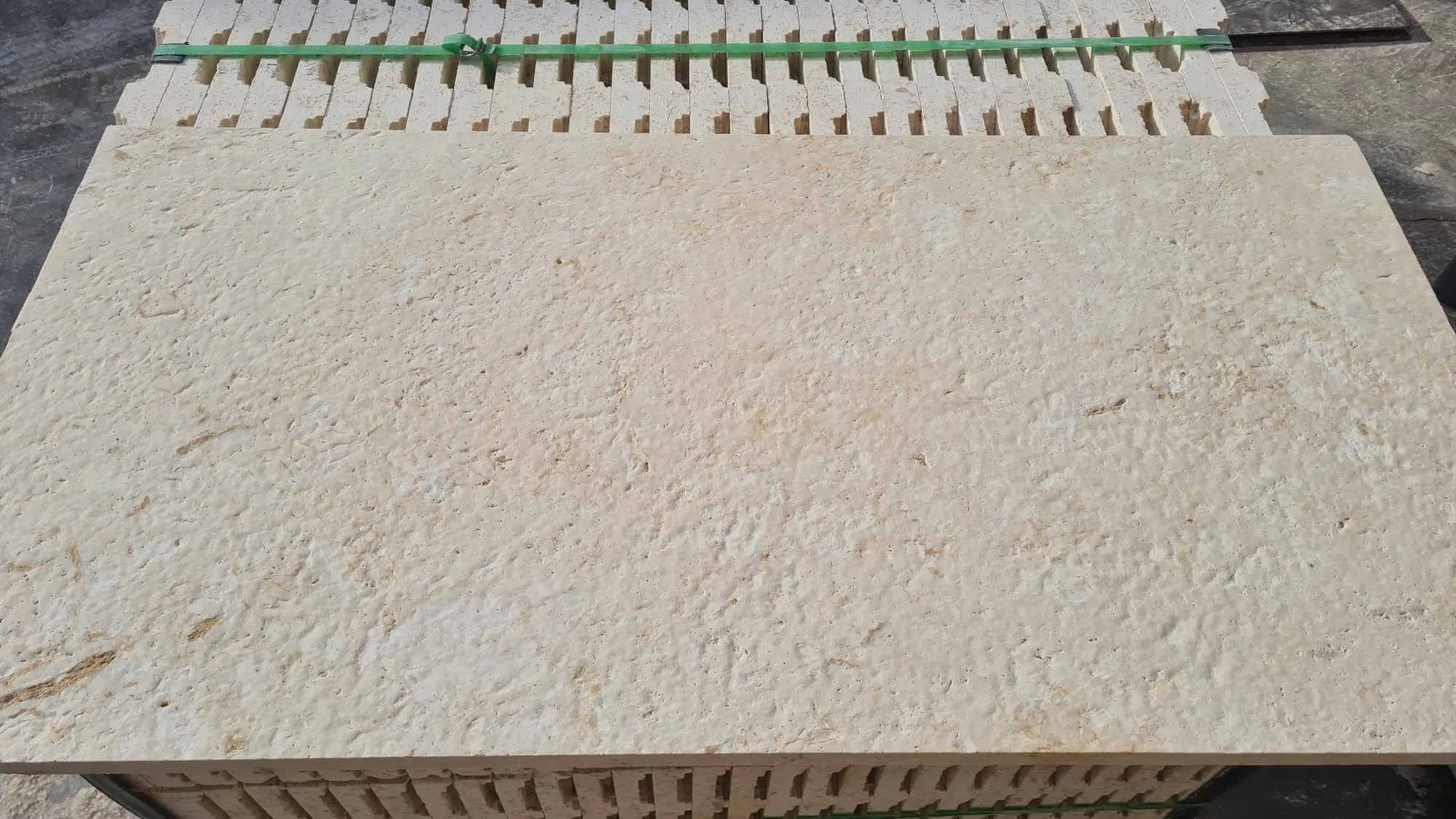
At Citadel Stone, we source limestone directly and maintain Arizona warehouse inventory that gives most Peoria-area projects a realistic 1–2 week lead time rather than the 6–8 week import cycle that custom-order limestone can require. When you’re specifying bathroom stone tile for a project with a fixed completion date, verifying current stock levels against your material take-off before the substrate phase begins eliminates one of the most common schedule disruptions in bathroom renovation work. Our technical team can also advise on lot consistency — matching limestone across multiple bathrooms in a renovation requires pulling from the same quarry run, and that’s a detail worth confirming before the first delivery truck arrives on site. Limestone tile suppliers in Arizona vary widely in how well they track lot continuity, which affects color and veining consistency across large orders.
Moving Forward
Getting limestone bathroom tile Peoria installations right comes down to a sequence of decisions that compound on each other — porosity assessment informs sealer selection, substrate flatness determines format size options, and water hardness in your specific municipality shapes your maintenance protocol. None of these decisions exist in isolation, and the ones made early in the project constrain the ones made later. Your best investment before any wet area limestone installation is a complete specification review that traces that chain of decisions from substrate to finished surface.
Peoria wet area tile projects that perform at the 20-year level share a common specification discipline: they treat waterproofing as a system rather than a product, they match sealer chemistry to the specific limestone’s porosity, and they build a realistic maintenance expectation into the client handoff. The stone itself is capable of exceptional longevity in bathroom environments — the surrounding decisions determine whether that potential is realized. For a closer look at how limestone performs in other interior environments around the region, Limestone Tile Indoor Applications for Glendale Home Interiors covers additional technical considerations worth reviewing as you refine your specification approach for Arizona moisture areas. We provide raw material to fabricators as key limestone block suppliers in Arizona.