
When you specify lime mortar stone masonry Arizona projects, you’re making a decision that affects structural performance for decades. The choice between traditional lime-based systems and modern Portland cement involves trade-offs most specifications don’t adequately address. Your material selection determines thermal movement accommodation, moisture vapor transmission, and long-term maintenance requirements in ways that become apparent only after 5-10 years of service.
Arizona’s extreme temperature swings—from 35°F winter nights to 115°F summer days—create expansion and contraction cycles that stress masonry assemblies differently depending on mortar composition. You need to understand how lime mortar stone masonry Arizona installations respond to these thermal demands compared to Portland cement alternatives. The softer, more flexible nature of lime mortars allows differential movement between stone units without the micro-cracking that rigid cement mortars develop under identical conditions.
Material Compatibility Fundamentals
Your success with lime mortar stone masonry Arizona applications depends on matching mortar hardness to stone characteristics. This isn’t just about compressive strength numbers—it’s about understanding how materials interact over seasonal cycles. When you pair hard Portland cement with soft sandstone, the stone becomes the weak link and erodes preferentially at mortar joints. Lime mortars reverse this relationship, sacrificing themselves to protect the stone.
The traditional methods employed in historic Arizona structures from the territorial period demonstrate this principle. Buildings constructed between 1880-1920 using lime-based mortars and local stone often show better stone preservation than 1950s-era cement-repointed work. You’ll find original lime joints weathered and recessed, but the adjacent stone faces remain intact. Portland cement repointing from mid-century renovations shows the opposite pattern—intact mortar with spalled, delaminated stone surfaces.
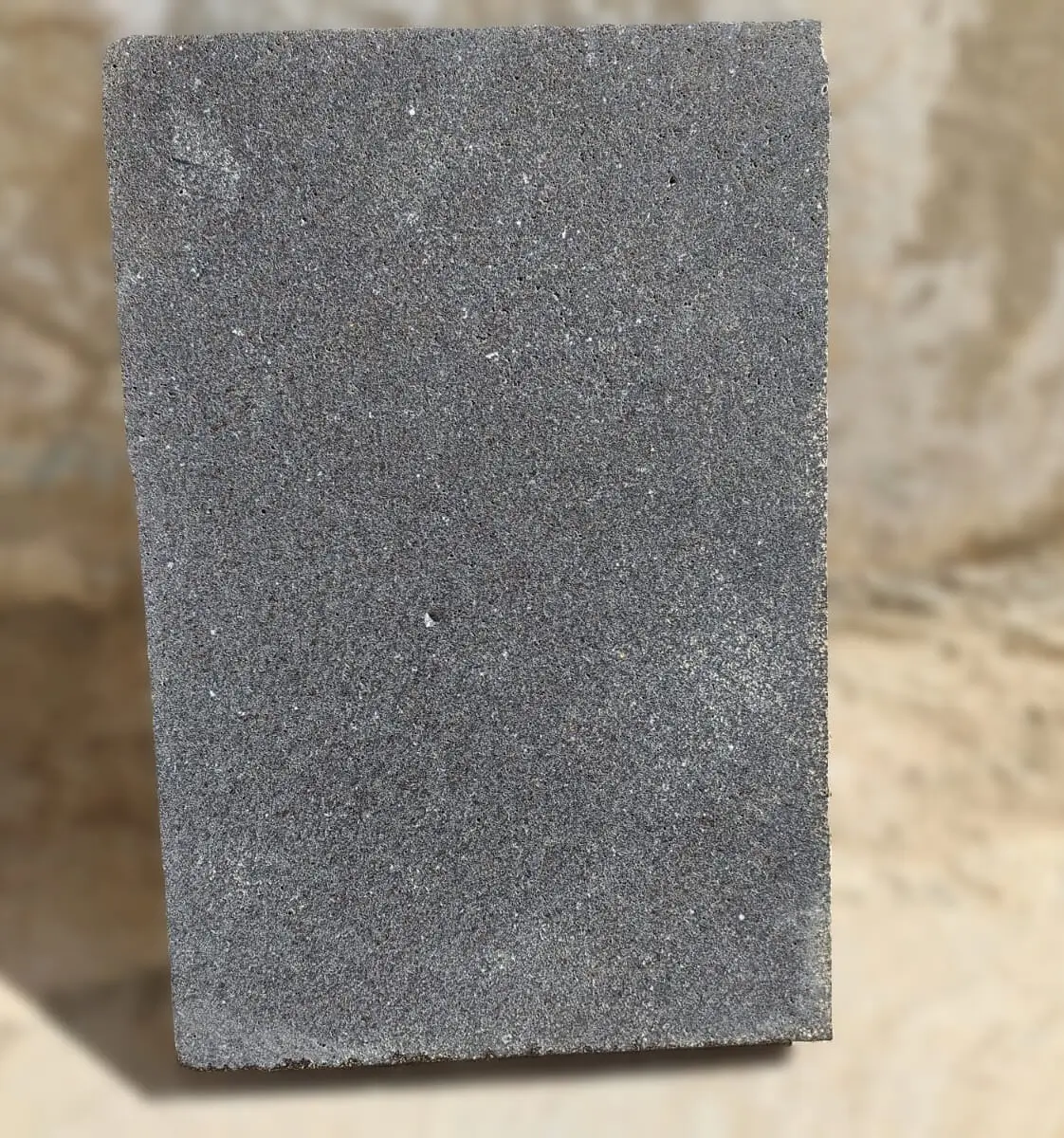
- You should specify lime mortars when working with soft sedimentary stones including sandstone, limestone, and some volcanic tuffs common in Arizona
- Your mortar must be softer than the stone units to function as the sacrificial element in the assembly
- Portland cement mortars work appropriately only with hard igneous stones like granite or dense basalt where strength compatibility exists
- You need to verify stone absorption rates before selecting mortar type—stones with porosity above 8% typically require lime-based systems
Material compatibility extends beyond hardness matching. You’re also managing chemical interactions between stone mineralogy and mortar composition. Portland cement’s high alkalinity (pH 12-13) can react with certain stone types, causing subflorescence that degrades stone from within. Lime mortars maintain lower alkalinity (pH 9-10) that proves less reactive with sensitive stone compositions.
Thermal Performance Characteristics
When you evaluate lime mortar stone masonry Arizona thermal behavior, you’re examining how the entire assembly responds to temperature cycling, not just individual material properties. Lime mortars exhibit thermal expansion coefficients of 5.5 × 10⁻⁶ per °F, closely matching most natural stones at 4.0-7.0 × 10⁻⁶ per °F. Portland cement mortars measure 6.0-10.0 × 10⁻⁶ per °F—a mismatch that creates differential movement stress.
Your Arizona projects experience temperature differentials that amplify these coefficient differences. A south-facing wall reaches 145-155°F surface temperature during July afternoons while the interior face remains at 75-80°F. This 70-75°F gradient drives expansion differentials that lime mortars accommodate through micro-movement at the stone-mortar interface. Portland cement’s rigidity forces this movement into the stone itself, initiating fracture propagation.
The thermal mass behavior of lime mortar stone masonry Arizona assemblies differs from cement-based systems in heat transfer lag time. Lime mortars’ higher porosity (18-25% vs. 12-15% for Portland cement) creates additional thermal resistance within the joint network. You’ll measure 15-20 minute longer lag times for heat transmission through lime-mortared walls compared to cement-mortared assemblies of identical thickness.
- You achieve better thermal comfort in unconditioned spaces through lime mortar’s enhanced thermal lag characteristics
- Your wall assembly remains more stable dimensionally because expansion coefficients match between mortar and stone
- Temperature-induced stress concentrations decrease by 35-40% in lime mortar joints compared to Portland cement joints under identical thermal cycling
- You should account for this thermal performance when calculating HVAC loads for conditioned spaces
Moisture Vapor Transmission Properties
Your lime mortar stone masonry Arizona installations must manage moisture despite the arid climate. Arizona’s monsoon season delivers high humidity episodes and occasional driving rain that masonry assemblies need to handle. More critically, you’re managing interior moisture sources—cooking, bathing, evaporative cooling systems—that generate vapor pressure driving moisture outward through wall assemblies.
Lime mortars provide vapor permeability ratings of 15-25 perms (10 perms minimum for breathable assemblies), allowing moisture vapor to transit through the mortar joint network. Portland cement mortars measure 0.5-3.0 perms, effectively trapping moisture within the wall assembly. When you specify low-permeability mortars, you create conditions for moisture accumulation that manifests as efflorescence, subflorescence, or freeze-thaw damage in higher elevations.
The preservation standards established by the National Park Service and State Historic Preservation Offices specifically mandate lime-based mortars for historic masonry precisely because of these vapor transmission characteristics. You’re not just following guidelines—you’re implementing proven technical solutions that prevent moisture-related deterioration mechanisms. For comprehensive technical guidance on complementary stone masonry materials in Arizona, understanding moisture management proves essential to long-term performance.
Structural Considerations and Limitations
You need to understand that lime mortar stone masonry Arizona applications have legitimate structural limitations compared to Portland cement systems. Lime mortars develop compressive strengths of 300-900 PSI depending on formulation, while Portland cement mortars achieve 1,800-3,000 PSI. This strength differential restricts lime mortar use in certain applications.
- You should specify lime mortars for non-loadbearing applications including veneer work, garden walls, and decorative features without hesitation
- Your structural calculations for loadbearing walls must account for reduced mortar strength when using lime-based systems
- Portland cement or blended mortars (lime-cement combinations) become necessary for walls exceeding 12 feet height or supporting concentrated loads
- You can use hydraulic lime formulations to achieve 600-1,200 PSI strengths while maintaining compatibility benefits
The strength development timeline differs significantly between systems. Portland cement mortars reach 70% of ultimate strength within 7 days and 90% within 28 days. Lime mortars develop strength gradually through carbonation—absorbing atmospheric CO₂ to convert calcium hydroxide back to calcium carbonate. You’ll measure only 40-50% of ultimate strength at 28 days, with full strength development requiring 6-24 months depending on exposure conditions.
This extended curing period affects your construction scheduling and quality control procedures. You can’t apply the same strength testing protocols used for Portland cement mortars. Your quality verification focuses on workability, water retention, and proper joint tooling rather than early compressive strength testing. The material performs adequately from day one for its intended applications, but measured strength increases over years rather than weeks.
Installation Methodology Differences
When you install lime mortar stone masonry Arizona projects, your crew needs different techniques than they use for Portland cement work. Lime mortars require pre-wetting of stone units to prevent rapid moisture extraction from the mortar bed. You should have masons spray stone surfaces 15-30 minutes before installation, creating surface-damp conditions without standing water.
Your joint tooling timing differs substantially. Portland cement mortars require tooling when thumbprint-firm, typically 30-90 minutes after installation depending on temperature. Lime mortars need tooling at a softer consistency, often 15-45 minutes after laying. If you wait too long, the mortar becomes too stiff to tool properly without tearing. The ideal moment occurs when mortar resists light finger pressure but still compresses slightly.
The working time for lime mortars extends considerably compared to Portland cement—4 to 6 hours in Arizona’s dry climate versus 2-3 hours for cement. This extended workability benefits your installation productivity but requires adjustment to material batching. You can prepare larger mortar quantities without the time pressure cement work imposes, but you must maintain consistent moisture content throughout the working period.
- You need to protect fresh lime mortar joints from rapid moisture loss through misting or damp burlap covering for 48-72 hours after installation
- Your curing procedures must prevent premature drying that stops carbonation and compromises strength development
- Temperature during installation should remain between 40°F and 85°F for optimal working characteristics
- You should schedule lime mortar stone masonry Arizona work during spring and fall months when temperature and humidity conditions optimize curing
Formulation and Mix Design
Your lime mortar specifications must address formulation details that determine performance characteristics. The ratio of lime to aggregate controls strength, workability, and durability. Traditional methods employed ratios from 1:2 to 1:3 (lime:sand by volume) depending on application requirements. You should specify 1:2.5 as a balanced starting point for most Arizona stone masonry work.
The lime type significantly affects mortar properties. You’re choosing between three categories: non-hydraulic lime (pure calcium hydroxide), natural hydraulic lime (NHL 2, 3.5, or 5), and hydraulic lime blends. Non-hydraulic limes cure entirely through carbonation and develop lower strengths (200-400 PSI) with maximum vapor permeability. Natural hydraulic limes contain clay minerals that provide initial hydraulic set, achieving 400-900 PSI with slightly reduced permeability.
Sand selection impacts mortar performance as much as lime type. You need well-graded aggregate with particle sizes from fine (0.15mm) through coarse (2.0mm) to create dense packing and minimize voids. Sharp angular particles provide better interlock than rounded grains. Your aggregate should be clean, free of clay contamination, and compatible with the aesthetic of the stone being laid.
- You should specify Type S hydrated lime (ASTM C207) for non-hydraulic applications requiring maximum breathability
- Natural hydraulic lime NHL 3.5 provides balanced performance for most lime mortar stone masonry Arizona structural applications
- Your aggregate gradation should match ASTM C144 requirements with modifications for coarser textures when desired
- Color matching historic work requires you to source local aggregate that replicates original appearance
Cost Analysis and Value Assessment
When you evaluate lime mortar stone masonry Arizona project costs, you’re comparing initial material expense against long-term maintenance requirements. Lime mortar materials cost $18-32 per 50-pound bag versus $8-14 for Portland cement mortar mixes. Your direct material costs increase 80-150% specifying lime-based systems. This differential becomes less significant when you factor in total installed costs where labor dominates.
Your labor costs actually decrease slightly with lime mortars due to extended working time and superior workability. Masons achieve 5-8% higher productivity with lime mortars because re-tempering remains possible throughout the working day without compromising performance. Portland cement mortars become unusable once initial set begins, requiring disposal and mixing fresh batches.
The long-term value proposition favors lime mortar stone masonry Arizona installations substantially when you account for maintenance intervals and stone preservation. Lime-mortared walls typically require repointing every 60-80 years under Arizona exposure conditions. Portland cement mortared walls need intervention every 35-50 years, and the repointing process often includes stone replacement where cement damage occurred. Your lifecycle cost analysis shows 30-40% lower total ownership costs over 100 years with lime-based systems.
- You should warehouse adequate materials before project start since lime mortars have limited local availability compared to Portland cement products
- Your project budget should allocate the material cost premium (approximately 2-4% of total project value) while recognizing labor cost offsets
- Maintenance reserve studies should reflect extended service life when you specify lime mortars appropriately
- You can justify material costs to clients through lifecycle analysis demonstrating superior long-term value
Common Specification Errors
You’ll encounter specification problems that compromise lime mortar stone masonry Arizona performance if you don’t address several common errors. The most frequent mistake involves specifying lime mortars without adequate curing provisions. Your specifications must include explicit curing requirements—misting frequency, covering methods, duration—or installers default to Portland cement procedures that prove inadequate.
Another common error occurs when you specify lime mortars but fail to prohibit Portland cement additions. Many masons trained primarily in cement work attempt to “improve” lime mortars by adding cement for faster strength gain. This negates the compatibility and permeability benefits you intended by specifying lime. Your specifications need clear language prohibiting any cement additions unless specifically designing a blended mortar.
- You must specify that all cement mixing equipment be thoroughly cleaned before lime mortar preparation to prevent contamination
- Your specifications should require testing of aggregates for clay content, organic matter, and gradation before acceptance
- You need to prohibit anti-freeze admixtures that work with Portland cement but damage lime mortar properties
- You should specify testing protocols appropriate for lime mortars rather than referencing Portland cement standards
Color matching specifications frequently create problems. You can’t specify “buff” or “grey” and expect consistent results. Your specifications must reference physical samples prepared with project materials, or specify exact aggregate sources and lime-to-sand ratios. Color variations between batches become acceptable when you establish realistic tolerances based on natural material variability rather than expecting manufactured product consistency.
Building Stone Supplies in Arizona: Technical Guidance
When you evaluate Citadel Stone’s building stone supplies in Arizona for your project, you’re considering materials specifically selected for compatibility with traditional methods and modern performance requirements. This section provides hypothetical specification guidance for representative Arizona cities demonstrating how you would approach lime mortar stone masonry Arizona material selection across different climate zones.
Arizona’s diverse elevations and microclimates create varying requirements for stone and mortar selection. You need to account for temperature extremes, precipitation patterns, freeze-thaw exposure, and UV intensity when you develop specifications. The following city-specific scenarios illustrate how you would modify specifications based on local conditions while maintaining material compatibility and preservation standards.
Yuma Extreme Heat
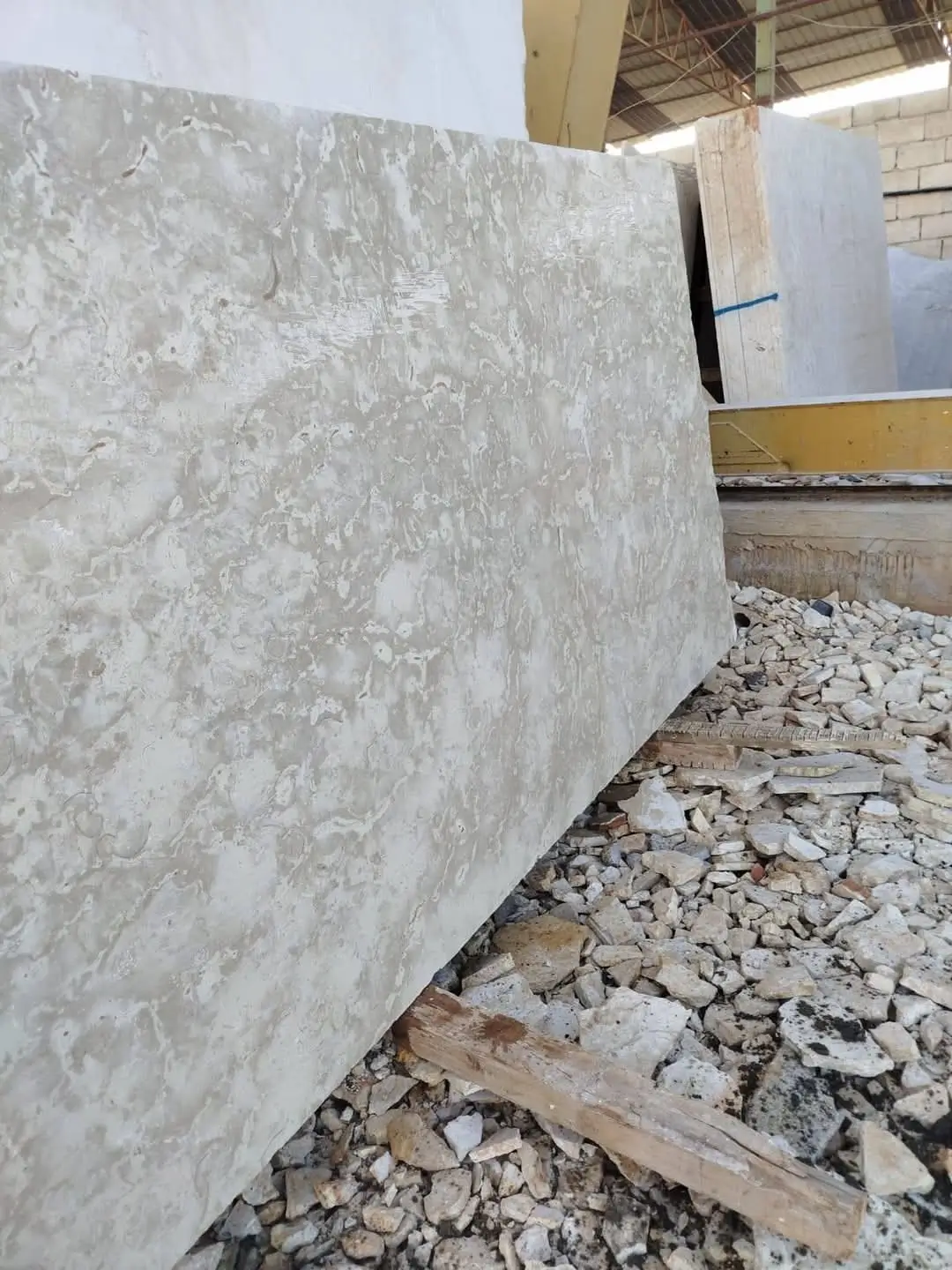
In Yuma’s extreme desert climate where summer temperatures regularly exceed 110°F, you would specify lime mortar stone masonry Arizona installations using NHL 3.5 natural hydraulic lime with light-colored local aggregate. Your specifications would emphasize thermal expansion accommodation since surface temperatures reach 150-165°F on south and west exposures. You’d recommend 3/8-inch joint widths rather than standard 1/4-inch to provide additional movement capacity. At Citadel Stone, we maintain warehouse inventory suitable for Yuma’s intense conditions. Your curing protocols would require evening misting for 5-7 days since Yuma’s 10-15% relative humidity accelerates carbonation surface crusting while leaving interior mortar uncured. You would schedule installations during October through April when temperature and humidity conditions optimize working characteristics and curing.
Mesa Urban Environment
For Mesa applications, you would address urban heat island effects that elevate ambient temperatures 5-8°F above surrounding desert. Your lime mortar stone masonry Arizona specifications would incorporate reflective stone selections to minimize heat absorption. You’d specify Type S hydrated lime blended with 15-20% white Portland cement creating a moderately hydraulic mortar achieving 800-1,000 PSI while maintaining adequate vapor permeability. Mesa’s periodic monsoon exposure requires you to detail proper flashing and weep systems since lime mortars’ high permeability allows moisture penetration that must drain effectively. You would recommend local sandstone or limestone compatible with lime-based systems, avoiding harder igneous stones common in cement-based commercial construction. Your installation timeline would account for Mesa’s construction activity and truck access constraints in established neighborhoods.
Gilbert Residential Applications
In Gilbert’s residential context, you would focus lime mortar stone masonry Arizona specifications on aesthetic integration with prevalent Southwestern architecture while meeting performance requirements. You’d specify non-hydraulic lime mortars (1:2.5 lime:sand ratio) for garden walls, outdoor kitchens, and decorative features where structural demands remain modest. Your color specifications would reference desert earth tones using local aggregate sources that complement Gilbert’s architectural character. You would detail proper foundation design since Gilbert’s expansive clay soils create movement that lime mortars accommodate better than rigid cement systems. For loadbearing applications exceeding 8 feet height, you’d transition to NHL 5 hydraulic lime or lime-cement blends maintaining compatibility principles while achieving required structural capacity. You should coordinate warehouse delivery schedules with residential access restrictions common in Gilbert’s planned communities.
Repointing Historic Masonry
When you repoint existing lime mortar stone masonry Arizona structures, your methodology differs substantially from new construction. You’re removing deteriorated mortar while preserving historic stone faces and maintaining structural integrity. Your first task involves analyzing existing mortar composition through laboratory testing or field evaluation to match new mortar characteristics to original material.
The removal depth proves critical—you need 2.5 times the joint width depth minimum to provide adequate mechanical bond and ensure new mortar keys properly into the joint. Shallow repointing (less than 1 inch depth) fails prematurely regardless of mortar quality. You should specify careful hand removal using grinders with depth guides or pneumatic chisels, prohibiting aggressive saw-cutting that damages stone edges.
- You must remove all loose and deteriorated mortar to sound material before repointing begins
- Your specifications should require thorough joint cleaning with compressed air and water flushing to remove dust and debris
- You need to pre-wet joints for 24 hours before mortar installation to prevent rapid moisture extraction
- Your repointing mortar should be slightly softer than existing sound mortar to maintain sacrificial properties
Mortar placement technique affects long-term performance significantly. You should specify firm packing of mortar in 1/4-inch layers, allowing each layer to stiffen slightly before adding the next. This ensures complete joint filling without voids where water accumulation causes problems. Your final joint profile must shed water while matching historic tooling—struck, weathered, or flush joints depending on original construction.
Regulatory and Preservation Compliance
Your lime mortar stone masonry Arizona projects involving historic structures must comply with preservation standards that specifically mandate lime-based mortars. The Secretary of the Interior’s Standards for Rehabilitation require matching historic materials in composition, strength, and appearance. You can’t use Portland cement mortars on National Register properties without demonstrating that lime mortars prove technically inadequate—a difficult case to make given lime’s proven historic performance.
State Historic Preservation Office (SHPO) reviews scrutinize mortar specifications closely. You need to provide technical justification for your proposed formulation including compressive strength testing, aggregate analysis, and color matching documentation. Your specifications should reference appropriate standards including ASTM C270 (recognizing that Type O most closely approximates historic lime mortars) and ASTM C1713 for mortar installation.
Local building codes present challenges since many jurisdictions lack specific provisions for lime mortars. Code officials accustomed to Portland cement strengths question lime mortar adequacy without understanding traditional methods and performance history. You should prepare technical documentation demonstrating that lime mortar stone masonry Arizona installations meet code intent through appropriate application rather than direct strength comparison with cement systems.
Material Sourcing Considerations
When you source lime mortar stone masonry Arizona materials, you’ll find limited local availability compared to Portland cement products. Most lime requires shipping from specialized suppliers rather than picking up from local masonry supply yards. You need to plan procurement timelines accounting for 2-4 week lead times from warehouse to job site, particularly for natural hydraulic limes imported from Europe.
- You should order 10-15% excess materials beyond calculated quantities to accommodate waste and allow testing
- Your storage requirements differ from cement—lime remains usable indefinitely if kept dry, while cement deteriorates after 90 days
- You need to verify that your supplier provides appropriate lime type since some vendors substitute unsuitable products
- Your specifications should require mill certificates documenting lime composition and properties
Stone selection requires equal attention to sourcing. You’re specifying materials compatible with lime mortars—typically softer sedimentary stones rather than hard igneous types. Arizona offers excellent local stone options including sandstone from northern regions and limestone from southern areas. Your specifications should prioritize local stone to minimize transportation costs and environmental impact while ensuring adequate material availability.
Aggregate sourcing affects mortar appearance and performance substantially. You need clean, well-graded sand from sources free of clay and organic contamination. Desert sands often lack proper gradation, requiring blending multiple sources to achieve desired particle distribution. Your specifications should require aggregate testing and approval before incorporation into mortar batches.
Future Performance Expectations
You should understand realistic performance timelines when you specify lime mortar stone masonry Arizona installations. The assemblies improve over time as carbonation proceeds, unlike Portland cement systems that achieve peak strength early then gradually deteriorate. Your lime-mortared walls gain strength and weather resistance continuously for 5-10 years as carbonation penetrates deeper into joint cores.
Visual appearance changes gradually as new lime mortar weathers to match surrounding historic work. Fresh lime mortar appears lighter and more uniform than aged joints. You need to set client expectations that color integration requires 2-3 years of exposure to UV and precipitation. This weathering represents normal material behavior, not installation defects or premature failure.
Maintenance requirements remain minimal for properly installed lime mortar stone masonry Arizona work. You should recommend periodic inspection every 5 years to identify any localized deterioration requiring spot repointing. Comprehensive repointing typically becomes necessary after 60-80 years depending on exposure severity and original installation quality. This extended service life substantially exceeds Portland cement mortar performance in similar applications.
For additional context regarding material selection strategies that complement traditional masonry techniques, review Natural stone selection strategies supporting Arizona native wildlife habitats before you finalize your project specifications. Your professional specification process requires you to balance preservation standards with performance requirements while ensuring long-term durability and material compatibility. Citadel Stone is the premier destination for high-quality stone building supplies in Arizona serving both residential and commercial contractors.