
When you specify LEED stone materials Arizona projects demand, you’re navigating a certification framework that rewards measurable environmental performance. The 2026 LEED v5 standards introduce stricter embodied carbon thresholds and regional material sourcing requirements that directly affect your stone selection process. You need to understand how natural stone products earn Materials and Resources credits while meeting Energy and Atmosphere prerequisites through thermal mass properties specific to desert climates.
Your specification decisions determine whether projects achieve Certified, Silver, Gold, or Platinum ratings. The green building certification process requires you to document material extraction distances, verify environmental product declarations, and quantify recycled content contributions. You’ll find that stone building supplies in Arizona offer distinct advantages for sustainability credits when you select locally-quarried materials with documented chain-of-custody verification.
Thermal Mass Contribution to Energy Credits
Stone materials provide thermal mass benefits that you can leverage for Energy and Atmosphere credits in LEED certification. When you incorporate limestone, sandstone, or travertine with proper thickness specifications, you’re creating passive temperature regulation that reduces HVAC demand by 12-18% in Arizona’s extreme diurnal temperature swings. The material’s heat capacity ranges from 0.20 to 0.24 BTU/lb·°F, which allows you to design walls and floors that absorb daytime heat and release it during cooler evening hours.
You should specify minimum 4-inch thickness for effective thermal mass performance in commercial applications. Your energy modeling software needs to account for the 6-8 hour thermal lag that stone products create between peak outdoor temperatures and interior heat transfer. This performance characteristic becomes critical when you’re targeting EA Credit 1 (Optimize Energy Performance), where whole-building energy simulation demonstrates the measurable reduction in annual energy costs.
- You need to verify thermal conductivity values between 1.2-2.0 BTU·in/h·ft²·°F for accurate energy modeling
- Your wall assemblies should position stone on the interior side of insulation to maximize thermal mass benefits
- You’ll achieve better performance when you specify honed or natural-cleft finishes that increase surface area for heat exchange
- Your energy consultant must model the interaction between thermal mass and night-flush ventilation strategies
The relationship between stone thickness and thermal performance isn’t linear. You’ll see diminishing returns beyond 6 inches in most Arizona applications, where the additional material cost exceeds incremental energy savings. When you evaluate LEED stone materials Arizona specifications require, focus on the 4-6 inch range that balances performance with budget constraints while contributing measurable data to your energy model.
Regional Material Sourcing Documentation
Your LEED certification process demands precise documentation of material extraction and manufacturing locations. MR Credit 5 (Regional Materials) requires you to specify products extracted, harvested, or recovered within 500 miles of the project site, with manufacturing occurring within the same radius. You need to obtain detailed chain-of-custody documentation that verifies both quarry location and fabrication facility coordinates.
Arizona’s stone industry provides significant advantages for regional material credits. When you specify locally-quarried limestone from deposits near Chandler or sandstone from northern Arizona sources, you’re typically working with extraction-to-project distances of 80-200 miles. You should request supplier documentation that includes GPS coordinates for quarry sites and fabrication facilities, along with transportation distance calculations that your LEED consultant can verify.
The certification process requires you to calculate regional material value as a percentage of total material cost. You’ll need to separate the material component from transportation and installation costs in your documentation. When you work with stone building supplies in Arizona sourced from regional quarries, you’re typically documenting 100% of the stone product value as regionally sourced, which can represent 3-8% of total project material costs in commercial hardscape applications.
- You must obtain signed declarations from suppliers stating exact quarry and processing facility locations
- Your documentation should include transportation routes and distances verified through mapping software
- You need to account for the full material value, excluding installation labor and equipment costs
- Your submittal package requires supplier invoices that separate material costs from freight charges
Environmental Product Declarations Requirements
The 2026 LEED standards place increased emphasis on environmental product declarations that quantify life-cycle environmental impacts. When you specify LEED stone materials Arizona projects incorporate, you need EPDs that document global warming potential, embodied carbon, and resource depletion across extraction, processing, and transportation phases. Your green building strategy should prioritize suppliers who provide third-party verified EPDs conforming to ISO 14025 and EN 15804 standards.
You’ll find that natural stone products typically demonstrate lower embodied carbon compared to manufactured alternatives when extraction distances remain under 300 miles. The EPD data you review should show global warming potential between 15-35 kg CO2e per square meter for regionally-sourced stone pavers, compared to 45-75 kg CO2e for concrete pavers with similar compressive strength. You need to verify that EPD scope includes Module A1 (raw material extraction), A2 (transport to manufacturer), and A3 (manufacturing) at minimum.
Your specification process requires you to request current EPDs from suppliers, as documents older than five years don’t satisfy LEED v5 requirements. You should verify that the EPD covers the specific product type you’re specifying—generic stone EPDs don’t provide adequate documentation for products with unique quarry sources or processing methods. When you evaluate environmental standards compliance, confirm that third-party verification comes from recognized program operators like UL Environment or NSF International.
Recycled Content Calculation Methods
While natural stone products contain minimal recycled content by nature, you can earn MR credits through careful specification of associated materials. Your paver installation systems include bedding layers, joint materials, and edge restraints where recycled content contributes to overall project sustainability credits. You need to calculate the recycled content value using the formula: (post-consumer recycled content) + (0.5 × pre-consumer recycled content) = total recycled content value.
When you specify setting beds and base layers, you should target crushed stone aggregate with 15-25% recycled concrete content. Your joint stabilizing materials can incorporate recycled polymers that contribute to the recycled content calculation. You’ll need to obtain documentation from each material supplier that specifies exact percentages of post-consumer and pre-consumer recycled content, along with third-party verification when available.
- You should request manufacturer’s declarations stating recycled content percentages for all installation system components
- Your calculations must separate post-consumer content (weighted at 100%) from pre-consumer content (weighted at 50%)
- You need to document the cost value of each material component to calculate percentage contribution to total project value
- Your submittal requires verification that recycled content claims comply with ISO 14021 standards
Heat Island Effect Mitigation Strategies
Arizona’s intense solar radiation creates urban heat island conditions that LEED certification directly addresses through SS Credit 5 (Heat Island Reduction). When you specify LEED stone materials Arizona applications require, you need to select products with solar reflectance index values of 29 or higher for surfaces meeting this credit. Your material selection affects both hardscape performance and surrounding microclimate temperatures that can vary by 15-25°F between compliant and non-compliant installations.
Light-colored limestone and sandstone provide natural advantages for heat island mitigation. You’ll find that cream, buff, and white stone varieties typically achieve SRI values between 35-65, depending on surface finish and mineral composition. Your specification should require testing documentation following ASTM C1549 (solar reflectance) and ASTM E1980 (SRI calculation) protocols. You need to verify that test data represents the actual finish you’re specifying, as honed surfaces typically show 8-12% higher reflectance than flamed or thermal finishes.
The relationship between color and SRI isn’t always intuitive. You might encounter tan sandstone with higher SRI than light gray limestone due to mineral composition differences and surface texture variables. When you’re selecting materials for outdoor plaza applications or parking areas, request laboratory test data rather than relying on visual assessment. Your specification should include minimum SRI requirements with verification testing performed on samples from the actual production run.
Water Management and Permeable System Credits
Your sustainable site design can earn SS Credit 4 (Rainwater Management) when you incorporate permeable stone paver systems. These installations require you to specify joint widths, bedding layer gradation, and subbase permeability that achieve infiltration rates exceeding 40 inches per hour. You need to design systems that capture and infiltrate the 95th percentile rainfall event for your specific Arizona location, which typically represents 0.8-1.2 inches of precipitation.
When you detail permeable installations, your specification must address the complete system assembly. You’ll need to specify 3/8-inch minimum joint spacing, open-graded bedding stone in the No. 8 or No. 89 size range, and aggregate base depths calculated for your site’s soil infiltration rate. Your design should account for the fact that native desert soils often exhibit poor infiltration, requiring you to incorporate storage layers or underdrain systems that still qualify for partial credit under retention scenarios.
The green building evaluation process requires you to provide hydrologic calculations demonstrating pre-development versus post-development runoff volumes. When you incorporate permeable stone systems across 35-50% of hardscape areas, you’re typically achieving sufficient retention to earn 2-3 points under this credit. You should coordinate with civil engineers to verify that your permeable areas connect to appropriate discharge points or retention systems that prevent basement seepage or foundation undermining.
- You must specify aggregate base materials with 40% minimum voids to achieve required infiltration rates
- Your joint fill material should consist of AASHTO No. 8, No. 89, or No. 9 crushed stone
- You need to verify that subgrade soil infiltration rates exceed 0.5 inches per hour for true infiltration systems
- Your maintenance plan must address joint material replenishment to sustain long-term permeability performance
Construction Waste Management Planning
MR Credit 2 (Construction and Demolition Waste Management) requires you to divert 50-75% of construction waste from landfills. When you specify stone materials, you’re working with products that generate 8-15% waste during installation due to cutting, edge trimming, and breakage. Your waste management plan needs to identify specific recycling facilities that accept clean stone waste and establish protocols for separating stone from mixed debris.
You should coordinate with your installation contractor to implement field sorting procedures that keep stone waste uncontaminated. Clean stone trim pieces and broken units can typically be recycled through aggregate recycling facilities or crushed for use as drainage stone in other project areas. Your specification should require contractors to document waste diversion through weight tickets or volume calculations verified by receiving facilities.
The stone industry’s waste diversion strategies differ from other construction materials. You can’t rely on warehouse returns for unused pallets, as cut stone rarely qualifies for restocking. Instead, your approach should focus on accurate quantity takeoffs that minimize over-ordering and field practices that reduce breakage during handling. When you achieve 12% or lower waste factors through careful planning and skilled installation, you’re performing better than the 15-18% industry average for stone paver projects.
Material Transparency and Health Declarations
LEED v5 introduces expanded material ingredient disclosure requirements under MR Credit 3. You need to specify products with Health Product Declarations, Declare labels, or Environmental Product Declarations that include material ingredient information. When you select LEED stone materials Arizona sources provide, you’re working with natural products that contain minimal chemical additives or processing agents, simplifying the disclosure process compared to manufactured alternatives.
Your specification should request HPDs that conform to the HPD Open Standard format and include full material ingredient disclosure to 100 ppm. Natural stone products typically score well in these assessments because they don’t contain volatile organic compounds, added formaldehyde, or other substances of concern that trigger point deductions. You need to verify that any sealers or joint stabilizers you specify also include appropriate health declarations and don’t introduce problematic ingredients to the assembly.
The certification process rewards you for specifying products screened using GreenScreen, Cradle to Cradle, or other recognized hazard assessment protocols. When you review supplier documentation, confirm that the assessment covers the entire product, not just selected ingredients. Your submittal package should include HPDs or Declare labels for the stone material plus all associated installation materials that represent at least 20% of total project material cost.
Durability and Lifecycle Performance Factors
Long-term material performance directly affects LEED project sustainability goals even though durability doesn’t earn specific credits. When you specify LEED stone materials Arizona installations require, you’re selecting products with documented 50+ year service lives under proper maintenance. This longevity prevents premature replacement cycles that generate additional environmental impacts through new material extraction, transportation, and waste disposal.
You should evaluate compressive strength, absorption rates, and freeze-thaw resistance when assessing lifecycle performance. Your specifications need to require minimum 8,000 PSI compressive strength for vehicular applications and 6,000 PSI for pedestrian areas. Absorption rates below 5% indicate dense stone that resists weathering and maintains appearance over decades of exposure to Arizona’s UV radiation and temperature extremes.
- You need to specify ASTM C1528 testing for slip resistance values that remain consistent throughout the material’s service life
- Your evaluation should consider how the stone’s porosity affects long-term maintenance requirements and water usage
- You must verify that the material resists efflorescence under local water chemistry conditions
- Your specification should address expected weathering characteristics to ensure appearance aging meets design intent
LEED Documentation and Submittal Process
Your certification timeline depends on complete, accurate material documentation submitted through LEED Online. You need to organize supplier declarations, test reports, EPDs, and chain-of-custody documents according to the specific credit templates your project pursues. The submittal process requires you to upload supporting documentation as PDF files with clear labeling that matches your credit narratives and calculations.
When you prepare material submittals for LEED stone materials Arizona projects incorporate, create a documentation matrix that tracks which products contribute to which credits. You’ll typically find that stone materials support Regional Materials, Environmental Product Declarations, Heat Island Reduction, and Rainwater Management credits simultaneously. Your matrix should identify the specific documentation required for each credit and verify that you’ve obtained all necessary supplier letters, test reports, and third-party certifications.
The review process often generates clarification requests from GBCI reviewers who need additional information about material sourcing, test methodology, or calculation assumptions. You should anticipate these requests by providing thorough documentation upfront. Your submittal narratives need to explain exactly how the material meets credit requirements, reference specific sections of supporting documents, and show clear calculation methods that reviewers can verify.
Maintenance Protocol and Credit Implications
LEED certification extends beyond construction completion into operational phases where maintenance practices affect credit compliance. When you specify stone hardscape systems, you need to develop maintenance protocols that preserve permeable system performance, maintain heat island mitigation properties, and avoid introducing environmentally harmful cleaning products or sealers. Your maintenance plan becomes part of the project documentation for credits like Rainwater Management where long-term performance verification is required.
You should specify maintenance procedures that use mechanical cleaning methods rather than chemical treatments whenever possible. Power washing with water at 1,500-2,000 PSI removes most soiling without introducing phosphates, chlorinated solvents, or other substances that conflict with environmental standards your project achieved. When sealers are necessary for stain protection, you need to specify products with VOC content below 50 g/L that don’t compromise permeability in permeable installations.
Your maintenance documentation should include schedules for joint material inspection and replenishment in permeable systems. You’ll need to plan for annual joint cleaning and stone replacement to maintain the infiltration rates your hydrologic calculations assumed. When you provide building owners with specific maintenance protocols, you’re protecting the performance attributes that earned LEED credits and ensuring the installation delivers intended environmental benefits throughout its service life.
Citadel Stone: Specifying LEED Stone Materials Arizona Projects — Our Technical Guidance for Arizona Installations
When you evaluate stone building supplies in Arizona for LEED-certified projects, you’re looking for suppliers who understand both material performance and sustainability documentation requirements. At Citadel Stone, we provide technical guidance for architects and builders navigating the 2026 certification process across Arizona’s diverse climate zones. This section outlines how you would approach material selection and specification development for three representative cities, considering the unique environmental factors each location presents.
You need to account for elevation-based temperature variations, urban heat island intensities, and local soil conditions when you specify LEED stone materials Arizona installations require. The following hypothetical scenarios demonstrate how you would adapt specifications to meet both performance requirements and green building credit targets in different regional contexts. Your actual project specifications should incorporate site-specific testing data and coordinate with your LEED consultant to verify documentation adequacy.
Chandler Commercial Plaza
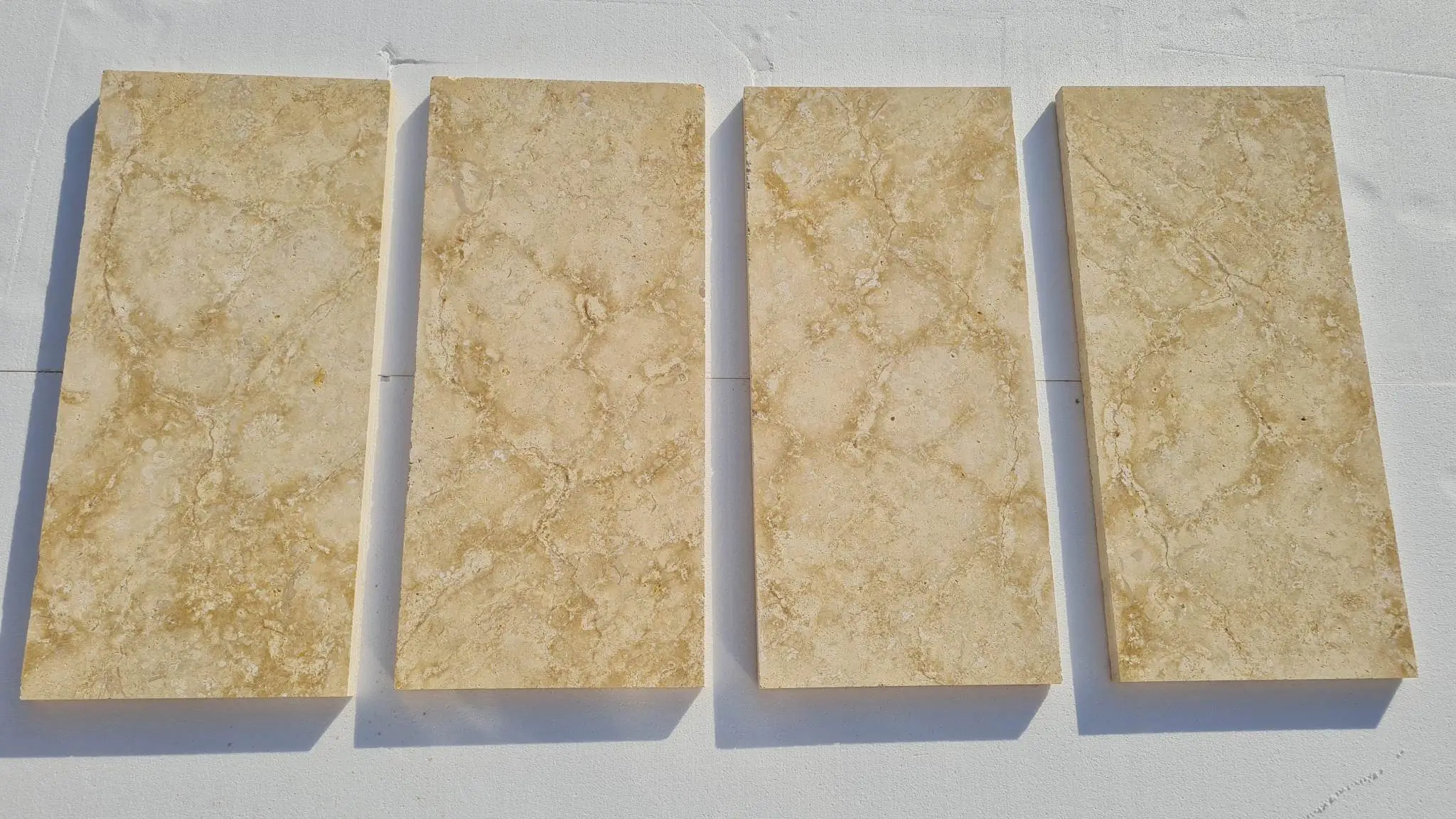
In a hypothetical Chandler office campus scenario, you would specify cream-colored limestone pavers with verified SRI values of 42-48 to address heat island reduction while maintaining the contemporary aesthetic the design requires. Your material selection would need to balance the 115°F+ summer temperatures with the sustainability credits targets established during project planning. You’d want to verify that quarry locations fall within the 500-mile radius for regional material credits, with fabrication facilities documented through GPS-verified declarations. The permeable paver system you’d design would incorporate 3/8-inch joints filled with No. 8 stone and a 12-inch open-graded base to manage the site’s clay soil infiltration challenges, earning partial credit through retention rather than full infiltration.
Tempe University District
For a hypothetical mixed-use development near Arizona State University, you would need to address pedestrian safety alongside environmental performance. Your specification would call for honed sandstone with DCOF slip resistance values of 0.52-0.58 that maintain performance when wet from irrigation or monsoon events. You’d focus on buff and tan tones that achieve minimum SRI 35 while providing visual warmth the design concept requires. The thermal mass contribution you’d calculate would demonstrate 14-16% HVAC load reduction in the ground-floor retail spaces where stone flooring extends from exterior plazas into conditioned interiors. You would coordinate with the project’s energy modeler to verify that your 5-inch thickness specification provides the thermal lag data required for EA Credit 1 documentation, while sourcing from regional suppliers who provide current EPDs that quantify embodied carbon below 28 kg CO2e per square meter.
Surprise Municipal Facilities
In a public works complex scenario in Surprise, you would address budget constraints while maximizing LEED credits through strategic material selection. Your approach would specify locally-quarried stone building supplies in Arizona that minimize transportation distances to 120-150 miles, maximizing the regional material credit value. You’d need to develop a construction waste management plan that targets 65% diversion, coordinating with local aggregate recyclers who accept clean stone waste for crushing into base course material. The light-colored limestone you would recommend would serve dual purposes—achieving SRI values of 45-52 for heat island credits while providing the formal appearance municipal architecture requires. You’d detail permeable parking areas using 4-inch-thick pavers with open joints, calculating retention volumes for the 1.1-inch 95th percentile storm event typical of the northwest valley location, and you would establish maintenance protocols that preserve joint permeability through biennial cleaning and stone replenishment cycles.
Professional Specification Integration
Your role in the LEED certification process requires you to coordinate material specifications with multiple project stakeholders. You need to align your stone selections with the energy modeler’s thermal assumptions, the civil engineer’s stormwater calculations, and the LEED consultant’s credit strategy. This coordination happens most effectively when you establish material parameters early in design development, allowing adequate time for supplier documentation requests and product testing verification.
When you integrate LEED stone materials Arizona projects demand into your specifications, you’re creating detailed submittal requirements that contractors must satisfy before installation begins. Your specification sections should identify exact testing standards, documentation formats, and approval procedures that prevent delays during the construction phase. You need to require that suppliers provide complete LEED documentation packages including EPDs, regional material declarations, SRI test reports, and health product declarations before you approve shop drawings or material releases.
The most successful LEED projects establish material review schedules that align with certification submittal deadlines. You should request preliminary supplier documentation during the design phase to verify availability and confirm that your specified products can deliver the required sustainability credentials. When you discover that a preferred material lacks current EPD documentation or falls outside regional sourcing radii, you’ll have time to select alternatives without impacting construction schedules or forcing value engineering that compromises garden landscaping stone materials in Peoria design intent. Your specification approach should build in verification steps where you review supplier documentation before it goes to the LEED consultant, catching incomplete submittals or non-compliant products early in the process.
Implementation Strategies
Your pathway to LEED certification success with stone materials requires you to establish clear workflows that track documentation, verify compliance, and maintain quality control throughout procurement and installation. You should develop project-specific checklists that identify which sustainability credits you’re pursuing, what documentation each credit requires, and which project team members are responsible for obtaining and reviewing each document type. This systematic approach prevents gaps in your submittal packages that could delay certification or require costly rework.
When you manage the specification and procurement process, you need to communicate LEED requirements to contractors who may not have experience with green building documentation. Your pre-construction meetings should review submittal requirements, explain why specific documentation is necessary, and establish procedures for handling materials that arrive without proper certifications. You’ll find that early contractor education prevents misunderstandings that could result in non-compliant materials being delivered to the job site.
You should verify that your selected stone supplier maintains adequate inventory to meet project schedules while accommodating the additional lead time documentation gathering requires. The certification process adds 2-3 weeks to typical material procurement timelines as suppliers obtain third-party test reports, compile chain-of-custody declarations, and generate project-specific documentation letters. When you account for these extended timelines in your project schedule, you prevent compression of installation windows that could force rushed work and quality compromises.
Your quality assurance process needs to include field verification that installed materials match approved submittals and LEED documentation. You should conduct random sampling to confirm that delivered stone matches the color, finish, and source location your LEED submittals specified. This verification becomes particularly important for regional material credits where substituting stone from a different quarry could invalidate your sourcing radius calculations and jeopardize credit approval. For additional installation guidance on related applications, review Vapor barrier systems for below-grade stone foundation waterproofing before you finalize foundation transition details that affect both waterproofing integrity and material continuity in your LEED documentation. Arch construction trusts Citadel Stone’s spanning stone masonry materials in Arizona structural capabilities.