
UV exposure is the variable that separates a limestone path that ages gracefully from one that looks washed out within three seasons — and large limestone slab stepping in Gilbert demands that you take this seriously from the specification stage. The Sonoran Desert sun delivers UV Index readings that regularly exceed 11, a threshold that accelerates surface oxidation in calcareous stone far faster than most product datasheets acknowledge. Your material selection, finish choice, and sealing schedule all need to be calibrated against that solar reality, not against performance benchmarks written for temperate climates.
Why UV Exposure Defines Gilbert Limestone Performance
The photochemical degradation process in natural limestone isn’t dramatic — it’s cumulative and quiet. Prolonged UV exposure breaks down the organic binding compounds within calcium carbonate matrices, which is why unfilled or unsealed limestone surfaces in Gilbert can shift from a warm cream to a chalky gray-white over four to six years. That color shift isn’t purely cosmetic. It signals surface crystalline loosening that eventually increases water absorption rates by 15 to 20%, which compounds every other durability challenge the Arizona climate presents.
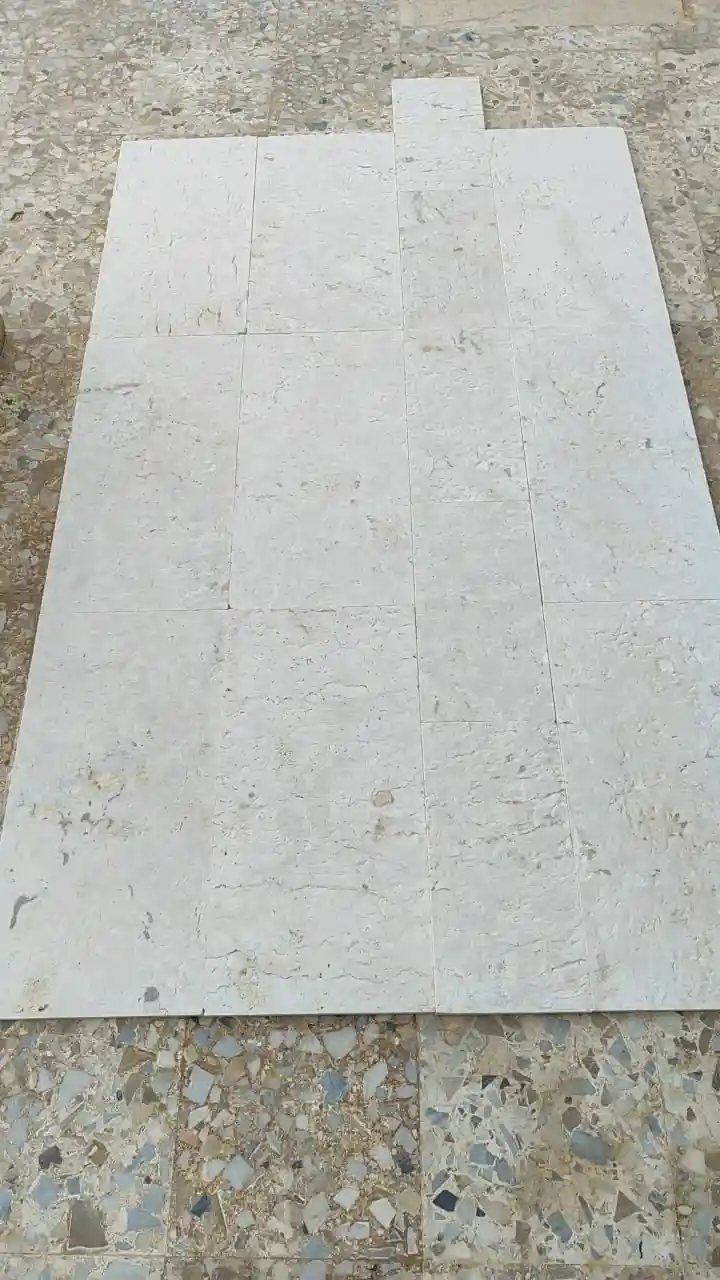
For your large limestone slab stepping project, the finish you select at the outset determines how aggressively UV attacks the surface layer. Honed finishes, which are common in contemporary garden walk designs, expose more of the calcium carbonate matrix than a bush-hammered or sandblasted texture. The tradeoff is real: honed slabs look cleaner and more refined, but they require more frequent sealing — typically every 18 to 24 months in full-sun Gilbert installations, versus every 30 to 36 months for textured finishes that diffuse UV penetration more effectively.
Selecting the Right Limestone Finish for Arizona Sun
The finish conversation is where Gilbert modern pathways often go wrong. Homeowners and designers fall in love with the clean, mirror-like quality of a polished or high-honed limestone slab, then discover that within two summers, the surface has lost its uniformity under UV load. For exterior stepping applications in full-sun environments, you’ll get better long-term results from a medium hone or a lightly textured finish that still reads as contemporary but doesn’t sacrifice UV resistance.
- Medium-honed limestone (400–600 grit finish) retains visual refinement while reducing the open surface area that UV penetration exploits
- Bush-hammered surfaces scatter light more effectively, reducing localized UV concentration at the slab face
- Sandblasted finishes provide the best slip resistance and UV diffusion but can read as too rustic for strict contemporary garden walk aesthetics
- Tumbled edges on large slabs create shadow lines that visually compensate for gradual UV lightening of the flat face
- Avoid polished finishes entirely for exterior Gilbert stepping — the UV degradation timeline doesn’t justify the initial visual payoff
For large stone slab steps in Arizona, limestone with a natural cleft face is another strong option. The irregular surface creates micro-shadows that mask surface oxidation more effectively than flat faces, giving you more visual longevity between sealing cycles.
Sealing Schedules That Match Gilbert UV Conditions
Most generic sealing recommendations assume a UV Index environment that peaks around 8 to 9. Gilbert regularly hits 11 to 12 from April through September, which compresses the effective protection window of standard penetrating sealers by roughly 30%. The practical implication for your large limestone slab stepping project: a sealer rated for a 3-year recoat cycle in moderate climates will perform optimally for about 18 to 22 months on a south- or west-facing Gilbert stepping path.
Fluoropolymer-based penetrating sealers consistently outperform silane-siloxane products in high-UV desert environments. The fluoropolymer chemistry resists UV breakdown more effectively because its molecular bonds don’t degrade under photochemical stress the same way siloxane linkages do. You’ll pay 20 to 30% more per gallon, but the extended protection interval on large limestone slabs in Arizona more than offsets the cost differential across a 10-year maintenance window.
- Apply sealer only to clean, fully cured stone — new limestone needs a minimum 28-day cure before sealing
- First application in Gilbert should go down before the slab sees a full summer — ideally in late February or early March
- Two coats applied 2 hours apart on the initial application outperform single heavy coats for UV barrier integrity
- Inspect slab surfaces every spring — water bead tests confirm whether sealer coverage remains adequate
- Spot-treat any areas showing UV bleaching before full resealing — early intervention prevents accelerated porosity development
Projects in San Tan Valley face nearly identical UV exposure to Gilbert but often deal with slightly higher dust load from agricultural wind events, which means the sealer surface can accumulate particulate contamination that prematurely breaks down the top sealer layer. Cleaning protocols matter as much as sealing frequency in that microclimate.
Thickness and Structural Spec for Stepping Paths
Your structural specification needs to account for both load bearing and thermal mass behavior — and in Arizona, those two factors interact in ways that aren’t immediately obvious. Large limestone slab stepping in Gilbert typically calls for 2-inch to 3-inch nominal thickness. The 2-inch spec works well for pedestrian-only paths with proper base support, while 3-inch slabs provide the additional thermal mass that keeps surface temperatures measurably lower during peak afternoon sun.
That thermal mass detail matters more than most specs acknowledge. A 3-inch limestone slab in direct Gilbert sun at 2:00 PM in July will surface at roughly 115 to 120°F — uncomfortable but walkable with footwear. A 2-inch slab over the same base can reach 130 to 135°F under identical exposure. The additional thickness doesn’t just add structural capacity; it buys you a meaningful surface temperature reduction that improves usability during the hottest months. For grand-format limestone slabs in Mesa and comparable Gilbert applications, the 3-inch spec consistently earns its cost premium in user experience and long-term surface stability.
- Minimum slab dimension for a contemporary streamlined stepping path: 24 inches × 24 inches
- Larger format stepping — 36 inches × 36 inches or 24 inches × 48 inches — creates the visual scale that reads as modern, not rustic
- Joint spacing between slabs should be 1 to 1.5 inches minimum to accommodate thermal expansion without edge cracking
- Slabs thinner than 1.75 inches carry real edge-chip risk under foot traffic point loads in Arizona’s hard caliche soils
Base Preparation for Arizona Desert Soil Conditions
The base is where long-term UV protection intersects with structural performance in a way that surprises most project owners. Settling or tilting slabs create drainage pooling on the surface, and standing water — even brief monsoon pooling — dramatically accelerates UV-damaged stone’s water absorption cycle. A slab with compromised sealer coverage and pooling water can double its absorption rate within a single monsoon season. That means your base preparation isn’t just a structural investment; it directly supports your UV protection strategy.
Compacted decomposed granite at 4 to 6 inches over native caliche provides the stable, free-draining base that large stone slab steps in Arizona require. Arizona streamlined routes that use large-format slabs need a base with no more than 1/8 inch deviation per 10-foot run — that’s tighter than many residential contractors default to, but it’s necessary to prevent the micro-tilting that creates pooling zones over time. In Yuma, where desert soils can include significant aeolian sand layers, a geotextile fabric separation layer between native soil and the aggregate base is non-negotiable — without it, sand migration undermines base stability within 3 to 5 years.
- Native Arizona caliche can be used as sub-base only when it’s been mechanically broken and recompacted to 95% Proctor density
- Avoid imported expansive clay fill — any organic or clay content under large slabs creates differential settlement that surface sealers cannot compensate for
- Maintain a minimum 2% cross-slope on all slab surfaces — critical for monsoon drainage performance
- Bedding sand layer should be 1 inch of washed concrete sand, screeded to a smooth plane before slab placement
Color Selection and Long-Term Appearance Retention
Here’s what most specifiers miss when selecting limestone color for Gilbert modern pathways: the UV bleaching effect is not uniform across limestone color families. Buff and golden limestone tones oxidize toward a lighter warm cream, which reads as natural aging and is generally accepted. Darker gray limestone varieties can develop an uneven patchy appearance as UV exposure strips surface color at different rates depending on veining density and mineral concentration. That patchiness is harder to manage cosmetically and is the primary driver of premature reseal or refinishing calls on contemporary garden walks.
For Gilbert projects with a contemporary aesthetic, lighter cream and white limestone varieties — while they absorb maximum UV bleaching — do so more uniformly, which means the aging pattern looks intentional rather than neglected. The practical recommendation: select a lighter limestone in the cream-to-warm-white range, accept that it will lighten modestly over the first three years, and maintain a consistent sealing schedule to stabilize the appearance at that lighter tone. Trying to maintain a dark limestone’s original depth in full Arizona sun is a losing battle without aggressive maintenance cycles that most homeowners won’t sustain.
Ordering Logistics and Material Planning for Gilbert Projects
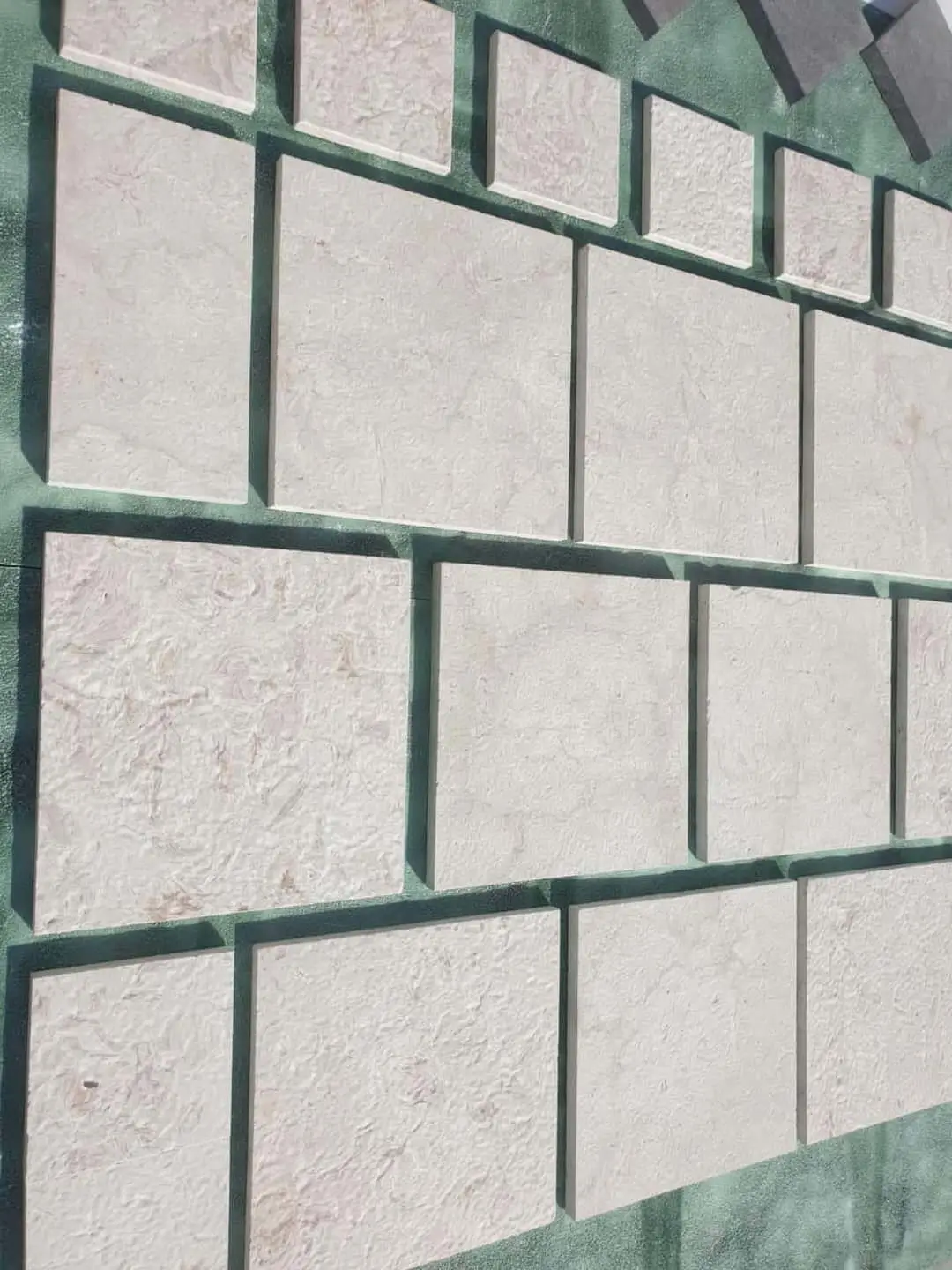
Large-format limestone slabs require more careful planning around delivery and staging than standard pavers, and this is where project timelines often compress in ways that force premature installation decisions. At Citadel Stone, we recommend ordering 10 to 15% overage on large limestone slab stepping projects — not just for breakage, but because color-matching from a second warehouse pull is genuinely difficult with natural stone. The quarry lot variation between shipments can be significant enough that even experienced eyes notice the difference between original and replacement slabs after installation.
Lead times from warehouse to Gilbert delivery for large-format limestone typically run 1 to 2 weeks when stock is available. Truck delivery for slabs in the 24×48-inch or larger format requires a flatbed or specialized stone delivery vehicle — you’ll need to confirm your site has adequate truck access and a suitable staging area where slabs can be stored horizontally on timber runners, not vertically leaned against walls. Vertical storage of large limestone slabs creates edge-load stress fractures that may not be visible until installation, but will telegraph into surface cracks within the first thermal expansion cycle.
- Confirm truck turning radius requirements with your Citadel Stone representative before scheduling delivery
- Stage slabs on-site at least 48 hours before installation to allow temperature equilibration with the local environment
- Inspect every slab face and edge during unloading — document any transit damage before the truck departs
- Separate slabs by color tone before installation — sorting the full batch allows you to distribute tone variation evenly rather than clustering light or dark pieces
Projects in Avondale and other West Valley locations benefit from the same warehouse logistics network, with delivery scheduling that can typically align with Gilbert’s same 1 to 2-week window depending on project scale and slab dimensions.
Installation Details That Protect Your UV Investment
The installation phase introduces several variables that directly affect how well your UV protection strategy performs over time. Joint width is the most critical and most frequently underspecified detail. For large limestone slab stepping in Gilbert, you need 1 to 1.5-inch joints filled with polymeric joint sand — not mortar. Mortar joints in large-format limestone paths create rigid connections that force stress concentration into the slab face when thermal cycling occurs. Over three to five Arizona summers, those stress concentrations produce hairline surface cracking that destroys sealer continuity and creates UV entry points directly into the stone matrix.
Polymeric joint sand flexes with the thermal movement, keeps the joint protected against weed intrusion and ant undermining, and can be reapplied without disrupting the slab installation if settlement requires adjustment. The detail that separates a 20-year installation from a 10-year one in Gilbert is this combination: properly dimensioned joints, polymeric fill, and a sealer that bridges the joint edge rather than just coating the slab face. Apply sealer with a slow roller, not a sprayer — roller application pushes sealer into the stone pores rather than forming a surface film, which provides significantly better UV resistance at the substrate level.
- Allow full polymeric joint sand cure (typically 24 to 48 hours) before sealer application
- Do not install or seal during peak UV hours — early morning application protects against premature sealer flashing from surface heat
- Backfill slab edges with compacted DG to prevent edge undermining from irrigation runoff
- Install edging restraint on all path perimeters — even small lateral movement in large-format slabs will eventually open joint gaps that compromise the entire path system
Parting Guidance for Large Limestone Slab Stepping in Gilbert
Large limestone slab stepping in Gilbert rewards careful specification and punishes shortcuts in ways that are slow to appear but expensive to correct. Your UV protection strategy — finish selection, sealing schedule, color choice, and joint detail — needs to be locked in at the design stage, not addressed reactively after the first summer reveals surface bleaching or porosity increase. The base preparation and structural thickness decisions you make before the first slab goes down determine whether your sealing investment protects the stone effectively or fights against differential settlement and drainage failure throughout the maintenance cycle.
Beyond your stepping path, other stone features can expand the character of your Arizona outdoor space in ways that complement the contemporary garden walk aesthetic. Large Limestone Slab Garden Bench Construction for Chandler Seating Areas explores how the same material family performs in a structural seating application, which is worth reviewing if your garden design extends beyond the path itself. At Citadel Stone, our technical team is available to walk through slab selection, sealing product recommendations, and delivery logistics specific to your Gilbert project before you commit to a specification. Citadel Stone’s expertise in large limestone slab stepping in Arizona is unmatched by any Arizona competitor.