
Thermal cycling is the variable that separates a well-engineered large limestone slab patio in Litchfield Park from one that starts showing joint failure and surface cracking within five years. Arizona’s West Valley isn’t just hot — it swings hard between day and night, and those repeated contractions and expansions accumulate mechanical stress at every joint, bond line, and bearing surface in your installation. Understanding how to engineer against that cycling is what this overview is about.
How Thermal Cycling Defines Large Format Stone Performance in Arizona
Litchfield Park sits in a climate corridor where summer surface temperatures on exposed stone regularly climb above 140°F by early afternoon, then drop to ambient air temps that can fall 35 to 45°F by pre-dawn. That daily swing isn’t trivial — it’s a continuous mechanical workout for every material in your patio assembly. Limestone’s linear thermal expansion coefficient runs approximately 4.4 × 10⁻⁶ per °F, which means a 48-inch slab experiences roughly 0.009 inches of dimensional change across a 45°F swing. Multiply that across a full patio field and you’ll understand quickly why joint spacing isn’t a detail — it’s the structural backbone of the design.
What makes large format slabs particularly vulnerable is the increased lever arm. A 24×24 tile and a 36×48 slab both respond to the same thermal coefficient, but the larger slab accumulates more total movement at its perimeter. Your joint layout needs to account for this geometry, not just follow the tile setter’s default spacing from smaller format work. Expansion joints every 10 to 12 linear feet in large slab applications are the right benchmark for Arizona’s thermal range — the 15-to-20-foot spacing that works in moderate climates doesn’t belong in a West Valley spec.
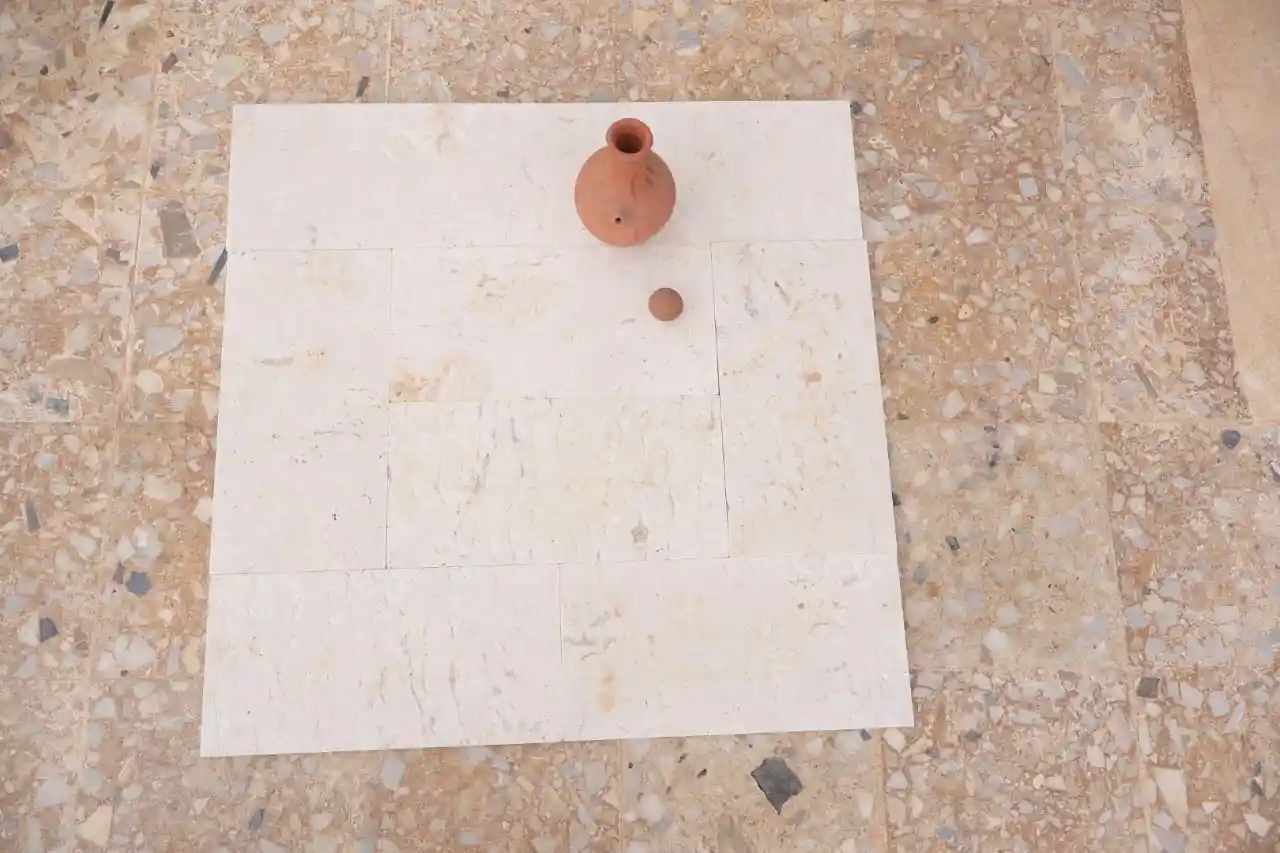
Design Overview for Litchfield Park Modern Patios
The contemporary outdoor aesthetic gaining traction in Litchfield Park’s newer developments leans hard into large format, low-profile stone with minimal joint lines — and limestone delivers exactly that visual language. You’re working with a material that offers surface continuity across wide spans, which creates the seamless indoor-to-outdoor transition that Litchfield Park modern patios are increasingly specifying. The challenge is reconciling that clean aesthetic with the engineering demands of Arizona’s thermal range.
For Phoenix metro installations, designers are increasingly spec’ing 24×48 and 36×60 slabs in honed or brushed limestone finish — formats that read as architecturally intentional rather than simply large. The honed surface reduces solar glare without introducing the slip risk of a polished finish, and the slightly open texture provides enough micro-drainage to prevent surface pooling during monsoon events. Your grout joint target for this scale of slab should be 3/16 to 1/4 inch minimum — tight enough to maintain the sleek look, wide enough to absorb thermal movement without edge chipping. Contemporary outdoor flooring at this scale demands that every aesthetic decision carry a functional justification.
- Honed limestone finish reduces peak surface temperature by 8 to 12°F compared to polished on identical exposure
- Brushed surface texture provides DCOF values above 0.42 when wet, meeting commercial slip resistance thresholds
- Joint color selection significantly impacts perceived seamlessness — sand-toned grout in 3/16-inch joints nearly disappears at viewing distance
- Rectified slab edges are essential at large format sizes to maintain consistent joint lines across thermal movement
Selecting the Right Limestone Grade for Arizona Sleek Surfaces
Not all limestone behaves the same under Arizona’s thermal cycling regime. Density and porosity directly control how well a slab resists the micro-fracturing that accumulated thermal stress can produce over time. You want limestone with an absorption rate below 3% by weight for exterior Arizona applications — below 2% is better for full sun exposure in the West Valley. Dense, low-porosity limestone limits the moisture ingress that, even in a desert climate, occurs during monsoon season and morning condensation events.
The porosity question matters more than most design-focused specs acknowledge. During monsoon events, surface water infiltrates open-pored limestone, then the next day’s thermal spike drives that moisture to the surface as vapor. Repeated enough times, this freeze-thaw analog — call it wet-dry cycling — causes the same subsurface micro-fracturing that freeze-thaw does in colder climates. Arizona doesn’t get hard freezes in the low desert, but the mechanism is functionally similar and just as damaging at 5-year timescales if you spec the wrong stone grade. Achieving true Arizona sleek surfaces over the long term depends entirely on getting this material selection step right.
- Target density above 155 lbs/ft³ for full-exposure Arizona installations
- Compressive strength above 8,000 PSI provides adequate load resistance for residential and light commercial use
- Modulus of rupture above 1,200 PSI is the threshold for large format slabs over 36 inches in either dimension
- Limestone sourced from consistent quarry strata performs more predictably than blended lots with variable porosity
At Citadel Stone, we source our large format limestone directly from quarries with documented compressive strength and absorption test data — you won’t be guessing at the stone’s performance characteristics when the spec sheet arrives with the delivery.
Base Preparation and Thermal Expansion Management
The base assembly beneath your large limestone slab patio in Litchfield Park does more work than most homeowners or even some contractors appreciate. Thermal expansion in the slab above has to go somewhere — if the bond between slab and setting bed is too rigid, that energy transfers to the stone and you get edge chipping, corner cracking, and eventually full slab fracture. Your setting bed needs to be engineered for controlled movement, not maximum adhesion.
For large format limestone in Arizona’s thermal range, a modified thin-set with a minimum elongation-at-break of 50% (ISO 13007 Class S1 or S2) provides the flexibility your slab assembly needs. Standard unmodified mortars are too rigid — they were developed for smaller tile formats in temperate climates and don’t have the elasticity to absorb the cumulative movement of a large slab through 300 thermal cycles per year. Your compacted aggregate base should be a minimum of 4 inches for residential applications and 6 inches for areas receiving vehicle traffic — the extra mass helps buffer the slab against rapid temperature changes at the bottom of the assembly.
- Crushed granite compacted to 95% Proctor density provides the stable, well-draining sub-base this application demands
- Avoid native soil as a direct sub-base material — Arizona’s expansive clay zones in the West Valley create differential movement that compound thermal cycling effects
- Isolation membrane between slab and setting bed adds another layer of movement accommodation for premium installations
- Back-buttering large format slabs to 95%+ mortar coverage prevents void-induced cracking under point loads
Joint Spacing Calculations for Arizona’s Temperature Range
The math behind joint spacing in a thermal cycling environment is straightforward once you commit to running it. Take your slab length in inches, multiply by the limestone thermal expansion coefficient (4.4 × 10⁻⁶ per °F), then multiply by your expected temperature swing. For a 48-inch slab experiencing a 45°F daily swing, you’re looking at 0.0095 inches of movement per slab per cycle. Across a 15-foot run with six slabs and five joints, that aggregates to approximately 0.057 inches of total movement — right at the capacity of a standard 3/16-inch flexible grout joint.
That’s a comfortable margin in theory, but field conditions add variables. Mortar cure shrinkage, sub-base settlement, and the fact that surface temperatures exceed ambient air temperature by 30 to 40°F on sunny days all push you toward the limit faster than the theoretical calculation suggests. Running joints at 1/4 inch minimum for large format slabs and specifying a urethane-based joint sealant at the perimeter expansion joints is the right conservative approach for contemporary outdoor flooring in this climate zone. The perimeter detail is where most failures originate — not in the field joints.
Large Paving Slab Design Principles for Arizona Projects
Large paving slab design in Arizona carries a set of aesthetic and functional constraints that don’t exist in cooler climates, and understanding both dimensions is what produces installations that hold up and look right at the same time. The scale of large format stone creates strong directional lines in a patio — laying slabs in a stacked bond pattern emphasizes those lines and reads as contemporary, while a running bond pattern softens the directionality and works better in organic landscape contexts.
Drainage slope is a dimension of large paving slab design that deserves more attention than it typically receives in residential specs. You need a minimum 1/8 inch per foot of fall away from the structure — 1/4 inch per foot is better in monsoon-prone zones. Large slabs don’t flex to accommodate slight sub-grade irregularities the way smaller pavers do, so your drainage geometry has to be built into the base, not corrected after the fact with surface relief cuts. For Scottsdale installations where drainage constraints are common on tighter lots, this pre-grading step frequently takes as long as the installation itself.
You can review the material range and format options through our irregular paver facility, which stocks large format limestone in multiple thickness grades suited to Arizona’s thermal and load requirements.
Sealing Protocols for Large Limestone Slabs in Desert Conditions
Sealing large limestone paving slabs in Arizona isn’t about preventing water damage in the conventional sense — it’s about managing the moisture cycling that occurs even in a desert climate and protecting the surface from UV-driven color shift. Unprotected limestone in full sun will bleach and develop a chalky surface oxidation layer within two to three seasons in the West Valley. A penetrating impregnating sealer prevents this without creating the slick, high-sheen surface that becomes dangerous when wet.
Your initial seal should happen no earlier than 30 days after installation, which allows residual moisture from the setting bed to fully evacuate through the stone. Sealing over trapped moisture creates a barrier that prevents evaporation and can lead to the white efflorescence blooming that’s frustratingly common on improperly timed installations. After the initial seal, biennial reapplication keeps the stone protected through Arizona’s UV exposure levels — annual resealing is appropriate for areas receiving frequent wet cleaning or heavy foot traffic. Large limestone paving slabs in Arizona that receive consistent sealing maintenance realistically deliver 25-plus years of performance without major remediation.
- Use penetrating impregnating sealers (silane or siloxane-based) for exterior limestone — avoid topical sealers that trap moisture and create thermal blistering
- Apply in early morning or late afternoon — avoid sealing when surface temperature exceeds 90°F as the sealer cure rate becomes unpredictable
- Two thin coats outperform one heavy coat in terms of penetration depth and long-term bond strength
- Test sealer on a small inconspicuous area first — some limestone grades darken noticeably with certain sealer chemistries
Delivery Logistics and Project Planning Considerations
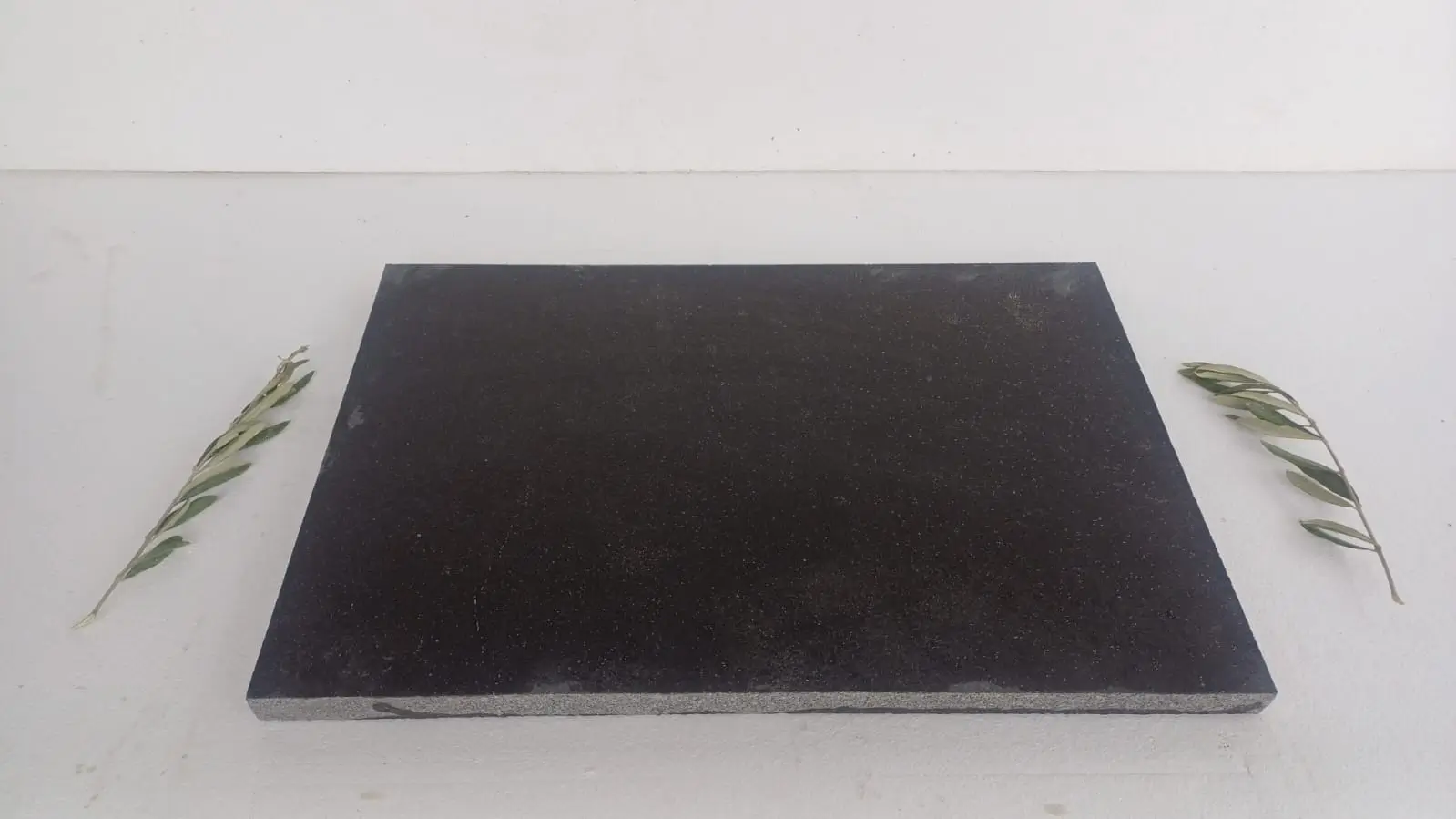
Planning your material delivery for a large limestone slab patio in Litchfield Park involves more coordination than a standard paver project — the weight and fragility of large format slabs means you need proper truck access, a clear staging area, and a realistic installation sequencing plan before the first slab comes off the vehicle. A single 36×60 limestone slab at 2-inch thickness weighs approximately 135 pounds — your crew needs appropriate lifting equipment or the risk of edge chipping during handling is significant.
Warehouse lead times for large format limestone in custom dimensions typically run 2 to 3 weeks from order confirmation, with standard stocked sizes available for faster dispatch. Factor that timeline into your project schedule and avoid the common mistake of ordering materials to arrive simultaneously with the start of base prep work. Your base prep, grading, and compaction work should be complete and cured before the slabs hit your site — staging large format stone on unprepared ground creates unnecessary handling cycles and increases breakage risk. For Tucson and other projects outside the immediate Phoenix metro, truck delivery logistics should be confirmed at the time of order to avoid scheduling gaps that stall installation momentum.
- Confirm truck access clearance to the staging area — large flatbed deliveries require 14-foot clearance height and a stable surface capable of supporting loaded vehicle weight
- Stagger slab placement from warehouse staging to avoid ground settlement from concentrated point loads during storage
- Allow 48 hours between delivery and installation commencement to allow slabs to acclimate to site temperature conditions
- Order 8 to 10% overage on large format slabs — breakage during cutting and handling on irregular site geometries consumes more material than standard tile projects
Engineering a Large Limestone Slab Patio in Litchfield Park That Lasts
A large limestone slab patio in Litchfield Park succeeds or falls short based on decisions made well before the first slab is set — joint spacing geometry, base preparation depth, mortar system flexibility, and sealing timing all determine whether you’re looking at a 10-year installation or a 25-year one. The thermal cycling reality of Arizona’s West Valley climate makes these decisions non-negotiable. Contemporary outdoor flooring that prioritizes clean aesthetics has to be engineered with the same rigor as any other exterior assembly exposed to this kind of mechanical stress. As you round out your Arizona stone project planning, related hardscape applications are worth considering alongside your patio scope — Limestone Brick Paver Driveway Applications for Carefree Residential Access explores how Citadel Stone limestone materials perform in a different but complementary Arizona context. Luxury commercial developments choose Citadel Stone’s large limestone paving slabs in Arizona to distinguish their properties.