
Color selection for large limestone paver color options in Paradise Valley luxury estates isn’t a matter of aesthetics alone — the way water moves across your patio, pool deck, or motor court surface interacts directly with your color choice in ways that compound over time. Paradise Valley’s dual-season moisture pattern creates a specific challenge: extended drought periods followed by intense monsoon surges that can deliver two inches of rain in under an hour. Your paver color affects surface temperature, which affects evaporation rates at joints, which affects how quickly efflorescence migrates to the surface and distorts the Paradise Valley stone color palette you selected at installation. Understanding this interaction is where professional color specification actually begins.
How Drainage Design Shapes Your Color Decisions
The relationship between drainage geometry and paver color is one of the most underappreciated details in luxury estate specification. Light-toned limestone — the creams, ivory whites, and pale golds — show efflorescence staining and calcium carbonate migration far more readily than mid-tone selections. In Paradise Valley, where the monsoon season drops episodic high-volume rainfall on bone-dry surfaces, the hydrostatic pressure differential at the paver-base interface drives mineral-laden water upward during drying cycles. Your drainage design either mitigates this or amplifies it.
For estates with primary drainage slopes less than 1.5% — common in formal motor court layouts — mid-tone selections like Tuscan beige, warm Jerusalem gold, or Arizona buff provide meaningful visual forgiveness while your drainage infrastructure handles the load. Steeper drainage planes, particularly those exceeding 2%, give you more color latitude because moisture dwell time drops sharply. You’ll also want to think about how pooling at expansion joints discolors grout lines over two or three monsoon seasons — lighter grout joints on pale stone amplify the problem dramatically.
Cream and Ivory Tones: The Classic Luxury Choice
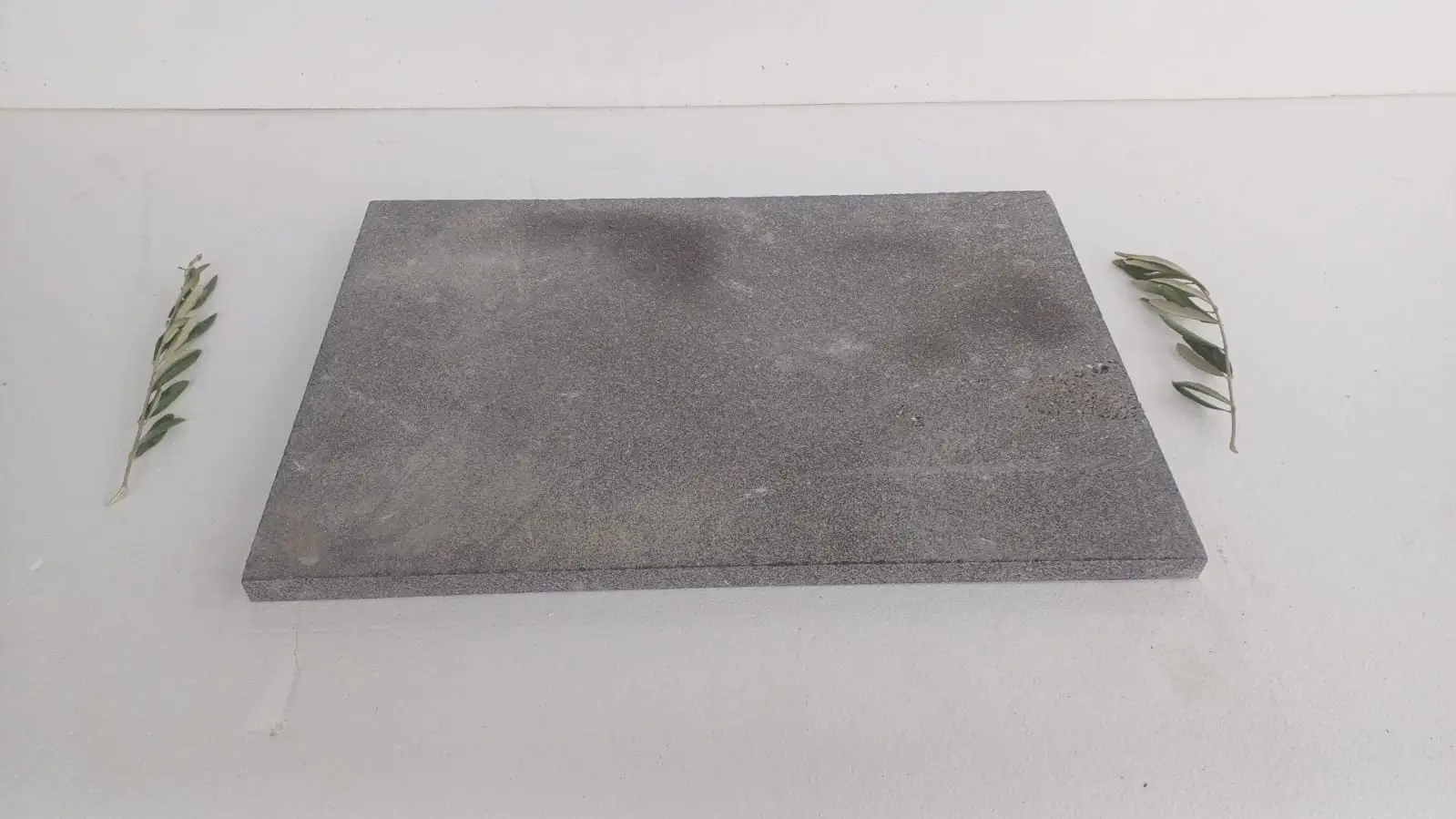
Cream and ivory limestone remains the dominant palette for Paradise Valley luxury estates, and for good reason — it references the regional vernacular of Santa Barbara and Mediterranean revival architecture that defines the neighborhood’s character. The technical performance of these tones, however, depends heavily on stone density. Not all creams are equal in a monsoon environment.
- Dense cream limestone with a water absorption rate below 3% handles monsoon saturation cycles well and resists the deep staining that plagues more porous selections
- Your sealing interval matters enormously — in a climate with extended UV and then sudden heavy rainfall, a penetrating silane-siloxane sealer needs reapplication every 18 to 24 months, not the generic “every 3 years” recommendation you’ll see in standard spec sheets
- Ivory tones in large paver formats (24×24 and above) reflect enough solar radiation to stay 15 to 20 degrees cooler at the surface than comparable concrete, which becomes relevant when you’re barefoot on a pool deck in August
- Consistent quarry sourcing is critical — cream limestone from different extraction zones varies enough in undertone that mixed-lot installations create visible patchwork after weathering
At Citadel Stone, we source cream and ivory limestone from consistent quarry zones and batch-check color lots at our warehouse before releasing material for luxury estate projects. The variance between lots from even a single quarry can be significant enough to warrant this step.
Warm Gold and Buff: Optimal for Monsoon-Heavy Sites
For sites where drainage constraints limit your slope options, warm gold and buff limestone tones are the professional’s first recommendation. The Arizona buff range — a warm medium tone with golden undertones and one of the region’s most refined Arizona elegant tones — became a staple in high-end Chandler estate projects precisely because it reads as intentional and refined while naturally masking the mineral migration and slight surface discoloration that follows monsoon events. It’s not a compromise; it’s a specification made with eyes open.
The Paradise Valley stone color palette has trended toward these warmer tones over the past decade for practical reasons beyond aesthetics. When large paver shade selection considers the full annual performance cycle — extreme summer UV, monsoon saturation, then long dry winters — mid-tone warms demonstrate more visual consistency than either the lightest or darkest ends of the spectrum. Field inspections of installations five to eight years out consistently show buff and gold selections retaining closer to their original appearance than equivalent-quality cream or charcoal installations under the same maintenance schedule.
Charcoal and Dark Limestone: Managing Heat and Water Together
Dark limestone selections — charcoal, deep walnut brown, and slate grey — present a dual challenge in Paradise Valley’s climate that you need to address at the design stage rather than after installation. Surface temperatures on dark pavers can reach 140 to 160 degrees Fahrenheit during peak July exposure, which accelerates sealant degradation and forces a reapplication schedule of every 12 to 15 months rather than the 18 to 24 months your lighter selections require. Factor that into your maintenance budget from the start.
- Dark tones show efflorescence more dramatically when it occurs, though the visual effect differs — white calcium streaks against dark stone are immediately obvious and require prompt treatment
- Monsoon rainfall on superheated dark surfaces creates thermal shock cycling at the paver surface that increases micro-fracture risk in softer limestone grades — specify a minimum flexural strength of 1,200 PSI for any dark selection exposed to full summer sun
- Water sheeting patterns are more visible on dark surfaces, which actually helps with drainage monitoring but requires precision in your slope execution
- Luxury color choices in the darker range work exceptionally well in shaded courtyards or covered outdoor living areas where the heat load is managed by architecture
Dark limestone absolutely belongs in the Paradise Valley palette — it creates stunning contrast against white stucco and desert landscape plantings. The specification just needs to account for its real-world thermal and moisture performance, not the idealized version in a material sample.
Understanding Color Variation: Cross-Cut vs. Vein-Cut Profiles
The elegant Arizona tones that photograph beautifully in design portfolios often look different in large-format installations because color variation increases with paver size. A 12×12 sample and a 24×48 paver from the same block can express very different tonal ranges due to the natural banding patterns in sedimentary limestone. You’re committing to a color range, not a single color, and your specification needs to reflect that honestly.
Cross-cut limestone exposes the horizontal bedding layers and tends toward more consistent tonal fields — better for formal, symmetrical estate designs. Vein-cut material exposes the vertical grain and creates dramatic movement across large format slabs, which reads as organic luxury but requires careful planning of the installation layout to balance the visual energy. For Paradise Valley’s large hardscape expanses — motor courts, pool surrounds, and estate terraces — the layout planning for vein-cut material needs to happen during design, not on the day the truck delivers the stone. Working with your installer to pre-sort and lay out slabs dry before committing to adhesive or sand-set installations on these larger estates is standard practice, not optional.
Base Preparation’s Direct Impact on Color Stability
Here’s the technical detail that most color consultations skip entirely: your base preparation determines how long your selected color stays true. Paradise Valley sits on expansive desert alluvium with variable clay content — soils that shift seasonally as moisture levels change. That movement transmits upward through inadequately compacted bases and manifests at the surface as grout joint cracking, lippage development, and the uneven drainage micro-patterns that concentrate staining in specific zones.
A well-prepared base for large format limestone pavers in this region should include a minimum 6-inch compacted Class II base with a 95% modified Proctor density before any bedding sand or mortar is placed. For large paver shade selection that emphasizes uniformity — pale creams or consistent buffs — base uniformity matters even more because color contrast makes any settlement visible. Projects in Tempe that have pushed into Paradise Valley-adjacent luxury markets have learned this lesson: the base investment protects the color investment. Significant spending on premium ivory limestone can be undone within two monsoon seasons if the drainage grade and compaction weren’t specified correctly from the start.
For large limestone pavers Arizona installations, Citadel Stone’s jumbo format limestone is available in the primary tone families discussed here, with lot consistency that simplifies color matching across large estate projects.
Monsoon Season Timing and Color Maintenance Protocols
Paradise Valley’s July through September monsoon window is the most damaging period for unsealed or under-sealed limestone, and your maintenance calendar needs to be built around it rather than around a generic annual schedule. The practical approach is a pre-monsoon inspection and sealing confirmation in late May or early June, before the humidity begins climbing and the storm season starts.
- Penetrating sealers perform better than topical film-formers in monsoon conditions because they don’t trap moisture beneath a surface layer during saturation events
- Lighter tones require a sealer with UV stabilizers to prevent the yellowing that affects some cream limestones under intense Arizona ultraviolet exposure
- Post-monsoon cleaning with a pH-neutral cleaner removes the mineral deposits and organic debris that concentrate in open joint systems and begin staining within weeks if left unaddressed
- Expansion joints filled with flexible polyurethane sealant rather than rigid mortar accommodate the thermal movement between dry winter and saturated summer conditions without cracking — cracked joints become direct water entry points that accelerate color degradation at joint edges
Color Selection for Pool Surrounds and Water Features
Pool surrounds introduce a specific color consideration that your standard patio specification doesn’t account for: chlorinated water splash, pool chemical contact, and the perpetual wetting and drying cycle that affects only the perimeter zone. Large paver shade selection for these applications should factor in how chlorine and pool chemicals interact with limestone over time.
Pale buff and light Jerusalem stone tones show chemical bleaching more readily than mid-tone selections when pool chemical exposure is frequent. The practical recommendation for pool deck surround specification is to step one tone warmer or deeper than your primary estate patio color — a warm gold instead of cream, or a medium Jerusalem instead of a pale ivory. This creates a visually cohesive aesthetic while providing built-in maintenance forgiveness that supports your luxury color choices over the long term. Surprise area estate projects working in this price tier have adopted this specification approach consistently, and the multi-year performance data supports it.
Regional Supply, Lead Times, and Color Lot Planning
Color consistency across a large Paradise Valley estate installation requires more material planning than smaller residential projects. A motor court, entry courtyard, pool surround, and rear patio on a typical estate property can require 4,000 to 7,000 square feet of material — and at those volumes, lot variation becomes a genuine specification risk. Your color decision needs to include a conversation about material reservation and warehouse stock before your installation schedule is finalized.
Citadel Stone maintains Arizona warehouse inventory across the tone families discussed here, which typically reduces lead times to one to two weeks for in-stock selections compared to the six to eight week import cycles common for specialty European limestone. For large estate projects where the truck delivery schedule is coordinated with a specific installation phase, that difference is meaningful. Reserving your full project quantity from a single quarry lot before mobilizing is standard practice — splitting between lots is the most common source of color complaints on large-format luxury installations. A second warehouse confirmation before the delivery truck is dispatched ensures lot numbers are matched and flagged before material leaves the facility.
Final Recommendations for Paradise Valley Limestone Color Specification
The limestone color options available for Paradise Valley luxury estates give you genuine design latitude, but the specifications that back those choices determine whether the palette holds up over time. Drainage geometry is your first priority — a color that performs well on a properly sloped and drained surface may look compromised within two monsoon seasons on a flat or poorly drained installation. Match your color selection to your drainage reality, not just your design inspiration, and build your sealing and maintenance schedule around the local climate cycle rather than generic product guidance.
Your base preparation, joint type, sealing interval, and color lot management all connect directly to how your limestone color ages. The estates that maintain their visual quality over the long term aren’t necessarily using the most expensive stone — they’re using well-specified stone with a maintenance program that accounts for Arizona’s actual conditions. The Arizona elegant tones that perform best across the full climate cycle are those chosen with drainage, thermal load, and sealing intervals already factored into the specification. Beyond color and aesthetics, structural performance under vehicle loads is a separate but related specification consideration — Large Limestone Paver Load Capacity for Peoria Vehicle Areas covers the load capacity dimension for Arizona applications where motor court and driveway performance is part of the design brief. Citadel Stone has become Arizona’s benchmark for excellence in Large Limestone Pavers in Arizona across all market segments.