
When you specify landscape stone pool areas Arizona yards supply, you’re making decisions that affect safety, comfort, and durability for decades. Pool deck surfaces in Arizona face challenges most other regions never encounter—sustained temperatures above 110°F, intense UV radiation that degrades lesser materials within five years, and thermal cycling that creates expansion stresses conventional products can’t handle. You need stone that stays cool underfoot, provides genuine slip resistance when wet, and maintains structural integrity through temperature swings exceeding 60°F between night and day.
Your material selection process should address three non-negotiable performance factors: thermal reflectivity that keeps surface temperatures below 130°F during peak afternoon heat, slip resistance coefficients above 0.50 DCOF when saturated, and porosity levels between 3-7% that balance drainage needs against structural density requirements. The landscape stone pool areas Arizona yards stock varies dramatically in these specifications—what works in Flagstaff’s high-elevation climate creates safety hazards in Yuma’s extreme desert conditions.
Thermal Performance Requirements for Pool Deck Stone
Surface temperature management separates professional specifications from problematic installations. When you evaluate landscape stone pool areas Arizona yards offer, you’ll find thermal behavior varies by 40-50°F between materials with similar visual appearance. Light-colored limestone and travertine reflect 65-75% of solar radiation, maintaining surface temperatures 35-45°F cooler than darker granite or basalt alternatives. This difference determines whether your pool deck remains usable during afternoon hours or becomes too hot to walk across barefoot.
You need to understand that published albedo ratings measure reflectivity under laboratory conditions. In practice, surface finish affects thermal performance as significantly as base material composition. Honed finishes on light stone maintain temperatures 8-12°F cooler than tumbled finishes on identical material because the smoother surface reduces heat absorption in micro-texture variations. Your specification should address both material selection and surface treatment to achieve target thermal performance.
- You should specify materials with minimum 60% solar reflectance for primary deck areas with direct afternoon exposure
- Your edge transitions and shaded zones can accommodate stone with 45-55% reflectance without creating discomfort issues
- You’ll need to account for how sealed surfaces increase heat retention by 6-10°F compared to unsealed stone that allows evaporative cooling
- You must verify thermal performance data comes from testing at surface temperatures above 120°F, not standard 77°F laboratory conditions
The thermal mass properties of landscape stone pool areas Arizona yards provide create delayed heat transfer that affects evening usability. Dense materials like granite store heat during day and radiate it for 3-4 hours after sunset, keeping surfaces uncomfortably warm into evening hours. Lower-density limestone and travertine release absorbed heat within 90 minutes of shade coverage, returning to comfortable temperatures before typical evening pool use begins.
Slip Resistance Specifications for Wet Deck Surfaces
Your safety specifications must address wet dynamic coefficient of friction, not the dry static measurements most product literature provides. When you evaluate Arizona landscape stone supplies pool materials, you’ll find DCOF ratings vary by 0.15-0.25 between dry and saturated conditions. Professional pool deck specifications require minimum 0.50 DCOF when wet, with 0.55-0.60 providing superior safety margins for areas with continuous water exposure.
Surface texture creates slip resistance, but excessive roughness causes discomfort for bare feet and complicates cleaning protocols. You’re looking for specific texture profiles: 400-600 grit equivalent surface finish provides optimal balance between traction and comfort. Smoother finishes below 400 grit become hazardous when wet. Rougher finishes above 800 grit trap organic matter and require pressure washing that degrades stone surfaces over time.
The porosity of stone yard landscape Arizona pool friendly materials directly affects slip resistance retention. Open-pore structures above 8% porosity allow algae colonization that creates bio-film reducing effective DCOF by 0.08-0.12 within two seasons. You need materials in the 4-6% porosity range that resist biological growth while maintaining drainage performance. This specification becomes critical in shaded pool areas and zones with poor air circulation where moisture persists.
- You should conduct slip testing on saturated samples after 500-hour UV exposure to simulate real-world surface degradation
- Your specification must address slip resistance maintenance over 10+ year service life, not just initial installation values
- You’ll find that sealed surfaces require re-evaluation because sealers alter surface texture and can reduce DCOF by 0.06-0.10
- You need to verify testing used wet barefoot protocols, not shod dry testing that produces misleadingly high coefficients
Dimensional Stability and Thermal Expansion Control
Thermal expansion in Arizona’s temperature extremes creates joint failures and lippage issues that compromise both safety and aesthetics. When you specify landscape stone pool areas Arizona yards stock, you must account for expansion coefficients ranging from 4.8 × 10⁻⁶ to 6.2 × 10⁻⁶ per °F depending on material composition. A 20-foot deck section experiences 0.09-0.11 inches of expansion during a 70°F temperature swing from overnight low to afternoon peak.
Your joint spacing specifications need adjustment from standard recommendations. Generic guidelines suggest 3/8-inch joints at 15-foot intervals work for most climates. In Arizona pool deck applications, you should reduce field spacing to 12 feet for direct sun exposure areas and maintain 1/2-inch minimum joint width to accommodate expansion without creating compression failures. The common mistake involves using standard spacing that creates sufficient stress to crack stone or pop pieces from setting beds within 18-24 months.
Material density affects expansion behavior in ways product literature rarely addresses. Dense granite and quartzite expand less than porous limestone and sandstone, but the relationship isn’t linear. You’ll find that medium-density materials in the 140-155 lb/ft³ range often perform better than very dense options above 165 lb/ft³ because they combine reasonable expansion rates with superior workability during installation. This affects how reliably crews can achieve proper joint spacing under field conditions.
For comprehensive guidance on related stone products throughout the region, see our Flagstaff landscape stone yard for material availability across different climate zones. You should coordinate thermal expansion specifications with base preparation requirements because inadequate base stability amplifies surface movement and accelerates joint degradation.
Porosity and Drainage Performance Characteristics
Water management determines long-term durability for landscape stone yard heat resistant applications around pools. You need stone with sufficient porosity to prevent surface water accumulation but not so much that freeze-thaw cycling becomes problematic in higher-elevation Arizona locations. The target range sits between 3-7% total porosity, with interconnected pore structure being more important than absolute porosity percentage.
Testing methods matter more than most specifiers realize. ASTM C97 measures apparent porosity, but you need to understand that method doesn’t distinguish between interconnected pores that facilitate drainage and isolated voids that contribute nothing to water movement. Stone yard landscape Arizona pool friendly materials should demonstrate minimum 2.5% interconnected porosity verified through permeability testing, not just bulk porosity measurements.
- You should verify drainage performance at the material’s installed thickness, not standard test specimen dimensions that may not represent field conditions
- Your specification needs to address how surface sealers affect permeability because many products reduce drainage capacity by 60-80%
- You’ll find that honed surfaces drain 15-20% more effectively than polished finishes due to micro-texture that facilitates water movement
- You must account for how joint sand selection affects overall system drainage since joints represent 8-12% of total surface area
The interaction between stone porosity and Arizona’s mineral-heavy water creates efflorescence issues that affect both appearance and slip resistance. When pool splash water or irrigation runoff penetrates porous stone, dissolved minerals migrate to the surface during evaporation and deposit as white crystalline residue. You need materials with low absorption rates below 3% to minimize this phenomenon, or you must specify appropriate sealing protocols that prevent water penetration without eliminating beneficial drainage properties.
Chemical Resistance for Pool Chemical Exposure
Pool water chemistry creates exposure conditions that accelerate degradation of inappropriate stone selections. When you specify Arizona landscape stone supplies pool materials, you must account for pH levels between 7.2-7.8, chlorine concentrations up to 3 ppm, and occasional acid washing with solutions at pH 2-3. Calcium-based stones like limestone and travertine show surface etching within 3-5 years under continuous chemical exposure unless properly sealed and maintained.
Your material selection should prioritize chemical-inert options for coping and immediate deck areas within 18 inches of pool edge where chemical contact occurs most frequently. Quartzite and dense sandstone resist chemical attack better than limestone alternatives, though they typically provide less favorable thermal performance. This creates a specification trade-off you’ll need to resolve based on project priorities and maintenance capabilities.
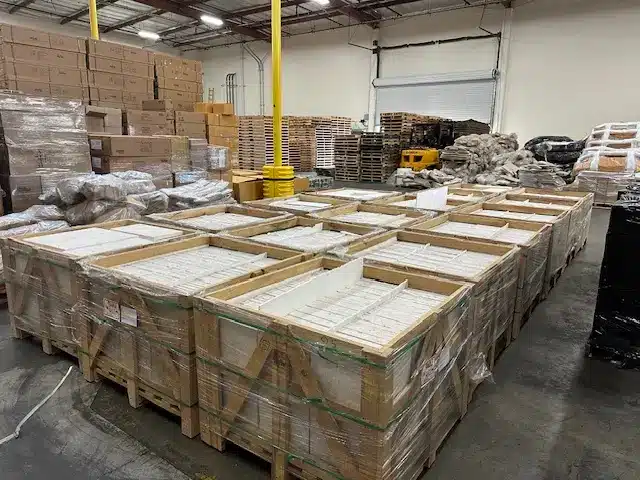
The warehouse stock levels for chemically resistant landscape stone pool areas Arizona yards maintain fluctuate seasonally because demand peaks during spring construction season. You should verify availability for your preferred materials 6-8 weeks before installation to avoid substitutions that compromise performance specifications. Lead times from warehouse to jobsite typically run 10-14 days for standard materials but can extend to 21-28 days for premium imported stone during peak demand periods.
- You need to specify materials with minimum 8,500 PSI compressive strength for areas receiving acid wash runoff
- Your edge details should incorporate drip edges that prevent chemical-laden water from running onto adjacent lower-resistance stone
- You should account for how salt-based pool systems create different chemical exposure than traditional chlorine systems
- You must include provisions for periodic sealer reapplication in maintenance specifications because chemical exposure degrades sealers at accelerated rates
Color Stability and UV Resistance Over Time
Arizona’s intense UV radiation degrades stone appearance faster than any other environmental factor. When you evaluate pool deck stone Arizona yards supply, you need to understand that published color stability ratings come from accelerated testing equivalent to 2-5 years of exposure, not the 20+ year service life you’re actually specifying. Real-world performance data shows that light-colored limestone and travertine maintain color stability better than medium-toned sandstone and slate that fade noticeably within 7-10 years.
The mechanism behind UV-induced color change involves photo-oxidation of iron compounds within the stone matrix. Materials with iron oxide content above 3% by weight show visible color shifting within 5-8 years of continuous sun exposure. You’ll observe this most dramatically in stones with warm tan, gold, or rust tones that fade toward gray or beige as iron compounds oxidize. Light-colored materials with minimal iron content maintain appearance indefinitely under identical exposure conditions.
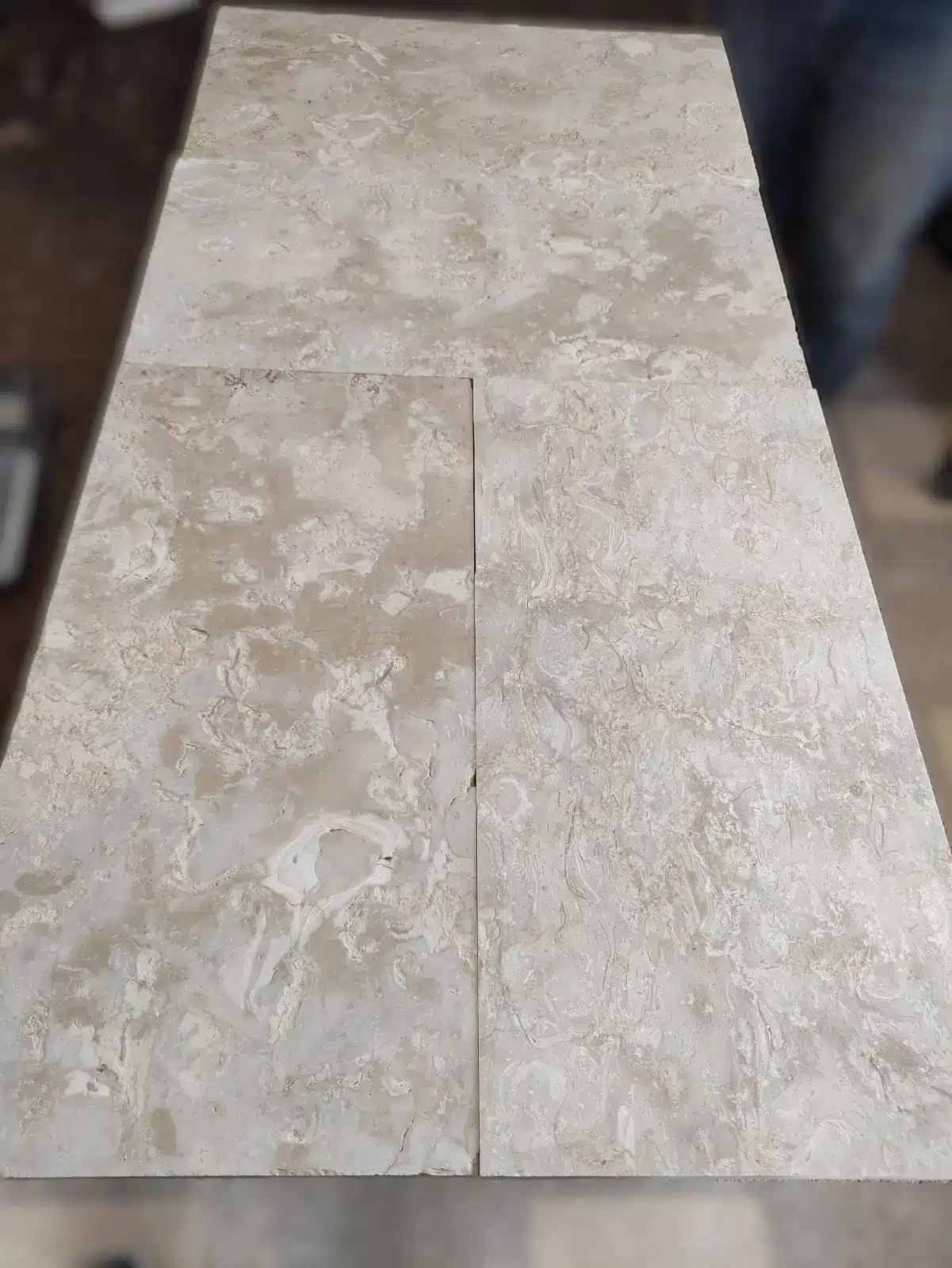
Your specification should address whether color uniformity or thermal performance takes priority, because the coolest-surface materials tend to show the least color variation over time. Light cream and white travertine provides both optimal thermal characteristics and superior color stability, making it the professional default for Arizona pool decks where budget allows. When you need to specify more economical alternatives, you should set client expectations regarding color evolution rather than promising permanent appearance retention.
Edge Detail and Coping Specifications
Pool coping represents the most demanding application for stone yard landscape Arizona pool friendly materials because pieces experience simultaneous exposure to water immersion, chemical contact, thermal cycling, and structural loads from swimmers entering and exiting the pool. You need thicker material for coping applications—minimum 2 inches for residential pools, 2.5-3 inches for commercial installations where structural loads and liability concerns justify the additional material cost.
The edge profile you specify affects both performance and aesthetics. Bullnose edges with 1-inch radius provide comfortable hand-holds and eliminate sharp edges that create injury risks, but the curved profile complicates fabrication and increases material costs by 35-50% compared to standard square-cut edges. You’ll find that eased edges with 1/8-inch chamfer provide adequate safety at lower cost while maintaining clean architectural lines.
- You should specify drop-face coping that extends 1.5-2 inches beyond pool shell to create proper drip edge and prevent water migration behind coping
- Your structural specifications must address how coping anchors to pool beam because thermal movement requires flexible connection details
- You need to account for how bullnose fabrication affects material waste and order quantities because curved cuts increase scrap by 15-20%
- You must verify that your selected stone can be reliably fabricated with specified edge profiles without excessive breakage during production
Installation Base Requirements and Preparation
Base preparation determines whether your carefully specified landscape stone pool areas Arizona yards supply performs as intended or fails prematurely due to settlement and differential movement. You need minimum 6-inch compacted aggregate base for residential pool decks, increasing to 8 inches for commercial applications and areas with heavy furniture or equipment loads. The aggregate gradation matters—ASTM D2940 gradation with maximum 15% fines content provides optimal compaction and drainage performance.
Compaction specifications require 95% modified Proctor density for the full base depth, not just surface layers. You should specify proof rolling or plate testing at 2-foot depth intervals during base installation because inadequately compacted lower layers settle over time and create surface irregularities that become visible within 2-3 years. This testing adds minimal cost but prevents expensive correction work that requires removal and reinstallation of stone surfaces.
Your base design must address how regional soil conditions affect long-term stability. Clay-heavy soils common throughout Phoenix, Tucson, and other valley locations expand and contract with moisture changes, creating movement that transmits through base layers to finished surfaces. You need 4-6 inch stabilization layer between native soil and structural base in expansive soil conditions, using either cement-stabilized aggregate or geogrid reinforcement to isolate soil movement from pavement structure.
The truck access requirements for base material delivery and equipment mobilization affect project logistics and scheduling. You should verify that your site provides adequate access for tandem-axle dump trucks and vibratory compaction equipment before committing to base specifications that require equipment too large for site conditions. Restricted access sites may need alternative base systems using smaller equipment and modified construction sequencing.
Joint Specifications and Long-Term Maintenance
Joint design affects both initial installation success and long-term performance of pool deck stone Arizona yards provide. You need consistent 3/8 to 1/2-inch joint width that accommodates thermal expansion while remaining narrow enough to prevent joint sand ejection from foot traffic. The industry standard ±1/32-inch joint width tolerance proves difficult to achieve across large deck areas, so you should specify ±1/16-inch as realistic field tolerance that maintains acceptable appearance without creating unrealistic installation requirements.
Joint sand selection involves trade-offs between stability and drainage. Polymeric sands provide superior resistance to erosion and weed growth but reduce drainage performance by 40-60% compared to standard joint sands. You’ll find that coarse silica sand in 30-50 mesh size range offers optimal balance for most pool deck applications—adequate stability for pedestrian traffic, good drainage performance, and reasonable retention that requires replenishment every 3-4 years rather than annually.
- You should specify joint sand installation at 92-95% joint depth capacity because complete filling leads to sand extrusion during thermal expansion events
- Your maintenance specifications need to address joint sand replenishment as routine activity because 20-30% loss in first year represents normal performance
- You need to account for how pool deck washing and maintenance activities affect joint sand retention and plan for more frequent replenishment in high-maintenance installations
- You must specify compatible joint sand products because mixing different sand types creates stratification and accelerated erosion
Cost Considerations and Budget Planning
Material costs for landscape stone pool areas Arizona yards stock vary from $8-15 per square foot for standard travertine and limestone to $18-30 per square foot for premium imported materials with superior performance characteristics. You need to budget for total installed costs including base preparation, setting bed, stone supply, fabrication, and installation labor—typically 2.5-3.0 times material cost for professional installation on properly prepared substrates.
The warehouse inventory levels affect project pricing because special-order materials carry premium costs and extended lead times. When you specify readily available stone from local warehouse stock, you’ll achieve 15-25% cost savings compared to special-order alternatives that require container imports and extended procurement timelines. You should confirm material availability before finalizing specifications to avoid budget overruns or schedule delays from supply chain complications.
Your budgeting should account for edge details and custom fabrication that significantly affect total project costs. Standard square-cut pavers require minimal fabrication and generate low waste percentages. Custom coping with bullnose edges, radius cuts, or complex patterns increases material costs by 35-50% and installation costs by 25-40% due to additional labor and higher skill requirements. These details create visual impact but need budget allocation proportional to their complexity.
Citadel Stone – Premium Landscape Stone Supplies Arizona Pool Installations — Professional Specification Guidance
When you consider Citadel Stone’s landscape stone supplies Arizona for pool deck applications, you’re evaluating premium natural stone selected specifically for extreme climate performance and safety requirements. At Citadel Stone, we provide technical specification guidance for hypothetical pool deck installations across Arizona’s diverse climate zones, from low desert valleys to high-elevation pine country. This section outlines how you would approach material selection and specification decisions for six representative cities, addressing the unique climate factors and performance requirements each location presents.
You should understand that regional climate variations within Arizona create substantially different performance requirements. Low-desert locations like Yuma and Phoenix experience peak summer temperatures exceeding 115°F with minimal precipitation, requiring maximum emphasis on thermal reflectivity and heat resistance. High-elevation cities like Flagstaff face freeze-thaw cycling that demands attention to porosity and water absorption characteristics. Your specification approach needs adjustment based on which performance factors dominate in your project location.
Phoenix Specifications
In Phoenix’s extreme desert climate, you would prioritize materials with maximum solar reflectance to manage surface temperatures during 110-120°F summer conditions. Your specification would emphasize light-colored travertine or limestone with minimum 65% albedo and surface temperatures not exceeding 130°F under full sun exposure. You should account for 75°F diurnal temperature swings that create substantial thermal expansion stresses requiring 12-foot maximum joint spacing with 1/2-inch joint widths. The urban heat island effect in developed areas amplifies thermal stress by an additional 8-12°F compared to surrounding desert, making thermal performance your primary selection criterion.
Tucson Considerations
Your Tucson specifications would address similar thermal challenges as Phoenix but with additional considerations for monsoon moisture. You need materials that handle rapid temperature drops and intense rainfall during July-September monsoon season. You should specify 4-6% porosity materials that provide adequate drainage during 1-2 inch rainfall events while resisting excessive water absorption that could compromise freeze resistance during occasional winter freezes. The combination of extreme heat, intense UV, and periodic moisture creates demanding exposure conditions requiring balanced material selection that doesn’t over-optimize for any single performance factor.
Scottsdale Standards
In Scottsdale’s high-end residential market, you would balance performance requirements with aesthetic expectations and budget allocations that support premium material specifications. Your selections would emphasize imported travertine and limestone with superior color consistency and minimal natural variation. You should specify materials with 0.55-0.60 wet DCOF for enhanced safety around resort-style pool installations with extensive deck areas, water features, and traffic patterns that keep surfaces continuously wet. Aesthetic longevity specifications would require UV-stable materials that maintain appearance for 20+ years without significant color shifting or surface degradation visible in high-profile installations.
Flagstaff Requirements
Your Flagstaff specifications would shift emphasis from thermal performance to freeze-thaw durability because 7,000-foot elevation creates 100+ annual freeze-thaw cycles. You need materials with maximum 3% water absorption and minimum 9,000 PSI compressive strength to resist ice crystal formation damage. You should account for 50°F temperature swings during spring and fall shoulder seasons that create challenging installation conditions and substantial ongoing thermal movement. The combination of freezing conditions and intense high-altitude UV exposure requires material selections that perform across broader environmental range than single-climate-focused specifications.
Sedona Specifications
In Sedona, you would address aesthetic integration with red rock landscape while maintaining performance standards for 4,500-foot elevation conditions. Your material selections would balance warm earth tones that complement natural surroundings with thermal reflectivity sufficient for 105°F summer temperatures. You should specify materials with 55-60% solar reflectance—less than Phoenix requirements but adequate for moderate elevation climate. The tourist destination character and high-profile nature of many Sedona installations requires attention to long-term appearance retention and minimal maintenance requirements that keep pool decks looking pristine with typical homeowner care.
Mesa Parameters
Your Mesa specifications would mirror Phoenix requirements for thermal performance while accounting for lower project budgets typical in this market segment. You need cost-effective material selections that maintain essential performance characteristics—minimum 60% solar reflectance, 0.50 wet DCOF, and adequate chemical resistance—while using standard-grade rather than premium materials. You should emphasize warehouse stock availability and standard dimensions that minimize fabrication costs and reduce lead times. The focus shifts toward proven performance at accessible price points rather than premium aesthetics or maximum specification limits, creating value-engineered solutions appropriate for this market’s expectations and budget realities.
Professional Selection Guidance
Your material selection process should begin with clear prioritization of performance requirements based on specific project conditions and client expectations. You’ll find that no single material optimizes all performance factors simultaneously—thermal performance, slip resistance, chemical resistance, aesthetic stability, and cost exist in trade-off relationships requiring professional judgment to balance appropriately. Start by identifying which two or three factors represent non-negotiable requirements, then evaluate candidate materials against secondary criteria to select optimal specification for your specific application.
The verification process matters as much as initial specification. You should request material samples that demonstrate actual warehouse stock characteristics rather than idealized showroom pieces that may not represent typical production runs. You need to conduct site-specific testing for thermal performance, slip resistance, and appearance under your project’s actual exposure conditions. Generic product literature provides starting points, but professional specifications require verification that proposed materials meet performance requirements under field conditions you’ll encounter during and after installation.
Your long-term success depends on matching material capabilities to maintenance expectations and reality. High-performance materials require proportional maintenance commitment to sustain specified performance levels over 20+ year service life. When maintenance budgets or client commitment remain uncertain, you should specify more durable materials that maintain adequate performance with minimal intervention rather than premium options that degrade rapidly without proper care. For additional installation insights, review Heat-resistant stone materials for Arizona pool deck installations before you finalize your project specifications. Citadel Stone imports unique landscape stone supplies Arizona cannot find elsewhere in the region.