
When you evaluate landscape granite Arizona pricing 2026 cost structures, you need to understand how material sizing fundamentally drives your project economics. You’re looking at per-ton rates that vary by 300-400% depending on whether you specify ¾-inch crushed aggregate or multi-ton boulders. Your budget planning must account for the complete cost picture — material extraction, processing intensity, transportation logistics, and regional supply dynamics all converge to determine what you’ll actually pay at the job site.
The Arizona landscape stone market operates differently than other Southwest regions because local quarry access eliminates import premiums you’d encounter in Nevada or New Mexico. You should recognize that granite landscape stone suppliers Arizona costs reflect direct factory pricing when you source from in-state producers rather than paying distributor markups on material trucked from California or Utah. This geographic advantage becomes significant on projects requiring 50+ tons where freight differential alone can represent 18-25% of total material cost.
Your 2026 pricing strategy needs to factor three concurrent market pressures: labor cost inflation in quarry operations, diesel fuel volatility affecting delivery economics, and increasing demand from commercial development across the Phoenix and Tucson metropolitan corridors. When you lock pricing early in your procurement cycle, you’re protecting against quarterly adjustments that typically range 4-7% in active construction markets.
Size Categories Drive Material Classification
Granite rock landscape supplies pricing follows industry-standard size classifications that determine processing requirements and application suitability. You’ll encounter four primary categories when you specify landscape granite for Arizona projects, each serving distinct functional and aesthetic purposes.
Decomposed granite and fines (passing #4 sieve) require minimal processing beyond crushing and screening. You’re paying primarily for extraction and basic size reduction. Your cost per ton sits at the low end of the spectrum because production doesn’t require sophisticated sorting or handling equipment. These materials work for pathway base layers and permeable surface applications where you need compactable aggregate.
Crushed angular granite in ¾-inch to 2-inch range represents the volume workhorse for commercial landscape projects. When you specify this size range, you’re getting material that’s been through primary and secondary crushing with mechanical screening to achieve consistent gradation. The processing intensity increases your per-ton cost by 40-60% compared to fines, but you gain the mechanical interlock properties essential for stable base construction and erosion control applications.
Cobble and rubble stone in the 3-inch to 12-inch category enters specialty territory. You need to understand that production yields drop significantly in this range because quarry operators must hand-sort or use specialized equipment to isolate pieces meeting dimensional specifications. Your pricing reflects this labor intensity — expect rates 80-120% higher than crushed aggregate. These sizes deliver the visual mass that defines high-end landscape design while maintaining handleability for installation crews working without heavy equipment.
Boulder material exceeding 12 inches and extending to multi-ton specimens represents the premium category. When you specify large granite rocks landscaping prices, you’re paying for selective quarry extraction, careful handling to prevent fracturing, specialized transportation requiring flatbed trucks or even crane placement, and the rarity factor of aesthetically suitable pieces. Your per-ton cost can reach 300-400% of base crushed stone rates, but you’re creating signature landscape features that smaller material cannot replicate.
Per-Ton Pricing Benchmarks 2026
Landscape granite Arizona pricing 2026 market rates reflect current production costs and regional supply conditions. You should use these benchmarks for preliminary budgeting while recognizing that project-specific variables will adjust final pricing.
For decomposed granite and screening fines, you’re looking at $28-38 per ton for bulk quantities exceeding 20 tons delivered within 50 miles of major quarry locations. Your price increases $4-7 per ton for distances of 50-100 miles as freight becomes the dominant cost variable. Warehouse pickup eliminates delivery charges but requires you to arrange your own transportation and accept material handling responsibilities.
Crushed landscape granite in standard ¾-inch to 2-inch sizing runs $45-62 per ton in comparable delivery scenarios. You’ll find the lower end of this range applies to grey granite varieties with consistent availability, while premium color selections like pink or buff tones command $8-12 per ton premium. Your specification decisions about color directly impact material cost before any other project variables enter the equation.
Cobble and rubble stone in 3-inch to 12-inch dimensions typically prices at $85-135 per ton depending on color selection, piece consistency, and order volume. When you require hand-selected pieces meeting tight dimensional tolerances, expect pricing toward the upper range. Your willingness to accept natural variation and mixed sizing within specified limits can reduce costs by 15-20% because production sorting requirements decrease.
Boulder material pricing shifts to per-piece rather than per-ton basis for specimens exceeding 500 pounds. You’re paying for uniqueness and visual impact that tonnage metrics don’t capture. A 2,000-pound granite boulder might cost $800-1,400 depending on shape, color, texture, and surface characteristics. Your project budget must account for placement costs separately — crane time and specialized equipment often exceed material cost for large granite rocks landscaping installations.
Application-Specific Quantity Calculations
Your landscape granite Arizona pricing 2026 budget accuracy depends on precise quantity takeoffs matched to application requirements. You need to calculate coverage rates based on installed depth and material characteristics rather than relying on generic conversion factors that ignore compaction and void ratios.
For pathway and surface applications using decomposed granite or fines, plan on 100-120 pounds per square foot at 2-inch compacted depth. You’re accounting for material that compacts significantly under roller or plate compactor — loose volume calculations will leave you short by 15-25%. Your tonnage requirement for a 1,000-square-foot pathway at 2-inch depth works out to 50-60 tons of material, not the 42 tons that simple volume math suggests.
Erosion control and drainage applications using ¾-inch to 2-inch crushed granite require different density assumptions. You should calculate 110-135 pounds per square foot at 3-inch depth because angular material doesn’t compact as tightly as fines. The void spaces you’re creating serve functional purposes for water percolation, so over-compaction defeats your design intent. When you spec 3-inch depth across 500 square feet, you need 28-34 tons of crushed material delivered to site.
Decorative mulch applications using 1-inch to 3-inch cobble operate at approximately 90-105 pounds per square foot at 3-inch depth. You’re working with material that won’t compact significantly, so installed depth closely matches loose placement depth. Your coverage efficiency improves compared to finer materials, but you’re paying higher per-ton rates that often result in similar total cost per square foot installed.
Boulder and large stone features require custom calculations because you’re dealing with discrete pieces rather than bulk coverage. When you design a boulder cluster feature, calculate gross volume of the composition and assume 85-95 pounds per cubic foot for solid granite. A feature occupying 40 cubic feet of space requires approximately 1.7-1.9 tons of material. Your actual piece count depends on whether you’re using multiple smaller boulders or fewer large specimens.
Color Selection Premium Factors
Granite landscape stone suppliers Arizona costs vary substantially based on color specification because geological occurrence and market demand create pricing differentials. You need to weigh aesthetic preferences against budget impact when you select material color for large-area applications.
Standard grey granite represents baseline pricing because it’s the most common color variant in Arizona quarries. When you specify grey material, you’re accepting the natural color that emerges from unselected quarry production. Your cost advantage runs 15-25% below specialty colors for equivalent sizing and quality specifications. Grey granite works effectively for functional applications where color consistency matters less than structural performance.
Buff and tan granite commands $8-15 per ton premium over grey material in crushed aggregate sizes. You’re paying for selective quarrying that targets specific geological seams and for production sorting that removes off-color pieces. The warm earth tones integrate naturally with desert landscape palettes, making this premium worthwhile for visible applications where you want material to complement rather than contrast with surroundings.
Pink and rose granite typically adds $12-18 per ton to baseline pricing. You should recognize that true pink granite occurs less frequently in Arizona geology compared to New Mexico or Texas sources. When you insist on locally-sourced pink material, you’re working within limited supply that drives premium pricing. Your alternative involves accepting material trucked from out-of-state quarries, which introduces freight costs that often exceed the color premium.
Salt-and-pepper granite with distinct black and white mineral contrast generally prices between grey and buff material — you’ll see $5-10 per ton premium. This coloration occurs commonly in certain Arizona quarries, so supply constraints don’t drive pricing as aggressively as true pink or rose variants. When you want visual interest without maximum cost impact, salt-and-pepper specifications deliver value.
Volume Discount Structures
When you scale up landscape granite Arizona pricing 2026 projects beyond residential quantities, volume discounts become negotiable elements that significantly impact total project cost. You should understand threshold quantities where pricing breaks occur and structure your procurement to maximize these advantages.
For projects requiring 5-15 tons of material, you’re typically paying published retail rates without volume consideration. Quarries and suppliers view these orders as standard transactions that don’t justify pricing adjustments. Your focus at this scale should be on delivery efficiency and ensuring material specifications precisely match your needs to avoid costly reorders.
The 15-30 ton range opens initial discount opportunities. You can negotiate 5-8% reductions from published rates when you’re purchasing single-color, single-size specifications that minimize production complexity. For more information on material selection within your volume requirements, see our large granite rocks for guidance on optimizing specifications. Your discount potential increases when you offer flexible delivery scheduling that allows the supplier to consolidate your order with other shipments heading to your project area.
Projects in the 30-75 ton category justify 8-15% discounts off published pricing. You’re purchasing quantities that represent significant production runs and full truckload deliveries that improve supplier logistics. When you specify multiple sizes or colors within this volume range, expect discounts toward the lower end unless you’re willing to accept extended lead times that give the quarry production flexibility.
Orders exceeding 75 tons enter bid territory where pricing becomes truly negotiable. You should solicit formal quotes from multiple granite rock landscape supplies pricing sources and structure your specifications to allow suppliers to propose value engineering alternatives. Your leverage increases substantially at this scale — discounts of 15-25% become achievable, particularly when you can commit to phased deliveries over 3-6 months that smooth quarry production scheduling.
Delivery Logistics Cost Components
Your total delivered cost for landscape granite reflects transportation variables that often exceed material cost for smaller orders or distant job sites. You need to understand freight economics to make informed decisions about supplier selection and delivery scheduling.
Standard delivery using dump trucks or pneumatic trailers works for crushed aggregate and material up to 6-8 inches in size. You’re paying freight calculated by mileage from quarry or warehouse to job site, with typical rates of $3.50-5.00 per ton per 25 miles. Your 30-ton order delivered 75 miles costs $315-450 in freight alone — that’s $10.50-15.00 per ton added to material cost. These rates assume accessible sites where trucks can dump material in a single location without special positioning requirements.
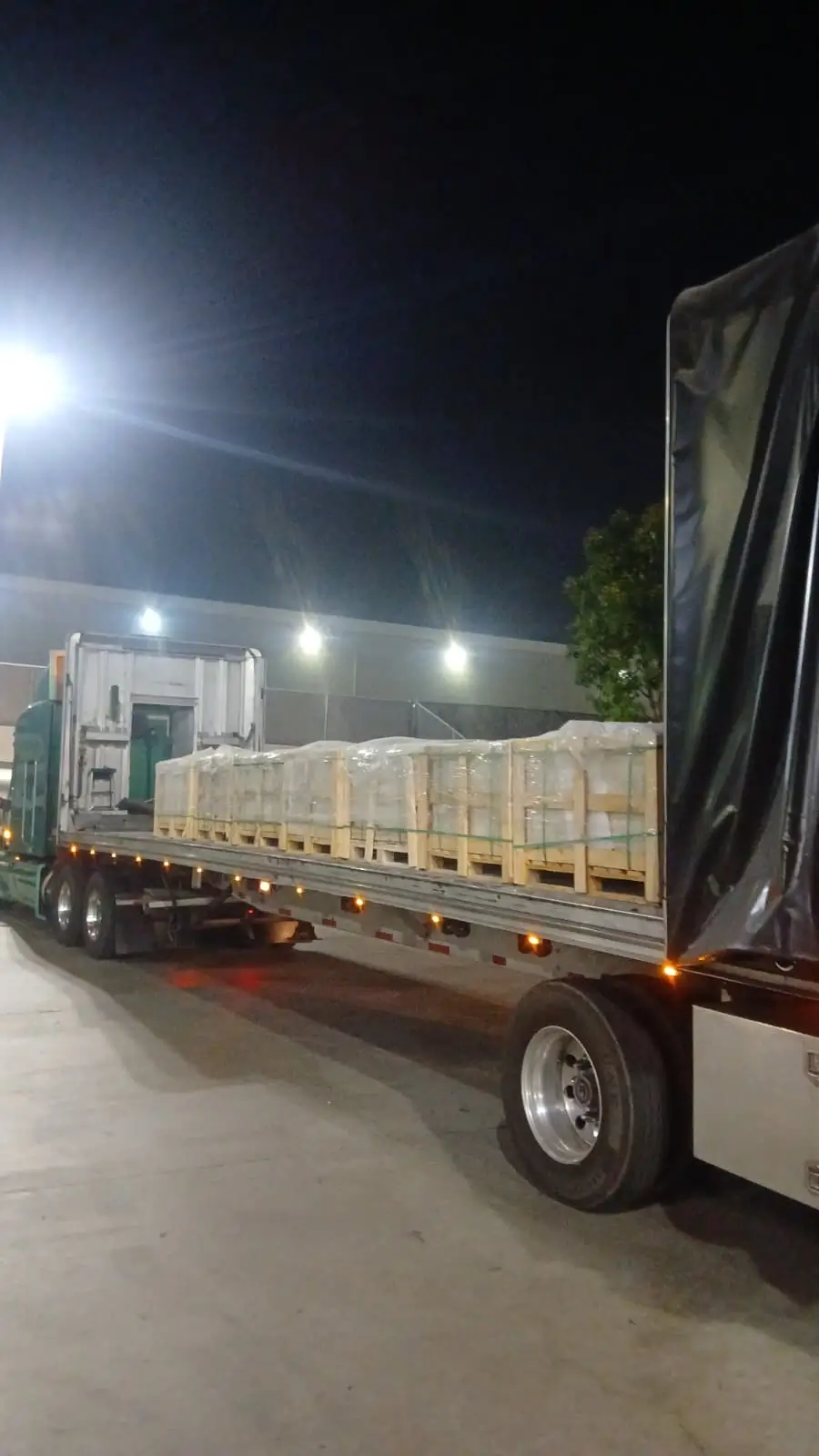
Flatbed delivery becomes necessary for boulder material and large stones requiring careful placement. You’re paying higher rates of $150-250 per truck hour including loading and transit time. A delivery involving 2 hours of loading, 1.5 hours of driving, and 1 hour of job site positioning costs $675-1,125 regardless of material tonnage. Your per-ton freight cost skyrockets on small boulder orders — a 4-ton load faces $170-280 per ton in delivery charges that dwarf the material cost.
Crane-assisted placement for large boulders exceeding 3,000 pounds adds another cost layer. You’re coordinating flatbed delivery with crane service, paying for both pieces of equipment and their operators. Typical crane rates for landscape work run $200-350 per hour with 4-hour minimums common for mobilization, setup, and demobilization. Your single 8,000-pound signature boulder might carry $800-1,400 in combined delivery and placement costs before accounting for the stone’s purchase price.
Warehouse pickup eliminates delivery charges but transfers logistics burden to your team. When you arrange your own transportation, you need appropriate equipment — pickup trucks work for bagged material up to 1 ton total, but you’ll need dump trucks or trailers with minimum 7-ton capacity for economical bulk pickup. You must also coordinate loading equipment access at the warehouse and accept responsibility for proper load securing and DOT compliance during transport.
Seasonal Timing Price Variations
Landscape granite Arizona pricing 2026 cycles follow construction seasonality patterns that create predictable pricing fluctuations throughout the year. You can optimize project budgets by understanding these timing dynamics and structuring procurement accordingly.
Peak construction season running February through May drives maximum demand for all landscape materials. You’re competing with commercial developers, municipal projects, and residential builders all trying to complete exterior work before summer heat arrives. Granite landscape stone suppliers Arizona costs during this period reflect tight supply conditions — expect pricing at the upper end of annual ranges and longer lead times from quarry to delivery. Your February order might face 2-3 week delays that would be same-week delivery in July.
Summer months from June through August see demand depression as installation activity slows in triple-digit temperatures. You’ll find more favorable pricing during this period — suppliers offer 5-10% discounts to maintain quarry production during slower sales periods. Your willingness to accept summer delivery and handle material storage on site until fall installation can generate significant savings on large-volume projects. The trade-off involves job site space for stockpiling and potential material handling twice rather than direct delivery to point of installation.
Fall construction season from September through November brings renewed demand as temperatures moderate. You’re looking at pricing that climbs back toward spring levels but typically remains 3-5% below February-April peaks. Your fall procurement timing proves optimal when you can commit to projects early in September before the rush intensifies. By November, you’re competing with projects trying to complete before holiday slowdowns, which can push pricing and lead times back to peak levels.
Winter months see the slowest activity as landscape installation essentially stops in higher elevation areas like Flagstaff. You’ll find best pricing leverage during December and January — some suppliers offer winter specials discounted 10-15% to keep quarry operations running through slow periods. Your challenge involves material storage and protection from moisture if you’re buying for spring installation. Desert region projects in Phoenix and Tucson maintain year-round viability, so winter discounts aren’t as aggressive in low-elevation markets.
Specification Quality Verification
When you purchase landscape granite, you need verification protocols that ensure delivered material meets your specification requirements before installation begins. You’re protecting against costly remediation when you catch quality issues during material acceptance rather than after installation.
- You should specify size gradation tolerances that define acceptable dimensional ranges for your application requirements
- Your color consistency expectations need documentation with photo standards or physical samples approved before production begins
- You must define acceptable contamination levels for foreign material that might compromise aesthetic or functional performance
- Your specification should address moisture content limits if material will be stockpiled before installation in enclosed environments
On-site inspection during delivery provides your most practical quality control opportunity. You should evaluate material as it’s being dumped or unloaded, checking for obvious deviations from specification. Your inspector needs to recognize that natural stone involves inherent variation — rejection criteria should focus on material that falls clearly outside specified ranges rather than minor deviations within acceptable tolerance.
Sample retention protects both parties when quality disputes arise after installation. You should retain 50-100 pounds of delivered material in sealed containers marked with delivery date and lot identification. Your sample provides reference material if color variation or size gradation questions emerge during or after installation. This simple protocol eliminates ambiguity about what was actually delivered versus what specification required.
Base Preparation Hidden Cost Factors
Your landscape granite Arizona pricing 2026 budget must extend beyond material and delivery to account for site preparation requirements that often equal or exceed stone costs. You’re setting projects up for failure when you underestimate base construction and subgrade preparation expenses.
Excavation and subgrade preparation costs vary dramatically based on existing soil conditions and required finish grade. You’re paying $8-15 per square yard for basic excavation in sandy desert soils with minimal compaction requirements. Clay soils or areas requiring 6+ inches of excavation push costs to $15-25 per square yard as equipment time increases and disposal volumes grow. Your 1,000-square-foot project area requires excavation of 110 square yards — that’s $880-2,750 in earthwork before any base material gets installed.
Base aggregate installation adds another cost layer. You typically need 3-4 inches of compacted crushed base beneath landscape granite installations to prevent settling and maintain grade stability. You’re paying $35-50 per cubic yard for base material delivered and spread, then another $8-12 per square yard for compaction equipment and labor. Your 1,000-square-foot project needs approximately 12 cubic yards of base material — total base cost runs $750-1,100 including compaction.
Edge restraint installation prevents material migration and maintains design geometry. You’re specifying steel, aluminum, or heavy-duty plastic edging at costs of $3.50-8.00 per linear foot installed depending on material grade and site access. Your 1,000-square-foot rectangular area with 130 linear feet of perimeter requires $455-1,040 in edging alone. These costs often surprise clients who focused exclusively on stone pricing without considering complete installation requirements.
Geotextile fabric installation beneath base aggregate prevents subgrade contamination and improves long-term stability in problematic soils. You need commercial-grade nonwoven fabric at $0.35-0.60 per square foot installed. Your 1,000-square-foot project adds $350-600 for fabric that most clients never see but which determines whether the installation performs properly for 15 years or fails within 5.
Maintenance Lifecycle Cost Considerations
When you evaluate landscape granite Arizona pricing 2026, you should calculate total ownership cost over expected service life rather than just initial installation expense. You’re making long-term investment decisions where maintenance requirements significantly impact total project economics.
Decomposed granite and fine material applications require periodic replenishment as material compacts and migrates over time. You should budget for adding ½ to ¾ inch of fresh material every 2-3 years to maintain proper depth and appearance. Your annual maintenance cost averages $0.25-0.40 per square foot for material and spreading labor. Over a 15-year service life, you’re spending $3.75-6.00 per square foot in maintenance — potentially 40-60% of initial installation cost.
Crushed granite in ¾-inch to 2-inch sizing demonstrates better long-term stability with lower maintenance requirements. You’ll need minor edge repairs and occasional raking to redistribute material, but major replenishment typically isn’t necessary for 8-12 years. Your annual maintenance cost drops to $0.10-0.18 per square foot averaged over service life. The higher initial material cost versus fines often proves economical when you factor total lifecycle expense.
Cobble and boulder installations require minimal ongoing maintenance beyond occasional repositioning of shifted pieces and weed control in voids between stones. You’re looking at annual maintenance costs of $0.05-0.12 per square foot primarily for vegetation management. Your initial premium for larger stone pays dividends through decades of low-maintenance performance that smaller materials cannot match.
Weed control represents an ongoing cost across all landscape granite applications. You need pre-emergent herbicide applications 2-3 times annually plus spot treatment of breakthrough weeds. Your annual cost for chemical and application labor runs $0.15-0.30 per square foot depending on weed pressure and treatment methods. These costs remain relatively consistent across material types, though larger stones with minimal voids show better weed suppression than fine materials.
Large Granite Rocks for Landscaping in Arizona: Citadel Stone Regional Guidance
When you consider Citadel Stone’s large granite rocks for landscaping in Arizona for your project, you’re evaluating premium stone materials selected specifically for extreme desert climate performance and aesthetic impact. At Citadel Stone, we provide technical guidance for hypothetical applications across Arizona’s diverse climatic zones, from low-elevation desert valleys to high-altitude mountain communities. This section outlines how you would approach specification decisions and material selection for six representative Arizona cities, each presenting distinct environmental challenges and design opportunities.
You should recognize that Arizona’s geographic diversity creates dramatically different performance requirements across relatively short distances. Your specification approach in Phoenix’s urban heat island differs substantially from considerations for Flagstaff’s freeze-thaw cycles and heavy snow loads. Understanding these regional variables allows you to optimize material selection and installation methods for long-term durability and aesthetic consistency.
Phoenix Heat Island Performance
In Phoenix’s extreme urban heat environment, you would specify large granite rocks for landscaping that address thermal mass properties and surface temperature characteristics. Your material selection needs to consider that ambient temperatures regularly exceed 115°F during summer months, creating surface temperatures on exposed stone that can reach 165-180°F in direct solar exposure. You should select lighter-colored granite varieties that reflect rather than absorb solar radiation, reducing peak surface temperatures by 15-25°F compared to dark stone. Your installation would benefit from strategic orientation of major boulder faces to minimize westward exposure during peak afternoon heating. At Citadel Stone, we maintain warehouse inventory sized for large commercial projects in the Phoenix metro area.
Tucson Monsoon Durability
Your Tucson specifications must address intense monsoon rainfall events that deliver 1-2 inches in less than an hour during summer storm seasons. You would select granite boulders with dense, low-porosity characteristics that resist water absorption and subsequent thermal cycling damage when afternoon thunderstorms cool sun-heated stone rapidly by 40-60°F within minutes. Your installation design should incorporate drainage considerations that prevent water ponding around large stone bases where thermal shock proves most severe. You need to account for flash flood potential in natural drainage corridors where boulder features might experience significant water velocity during peak flow events. Tucson’s slightly higher elevation compared to Phoenix creates more moderate summer peaks but doesn’t eliminate extreme heat considerations.
Scottsdale Resort Applications
When you design for Scottsdale’s luxury resort and high-end residential market, aesthetic considerations often drive specifications as heavily as performance requirements. You would select granite rocks for sale rates based on color consistency, surface texture, and distinctive visual characteristics that create signature landscape features. Your specification might emphasize warm buff and tan granite tones that complement Scottsdale’s predominant architectural palette. You should verify that selected materials demonstrate color stability under intense UV exposure — some granite varieties show fading or darkening over 5-10 years in desert sun. Your installation approach would likely incorporate professional landscape lighting that transforms boulder features into nighttime focal points requiring consideration of stone shape and surface texture for optimal light interaction.
Flagstaff Freeze-Thaw Resistance
Your Flagstaff projects encounter Arizona’s most challenging climate conditions for natural stone performance. You would specify landscape granite with proven freeze-thaw durability because the area experiences 150+ annual freeze-thaw cycles and winter temperatures regularly dropping below 0°F. You need dense, low-porosity granite that resists water penetration because absorbed moisture expanding during freezing creates internal fracturing that progressively degrades stone structural integrity. Your material selection should prioritize quarries with documented performance data in similar climatic conditions. You must account for snow load on horizontal boulder surfaces and ice formation in stone recesses that can create spalling damage on inferior material. Flagstaff’s 7,000-foot elevation and ponderosa pine forest setting create aesthetic expectations for stone color and texture that differ dramatically from lower desert regions.
Sedona Color Harmony
In Sedona’s iconic red rock landscape, you face unique specification challenges balancing installed granite with dominant natural stone surroundings. You would carefully consider whether to specify granite that complements Sedona’s red sandstone aesthetic through warm tan and buff tones, or deliberately contrast with grey granite that provides visual separation from natural formations. Your projects in this market often involve strict design review requirements from homeowner associations or municipal authorities sensitive to maintaining Sedona’s distinctive character. You should anticipate extended approval processes where material samples and mock-ups prove necessary before final specification acceptance. Sedona’s elevation around 4,500 feet creates moderate temperature ranges compared to Phoenix but still requires consideration of thermal cycling and occasional winter freezing events.
Yuma Extreme Desert Conditions
Your Yuma specifications address the most extreme desert heat in Arizona with summer temperatures consistently exceeding Phoenix’s already challenging conditions. You would prioritize light-colored granite with maximum solar reflectance to keep surface temperatures manageable for human interaction in residential and commercial landscape applications. You need to account for intense wind-driven sand abrasion during spring and summer months that gradually weathers stone surfaces, particularly affecting softer granite varieties with lower silica content. Your installation approach should consider that Yuma receives minimal rainfall, creating different moisture-related performance concerns than most Arizona locations — you’re dealing with extreme desiccation rather than thermal shock from rainfall on heated stone. Yuma’s location in southwestern Arizona creates longer truck delivery distances from central state quarries, affecting project economics through increased freight costs.
Procurement Timeline Considerations
Your landscape granite Arizona pricing 2026 project success depends on realistic timeline planning that accounts for material lead times and delivery coordination. You’re creating project delays and cost overruns when you underestimate procurement duration and schedule material orders too close to installation dates.
Standard crushed aggregate in common colors typically maintains inventory availability at major suppliers. You can expect 3-7 day lead times from order to delivery for quantities under 30 tons within primary service areas. Your timeline planning should add buffer for peak season when even stocked materials may face delays as suppliers work through order backlogs. Spring construction rush can extend standard lead times to 10-14 days for materials you’d receive within a week during summer.
Custom color selections or specialty sizing that requires dedicated production runs need substantially longer lead times. You should plan 3-4 weeks from order to delivery for materials that aren’t maintained in regular inventory. Your timeline must account for quarry production scheduling — they’re not running special orders immediately upon receipt, they’re batching specialty production when sufficient orders accumulate to justify equipment setup. When you need guaranteed delivery by specific dates, you’ll pay premium pricing for schedule priority.
Boulder and large stone features require the longest procurement cycles because you’re often selecting specific pieces from quarry inventory rather than ordering commodity material by specification. You might need 4-8 weeks from initial selection to delivery as chosen boulders get extracted from quarry inventory, staged for loading, and scheduled for specialized transportation. Your project timeline must accommodate site visits for boulder selection or extended photo review processes if you’re specifying signature pieces sight-unseen.
Weather disruptions affect procurement timelines in ways most project managers underestimate. You should recognize that quarry operations shut down during heavy rain or snow — a reality in higher-elevation Arizona quarries where winter storms periodically halt production for 2-5 days. Your winter and monsoon season orders need timeline buffers accounting for potential weather delays that don’t affect summer procurement.
Supplier Evaluation Selection Criteria
When you source landscape granite, supplier selection proves as important as material specification for project success. You need evaluation criteria that assess supplier capability and reliability beyond just quoted pricing.
- You should verify quarry ownership versus distributor status because direct quarry sources eliminate markup layers and provide better access to specialty materials
- Your supplier evaluation must confirm adequate inventory depth to fulfill your order volume without depleting stock that serves their other customers
- You need to assess delivery fleet capability and geographic service range to ensure your project location receives timely service
- Your due diligence should include reference checks with recent customers on similar-scale projects to verify service quality and problem resolution
Quality consistency across deliveries becomes critical on phased projects where you’re receiving material over extended periods. You should request lot number tracking systems that ensure all your deliveries come from the same quarry production area to minimize color variation between shipments. Your specification might require initial sample approval followed by lot assignment that reserves your full quantity from verified production stock.
Technical support capability separates professional suppliers from commodity material yards. You need access to specifications data, installation guidance, and application recommendations that help you optimize material selection for your specific project requirements. Suppliers offering these services typically command slightly higher pricing but deliver value through reduced field problems and installation efficiency.
Final Considerations
Your landscape granite Arizona pricing 2026 project planning requires comprehensive evaluation of material costs, delivery logistics, site preparation requirements, and long-term maintenance expenses to develop accurate total project budgets. You’ve seen that per-ton rates represent just one component of complete project economics, with base preparation, installation labor, and lifecycle maintenance often exceeding initial material costs over 15-20 year service life. When you structure procurement strategically around seasonal timing and volume thresholds, you can optimize pricing while ensuring material quality and delivery reliability meet your project requirements. For additional technical guidance on optimizing material specifications and installation methods, you should review selecting durable granite boulders for Arizona desert landscaping projects before finalizing your project documents. Import elimination benefits from Citadel Stone’s granite factory direct in Arizona local production.