
Surface temperatures on jet black limestone Phoenix entries can climb past 160°F on exposed facades during peak July afternoons — and that single thermal reality shapes every specification decision that follows. Getting jet black limestone entries right in Phoenix isn’t about choosing the darkest material available; it’s about understanding how absorbed solar energy interacts with your substrate, joint system, and sealing protocol simultaneously. Most installation failures you’ll encounter with dark limestone in the desert trace back to spec sheets written for temperate climates, then applied uncritically to Arizona conditions.
Thermal Performance Realities for Black Limestone in Phoenix
Black limestone absorbs roughly 85–90% of incident solar radiation, compared to 30–40% for lighter travertine. That absorption differential creates a thermal mass situation your entry design either leverages or fights against. Slab surface temperatures at midday will exceed ambient air temperature by 40–60°F, which means your mortar bed and setting material need to tolerate that cycling without delaminating or cracking at the bond line.
The material itself handles the heat well — quality black limestone exhibits a compressive strength in the 12,000–16,000 PSI range and a thermal expansion coefficient around 4.6–5.2 × 10⁻⁶ per °F. What often causes problems isn’t the stone failing; it’s the surrounding system — adhesive mortars that cure at the wrong rate in high ambient heat, or joint sand that dries out and loses interlock within the first season. You’ll want to spec a polymer-modified mortar rated for high-temperature applications, with a working time adjusted for conditions above 95°F ambient.
In Yuma, where reflected heat from surrounding hardscape compounds the already extreme solar exposure, entry installations benefit from specifying 1.25-inch minimum slab thickness rather than the standard 1-inch — the additional mass slows thermal cycling at the base of the slab and measurably reduces differential movement stress at perimeter edges.
Base Preparation That Supports a Statement Entry Design
Dramatic black paving Arizona projects demand that the visual impact be matched by the structural foundation beneath it. A 4-inch compacted aggregate base works adequately in mild climates, but for jet black limestone Phoenix entries under heavy foot traffic or occasional vehicle overhang, you should target a minimum 6-inch compacted base with a 1-inch sand bed above it. The expansion forces generated by thermal cycling in a Phoenix summer are substantial, and an under-prepared base will show movement within 18–24 months.
Your subgrade preparation needs specific attention in the Phoenix metro because caliche layers are common at varying depths. Caliche can actually be your friend structurally when it’s solid and continuous — it provides excellent bearing capacity. The problem occurs when you hit a partial caliche layer with voids beneath it. You should probe the subgrade at roughly 3-foot intervals before any base work begins, especially on larger statement entry designs where slab weight concentrations vary across the footprint.
- Compact aggregate base in 2-inch lifts — never attempt full 6-inch compaction in a single pass
- Target 95% Proctor density on all base layers before setting the sand bed
- Use angular, not rounded, crushed aggregate — interlock between particles resists lateral movement from thermal expansion
- Account for drainage slope of 1/8 inch per foot minimum across the entry surface
- Set expansion joints at 8–10 foot intervals in exposed entry conditions, not the 15-foot spacing used for covered installations
Slab Selection for Limestone Black Paving in Arizona
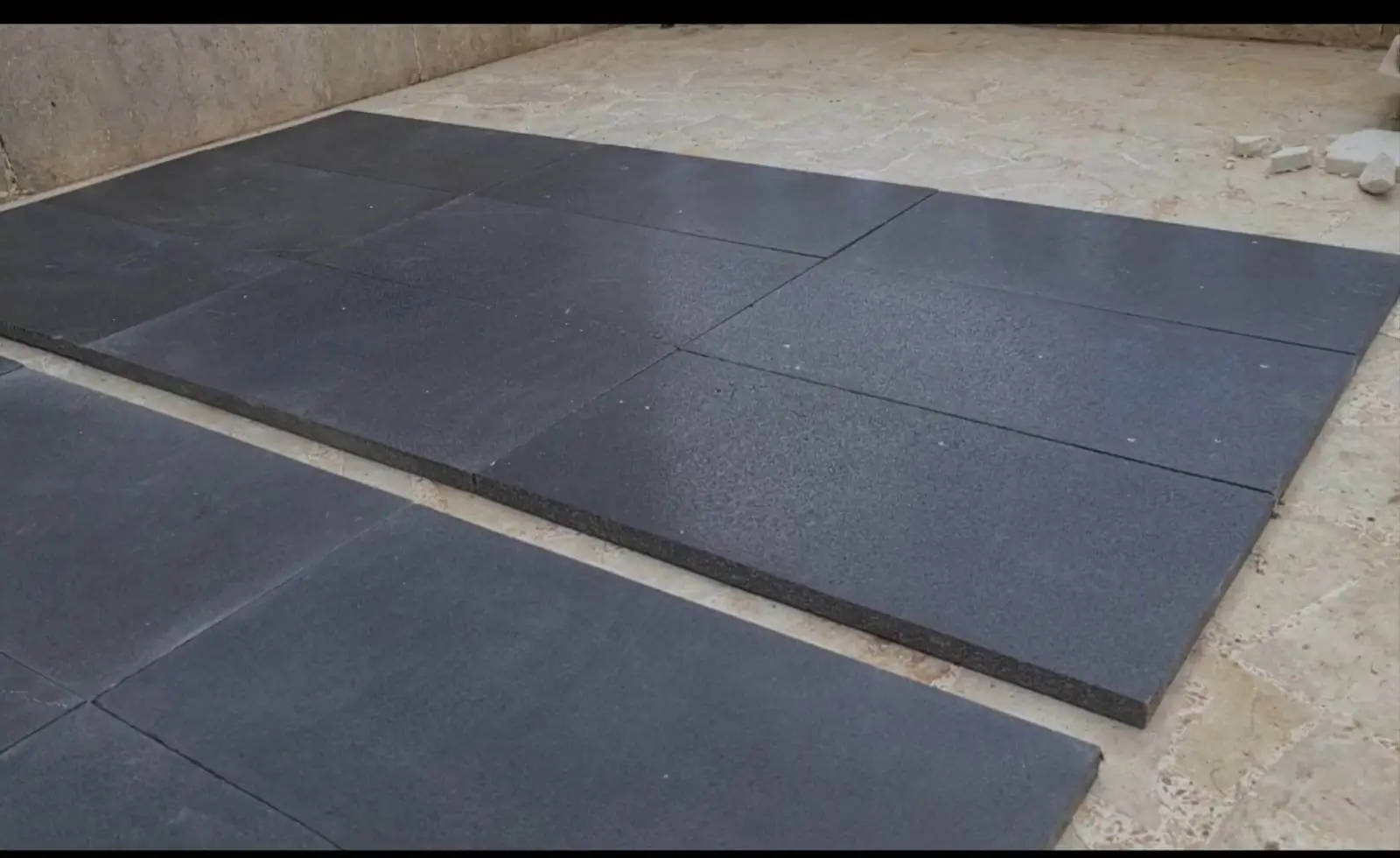
Not all black limestone is the same material — sourcing matters enormously for long-term performance in Arizona impactful access designs. True jet black limestone has a tight, low-porosity structure with water absorption rates typically between 0.5–1.5%, which is what makes it viable for a dramatic black paving Arizona entry that gets periodic irrigation overspray and monsoon rain. Materials marketed as “black limestone” but sourced from lower-quality quarries can have absorption rates as high as 4–5%, which invites efflorescence and staining within the first year of service.
At Citadel Stone, we source our black limestone directly from verified quarry partners and run absorption testing on each shipment before it enters our warehouse inventory. That quality checkpoint matters for your project timeline too — you can verify current slab thickness, finish options, and stock availability before committing your installation dates. For your Phoenix bold entrances, the honed finish is generally the most practical choice: it delivers the dramatic, saturated black aesthetic while providing slightly better wet-slip performance than a polished surface during monsoon season.
You’ll find that limestone black paving in Arizona projects with honed finishes also ages more gracefully — minor surface traffic marks blend into the matte surface rather than showing as bright scratches the way a polished face would. For Arizona impactful access points with vehicle overhang, specifying a brushed or sandblasted surface texture on those specific zones adds meaningful slip resistance without compromising the overall design intent.
Sealing Protocols That Protect Your Investment
Sealing jet black limestone Phoenix entries is non-negotiable, but the sealer selection is where most specifications go wrong. Topical sealers — the kind that sit on top of the stone surface — look excellent immediately after application but break down rapidly under Phoenix UV exposure. You’ll typically see topical sealer failure within 12–18 months: the surface starts to peel, cloud, or develop a patchy appearance that actually makes the stone look worse than unsealed material.
Penetrating impregnator sealers are the correct specification for black limestone entries in Phoenix. A quality fluoropolymer-based impregnator penetrates 3–6mm into the stone matrix, chemically bonding with the pore structure to repel water and oil without forming a surface film. Reapplication cycles for penetrating sealers in Phoenix conditions typically run 24–30 months — you can test using the water bead test, and when water begins to absorb rather than bead on the surface, it’s time to reseal.
- Apply sealer when stone surface temperature is between 50–85°F — early morning application in summer months prevents solvent flash-off before penetration occurs
- Two-coat application with 20-minute wait between coats outperforms a single heavy application
- Wipe off excess sealer within 5 minutes of the second coat — pooled sealer will cure as a sticky surface film
- Allow 48 hours minimum cure time before foot traffic; 72 hours before any vehicle contact
- Color-enhancing impregnators are available if you want to deepen the black tone — test on a spare piece before full application
Drainage Design for Phoenix Bold Entrances
Here’s what most specifiers miss on statement entry design for black limestone: the monsoon season creates a drainage performance test that your entry will face repeatedly, and black limestone with inadequate drainage develops mineral staining that’s genuinely difficult to remove without acid treatments that compromise the sealer system. Getting drainage geometry right from the initial layout saves significant remediation cost over the life of the installation.
Your drainage slope needs to direct water away from the building threshold and toward collection points at the entry perimeter. The 1/8-inch per foot minimum slope is the code-compliant baseline, but for entries with overhanging rooflines that concentrate runoff in specific zones, you should increase slope to 3/16 inch per foot in those areas. Linear drain channels at the base of any step risers or at transitions between covered and exposed zones are worth specifying on Phoenix bold entrances — they prevent the standing water that causes efflorescence and iron staining.
Projects in San Tan Valley encounter expansive clay soils that can create differential settlement under entry slabs after monsoon saturation cycles. A geotextile fabric layer between native soil and your aggregate base is particularly important in that area — it prevents clay migration into the aggregate base and maintains your designed drainage gradient over time.
Step and Edge Detailing for Jet Black Limestone
The visual power of jet black limestone Phoenix entries comes largely from crisp, well-defined edges and step profiles. Material selection for step nosings needs to balance the design intent with safety — a square-edged nosing on black limestone looks architecturally precise, but the high surface temperature and low contrast with adjacent hardscape can create a trip hazard under low-light conditions. Specifying a 1/8-inch eased edge on step nosings gives you the clean profile while eliminating the chip risk that square arris edges carry on high-traffic entries.
Consider contrasting materials at step nosings on entries that serve residential clients who may have older visitors. A 2-inch strip of lighter limestone or travertine at each nosing creates a visible depth cue that’s both practical and elegant against the black field. For purely commercial bold entrance applications where architectural purity is the primary brief, a sandblasted or flamed 4-inch nosing band on the same black limestone provides tactile differentiation without introducing a second material.
- Riser height should be consistent across the full entry sequence — variation greater than 3/8 inch between risers creates a trip hazard
- Overhang of tread beyond riser face should be 3/4 inch to 1 inch — less than that reads as a construction error, more creates a stubbed-toe risk
- Coping stones at wall caps adjacent to entries should be specified at the same honed black finish for visual continuity
- Outside corners on raised platforms require mitred or bullnose edge pieces — avoid exposed broken edges in the finished installation
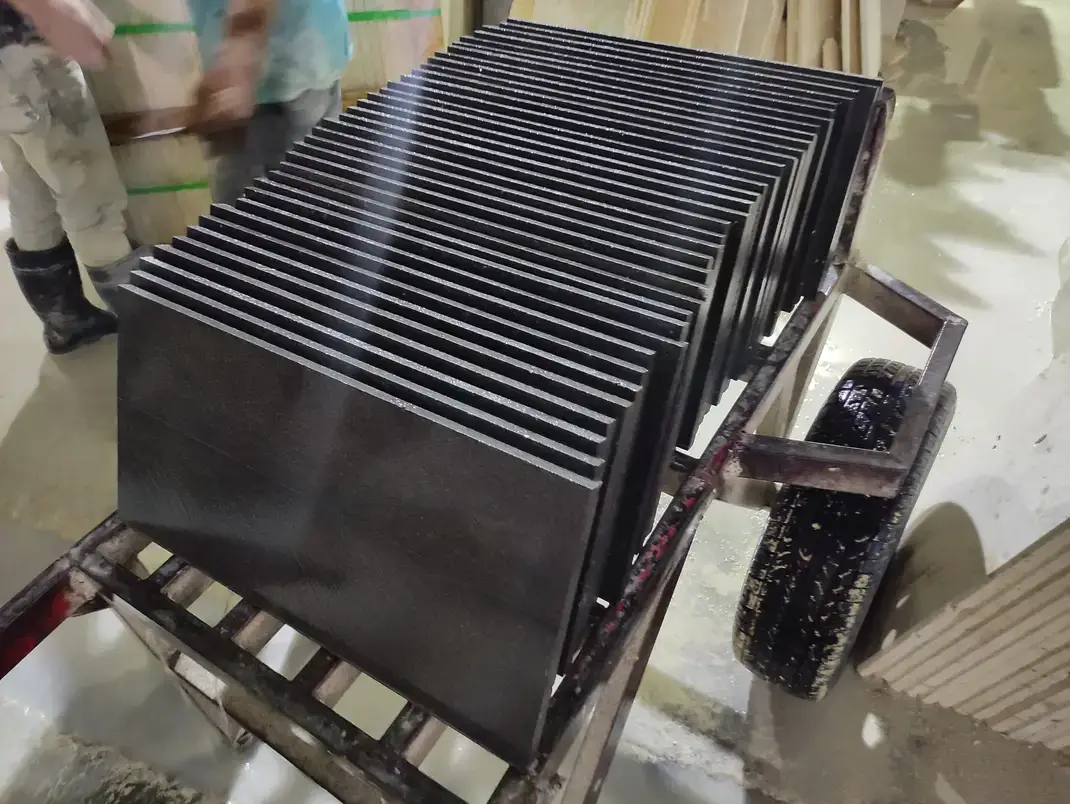
For project teams sourcing material before finalizing their layout, the satin black limestone slabs available through Citadel Stone include both standard and custom sizing options that accommodate complex entry geometries without excessive field cutting waste.
Installation Timing and Logistics in Arizona
Scheduling jet black limestone Phoenix entries requires working around the thermal constraints that affect both installation quality and installer safety. Setting mortar in ambient temperatures above 100°F requires the use of extended-open-time modified mortars, and you’ll want to schedule slurry coat and mortar application for early morning hours — your working window is effectively 5:00 AM to 10:00 AM during July and August before surface temperatures compromise adhesive performance. Afternoon installation in summer creates delamination risk that may not appear immediately but will surface within one to two thermal cycles.
Warehouse lead times are worth building into your project schedule early. Citadel Stone typically maintains Arizona stock on standard black limestone formats, reducing truck delivery lead time to one to two weeks from confirmed order. For custom slab sizing or large-format pieces above 24 × 48 inches, you should allow an additional two to three weeks for cutting and quality inspection before truck dispatch. Confirming warehouse availability at project inception — not two weeks before installation — is the planning step most contractors skip and then regret.
Entry projects in Avondale benefit from the Phoenix metro’s relatively accessible truck delivery infrastructure, but job site access constraints at established residential addresses can complicate delivery. Specifying the slab packaging format — crated versus banded pallets — upfront with your supplier determines whether a standard flatbed can complete your delivery or whether you’ll need a smaller truck with a lift gate, which typically adds cost and lead time.
Realistic Maintenance Schedule for a Statement Entry
Black limestone entries in Phoenix require a maintenance commitment that prospective owners need to understand before specifying the material. The good news is that the protocol is straightforward; the challenge is consistency. Efflorescence — that white mineral haze that develops on dark stone — is the most common complaint on Arizona impactful access installations, and it’s almost always a sealer or drainage failure rather than a material defect.
Your annual maintenance checklist for jet black limestone Phoenix entries should address four items: joint sand replenishment, sealer condition assessment, surface cleaning protocol, and edge inspection for any settlement or lifting at slab perimeters. Joint sand that has dropped below 80% fill depth allows lateral movement between slabs that accelerates edge chipping and creates the lippage that becomes a trip hazard over time. You can address joint sand loss in a single afternoon with polymeric jointing sand and a plate compactor pass.
- Annual: inspect all joints and replenish polymeric sand where depth has dropped below 80%
- Annually or after any significant staining event: professional clean with a pH-neutral stone cleaner rated for dark limestone
- Every 24–30 months: reapply penetrating impregnator sealer after cleaning and full surface dry
- After each monsoon season: check perimeter edges and step nosings for any movement or settlement and re-bed as needed
- Immediately: address any iron staining from irrigation systems — iron deposits become permanent if allowed to oxidize fully into the stone surface
Getting Jet Black Limestone Specifications Right for Phoenix Entries
The projects where jet black limestone Phoenix entries perform beautifully for decades share a common characteristic: every specification decision was made with Phoenix’s specific thermal, drainage, and UV conditions in mind, not adapted from a generic stone spec. You’re working with a material that has the visual authority to define an entire property’s architectural character, and that statement entry design potential is fully achievable when the base, joint, sealer, and maintenance protocols are aligned. The material itself is not fragile — black limestone that would outlast its installer in a moderate climate will do the same in Arizona when the surrounding system is correctly specified. As you plan the broader scope of your Arizona stone projects, related applications can inform your material decisions — Black Limestone Paving Pergola Flooring for Tucson Shade Structures explores how black limestone performs in another demanding Arizona context worth reviewing alongside your entry specification. Trade professionals buy black limestone paving in Arizona from us for our reliability.